
Review: Miranda 105mm f2.8
Deutsche Textversion /
English Text Version (sorry for errors, no native english speaker)
Die japanische Miranda Camera K.K. existierte von 1955 bis 1976 und stellte zu ihrer Zeit sehr hochwertige und teilweise auch innovative Kameras her.
Man baute fast ausschließlich Kleinbildkameras, die vor allem auf dem japanischen Heimatmarkt sowie in den USA sehr erfolgreich waren.
Der Erfolg in Amerika beruhte vor allem auf der Zusammenarbeit mit der Allied Impex Corporation (AIC), die ihre Kameraaktivitäten später unter dem Markennamen Soligor bündelte.
Soligor übernahm ab 1968 Anteile an Miranda und die Firma dann ab 1969 vollständig.
Eine Sonderstellung nimmt Miranda unter den japanischen Kameraherstellern vor allem aufgrund der Tatsache ein, dass man im Gegensatz zu fast allen Konkurrenten seine Objektive nie selbst baute, sondern immer von Zulieferern unter eigenem Namen einkaufte.
Dies ist auch der Grund, warum es für uns heute nicht mehr nachvollziehbar ist, wer ein bestimmtes Miranda-Objektivmodell wirklich gebaut hat.
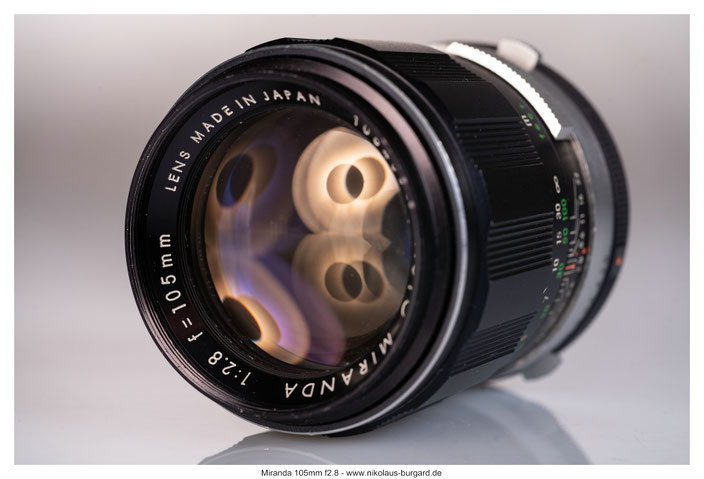
Aus dieser Objektivserie möchte ich euch das
Miranda 105mm f2.8
in diesem Test intensiv vorstellen.
Es gibt von diesem Miranda 105mm f2.8 verschiedene Bauformen.
Bei meinem Exemplar handelt es sich um die "Auto Miranda"-Version (46mm Frontfiltergewinde), spätere Modelle (mit "E" und "EC" in der Bezeichnung) hatten ein 52mm Frontfiltergewinde.
Technische Daten:
- Blende: von f2.8 bis f16, 6 gerade Blendenlamellen, ohne Clicks
- Optisches System: 5 Linsen in 5 Gruppen oder 6 Linsen in 3 Gruppen (leider widersprüchliche Quellenangaben)
- Gewicht: 360g
- Länge: 69mm
- Filterdurchmesser: 46mm
- Naheinstellgrenze: 120 cm
Und so sieht das Objektiv aus:
The Japanese Miranda Camera K.K. existed from 1955 to 1976 and produced very high-quality and sometimes innovative cameras in its time.
They built almost exclusively 35mm cameras, which were very successful, especially in the Japanese home market and in the USA.
The success in America was mainly based on the collaboration with the Allied Impex Corporation (AIC), which later bundled its camera activities under the brand
name Soligor.
Soligor took over shares in Miranda from 1968 and the company then from 1969.
Miranda occupies a special position among the Japanese camera manufacturers mainly due to the fact that, unlike almost all competitors, one never built his own
lenses, but always bought from suppliers under his own name.
This is also the reason why it is no longer comprehensible for us today who really built a certain Miranda lens model.
I want you to do this from this lens series
Miranda 105mm f2.8
present intensively in this test.
There are different designs of this Miranda 105mm f2.8.
My copy is the "Auto Miranda" version (46mm front filter thread), later models (with "E" and "EC" in the designation) had a 52mm front filter
thread.
Technical data:
- aperture: from f2.8 to f16, 6 straight aperture slats, without clicks
- Optical system: 5 lenses in 5 groups or 6 lenses in 3 groups (unfortunately contradictory sources)
- Weight: 360g
- Length: 69mm
- Filter diameter: 46mm
- Close Focussing limit: 120 cm
And this is what the lens looks like:

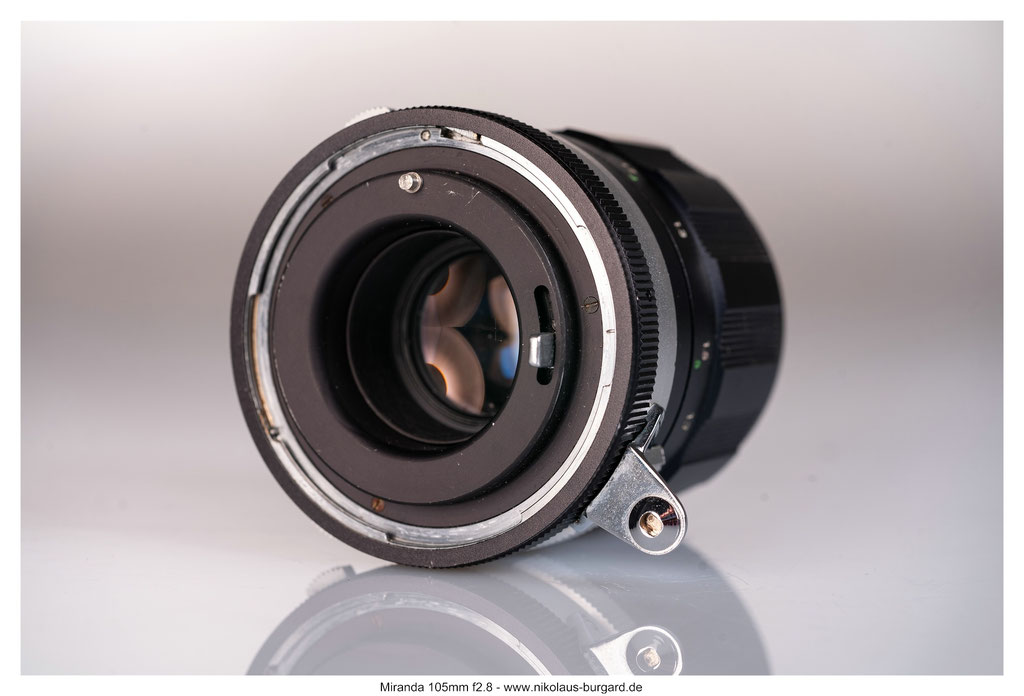
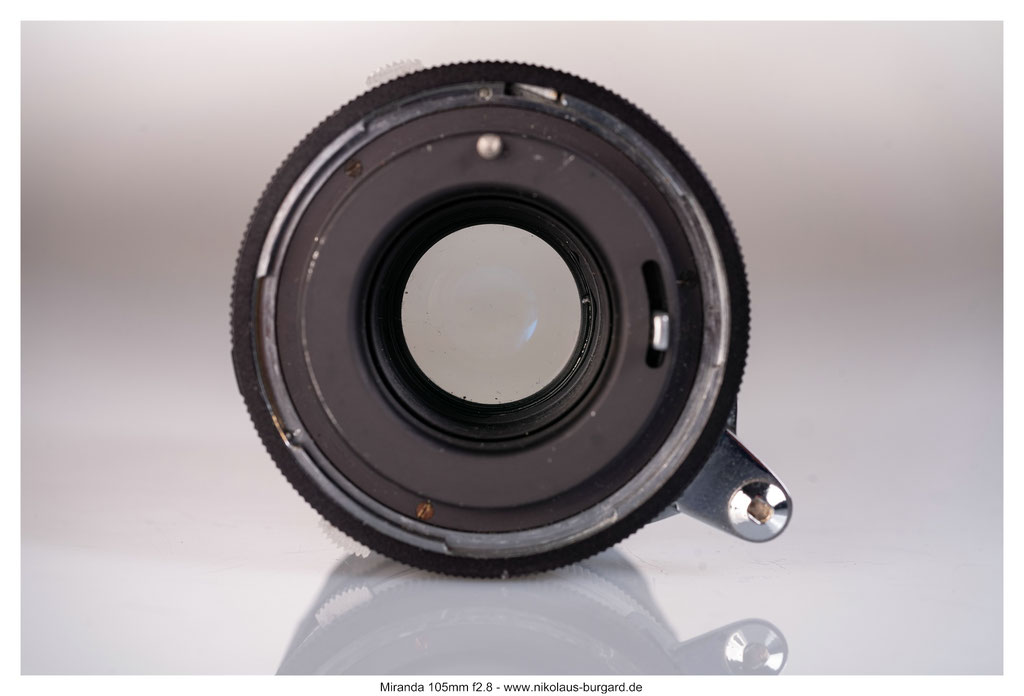

Das Objektiv hat eine normale Auszugsfokussierung.
Am kürzesten ist es bei unendlich-Einstellung,
je weiter man in den Nahbereich fokussiert, desto länger wird es.
The lens has normal pull-out focusing.
It is shortest at infinity setting,
the closer you focus, the longer it becomes.


Ich adaptiere die Miranda-Objektive mittels eines von einem Kollegen gebauten Helicoid-Adapters.
Dieser besteht aus einem einer defekten Miranda-Kamera entnommenen Kamera-Anschluß, der mit einem handelsüblichen M42-Helicoid verheiratet wurde und einem dünnen M42 auf Sony-E-Mount-Rückteil.
Ihr seht hier den Adapter neben dem Objektiv, einmal in unendlich-Stellung und einmal mit der maximalen zusätzlichen Fokussierung in den Nah-(Makro-) Bereich
I adapt the Miranda lenses using a helicoid adapter built by a colleague.
This consists of a camera mount taken from a defective Miranda camera, which was married to a commercially available M42 helicoid and a thin M42 on a Sony E-mount back.
Here you can see the adapter next to the lens, once in infinity position and once with the maximum additional focus in the close-up (macro) range


Und so sieht die Kombination aus einer der Testkameras (hier die Sony Alpha 7RIII), dem Adapter und dem schönen Objektiv aus:
And this is what the combination of one of the test cameras (here the Sony Alpha 7RIII), the adapter and the beautiful lens looks like:

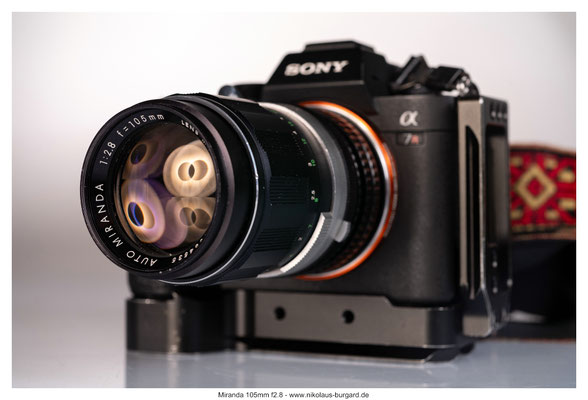

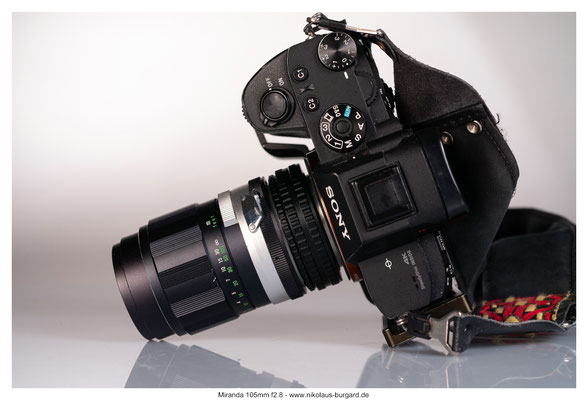
Die Kombination aus Objektiv, Adapter und Kamera ist für ein leichtes Teleobjektiv sehr leicht und kompakt, vor allem der geringe Objektivdurchmesser lässt alles sehr "schlank" wirken.
Das Objektiv selbst hat die knapp 6 Jahrzehnte sehr gut überdauert und sieht fast "wie neu" aus,
auch die Fokussierung läuft noch weich und gleichmäßig.
Kameras für die Bilder dieses Tests waren die Sony Alpha 7III (Kleinbildformat, 24MP) und die Sony Alpha 7RIII (Kleinbildformat, 42MP).
Die analogen Bilder des Tests wurden mit der Miranda Auto Sensorex EE auf Kentmere 400 Schwarz-Weiss-Film gemacht.
Die analytischen Bilder zur Bildschärfe sind alle mit der Sony Alpha 7RIII entstanden.
Alle digitalen Bilder des Tests sind im Raw-Format aufgenommen worden und wurden in Lightroom entwickelt.
The combination of lens, adapter and camera is very light and compact for a lightweight telephoto lens, especially the small lens diameter makes everything look
very "slim".
The lens itself has survived the almost 6 decades very well and looks almost "like new",
The focusing also runs softly and evenly.
Cameras for the images of this test were the Sony Alpha 7III (small image format, 24MP) and the Sony Alpha 7RIII (small screen format, 42MP).
The analog images of the test were taken with the Miranda Auto Sensorex EE on Kentmere 400 black and white film.
The analytical images for image sharpness have all been created with the Sony Alpha 7RIII.
All digital images of the test have been taken in raw format and were developed in Lightroom.
Bildschärfe / Sharpness
Ich habe eine Bildreihe zur Bewertung der Schärfe für euch angefertigt, bei der sowohl das Bildzentrum als auch die Bildecke in einer Schärfeebene liegen.
Fokuspunkt war die Markise des Hauses links der nach oben führenden Straße.
Das Haus in der rechten unteren Bildecke liegt auf der gleichen Höhe und somit in der gleichen Schärfeebene.
Die Blendenreihe zeigt die Werte f2.8 - f4 - f5.6 - f8 - f11:
I have created a series of pictures to evaluate the sharpness for you, in which both the picture center and the picture corner are located in a field
level.
Focus point was the awning of the house on the left of the upward leading street.
The house in the lower right corner of the picture is located at the same height and thus in the same field level.
The aperture series shows the values f2.8 - f4 - f5.6 - f8 - f11:
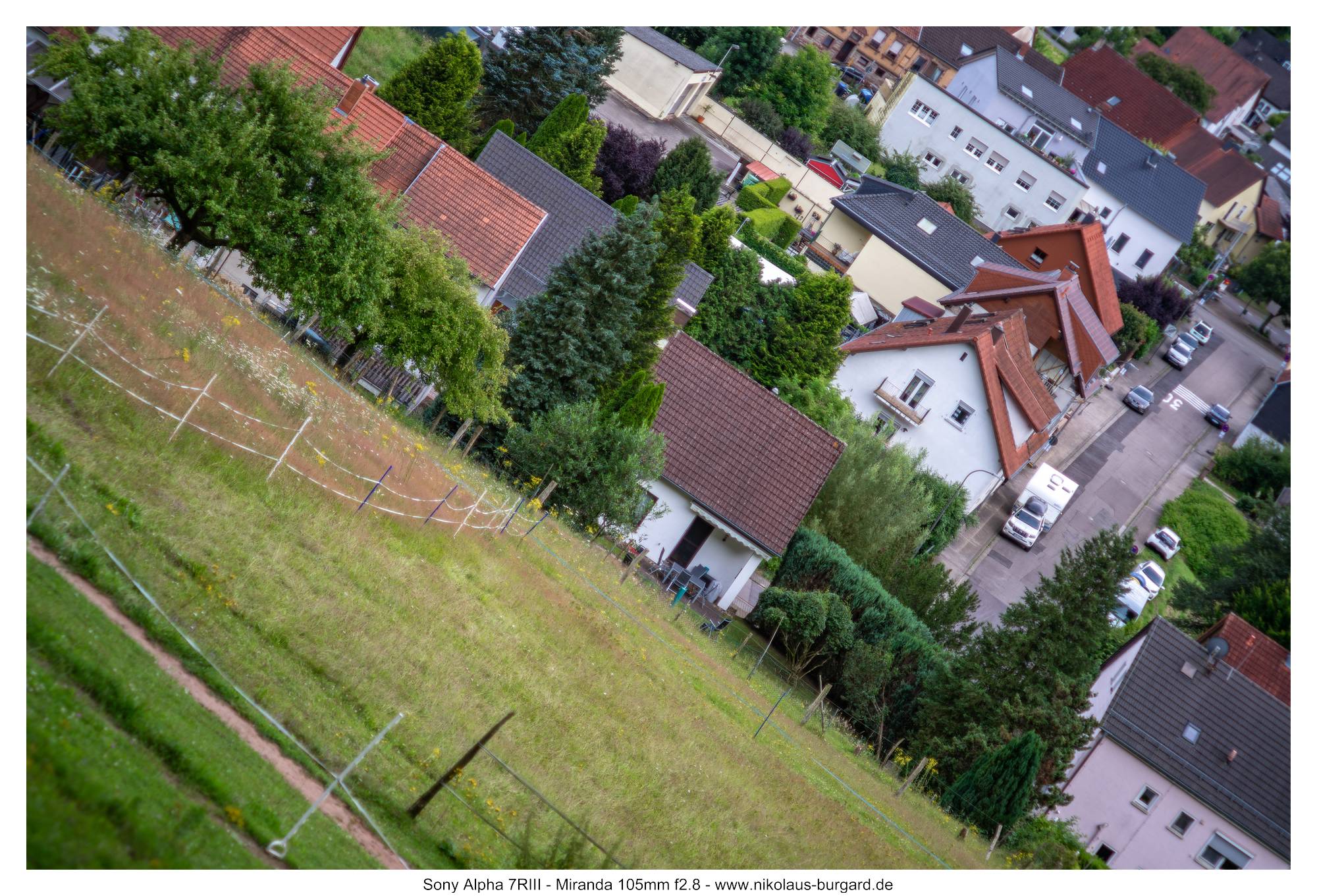


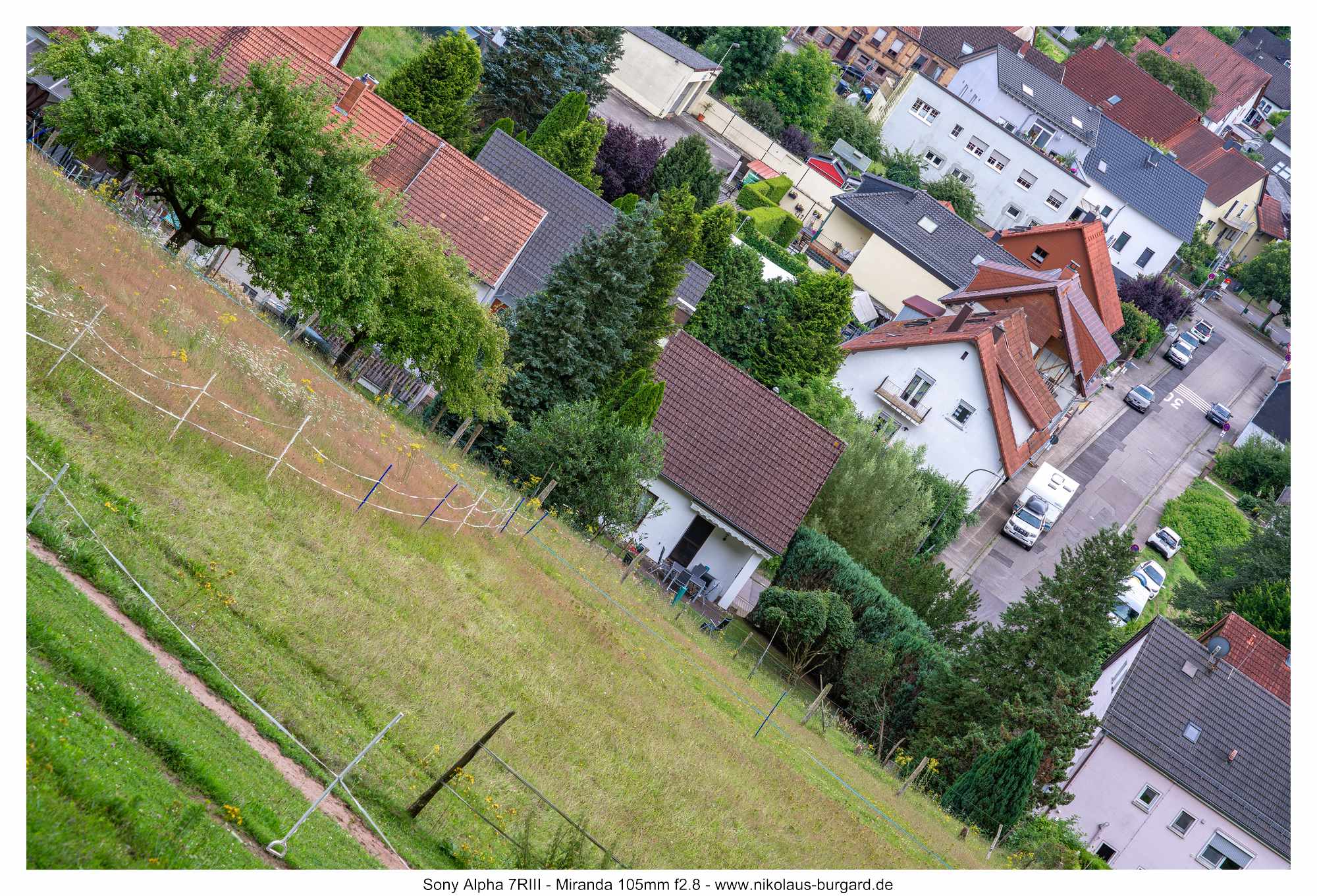


Die vom Objektiv verursachte Vignettierung ist bei Offenblende sehr deutlich erkennbar.
Bis f4 wird sie schon deutlich gemildert,
aber erst bei 5.6 ist sie unkritisch.
Als nächstes folgen 100%-Vergrößerungen aus der Bildmitte vom Fokuspunkt,
in der gleichen Reihenfolge wie oben:
The vignetting caused by the lens is very clearly visible in the case of open aperture.
Up to f4 it is already significantly mitigated,
But it is only at 5.6 that it is uncritical.
Next, 100% magnifications from the center of the image from the focus point follow,
in the same order as above:


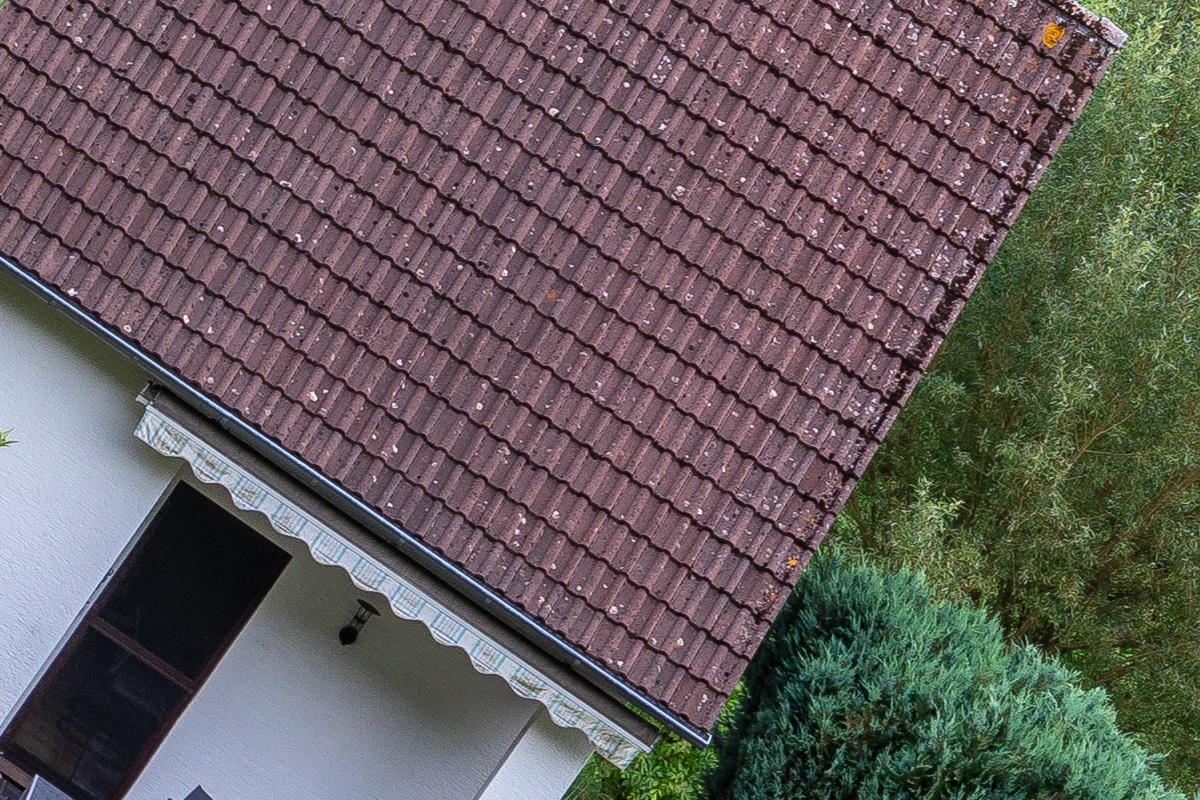


Bei f2.8 ist die Schärfe in der Bildmitte bereits auf gutem Niveau, die Kontraste sind noch stark steigerungsfähig und es gibt einen gut sichtbaren Glow aufgrund der sphärischen Aberration.
Bei f4 steigert sich die Schärfe deutlich auf sehr gutes Niveau, aber die Kontraste sind weiterhin noch etwas steigerungsfähig. Die sphärische Aberration ist komplett verschwunden.
Ab f5.6 bis f11 sind Schärfe und Kontrast in der Bildmitte sehr gut.
At f2.8, the sharpness in the center of the image is already on a good level, the contrasts are still highly increasing and there is a highly visible glow due to
the spherical aberration.
At f4, the sharpness increases significantly to a very good level, but the contrasts are still a bit more profitable. The spherical aberration has completely disappeared.
From f5.6 to f11, sharpness and contrast in the center of the image are very good.

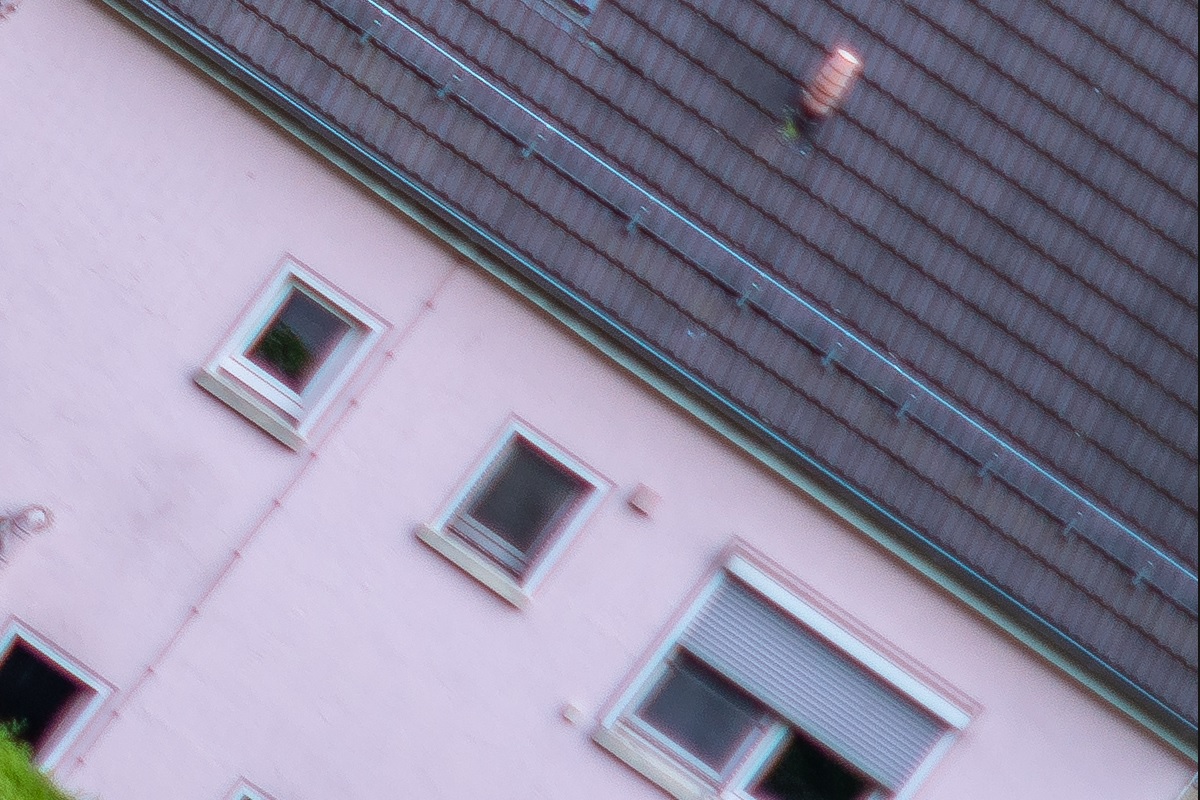


In der Bildecke ist die Bewertung leider anders.
Bei f2.8 überlagert die Vignette mit ihrer Abdunkelung stark.
Astigmatismus und die sphärische Aberration bestimmen die nur mäßige Grundschärfe.
Bei f4 erhöht sich die Grundschärfe in der Ecke sichtbar, es verbessert sich die Vignette.
Bei f5.6 ist die Schärfe in der Bildecke gut bis sehr gut. Die Vignette ist verschwunden
Bei f8 und f11 ist die maximale Schärfe- und Kontrastleistung in der Ecke auf sehr gutem Niveau erreicht.
Bei allen Vergrößerungen aus der Ecke sind gut sichtbare Spuren von lateralen chromatischen Aberrationen zu erkennen, z.B. an den Fensterrahmen.
Zusammenfassend kann man sagen:
Bereits bei Offenblende f2.8 ist das Objektiv im erweiterten Bildzentrum gut scharf, ab f4 sehr gut.
Randscharf ist es ab f5.6,
für perfekt scharfe Ecken muss man bis auf 8 abblenden.
In the extreme picture corner the rating is unfortunately different.
At f2.8, the vignette superimposes strongly with its darkening.
Astigmatism and the spherical aberration determine the only moderate fundamental sharpness.
With f4, the basic sharpness in the corner increases visibly, the vignette improves.
At f5.6, the sharpness in the picture corner is good to very good. The vignette has disappeared
At f8 and f11, the maximum sharpness and contrast performance in the corner is reached at a very good level.
At all magnifications from the corner, clearly visible traces of lateral chromatic aberrations can be seen, e.g. on the window frames.
Summary:
Even with open aperture f2.8, the lens in the extended image center is well sharp, from f4 very good.
It is border sharp from f5.6,
For perfectly sharp corners you have to dim up to 8.
Rendering & Bokeh
Wenn es um das Hintergrundrendering geht, gibt es immer viele gegensätzliche Meinungen.
Denn ob einem die Darstellung eines Objektives gefällt oder nicht, ist einfach Geschmackssache.
Der Eine möchte alles butterweich aufgelöst haben, der Andere mag es busy mit viel Outlining und Strukturen und/oder Swirl (und natürlich gibt es ganz viel zwischen diesen Extremen in der Mitte)...
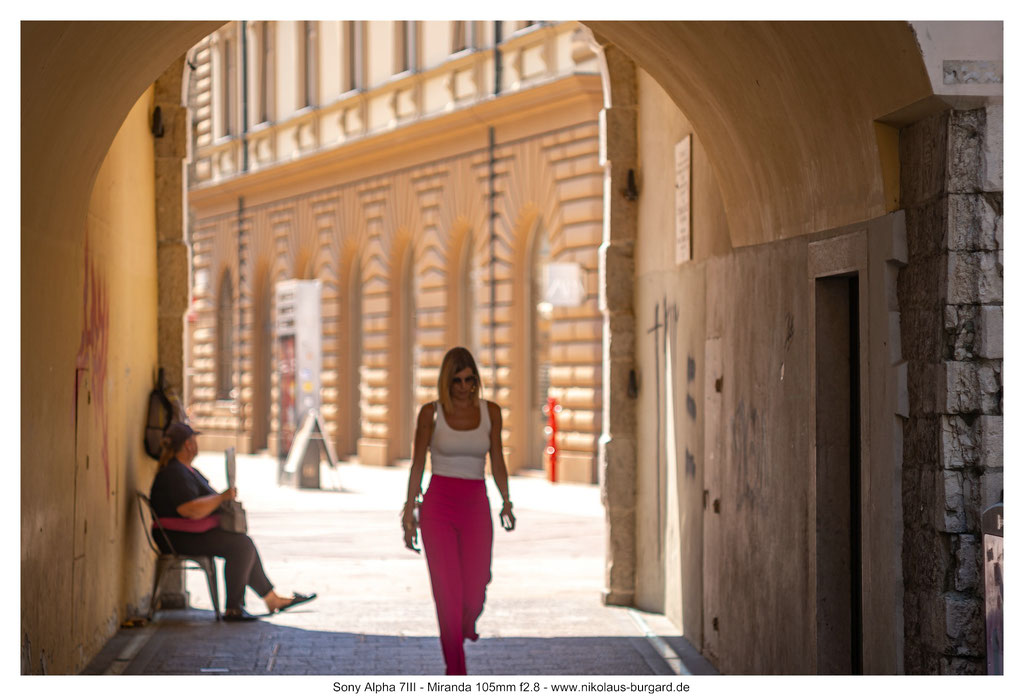
Das Miranda 100mm f2.8 ist in den meisten Situationen ein Vertreter der weichen, unaufgeregten Fraktion.
Die Hintergründe werden eigentlich immer schön weich und flächig aufgelöst, störende Strukturen gibt es nur selten.
Die Blendenwerte sind f2.8 - f4 - f5.6 - f8:
When it comes to background rendering, there are always a lot of opposing opinions.
Because whether you like the representation of a lens or not, is simply a matter of taste.
One wants to have everything butter-soft resolved, the other likes it busy with a lot of outlining and structures and/or swirl (and of course there is quite a
lot between these extremes in the middle)...
The Miranda 100mm f2.8 is in most situations a representative of the soft, unexcited fraction.
The backgrounds are actually always nicely soft and flat dissolved, disturbing structures are rarely available.
The following series shows the development of the background blur when dimming.
The focus was on the middle screw on the right in the picture, distance to this was about 1.5 meters.
The aperture values are f2.8 - f4 - f5.6 - f8:
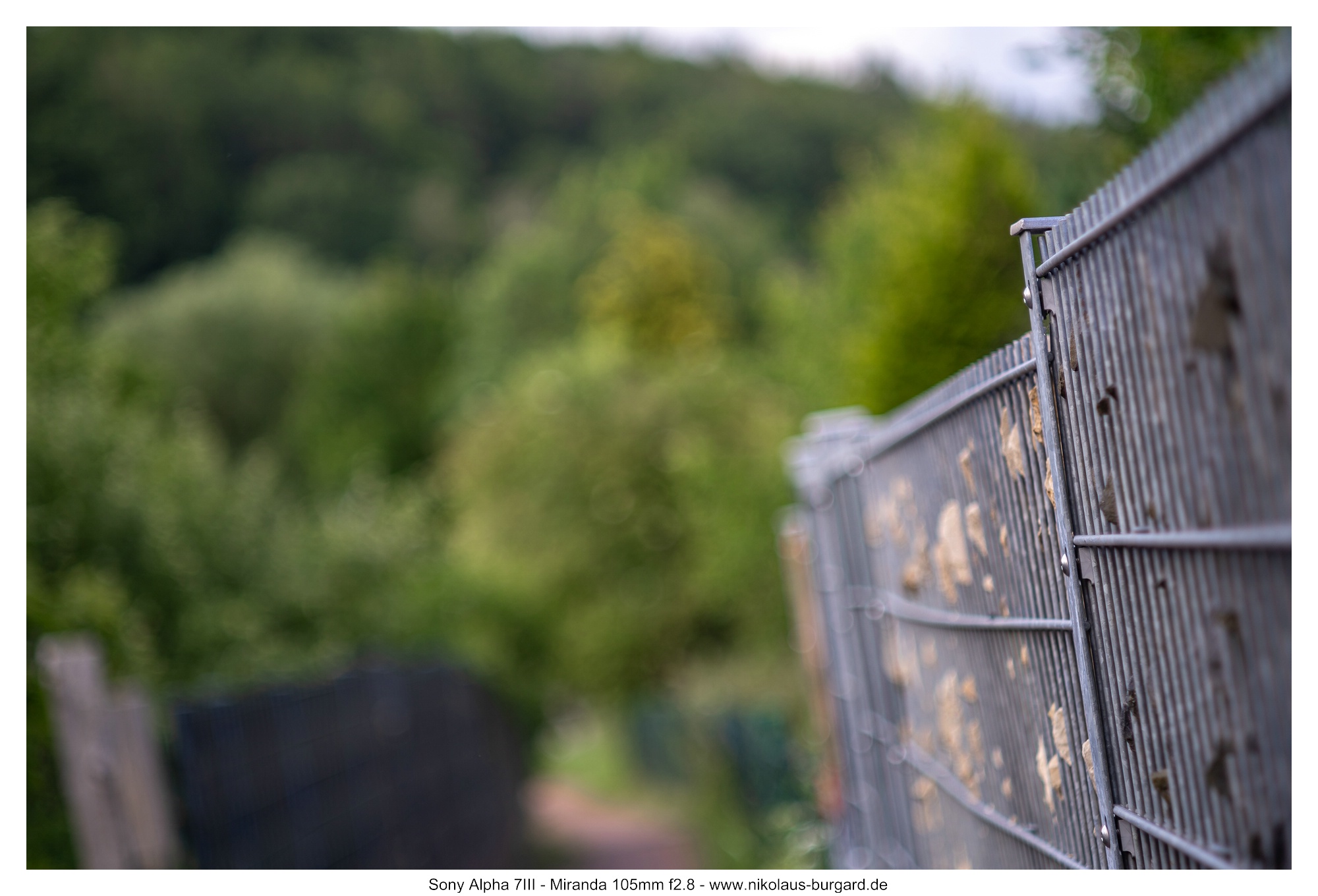


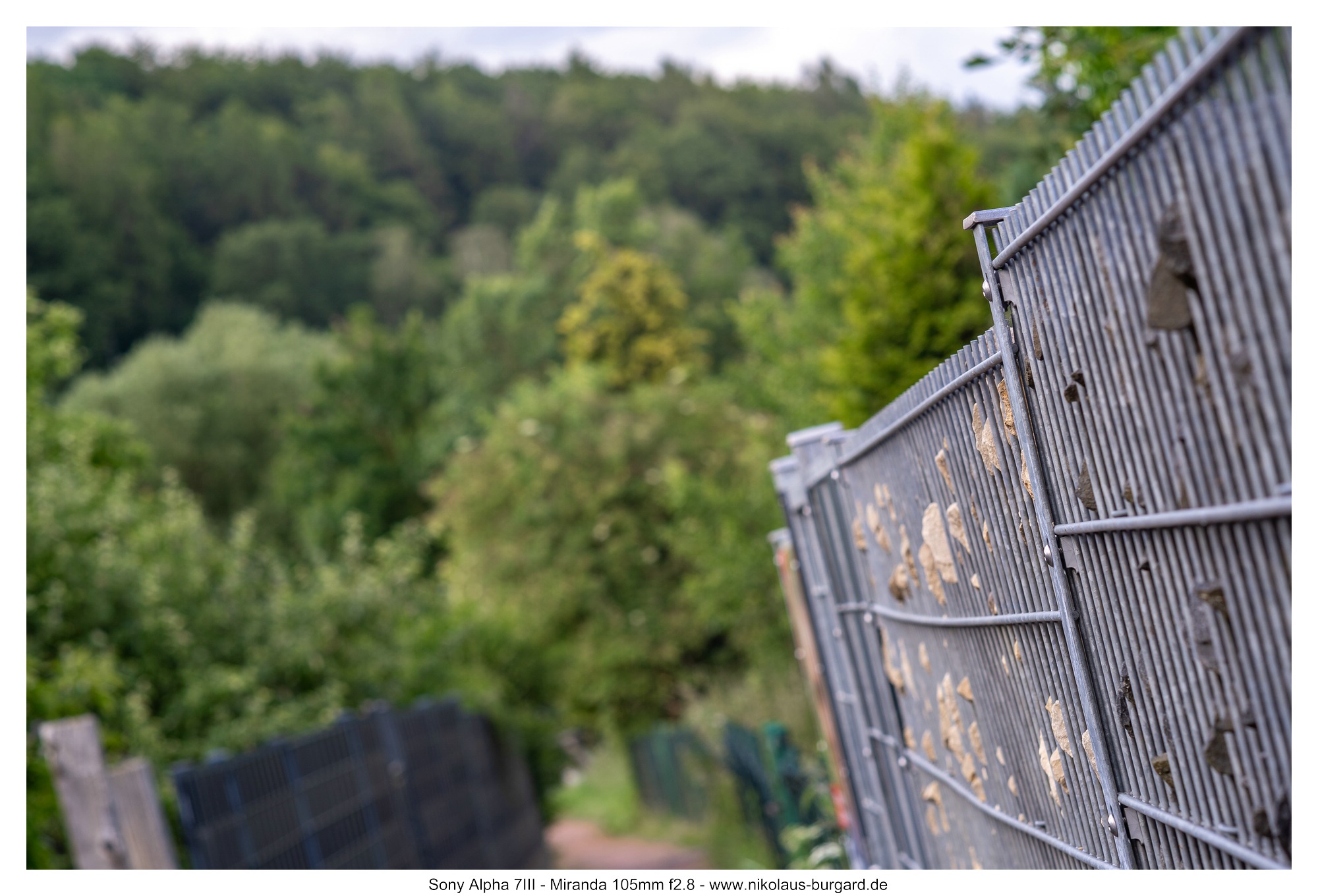


Bei f2.8 gibt es viel Unschärfe (und Vignette) und das Bokeh ist schon bei Offenblende schön weich.
Ab f4 nimmt die Tiefenschärfe dann zu, und es werden immer mehr Hintergrunddetails erkennbar, die aber trotzdem unaufgeregt dargestellt werden.
Mein anderes wiederkehrendes Bokeh-Testmotiv zeigt schon etwas mehr:
Grundsätzlich ist das Bokeh bei Offenblende weich, aber gerade bei den Bäumen im Hintergrund gibt es schon leichte Reststrukturen:
At f2.8 there is a lot of blur (and vignette) and the bokeh is already nice and soft at open aperture.
From f4 onwards, the depth of field then increases, and more and more background details become recognizable, which are still displayed
unexcitedly.
My other recurring bokeh test motif shows a little more:
Basically, the bokeh is soft with open aperture, but especially with the trees in the background, there are already light residual structures:

An der objektiveigenen Naheinstellgrenze von 1,20m ist das Bokeh erwartungsgemäß extrem weich und flächig bei Offenblende und behält diese Eigenschaft auch beim Abblenden, auch wenn aufgrund der steigenden Tiefenschärfe mehr Details im Hintergrund erkennbar werden.
At the lens-native close focussing limit of 1.20m, the bokeh is expected to be extremely soft and flat when exposed and retains this property even when stopping down, even if more details become apparent in the background due to the increasing depth of field.


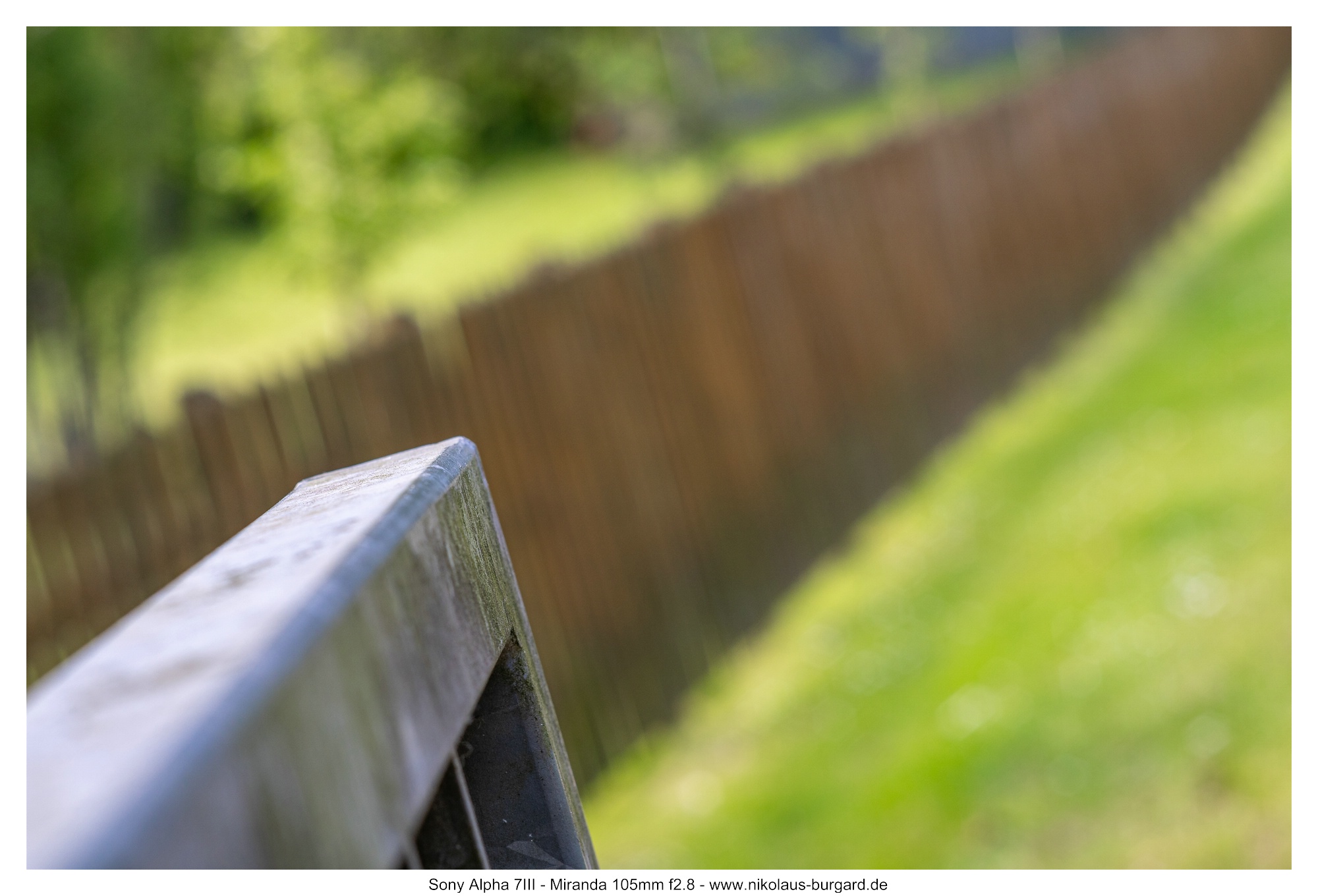


Zur Darstellung des Vordergrundbokehs habe ich folgende Reihe bei f2.8, f4 und f5.6 fotografiert:
Der Fokus lag auf dem Kreuz im Hintergrund. Der Baum und die Blätte lassen eine gute Beurteilung der Qualität der Vordergrundunschärfe zu.
To represent the foreground bokeh, I photographed the following series at f2.8, f4 and f5.6:
The focus was on the cross in the background. The tree and the leaves allow a good assessment of the quality of the foreground blur.


Die nächste 3er-Reihe zeigt eine Annäherung an das Motiv (bei f2.8) bei spektakulärem, farbenfrohen Hintergrund. Die Schärfe am Fokuspunkt ist gut, und das Bokeh in meinen Augen immer schön weich und pastellig.
The next series of three shows an approach to the motif (at f2.8) with spectacular, colorful background. The sharpness at the focus point is good, and the bokeh in my eyes always nice and soft and pastel.


Sehr gerne präsentiere ich in meinen Tests die sogenannten Fokuspaar, bei denen ich das gleiche Motiv vom gleichen Standpunkt aus mit unterschiedlicher Fokussierung (bei Offenblende) zeige:
In meinen Augen lassen sich so hervorragend Rückschlüsse über die Renderingeigenschaften eines Objektives ziehen.
In my tests, I like to present the so-called focus pairs, in which I show the same motif from the same point of view with different focus (at open
aperture):
In my eyes, conclusions can be drawn excellently about the rendering properties of a lens.


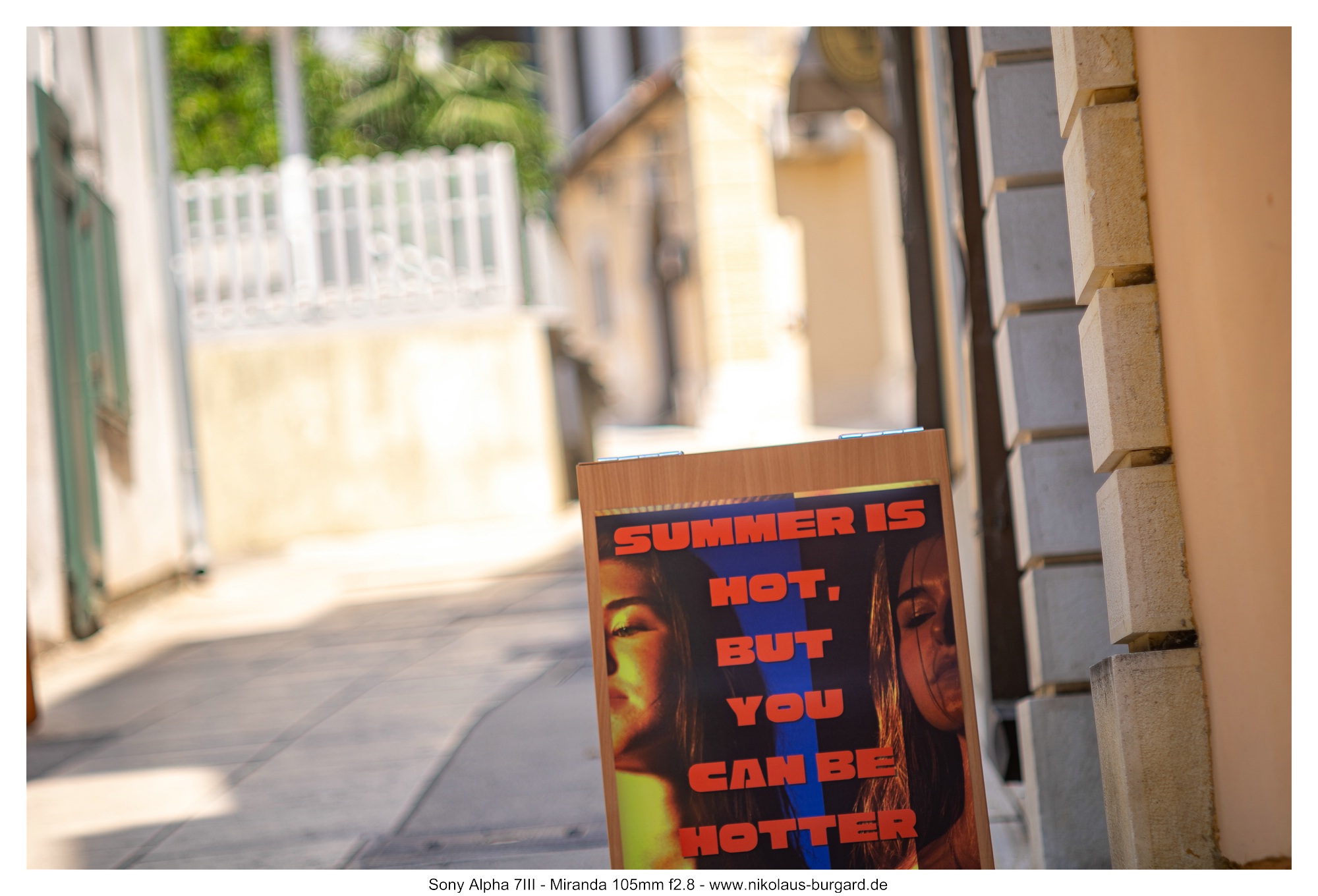
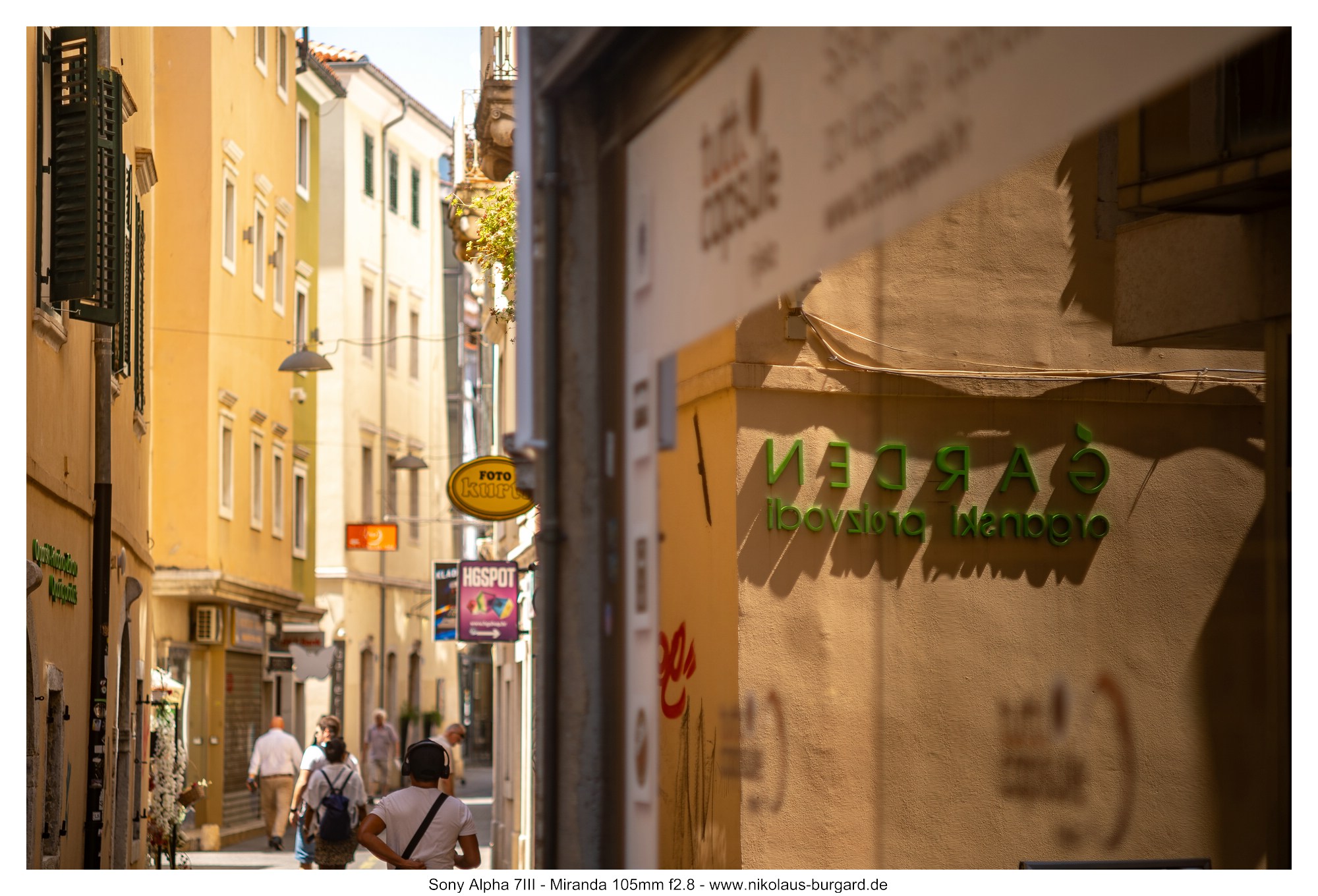
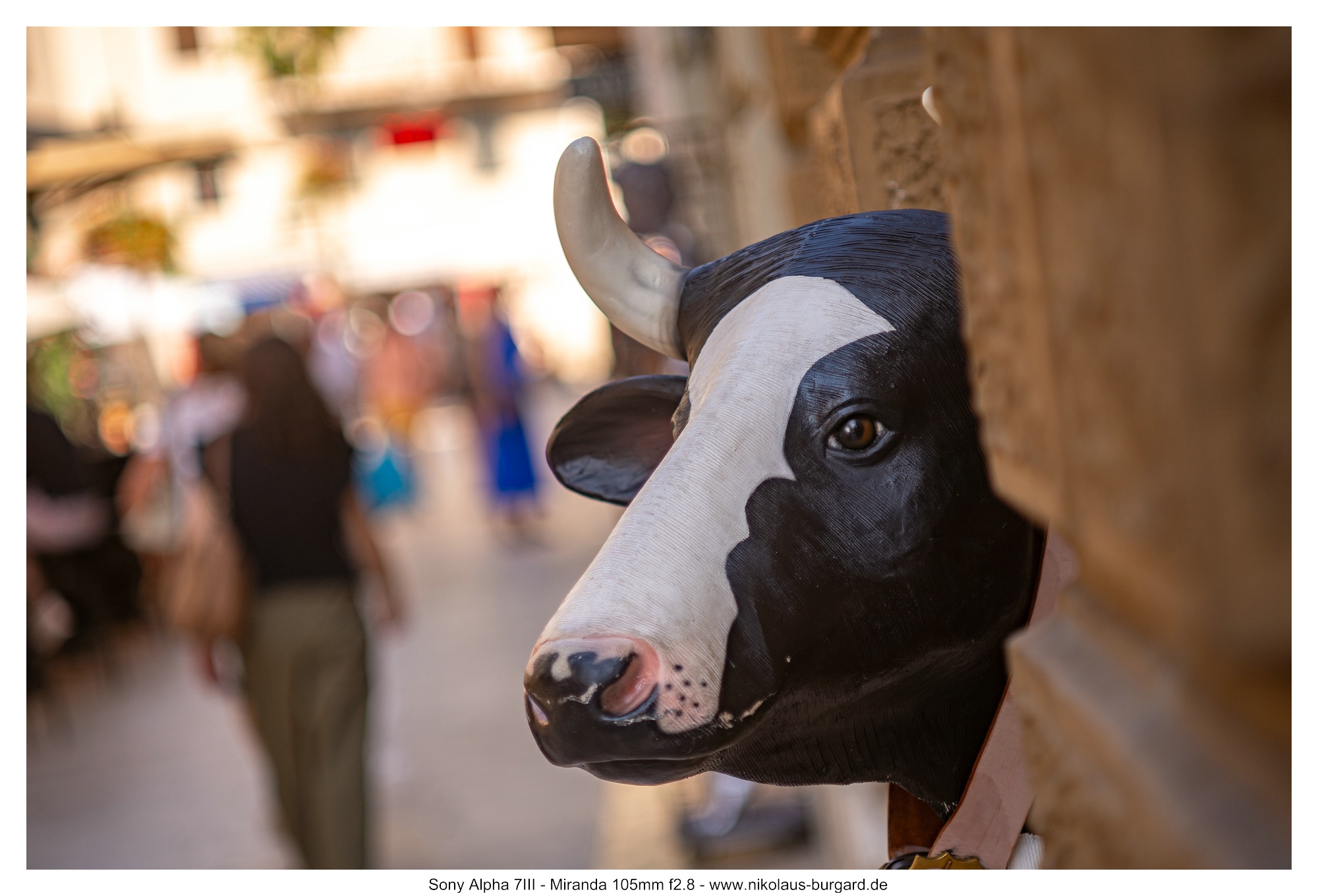
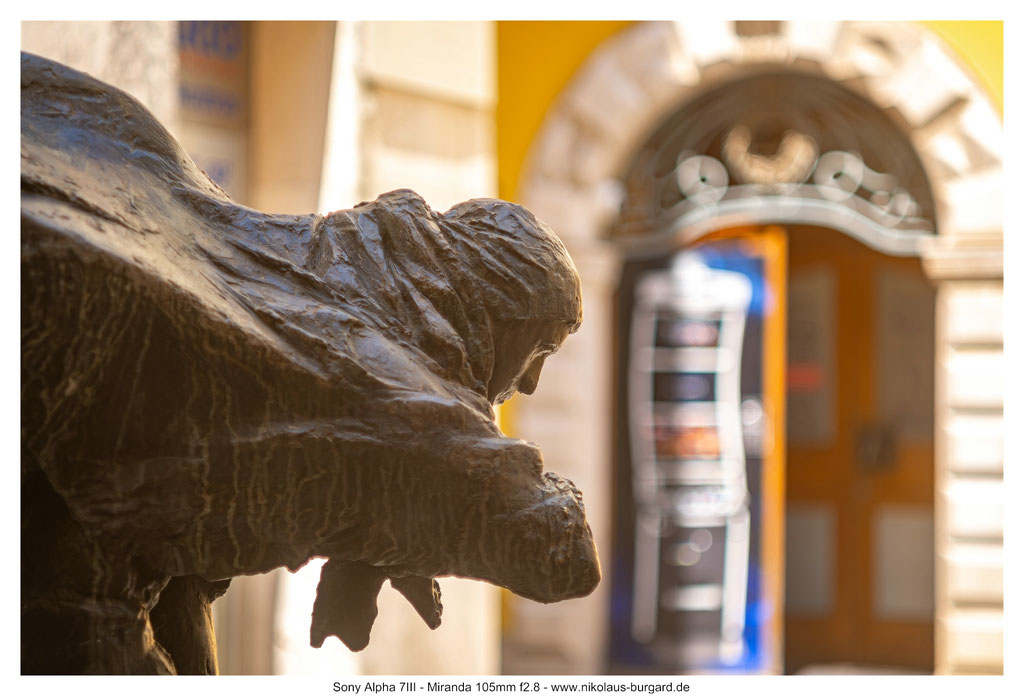
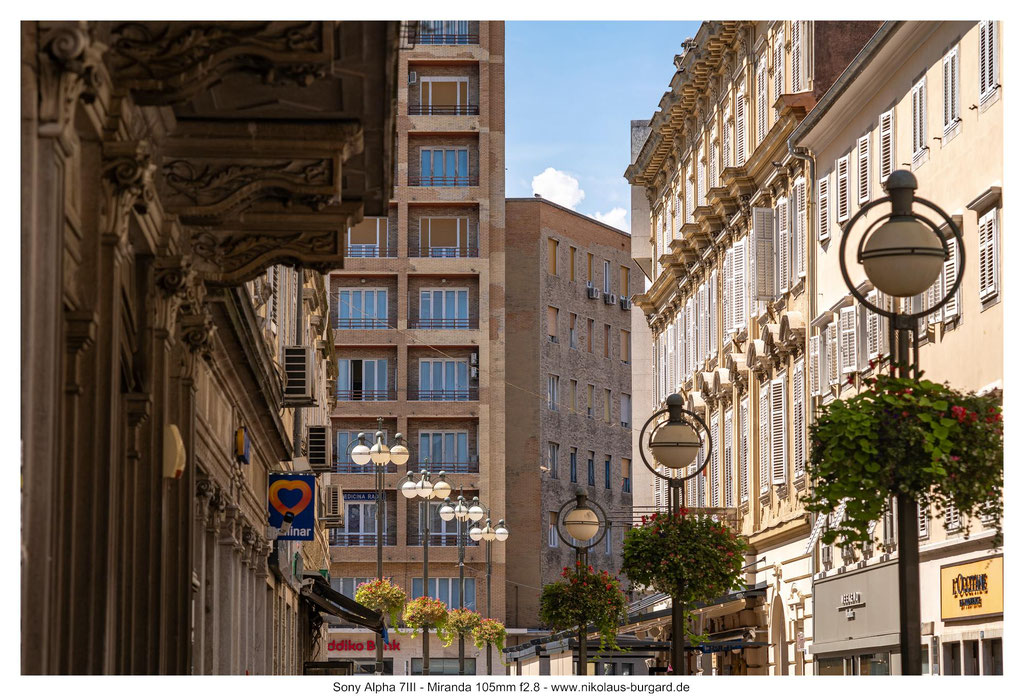
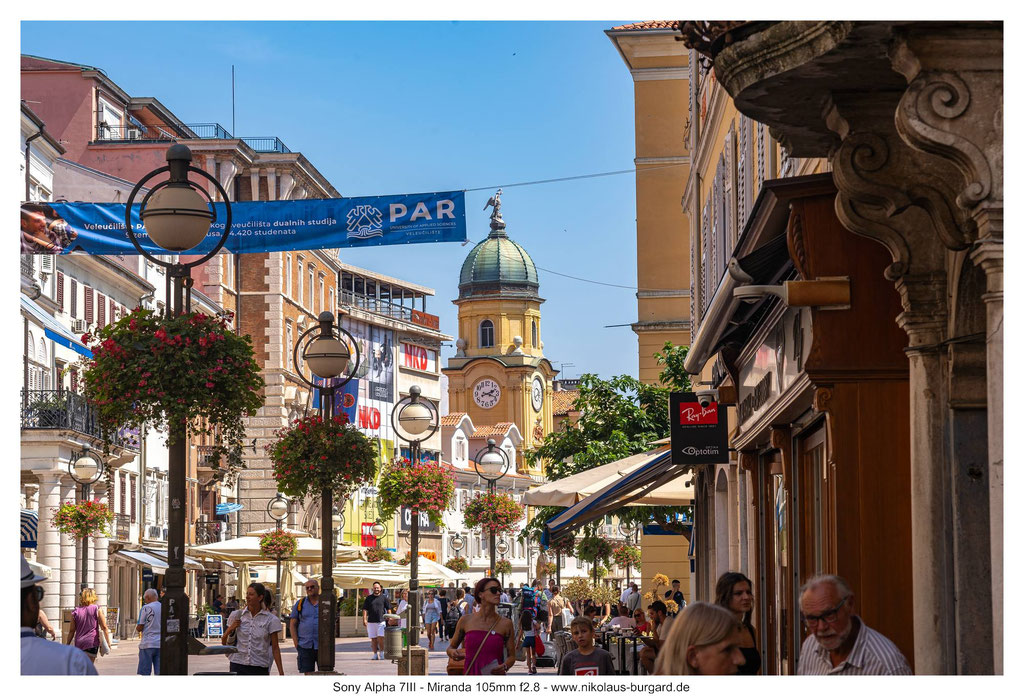
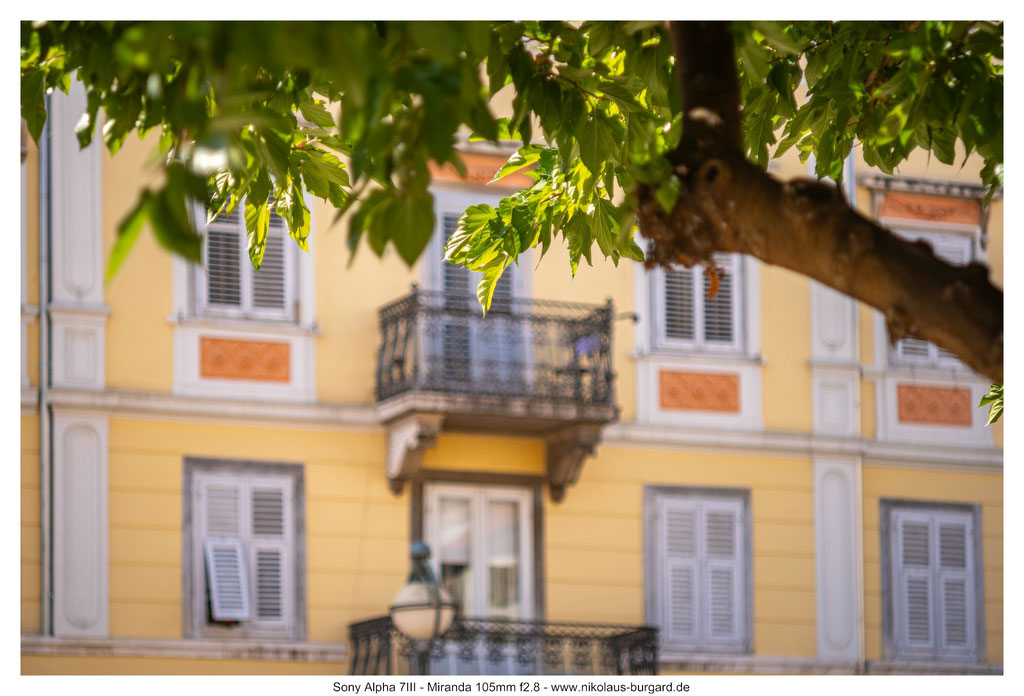
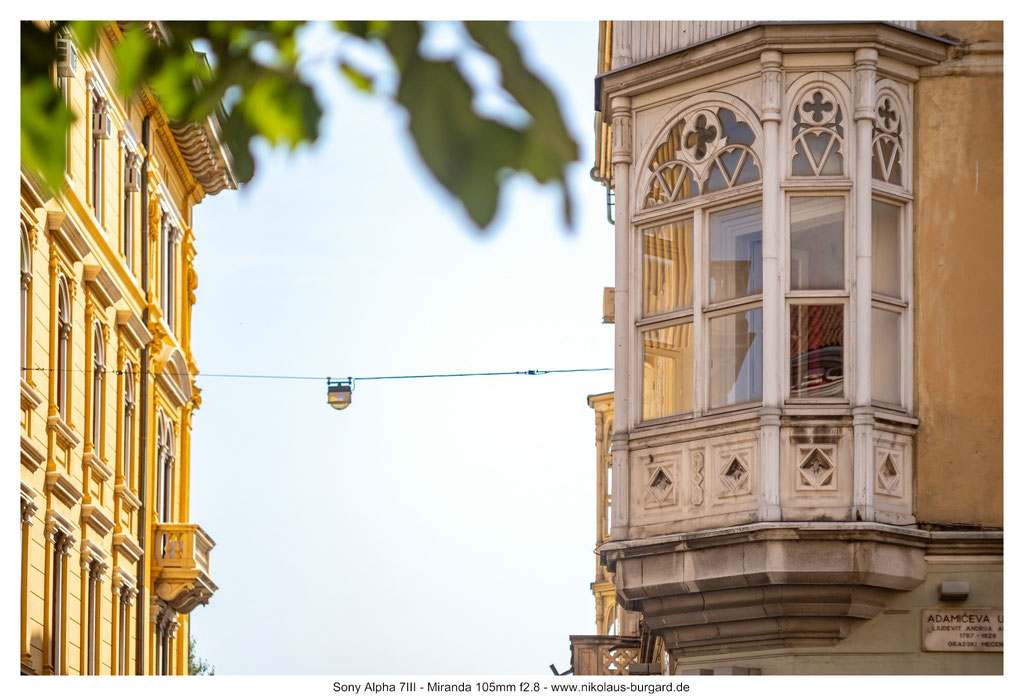
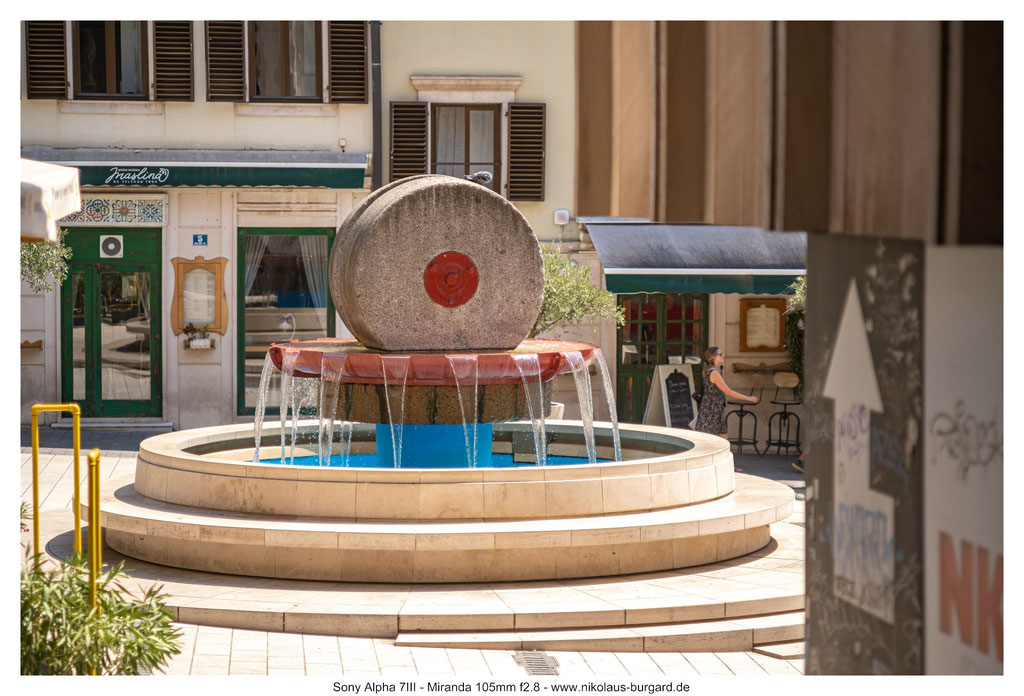
Bildserie / Picture Series: A hot day in Rijeka
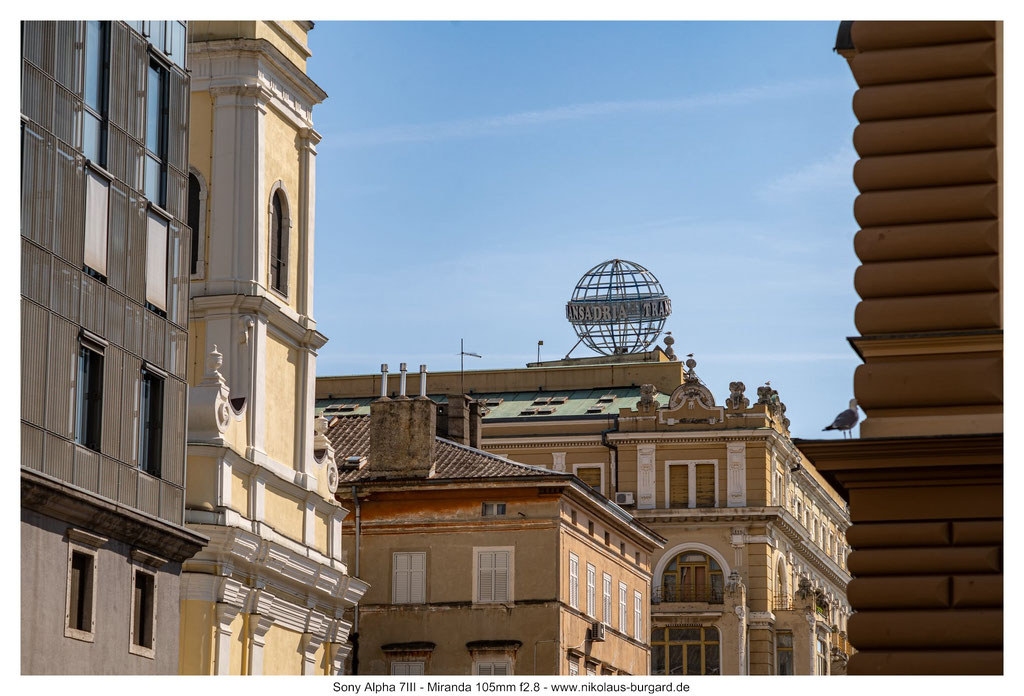
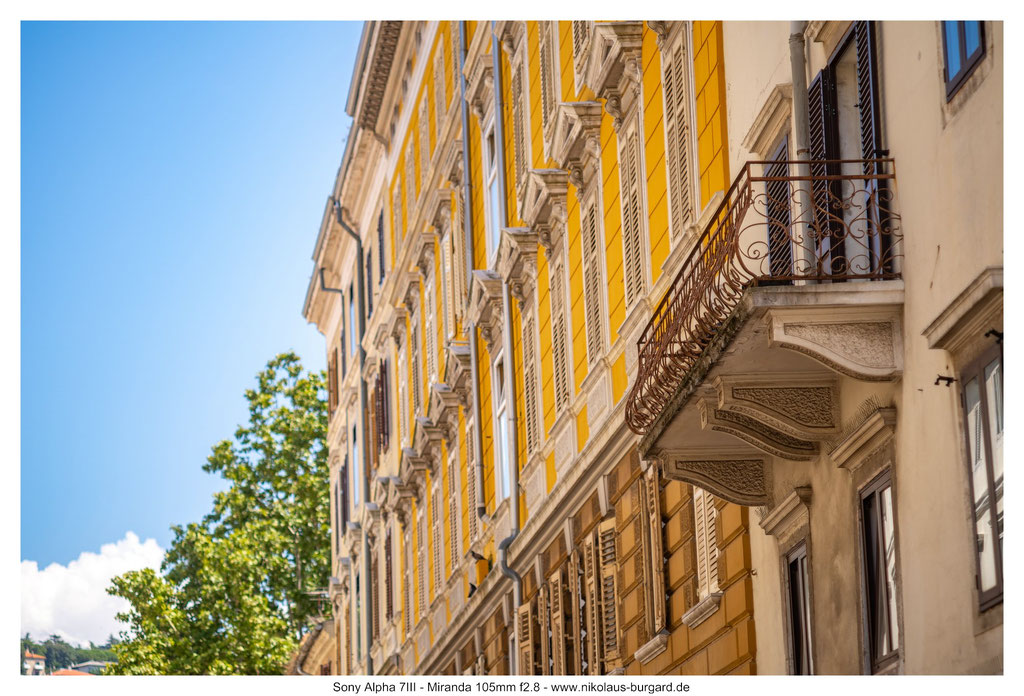
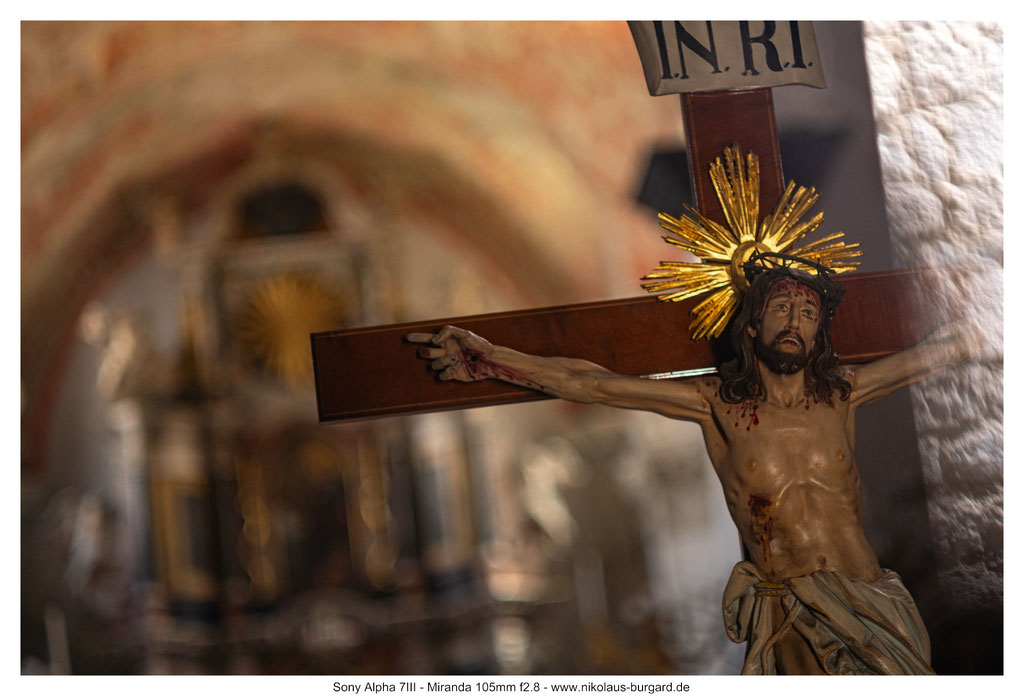
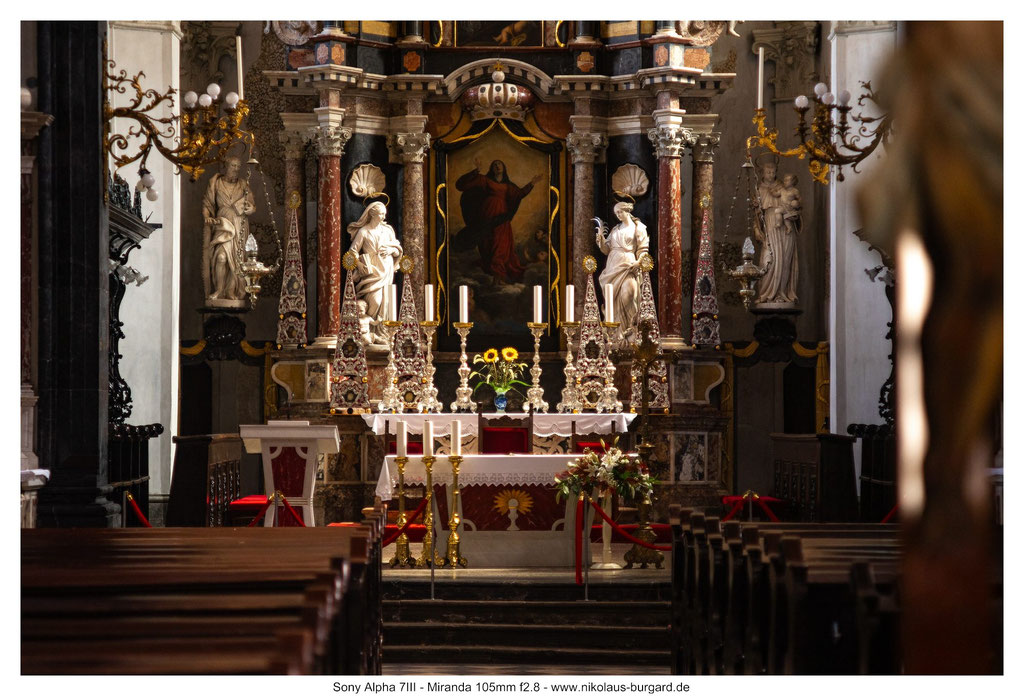
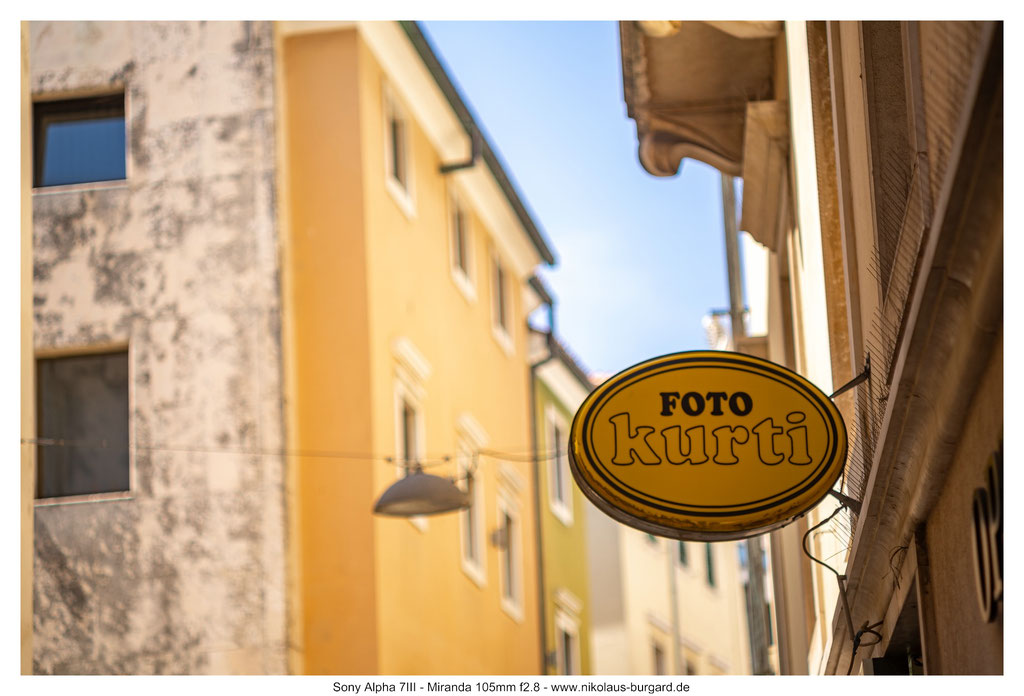
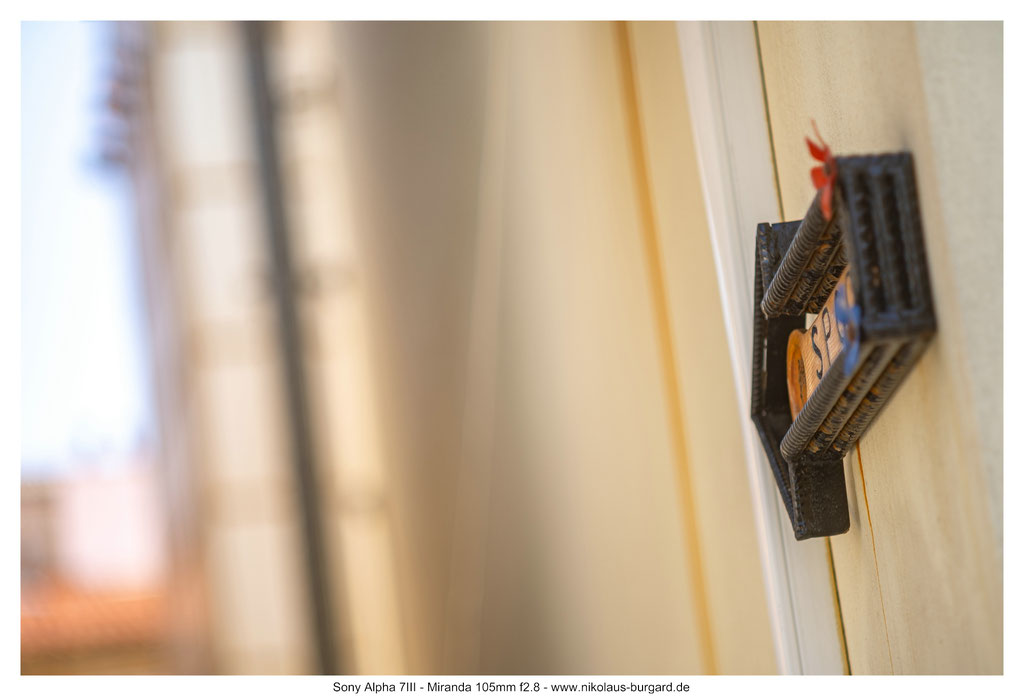
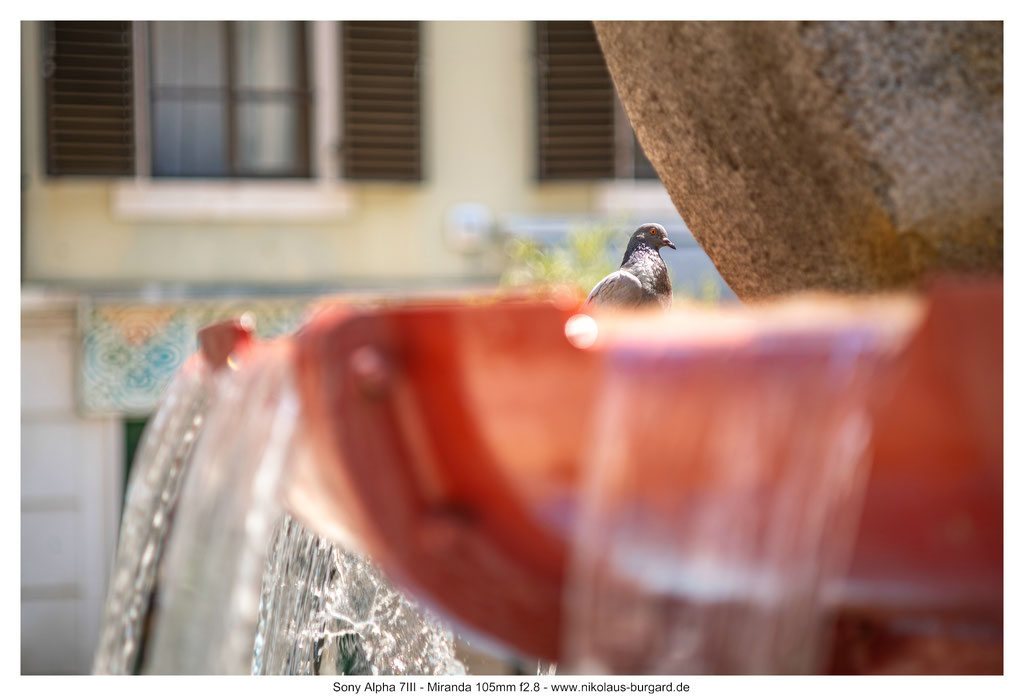
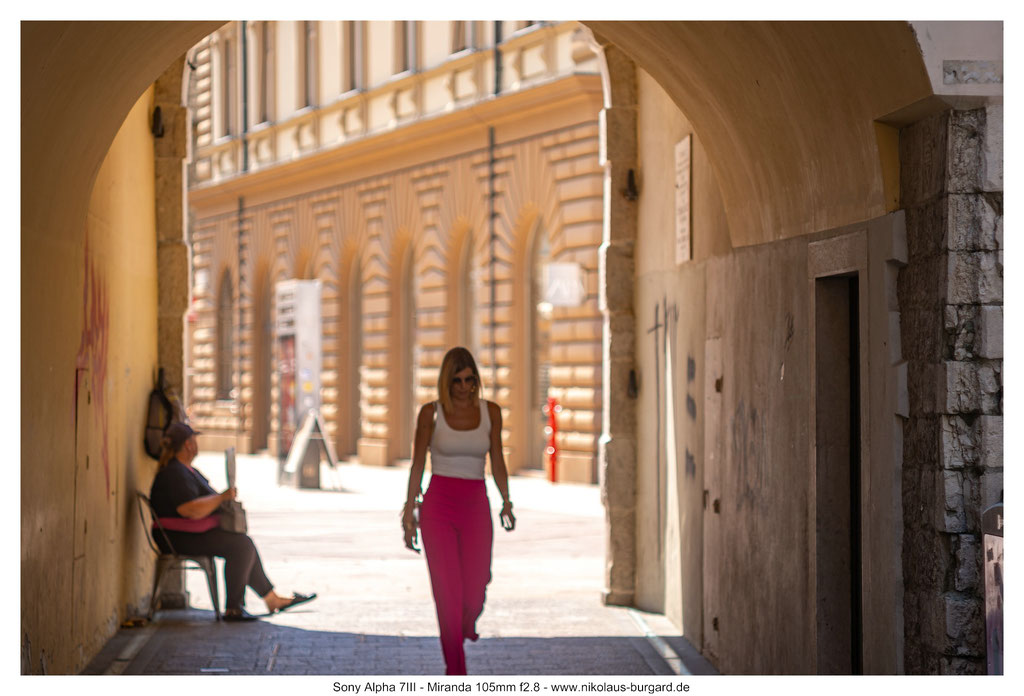
Über 35 Grad Celsius sind auch in Nordkroatien nicht alltäglich, und so wurde es wirklich ein heißer Tag im schönen Rijeka für uns. Die Stadt hat viel zu bieten: Shoppingmöglichkeiten für meine Damen, währenddessen ich mir die Zeit nahm, die Innenstadt fotografischzu erkunden.
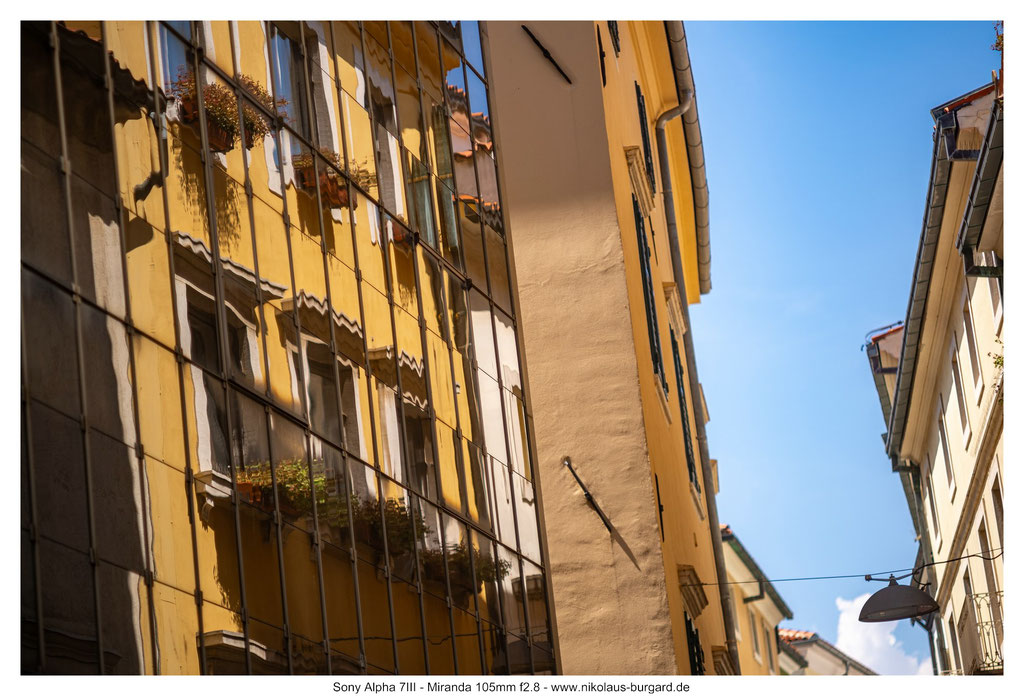
Das Miranda überzeugt mich mit seinem wunderschön pastelligen Rendering der Hintergründe und Farben in solchen oft harschen Lichtsituationen, auch die Schärfe passt ab Offenblende.
Over 35 degrees Celsius are not commonplace in northern Croatia either, and so it really became a hot day in the beautiful Rijeka for us. The city has a lot to
offer: shopping opportunities for my ladies, during which I took the time to explore the city center photographically.
The Miranda convinces me with its beautifully pastel rendering of the backgrounds and colors in such often harsh light situations, also the sharpness fits from
wide open.











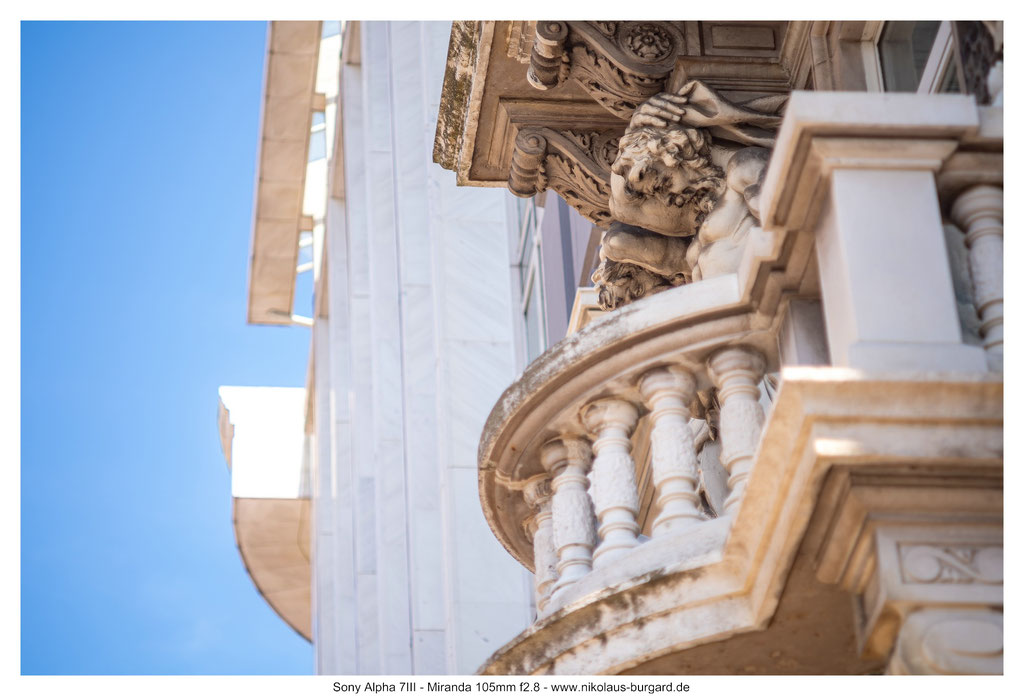
Verzeichnung / Distortion
Es gibt nur eine leichte kissenförmige Verzeichnung,
selbst in diesem Testbild kaum wahrnehmbar.
Ich kann mir kaum eine Situation vorstellen, wo diese Verzeichnung einer Korrektur bedarf.
Keines der Bilder in diesem Test ist auf Verzeichnung korrigiert.
There is only a slight cushion-shaped distortion,
hardly noticeable even in this test image.
I can hardly imagine a situation where this distortion needs a correction.
None of the images in this test is corrected for distortion.

People & Portraits
Hier ist das Miranda 105mm f2.8 ganz in "seinem Element".
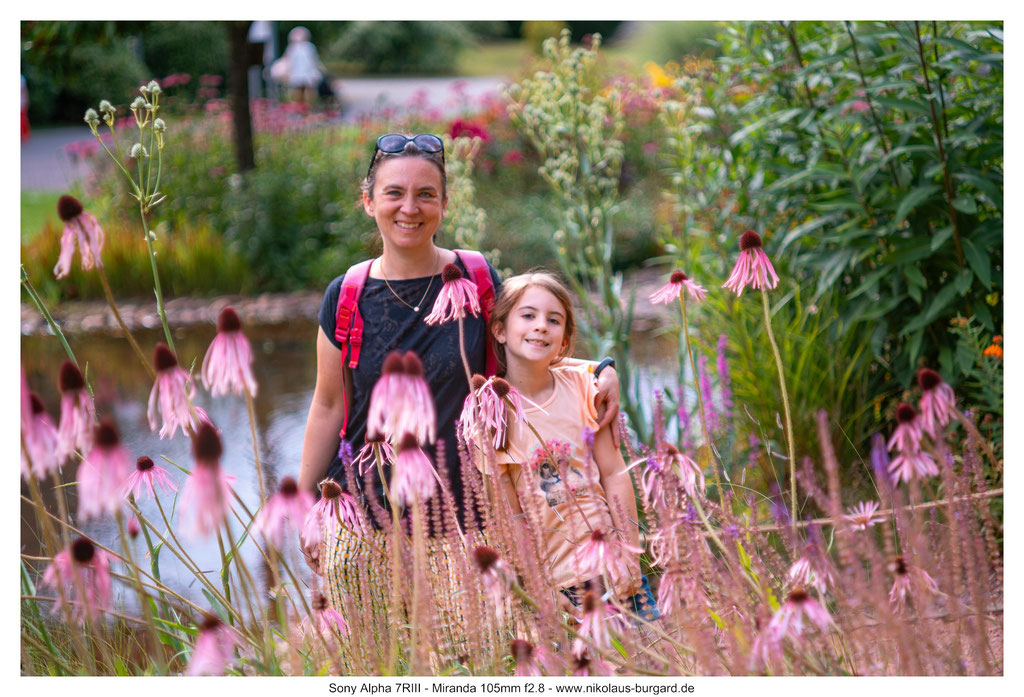
Die gute Grundschärfe bei Offenblende (ohne dabei zu klinisch zu sein) in Kombination mit den sanften, nicht beißenden Kontrasten und dem weichen Hintergrundrendering machen es zu einem sehr schönen Objektiv für die Fotografie von Menschen.
Egal ob Ganzkörper oder Halbkörperportraits, die Bilder wirken harmonisch, und dies auch bei schwierigen Hintergründen.
Here the Miranda 105mm f2.8 is entirely in "its element."
The good basic sharpness of the open aperture (without being too clinical) in combination with the gentle, non-biting contrasts and the soft background rendering
make it a very beautiful lens for the photography of people.
Whether full body or half-body portraits, the images look harmonious, and this even in difficult backgrounds.


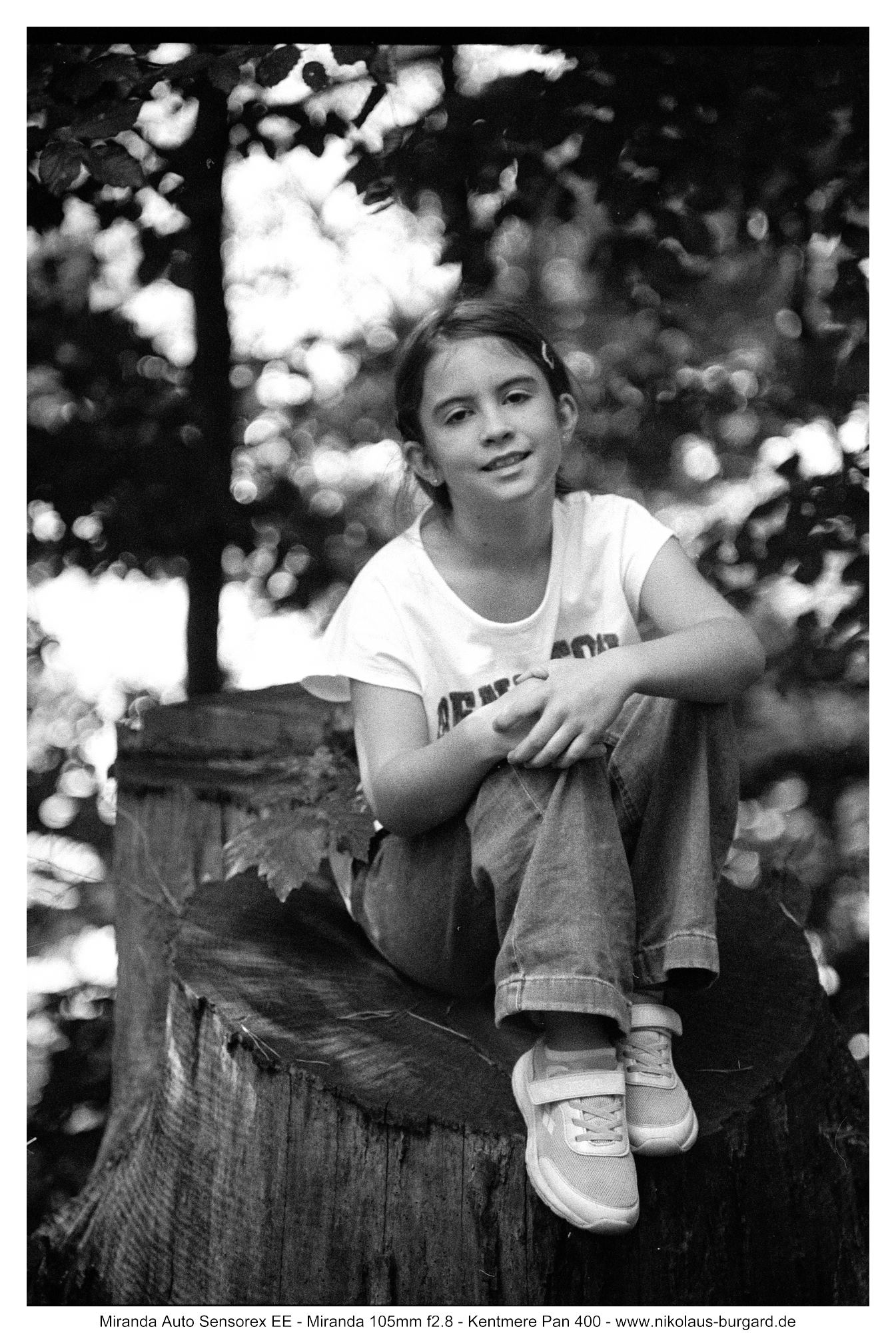
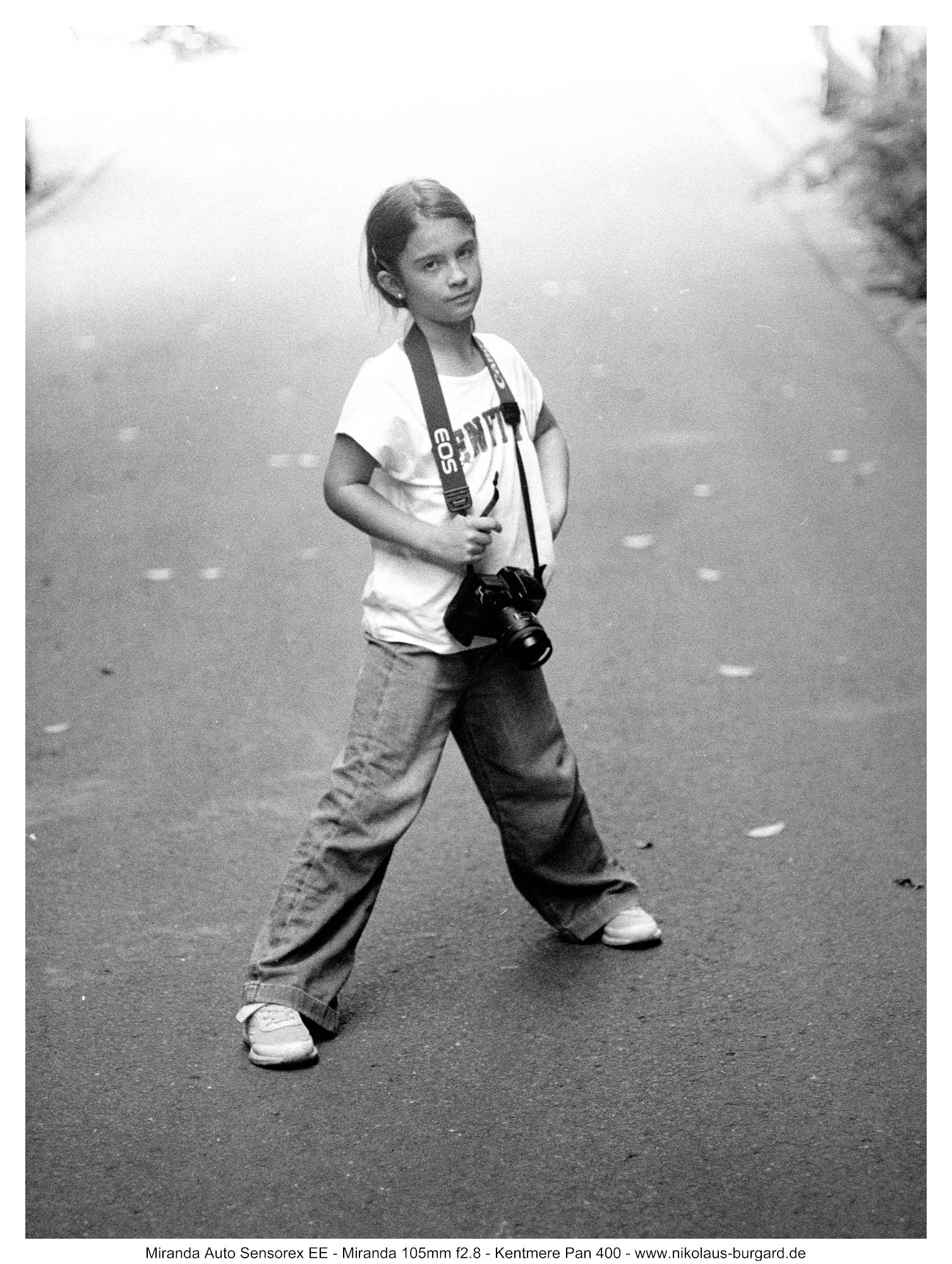
Die folgende Serie ist mit der Miranda Auto-Sensorex EE auf Kentmere 400 Schwarz-Weiß-Film entstanden.
Hier verbinden sich die weichen Renderingeigenschaften auch noch sanft mt dem deutlichen Filmkorn und die Bilder erhalten ihren ganz eigenen, klassischen Zauber:
The following series was created with the Miranda Auto-Sensorex EE on Kentmere 400 black and white film.
Here, the soft rendering properties also gently combine with the clear film grain and the images receive their very own, classic magic:



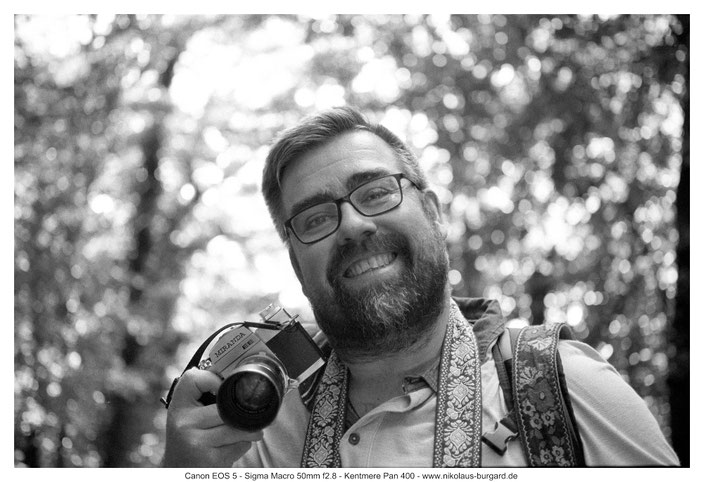
Das folgende Bild ist unmittelbar nach dem vorherghenden entstanden:
Es ist der "Gegenschuß" meiner Tochter mit der Canon EOS 5 und dem Sigma 50mm f2.8 Macro ebenfalls auf Kentmere 400 Schwarz-Weiß-Film und zeigt mich mit der Miranda-Kamera und dem Objekiv :-)
The following picture was taken immediately after the previous one:
It's my daughter's "countershot" with the Canon EOS 5 and the Sigma 50mm f2.8 Macro also on Kentmere 400 black-and-white film and shows me with the Miranda
camera and the test lens :-)
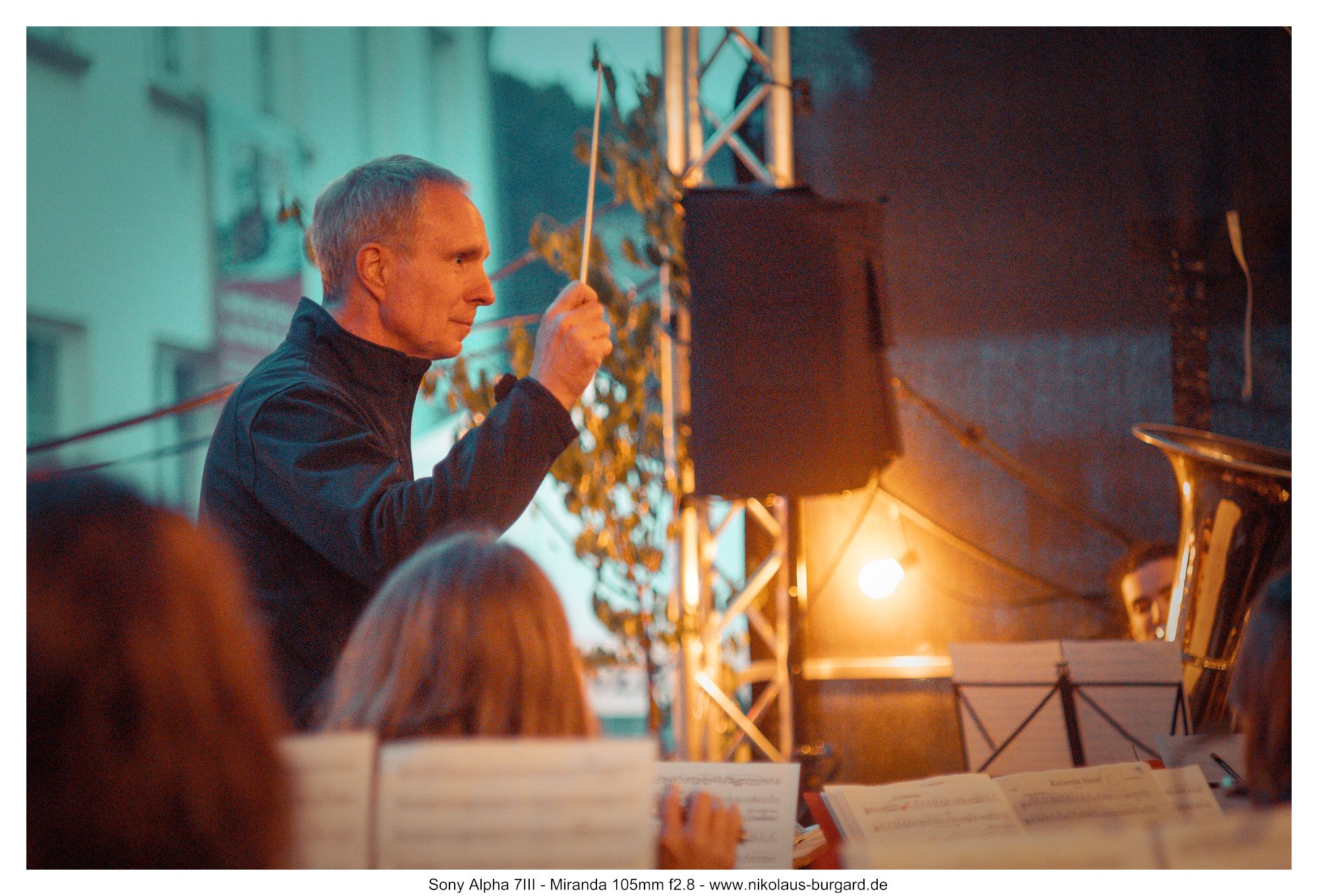
Bildserie / Picture Series: Wind Music
Sommer, Open Air mit Wind Music, gutes Essen, kühle Getränke - was braucht es mehr :-)
Natürlich schöne Bilder davon - und die liefert das Miranda auch hier.
Aufgrund der sehr wechselhaften LED-Beleuchtung habe ich mich bei dieser Serie für eine stärkere Bearbeitung der Farben entschieden, als ich das sonst mache.
Summer, open air with wind music, good food, cool drinks - what more does it need :-)
Of course beautiful pictures of it - and that's what the Miranda delivers here, too.
Due to the very changeable LED lighting, I have decided in this series for a stronger processing of the colors than I usually do.




Farbfehler / Chromatic Aberrations
Auf Farbfehler ist das Miranda 100mm f2.8 ganz ordentlich korrigiert.
Wie in den Bildern zur Beurteilung der Bildschärfe bereits gesagt und gezeigt gibt es sichtbare laterale chromatische Aberrationen, die aber per 1-Click-Lösung in der Bildbearbeitung komplett entfernt werden können .
Durchaus überraschend ist für mich aber die meist gute Korrektur auf longitudinale chromatische Aberrationen. Natürlich findet man Spuren davon in Vergrößerungen - jedoch selten sind diese in Gesamtbildern auffällig, wie auch das folgende Testbild mit Vergrößerungen von vor und hinter der Schärfeebene zeigt:
The Miranda 100mm f2.8 is properly corrected for color errors.
As already stated and shown in the images for the assessment of image sharpness, there are visible lateral chromatic aberrations, which can be completely removed
via a 1-click solution in image editing.
For me, however, the usually good correction to longitudinal chromatic aberrations is quite surprising. Of course, traces of it can be found in magnifications -
but rarely are these striking in overall images, as the following test image with magnifications of in front and behind the field level also shows:


Nur bei wirklich extremen Kontrastsituationen sind diese loCAs auch in den Gesamtbildern zu erkennen:
Only in really extreme contrast situations can these loCAs also be recognized in the full pictures:

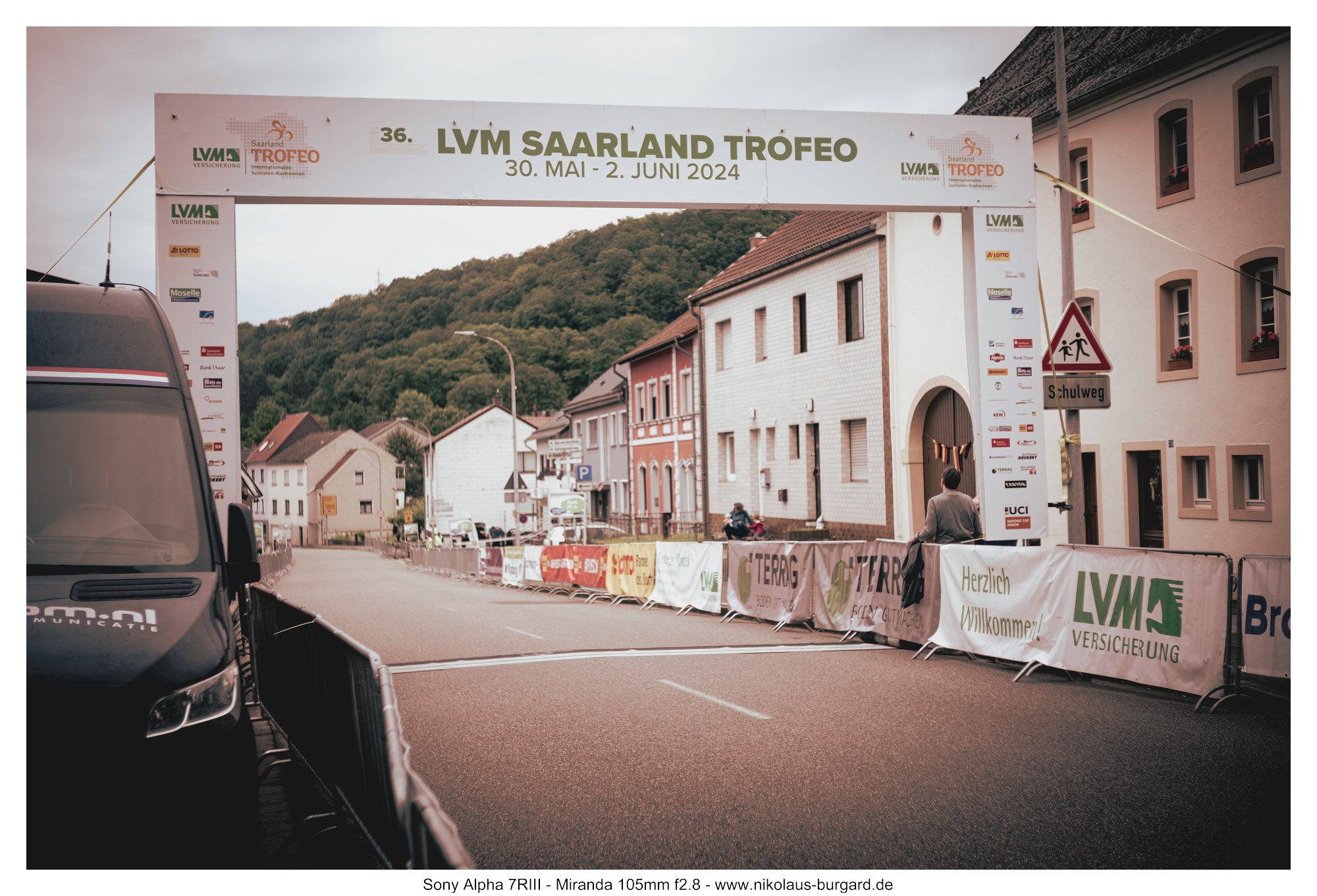
Bildserie / Picture Series: Saarland-Trofeo
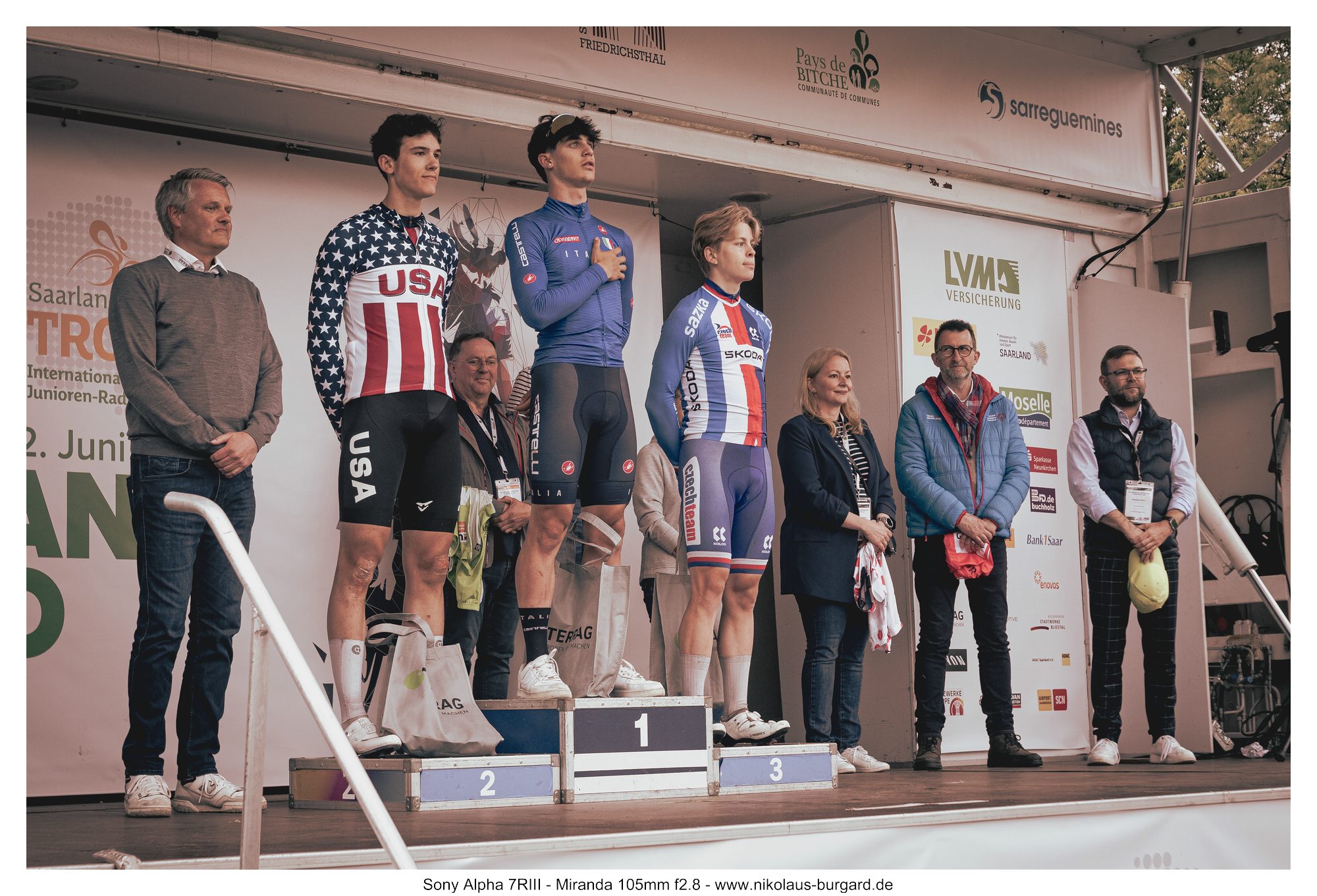
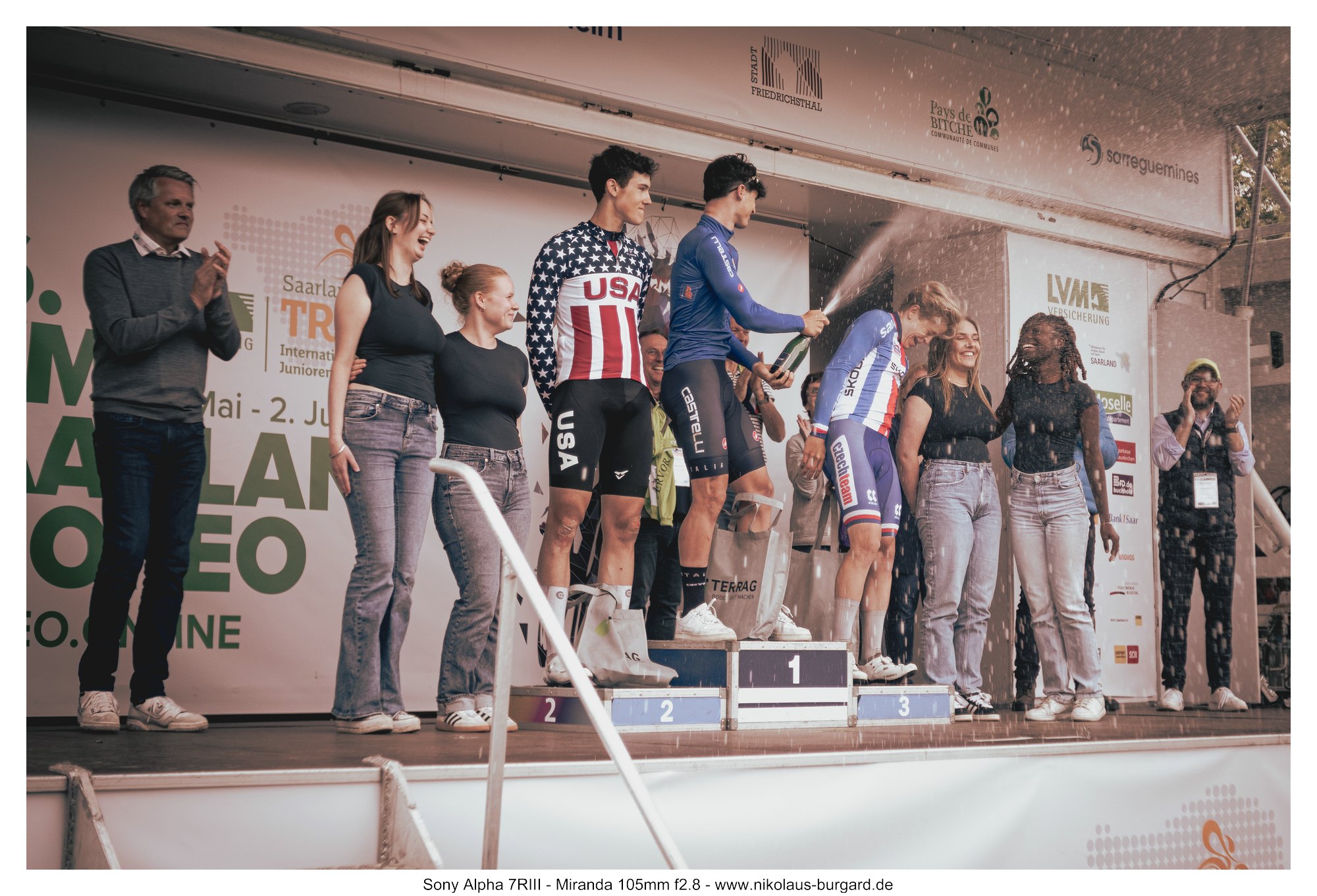
Die Saarland-Trofeo ist einer der etabliertesten Nachwuchs-Radwettbewerbe Europas.
Die Mehrtagesveranstaltung hat immer unterschiedliche Etapppenziele,
und so war auch unser kleiner Ort im letzten Jahr Zielort mit der Siegerehrung und allem, was dazu gehört.
The Saarland-Trofeo is one of the most established young cycling competitions in Europe.
The multi-day event always has different milestones,
and so was our small town last year's destination with the award ceremony and everything that goes with it.




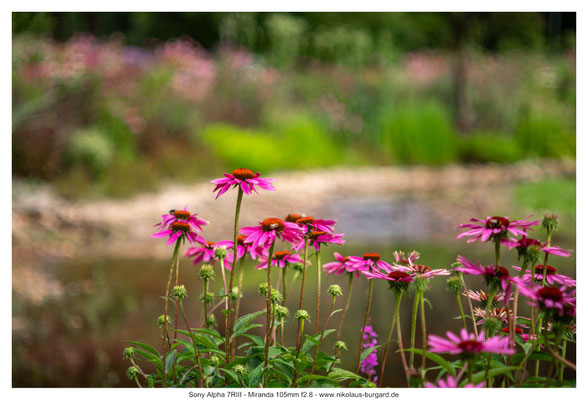
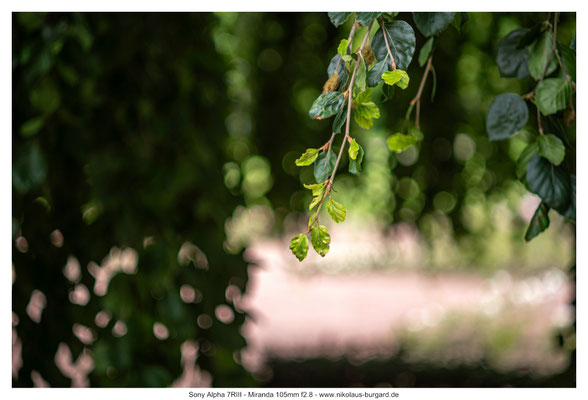
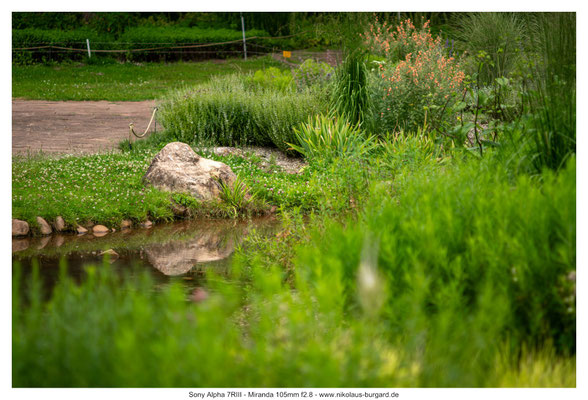
Bildserie: Ein Nachmittag im "Deutsch-Französischen Garten" / An afternoon in "Franco-German-Garden"
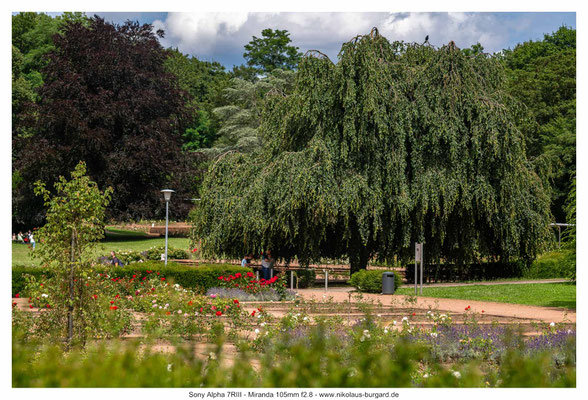
Der "Deutsch-Französischer Garten" ist eine schön gestaltete Parkanlage in Saarbrücken,
die zu jeder Jahreszeit zu einem Besuch einlädt.
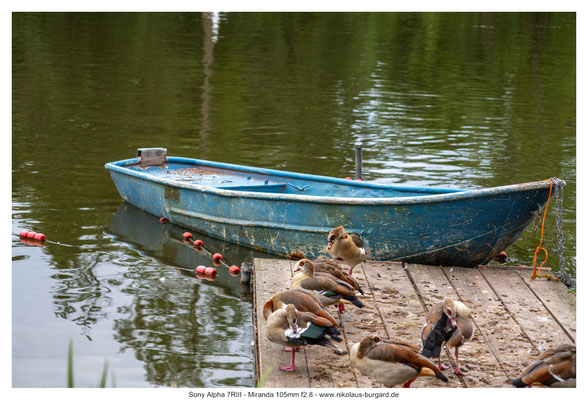
Flora und Fauna bieten allerhand Motive und der eingebettete See lädt zu einer Umrundung (oder zum Tretbootfahren) ein.
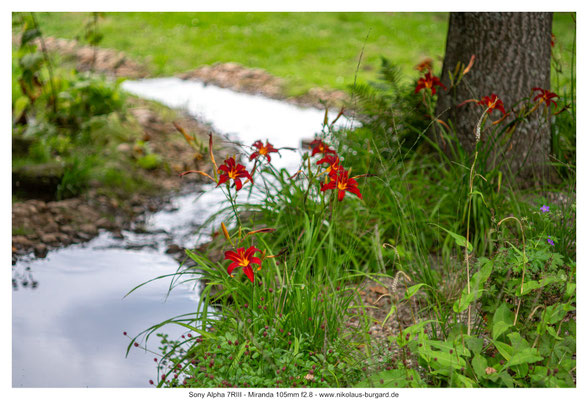
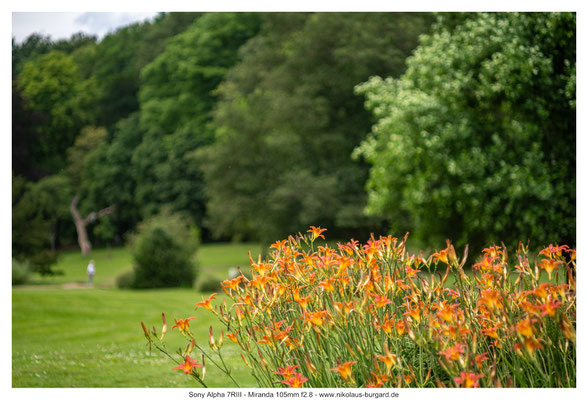
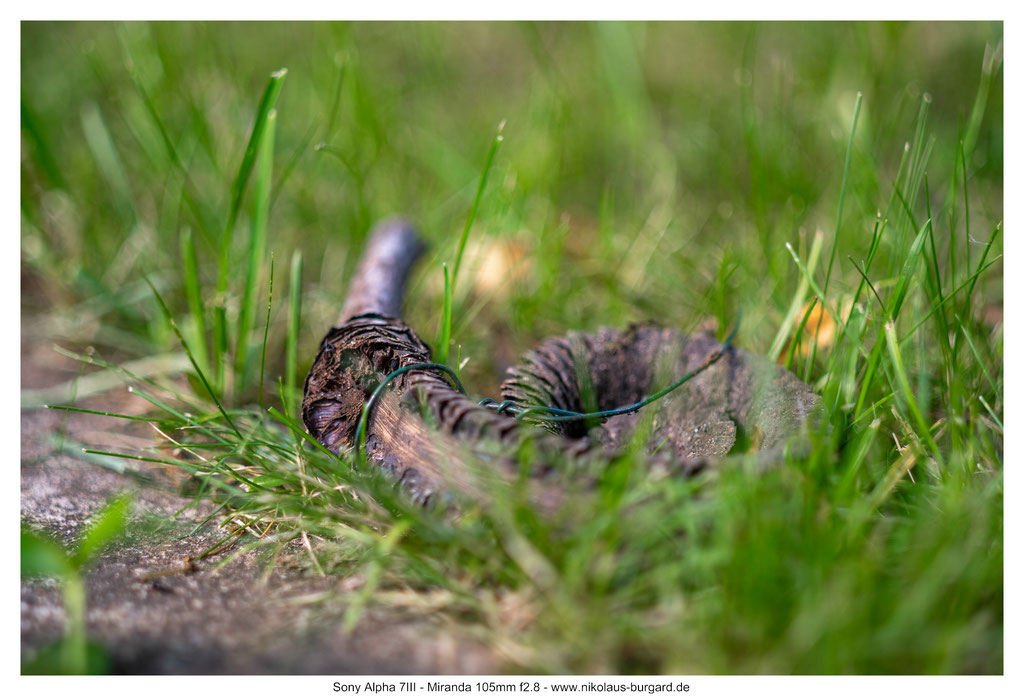
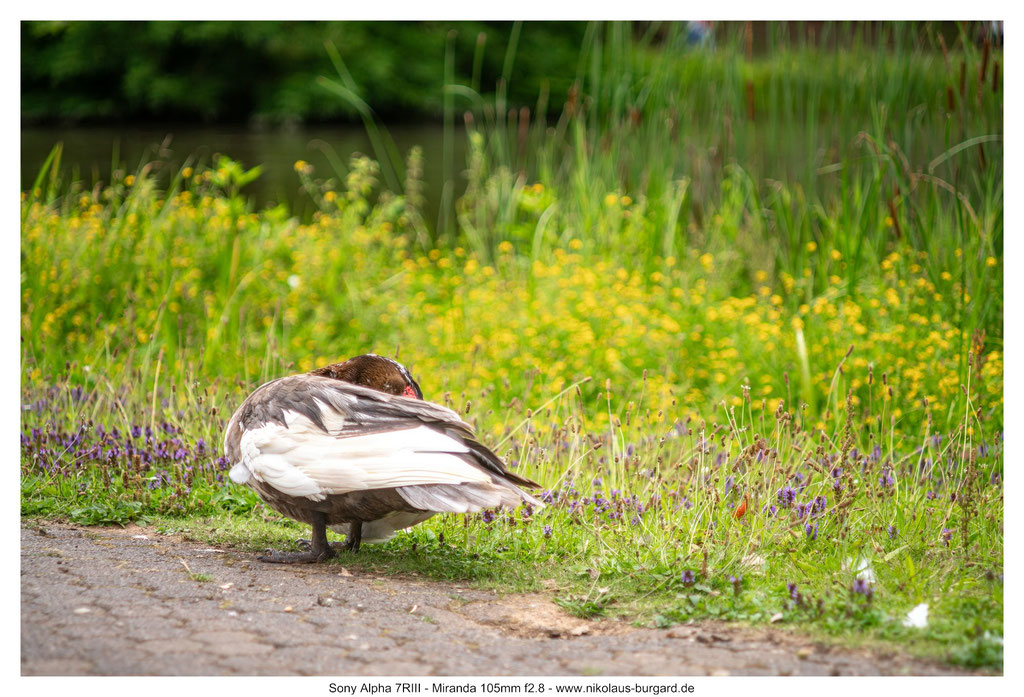
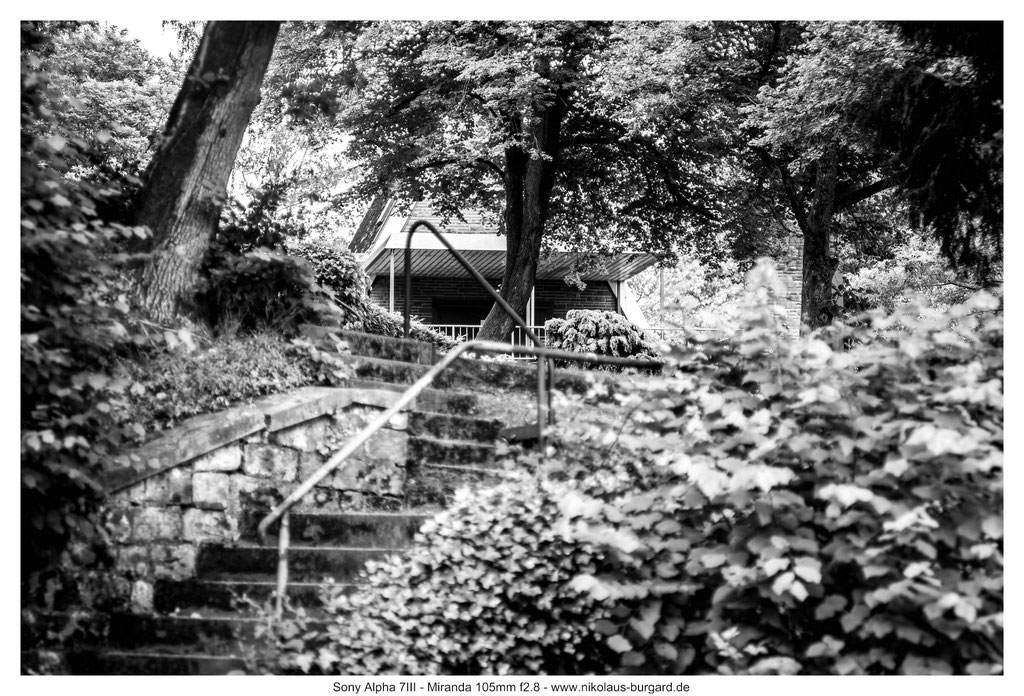
Gerade im Nahbereich überzeugt mich das Miranda. Viele Details bei gut durchgezeichneten dunklen Bildbereichen machen das Rendering so anders als das moderner Objektive. Ich mag das sehr.
The "German-French Garden" is a beautifully designed public park in Saarbrücken,
which invites you to visit at any time of the year.
Flora and fauna offer all sorts of motifs and the embedded lake invites you to a circumnavigation (or to pedal boating).
Especially in the close motifs, Miranda convinces me. Many details in well-drawn dark image areas make the rendering so different from modern lenses. I
like that very much.






Bildserie analog / Picture Series analogue: "Historische Gasmaschinenzentrale der Grube Heinitz"
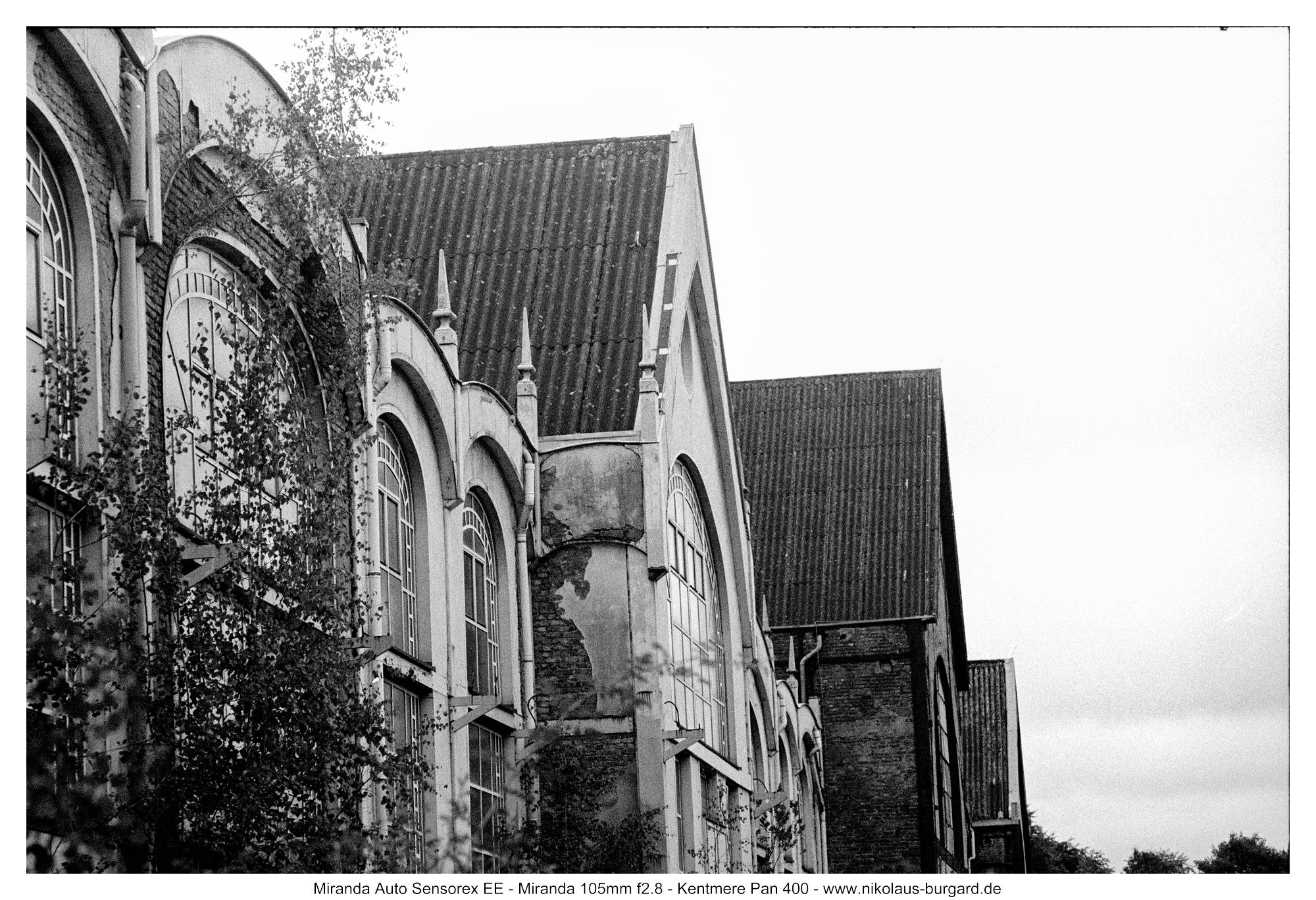
Die "Historische Gasmaschinenzentrale Heinitz" ist eine denkmalgeschützte Industriehalle im Jugendstil. Einst zum Bergwerk Heinitz gehörend, verfällt sie seit Jahrzehnten trotz Denkmalschutz und ihrer architektonisch wunderbaren Konstruktion.
Früher konnte man die Halle noch umrunden und so auch an die noch schönere Rückseite gelangen, leider ist dies mittlerweile aufgrund der großzügigen Absperrungen nicht mehr möglich, und so wird dieses Denkmal immer weiter in Vergessenheit geraten.
Passend dazu habe ich den aktuellen "Ist-Zustand" in der folgenden Serie mit der analogen Miranda Sensorex EE auf Kentmere 400 Schwarz-Weiß-Film dokumentiert.
The "Historische Gasmaschinenzentrale Heinitz" is a listed industrial hall in Art Nouveau style. Once part of the Heinitz mine, it has been decaying for decades
despite the protection of monuments and its architecturally wonderful construction.
In the past, you could still circumnavigate the hall and thus also get to the even more beautiful backside, unfortunately this is no longer possible due to the
generous barriers, and so this monument will soon be forgotten.
In addition, I have documented the current "actual state" in the following series with the analog Miranda Sensorex EE on Kentmere 400 black and white
film.




Verhalten im Gegenlicht / Flares and Backlight
Wie alle alten Objektive mit einer nur einfachen Vergütung ist auch das Miranda 105mm f2.8 im Gegenlicht sehr empfindlich.
Es empfiehlt sich jederzeit die Nutzung einer ausreichend langen Gegenlichtblende (oder sogar 2 übereinandergeschraubt).
Schwierig ist dies bei diesem Objektiv aufgrund des Filterdurchmessers von nur 46mm. Es gibt jedoch bei den großen Handelsplattformen für wenige Euro Step-Up-Ringe von 46mm auf 49mm, die dann den Einsatz von Gegenlichtblenden (oder Filtern) dieses gängigen Durchmessers ermöglichen.
Like all old lenses with single coating, the Miranda 105mm f2.8 in the backlight is very sensitive.
It is recommended to use a sufficiently long lens hood (or even 2 screwed over each other) at any time.
This is difficult with this lens due to the filter diameter of only 46mm. However, there are step-up rings of 46mm to 49mm on the large trading platforms for a few euros, which then allow the use of lens hoods (or filters) of this common diameter.
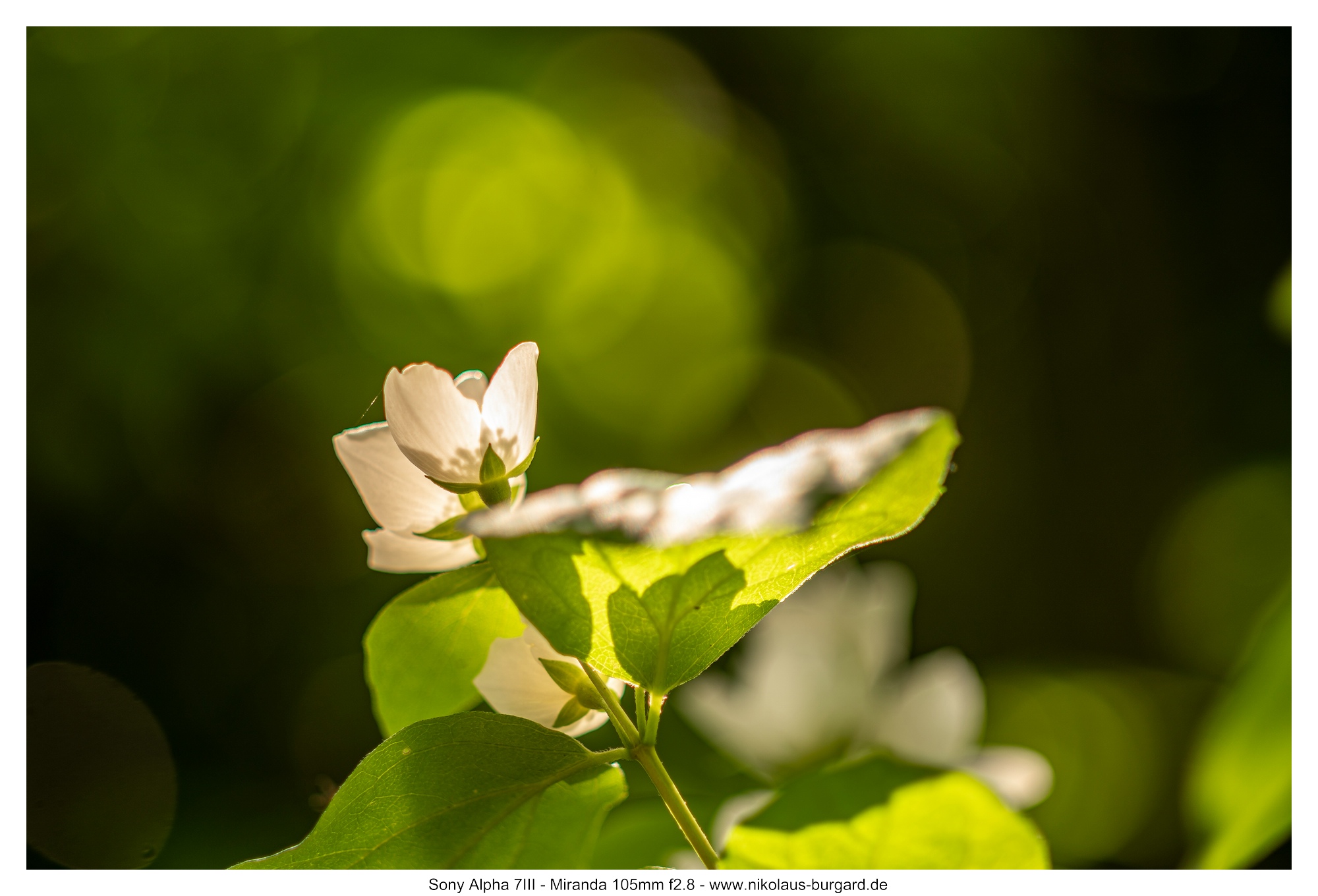
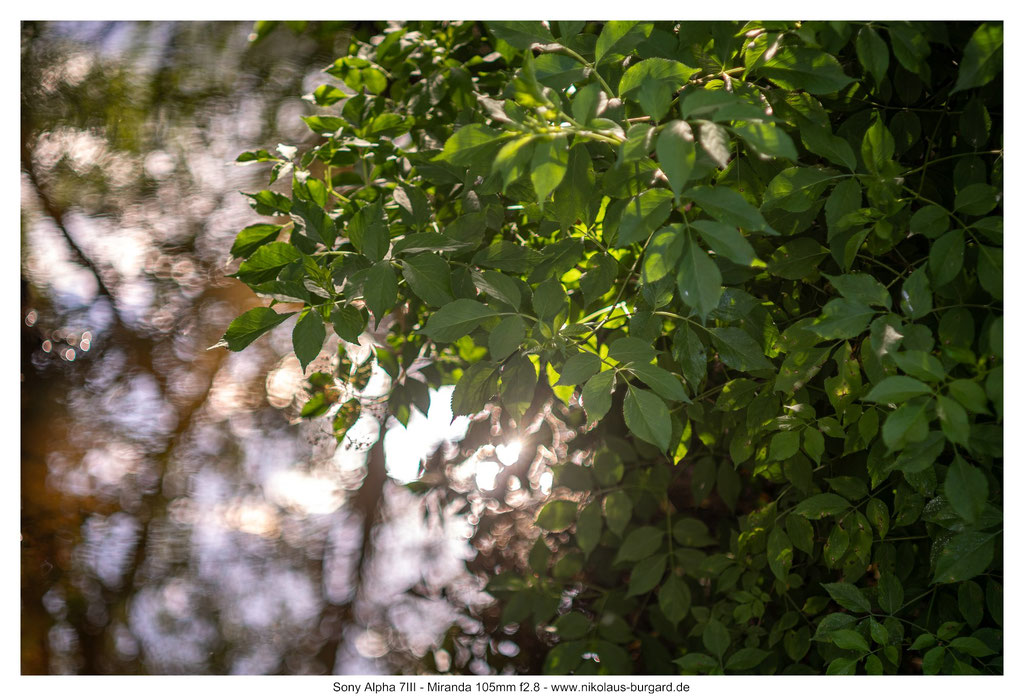
Bildserie/ /Picture Series: Flowers and Nature
Wie in der Bildserie aus dem Deutsch-Französischen Garten schon geschrieben,
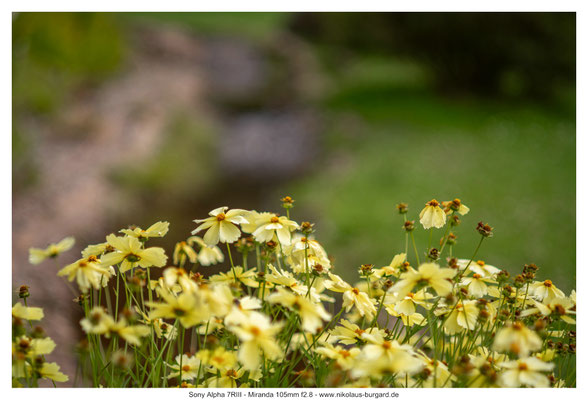
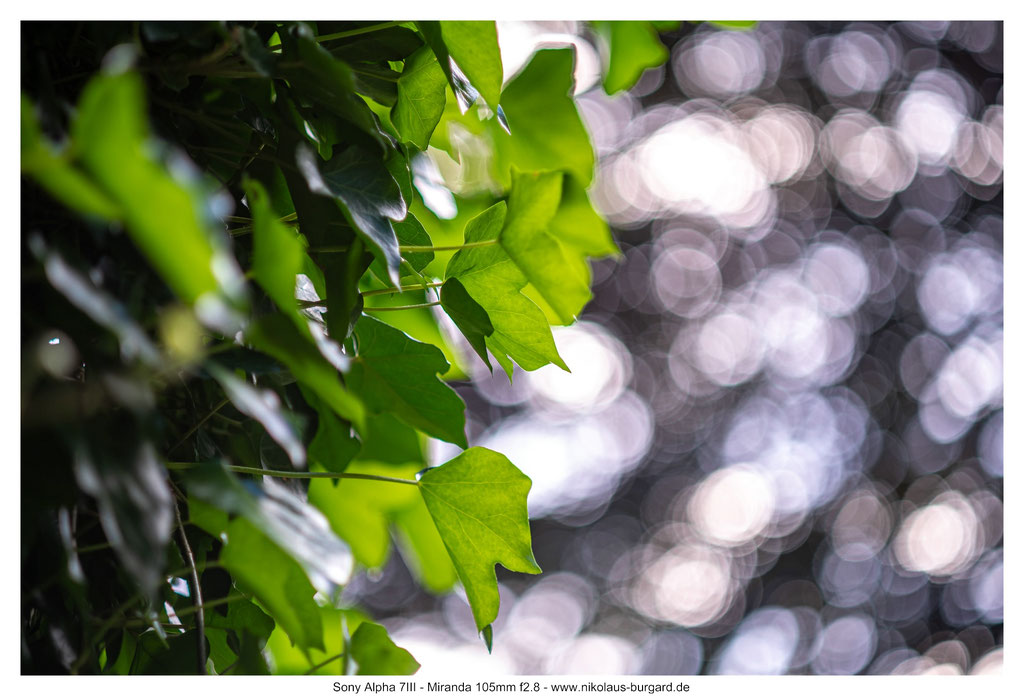
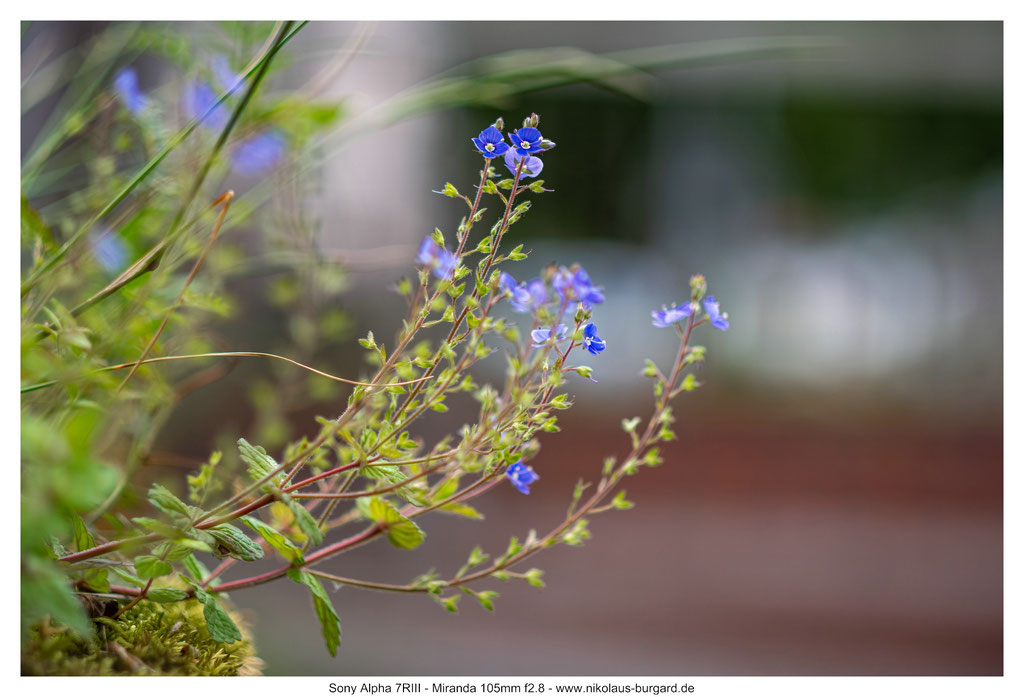
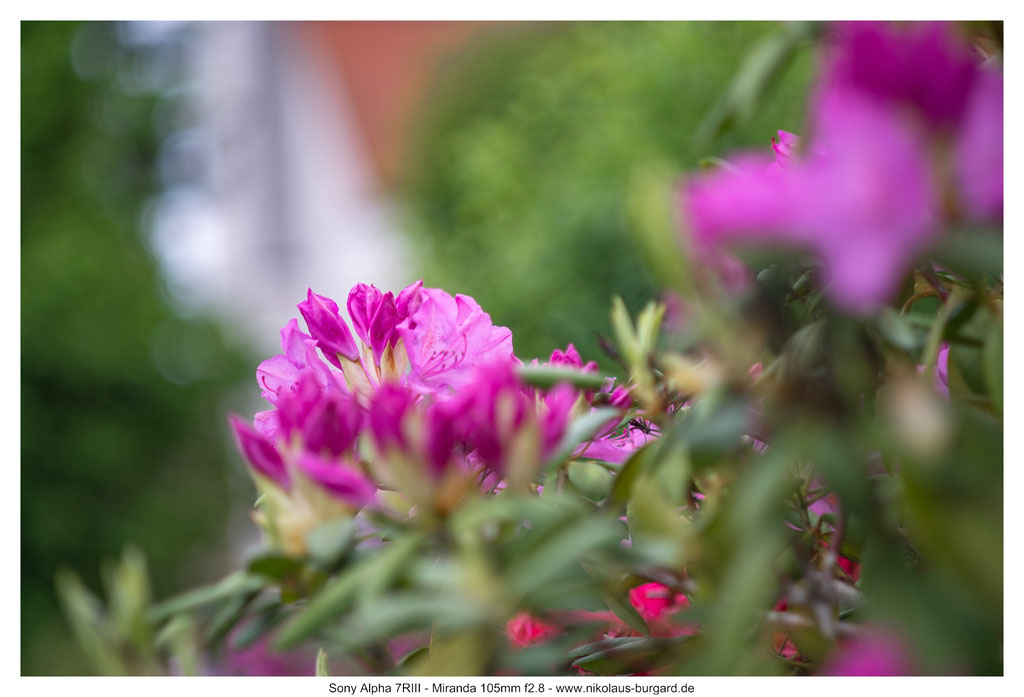
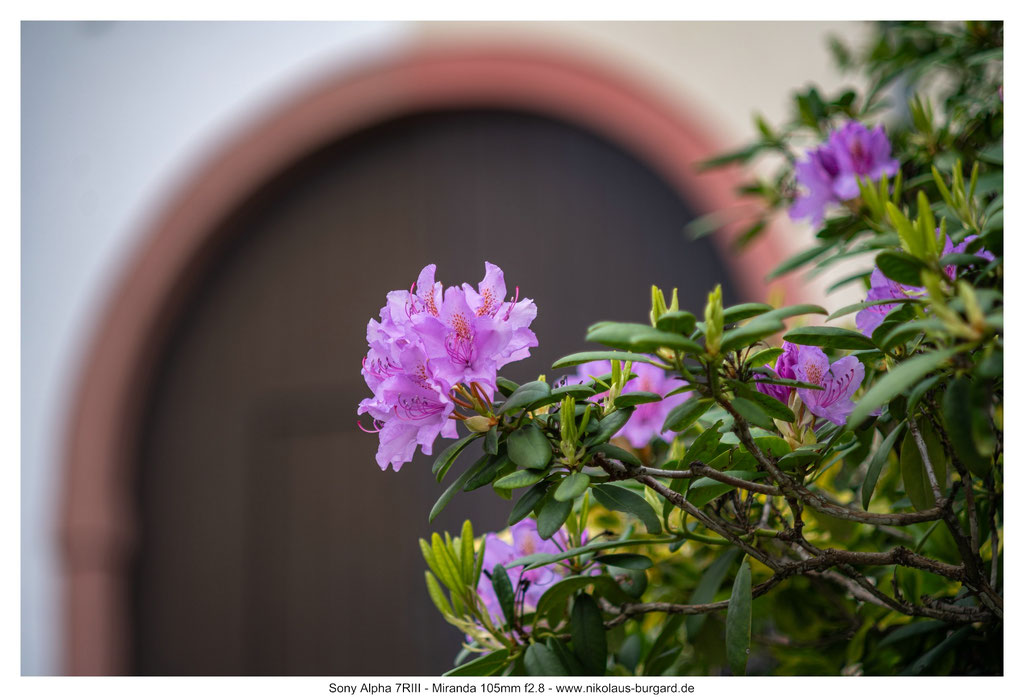
gefällt mir des Miranda vor allem aufgrund seines samtigen Renderings und Kontrastverhaltens.
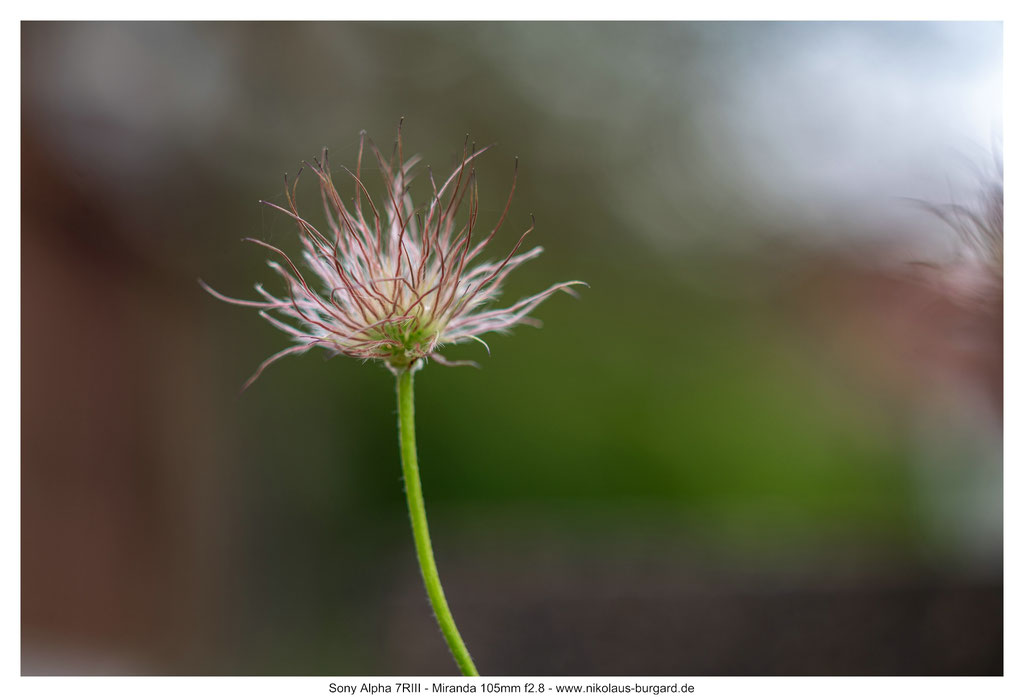
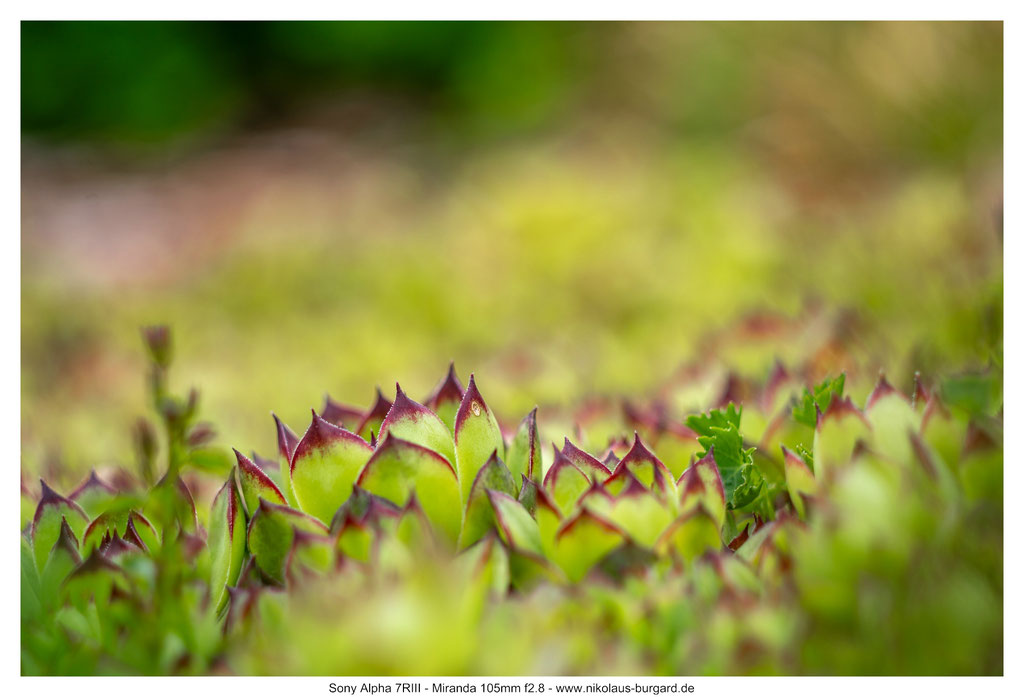
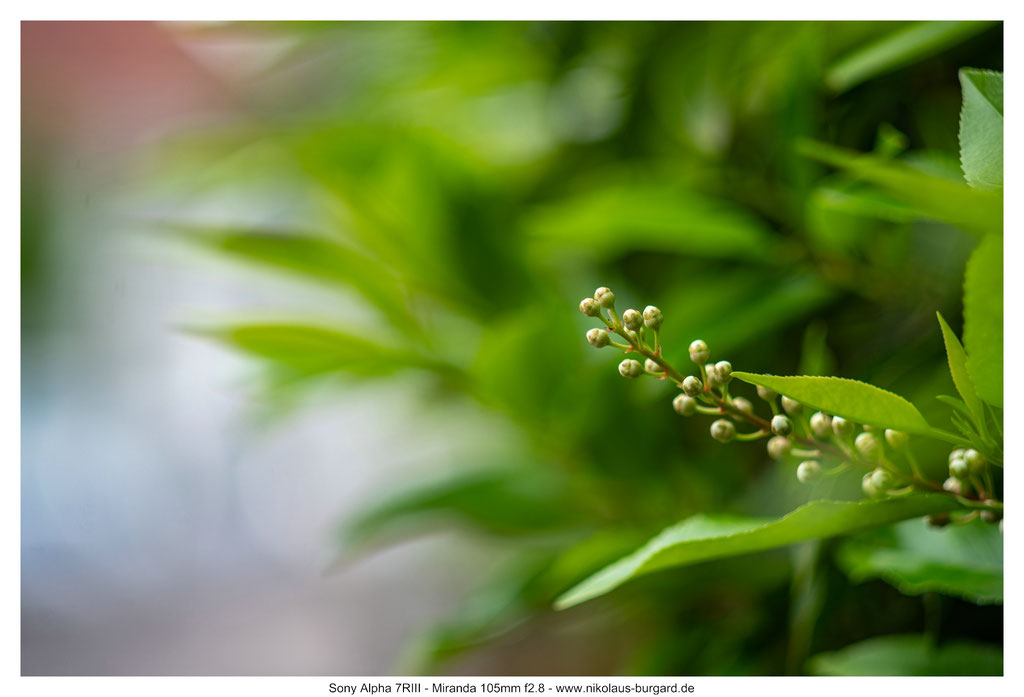
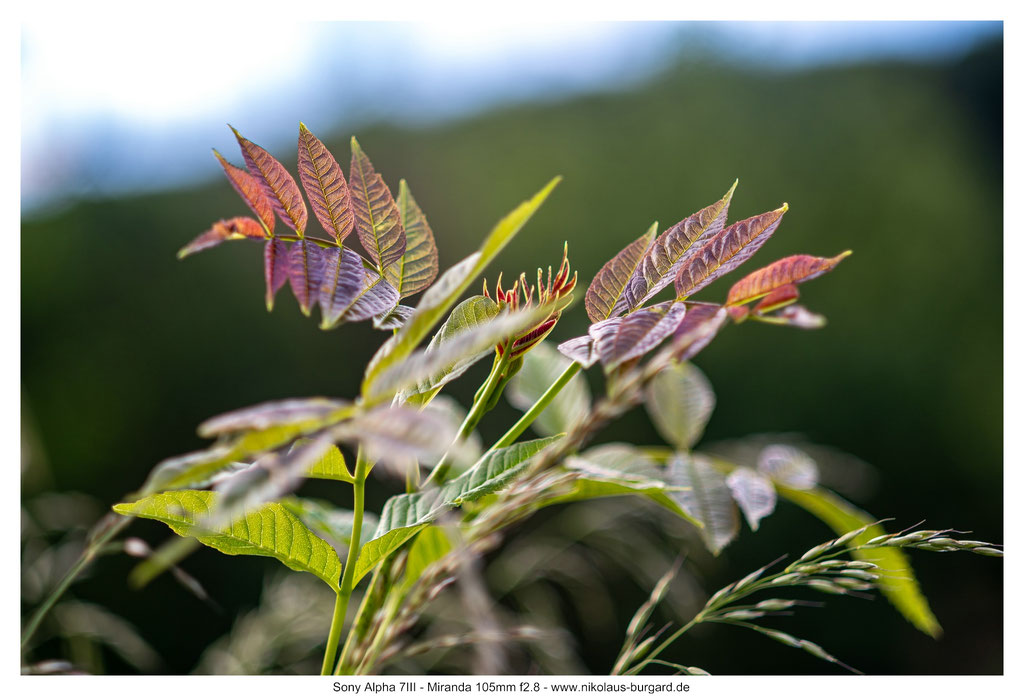
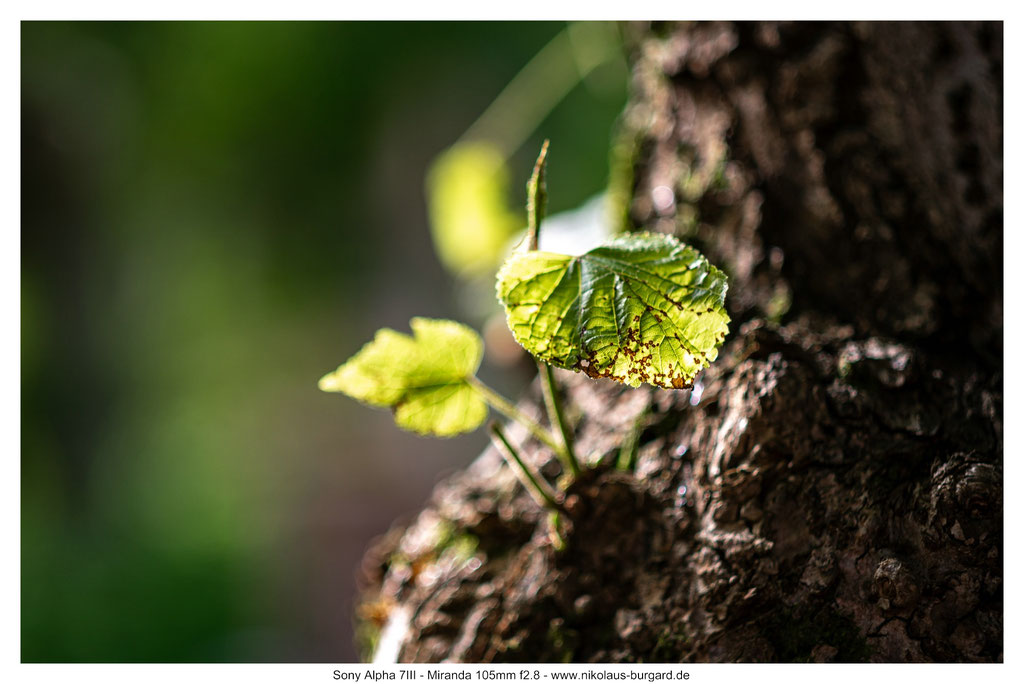
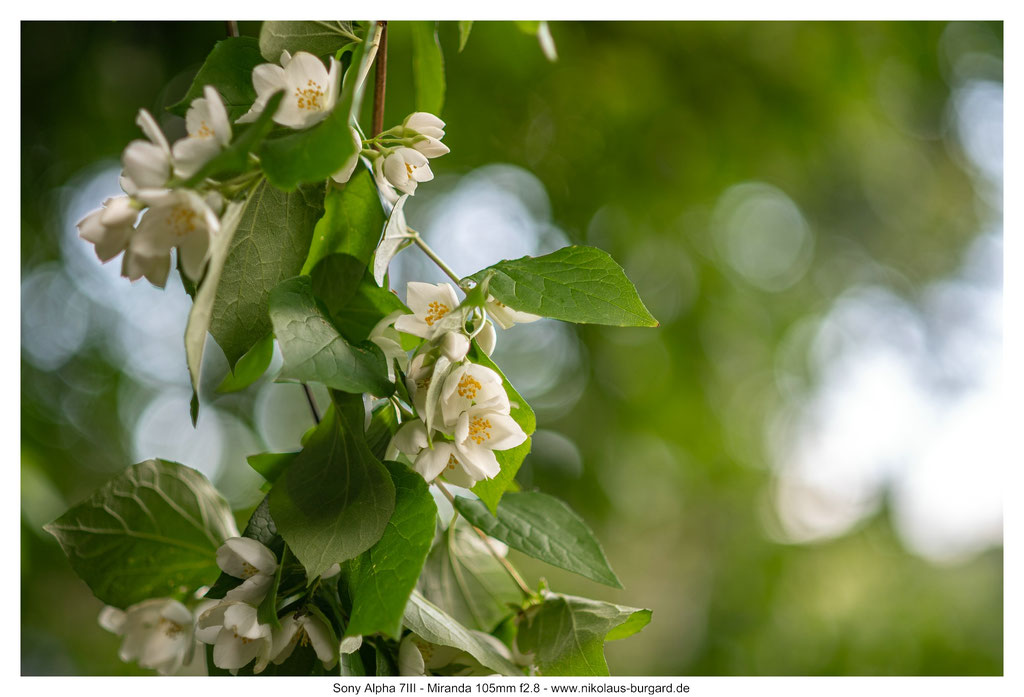
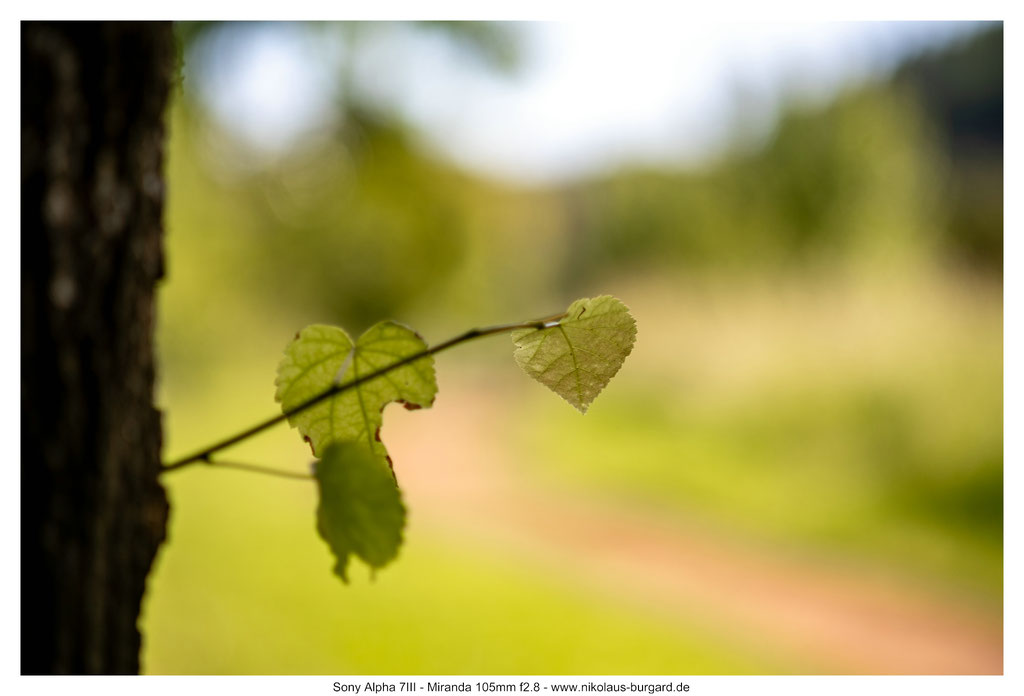
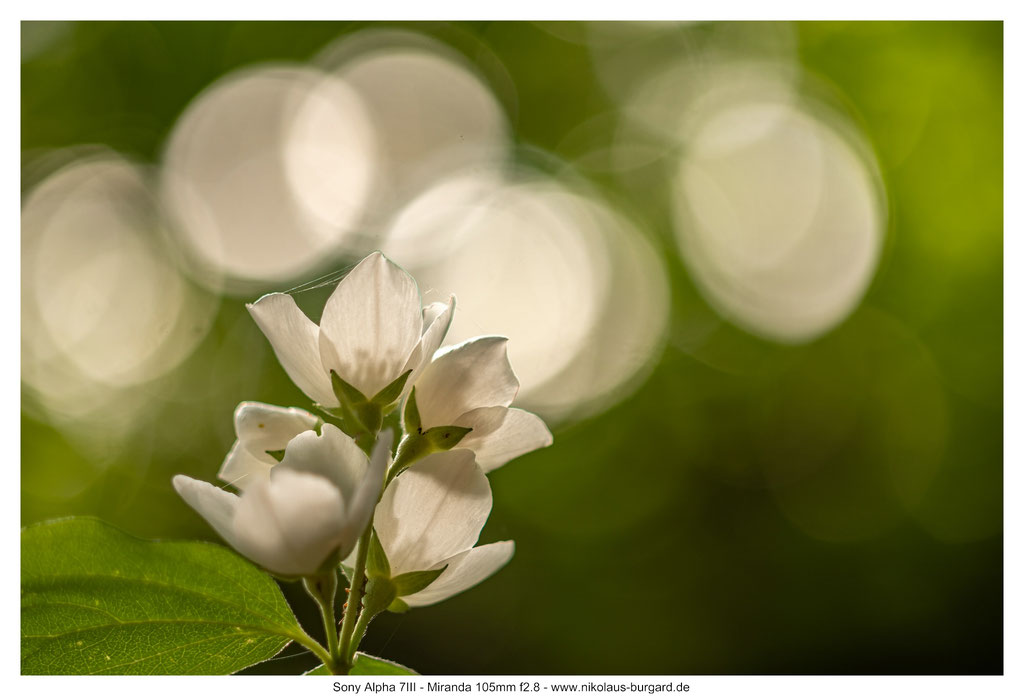
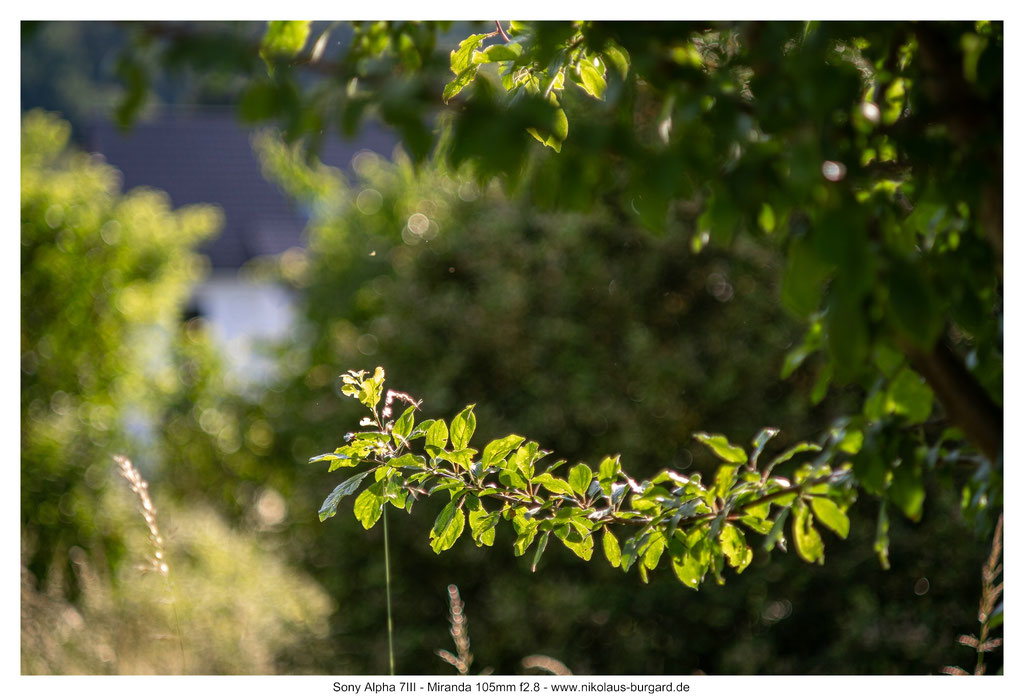
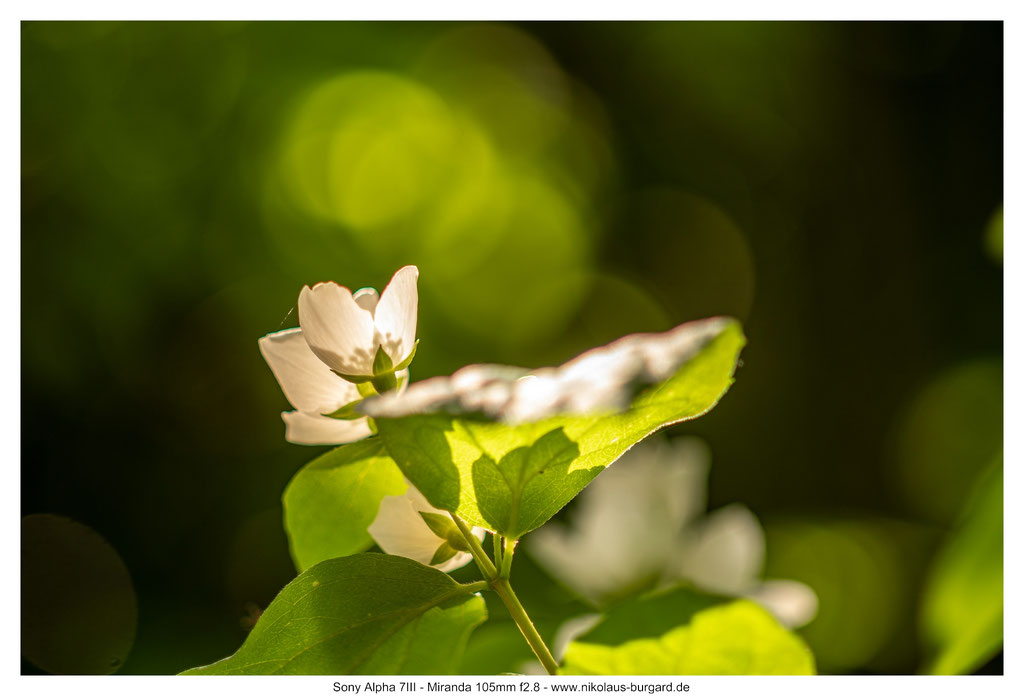
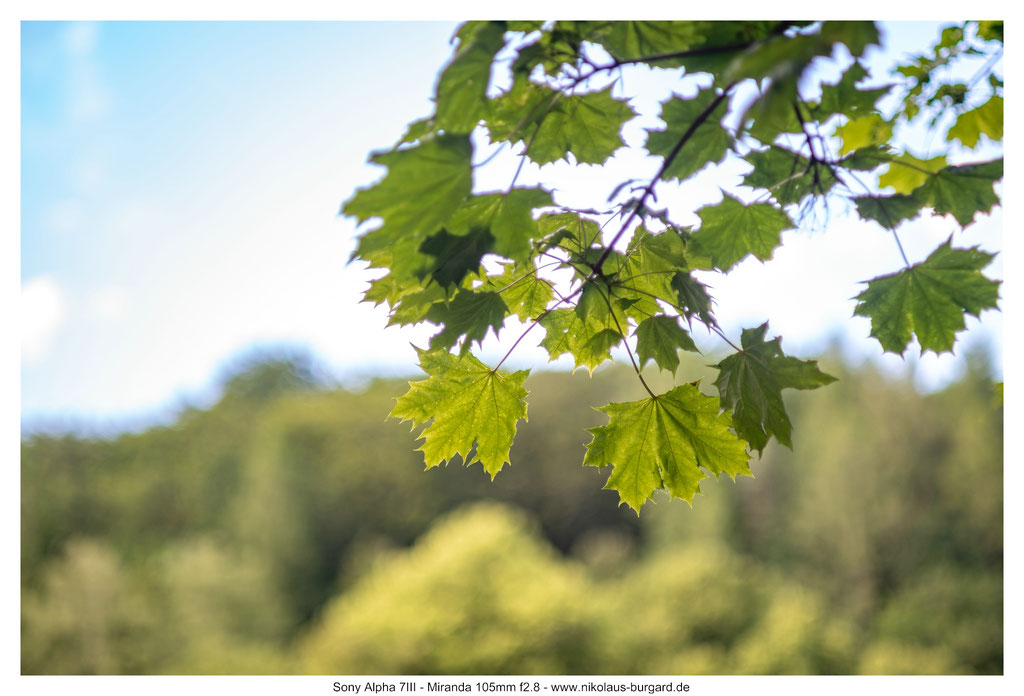
Für mich ist es deshalb ideal, um damit in der Natur mit der Kamera "zu malen", man kann damit fast "Farbsinfonien" erschaffen.
As already written in the series of pictures from the Franco-German Garden,
I like the Miranda mainly because of its velvety rendering and contrasting behavior.
For me, it is therefore ideal to "paint" with the camera in nature, you can almost create "color symphonies" with it.









Mein Fazit / Conclusion:
Die Miranda-Kameras und vor allem Objektive sind immer noch ziemlich "unbekanntes Land" ,
es gibt einfach kaum Tests oder Vorstellungen dieser Objektive.
Nach dem bereits auf meiner Seite vorgestellten Miranda 50mm f1.4 in der 8-Elemente Version
ist dieses leichte Tele/Portrait-Objektiv Miranda 105mm f2.8 das zweite in meinen Augen sehr interessante und lohnenswerte Objektiv aus der Objektivfamilie.
Zuerst wie immer ein kompakter Überblick über die objektiv messbaren Leistungen:
Die Bildschärfe ist im erweiterten Zentrum bereits bei Offenblende gut, ab f4 sehr gut.
Ab f5.6 ist es auch randscharf. Für perfekte Schärfe in den äußersten Bildecken muss man auf f8 abblenden.
Die Vignette ist bei Offenblende deutlich sichtbar, spätestens ab f5.6 verschwunden.
Es gibt kaum sichtbare Verzeichnung und nur leicht wahrnehmbare laterale chromatische Aberrationen. Die longitudinalen chromatischen Aberrationen machen sich in Form von Bokeh-Fringing bei Offenblende von Zeit zu Zeit bemerkbar.
Einziger größerer Schwachpunkt ist das Gegenlichtverhalten. Egal ob bei Offenblende oder deutlich abgeblendet, sobald die Sonne am Rand oder innerhalb des Sichtfeldes ist, gibt es einen deutlichen Kontrastverlust gepaart mit allen möglichen Flares und Ghosts.
Mir hat das Fotografieren mit dem Miranda sehr viel Spaß bereitet, der Ritterschlag ist immer, wenn mich ein Objektiv mit in den Urlaub begleiten darf, denn dann hat es vorher schon bewiesen, dass es keine Erinnerungen "zerstören" wird und gut ist.
Es ist ein sehr klassisch abbildendes Objektiv mit guter Schärfe und geringem Randabfall - aber das Kontrastverhalten unterscheidet es drastisch von einem modernen Objektiv. Es gibt fein abgestufte, gut durchzeichnete dunkle Bildbereiche, denen der "Punch" moderner Optiken fehlt.
Was Viele für einen Nachteil halten, gefällt mir sehr gut. Es ergeben sich plastische, pastellhafte Bilder.
Das Bokeh-Rendering ist meist sehr schön weich, aber auch hier gefällt es mir besonders auf Halb-/Ganzkörper-Portrait-Distanz für Portraits.
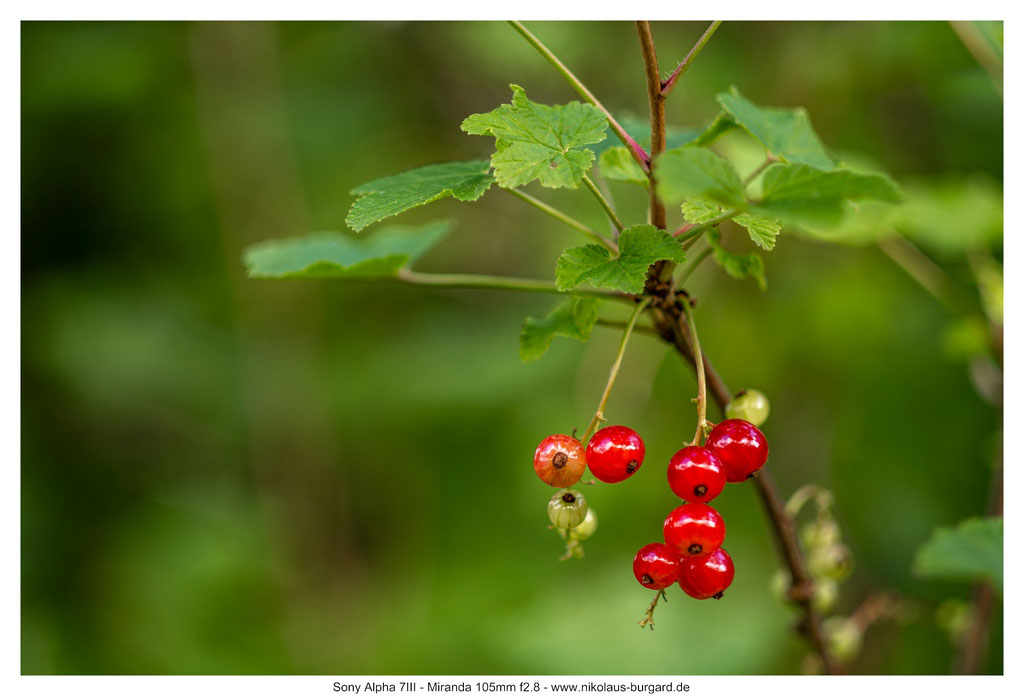
Im erweiterten Makro-Bereich ist das Objektiv ab Offenblende scharf genug - und es hat die Fähigkeit zu malen. Wunderschöne Unschärfebereiche bei sanften, ineinanderfließenden Farben, sowas sieht man selten.
Alles in Allem ist das ein in meinen Augen sehr empfehlenswertes leichtes Teleobjektiv, das einige besondere Renderingeigenschaften aufweist. Problematisch ist die etwas schwierige Adaptierbarkeit an moderne spiegellose Kameras - hier sind die Adapter meist recht teuer. Wie ich aus eigener Erfahrung aber mittlerweile weiß, sind viele der Miranda-Objektive sehr spannend - die Investition in einen solchen Adapter lohnt sich, zumal die Objektive meist recht günstig zu bekommen sind.
Wie immer freue ich mich auf eure Anmerkungen zu Objektiv und Test im Kommentarbereich unterhalb der abschließenden Bildergalerie!
The Miranda cameras and especially lenses are still pretty “unknown land” ,
There are simply hardly any tests or reviews of these lenses.
After the already on my page presented Miranda 50mm f1.4 in the 8-element version
is this light tele/portrait lens Miranda 105mm f2.8 the second very interesting and worthwhile lens from the lens family in my
eyes.
First, as always, a compact overview of the objectively measurable performances:
The image sharpness is good in the extended center already at open aperture, from f4 very good.
From f5.6 it is also sharp. For perfect sharpness in the outermost ceilings, you have to f8 dim on f8.
The vignette is clearly visible at the open aperture, at the latest from f5.6 disappeared.
There is barely visible distortion and only slightly perceptible lateral chromatic aberrations. The longitudinal chromatic aberrations are noticeable
from time to time in the form of bokeh-fringing in the case of open-blind.
The only major weakness is the backlight behavior. Whether with an open aperture or clearly dimmed, as soon as the sun is at the edge or inside the field
of view, there is a significant loss of contrast coupled with all sorts of flares and ghosts.
I enjoyed photographing with the Miranda a lot, the knighthood is always when a lens is allowed to accompany me on holiday, because then it has
already proven before that it will not "destroy" memories and is good.
It is a very classic imaging lens with good sharpness and low edge drop - but the contrast behavior distinguishes it drastically from a modern lens.
There are finely graduated, well-exacred dark image areas that lack the "punch" of modern optics.
What many people think is a disadvantage, I like very much. There are plastic, pastel pictures.
The bokeh rendering is usually very nicely soft, but also here I especially like it at half/full body portrait distance for
portraits.
In the advanced macro range, the lens is sharp enough from open aperture - and it has the ability to paint. Beautiful blur areas with gentle,
interlocking colors, you rarely see that.
All in all, this is a lightweight telephoto lens, which is highly recommended in my eyes and has some special rendering properties. The somewhat
difficult adaptability to modern mirrorless cameras is problematic - here the adapters are usually quite expensive. As I know from my own experience but now, many of the Miranda lenses are very
exciting - the investment in such an adapter is worthwhile, especially since the lenses are usually quite cheap to get.
As always, I look forward to your comments on lens and test in the comments section below the final picture gallery!
Diese Tests von Objektiven mit vergleichbarer Brennweite könnten auch interessant sein:
These tests of lenses with comparable focal length might also be interesting:
- Carl Zeiss Dynarex 90mm f3.4
- Carl Zeiss Jena Prakticar 80mm f1.8
- Enna (München) Ennalyt 85mm f1.5
- Konica Hexanon AR 100mm f2.8
- Meyer Optik Görlitz Primoplan 75mm f1.9
- Meyer Optik Görlitz Telefogar 90mm f3.5
- Olympus OM Zuiko Auto-Macro 90mm f2
- Tokina AT-X 90mm f2.5 Macro (Bokina)
- Tokyo Kogaku RE Auto-Topcor 85mm f1.8
- Tokyo Kogaku RE Auto-Topcor 100mm f2.8
- Vivitar 100-200mm f4 Close Focusing Zoom
Tests von anderen Miranda-Objektiven:
Other lens reviews from Miranda:
- Miranda 50mm f1.4 (8-Elements-Version)







Ulrich (Freitag, 21 November 2025 12:58)
Wieder eine interessante Vorstellung!
Zu der von dir angesprochenen Unklarheit zum optischen Aufbau kann ich direkt auf Miranda bezogen leider auch keine Aussage machen.
Allerdings ist in einem meiner Soligor Prospekte , 70er Jahre, ein 105mm mit f2,8 angeboten welches ebenfalls ein 46mm Filtergewinde hat und ist mit T2 bzw. T4 Anschluß gelistet , bei "Konstruktion 5el/5gr."
Die gezeigte T2 Variante sieht deiner Miranda Version täuschend ähnlich, mit Berg und Tal und einer nahezu gleichen Verstellung für die Blende.
Im gleichen Prospekt wird aber auch eine T4 Version angeboten mit 4-4 Linsen ,dann aber mit Filtergewinde M49. Hier ist leider die Abbildung sehr schlecht und unklar in der Zuordnung.
Beste Grüße Ulrich