
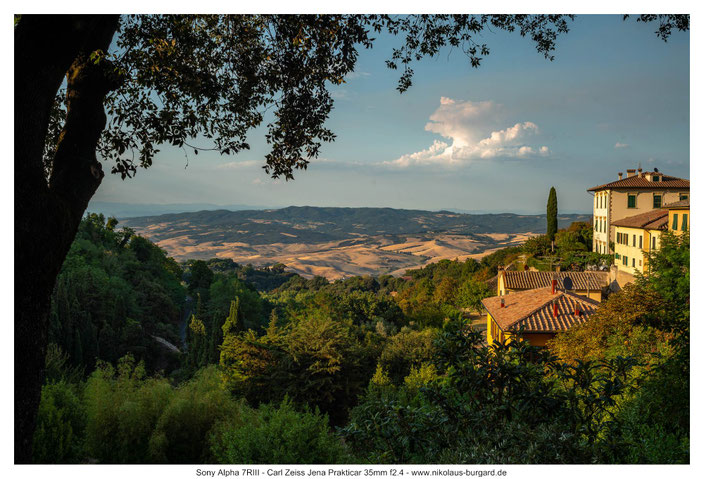
Review: Carl Zeiss Jena Prakticar (Flektogon) 35mm f2.4
Deutsche Textversion /
English Text Version (sorry for errors, no native english speaker)
12. 05.2026:
Die Firma Carl Zeiss Jena (und vor allem ihr Chefkonstrukteur Rudolf Solisch) war einer der absoluten Pioniere im Bau von Retrofokus-Weitwinkelobjektiven.
Bis heute ist es nicht eindeutig geklärt, wer im Jahr 1949 das erste solche Objektiv fertig entwickelt hatte, Pierre Angenieux mit seinem Retrofocus R1 oder Rudolf Solisch mit dem Carl Zeiss Jena Flektogon 35mm f2.8.
Jedenfalls blieb auch bei der Entwicklung der Weitwinkel-Objektive die Zeit nicht stehen, und aus der ursprünglichen Konstruktion des Flektogons war nach mehrfacher Überarbeitung keine Mehrleistung mehr herauszuholen.
Um eine Steigerung der Lichtstärke als auch der Schärfeleistung zu erreichen (und gleichzeitig die Produktionskosten zu senken) war also zu Beginn der 1970er Jahre eine Neukonstruktion unumgänglich geworden.
Hierbei wandten sich die Konstrukteure Gerhard Risch und Utz Schneider vom Biometar-Typ als Grundobjektiv ab und nahmen eine Triplet-Variante als Grundlage für ihr neues Objektiv.
Hierdurch konnte die Produktion deutlich wirtschaftlicher ausfallen (Kombinationsrechnungen für die Großserie waren so vereinfacht) und für den Nutzer wurde das Objektiv deutlich kompakter aufgrund der kleineren Frontlinse.
So entstand das im Jahr 1972 konstruierte und ab 1975 verkaufte Carl Zeiss Jena Flektogon 35mm f2.4.
Dessen letzte "Erscheinungsform" mit unveränderter optischer Rechnung, aber nun dem PB-Mount zum Anschluss an die Bajonett-Praktika-Kameras war das
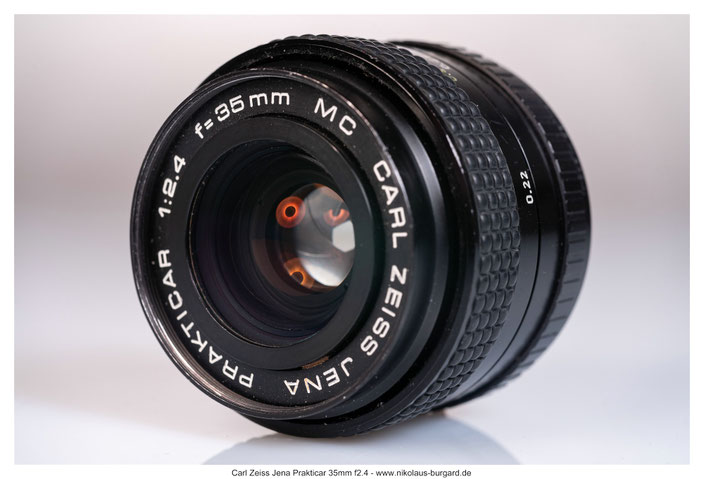
Carl Zeiss Jena Prakticar 35mm f2.4,
welches ich euch in diesem Test sehr ausführlich präsentieren möchte.
Einige technische Daten:
- Blende: von f2.4 bis f22, 6 Blendenlamellen
- Optisches System: 6 Linsen in 6 Gruppen
- Gewicht (mit Sockel): ca. 255g
- Filterdurchmesser: 49mm
- Naheinstellgrenze: 22cm
- Anschlüsse: Praktica PB (und M42 als "Flektogon 35mm f2.4")
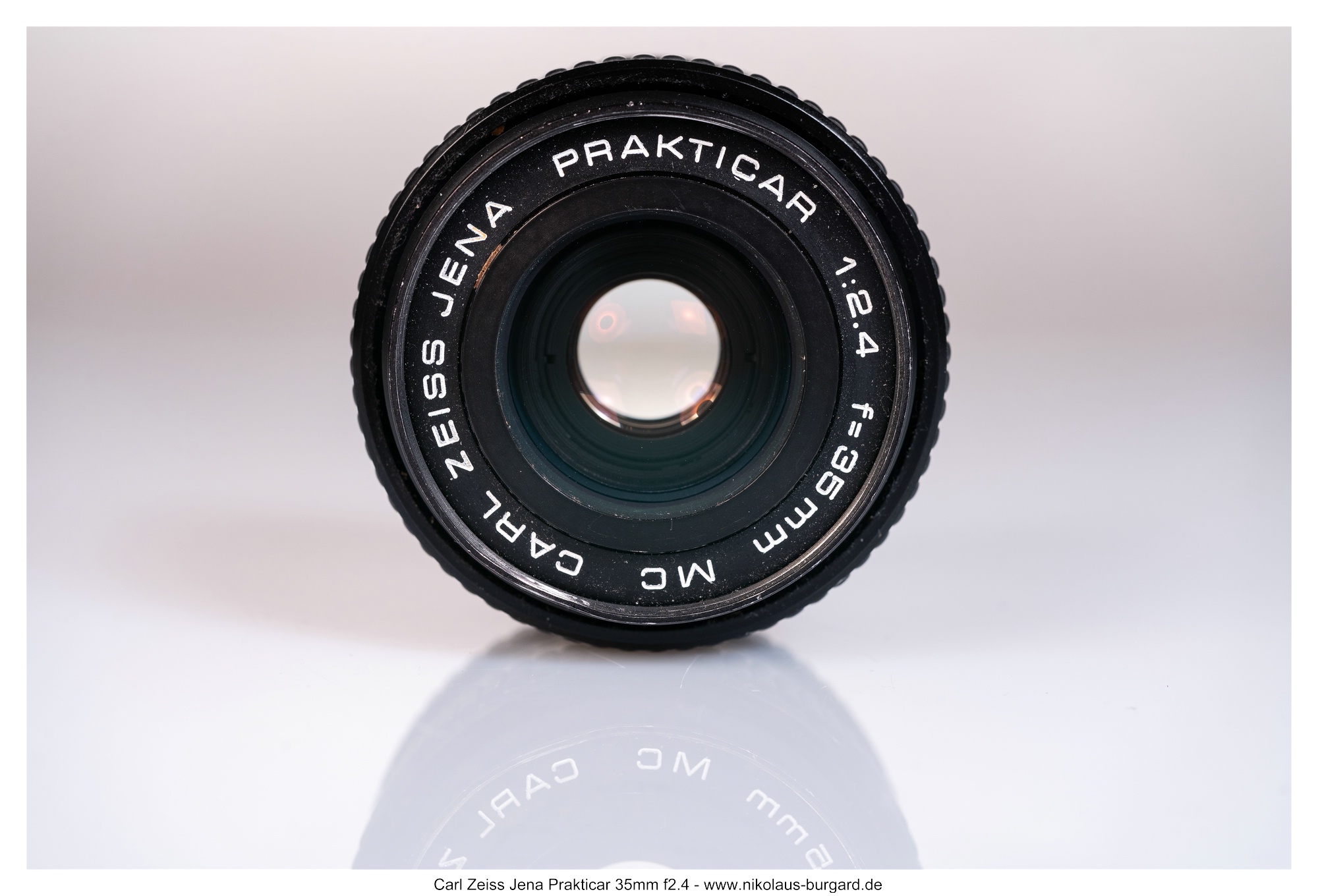
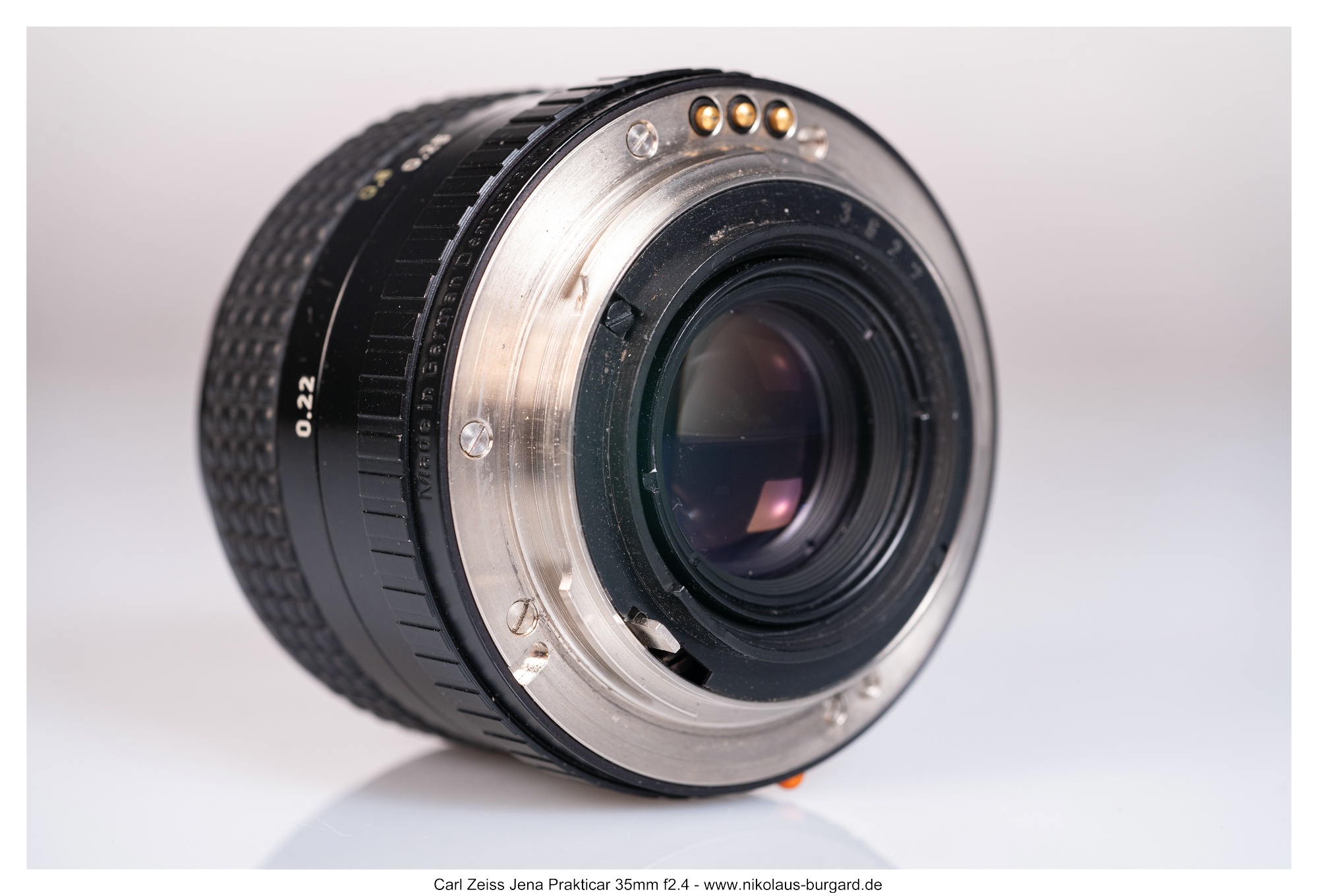
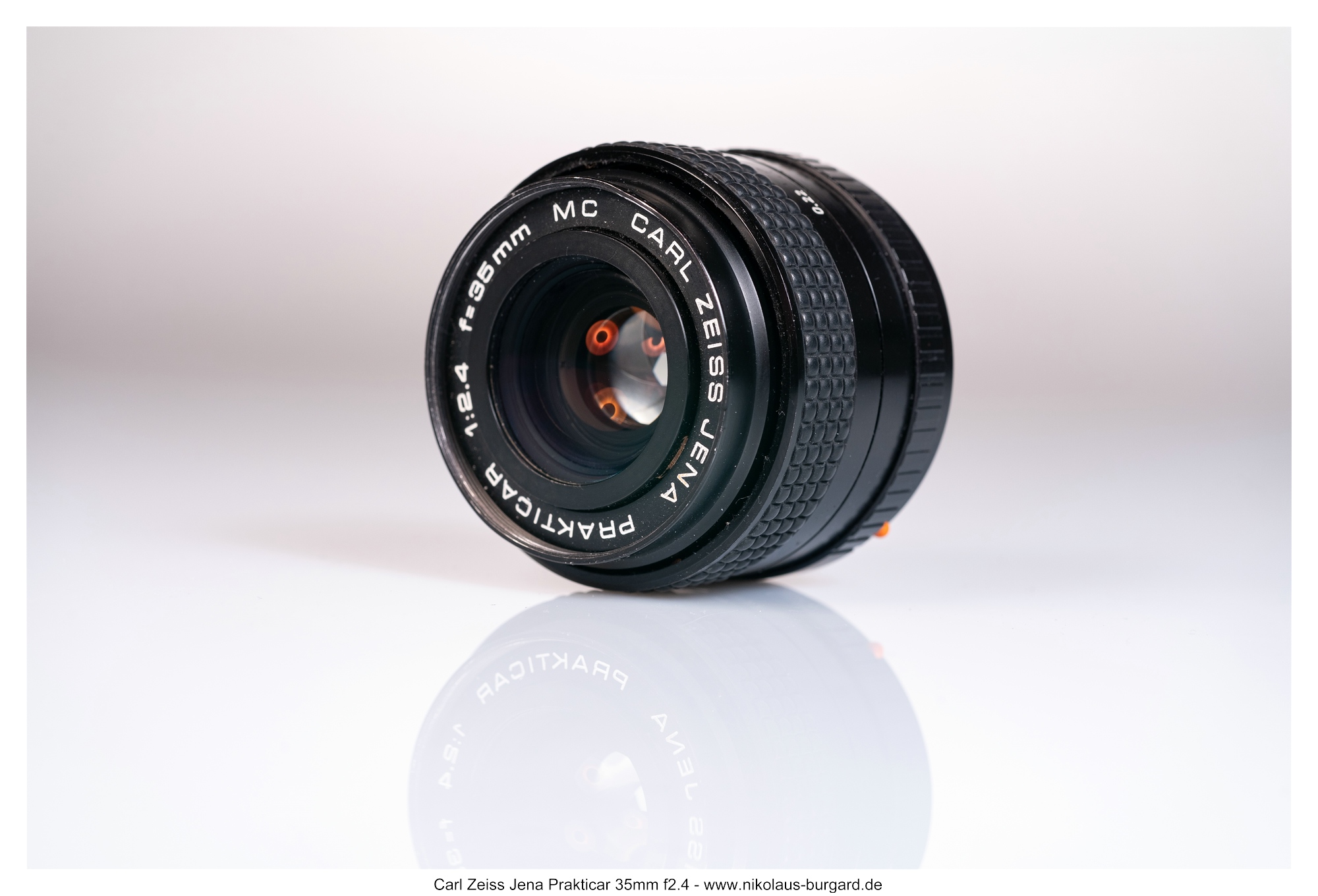
Und so sieht das Objektiv aus:
2026-05-12:
The company Carl Zeiss Jena (and especially its chief designer Rudolf Solisch) was one of the absolute pioneers in the construction of retrofocus wide-angle
lenses.
To date, it is not clear who had finished developing the first such lens in 1949, Pierre Angenieux with his Retrofocus R1 or Rudolf Solisch with the Carl Zeiss
Jena Flektogon 35mm f2.8.
In any case, even with the development of the wide-angle lenses, time did not stop, and the original construction of the Flektogon was no longer to be obtained
after multiple revisions.
In order to achieve an increase in light intensity as well as the sharpness output (and at the same time to reduce production costs), a new construction had
become inevitable at the beginning of the 1970s.
The designers Gerhard Risch and Utz Schneider turned away from the biometar type as a basic lens and took a triplet variant as the basis for their new
lens.
As a result, the production could be significantly more economical (combination calculations for the large series were so simplified) and for the user, the lens
became significantly more compact due to the smaller front lens.
This is how the Carl Zeiss Jena Flektogon 35mm f2.4, which was designed in 1972 and sold from 1975, was created.
It's last "form of appearance" with unchanged optical calculation, but now the PB mount for connection to the bayonet internship cameras, was
that
Carl Zeiss Jena Prakticar 35mm f2.4,
which I would like to present to you in great detail in this test.
Some technical data:
- Aperture: from f2.4 to f22, 6 aperture slats
- Optical system: 6 lenses in 6 groups
- Weight (with socket): approx. 255g
- Filter diameter: 49mm
- Close focusing limit: 22cm
- Connectors: Praktica PB (and M42 as "Flectogon 35mm f2.4")
And this is what the lens looks like:
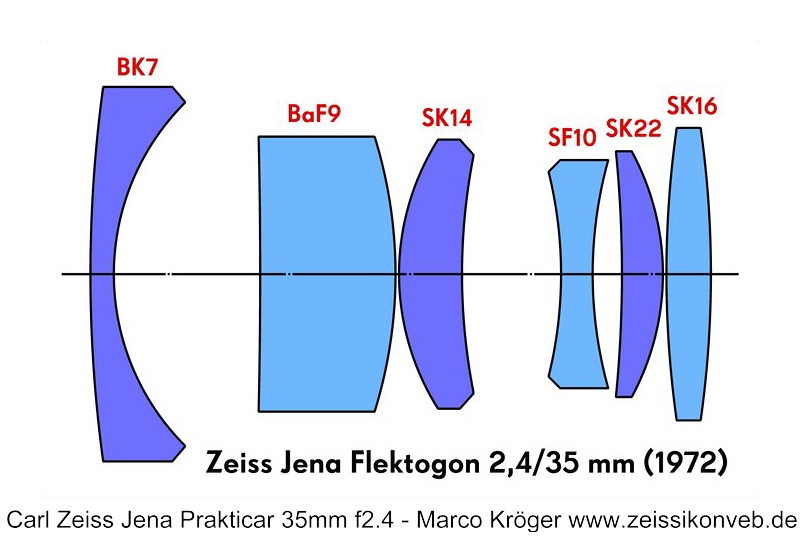
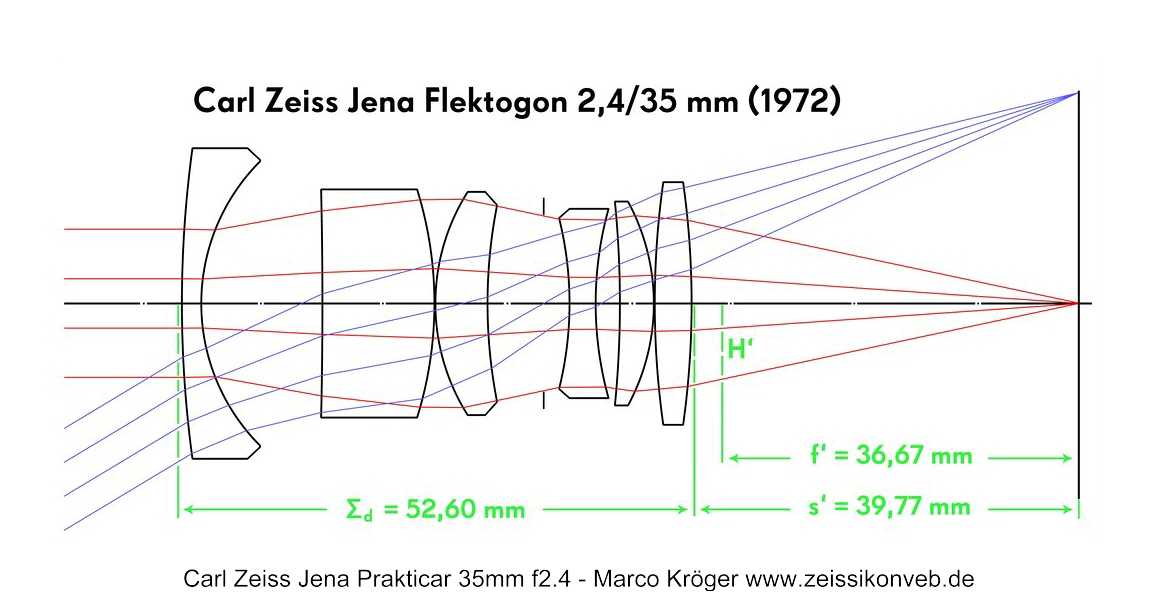
Die folgenden beiden Bilder zeigen den Linsenschnitt, einmal mit den verwendeten Glassorten und einmal mit dem resultierenden Strahlengang.
Vielen Dank an Marco Kröger von der Seite www.zeissikonveb.de, der mir diese neben vielen weiteren Hintergrundinformationen zur Verfügung gestellt hat.
Dort könnt ihr im Artikel zum Flektogon 35mm f2.4 viele weitere Informationen zur Entstehung des Objektives finden.
The following two pictures show the lens cut, once with the glass types used and once with the resulting beam path.
Many thanks to Marco Kröger from the site www.zeissikonveb.de, who provided
me with many other background information.
There you can find in the article on the Flektogon 35mm f2.4 much more information about the creation of the
lens.
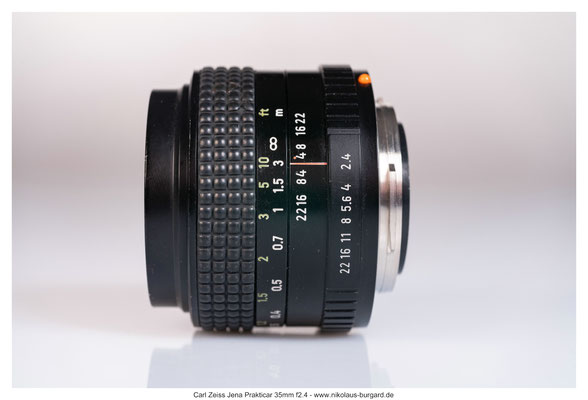
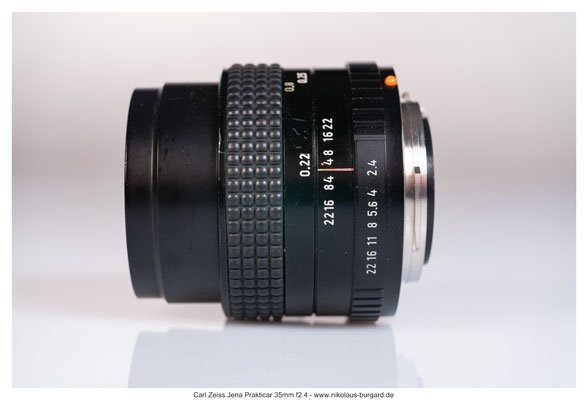
Das Objektiv hat eine normale Auszugsfokussierung.
Am kürzesten ist es bei unendlich-Einstellung,
je weiter man in den Nahbereich fokussiert, desto länger wird es.
The lens has a normal extension focusing.
It is shortest at infinity setting,
the further you focus into the close range, the longer it becomes.
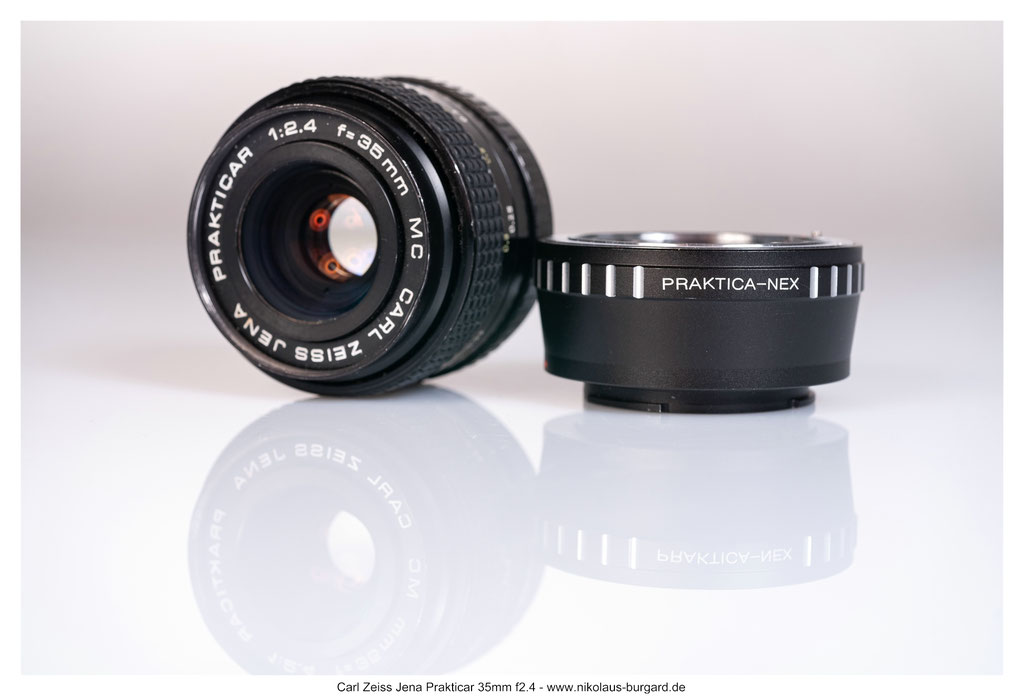
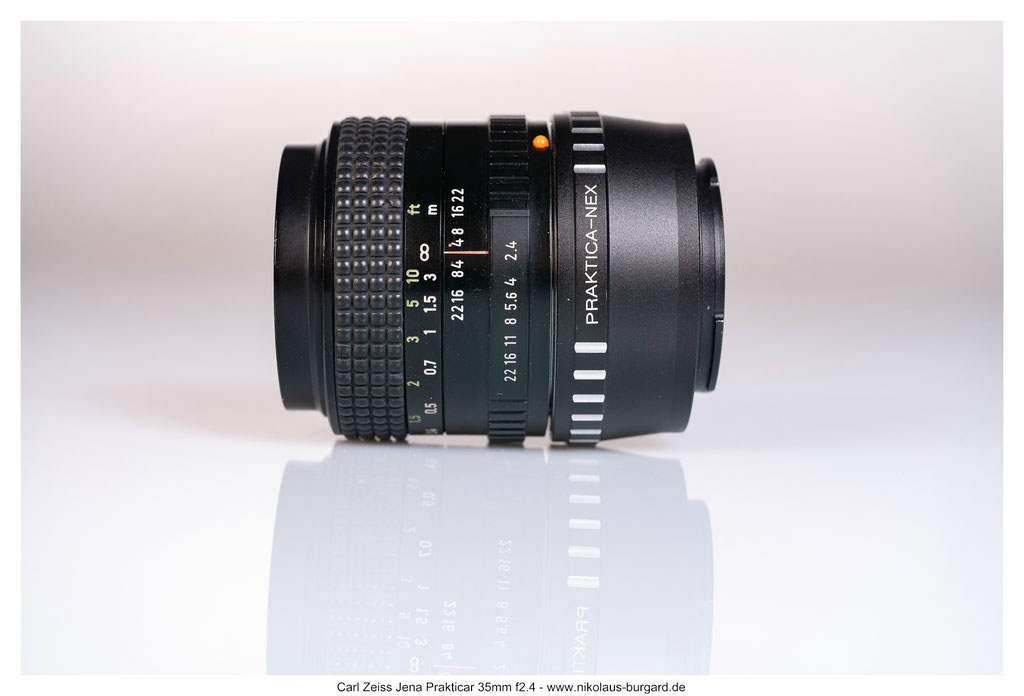
Adaptieren kann man das Objektiv mittels handelsüblicher Adapter PB / Praktica auf das gewünschte Kamerabajonett, in meinem Fall Sony E-Mount.
You can adapt the lens to the desired camera bayonet using the standard adapter PB / Praktica, in my case Sony E-Mount.
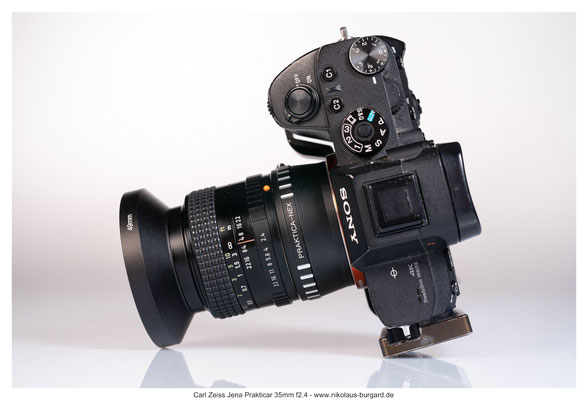
Und so sieht die Kombination aus einer der Testkameras (hier die Sony Alpha 7RIII), dem Adapter und dem schönen Objektiv aus:
And this is what the combination of one of the test cameras (here the Sony Alpha 7RIII), the adapter and the beautiful lens looks like:
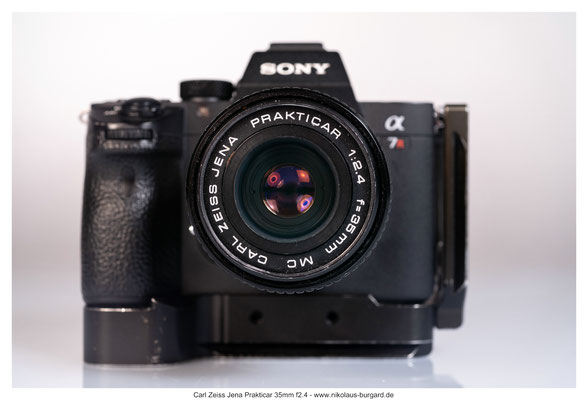
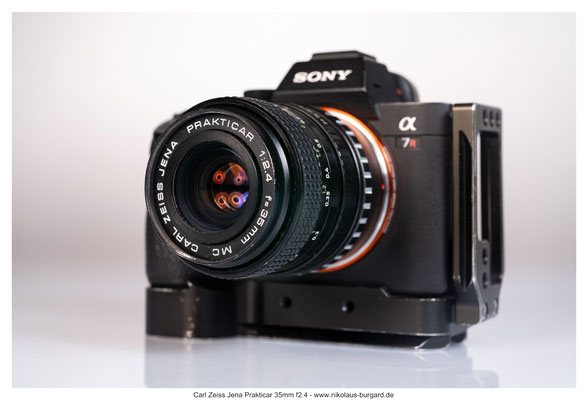
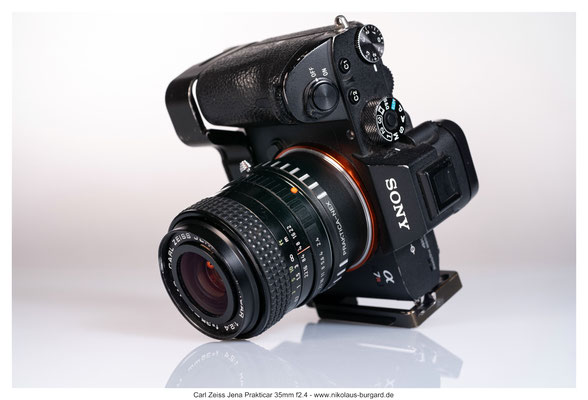
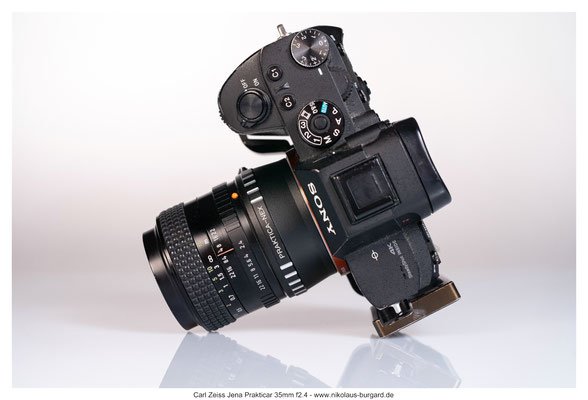
Eine stimmige, gut in der Hand liegende, kompakte Kombination, die auch nicht frontlastig ist - auch nicht länger und dicker als ein 50mm-Normalobjektiv.
Das Testobjektiv hat eine fast makellose Optik - keine Kratzer oder Beläge auf den Linsen.
Die Objektivfassung zeigt mit einigen Macken und Kratzern, dass das Objektiv viel und gerne benutzt wurde.
Die Fokussierung meines Exemplares ist weich und leichtgängig, aber sehr gleichmäßig.
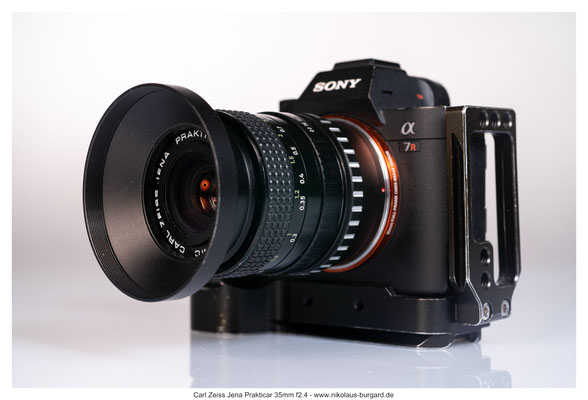
Ich empfehle die Nutzung einer Metall-Weitwinkel-Gegenlichtblende, die Frontlinse sitzt sehr weit vorne und so hat man sowohl Streulichtschutz als auch Schutz vor mechanischen Beschädigungen.
A harmonious, well-held, compact combination that is also not front-loaded - even longer and thicker than a 50mm normal lens.
The test lens has an almost flawless look - no scratches or pads on the lenses.
The lens frame shows with some quirks and scratches that the lens was used a lot and gladly.
The focus of my specimen is soft and smooth, but very even.
I recommend the use of a metal wide-angle backlight hood, the front lens sits very far in front and so you have both scattered light protection and
protection against mechanical damage.
Ich danke meinen Fotokollegen Dr. Ute Kopka und Dr. Kolio Raltchev für ihre tollen ergänzenden Aufnahmen, die sie mir zur Verfügung gestellt haben!
Thank you to my fellow photographer Dr. Ute Kopka and Dr. Kolio Raltchev for their additional great photographs that they have provided to me!
Bildschärfe / Sharpness
Ich habe an der Sony Alpha 7RIII (42 MP) eine Bildreihe zur Bewertung der Schärfe für euch angefertigt, bei der sowohl das Bildzentrum als auch die Bildecke in einer Schärfeebene liegen.
Fokuspunkt war das Dach des Hauses rechts der nach oben führenden Straße, das Haus in der rechten unteren Bildecke liegt auf der gleichen Höhe.
Die Blendenreihe zeigt die Werte f2.4 - f4 - f5.6 - f8 - f11
I took a series of images on the Sony Alpha 7RIII (42 MP) to evaluate the sharpness for you, with both the center and the corner of the image in the same plane of focus.
The focal point was the roof of the house to the right of the street leading upwards; the house in the lower right corner of the image is at the same height.
The aperture range shows the values f2.4 - f4 - f5.6 - f8 - f11
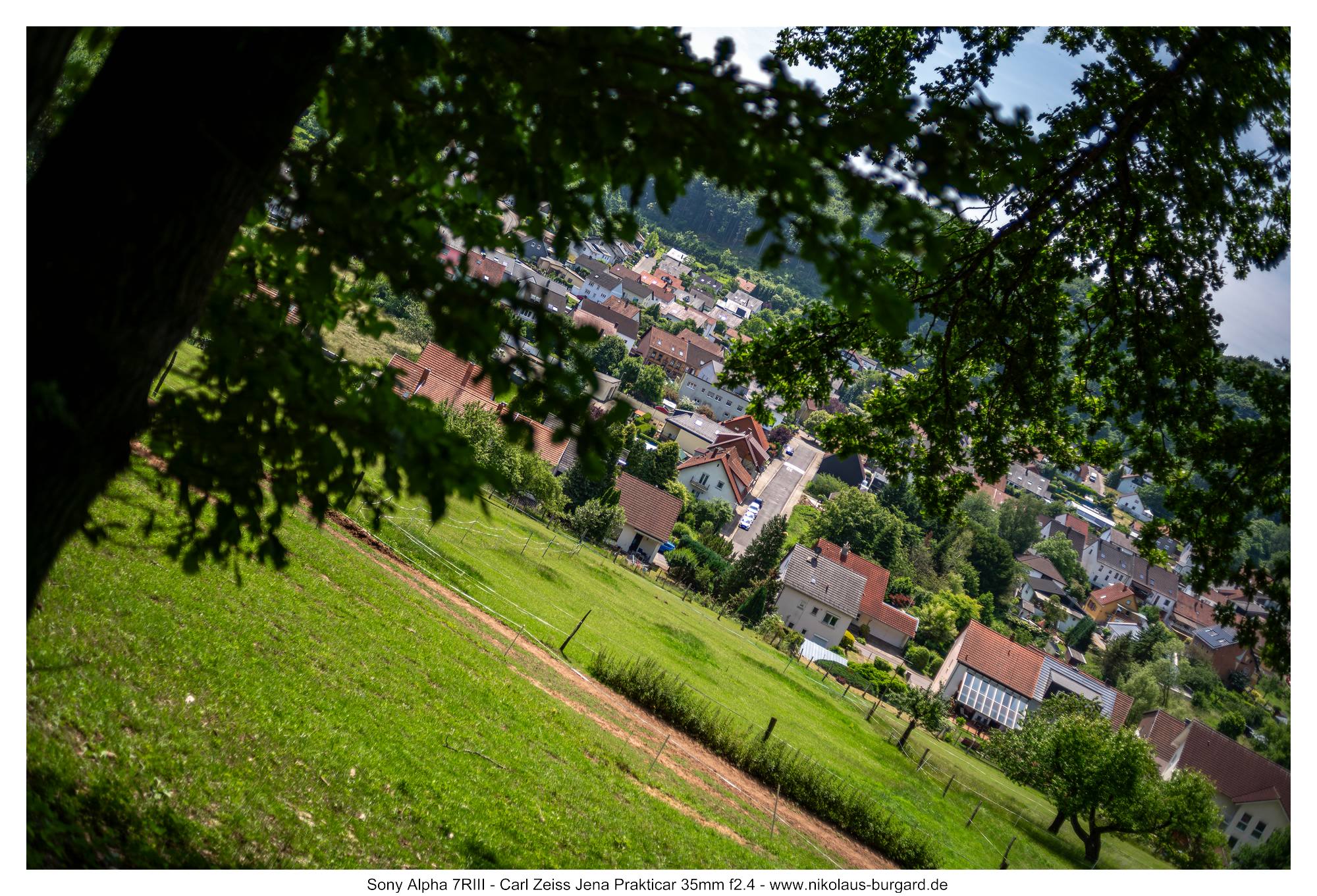
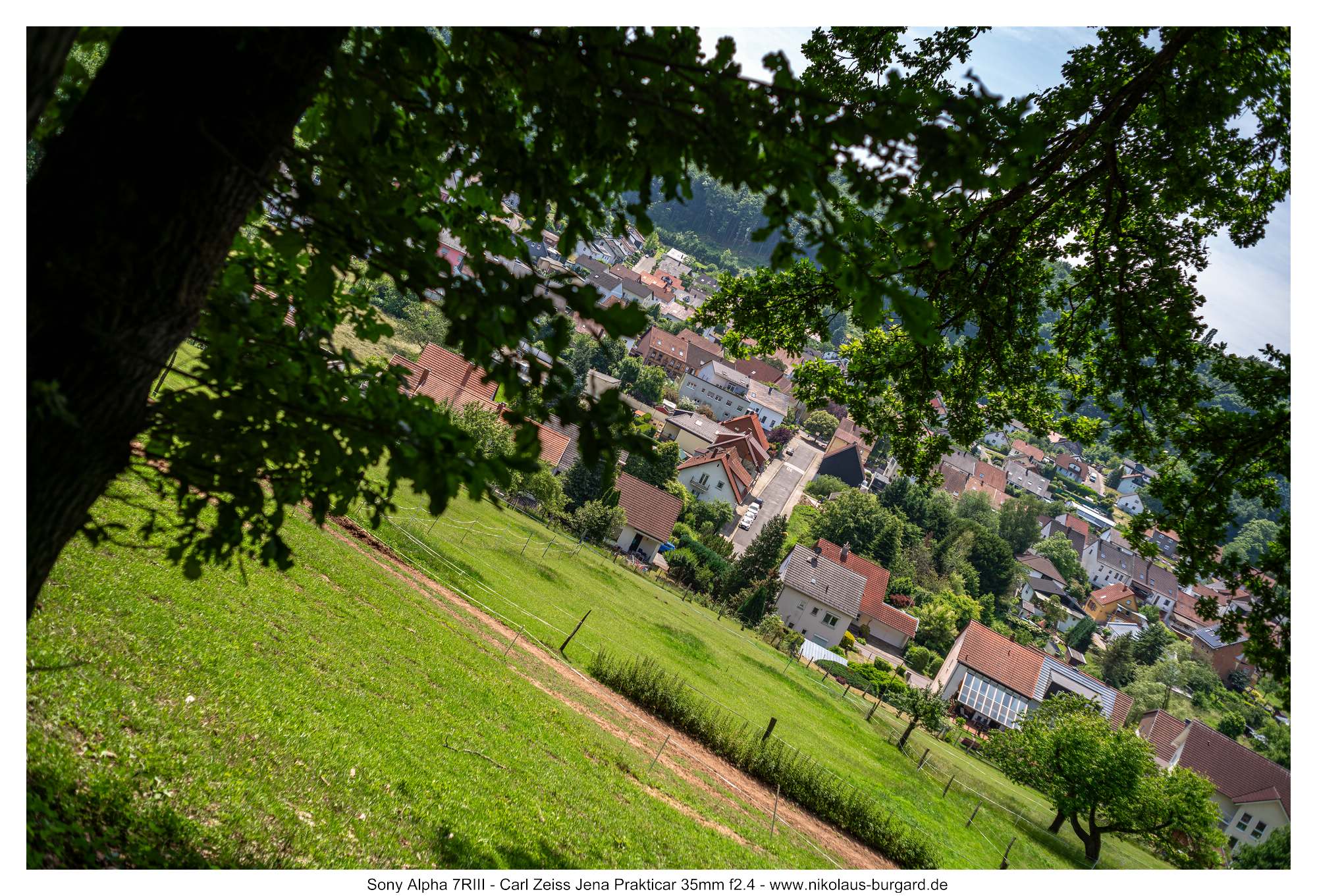
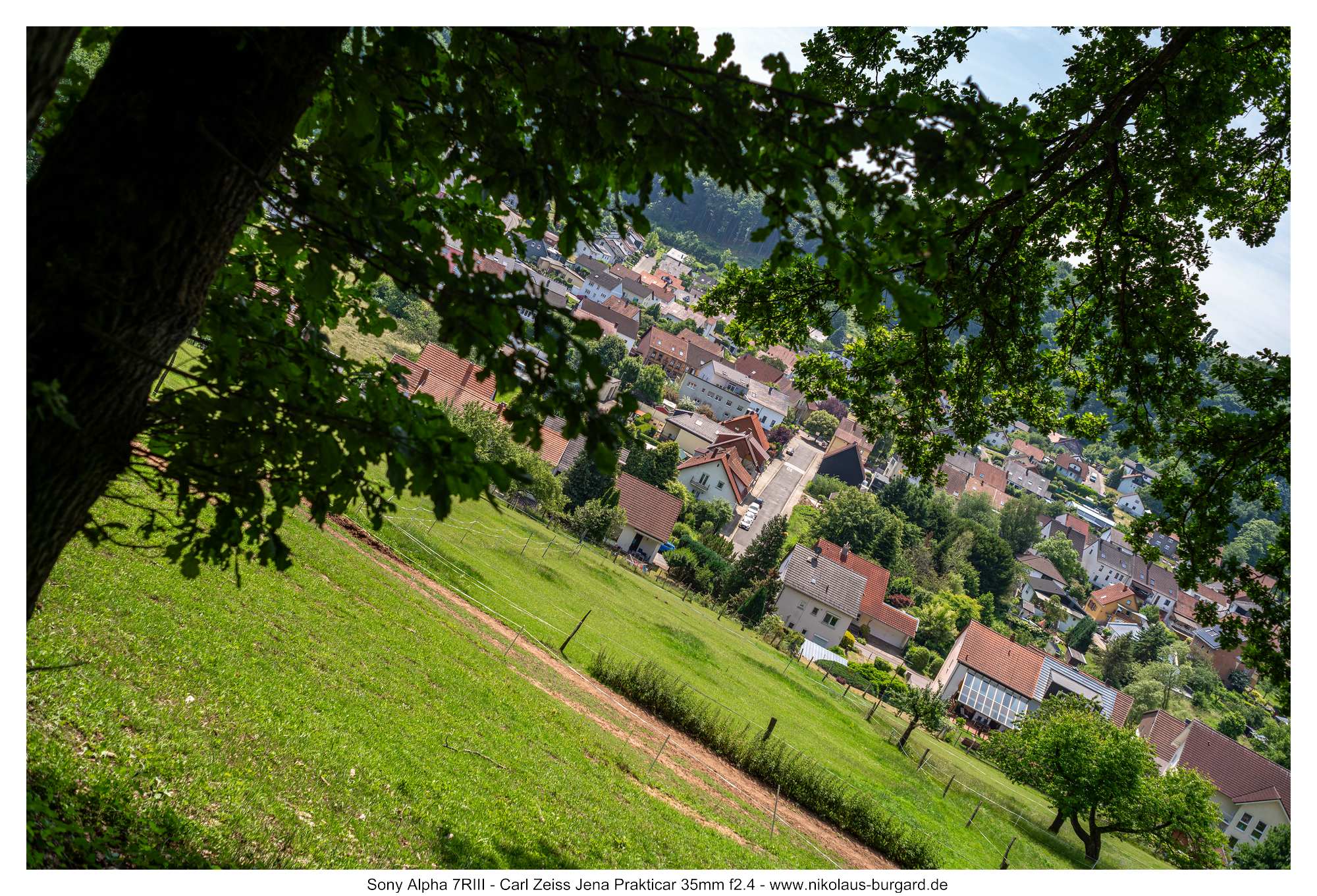
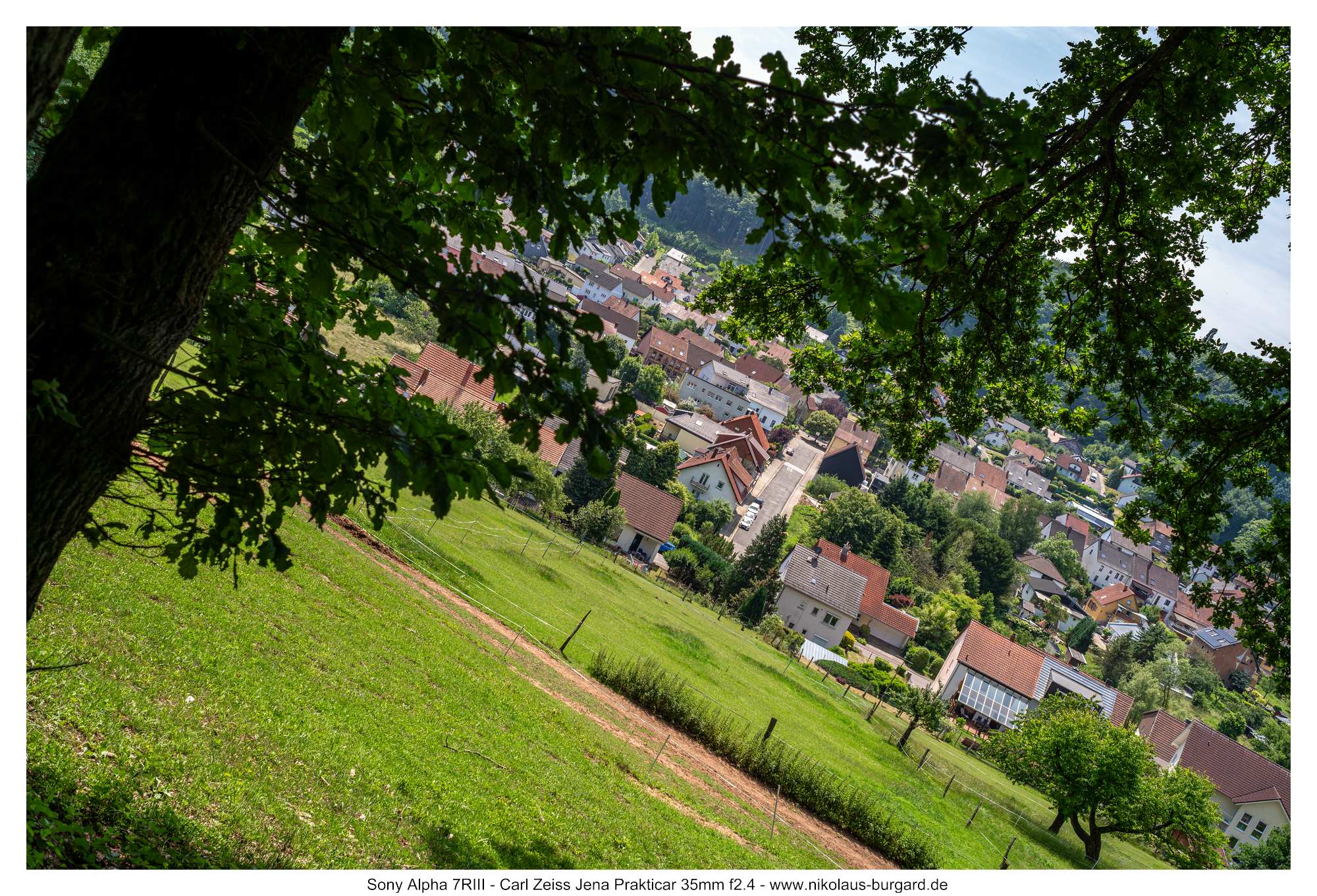
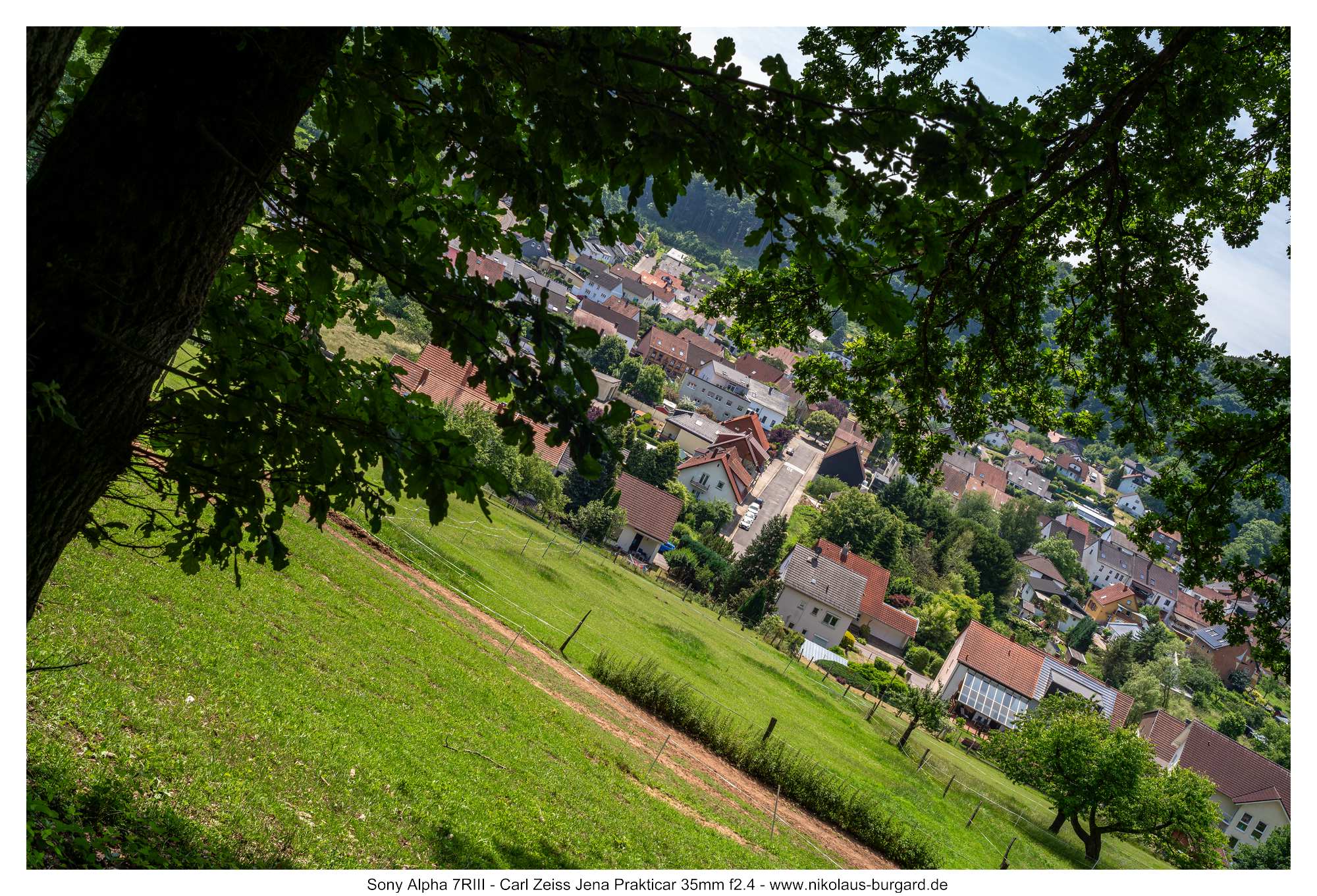


Die vom Objektiv verursachte Vignettierung ist bei Offenblende gut sichtbar.
Bei f4 ist sie schon fast verschwunden,
ab f5.6 ist keine Vignettierung mehr wahrnehmbar.
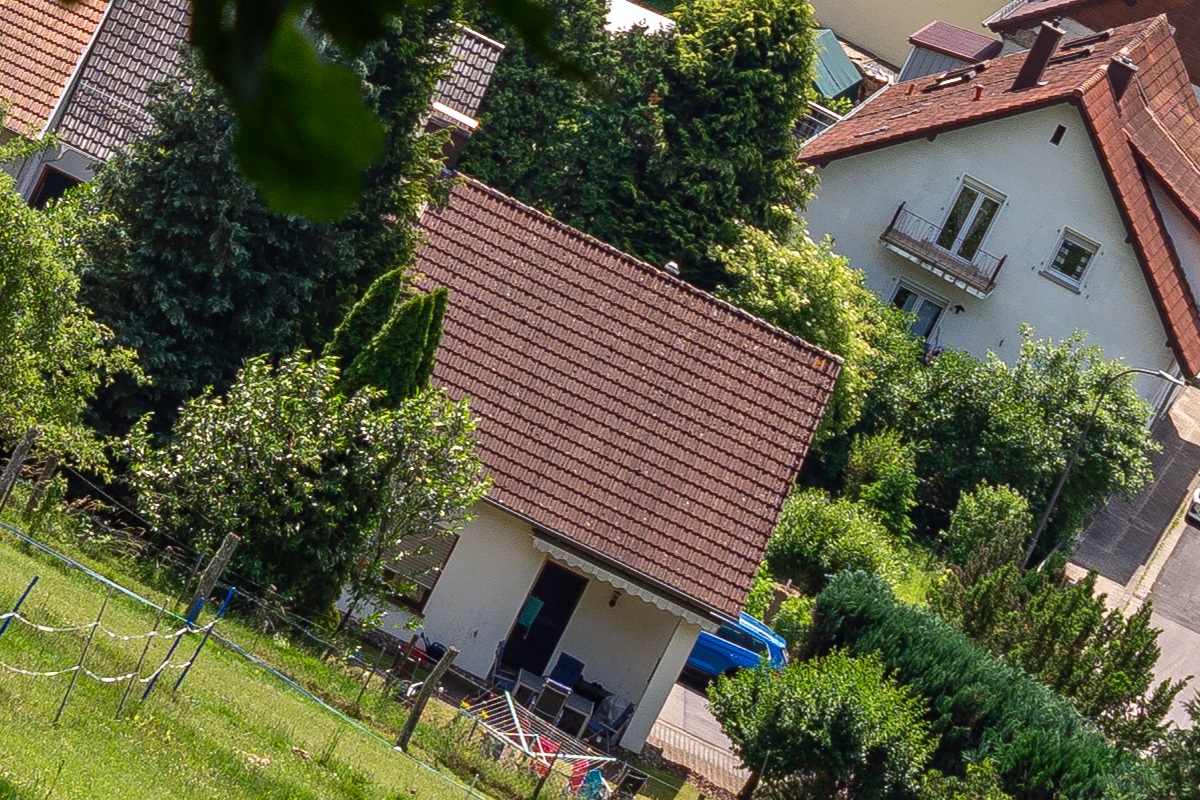
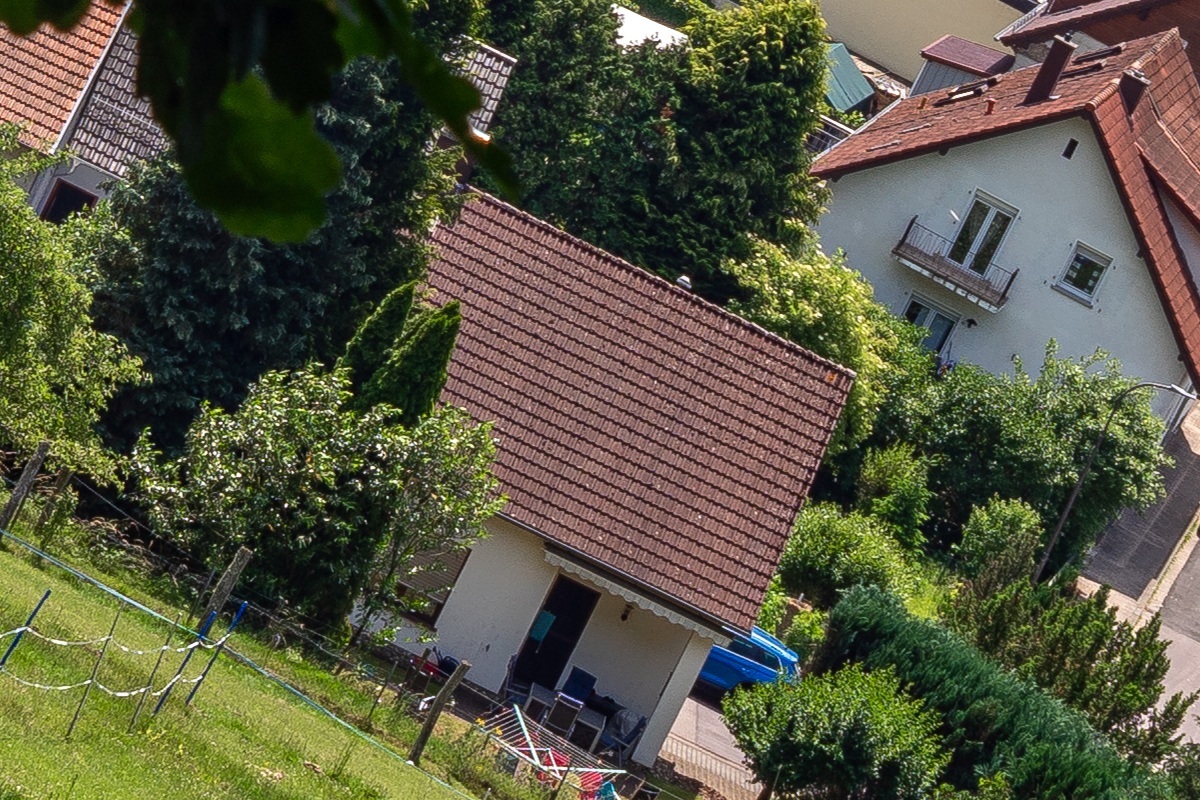
Als nächstes folgen 100%-Vergrößerungen aus der Bildmitte vom Fokuspunkt,
in der gleichen Reihenfolge wie oben:
The vignetting caused by the lens is clearly visible at wide aperture.
At f4 it has almost disappeared,
From f5.6 onwards, vignetting is no longer noticeable.
Next come 100% magnifications from the center of the focus point,
in the same order as above:
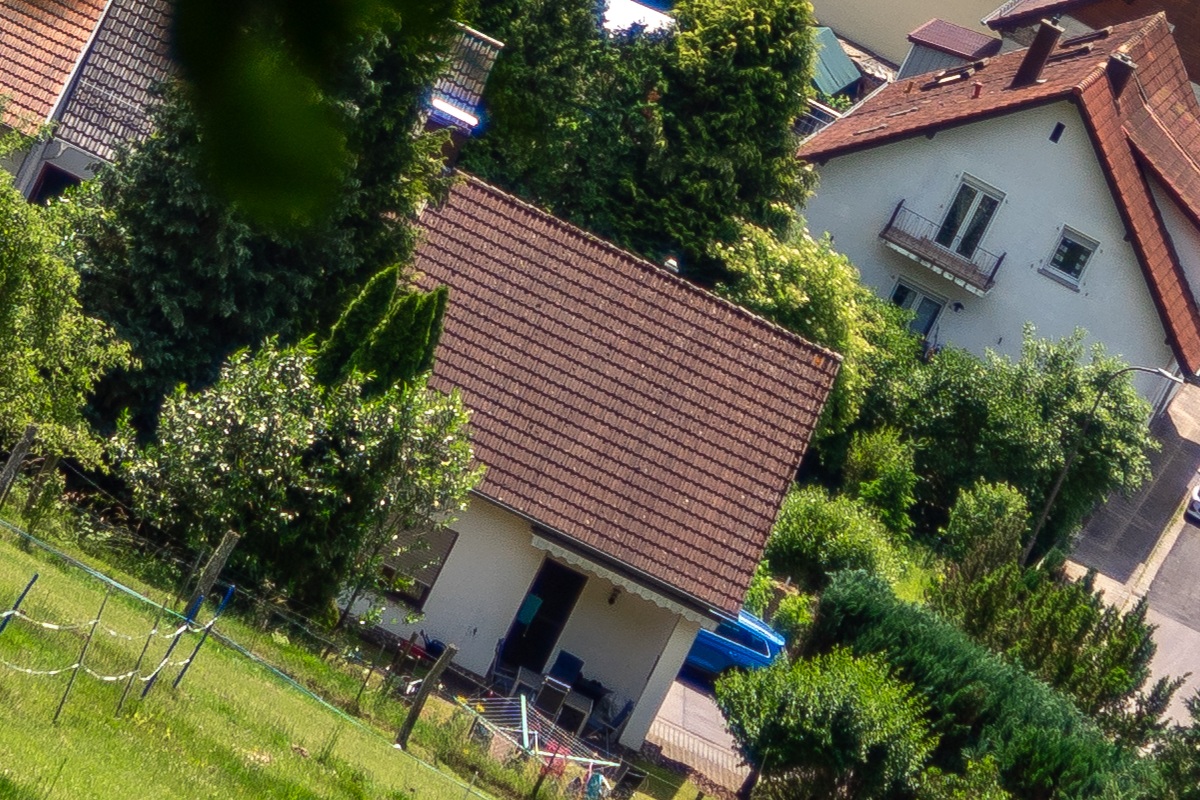
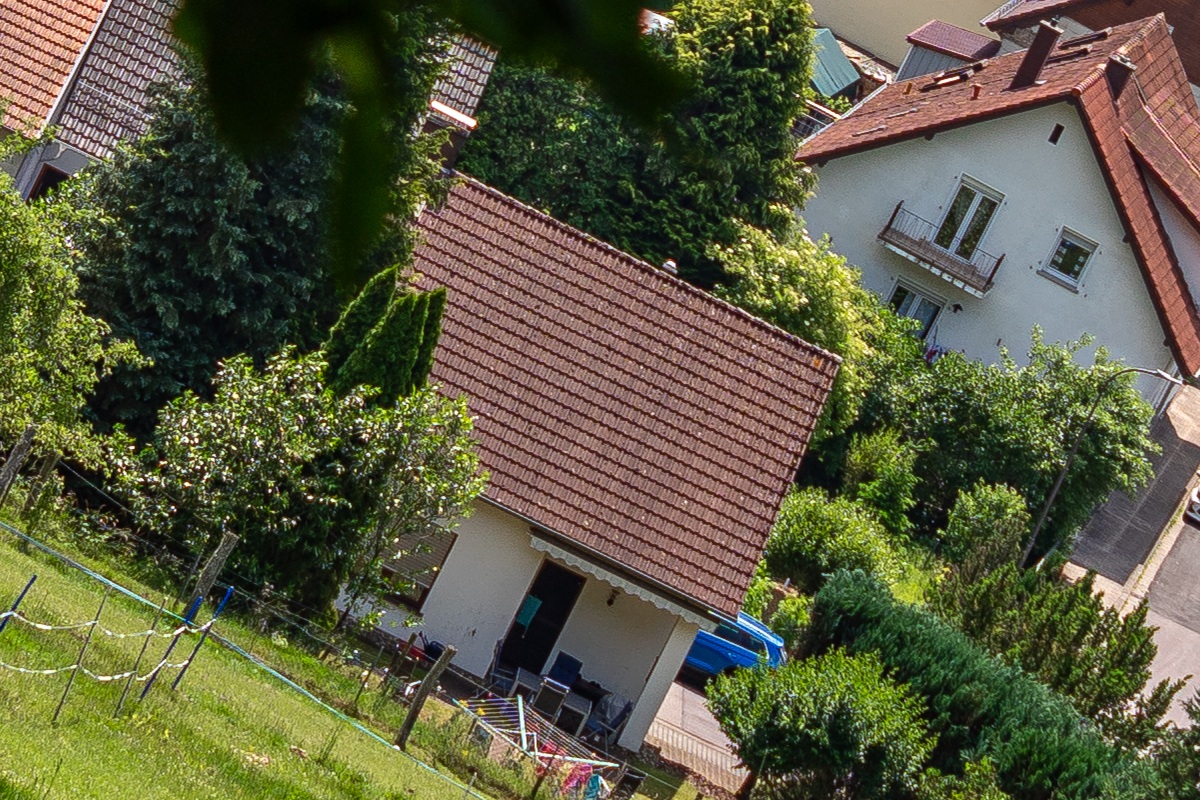
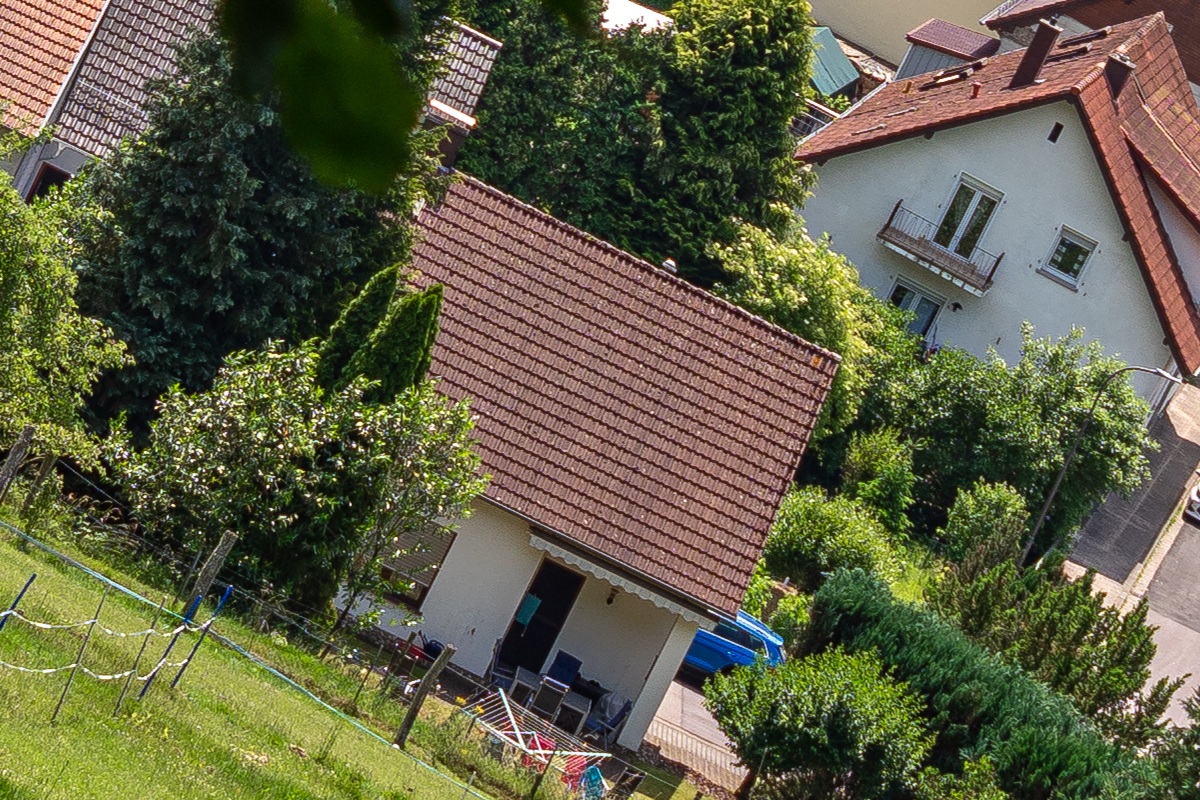


In der Bildmitte ist die Schärfe bei Offenblende f2.4 bereits gut bis sehr gut. Es gibt einen ganz leichten Glow aufgrund der sphärischen Aberration und etwas Purple Fringing an reflektierenden Stellen.
Bei f4 steigert sich die Schärfe auf sehr gutes Niveau, vor allem der Kontrast verbessert sich und die sphärische Aberration verschwindet komplett.
Ab f5.6 bis f11 ist die Bildschärfe in der Bildmitte ausgezeichnet, ebenso die Kontrastleistung.
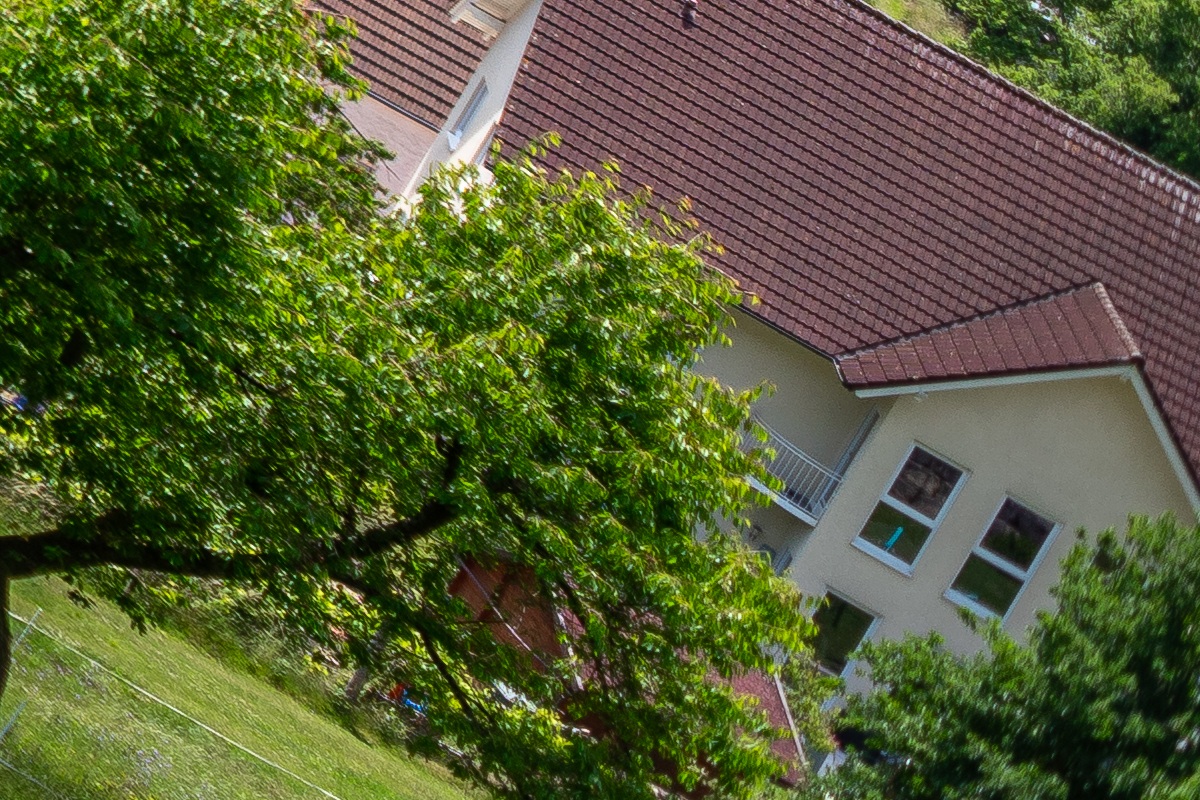
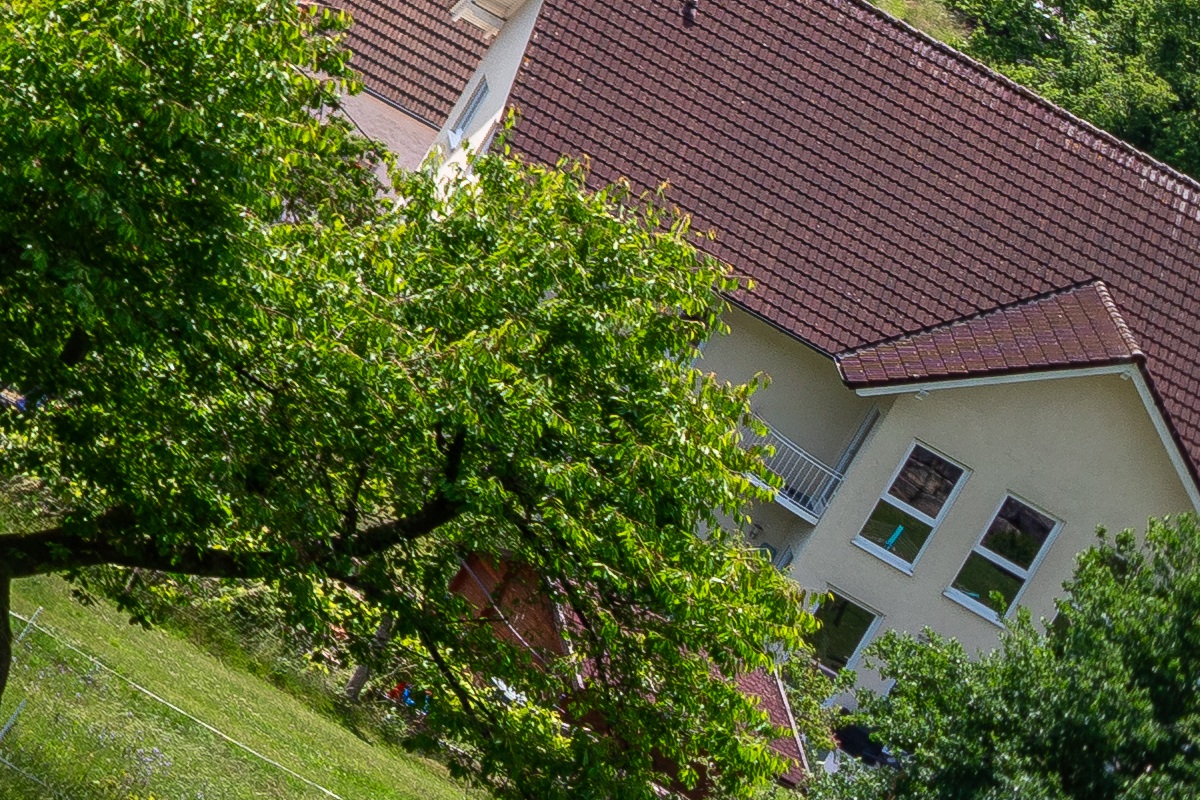
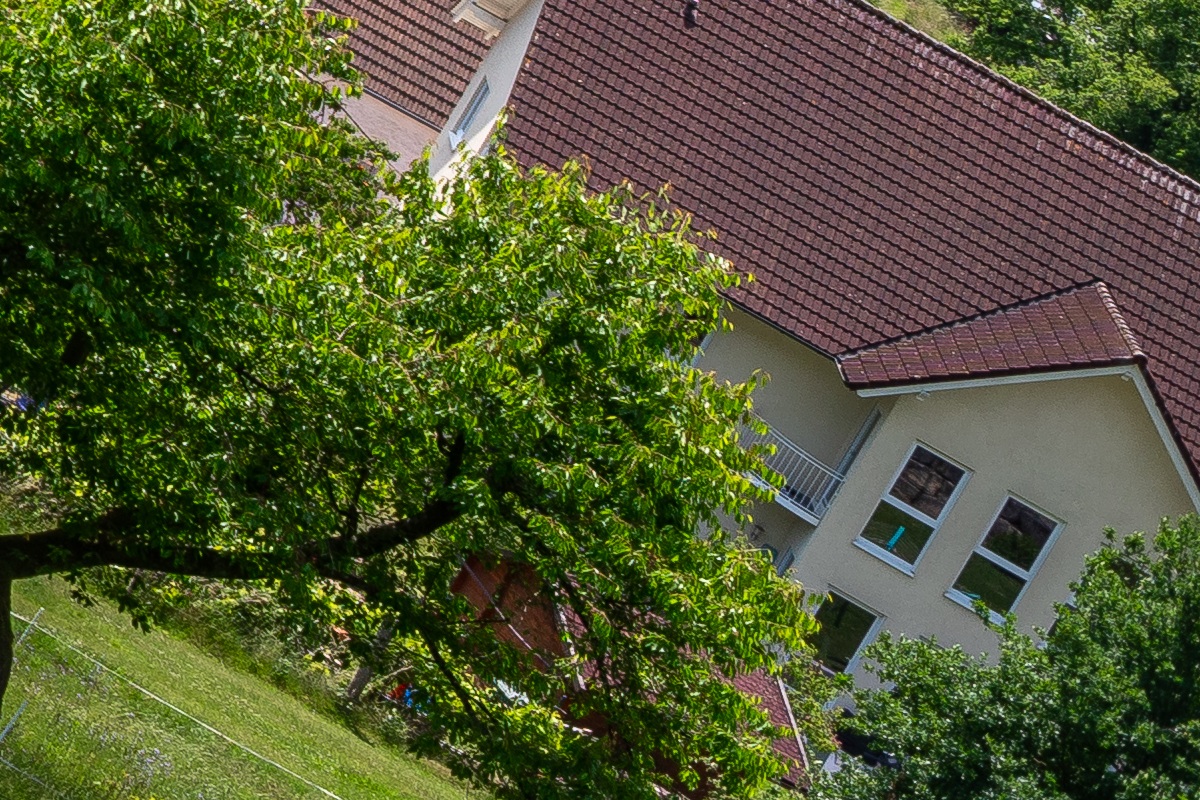
Auch aus der Bildecke habe ich 100%-Vergrößerungen angefertigt:
In the center of the picture, the sharpness of open aperture f2.4 is already good to very good. There is a very light glow due to the spherical aberration and
some purple fringing in reflective places.
At f4, the sharpness increases to a very good level, especially the contrast improves and the spherical aberration disappears completely.
From f5.6 to f11, the image sharpness in the center of the image is excellent, as is the contrast performance.
I also made 100% magnifications from the picture corner:
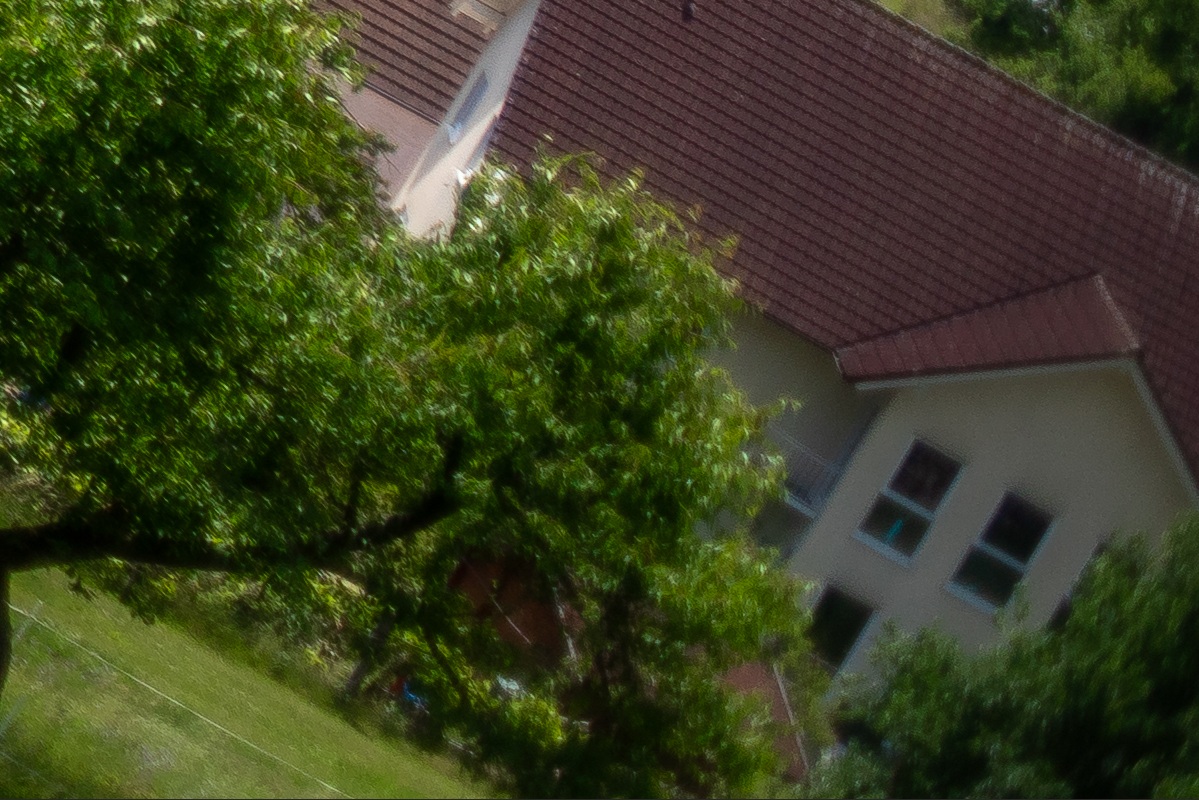
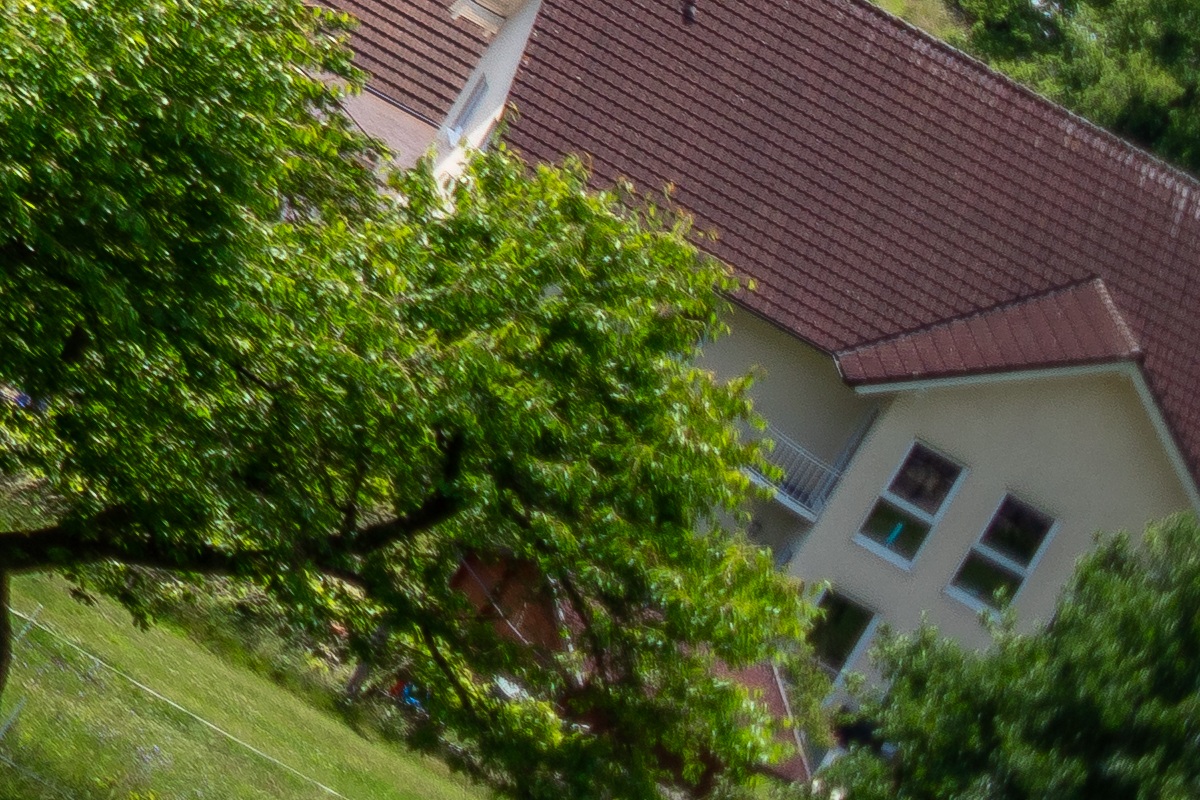


Die Bildecke ist schärfetechnisch bei f2.4 auf "man kann etwas erkennen" - Niveau und aufgrund der Vignette sehr dunkel.
Bei f4 gibt es einen ersten sichtbaren Schärfeschritt, vor allem die Vignettierung verbessert sich deutlich - die Ecke ist sichtbar heller.
Bei f5.6 haben wir eine gute Schärfeleistung in der Ecke erreicht und die Vignette ist verschwunden.
Bei f8 ist die Eckschärfe sehr gut, f11 steigert sich zu f8 noch einmal.
Bei allen Vergrößerungen aus der Bildecke sieht man Spuren von lateralen chromatischen Aberrationen, z.B. an den Fensterrahmen.
Die Schärfeleistung des Flektogons /Prakticars hat mich positiv überrascht. Oft liest man hierzu sehr geteilte Meinungen. Mein Exemplar performt wohl so, wie es sein sollte, und das ist wirklich gut:
Im Bildzentrum ist die Schärfe bei Offenblende gut bis sehr gut, ab f5.6 ausgezeichnet.
Randscharf ist es ab f5.6.
Die Bildecken sind bei Offenblende noch mäßig - aber auch hier wird es gut ab f5.6.
Bei f8 und f11 ist das Flektogon bis in die Bildecke sehr scharf.
The picture corner is sharpening at f2.4 on "you can see something" - level and very dark due to the vignette.
At f4 there is a first visible sharpness step, especially the vignetting improves significantly - the corner is visibly brighter.
At f5.6 we achieved a good sharpness performance in the corner and the vignette has disappeared.
With f8, the corner sharpness is very good, f11 increases again to f8.
With all the magnifications from the corner of the picture, traces of lateral chromatic aberrations can be seen, e.g. on the window frame.
The sharpness of the Flektogon / Prakticar surprised me positively. We often read very divided opinions on this. My copy is probably performing as it should be, and that's really
good:
In the picture center, the sharpness at open aperture is good to very good, from f5.6 excellent.
It is edge sharp from f5.6.
The picture sheets are still moderate at open aperture - but here, too, it will be good from f5.6.
At f8 and f11, the Flektogon is very sharp down to the picture corner.
Bildserie / Picture Series: Tuscan Affairs 1: Volterra
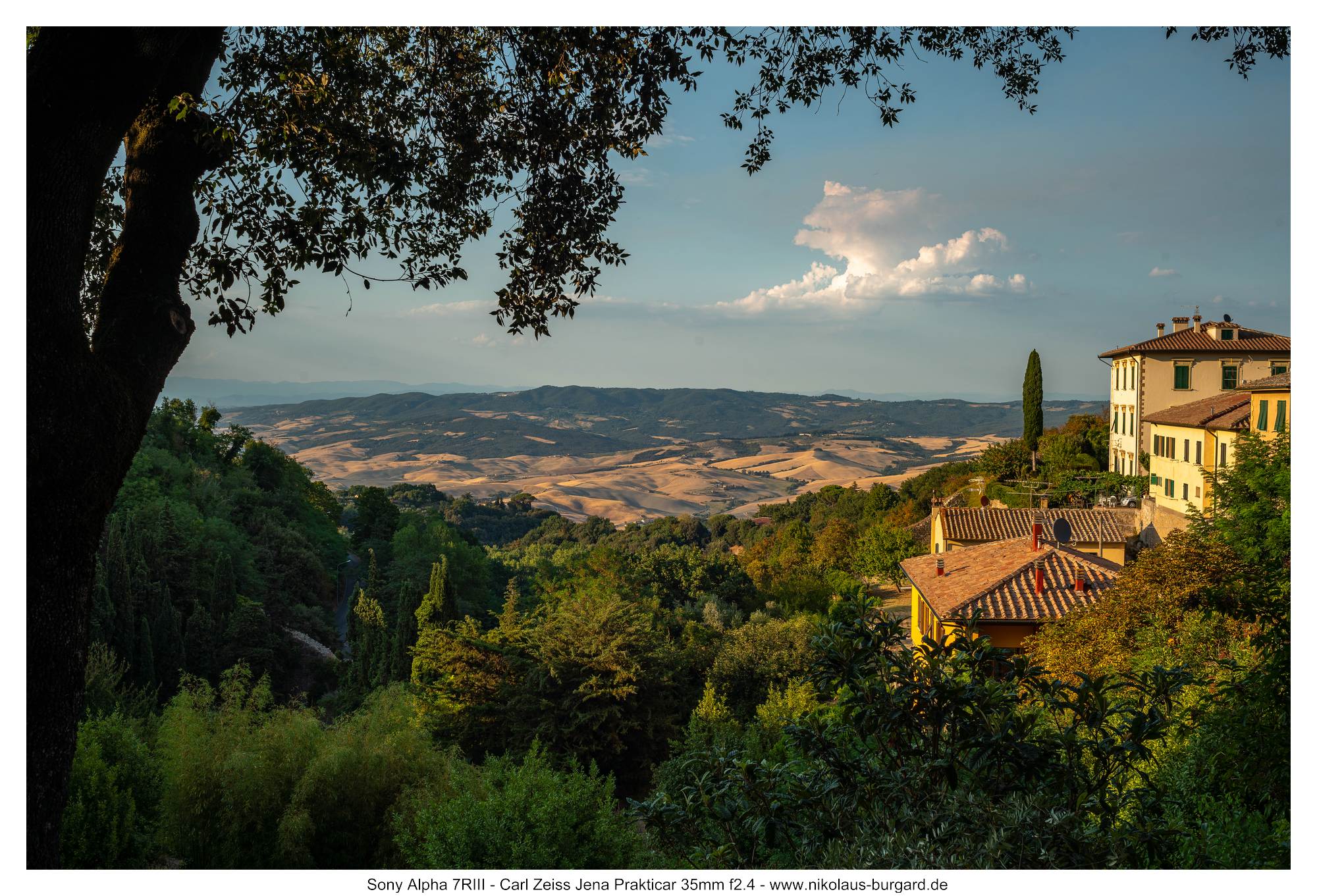
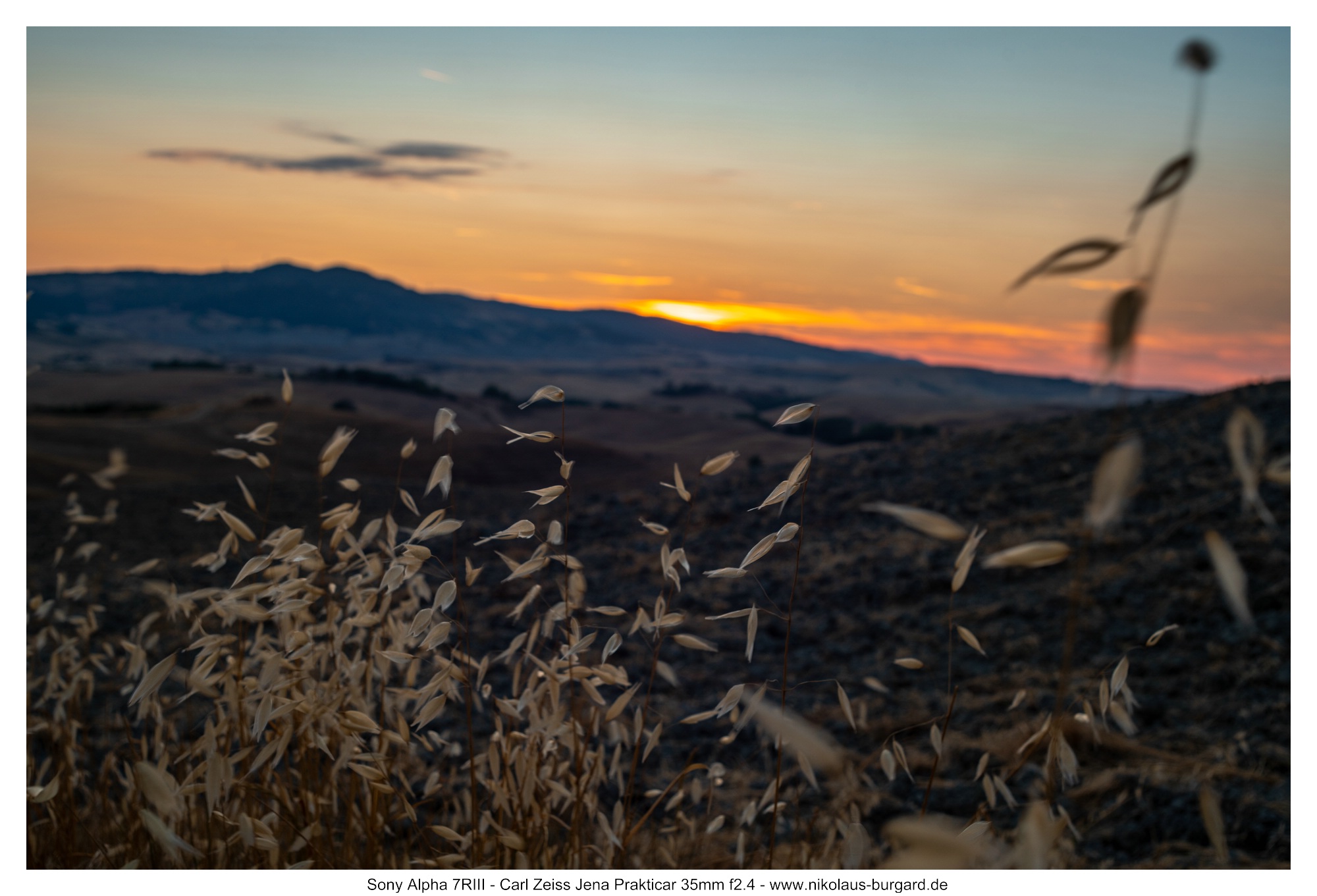
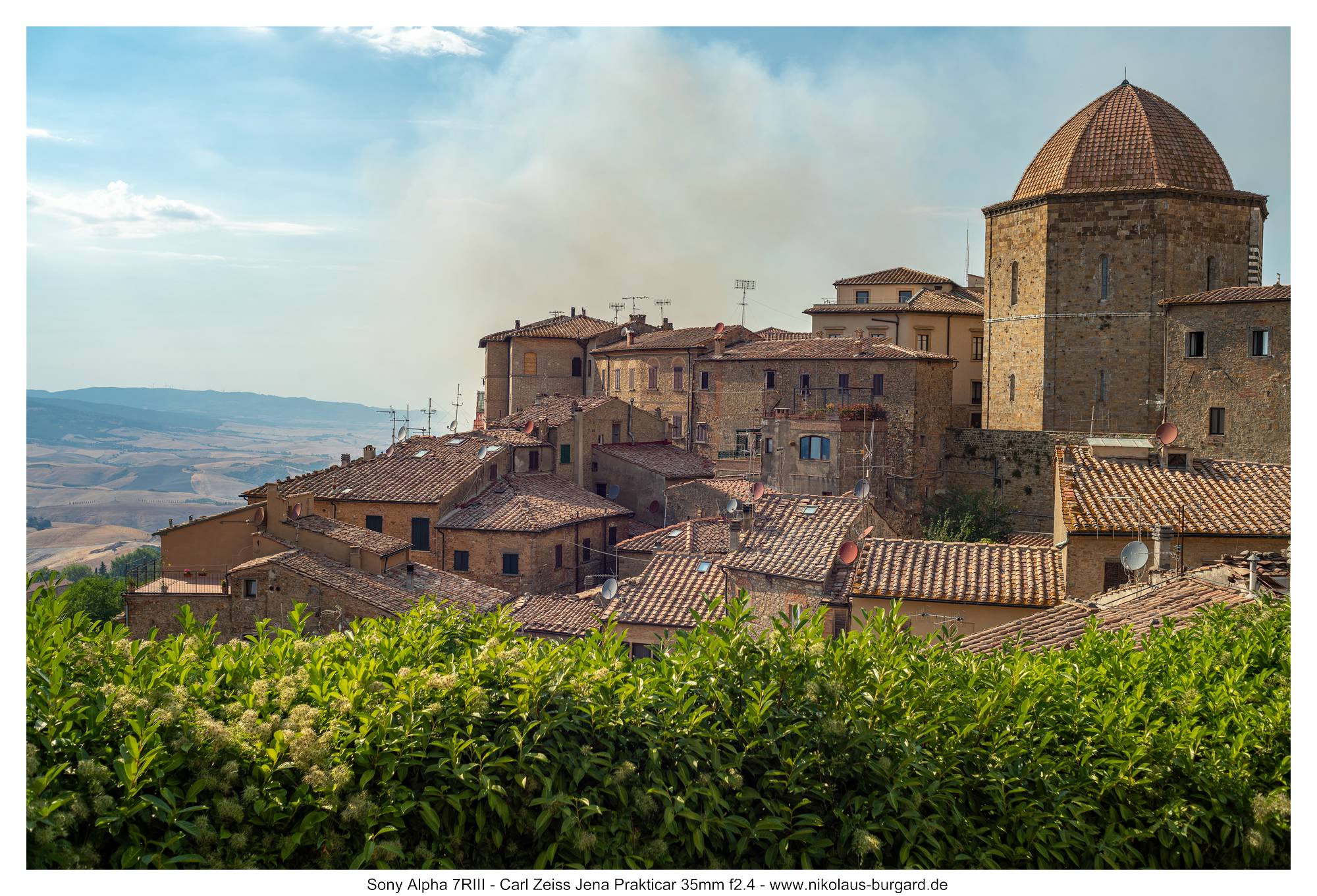
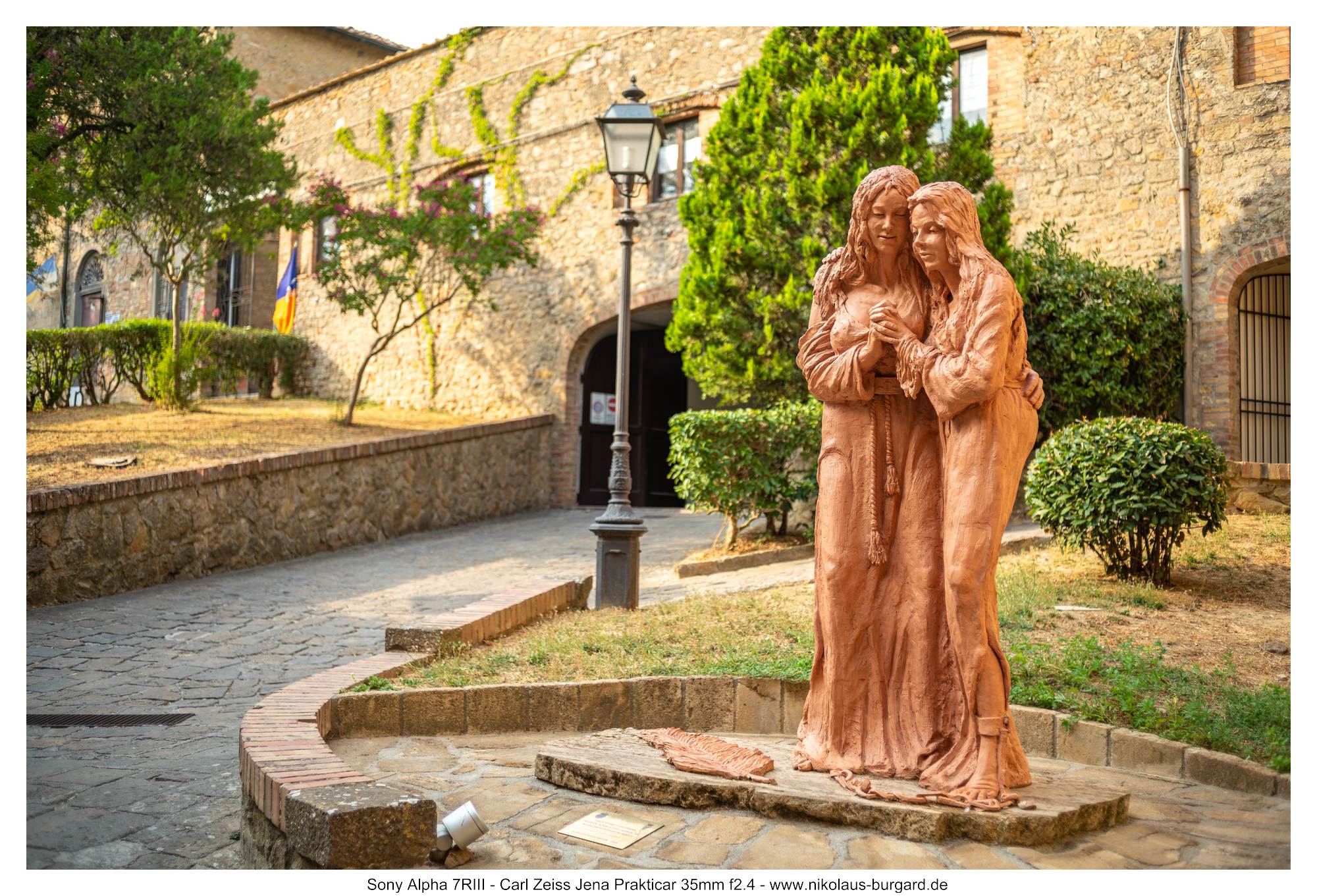
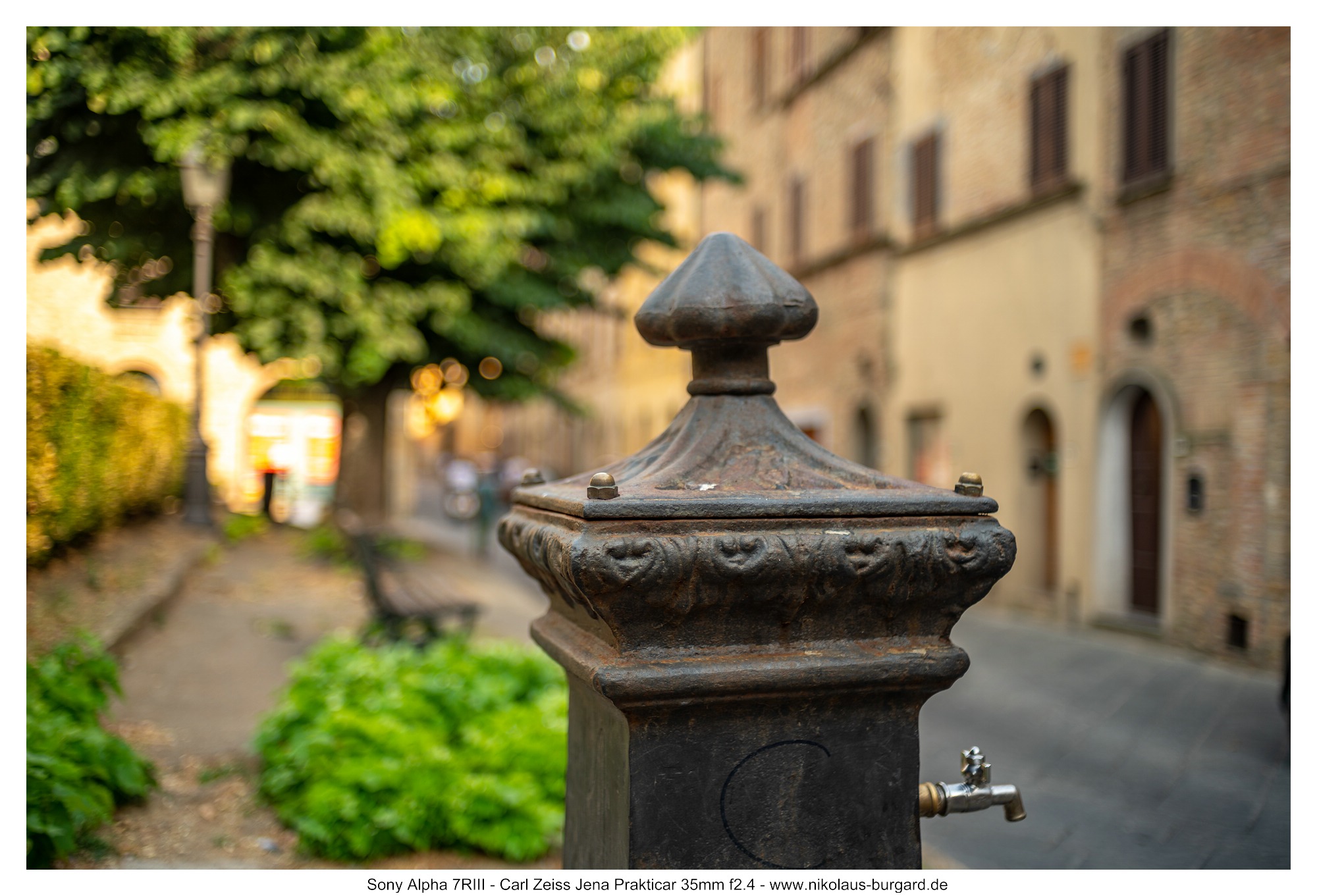
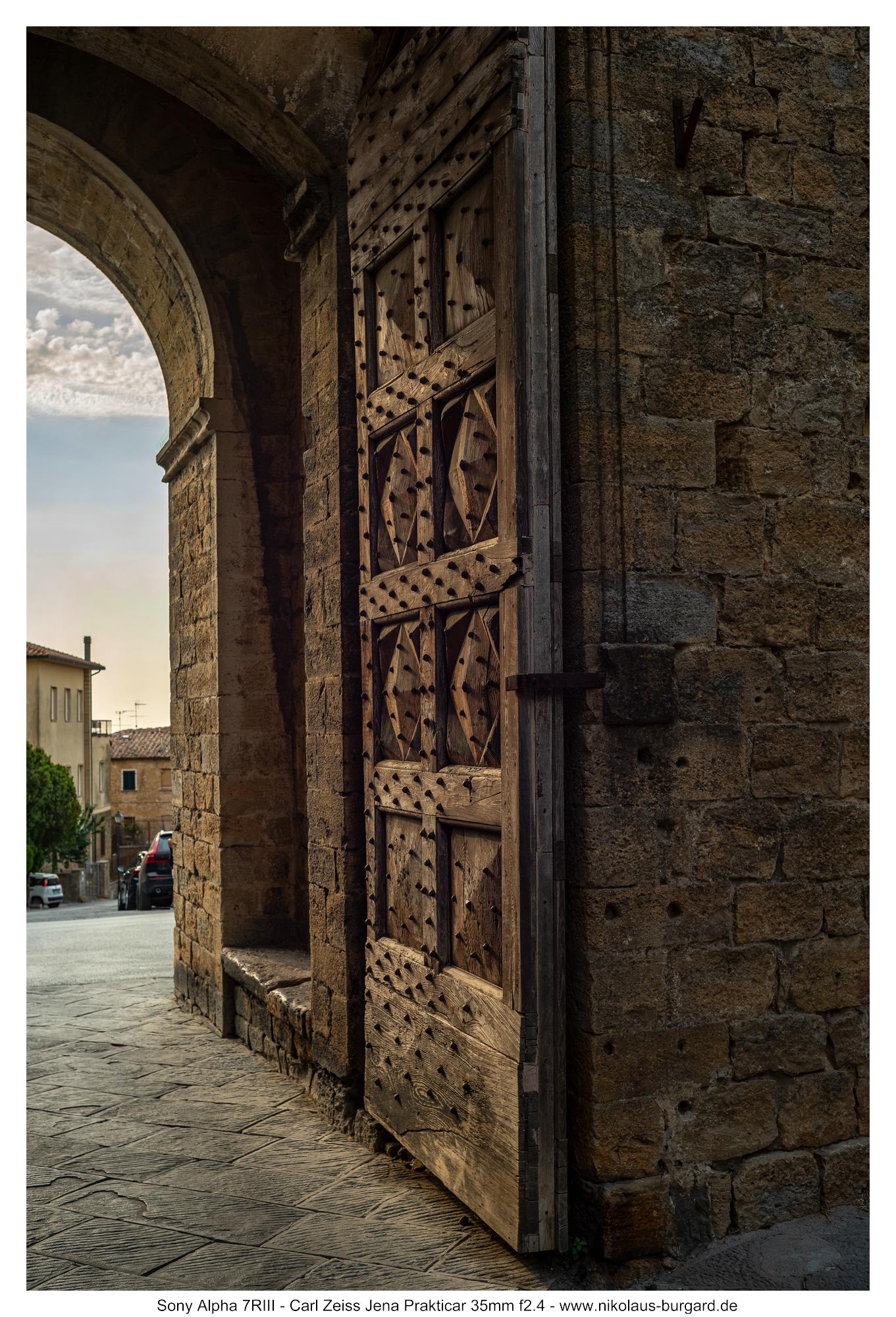
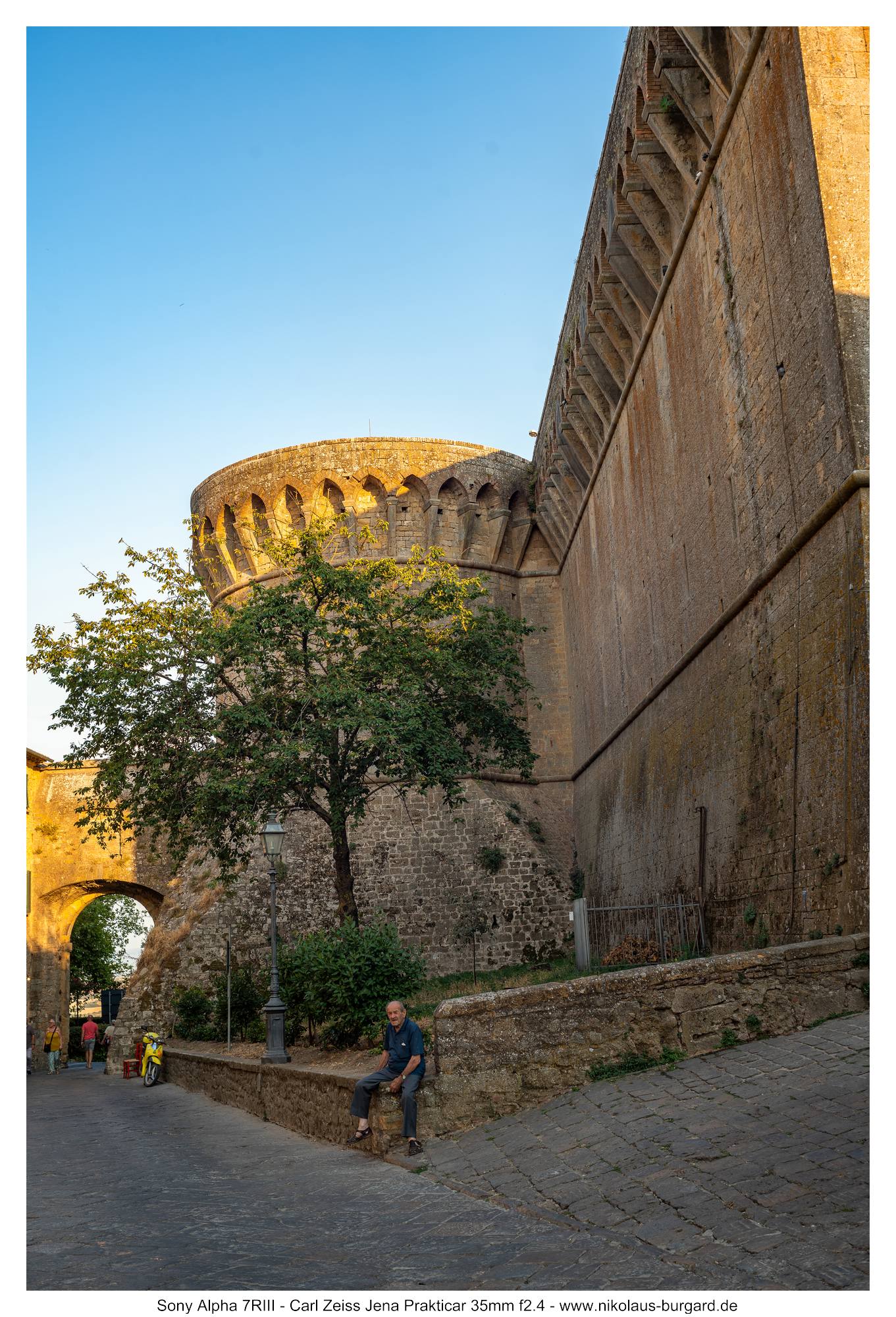
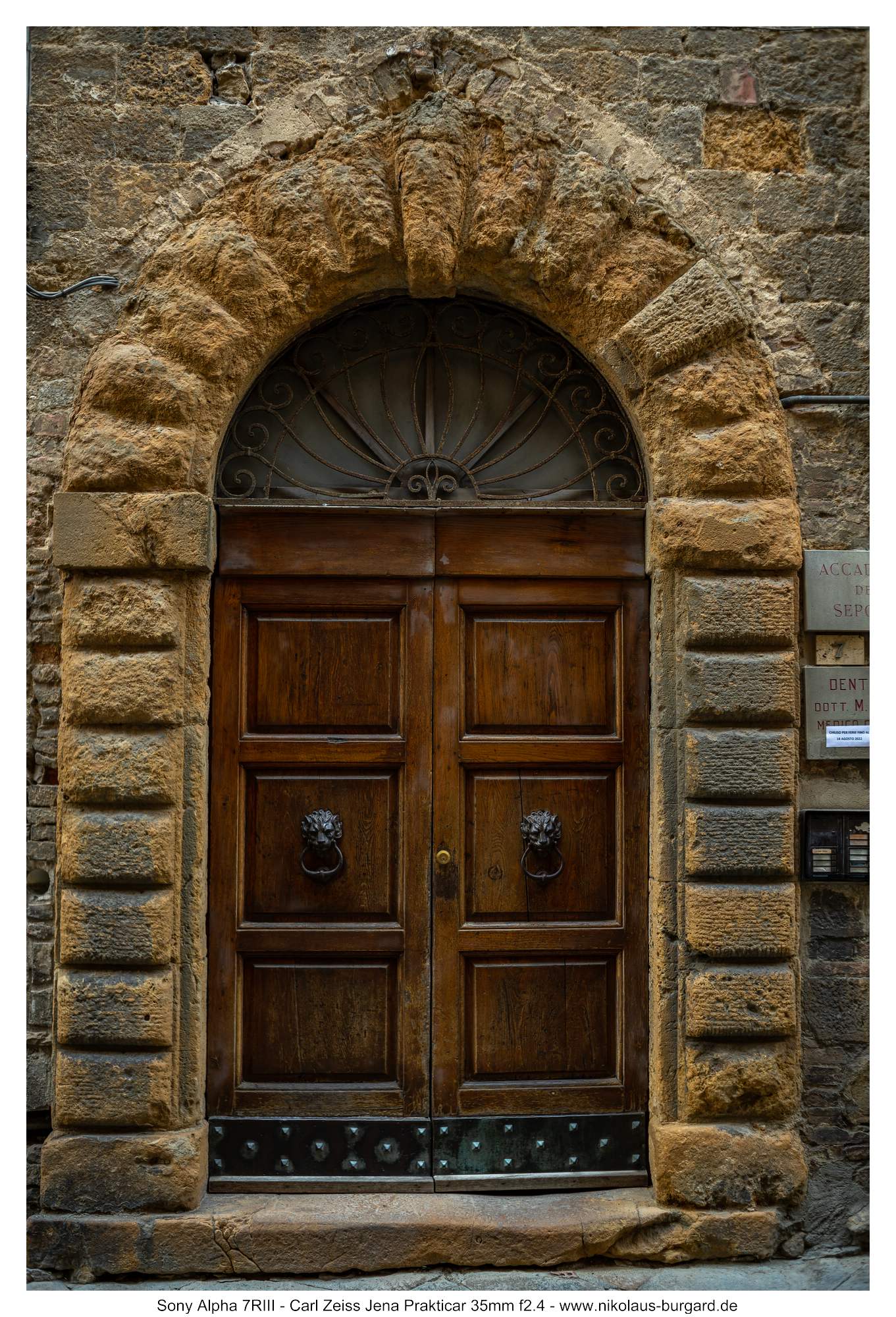
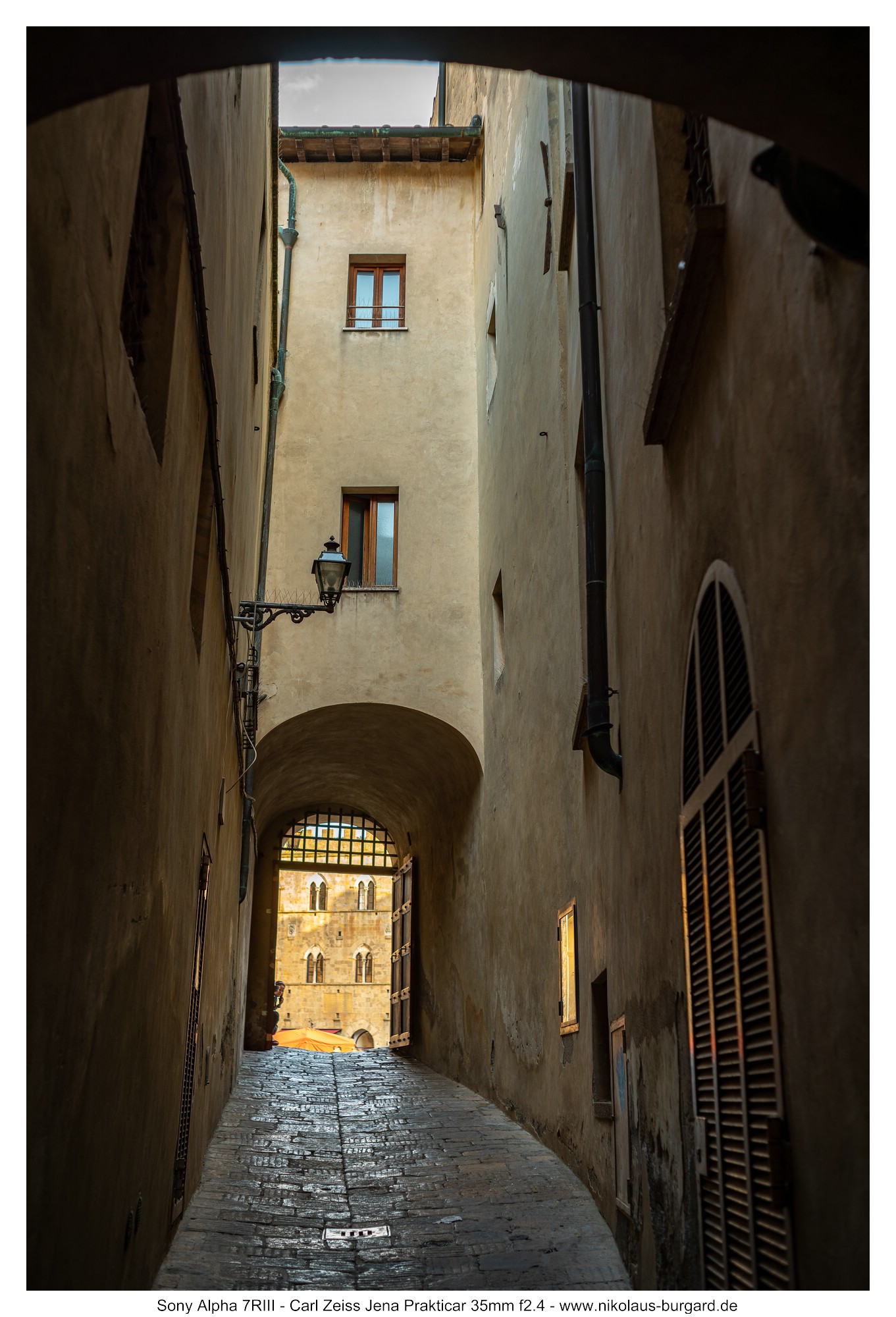
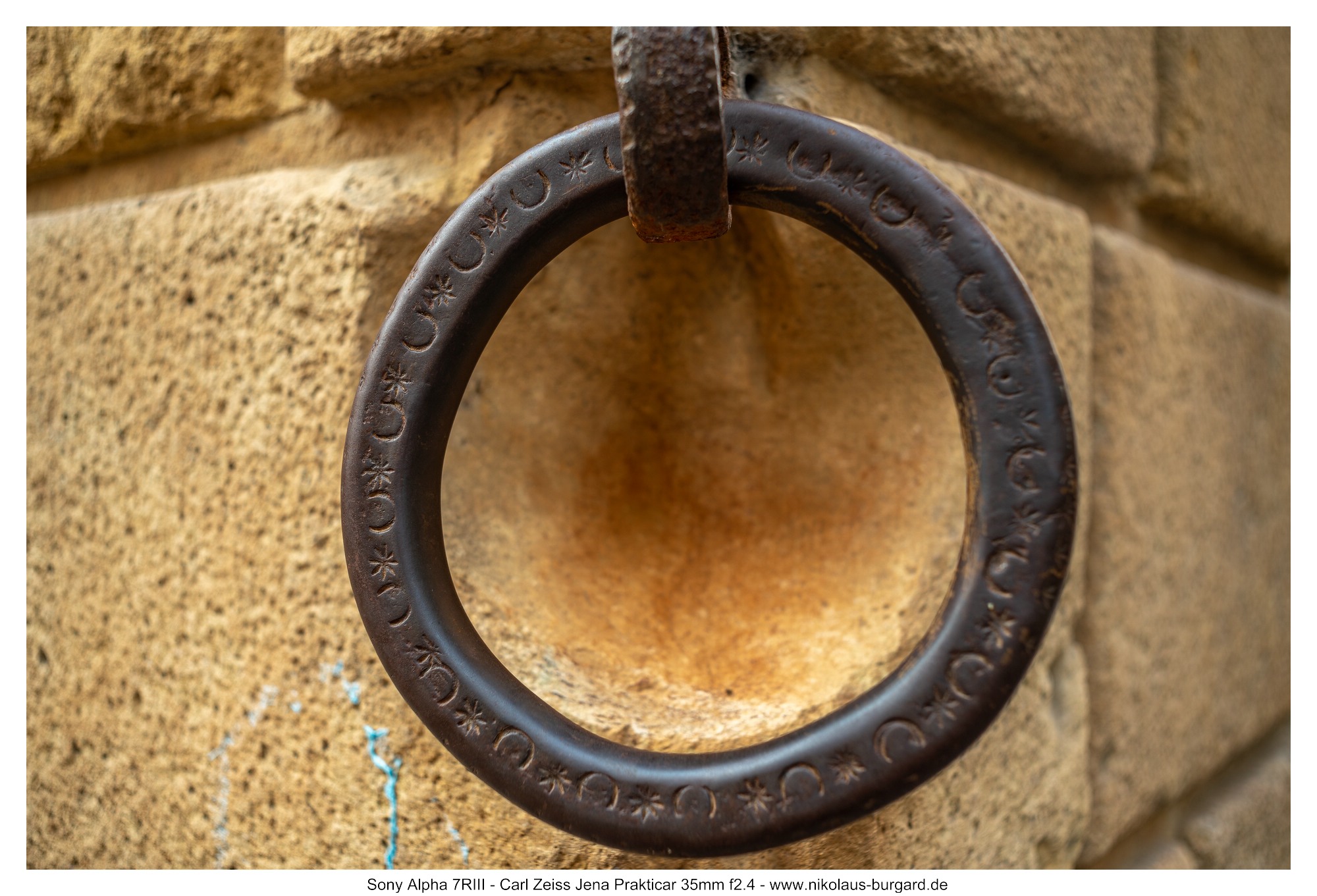
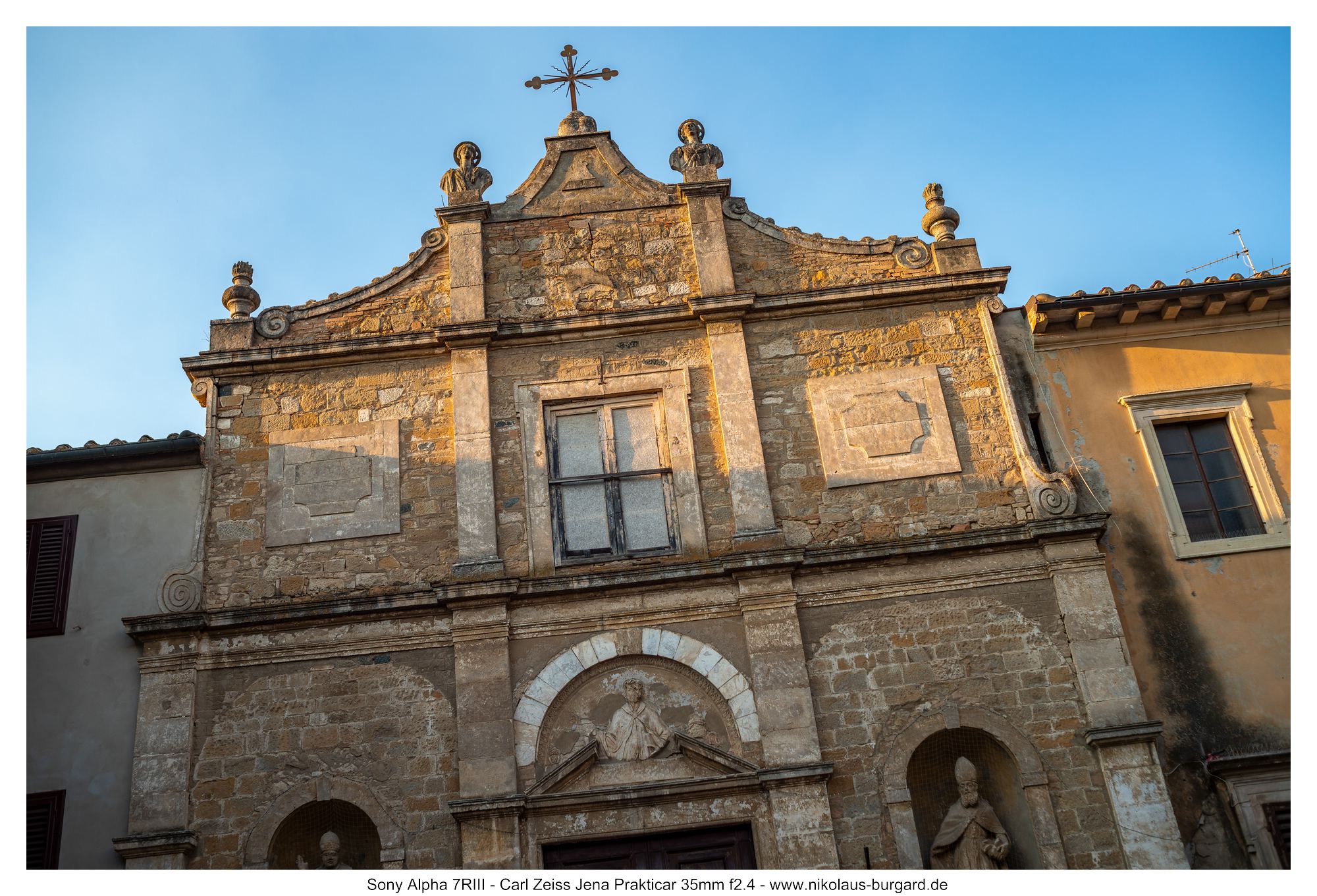
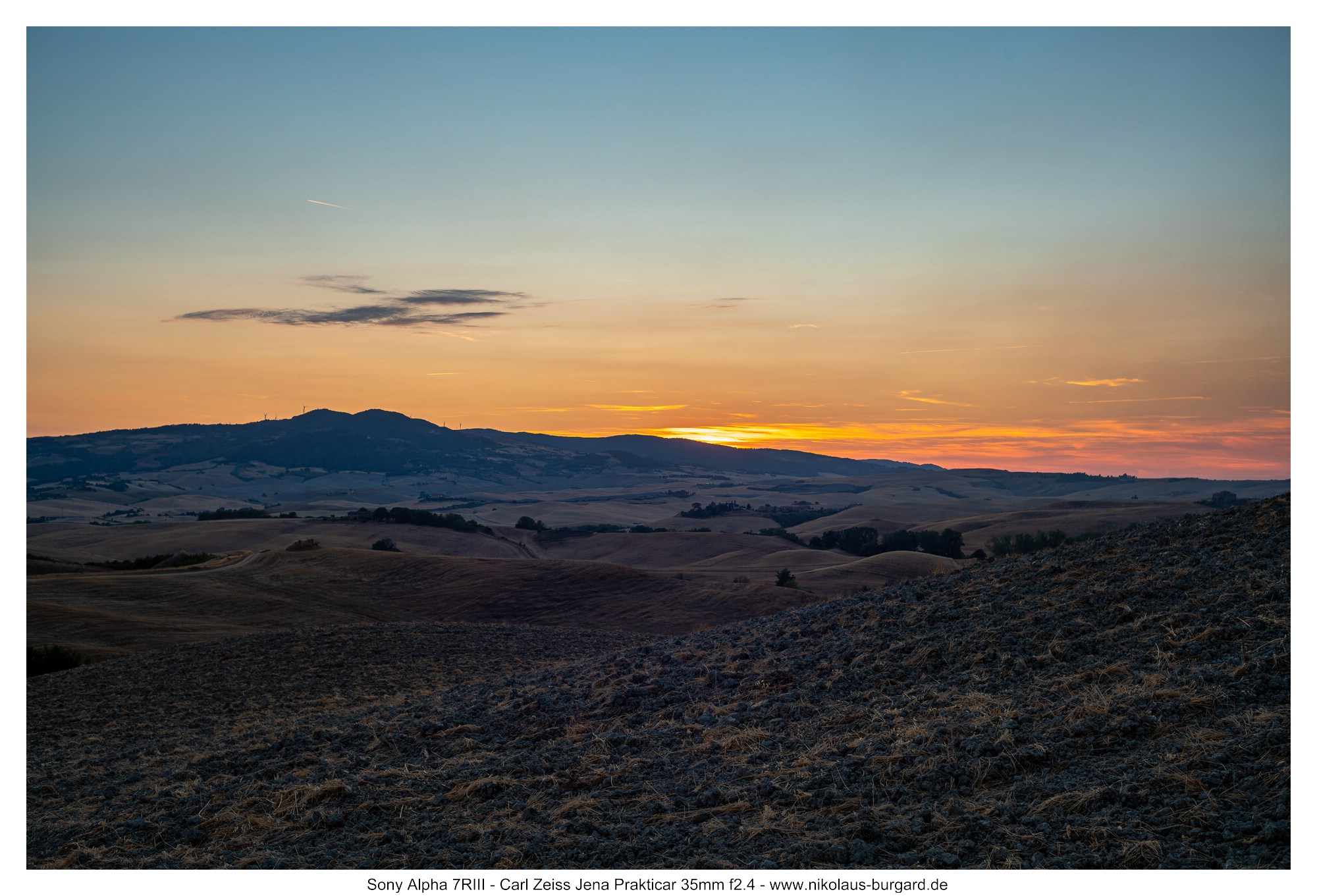
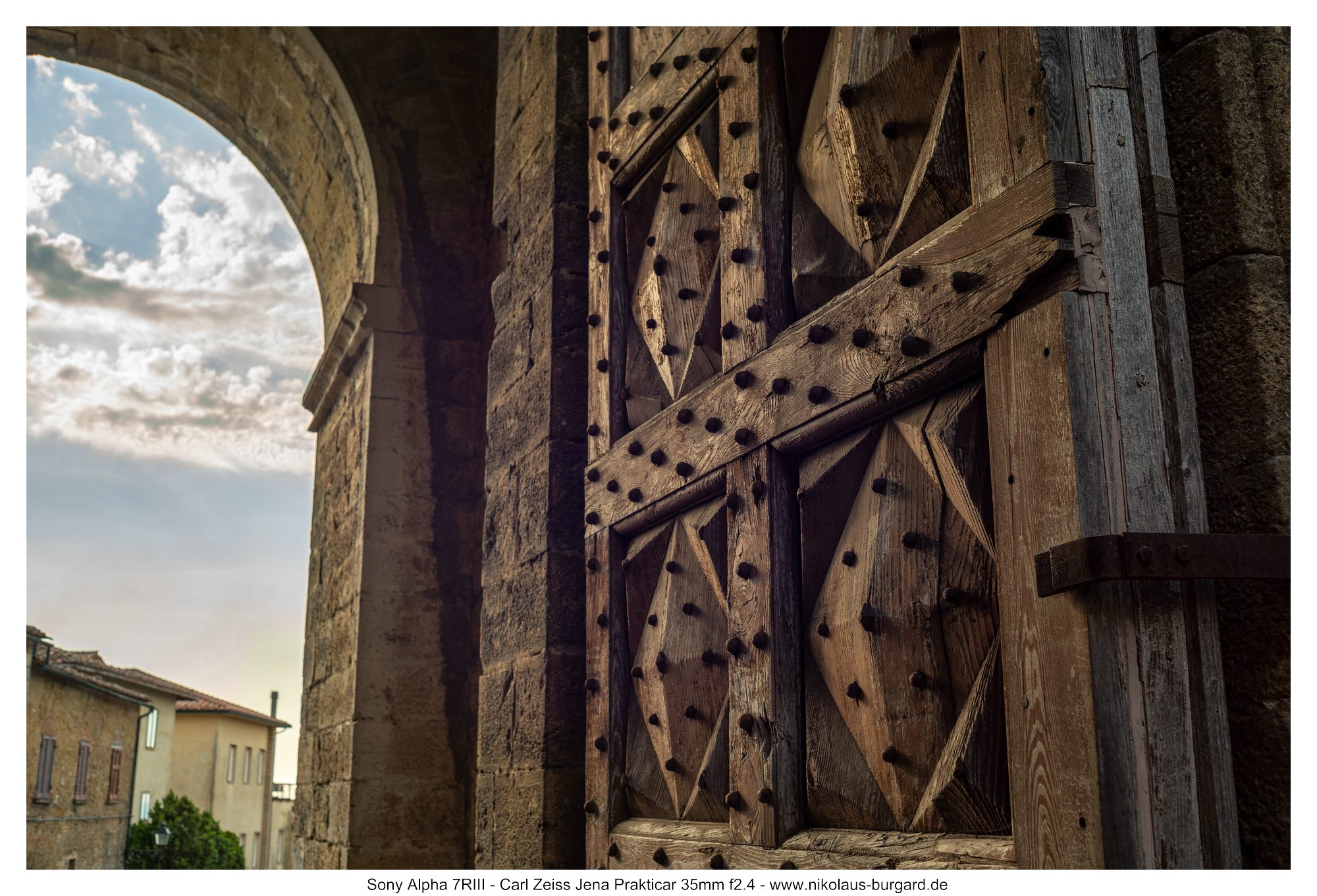
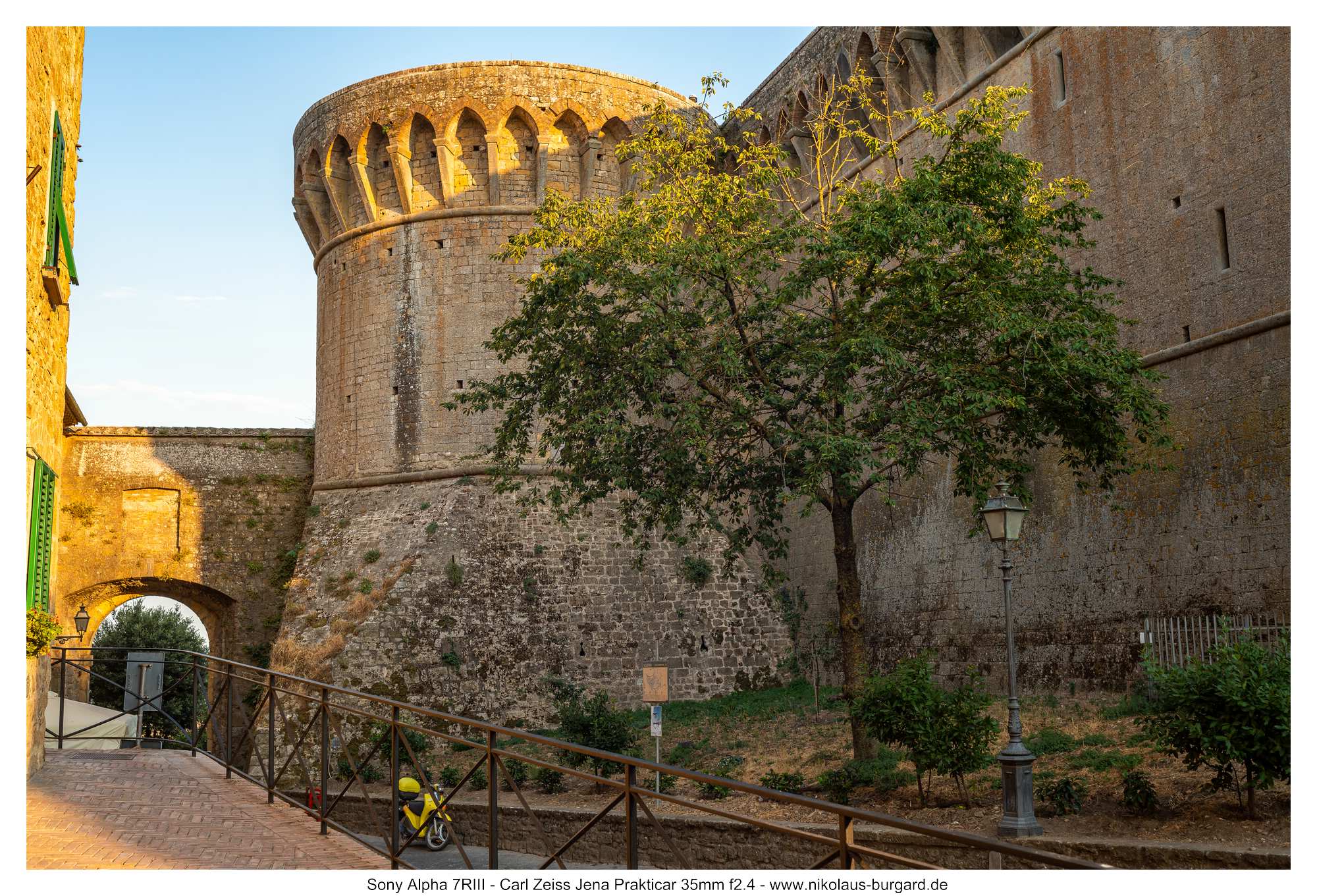
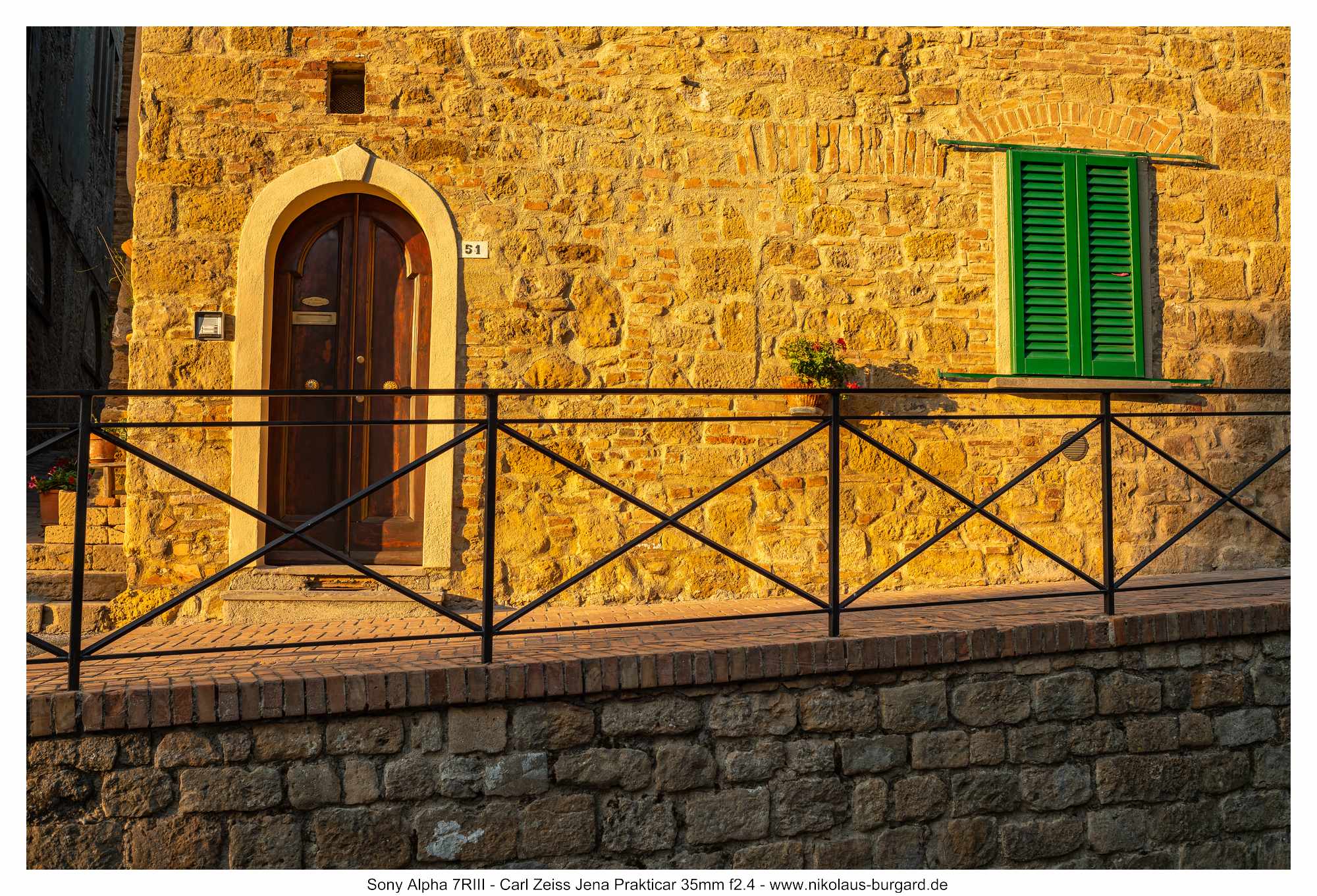
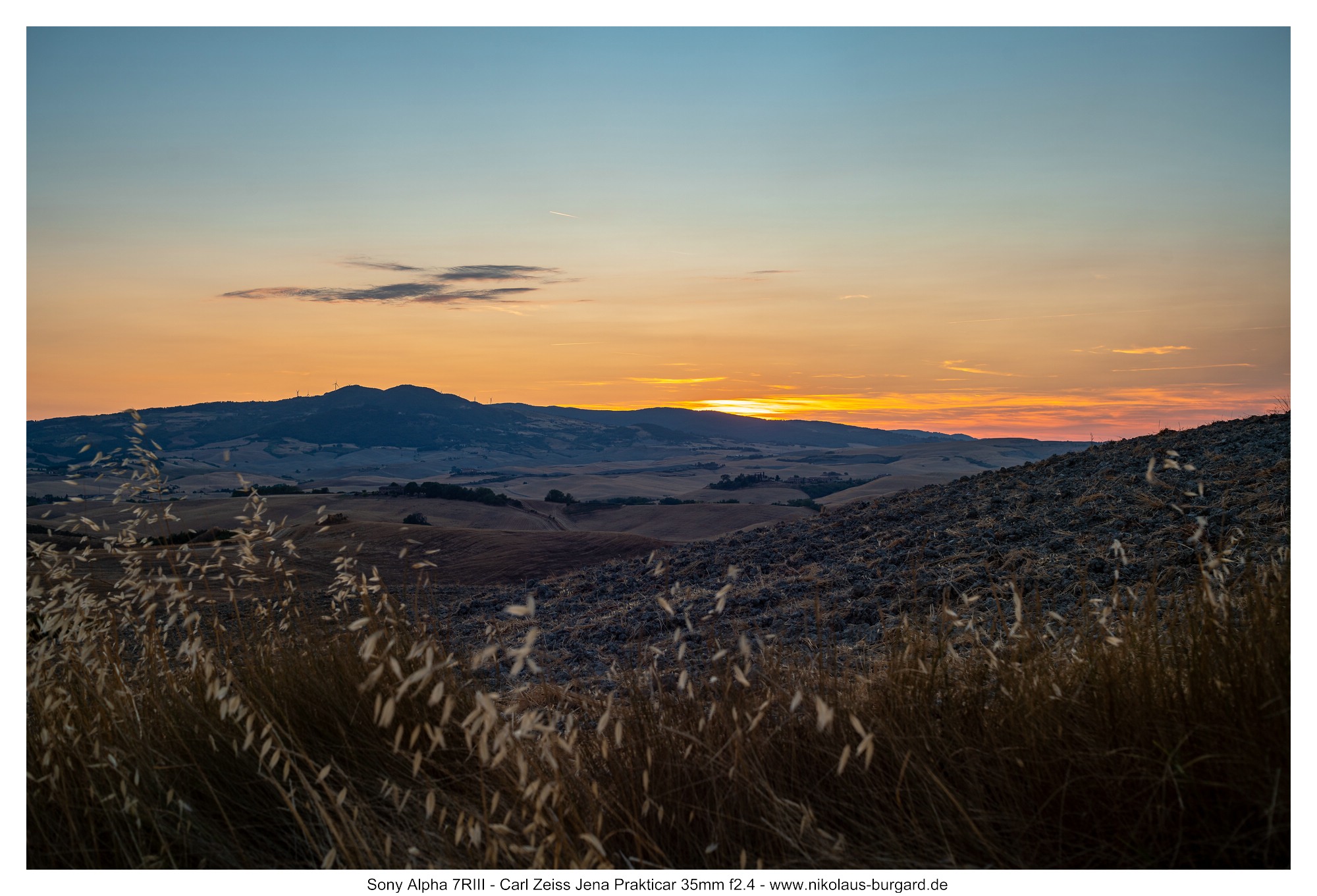
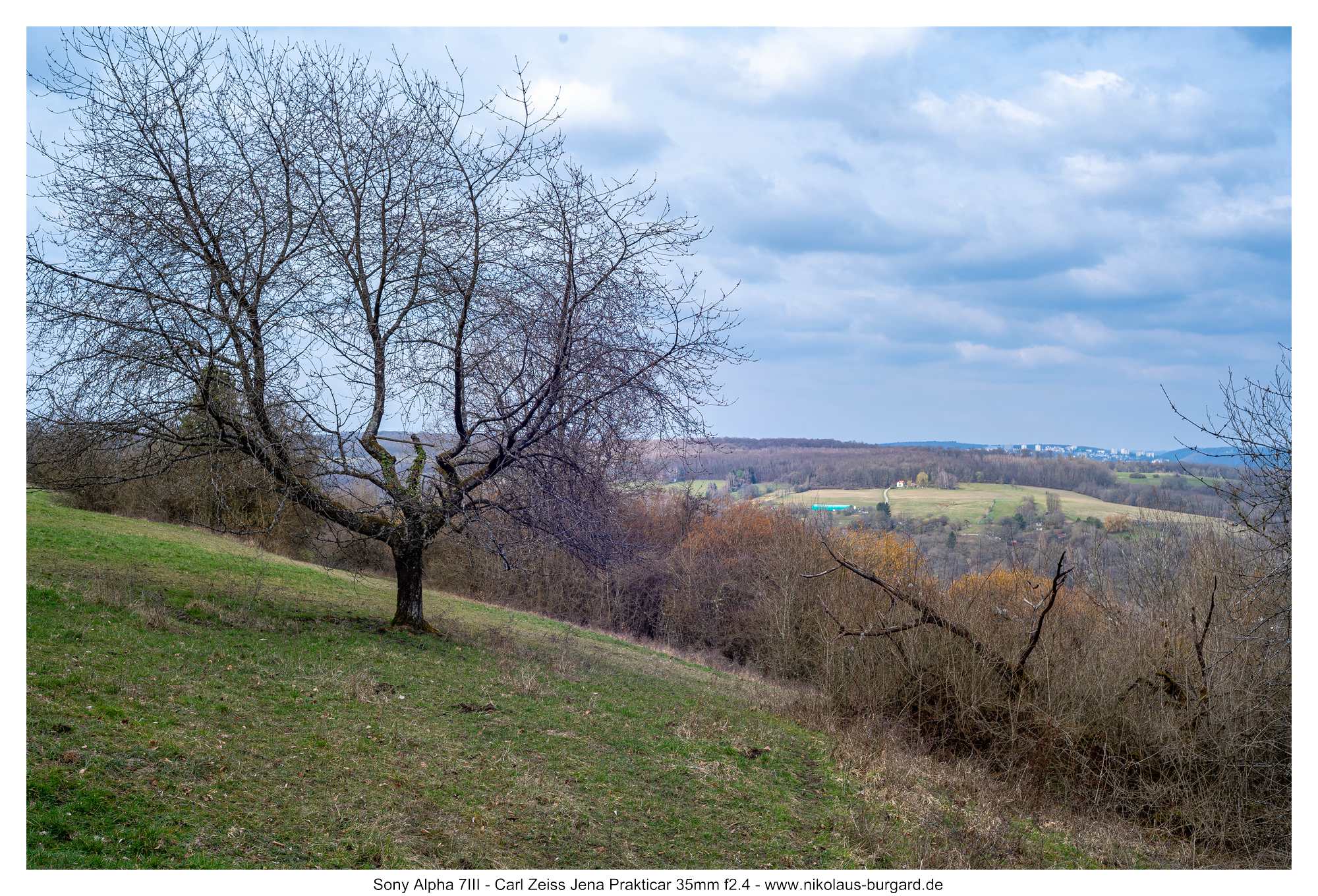
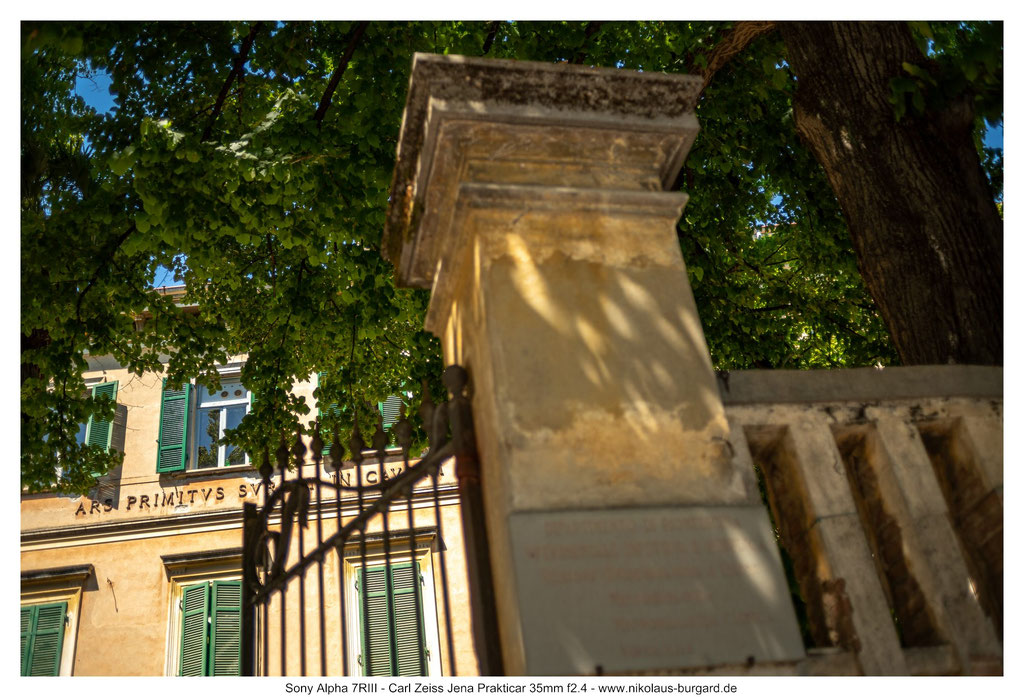
Das Carl Zeiss Jena Prakticar 35mm f2.4 ist ein echter Dauerbrenner in meiner Objektivsammlung, ich besitze es schon weit über 10 Jahre.
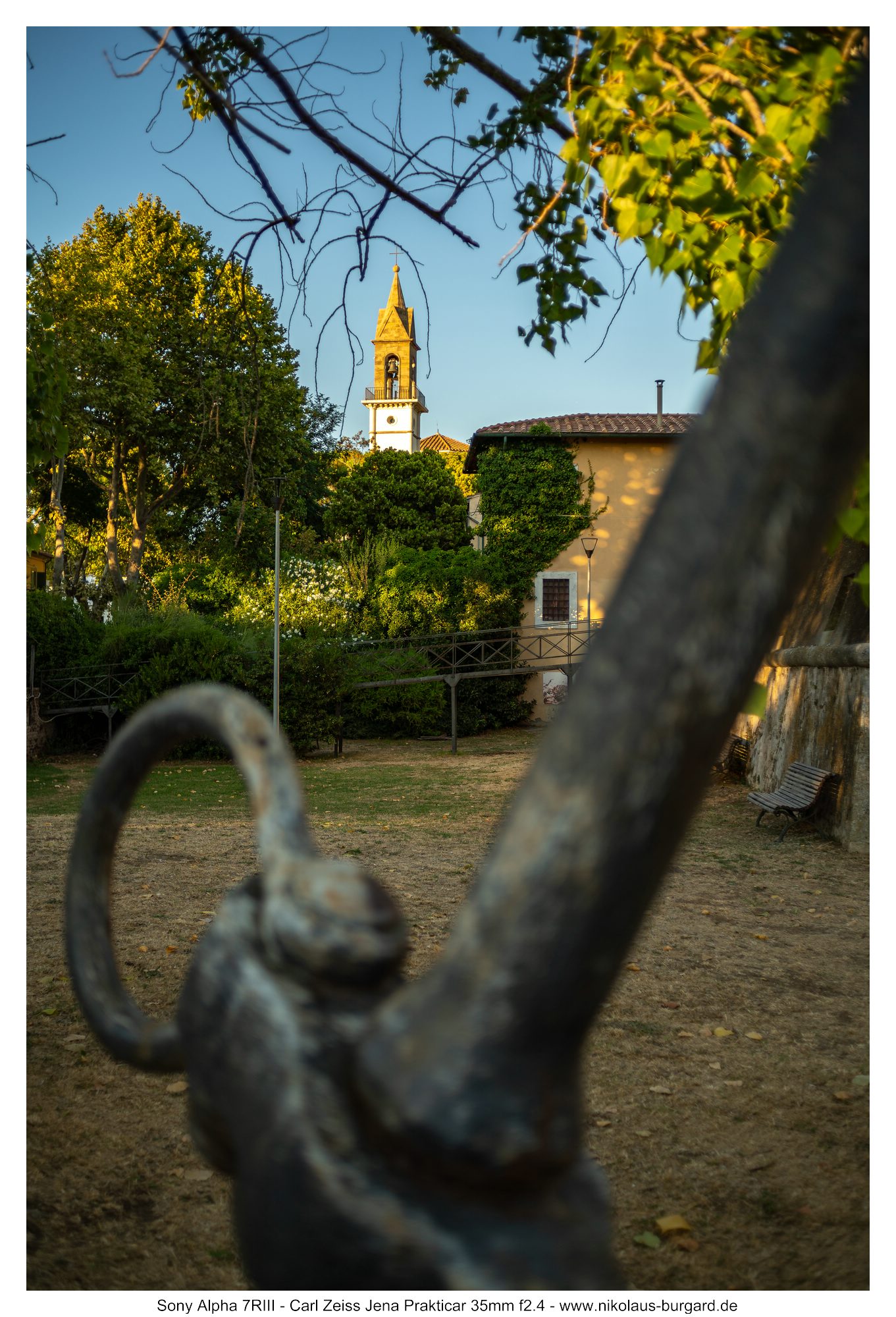
Und so durfte es im Jahr 2022 auch mit uns in die Toskana (ich hatte in diesem Urlaub eine reine Prakticar-Objektivauswahl mit dabei: 35mm f2.4, 50mm f1.4 und Vario-Prakticar 80-200mm f4).
Volterra bot eine wunderschöne Kulisse für stimmungsvolle Aufnahmen, bei denen das Prakticar sowohl seine hervorragende Schärfeleistung abgeblendet als auch seine sehr gute Bildleistung mit eigenem Rendering bei Detailaufnahmen bei Offenblende in die Waagschale werfen konnte.
The Carl Zeiss Jena Prakticar 35mm f2.4 is a real constant in my lens collection, I have owned it for well over 10 years.
And so it was in 2022 with us in Tuscany (I had a pure Praktica lens selection with me on this holiday: 35mm f2.4, 50mm f1.4 and Vario-Prakticar 80-200mm
f4).
Volterra provided a beautiful backdrop for atmospheric shots, in which the Prackica could show its excellent sharpness performance stopped down and throw its
very good image performance into the balance with its own rendering during details shots at open aperture.
Rendering & Bokeh
Wenn es um das Hintergrundrendering geht, gibt es immer viele gegensätzliche Meinungen.
Denn ob einem die Darstellung eines Objektives gefällt, ist halt einfach Geschmackssache.
Der Eine möchte alles butterweich aufgelöst haben, der Andere mag es busy mit viel Outlining und Strukturen und/oder Swirl (und natürlich gibt es ganz viel zwischen diesen Extremen in der Mitte)...
Bei den lichtstarken älteren 35mm-Objektiven, zu denen das Carl Zeiss Jena Prakticar 35mm f2.4 gehört, ist das Bokeh von weich und unaufgeregt meist noch weit entfernt.
Beim Design standen mit Sicherheit andere Kriterien wie Schärfe, Verzeichnung und Farbfehler im Vordergrund und waren einfach wichtiger als eine weiche Hintergrundgestaltung.
Das Prakticar / Flektogon hat in meinen Augen ein für ein 35mm-Objektiv sehr interessantes Rendering.
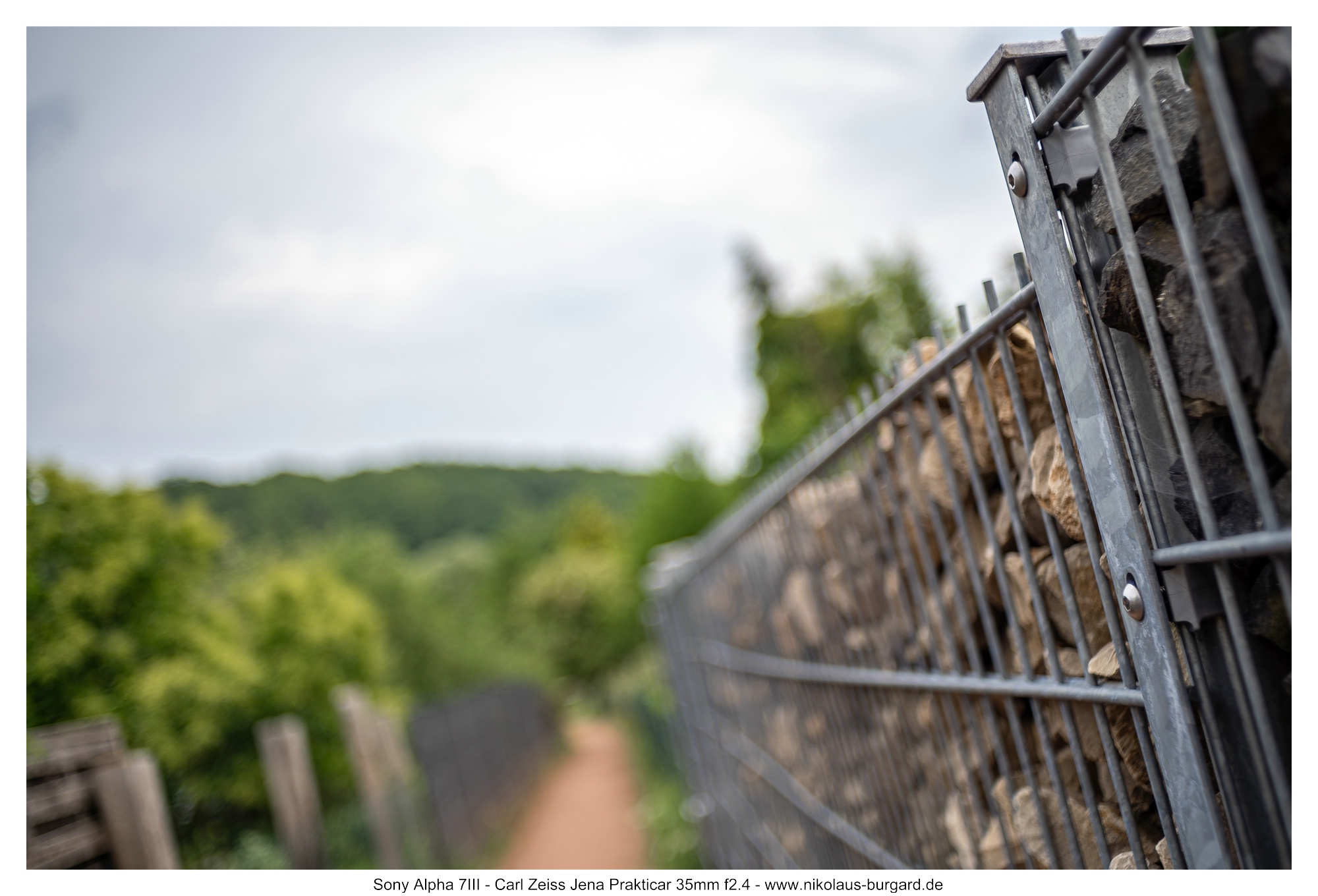
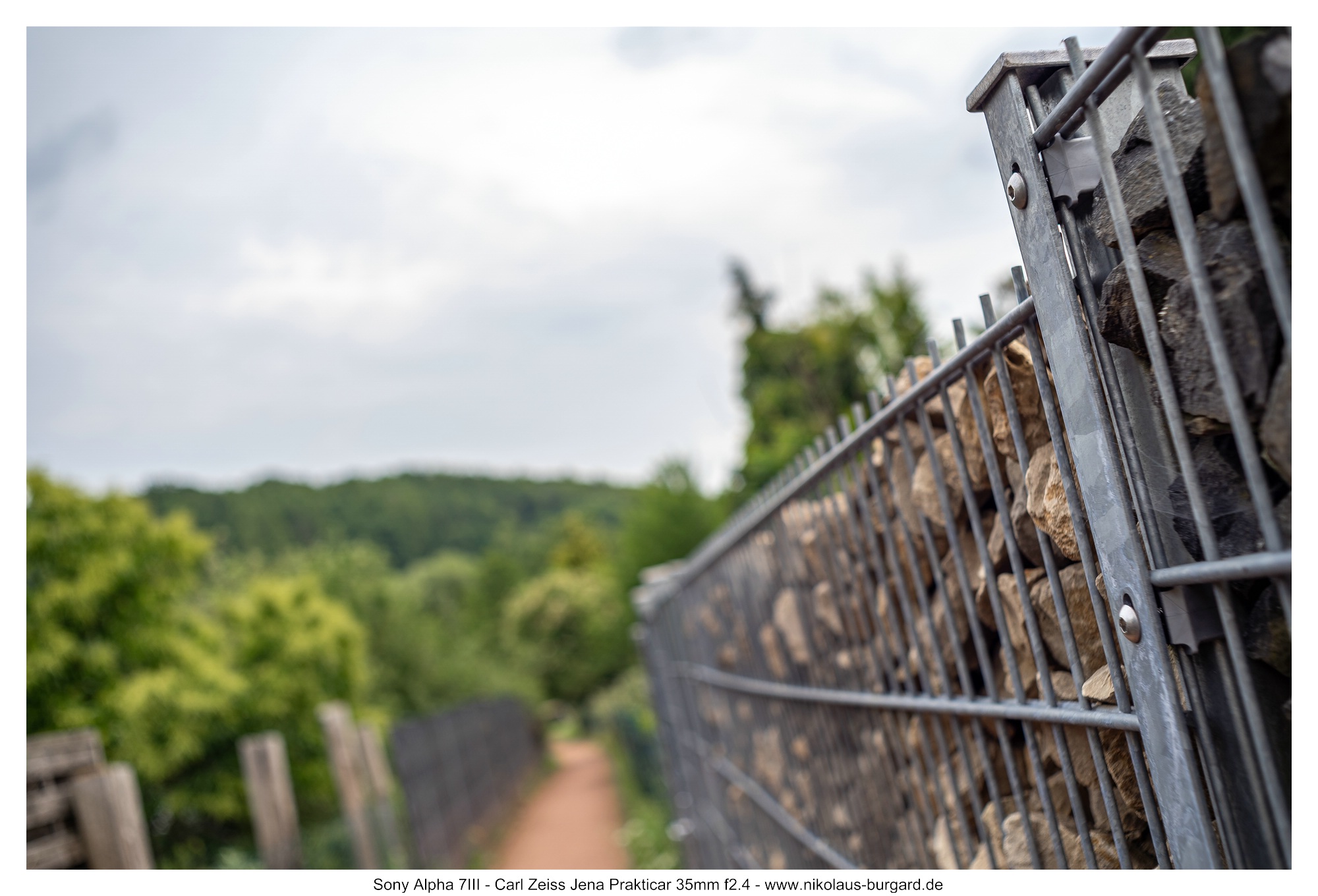
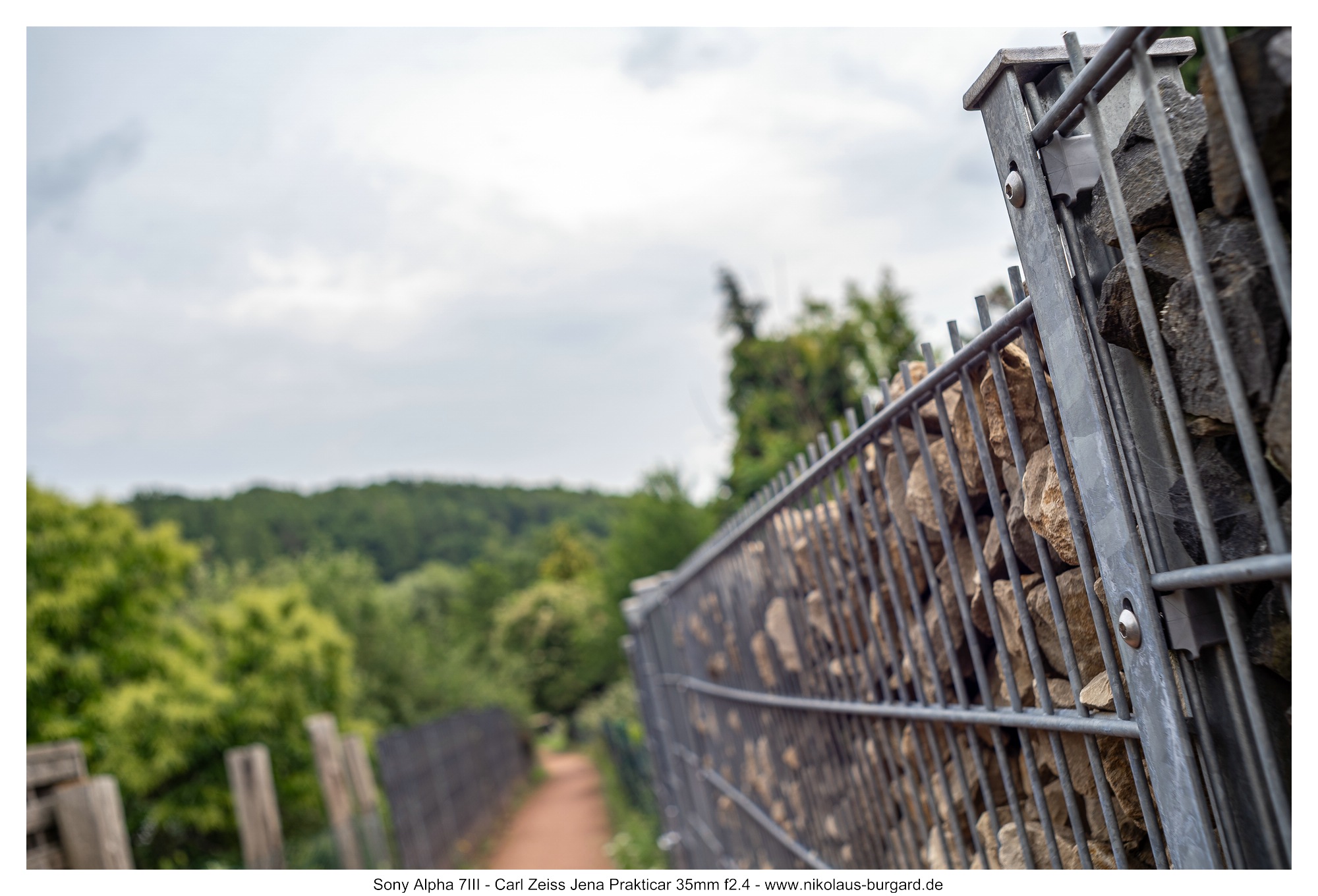
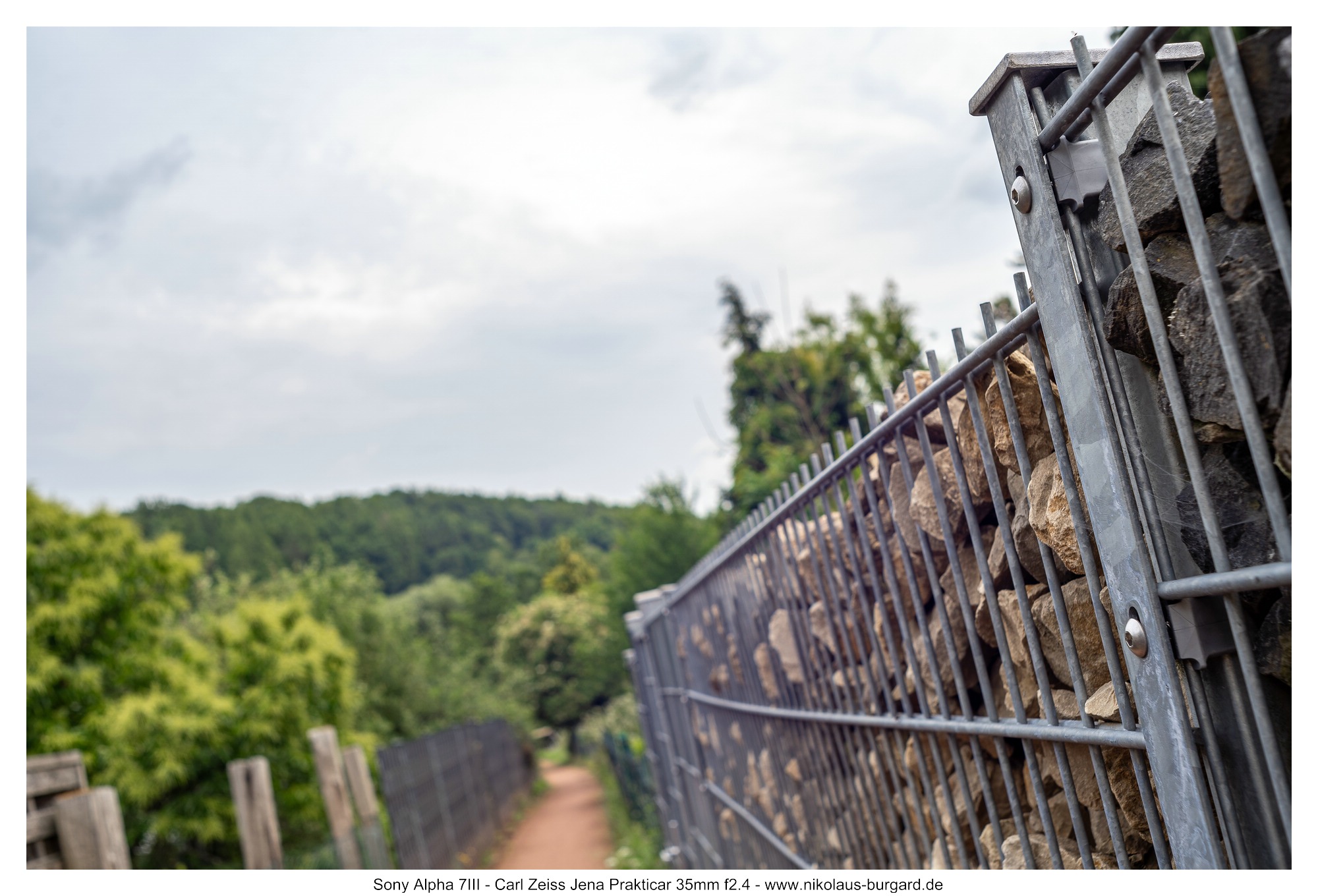
Die Hintergründe werden selten weich und flächig aufgelöst, "störende" Strukturen gibt es nicht nur bei großen Lichtkontrasten und auffälligen Highlights, sondern auch in gemäßigten Situationen. Es neigt gerne auch zu Bubble-Bildung , aber nur zu dezentem Swirl.
Die Blendenwerte sind f2.4 - f4 - f5.6 - f8:
When it comes to background rendering, there are always a lot of opposing opinions.
Because whether you like the representation of a lens is simply a matter of taste.
One wants to have everything butter-soft resolved, the other likes it busy with a lot of outlining and structures and/or swirl (and of course there is quite
a lot between these extremes in the middle)...
In the case of the bright older 35mm lenses, which include the Carl Zeiss Jena Prakticar 35mm f2.4, the bokeh is usually still far away from soft and
unexcited.
In the design, other criteria such as sharpness, distortion and color errors were certainly in the foreground and were simply more important than a soft
background rendering.
The Praktica / flektogon has in my eyes a very interesting rendering for a 35mm lens.
The backgrounds are rarely soft and flat dissolved, "disturbing" structures are not only available with large light contrasts and striking highlights, but
also in moderate situations. It also likes to tend to bubble formation, but only to subtle swirl.
The following series shows the development of the background blur when stopping down.
The focus was on the screw on the bottom right of the picture, distance to this was just over a meter.
The aperture values are f2.4 - f4 - f5.6 - f8:


An meinem zweiten häufig gezeigten Bokehtestmotiv ist das grundsätzlich weiche und flächige Hintergrundrendering gut zu sehen:
In my second frequently shown bokeh test motif, the generally soft and flat background rendering is clearly visible:
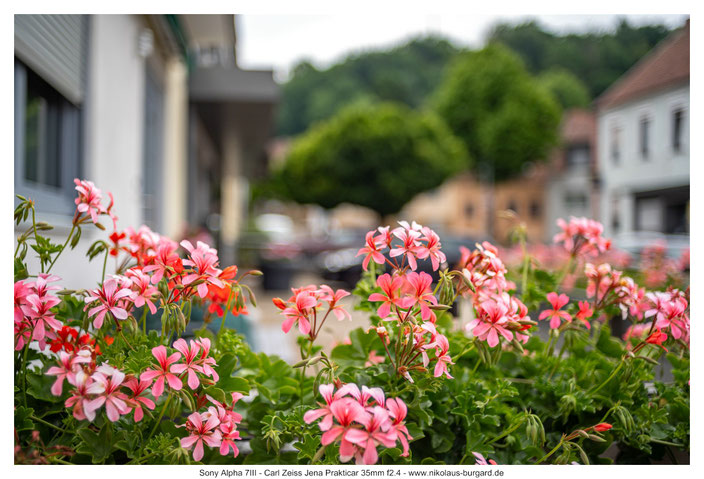
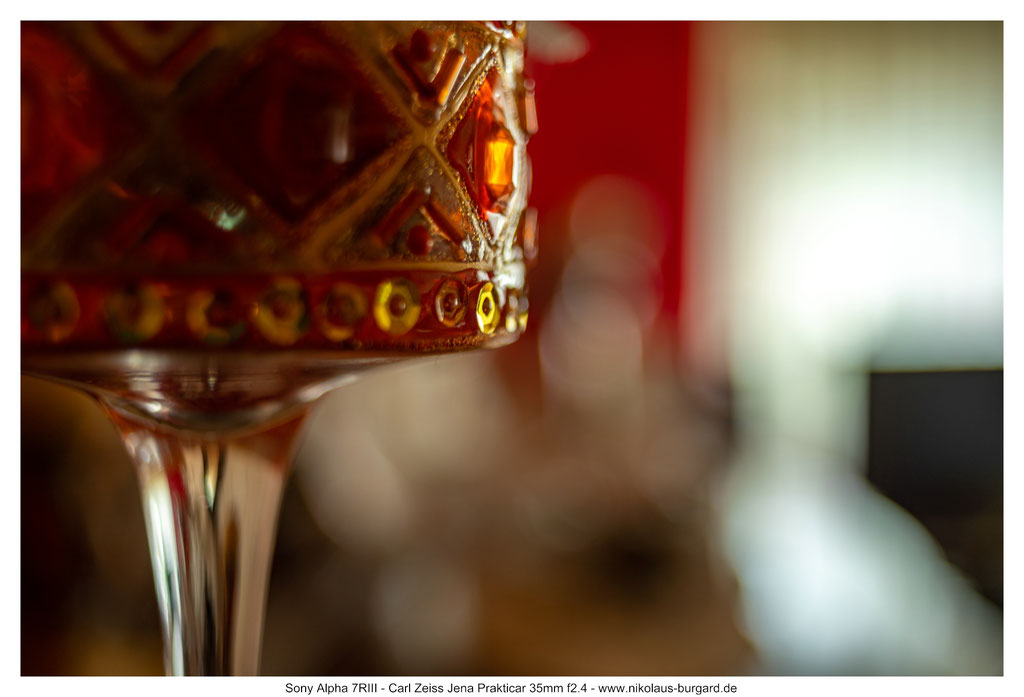
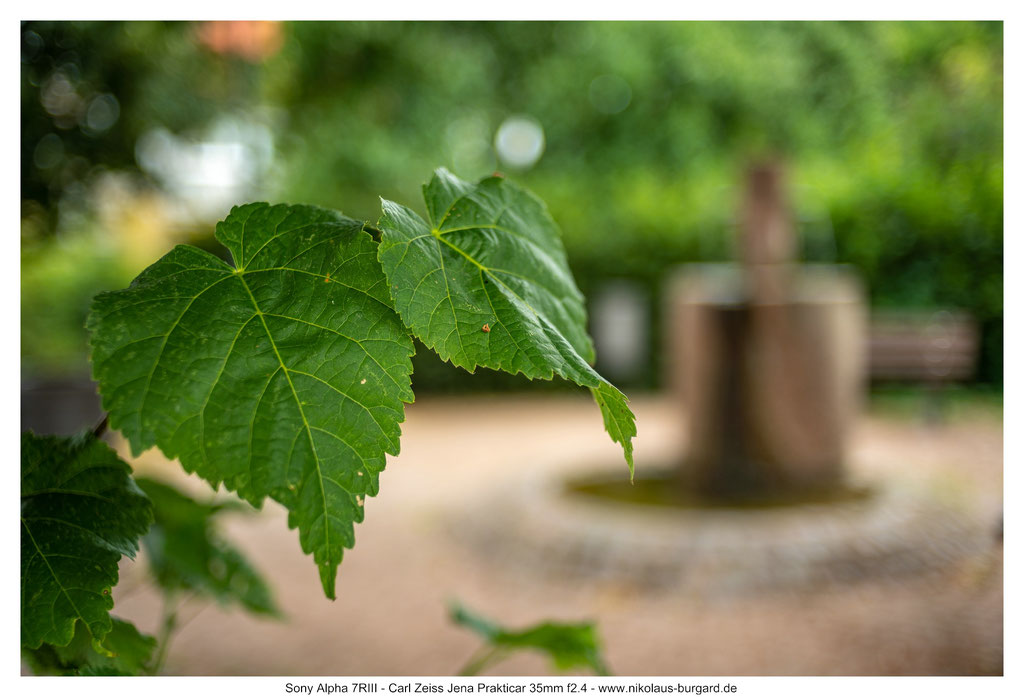
An der Naheinstellgrenze des Objektives ist das Rendering deutlich weicher und harmonischer als auf mittlere Distanz, hier verbleiben bei Offenblende kaum Reststrukturen in den Unschärfebereichen sichtbar.
Beim Abblenden bleibt das Bokeh harmonisch weich, die Highlights werden der Blendenlamellenzahl entsprechend zu sechseckigen "Stoppschildern".
At the close-focus limit of the lens, the rendering is significantly softer and more harmonious than at medium distances, here hardly any residual structures
remain visible in the blur regions with the open aperture.
When stopping down, the bokeh remains harmoniously soft, the highlights become hexagonal "stop signs" according to the number of aperture blades.
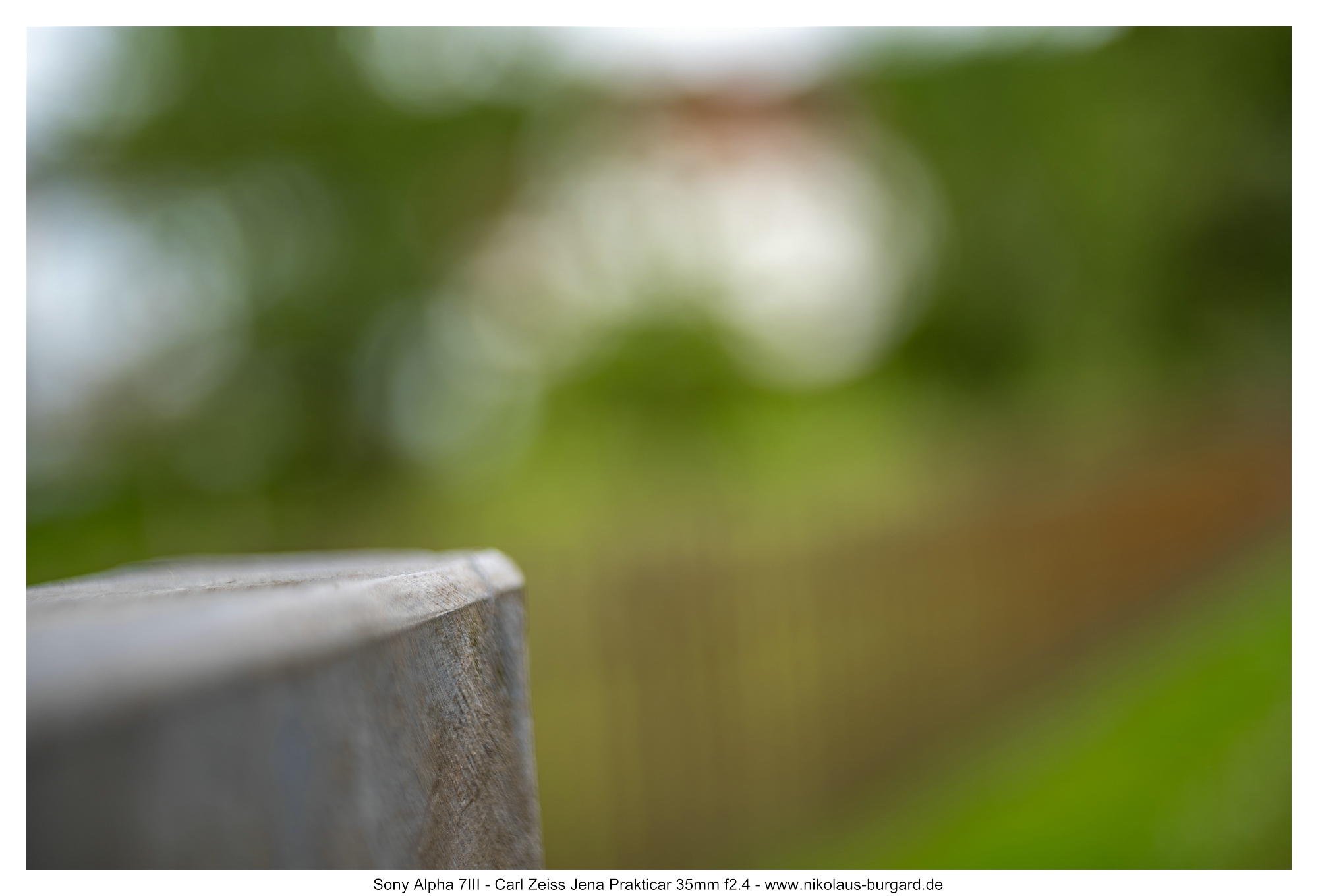
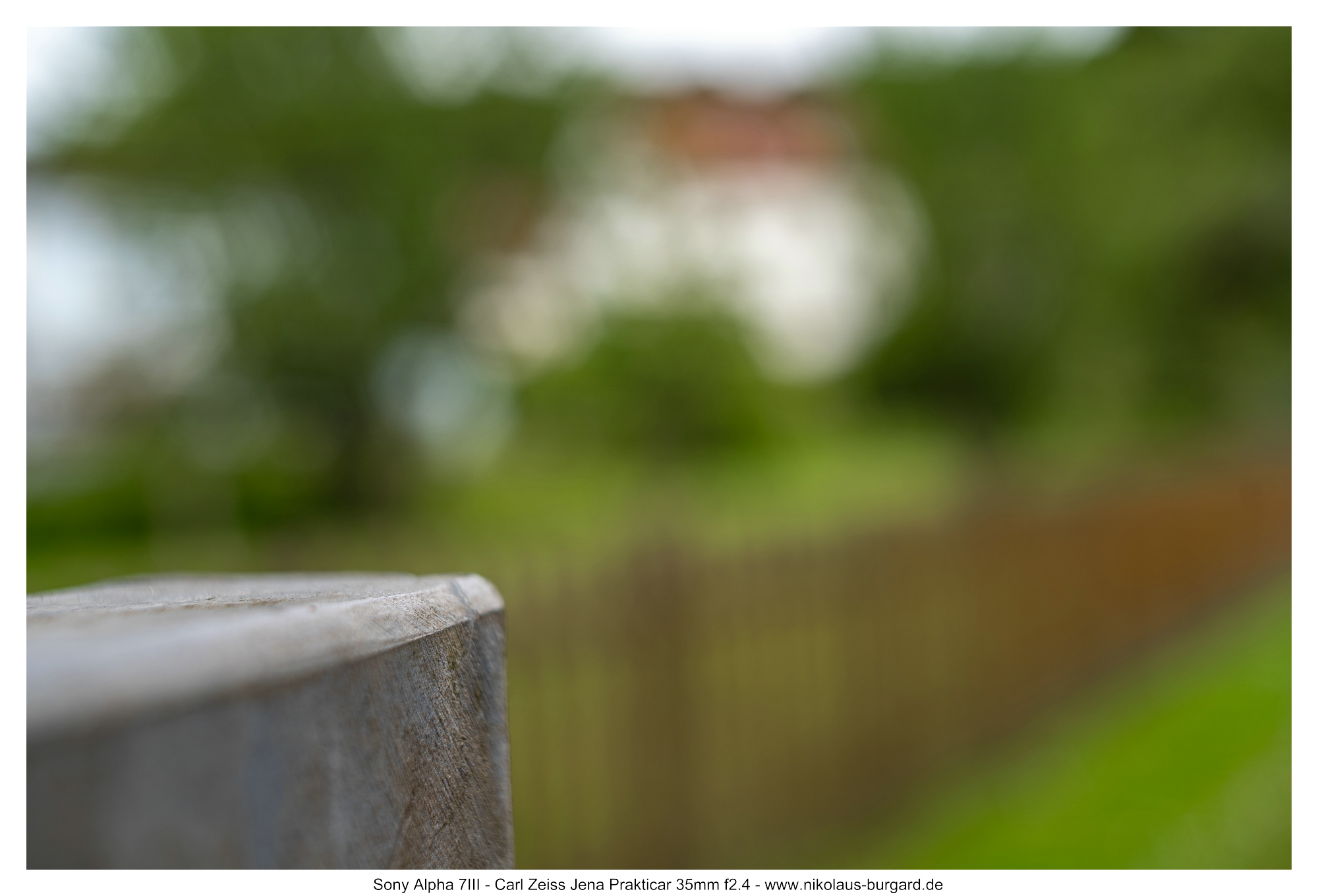
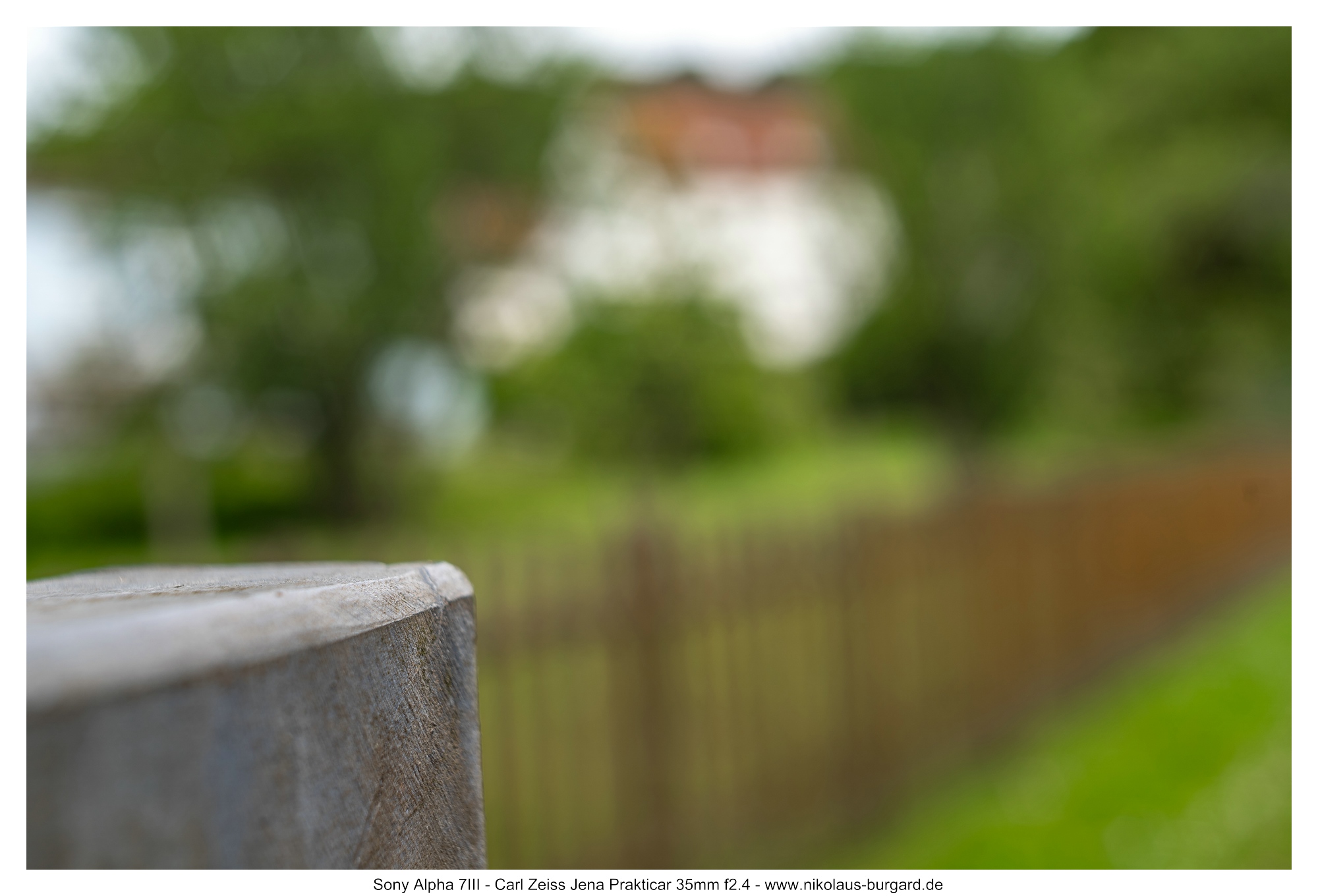
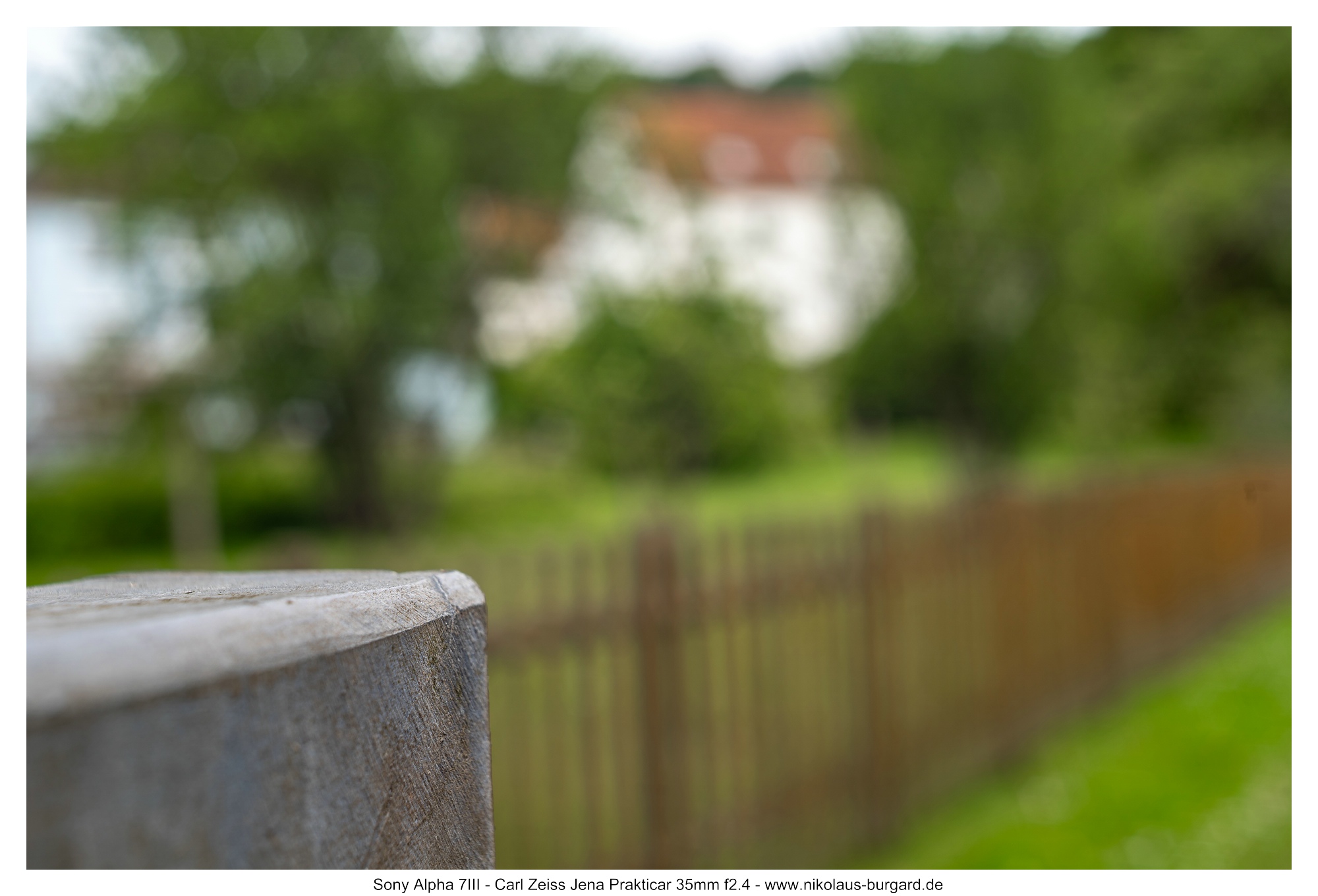
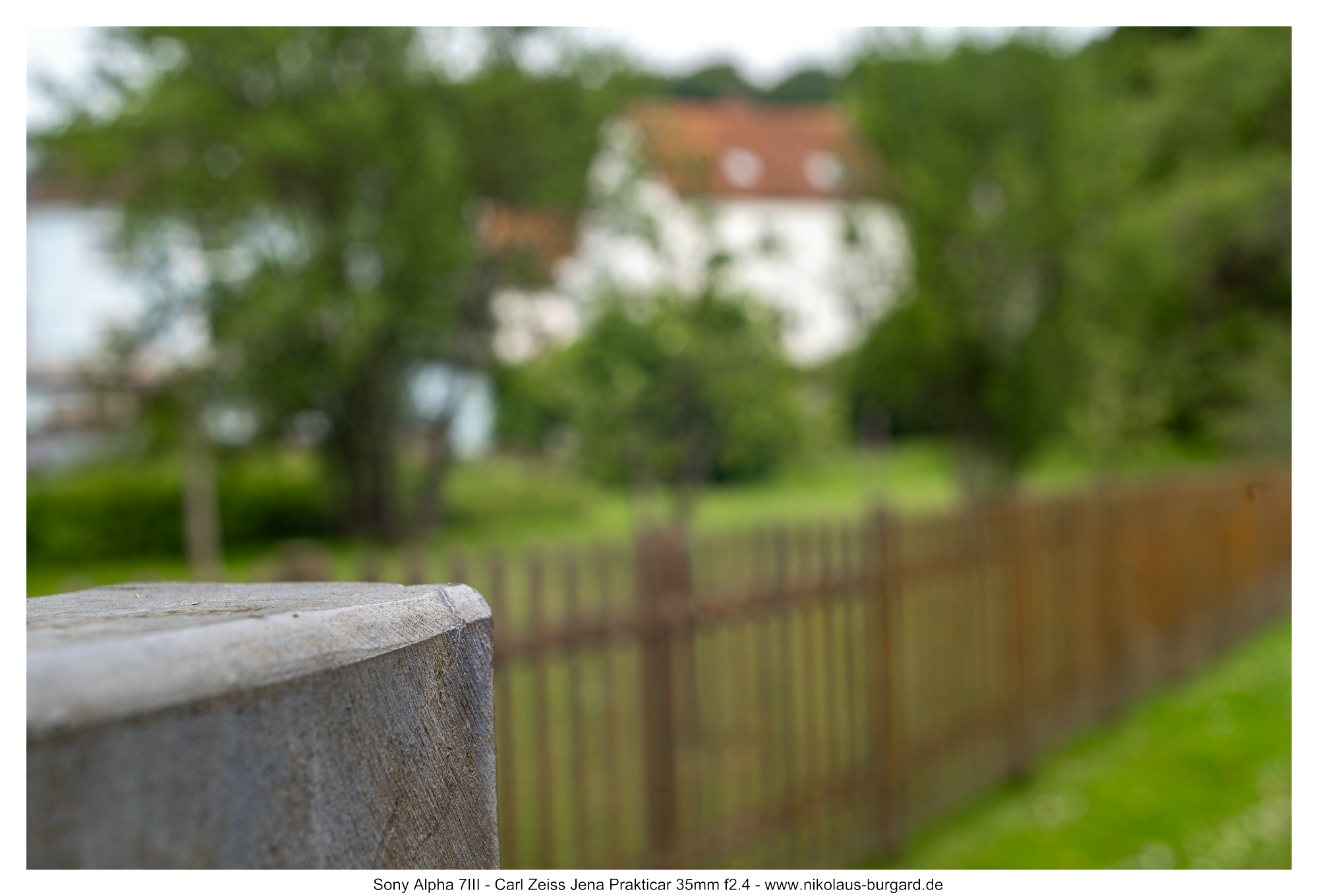


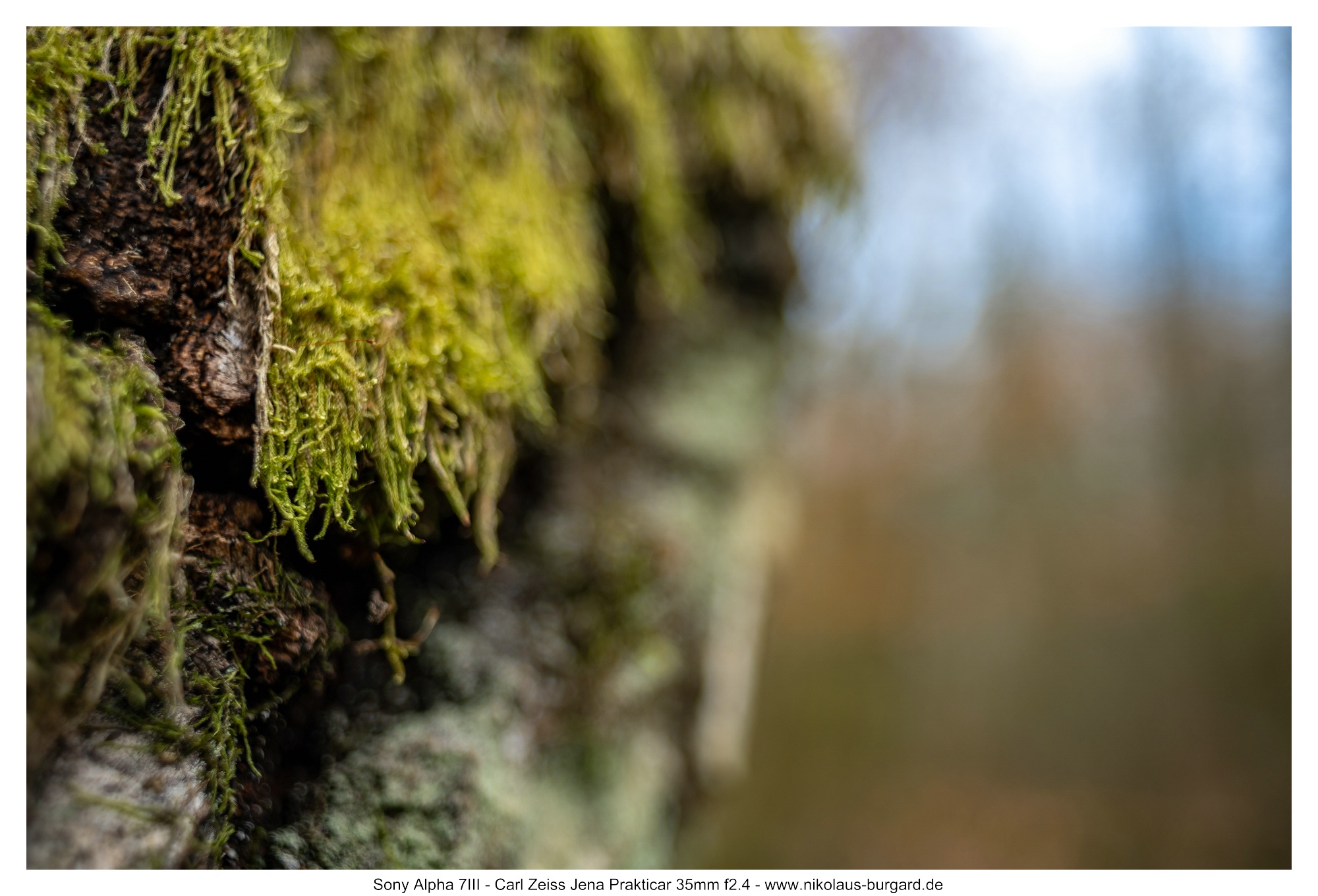
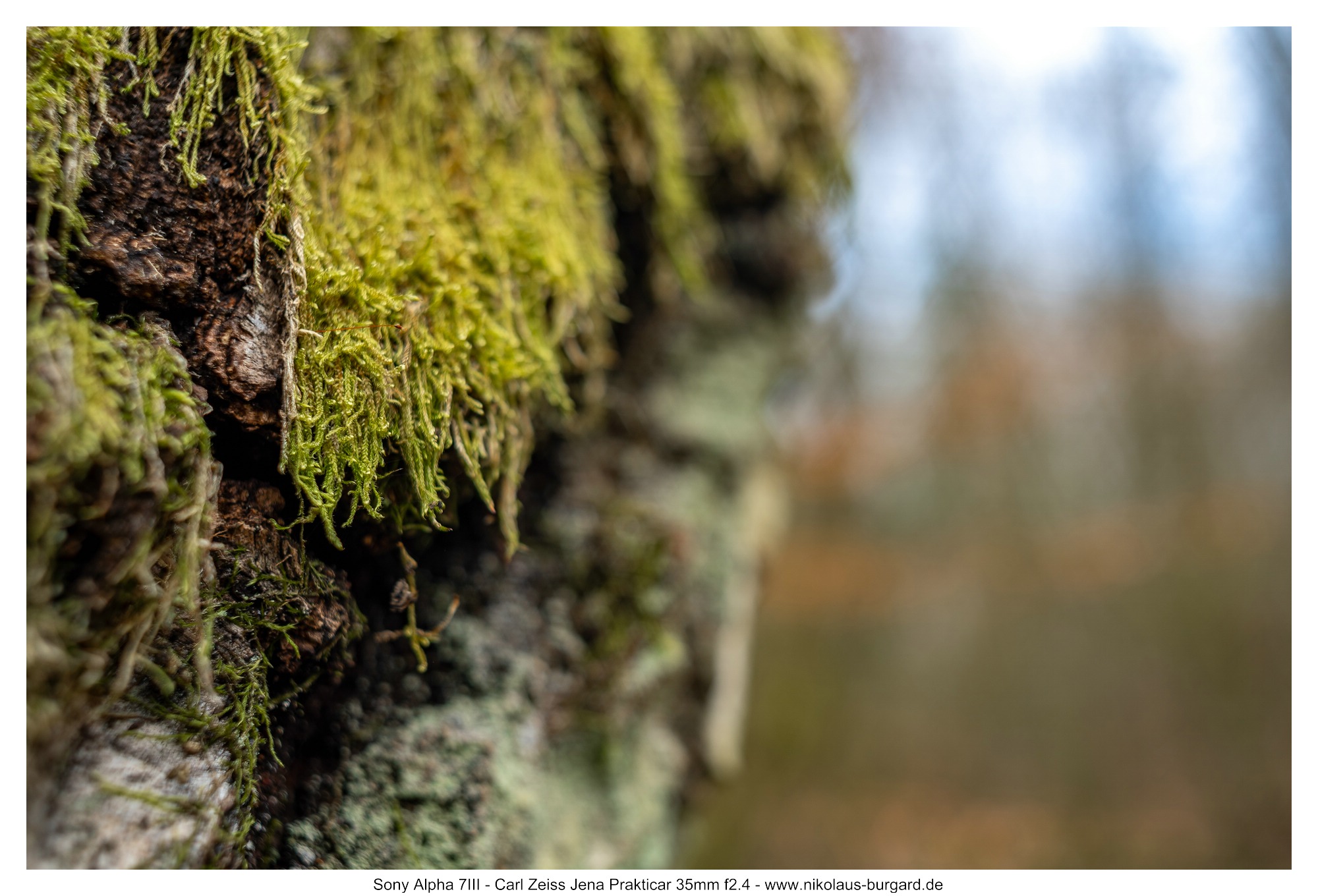
Die nächste Bildreihe ebenfalls an der Naheinstellgrenze zeigt einen deutlich näherern, komplexeren Hintergrund. Auch hier schlägt sich das Prakticar bei allen Blendenstufen gut, sowohl was die Bildschärfe am Fokuspunkt angeht als auch bezüglich der Unschärfe im Hintergrund.
The next series of images also at the close focusing limit shows a significantly closer, more complex background. Here, too, the Prakticar performs well at all aperture levels, both in terms of the image sharpness at the focus point and in terms of blur in the background.
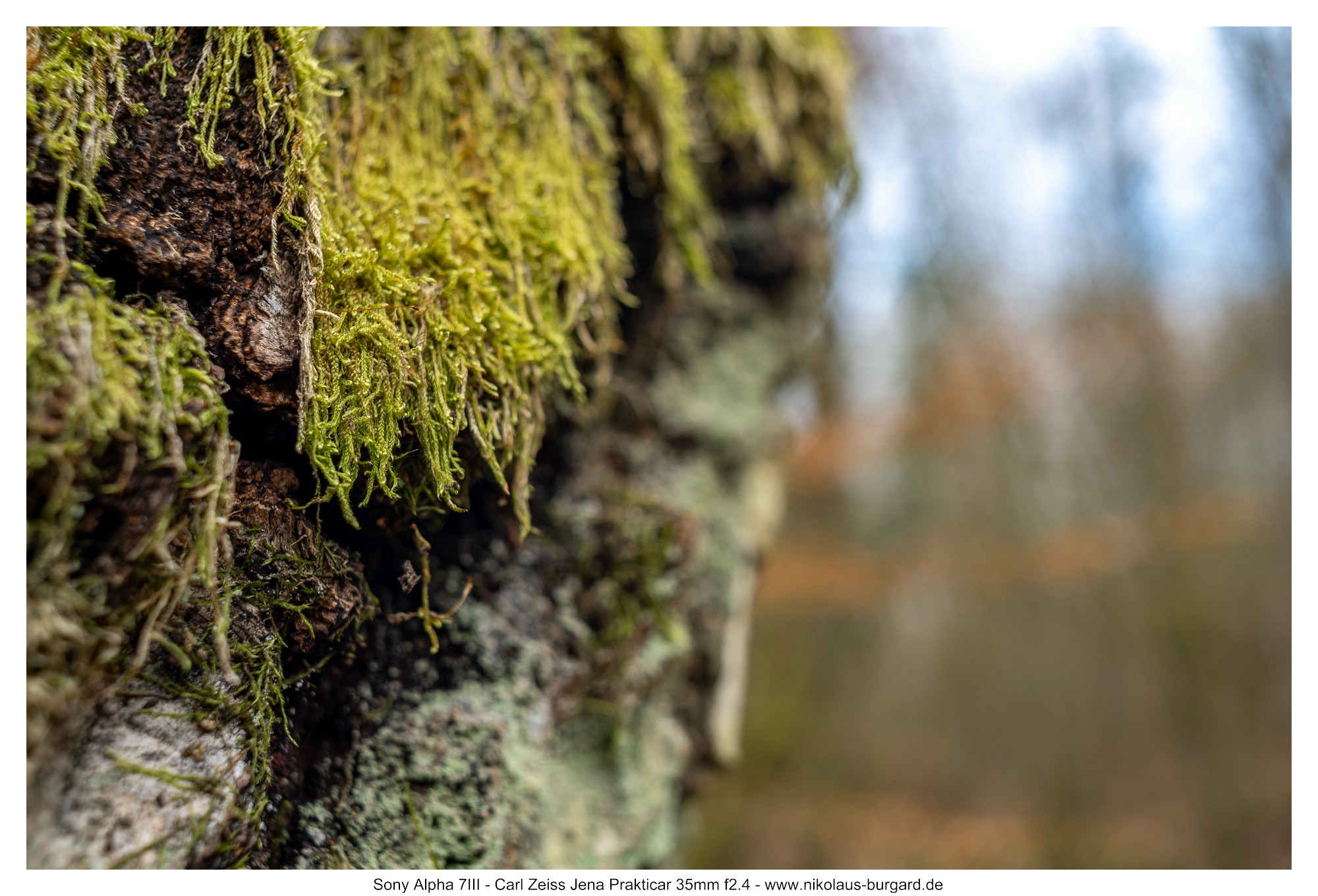
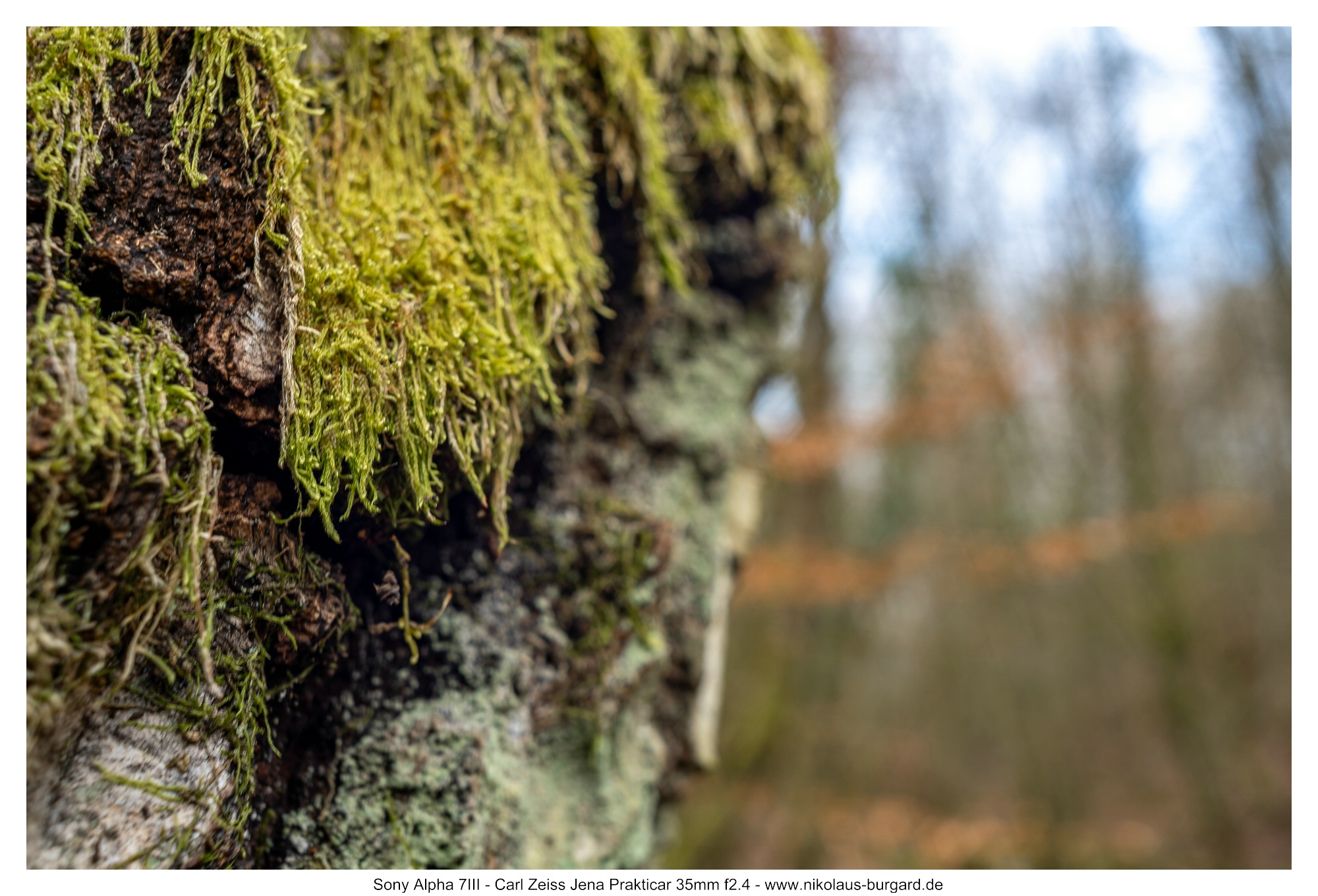


Auf längere Fokusdistanz ist, was die Freistellung angeht, natürlich schnell Schluss.
Selbst bei f2.4 ist da nur wenig Motivseparierung möglich:
In terms of the subject isolation, of course, the end is quick to reach at longer focus distance.
Even with f2.4, only a small amount of motif separation is possible:
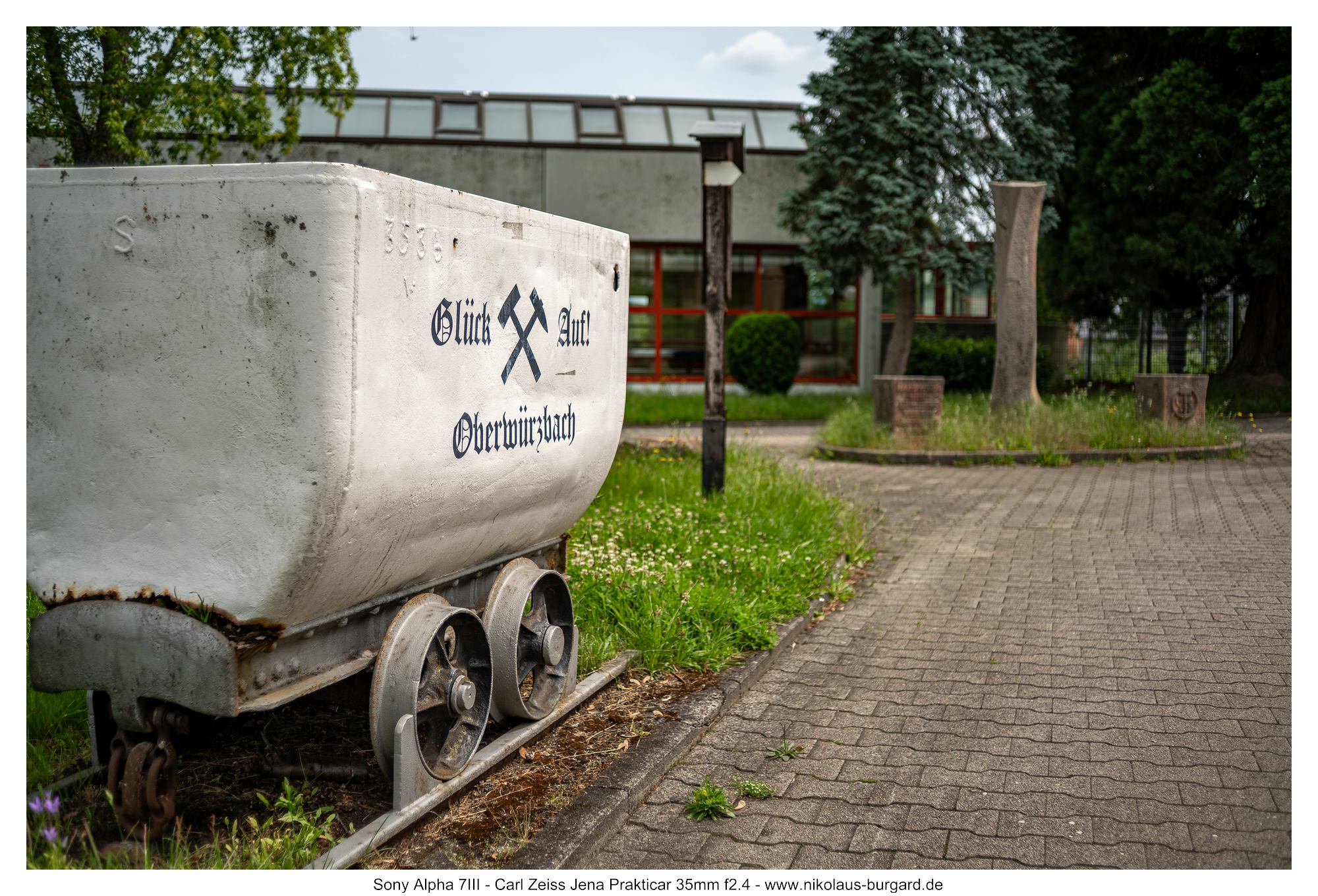
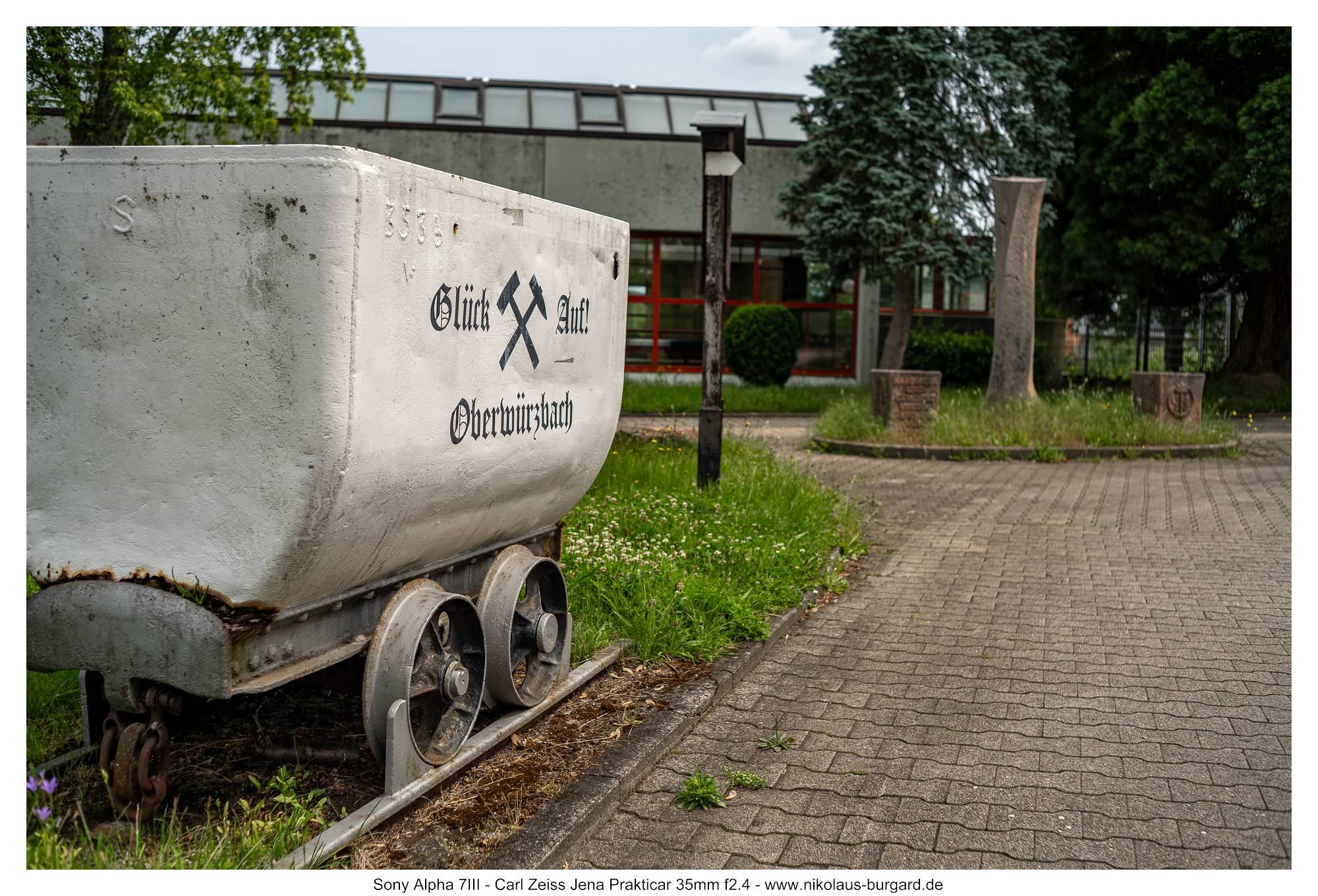
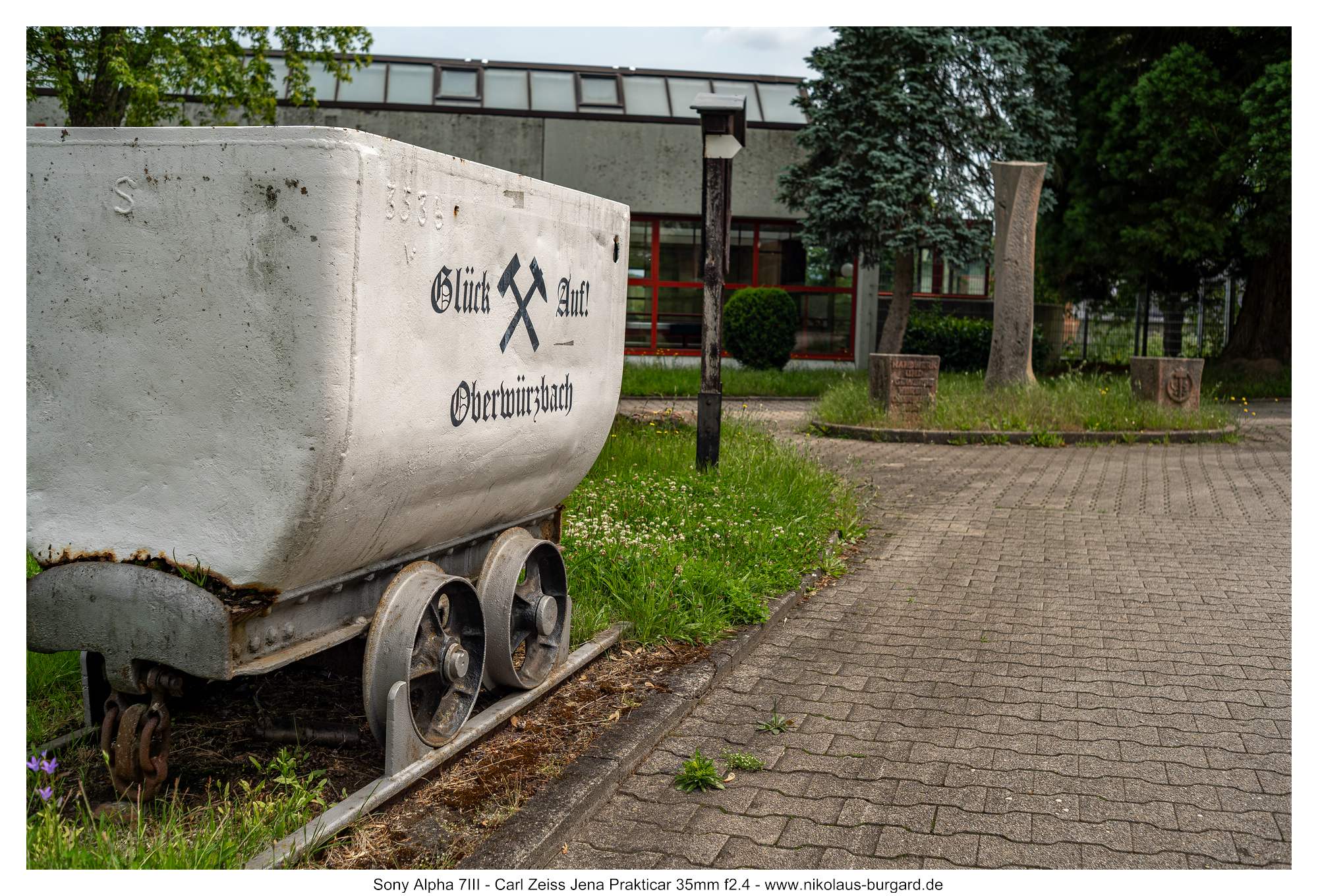
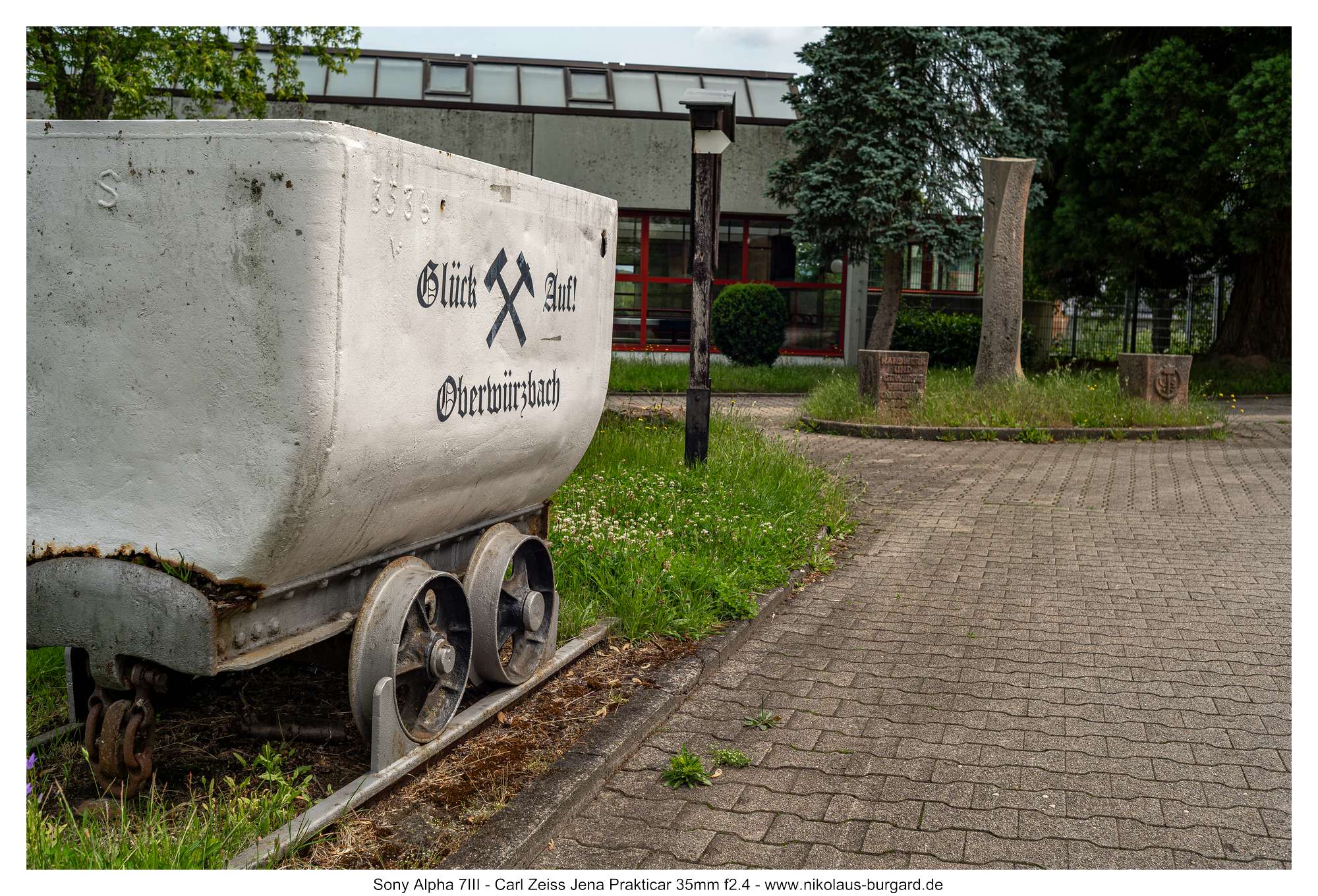
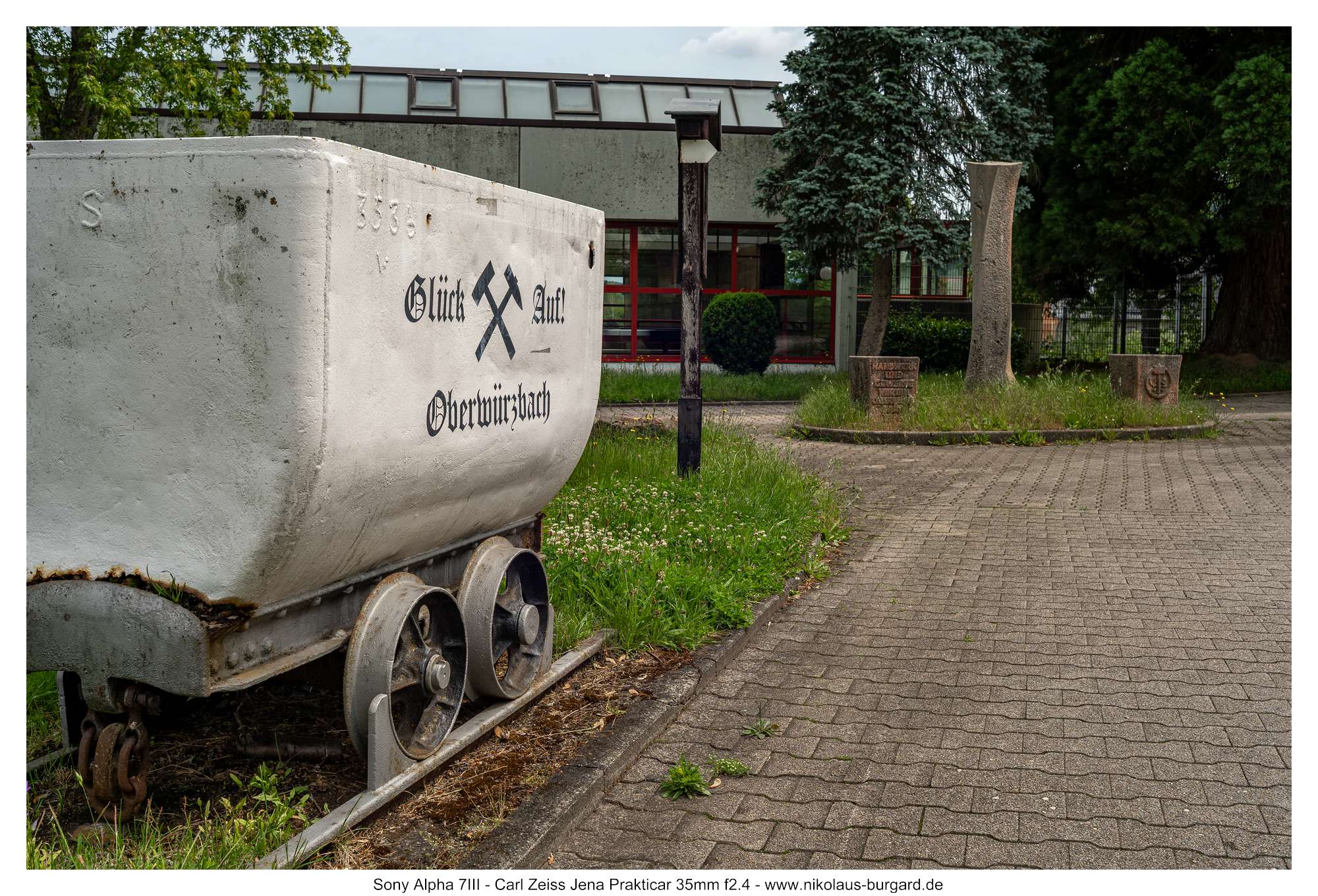


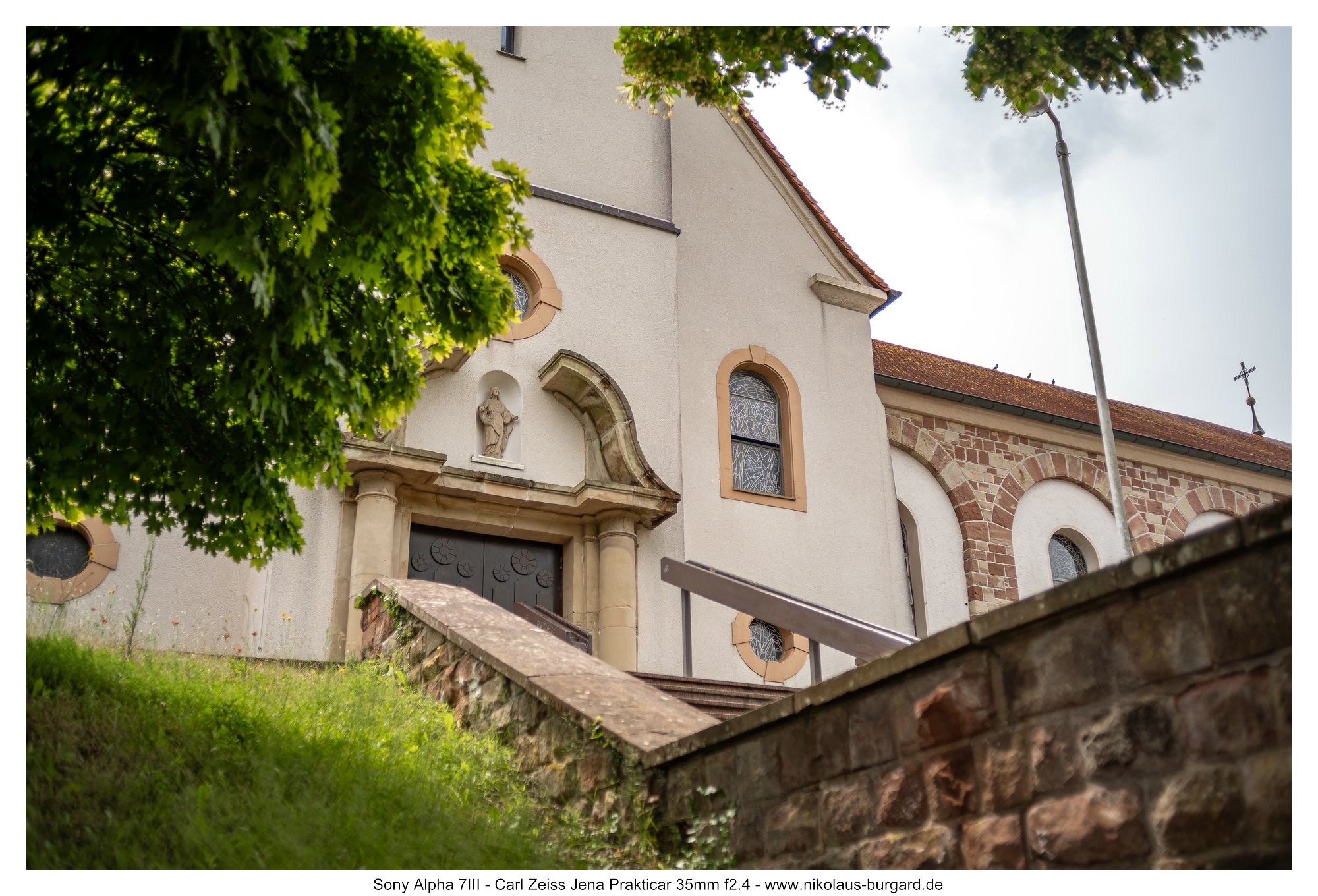
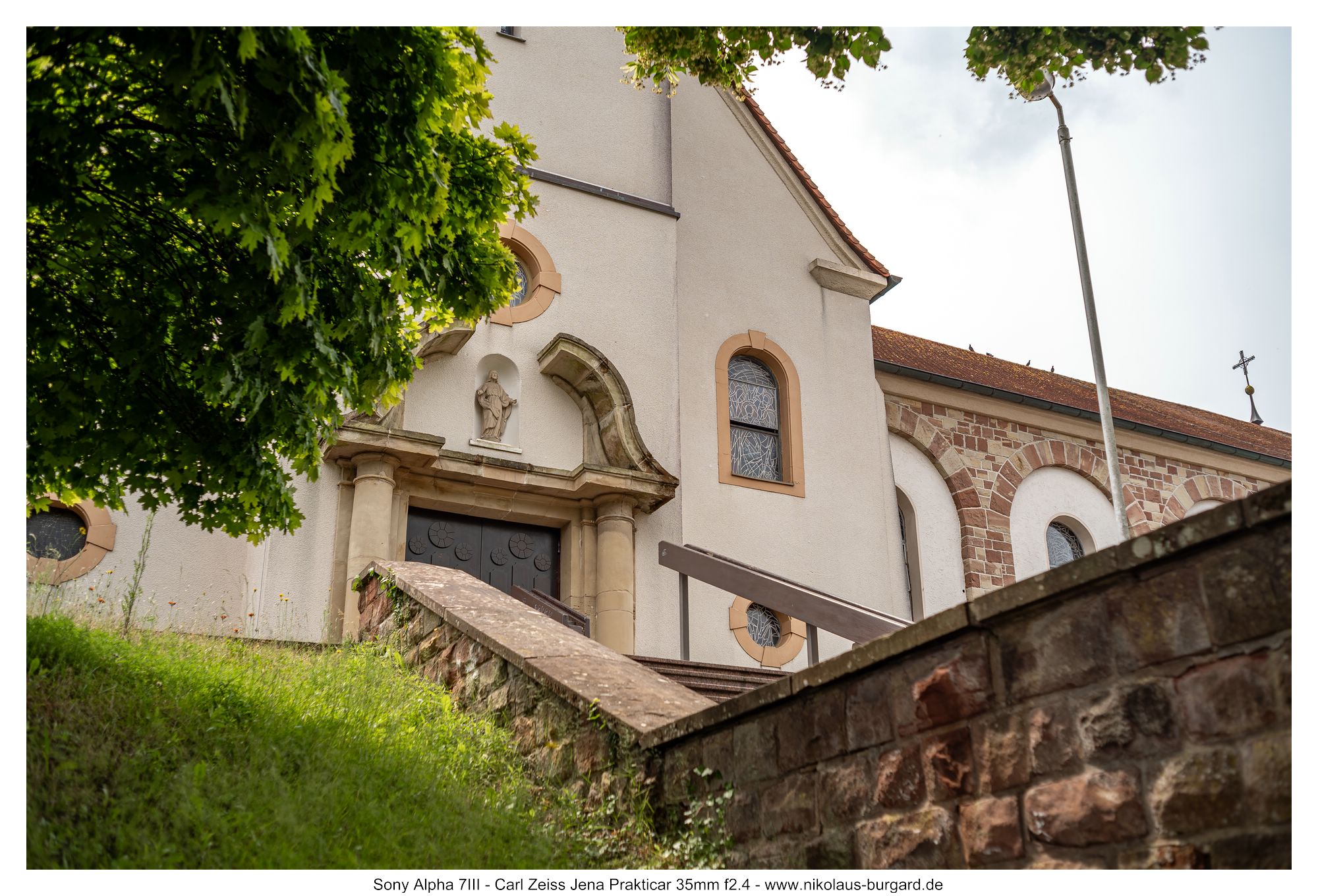
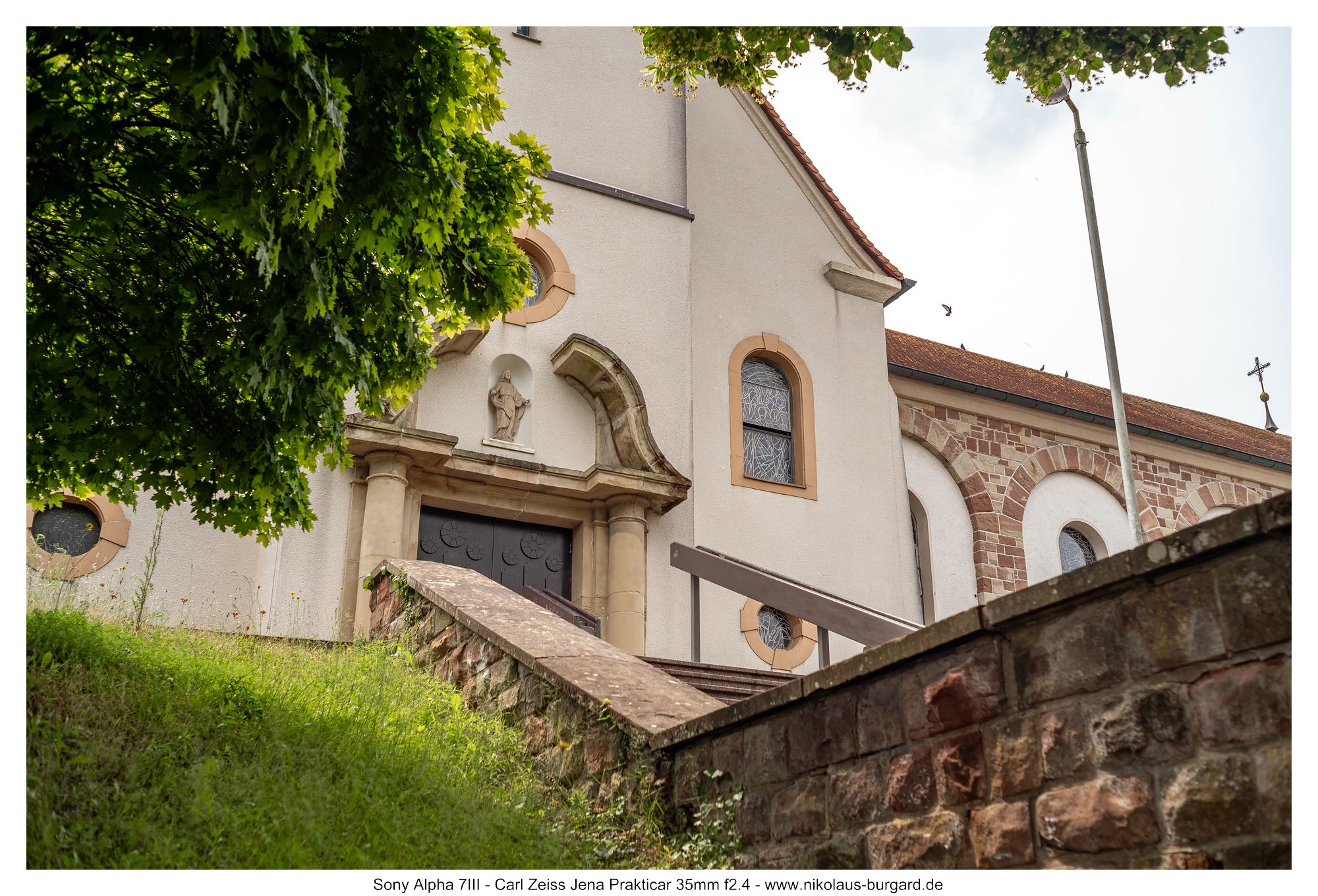
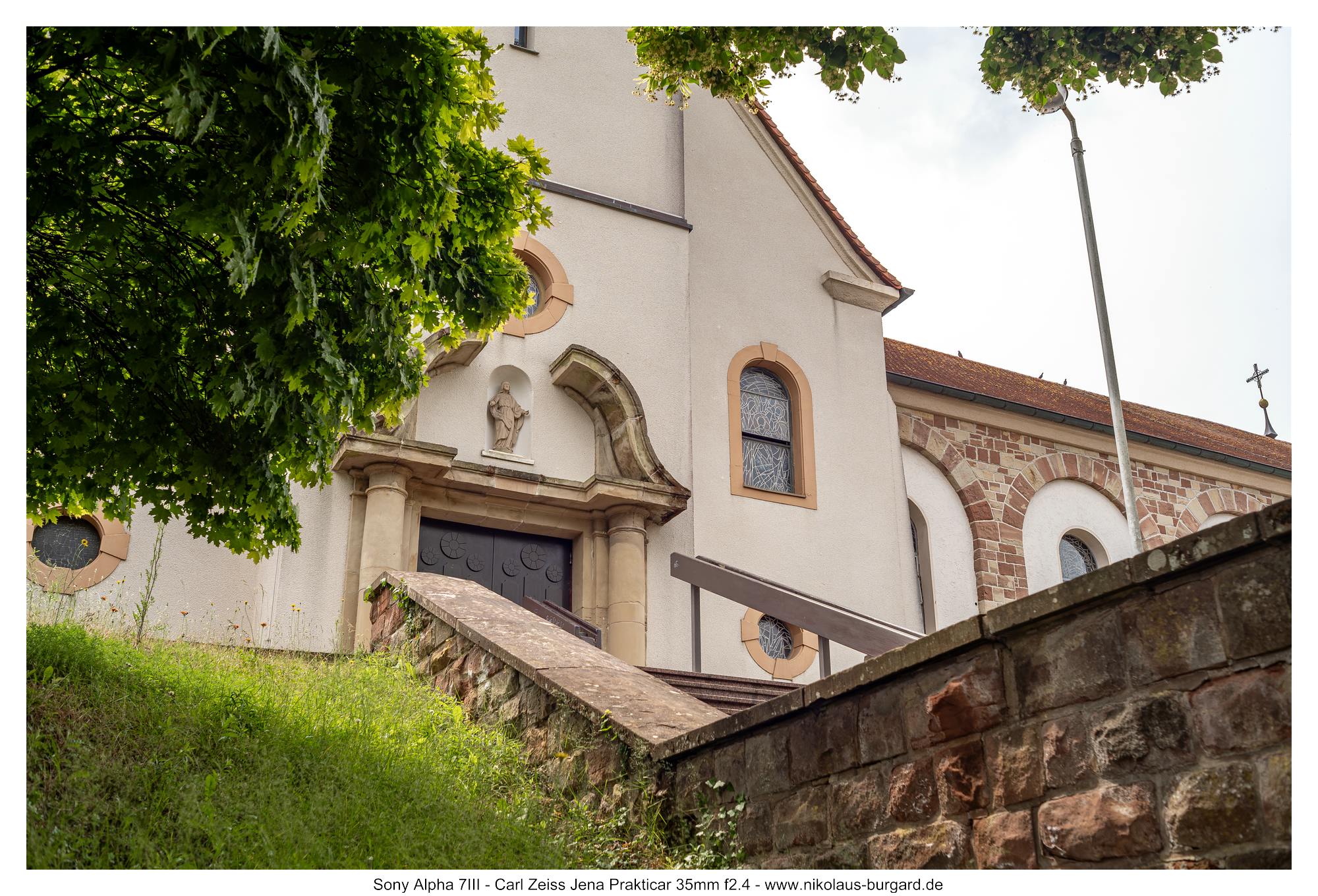
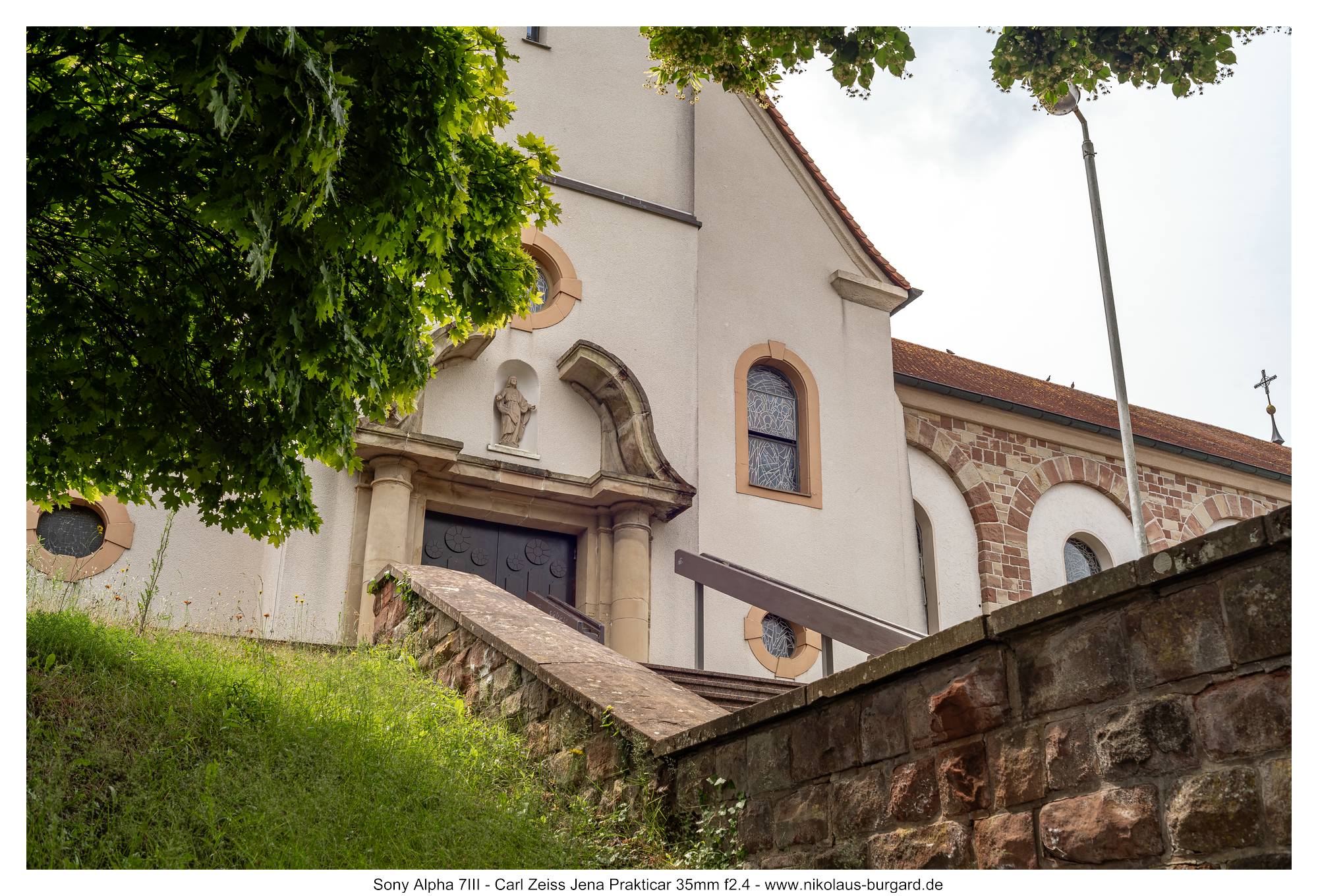


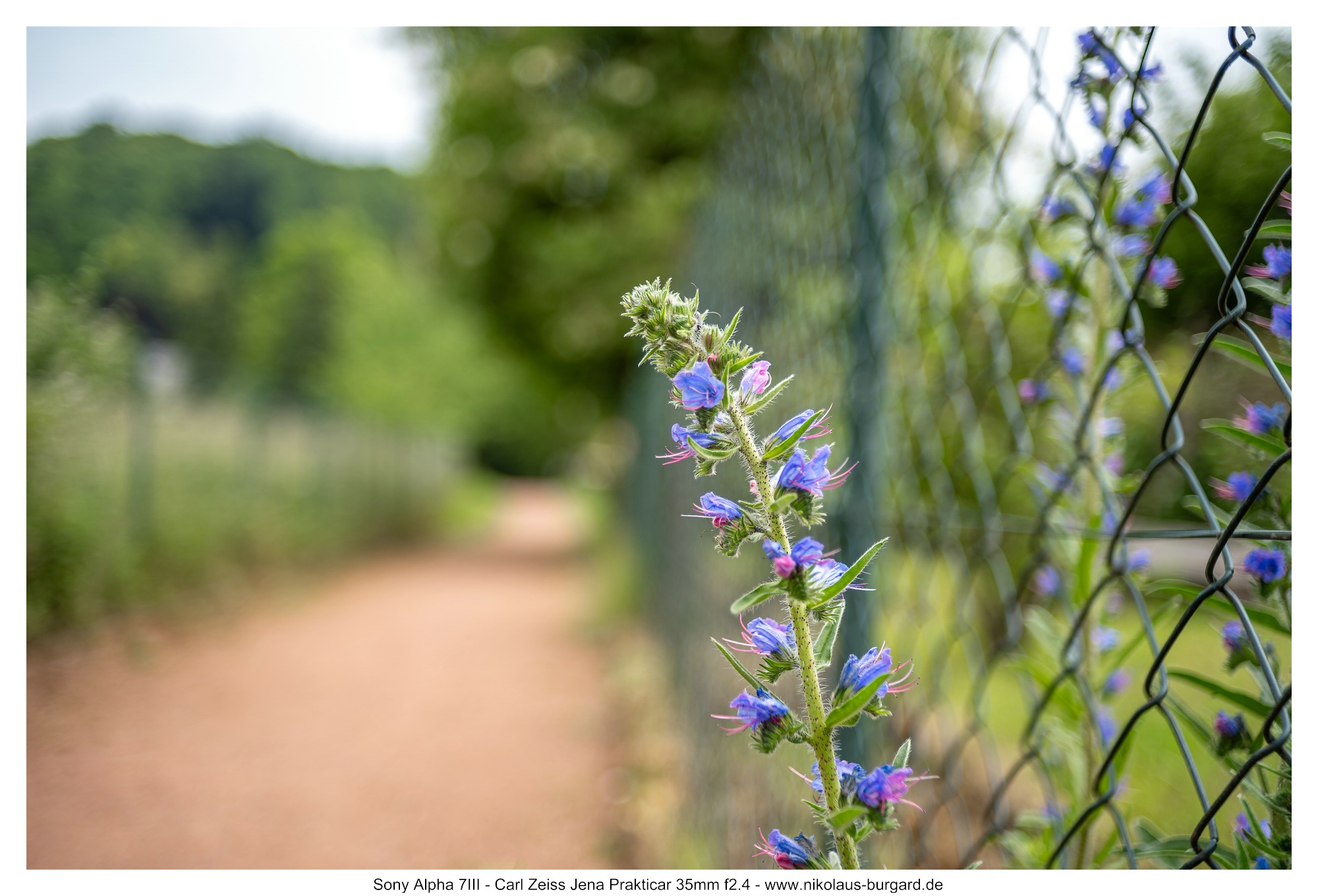
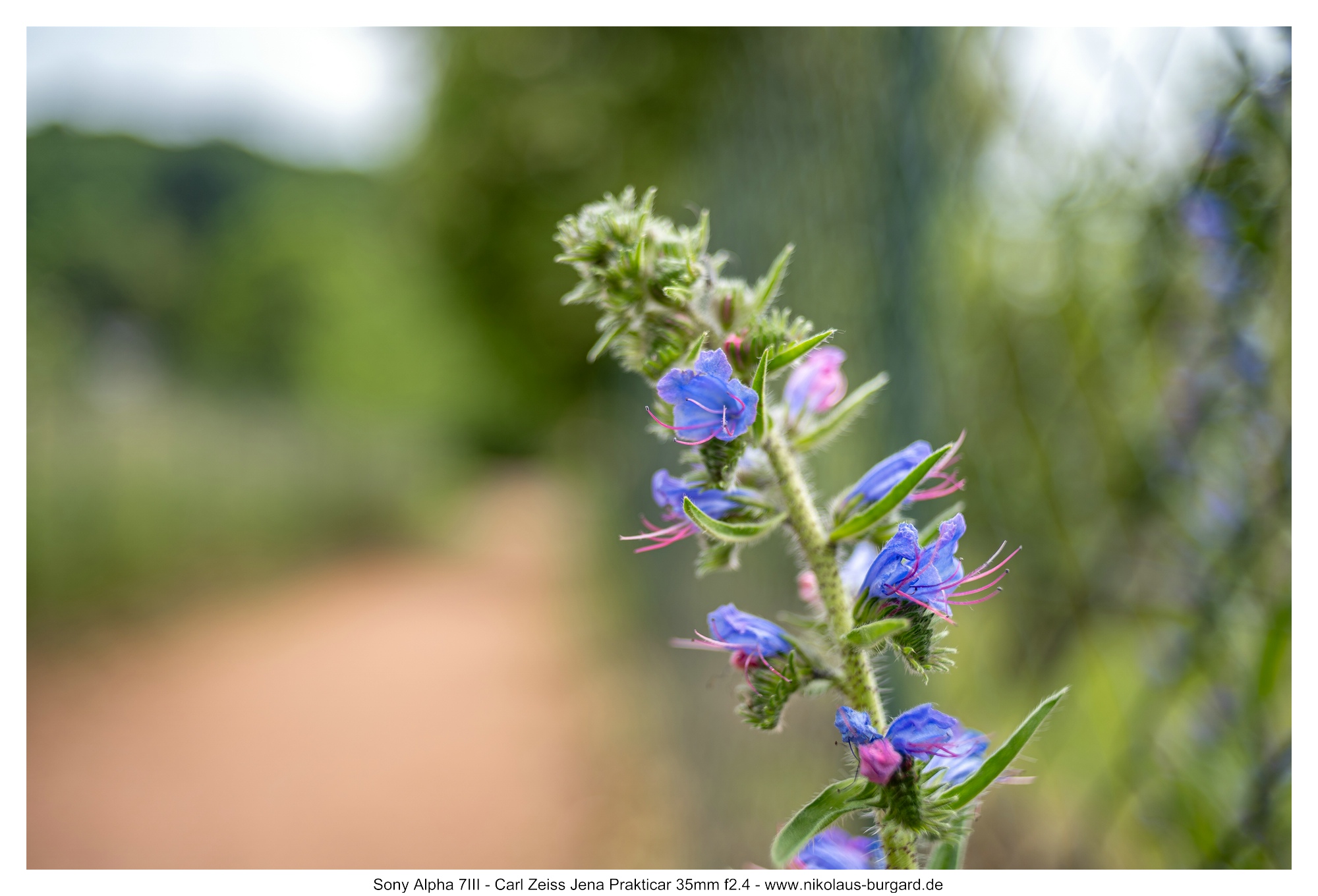
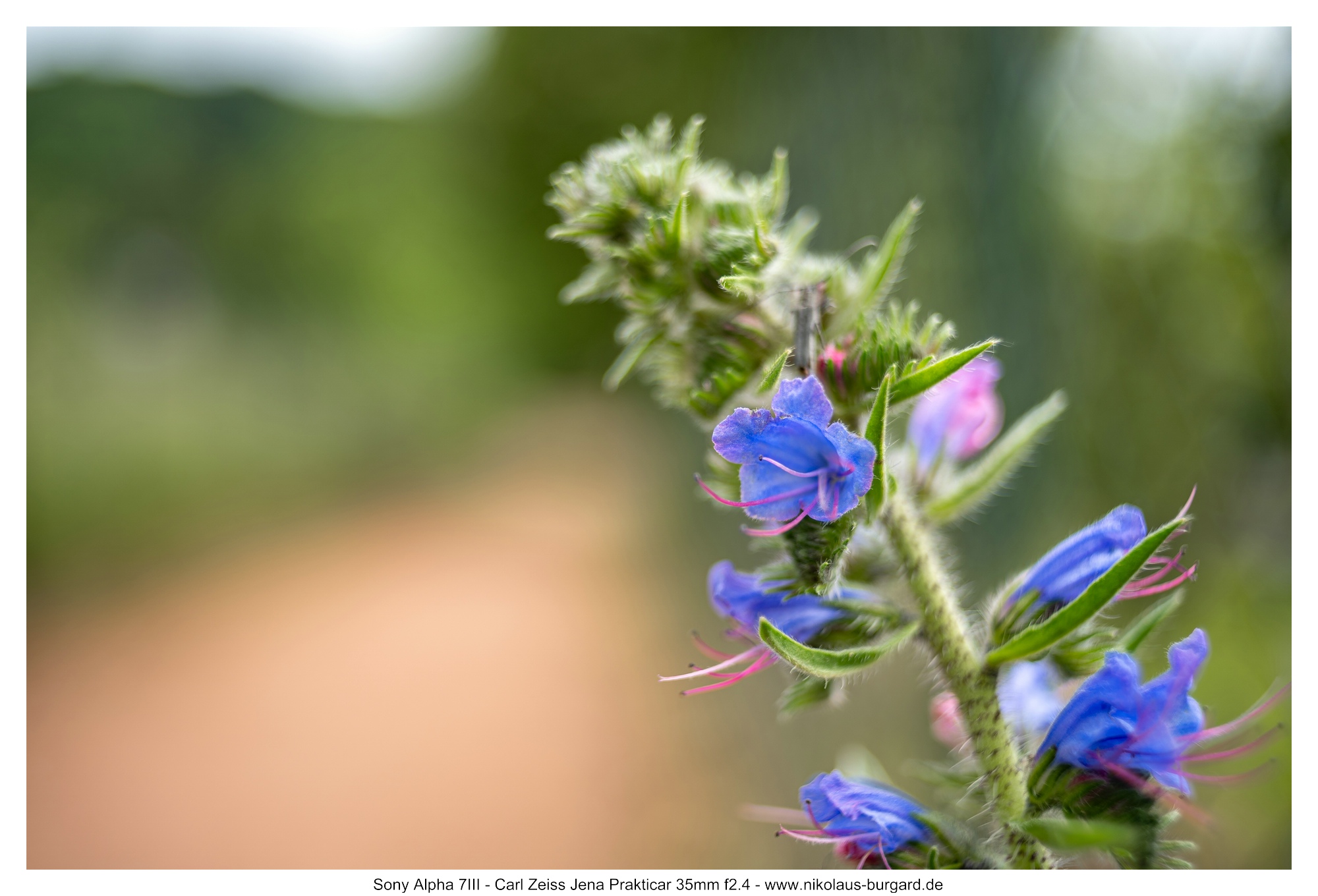
Als nächstes habe ich eine kleine Reihe vorbereitet, bei der ich bei Offenblende f2.4 immer näher ans Motiv herangehe - man sieht wie das Bokeh immer weicher und harmonischer wird, je näher man am Objekt ist:
Next I have prepared a small row, in which I approach the subject at open aperture f2.4 - you can see how the bokeh becomes softer and more harmonious, the closer you are to the object:
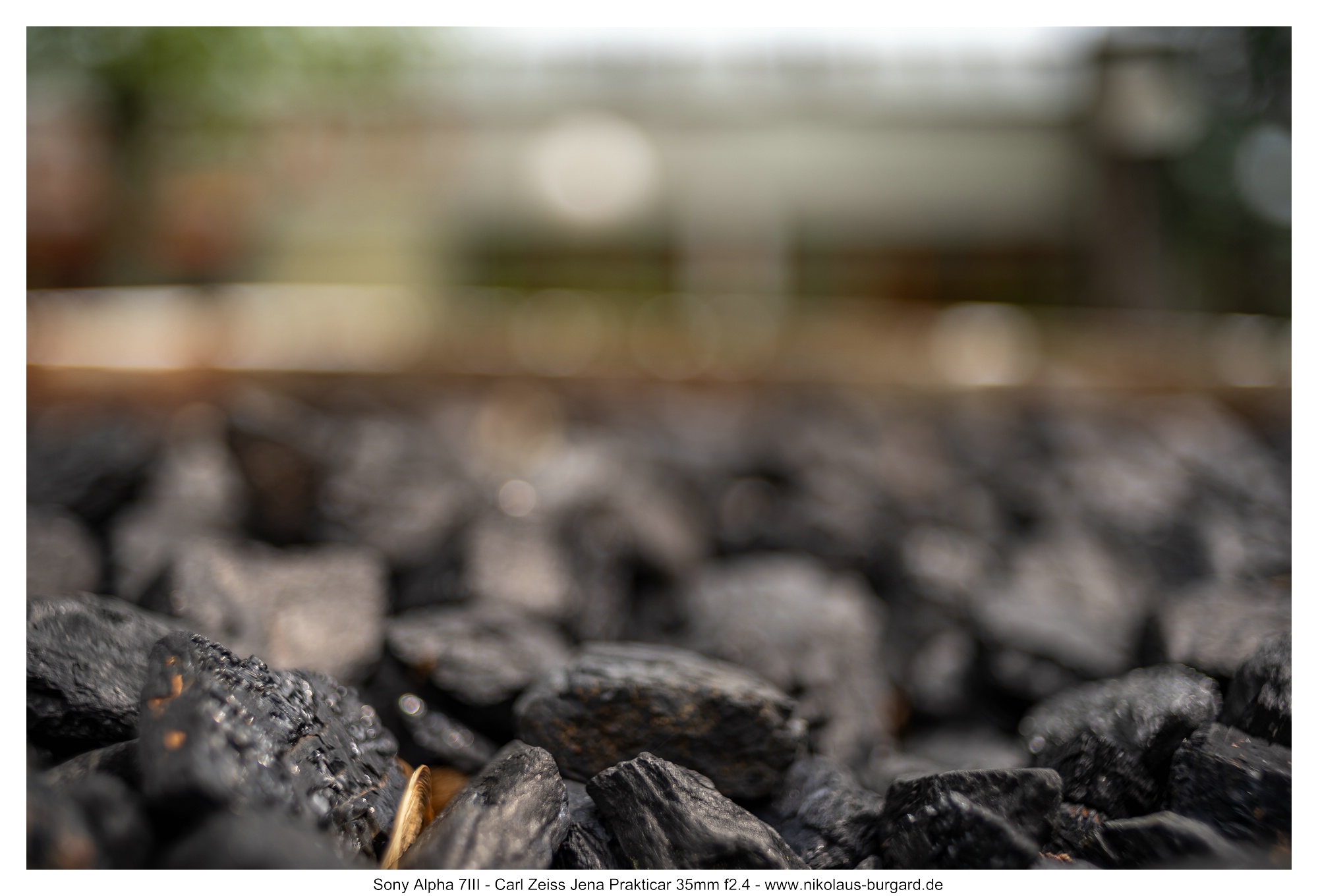
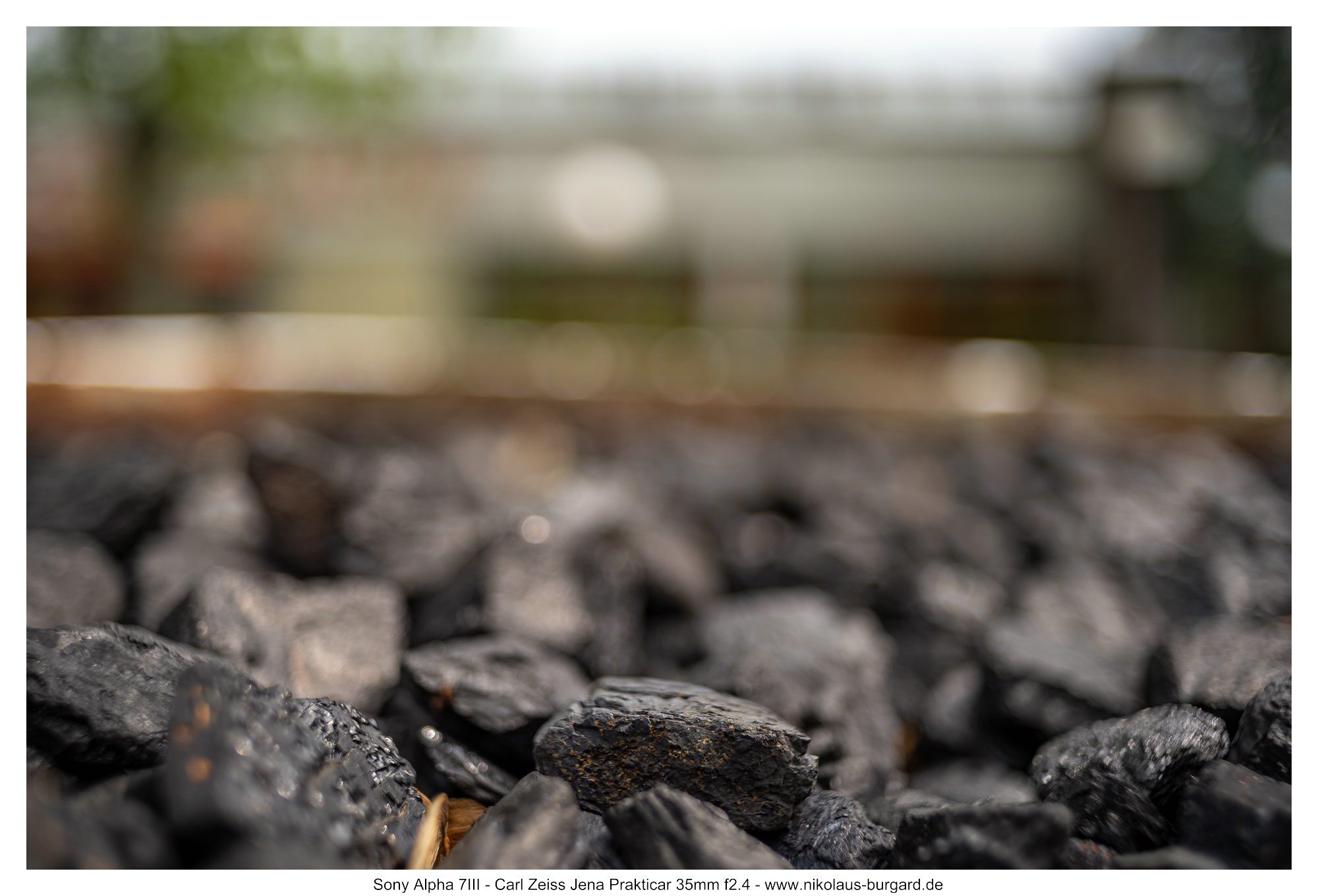
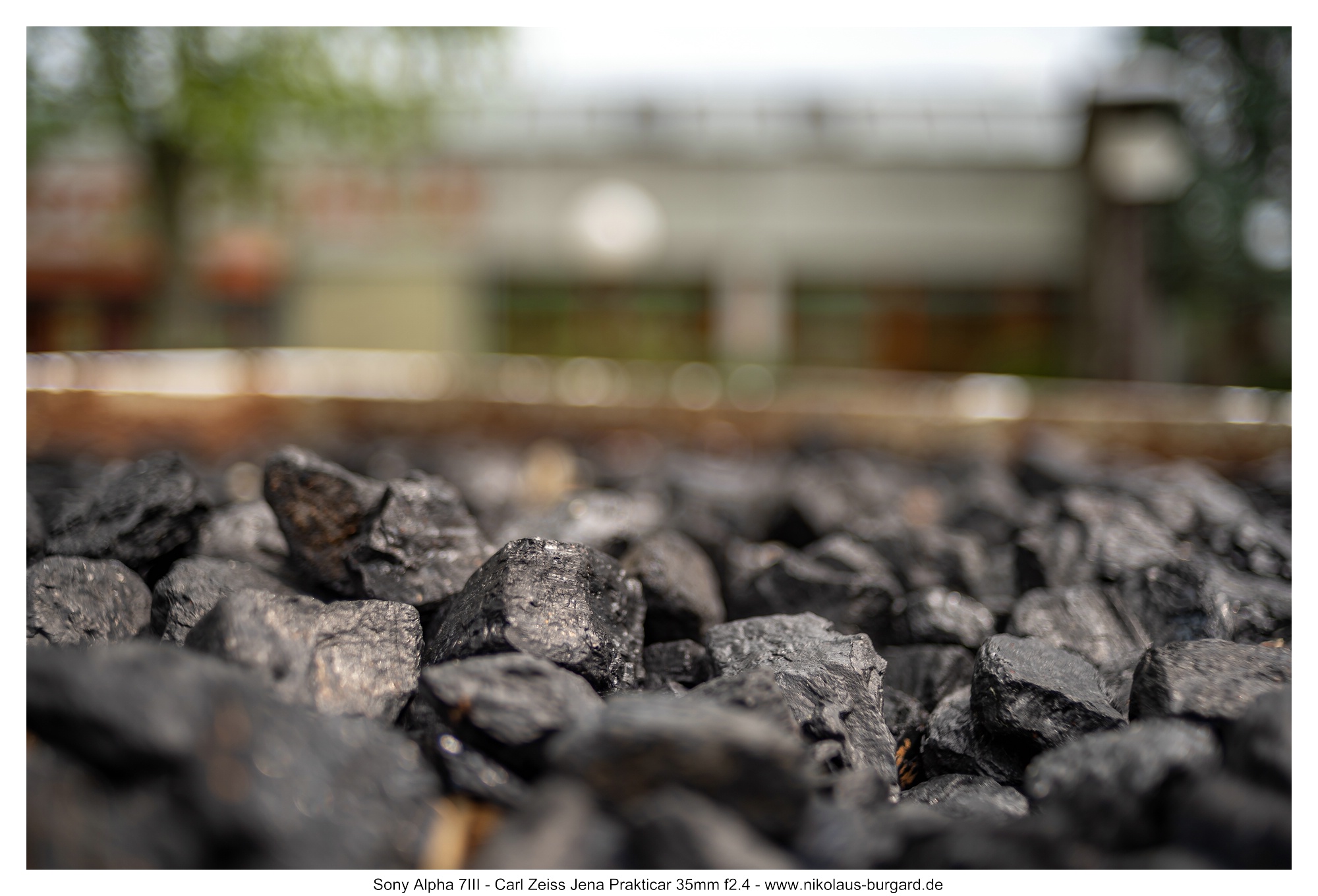
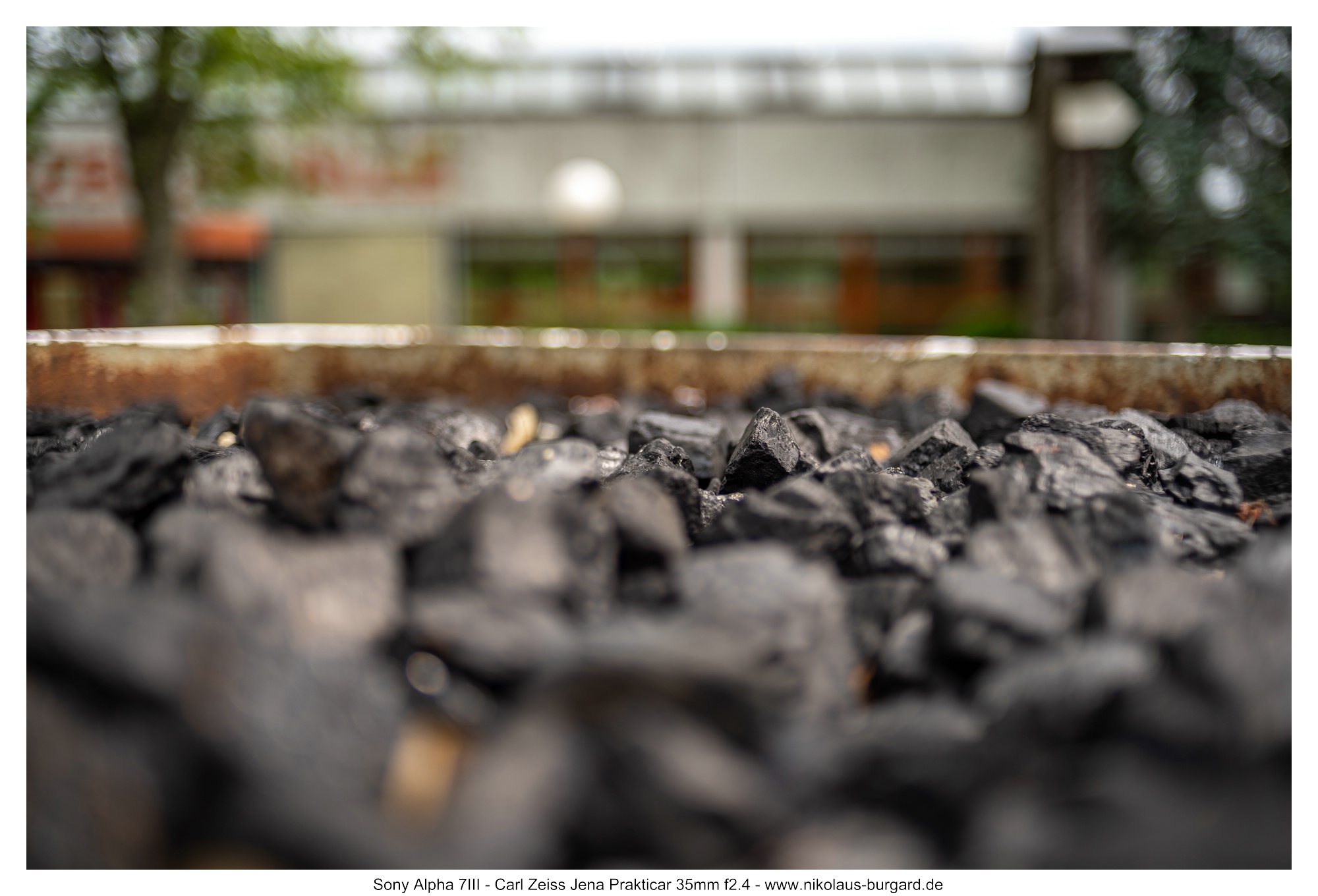
Die folgende Bilderreihe im Nahbereich ist vom gleichen Standort aus mit unterschiedlicher Fokussetzung entstanden - von der Naheinstellgrenze bis ca. 70-80 cm Fokusdistanz.
Die Unterschiede in Hintergrundrendering sind deutlich:
The following series of images in the close range was created from the same location with different focus - from the near-adjustment limit to about 70-80 cm
focus distance.
The differences in background rendering are clear:


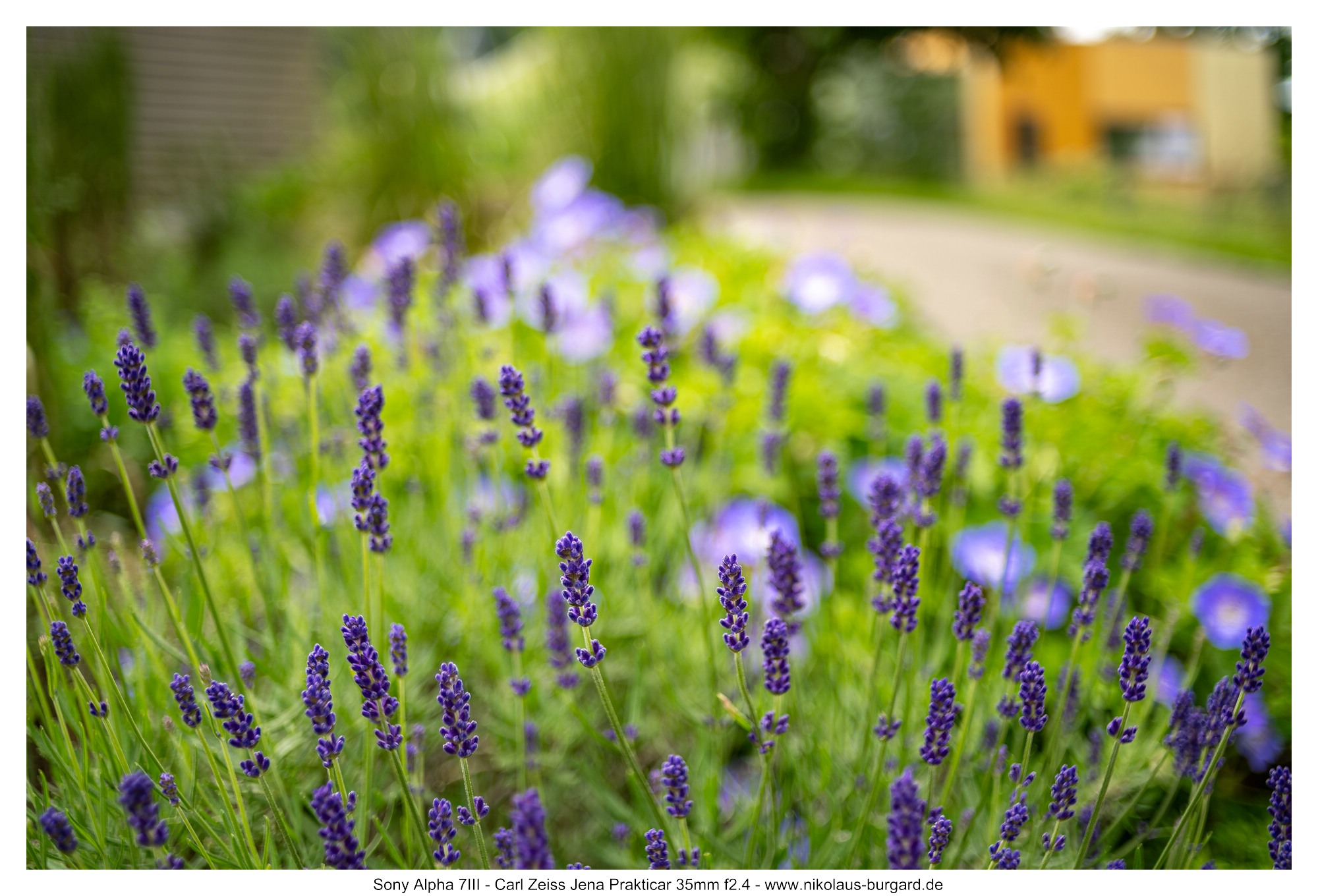
Auch beim folgenden Fokuspaar habe ich vom gleichen Standort aus bei Offenblende einmal auf den Vordergrund und einmal auf größere Distanz fokussiert. Auch das Vordergrundbokeh ist sehr ansehnlich weich:
Also in the following focus pair I have focused from the same location at open aperture once on the foreground and once at a longer distance. The foreground bokeh is also very nicely soft:
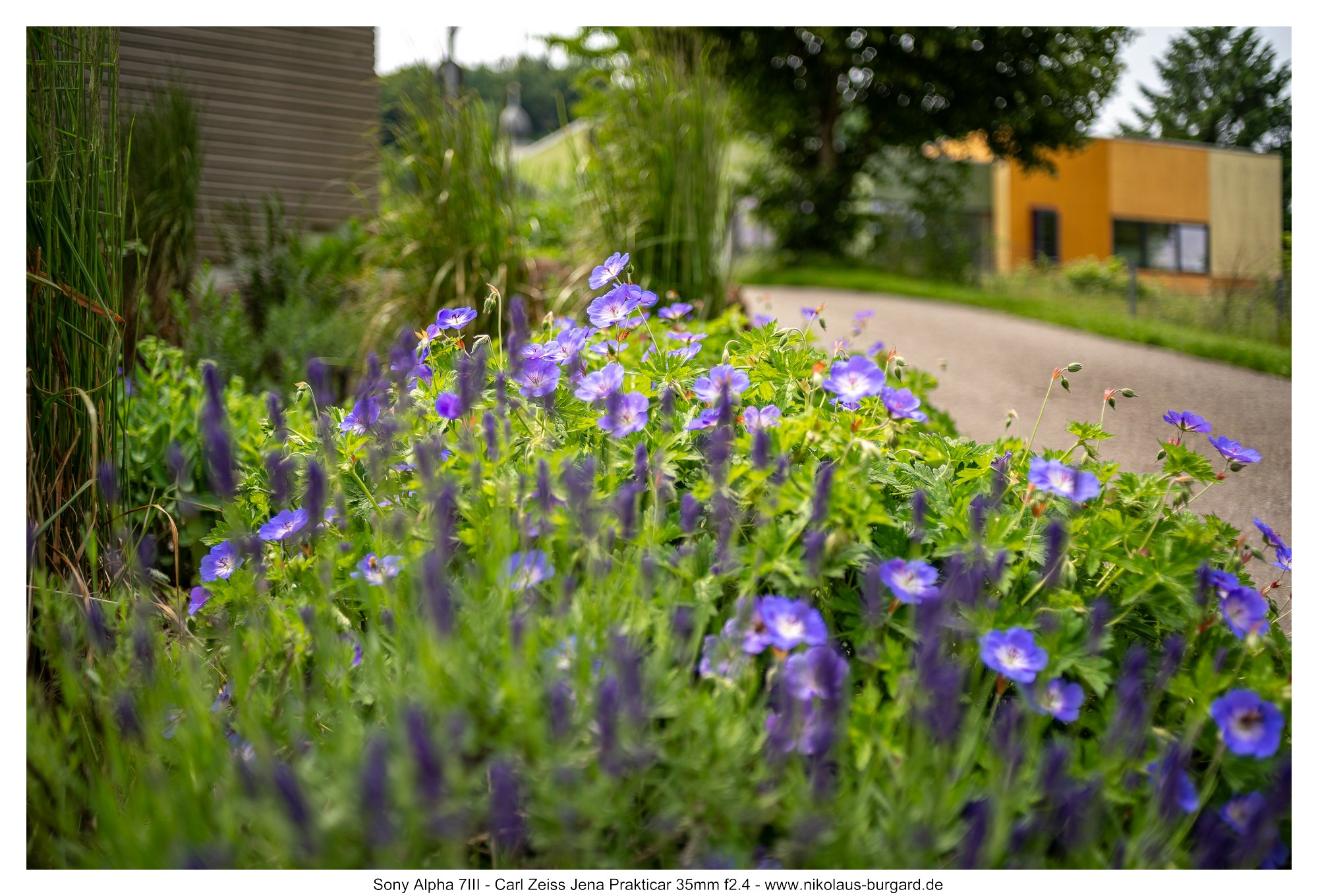


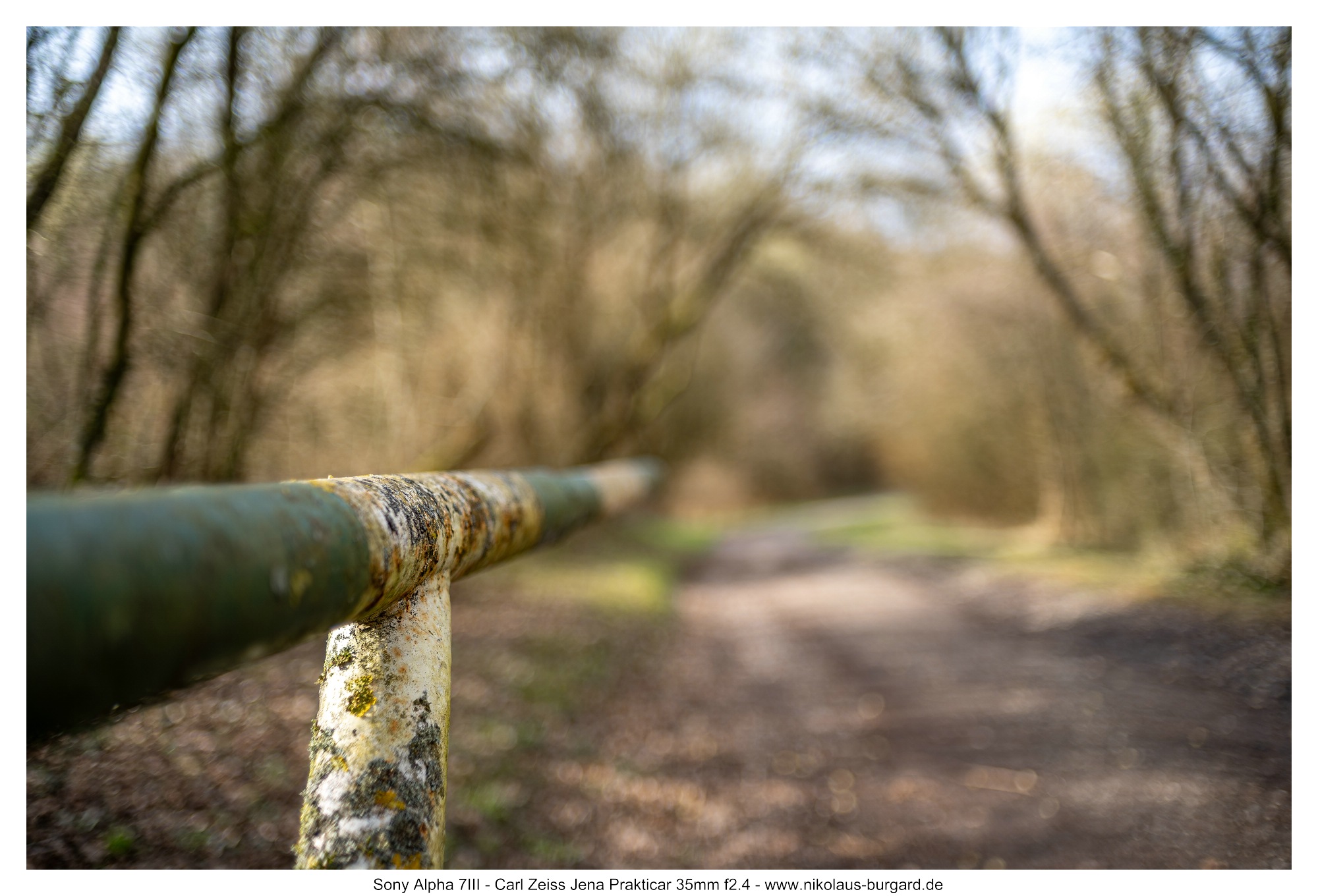
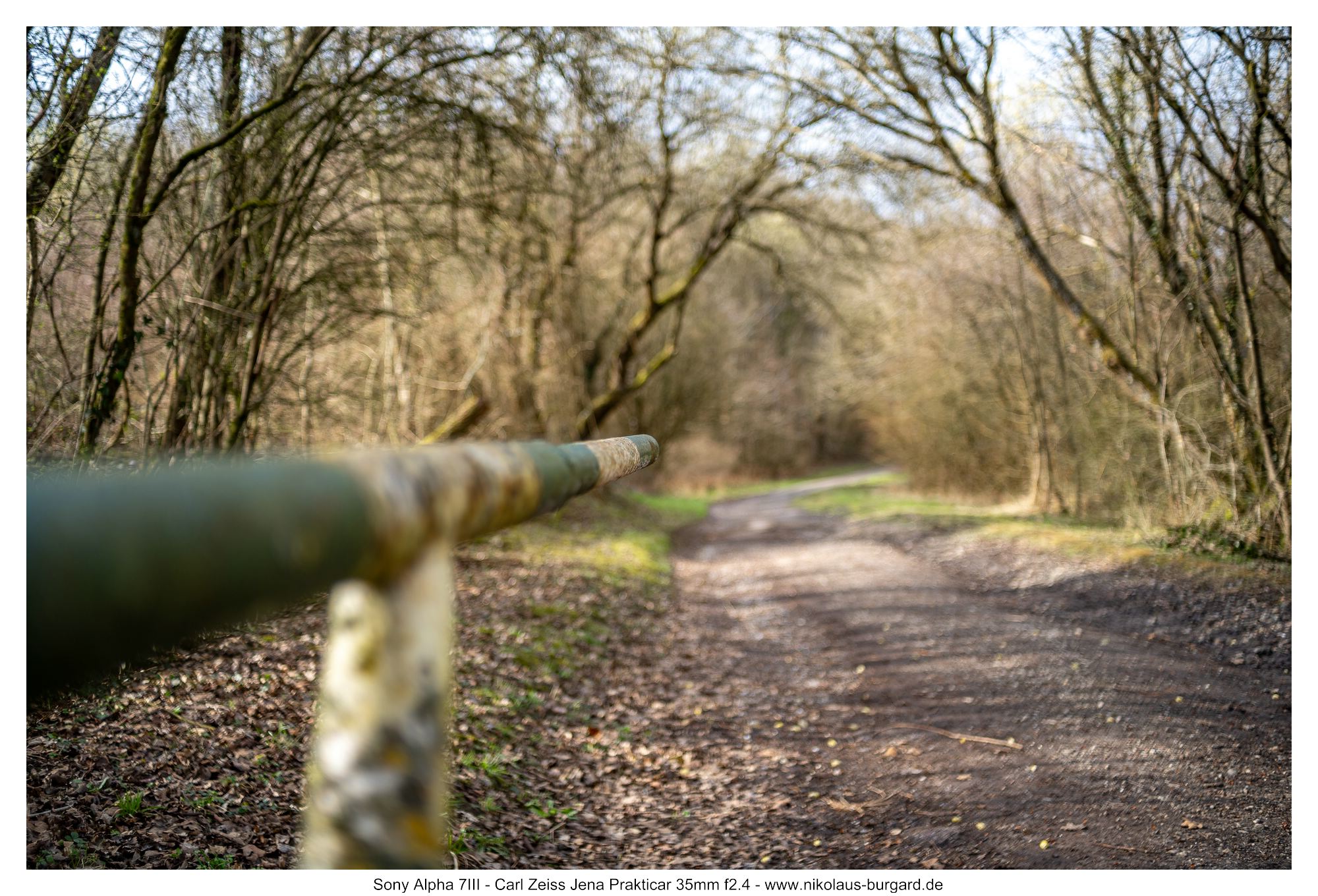
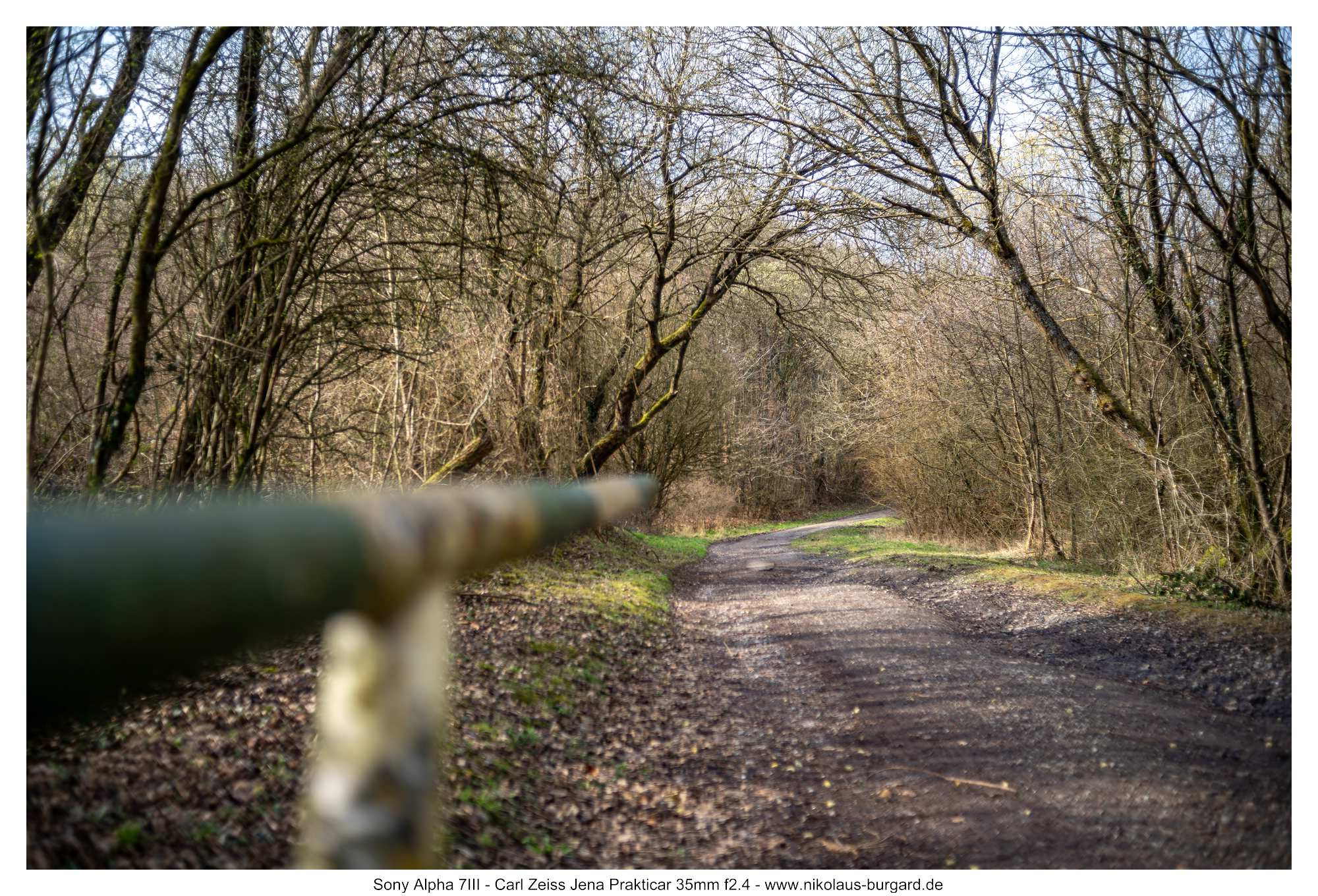
Und abschließend habe ich dies in einer Szene mit weiter entferntem Hintergrund vom extremen Nahbereich bis in die Ferne durchexerziert.
Vor allem das weiche Vordergrundbokeh ist wirklich bemerkenswert.
And finally, I have exercised this in a scene with a further away background from the extreme close range to the distance.
Especially the soft foreground bokeh is really remarkable.
Bildserie: Pilze! / Picture Series: Mushrooms!
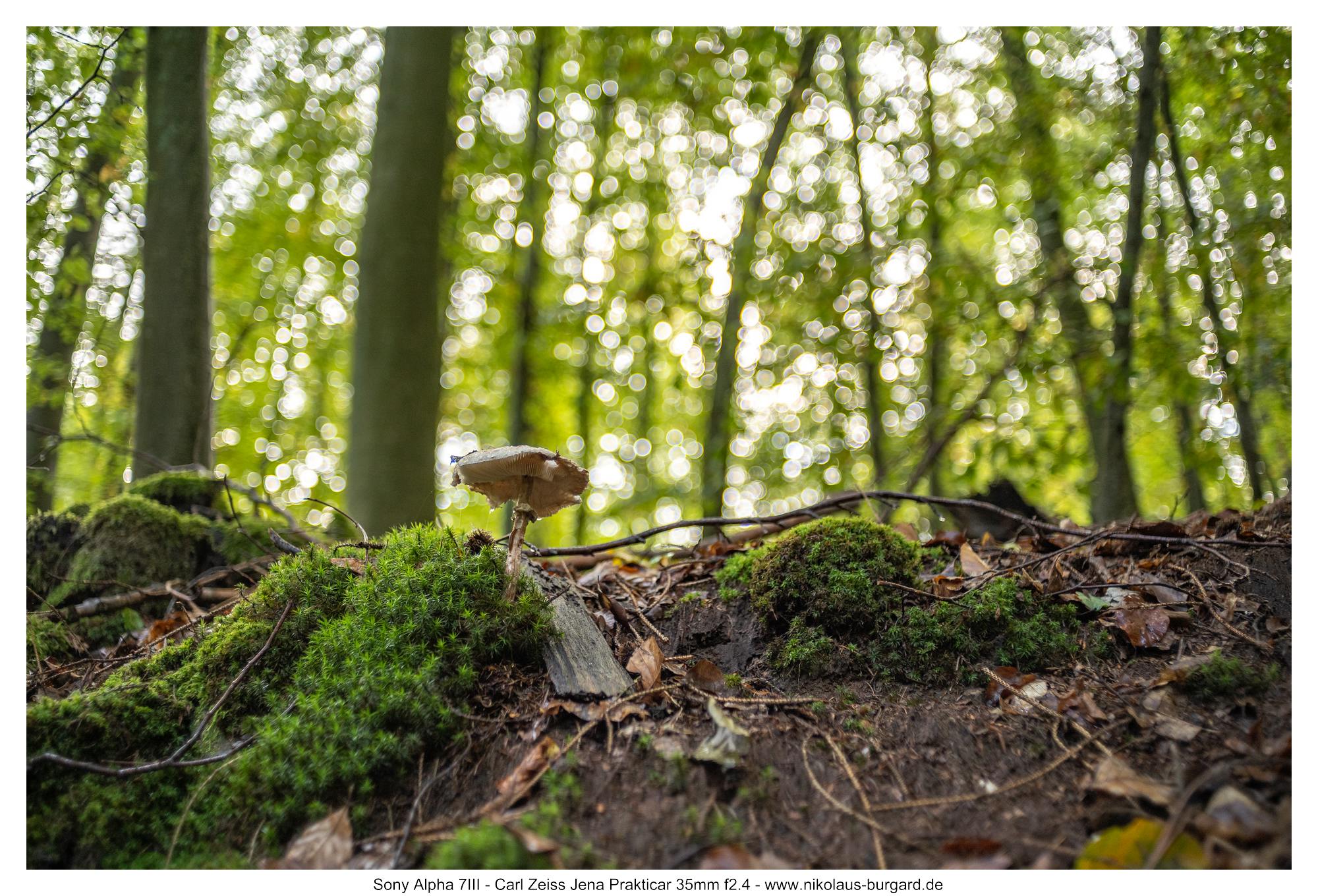
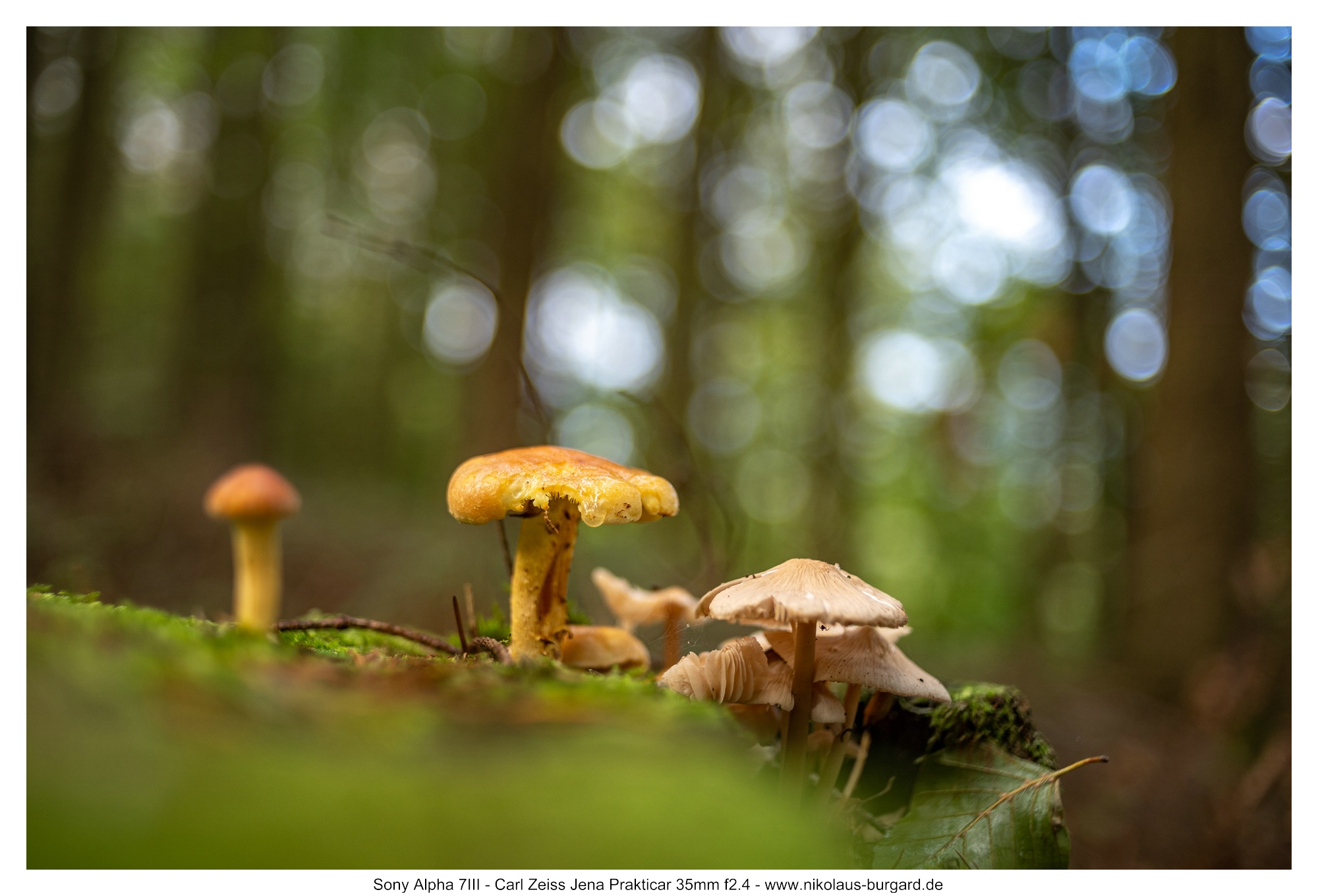
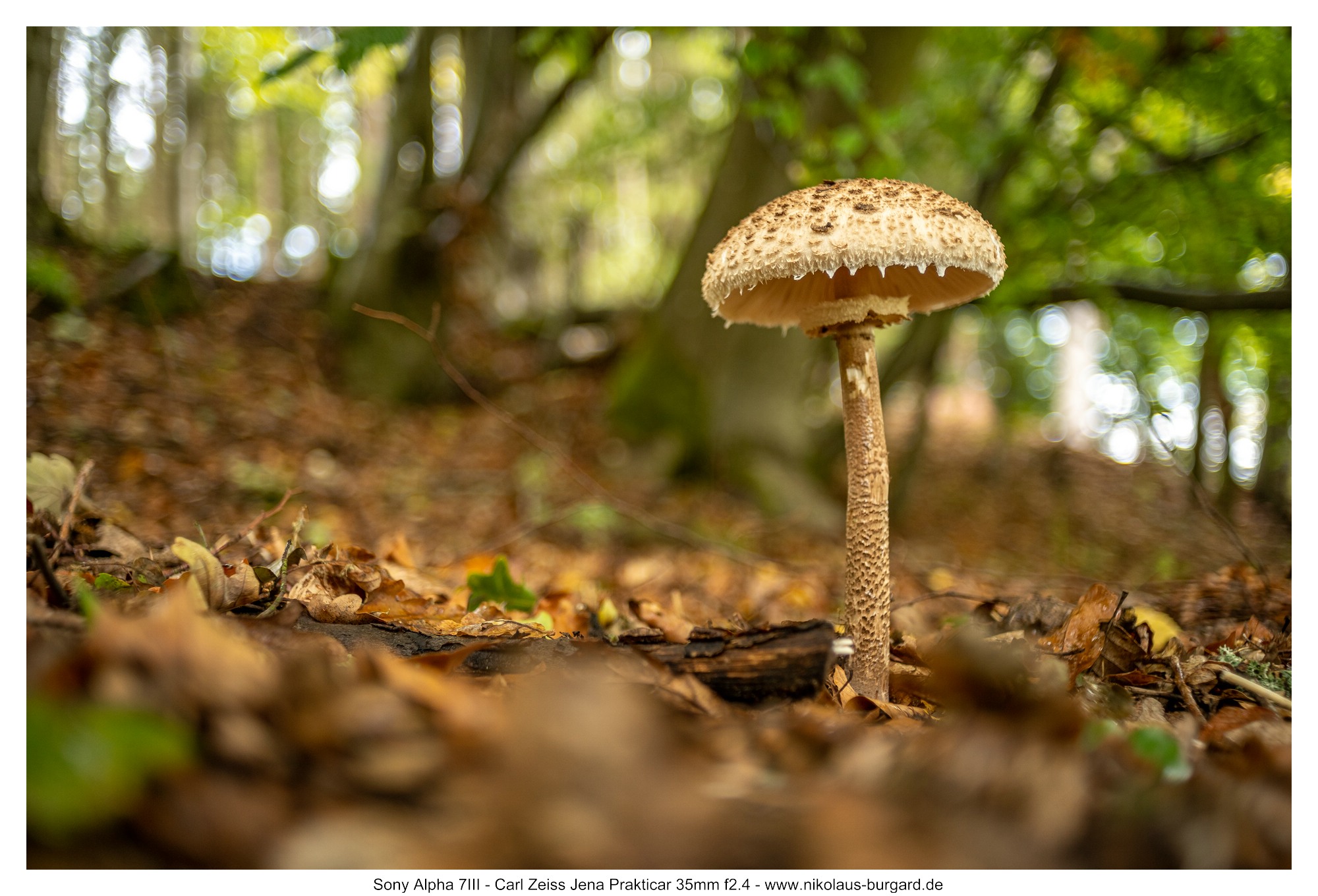
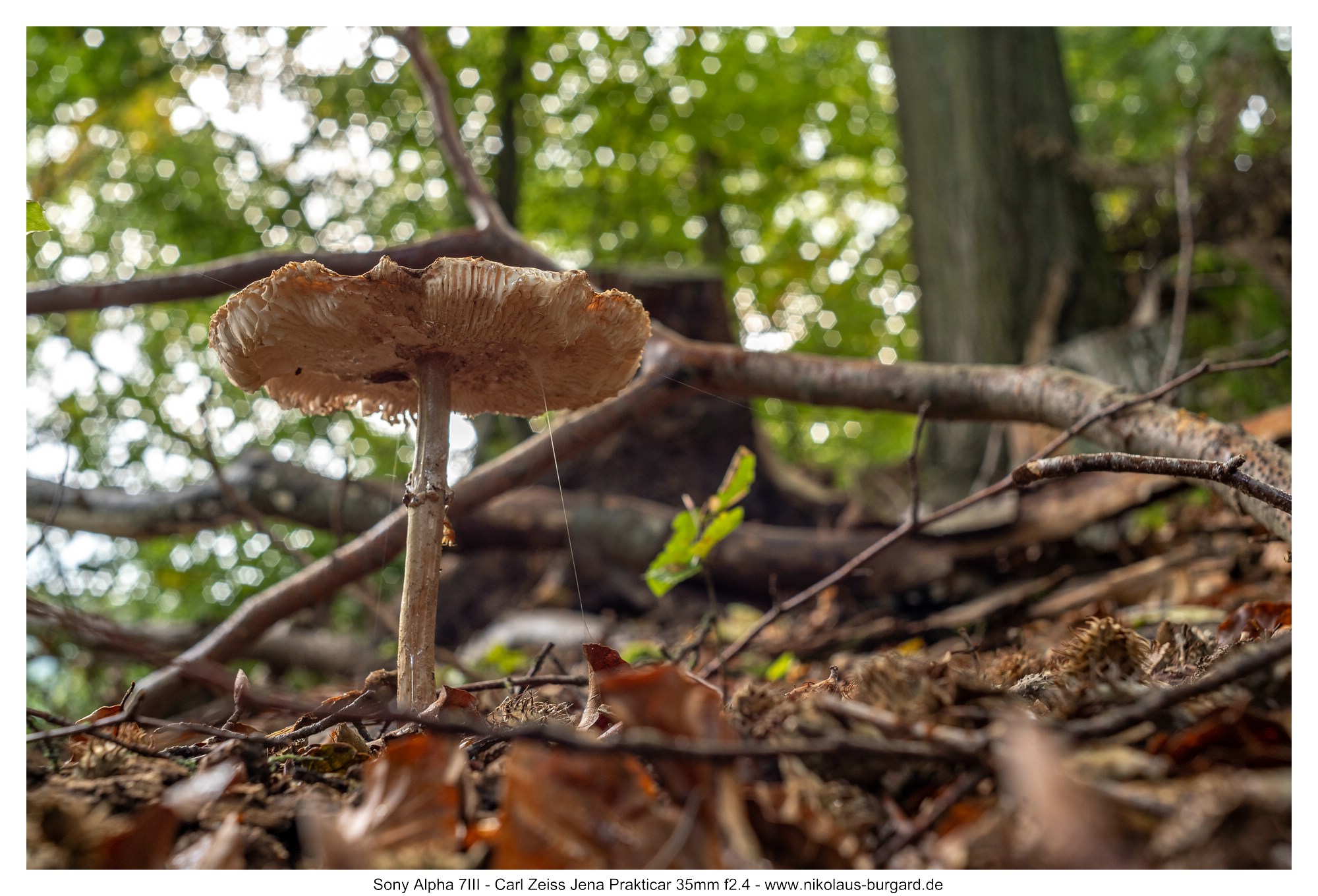
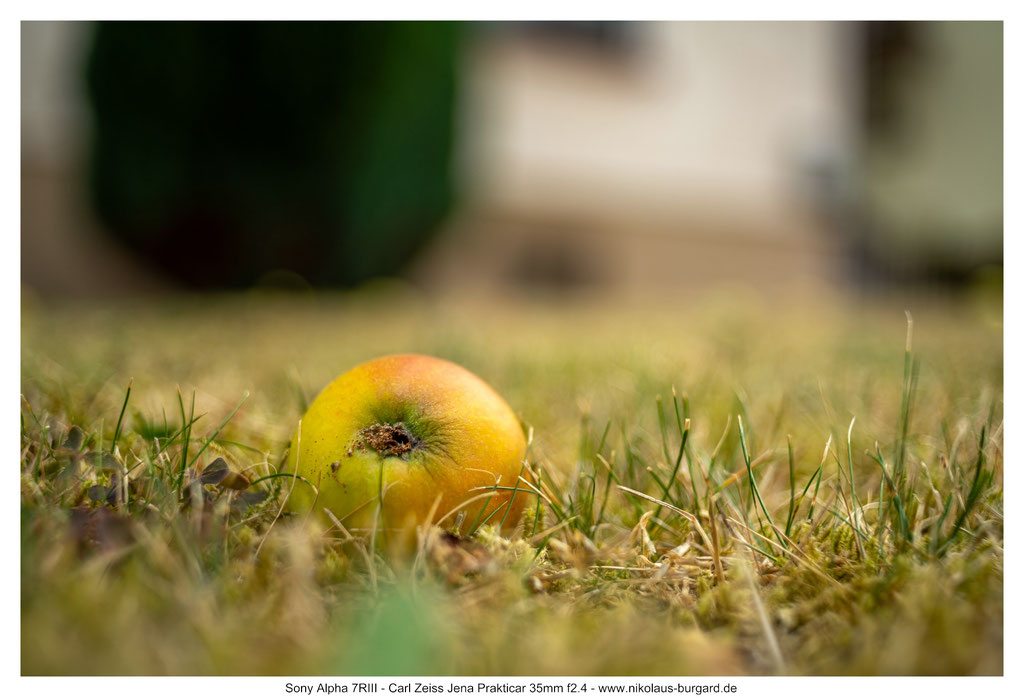
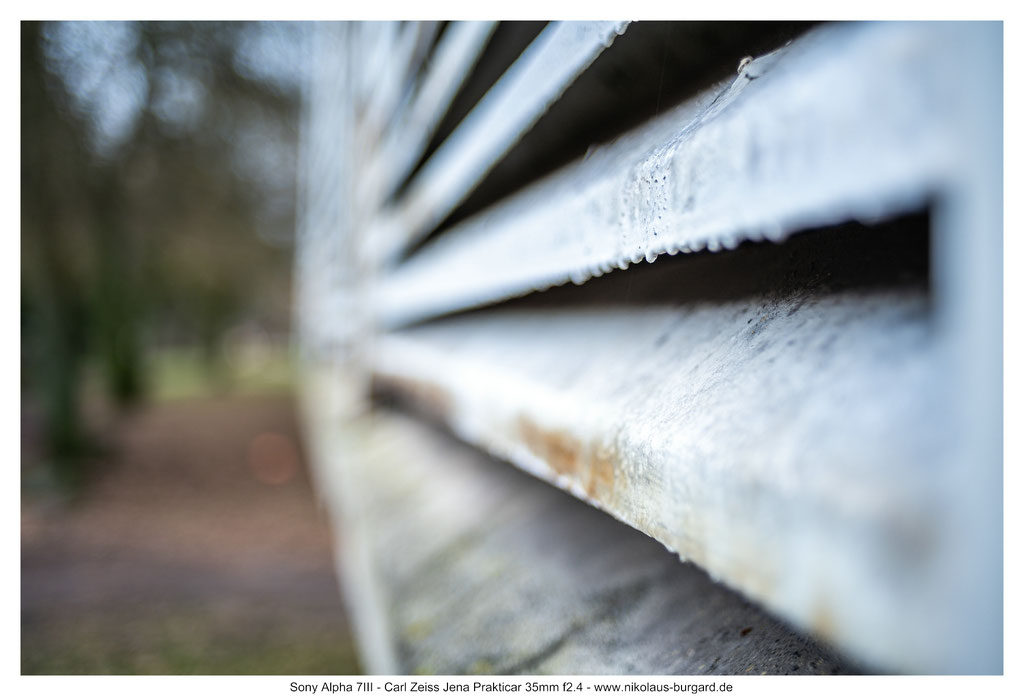
Mit seiner tollen Naheinstellgrenze ist das Flektogon / Prakticar die optimale "Waffe" für die herbstliche Pilzfotografie. Besonders bodennahe Weitwinkel-Aufnahmen haben hier in meinen Augen ihren besonderen Reiz.
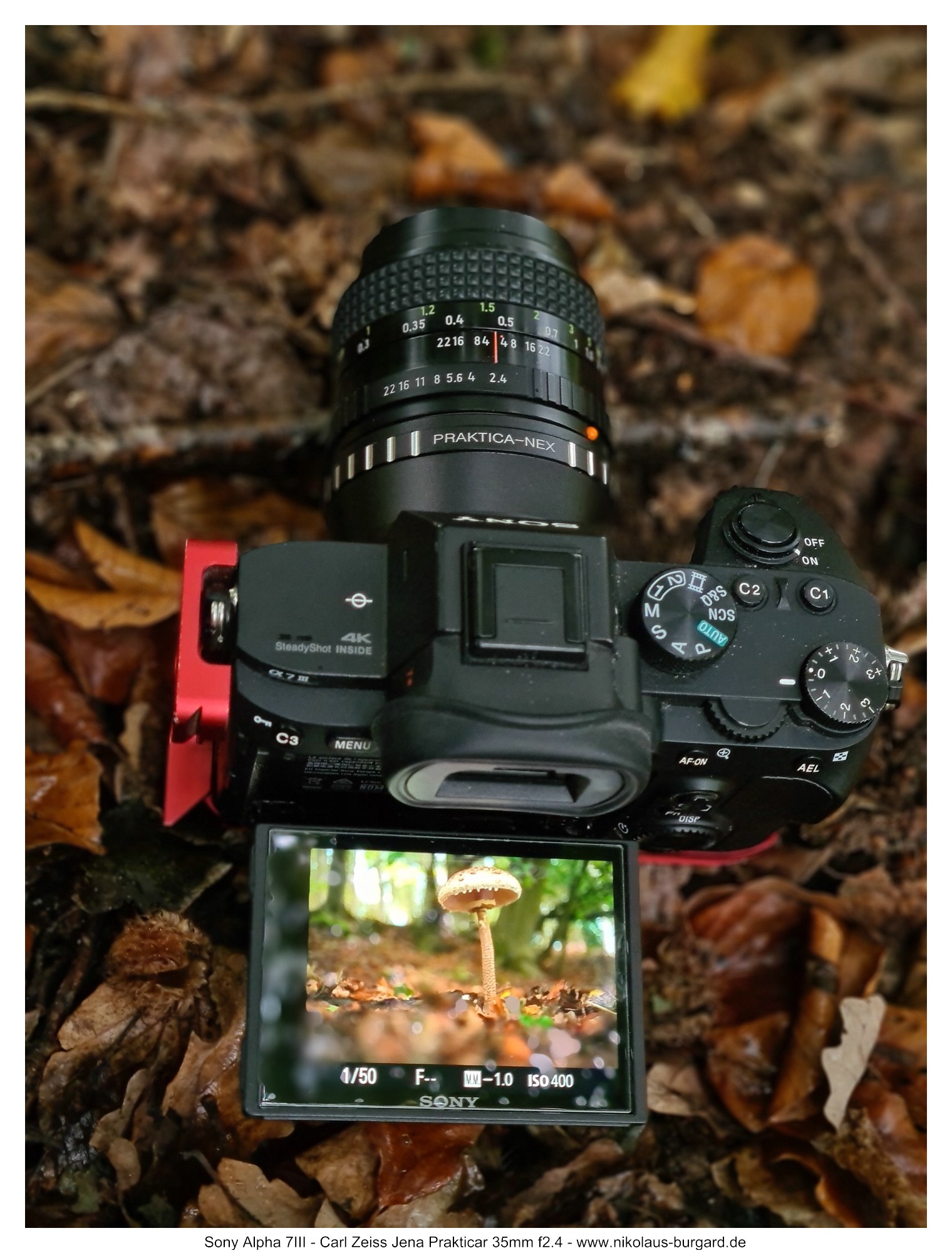
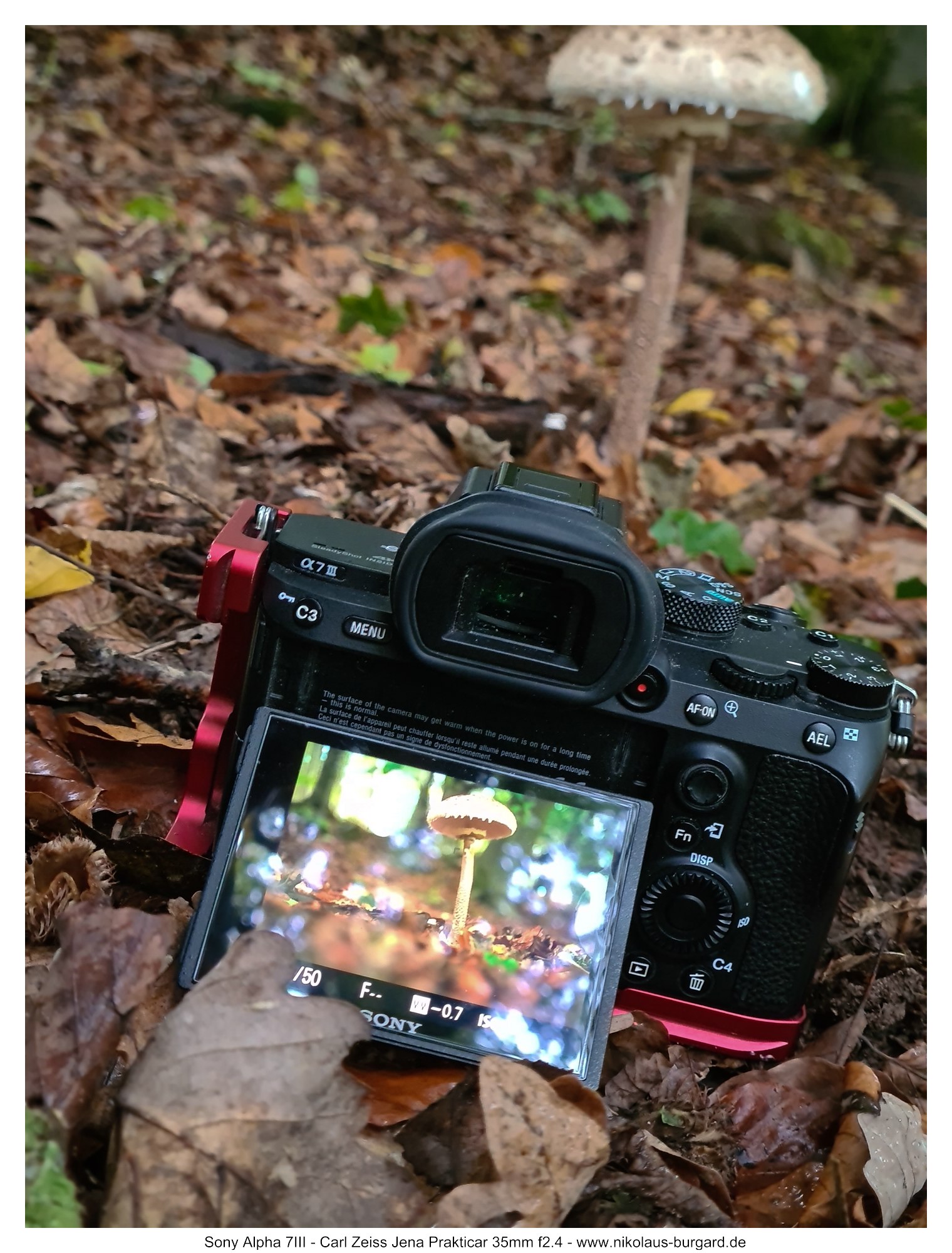
Hier mal ein kleines "Behind the scenes" einer solchen Aufnahmesituation bei mir:
With its great close-up limit, the Flektogon / Prakticar is the optimal "weapon" for autumnal mushroom photography. Particularly close-to-ground wide-angle shots
have their special charm here in my eyes.
Here is a small "Behind the scenes" of such a recording situation with me:
Und das daraus resultierende Foto:
And the resulting photo:
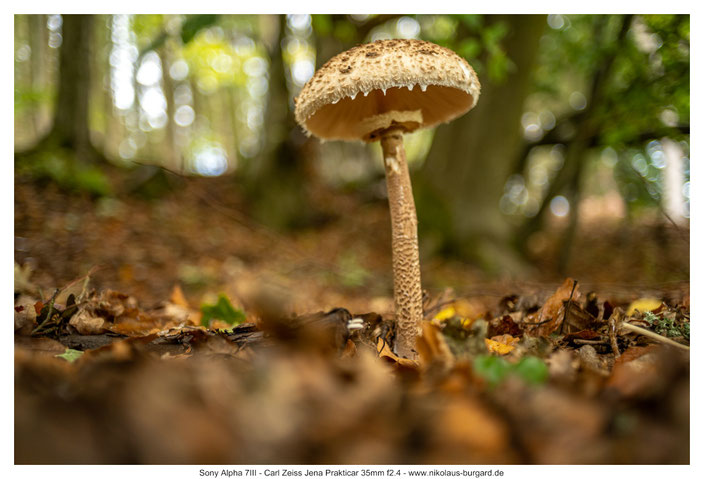
Ich mag das Flektogon / Prakticar enorm gerne für solche Aufnahmen.
Es ist einfach richtig gut scharf schon bei Offenblende,
und sein Hintergrundrendering trifft mit seinen Eigenarten genau meinen Geschmack.
Es gibt natürlich Objektive, die weichere, ruhigere Hintergründe produzieren - aber in meinen Augen bieten die feinen Bubbles und abgerundeten Catseyes einen gelungenen Rahmen für die eigentlichen Motive.
I like the Flektogon / Prakticar enormously for such recordings.
It is just really sharp already at open aperture,
and it's background rendering hits exactly my taste with his peculiarities.
There are, of course, lenses that produce softer, quieter backgrounds - but in my eyes, the fine bubbles and rounded catseyes provide a successful frame for the
actual motifs.
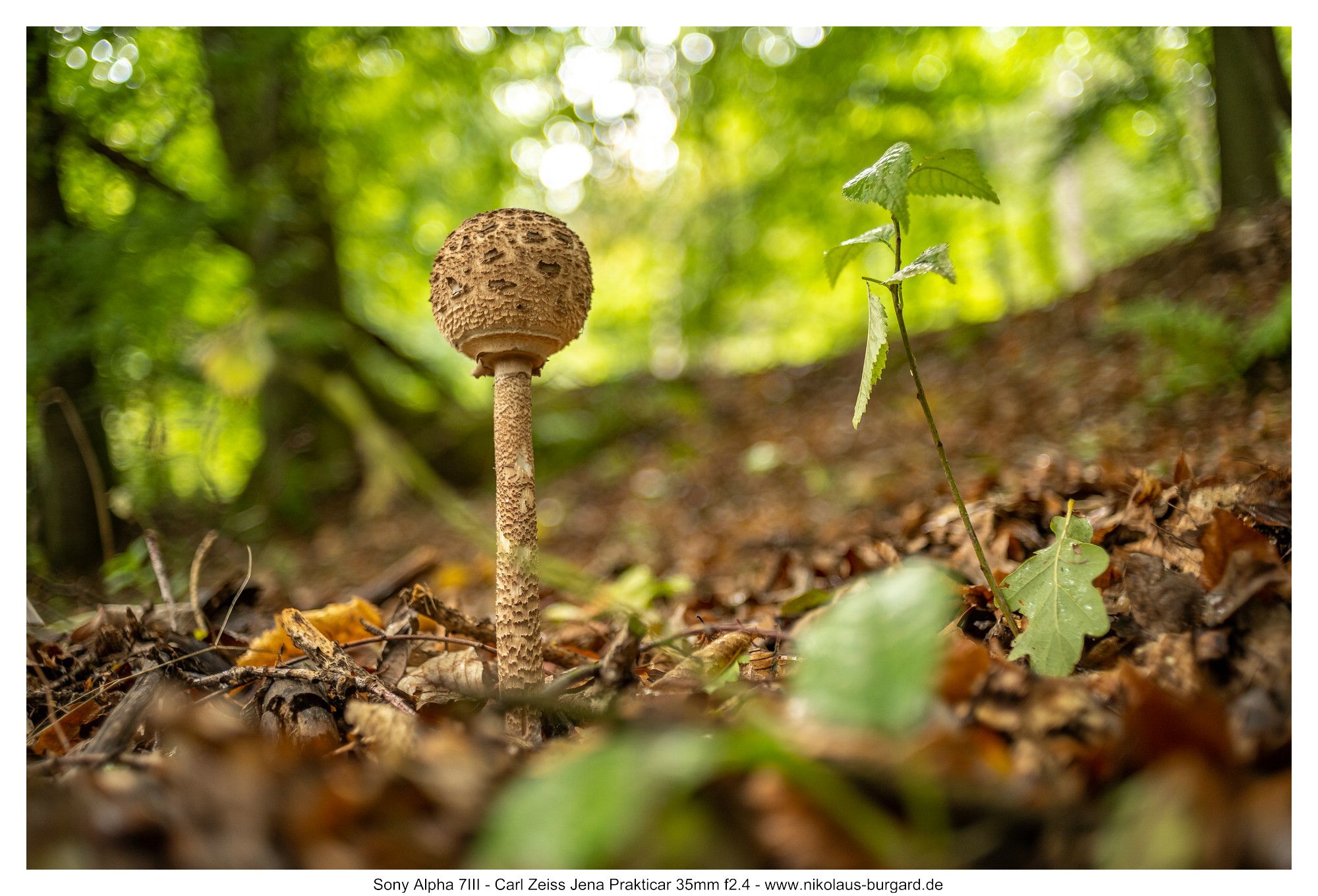
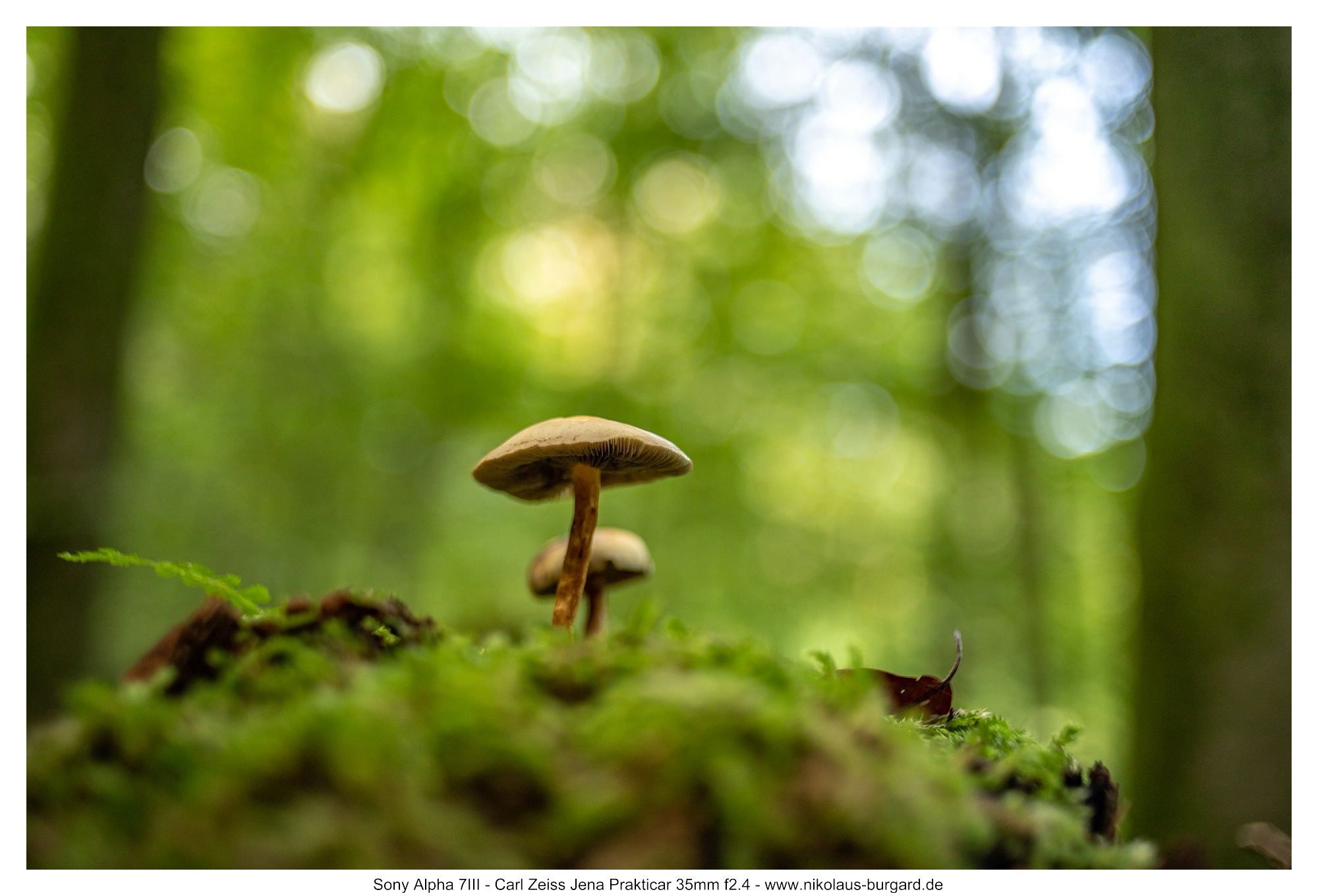
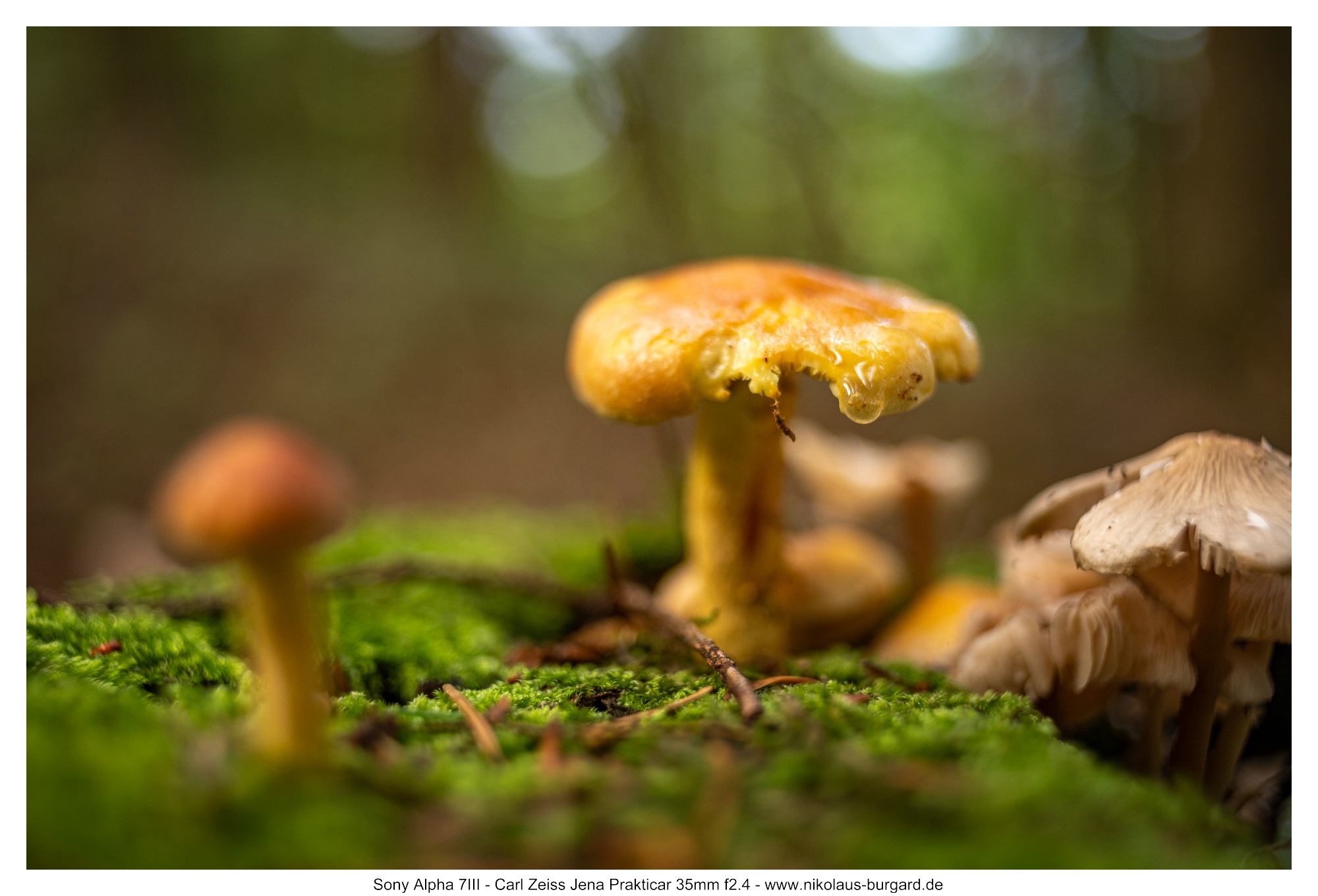
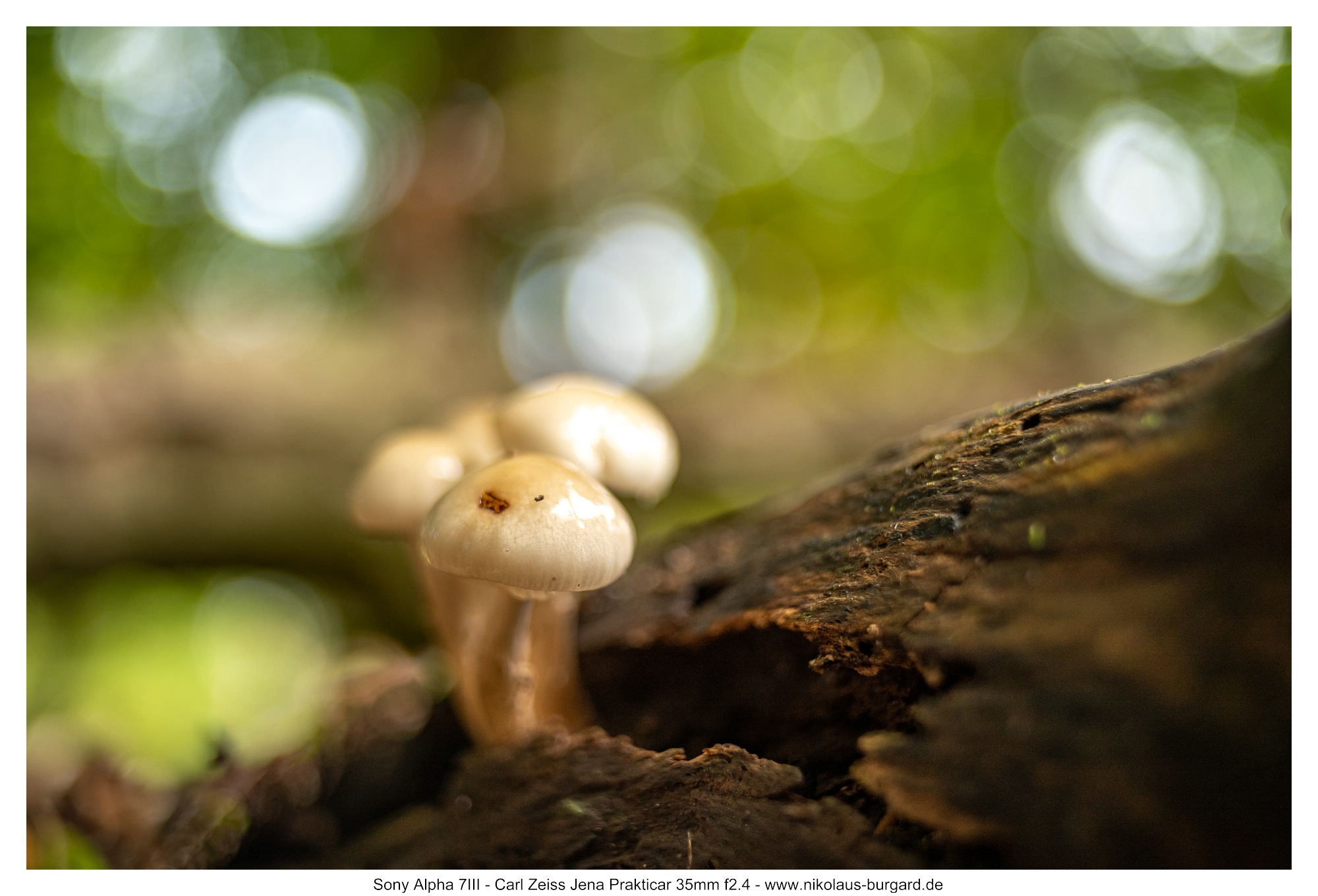
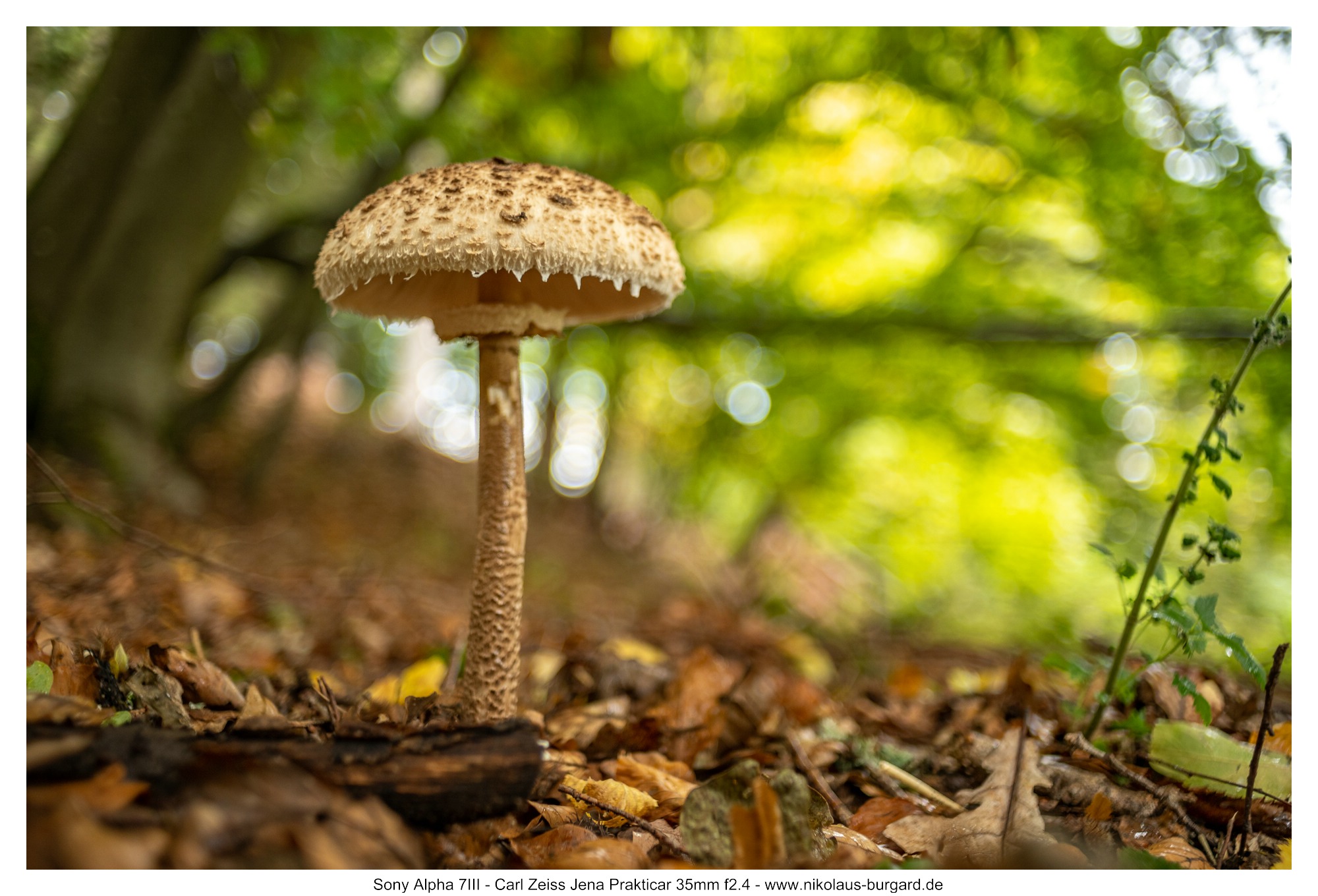
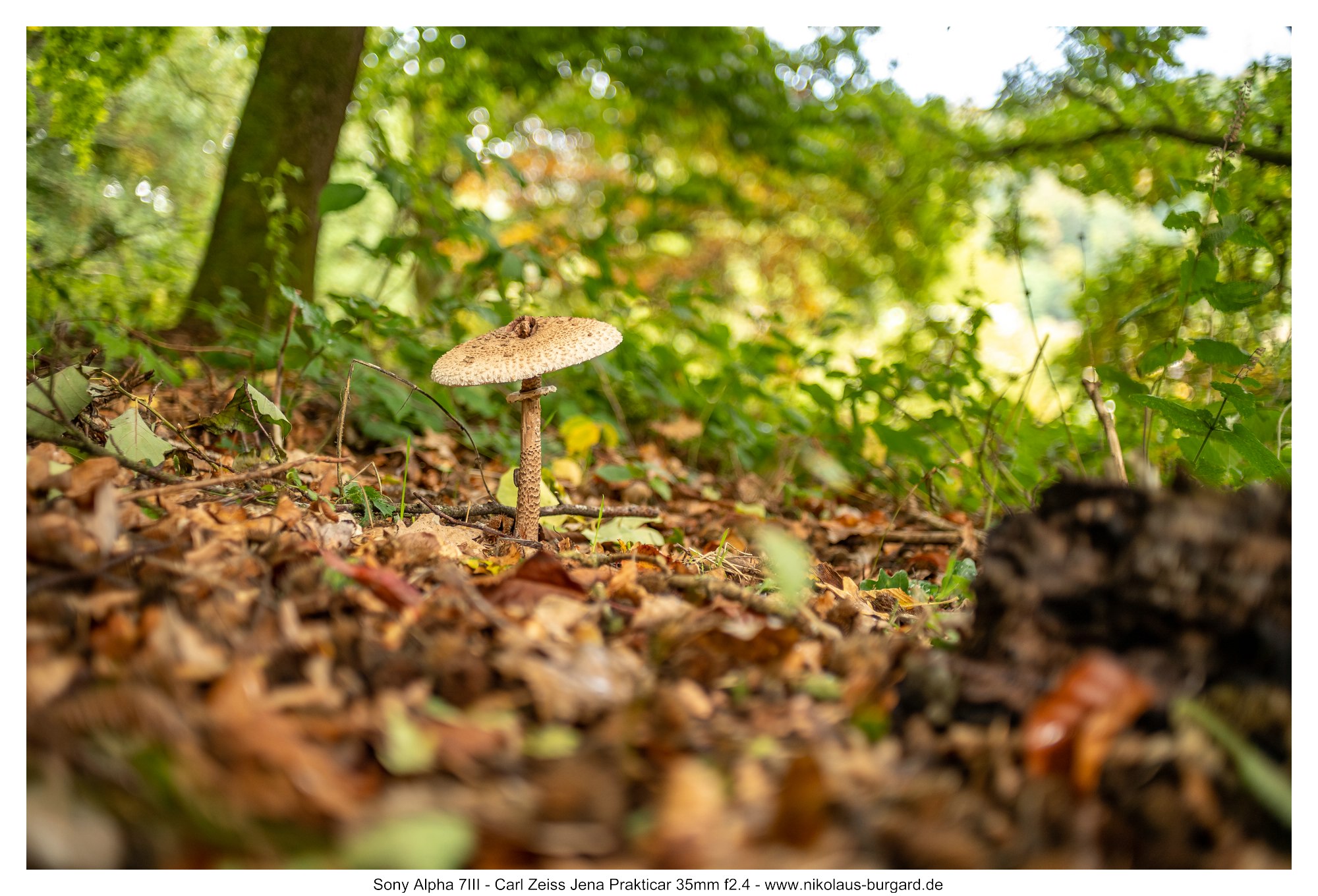
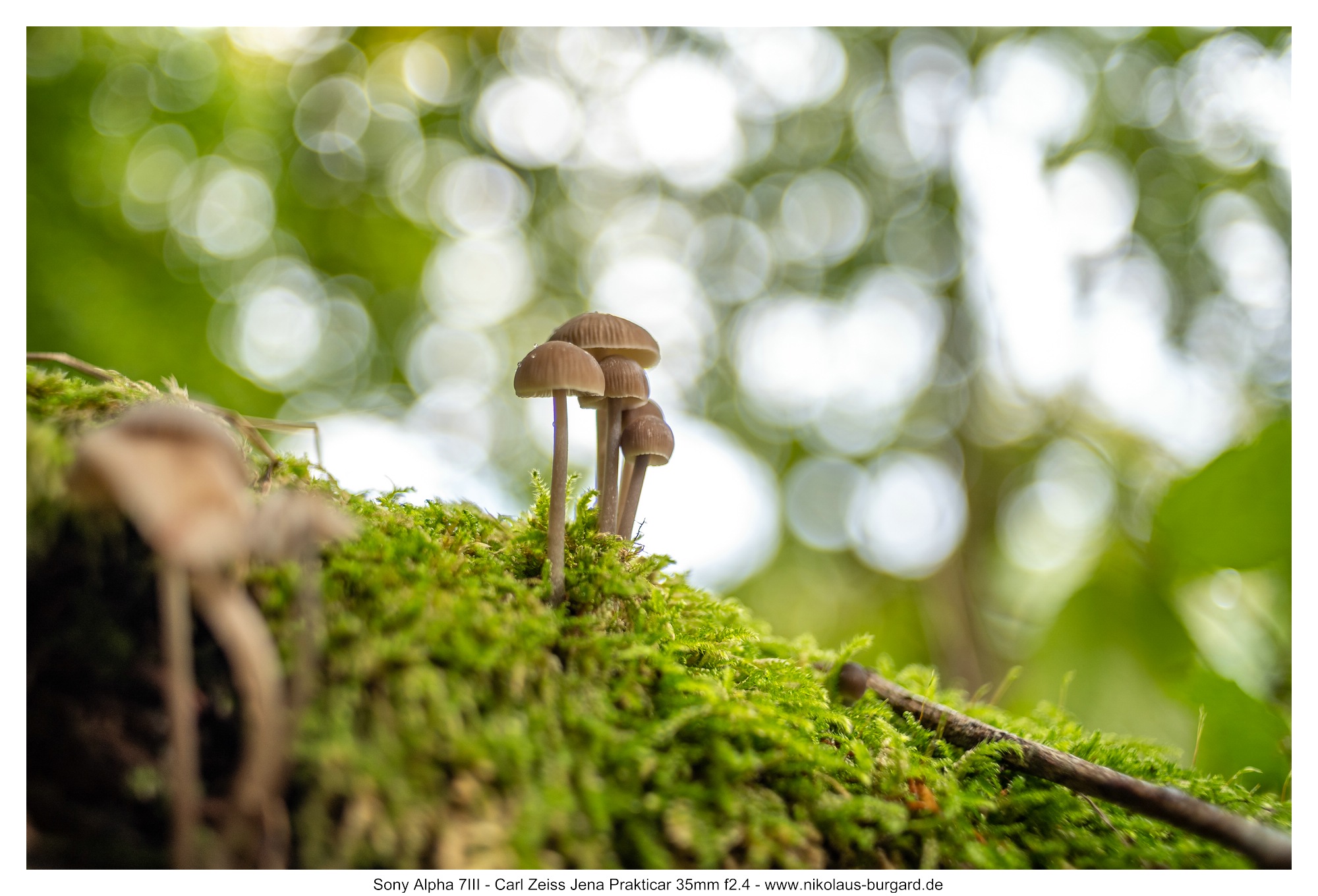
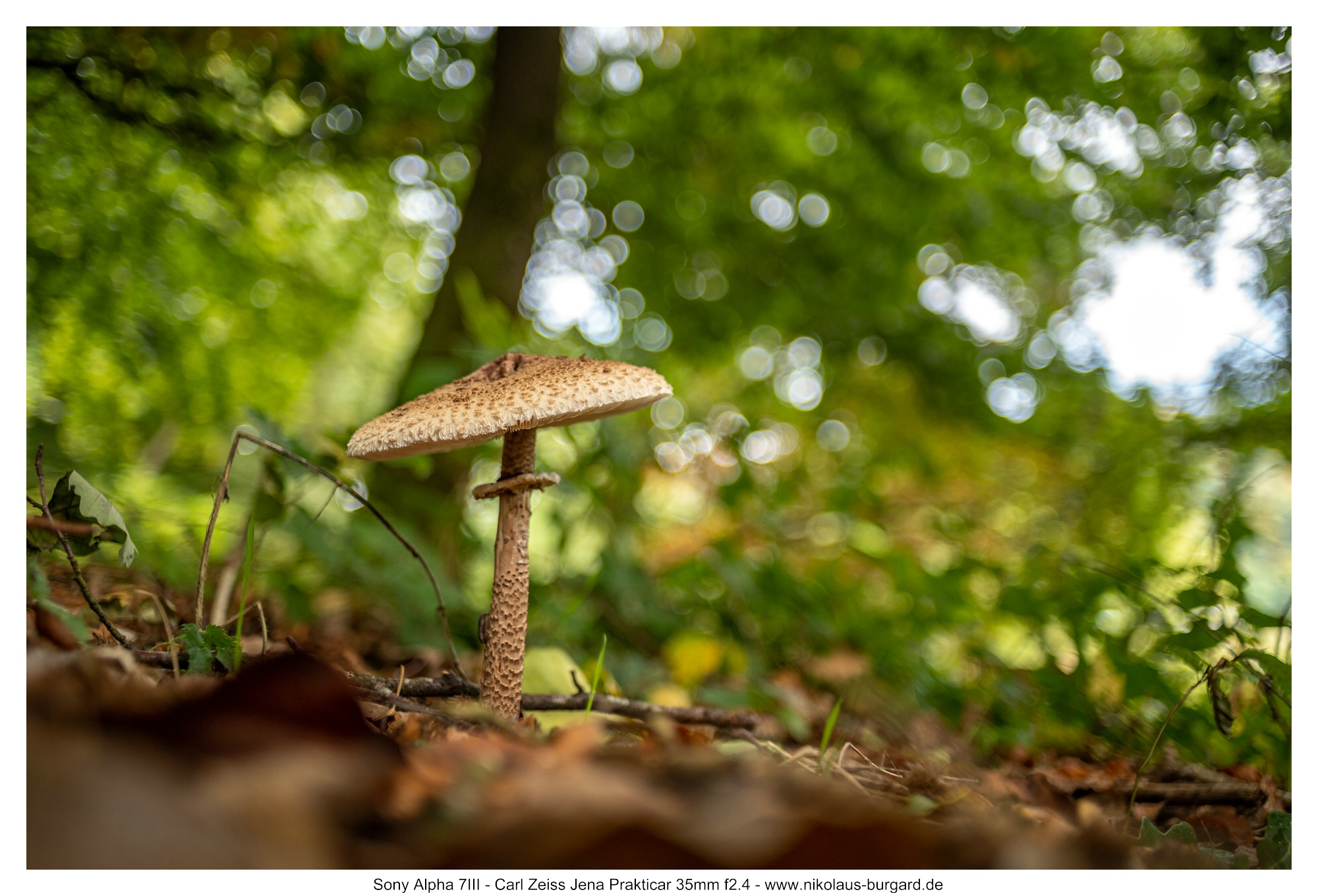
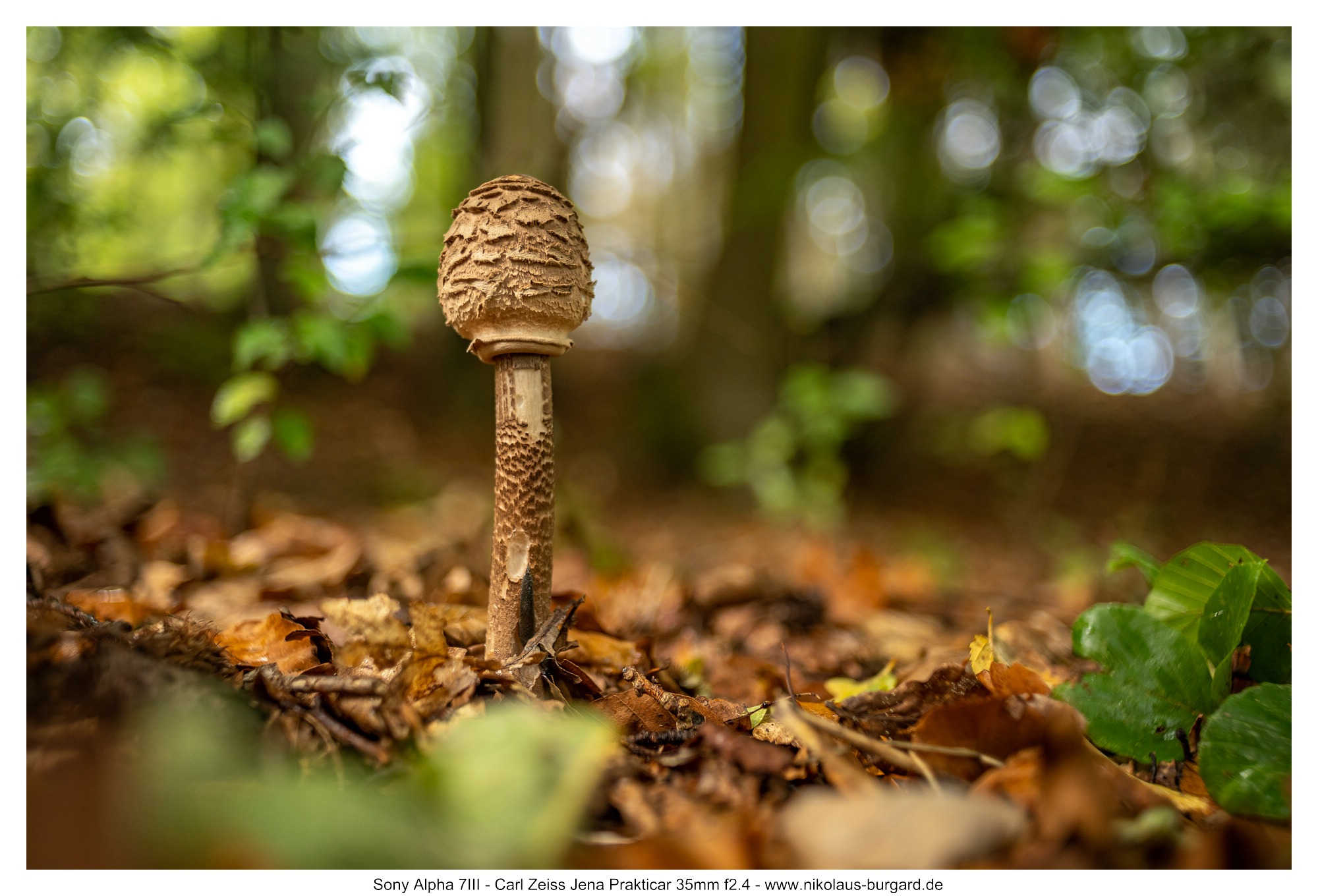
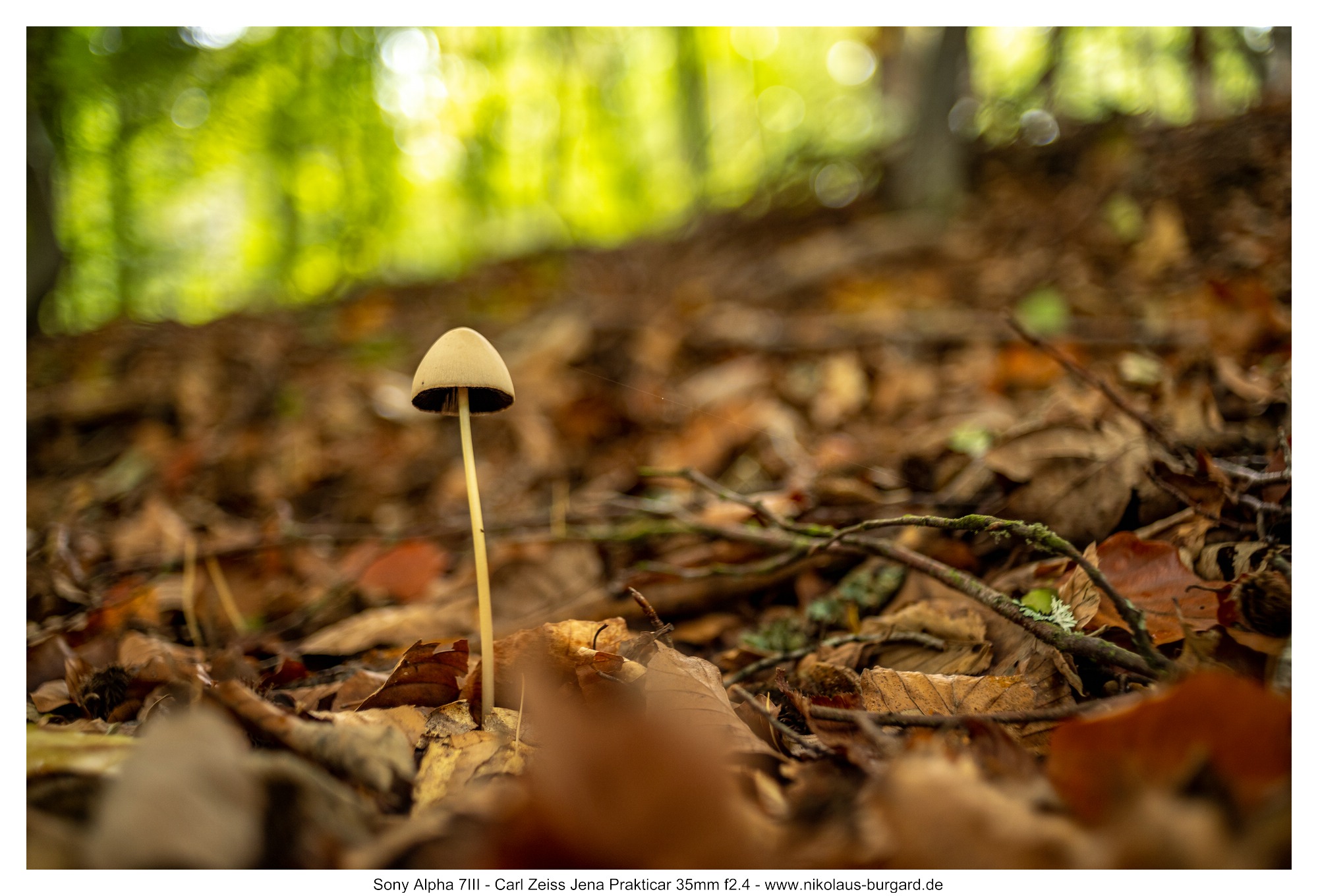
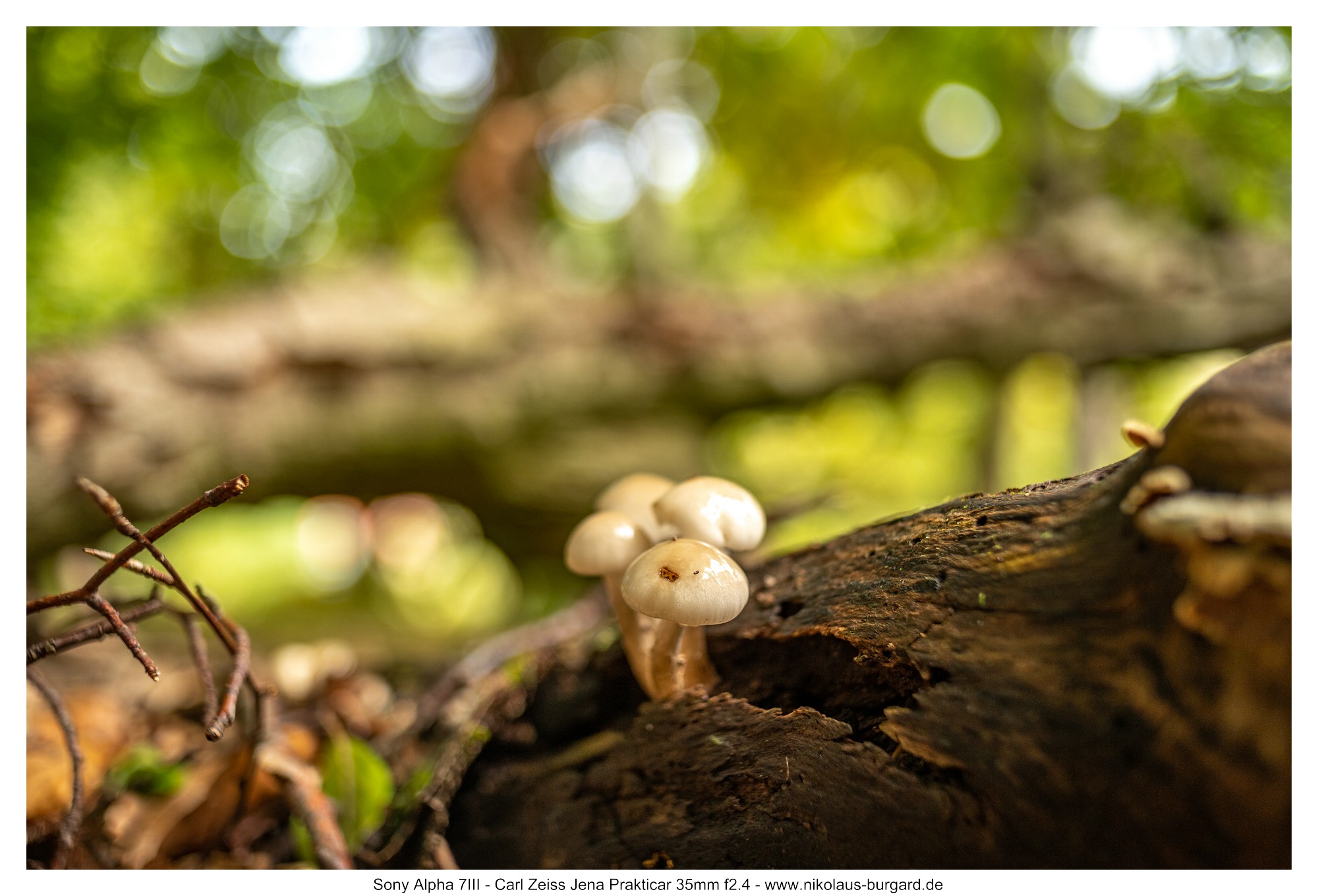
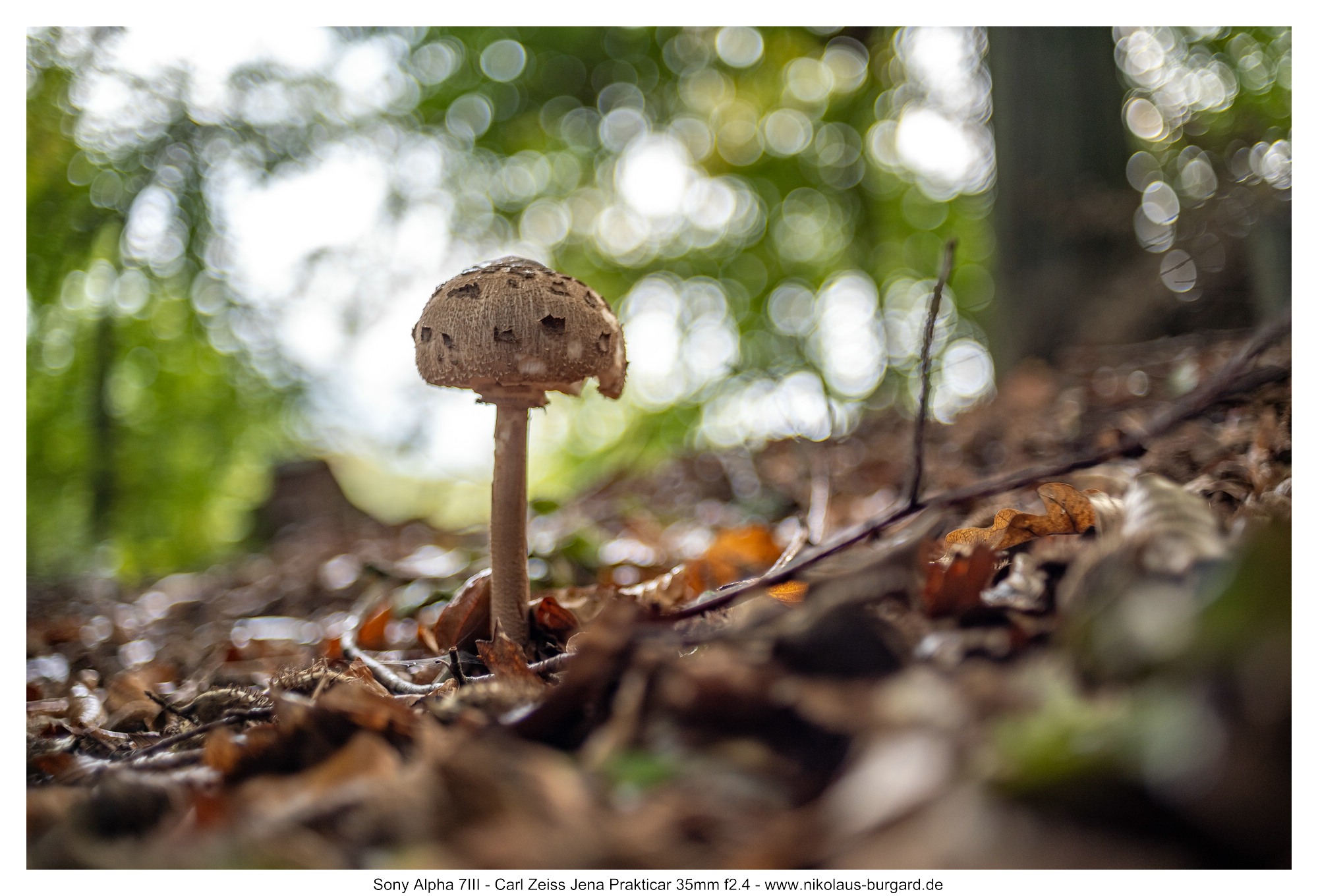
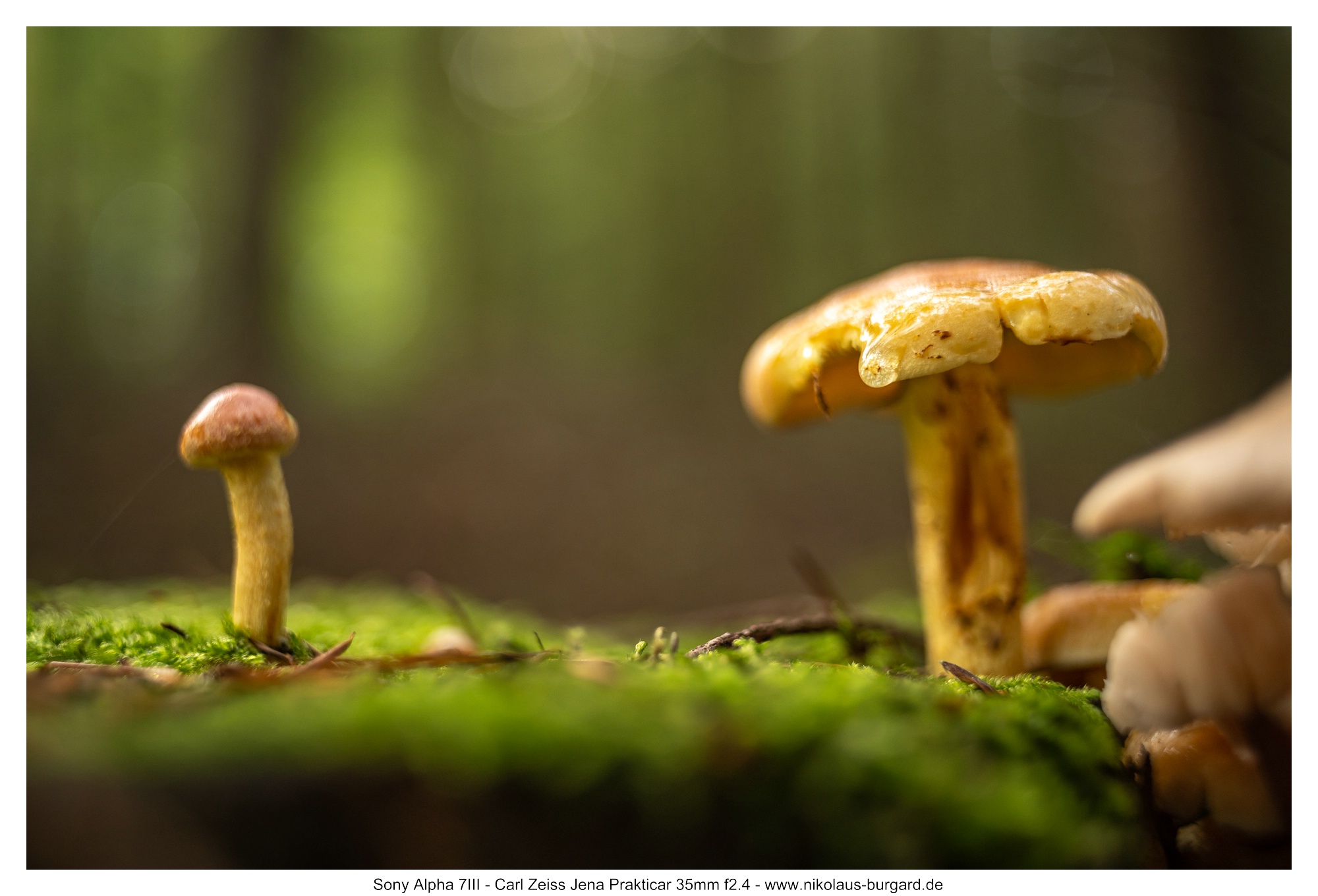
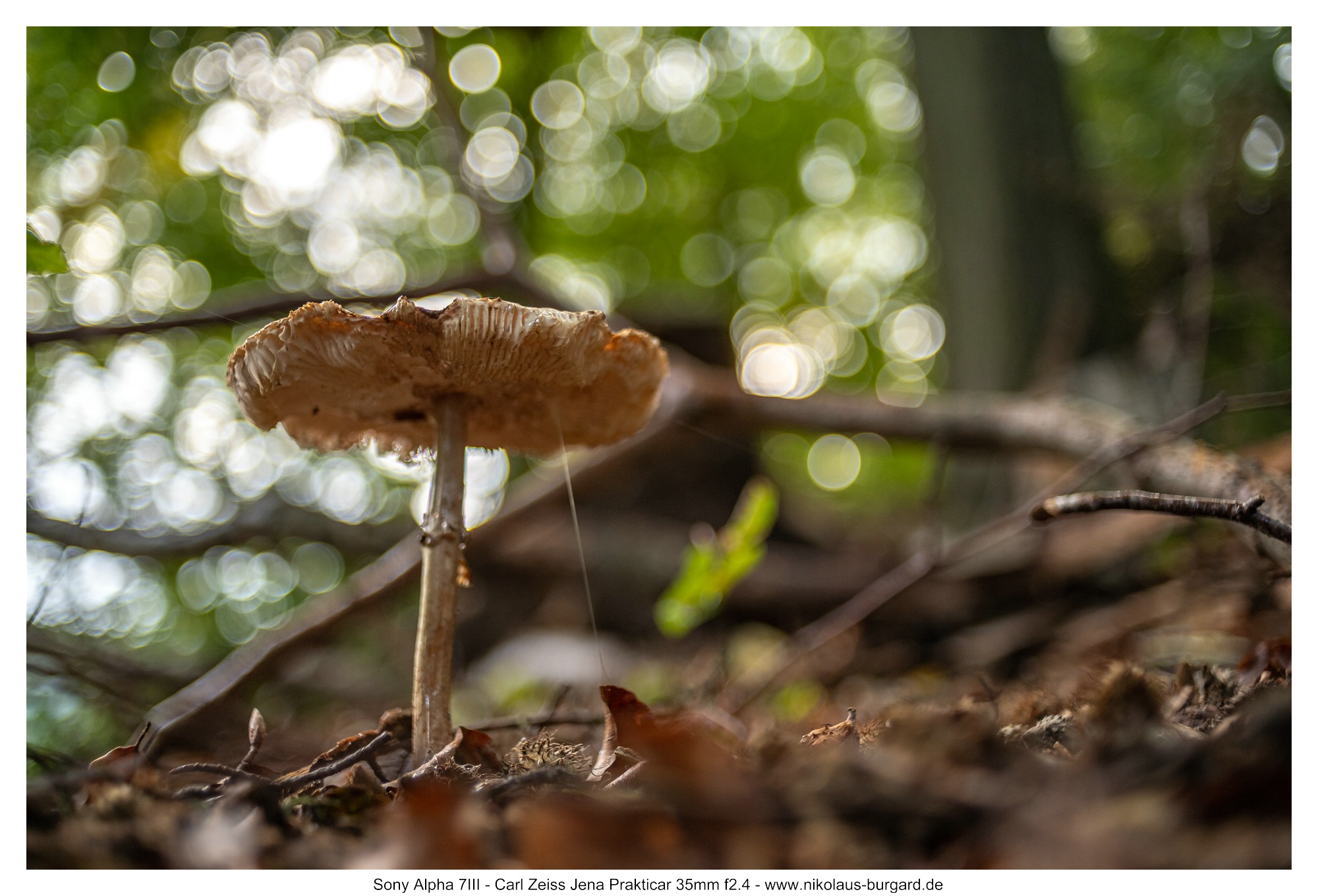
Das folgende Motiv habe ich exemplarisch einmal mit f2.4 und f8 fotografiert um die Unterschiede im Bildrendering zu zeigen:
I photographed the following motif with f2.4 and f8 to show the differences in the image rendering:


Portraits & People
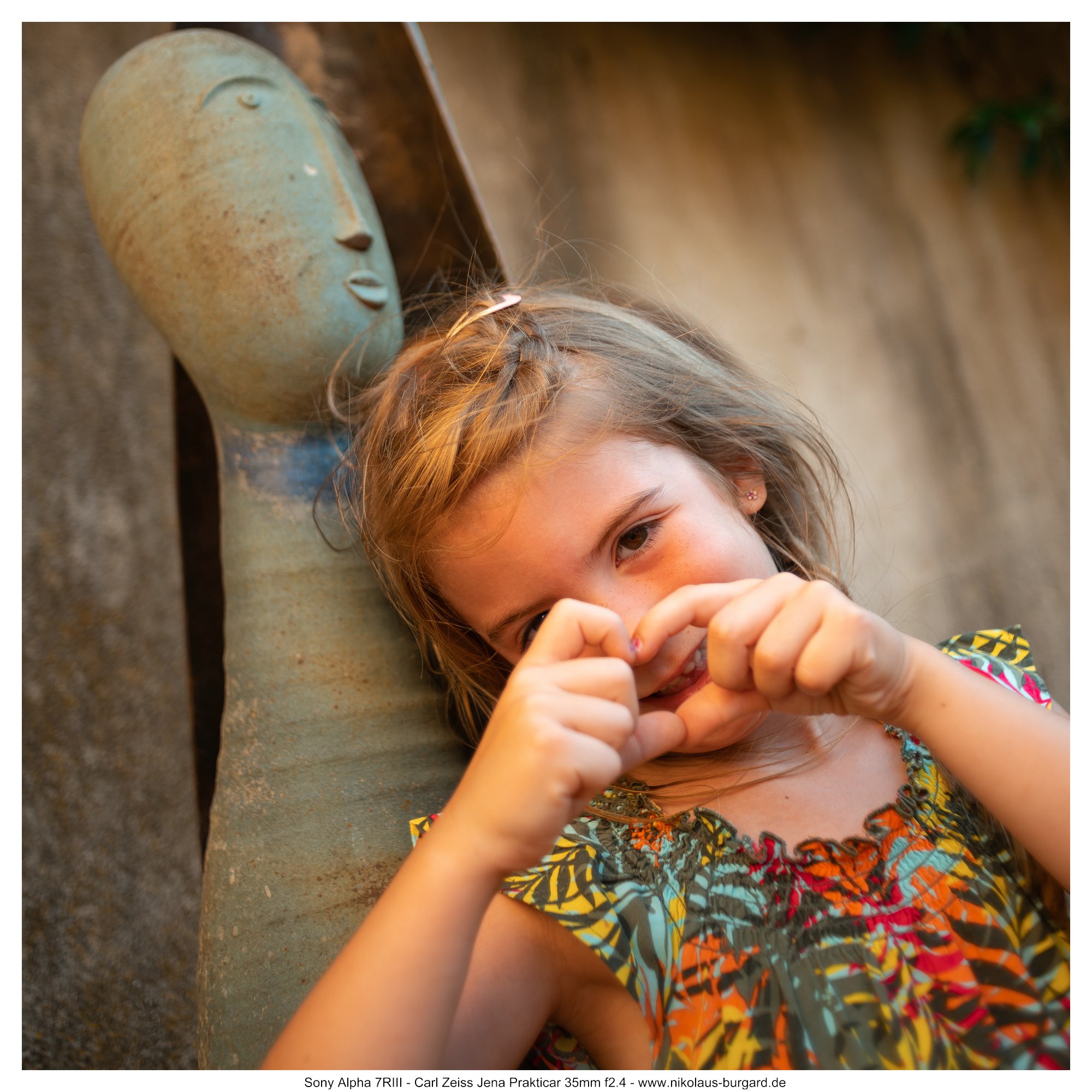
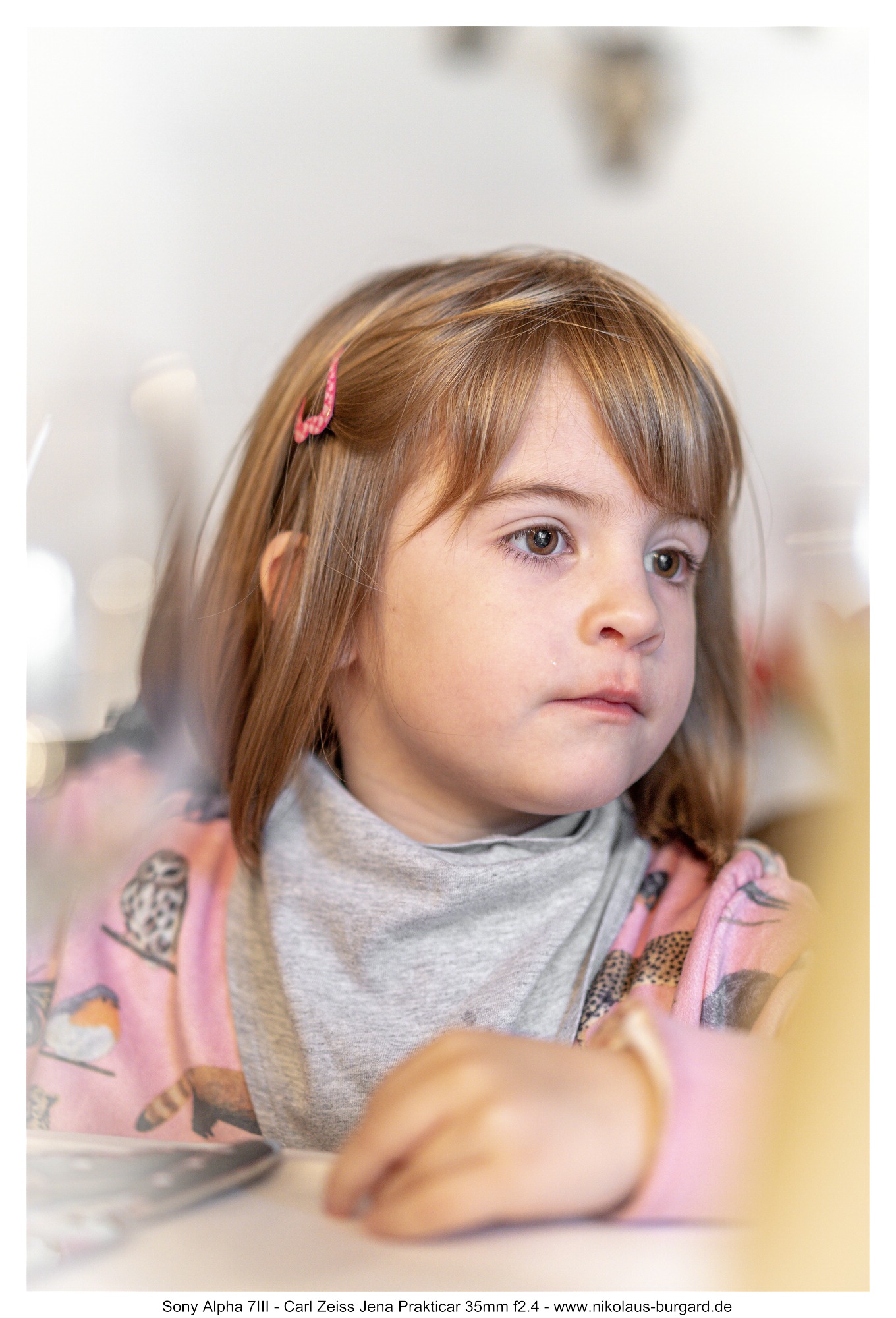
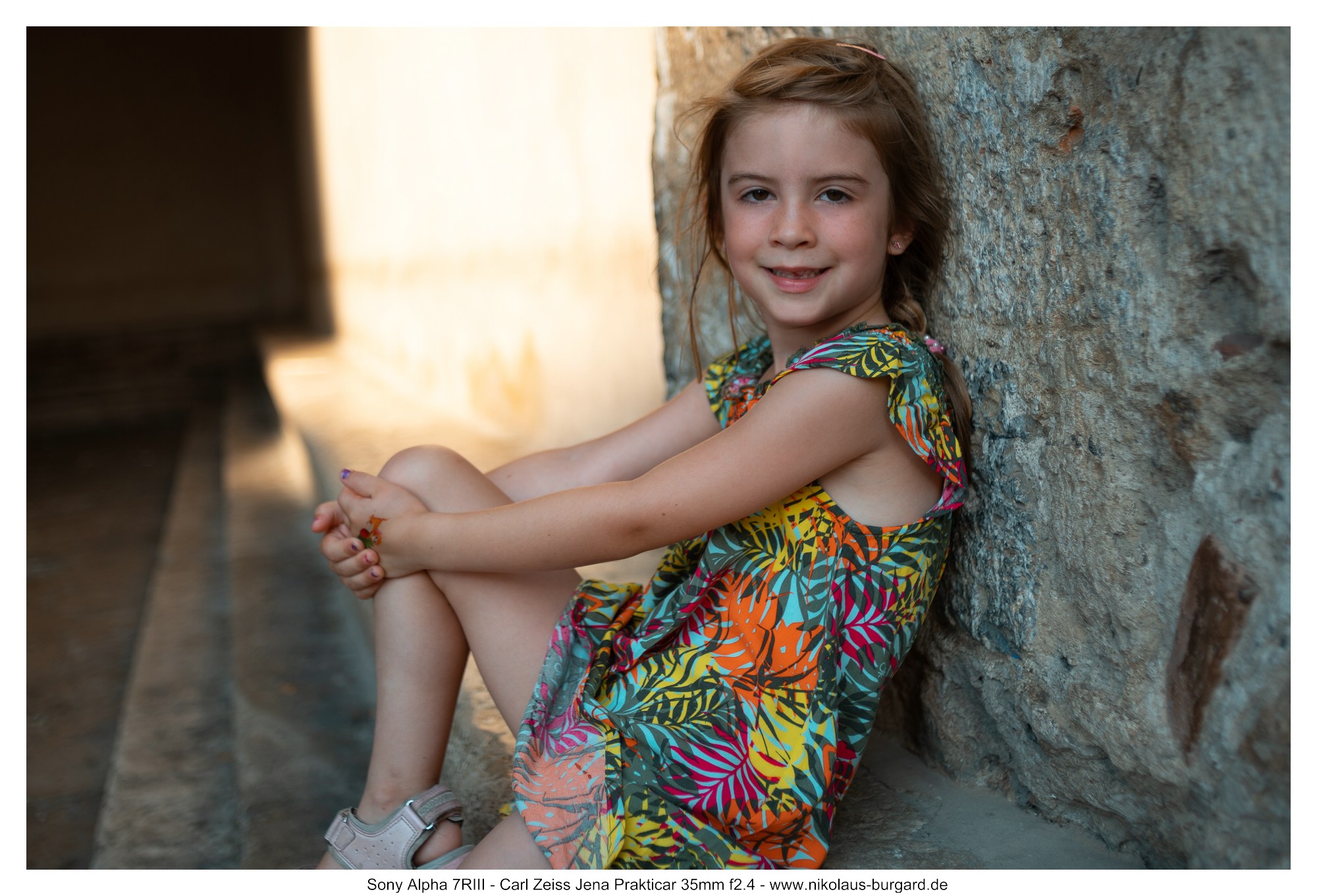
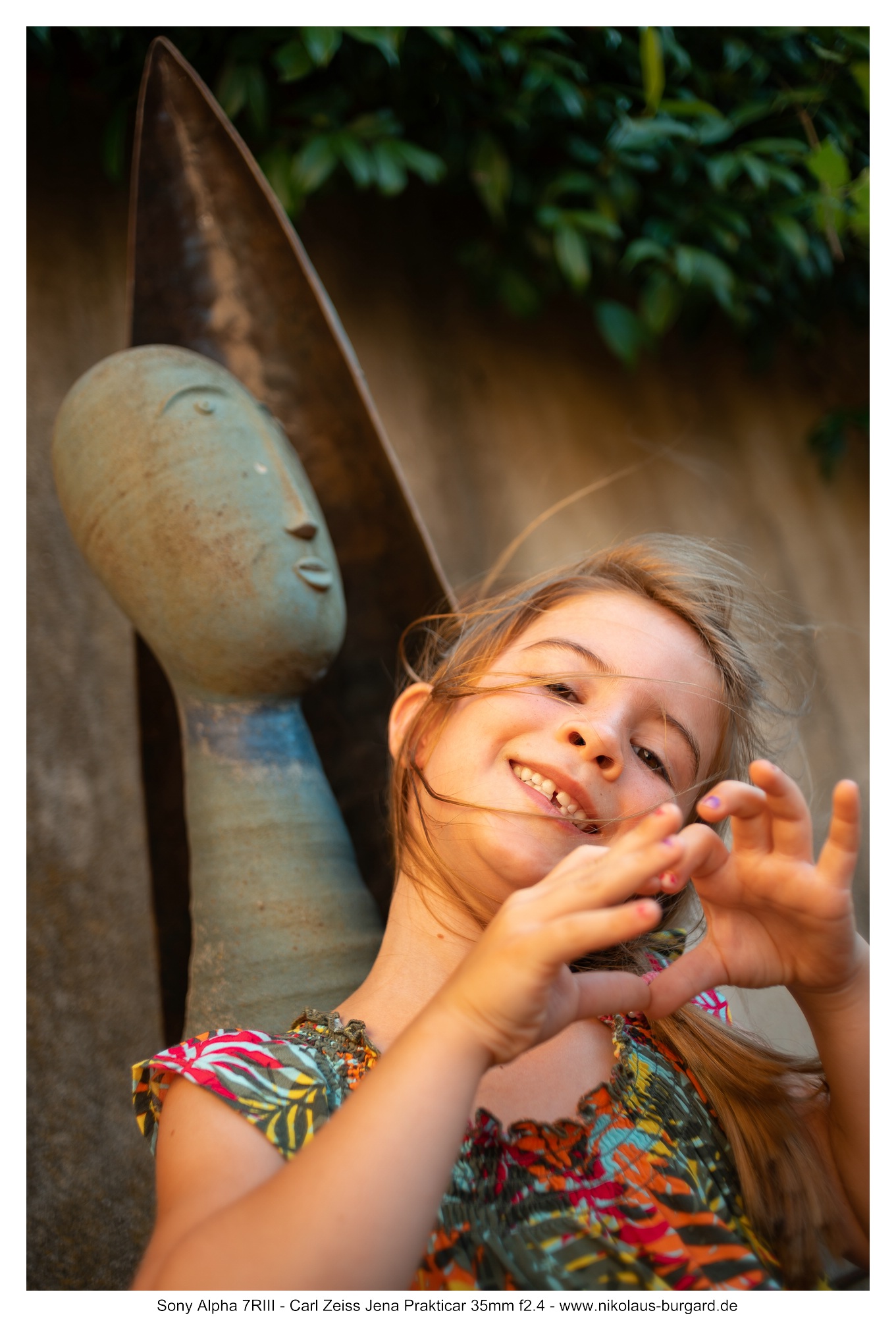
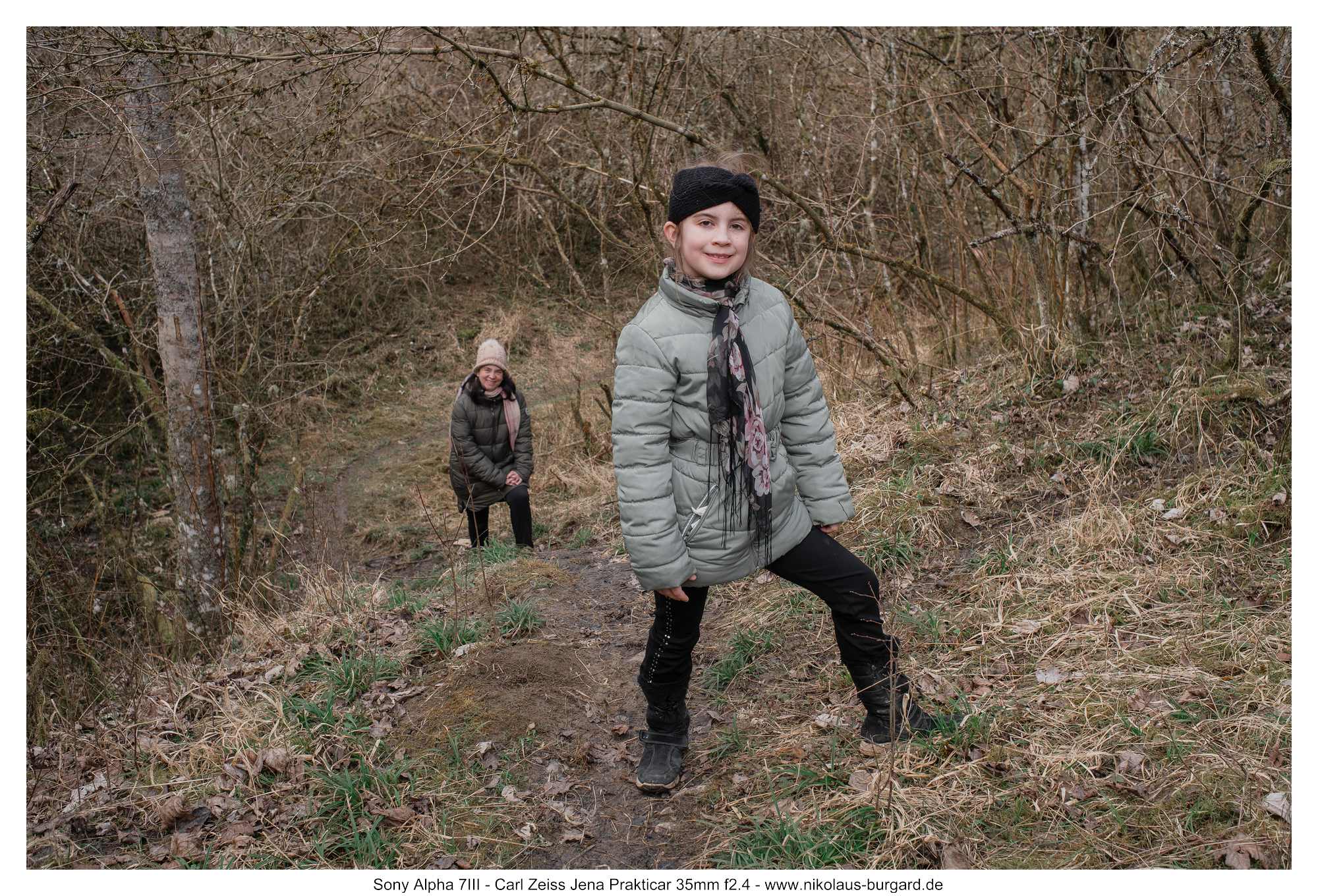
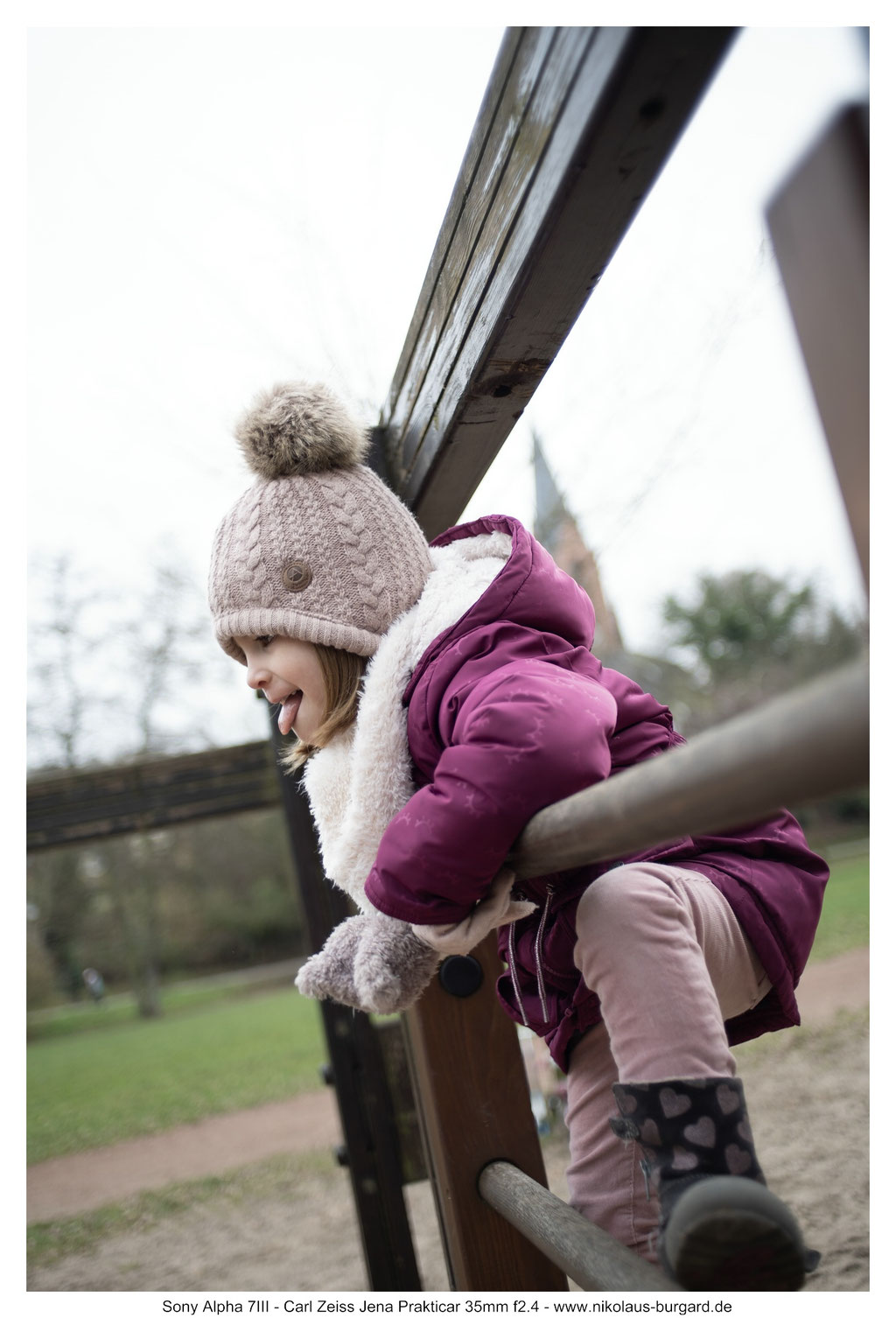
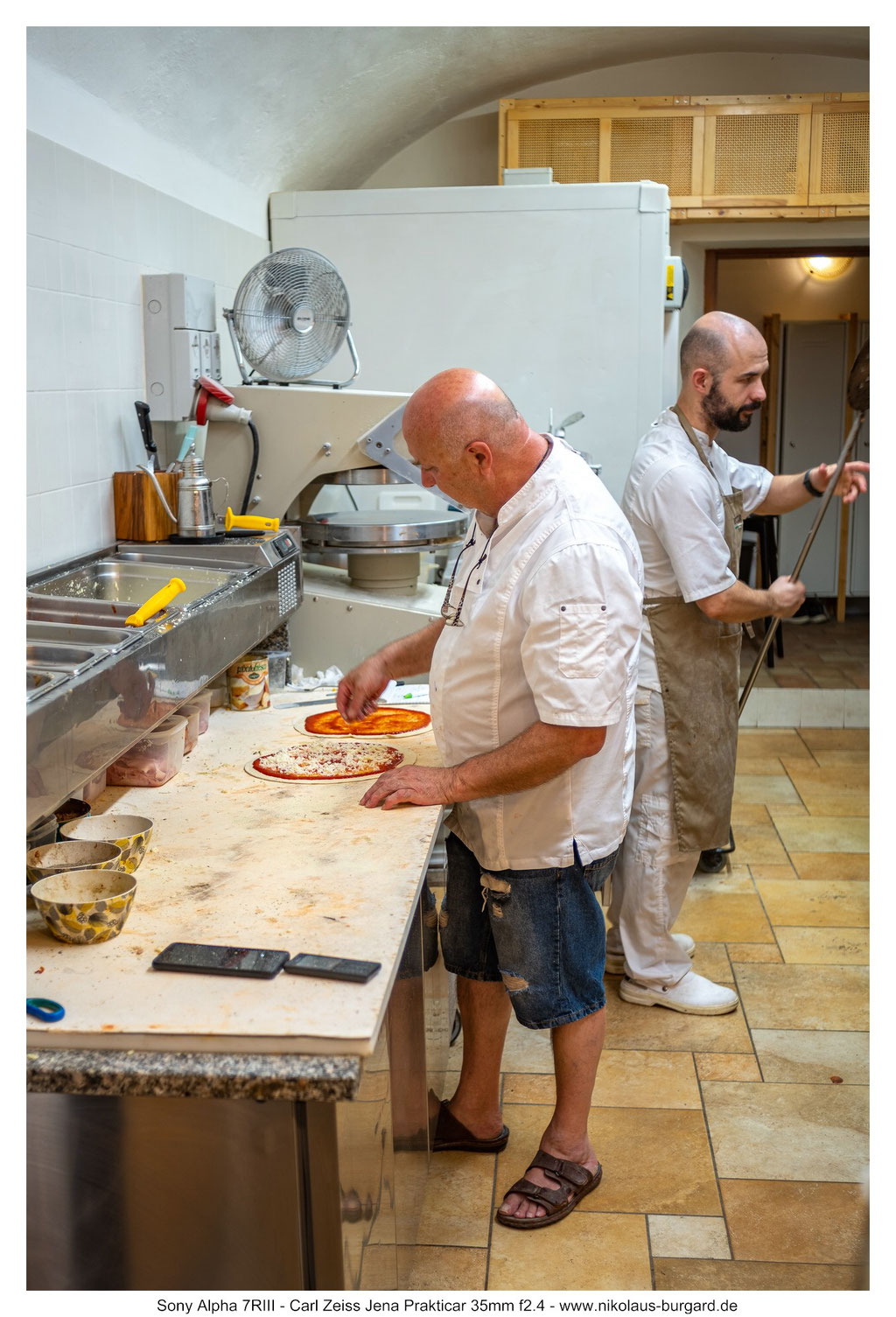
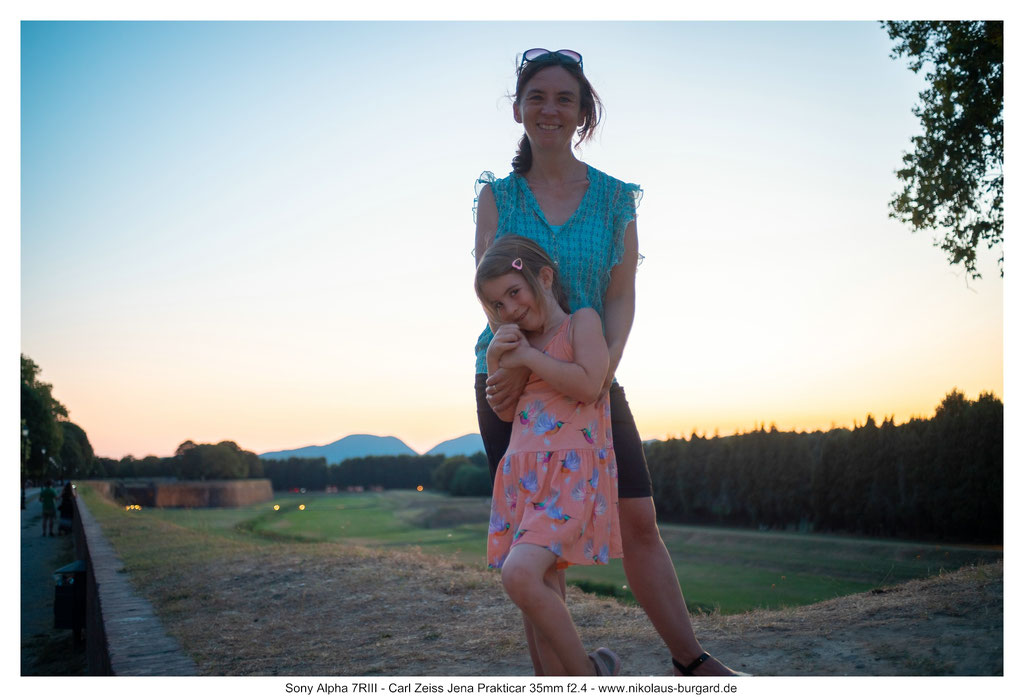
Natürlich habe ich in all den Jahren, in denen ich das Objektiv besitze, damit auch Menschen fotografiert, aber nie besonders als inszenierte Portraits, sondern immer eher Bilder meiner Familie im Reportage-Stil. Viele dieser Bilder findet ihr in den Bildserien dieses Testes, und hier habe ich ein paar Beispiele (alle bei Offenblende f2.4) angefügt. Mir gefällt das Rendering des Objektives sehr gut für solche Bilder. Scharf, wo es sein soll und schöne softe Hintergründe.
Of course, in all the years I have owned the lens, I have also photographed people, but never especially as staged portraits, but always more pictures of my family in the reportage style. Many of these images can be found in the picture series of this test, and here I have added a few examples (all at open aperture f2.4). I like the rendering of the lens very much for such pictures. Sharp where it should be and beautiful soft backgrounds.
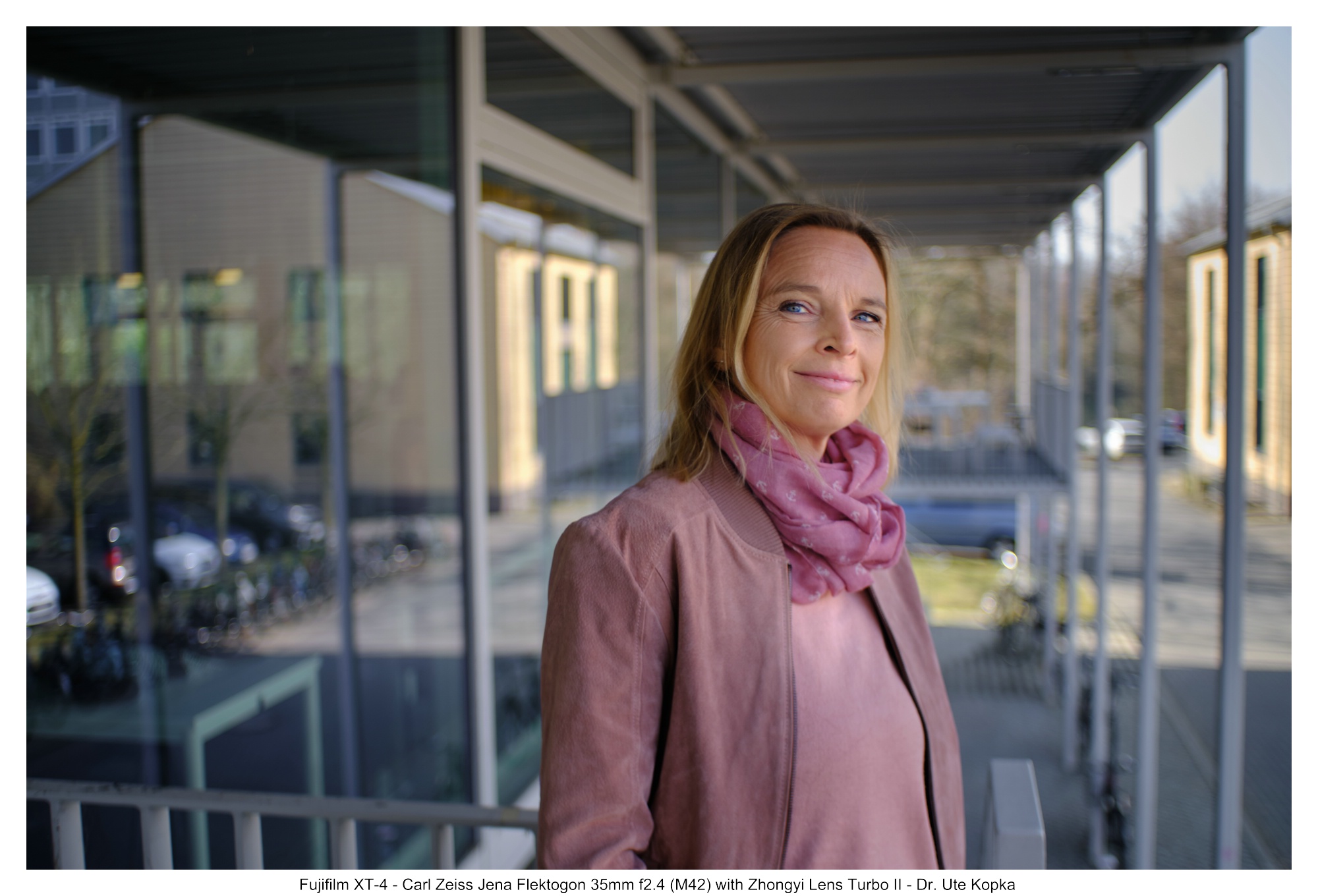
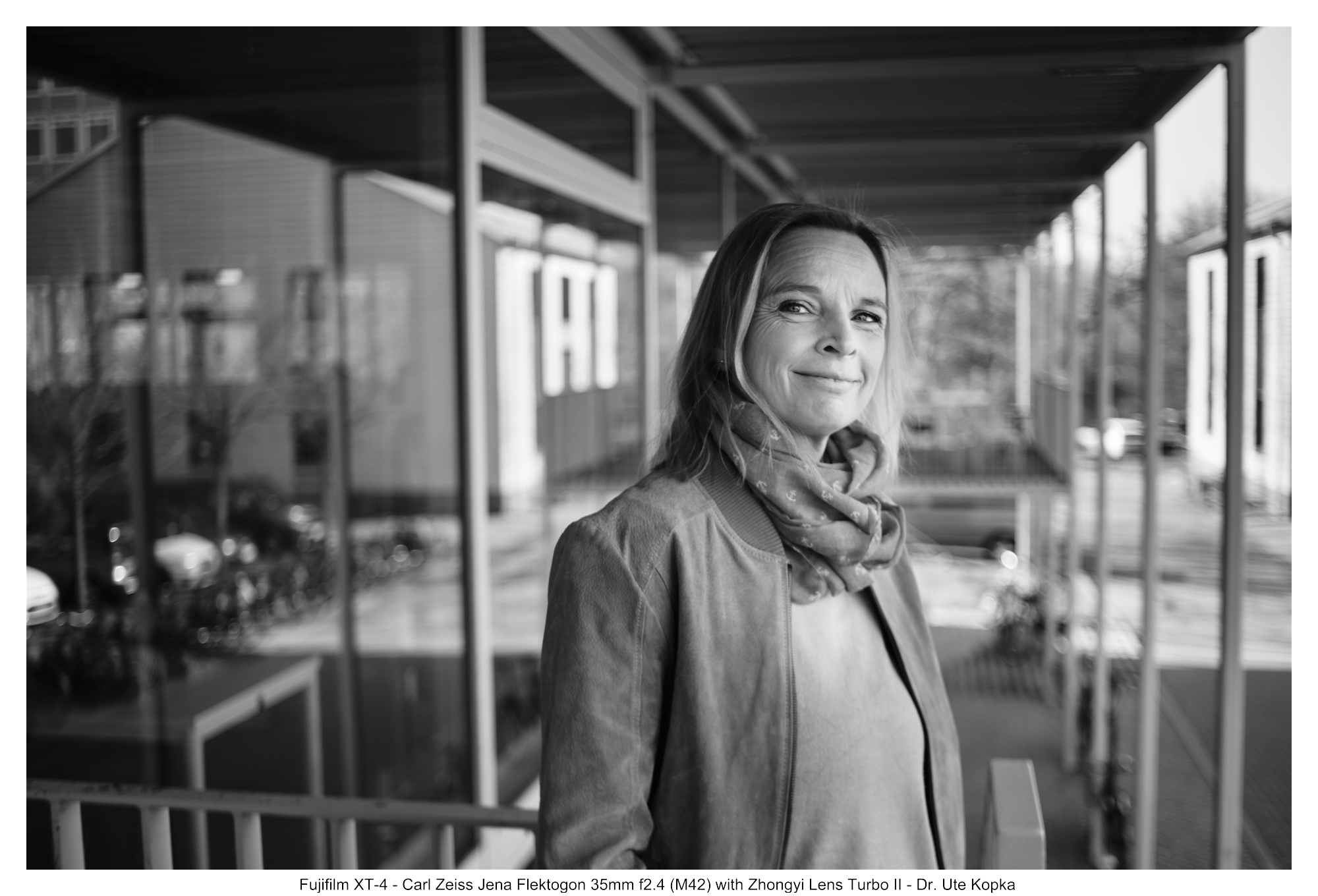
Ute Kopka hat mir auch für diesen Test 2 tolle Portraits zur Verfügung gestellt.
Das Erste zeigt eine Kollegin in einer halboffenen Lobby.
Aufgenommen wurde es mit einer Fuji XT-4 (APS-C). Das Objektiv wurde per Zhongyi Lens Turbo II adaptiert.
Mir gefällt die Farbversion sehr gut, Ute bevorzugt die Schwarz-Weiß-Version - ich zeige sie euch beide, dann könnt ihr selbst entscheiden:
Ute Kopka also provided me with 2 great portraits for this test.
The first shows a colleague in a semi-open lobby.
It was recorded with a Fuji XT-4 (APS-C). The lens was adapted by Zhongyi Lens Turbo II.
I like the color version very much, Ute prefers the black and white version - I show it to you both, then you can decide for yourself:
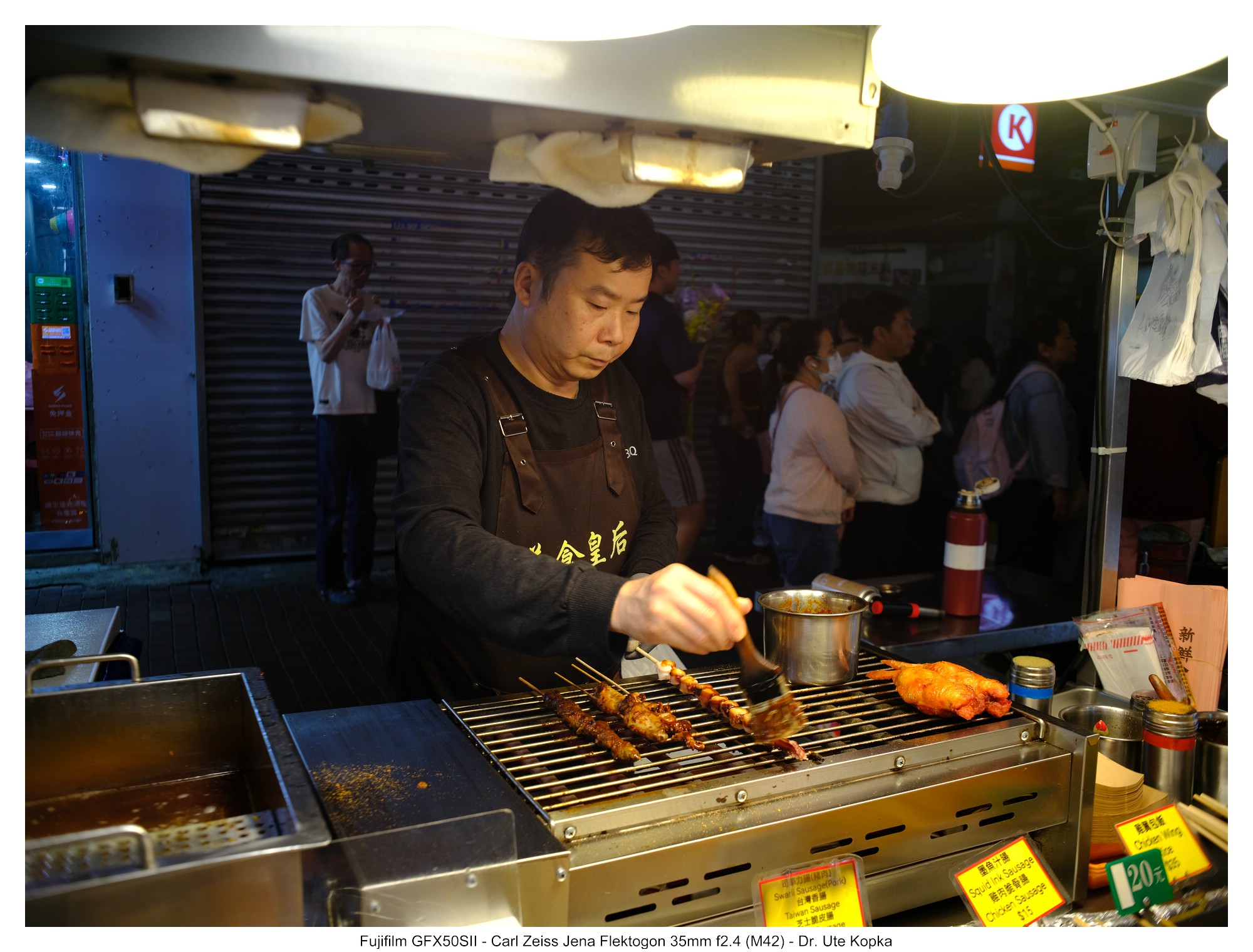
Das zweite Bild ist ein Street-Portrait aus Hongkong, aufgenommen mit der Fuji GFX 50SII:
The second picture is a street portrait from Hong Kong, taken with the Fuji GFX 50SII:
Portraits Analog / analogue portraits
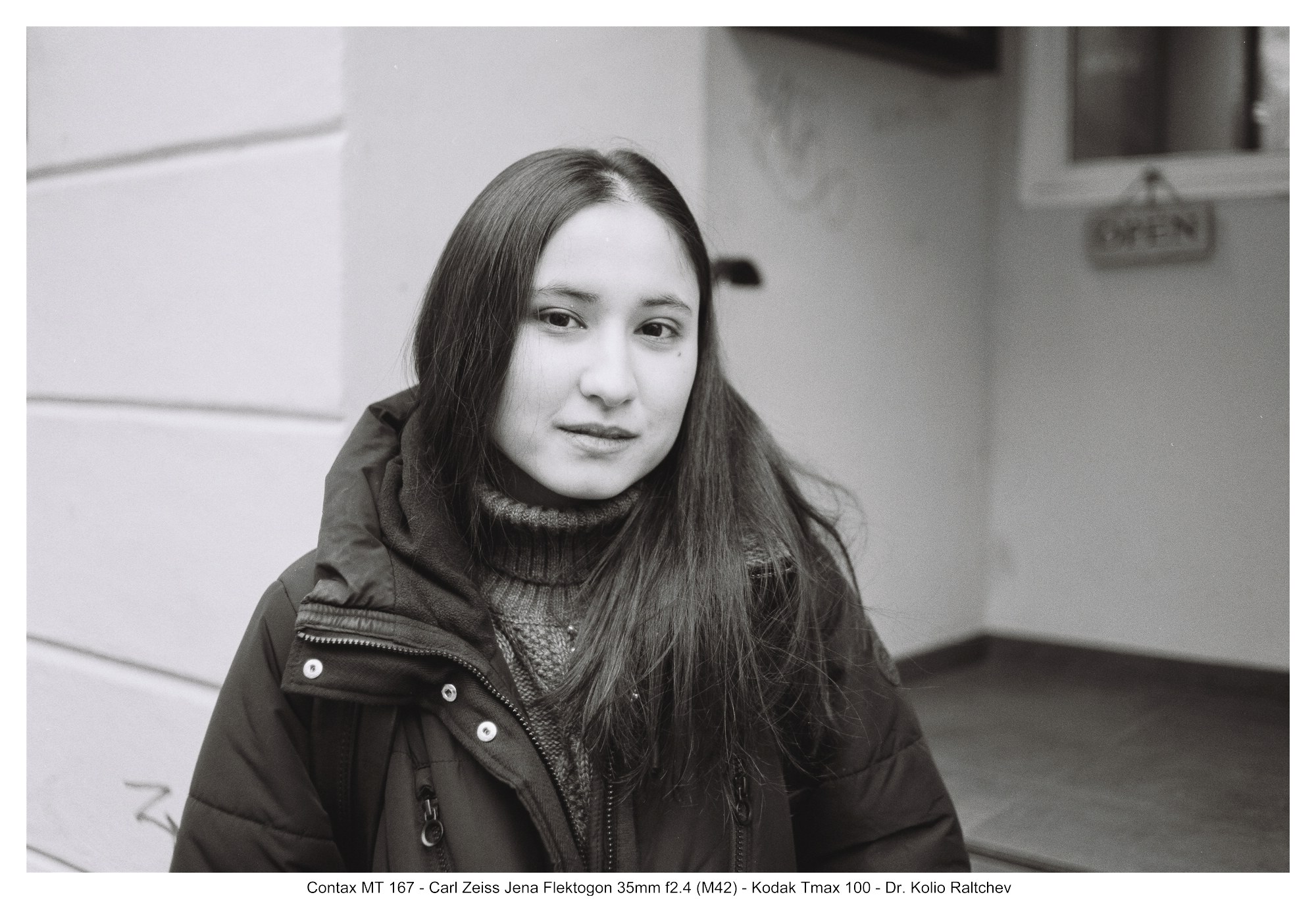
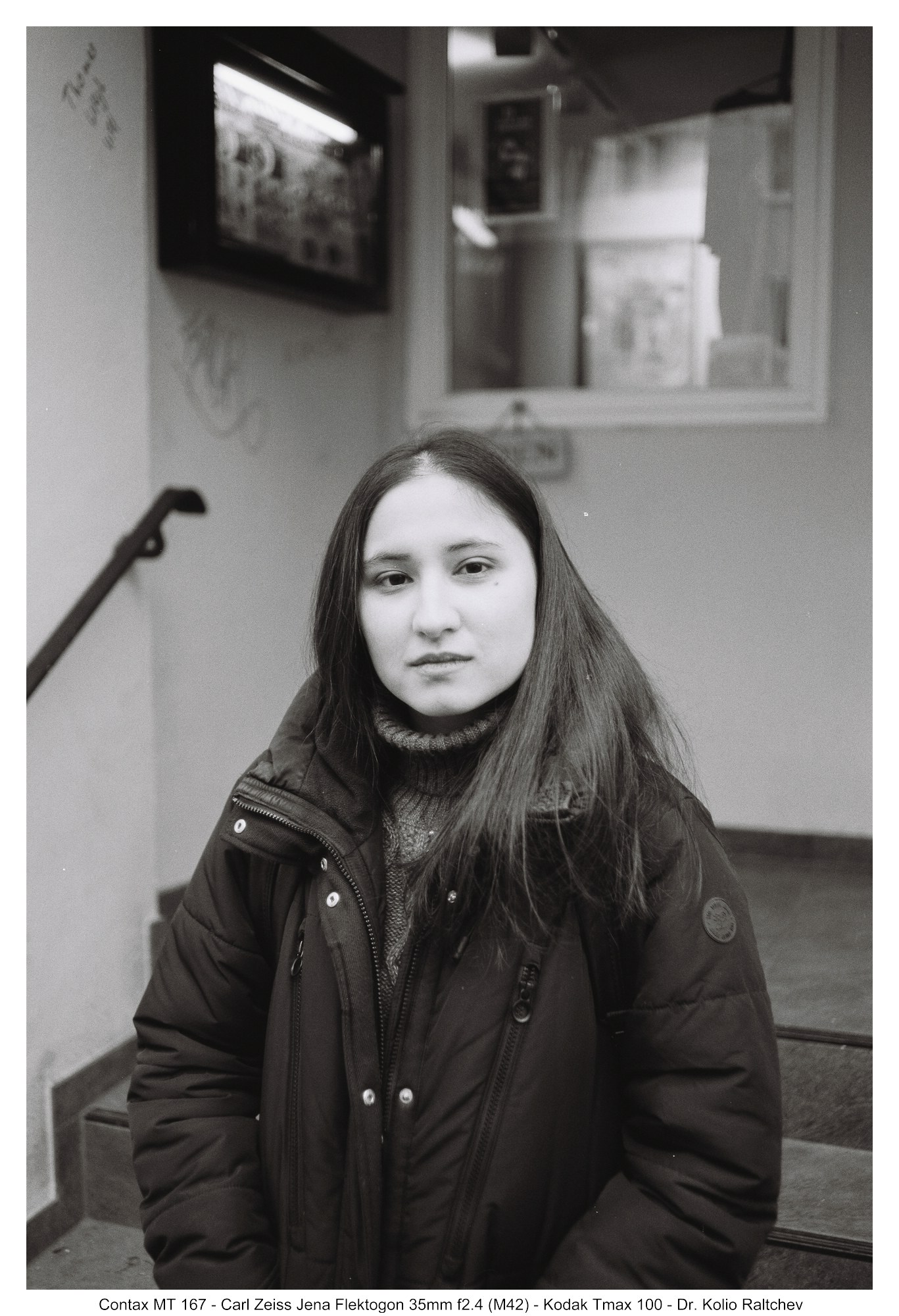
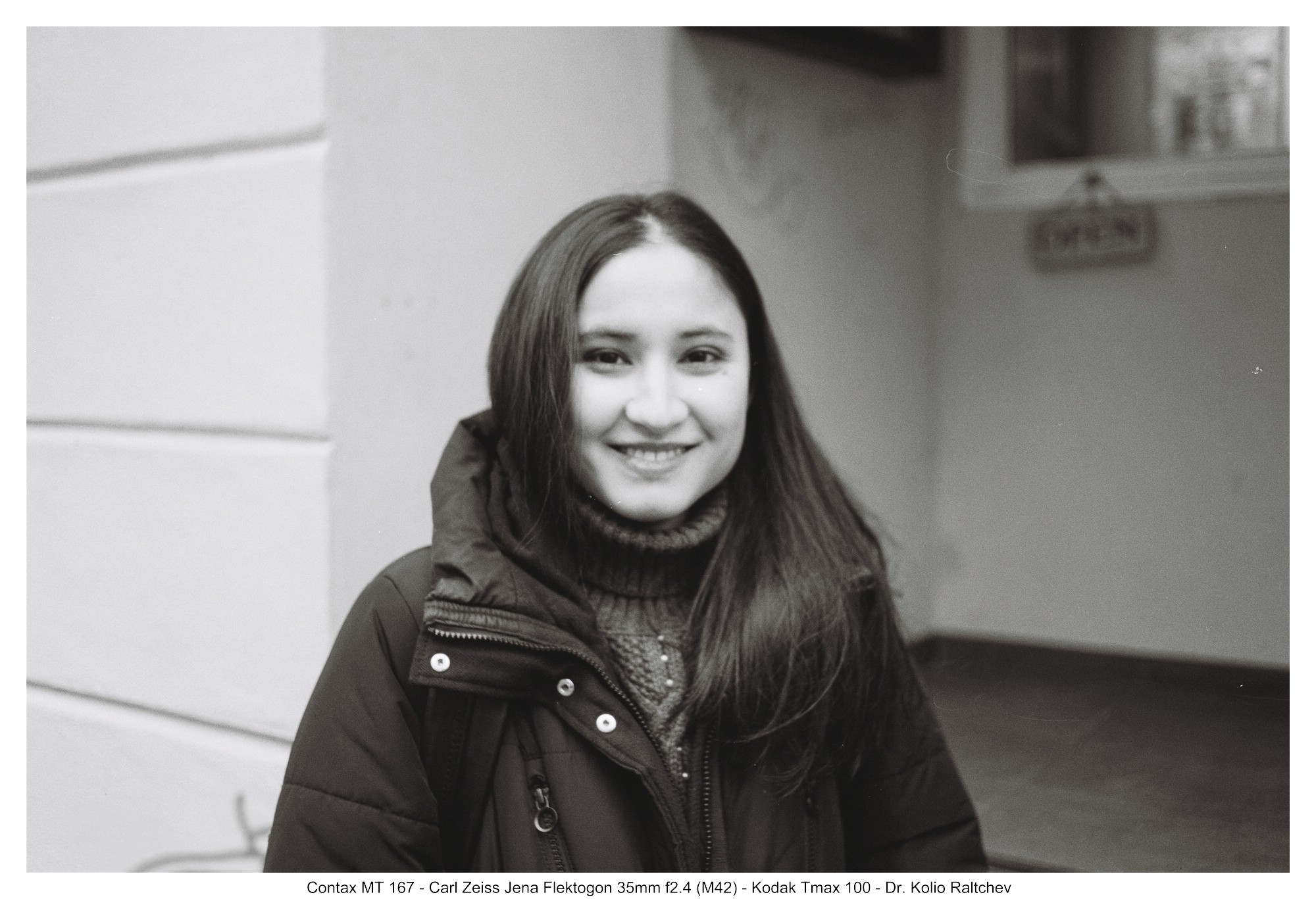
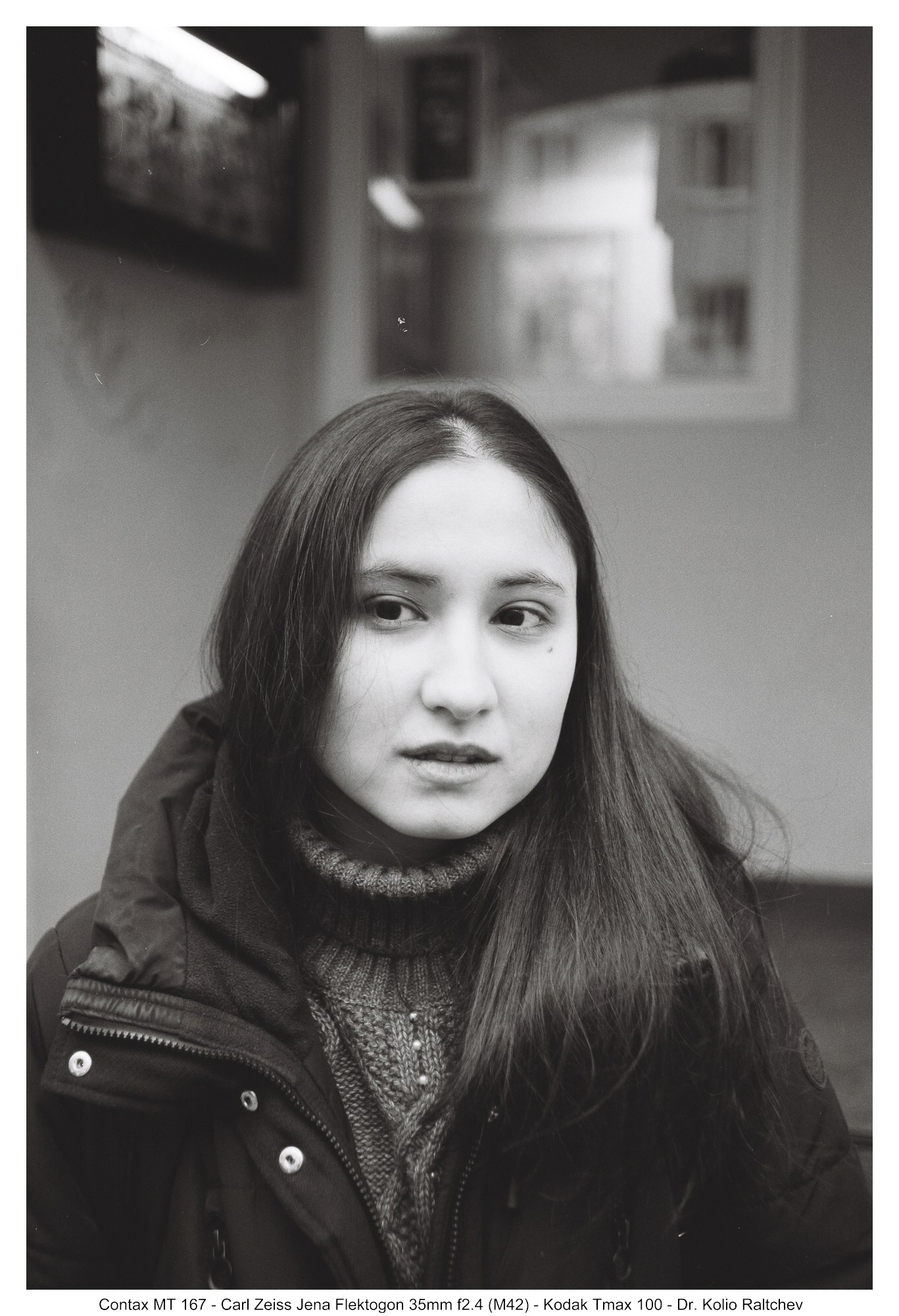
Mein Fotokollege Dr. Kolio Raltchev hat mir dankenswerterweise die folgenden wunderbaren Portraits auf klassischem Schwarz-Weiss-Film zur Verfügung gestellt.
Zum Einsatz kam die M42-Version des Objektives (Carl Zeiss Jena Flektogon 35mm f2.4) an der Contax MT 167, Film war der Kodak Tmax 100.
My fellow photographer Dr. Kolio Raltchev has thankfully provided me with the following wonderful portraits on classic black and white film.
The M42 version of the lens (Carl Zeiss Jena Flektogon 35mm f2.4) on the Contax MT 167 was used, film was the Kodak Tmax 100.
Bildserie analog: Die Streuobstwiese auf dem Farrenberg / Picture series analogue: The orchard on the top of "Farrenberg"
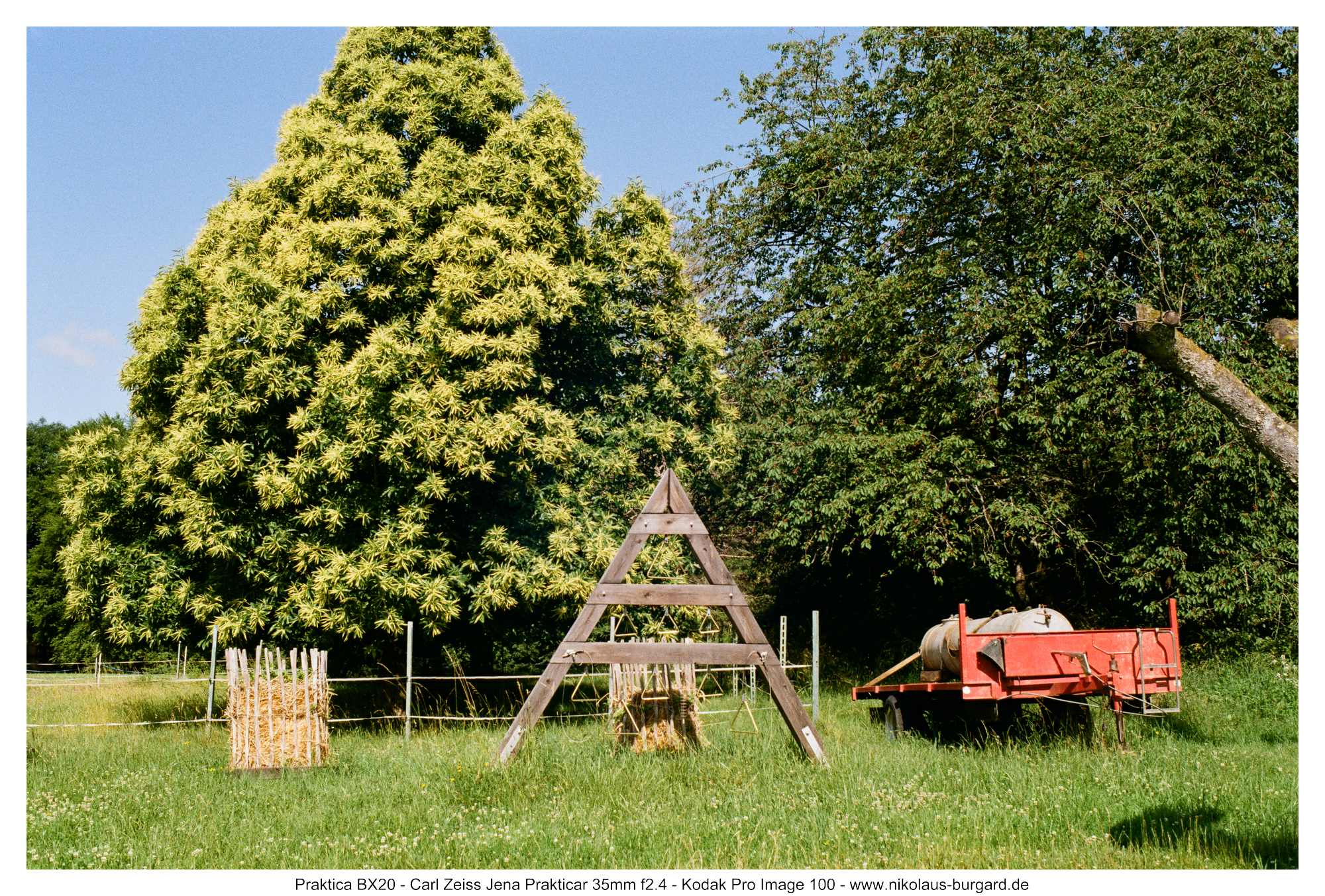
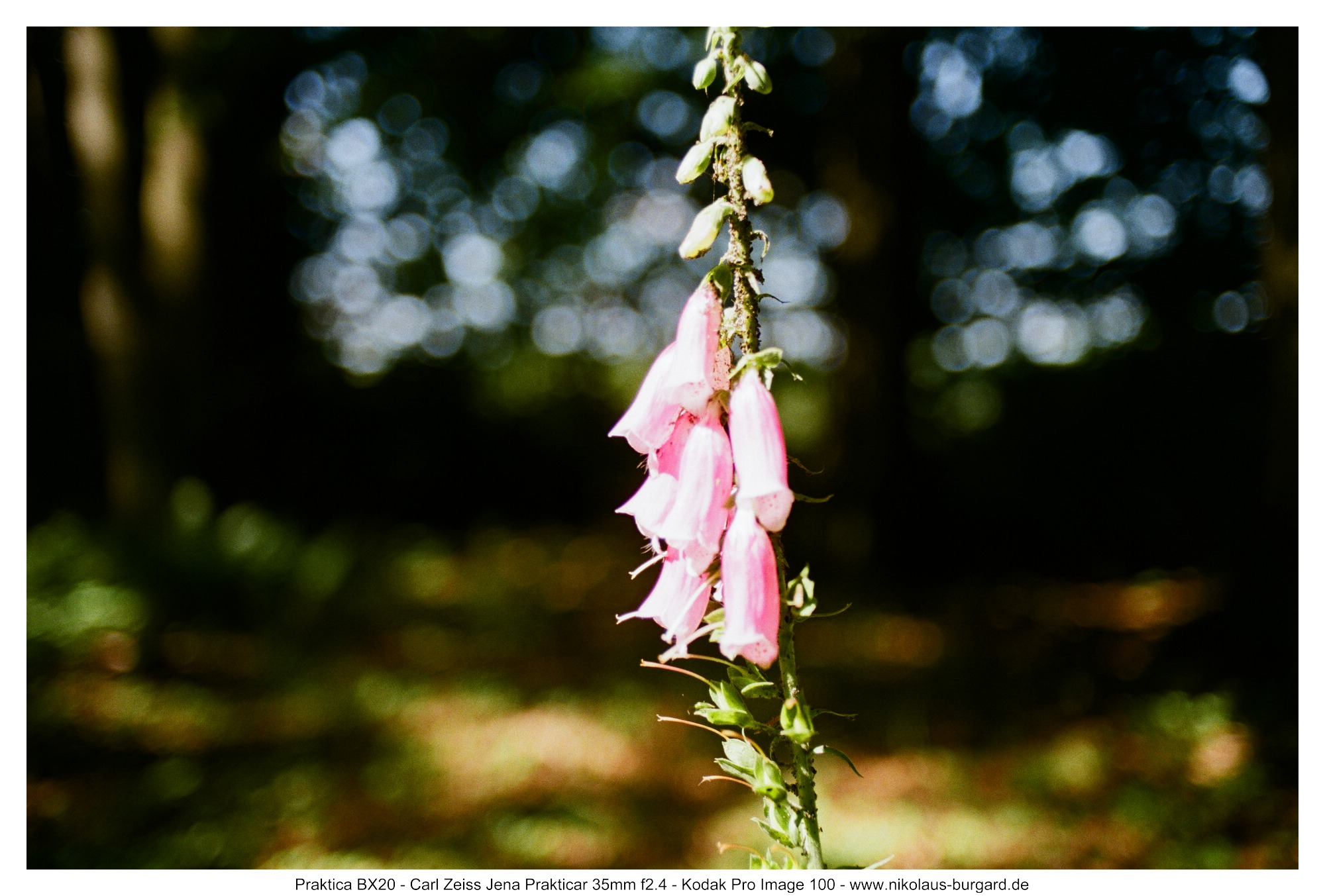
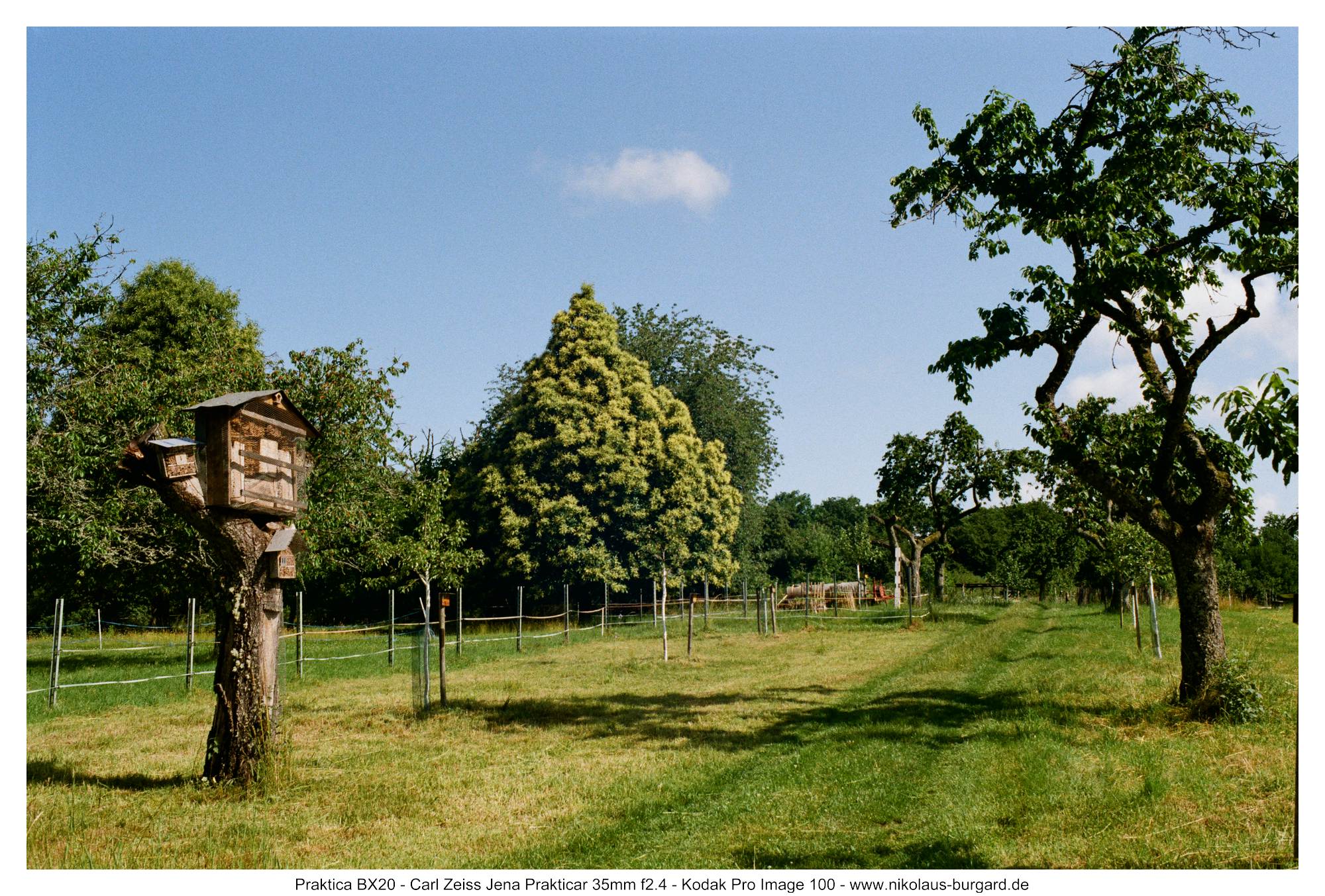
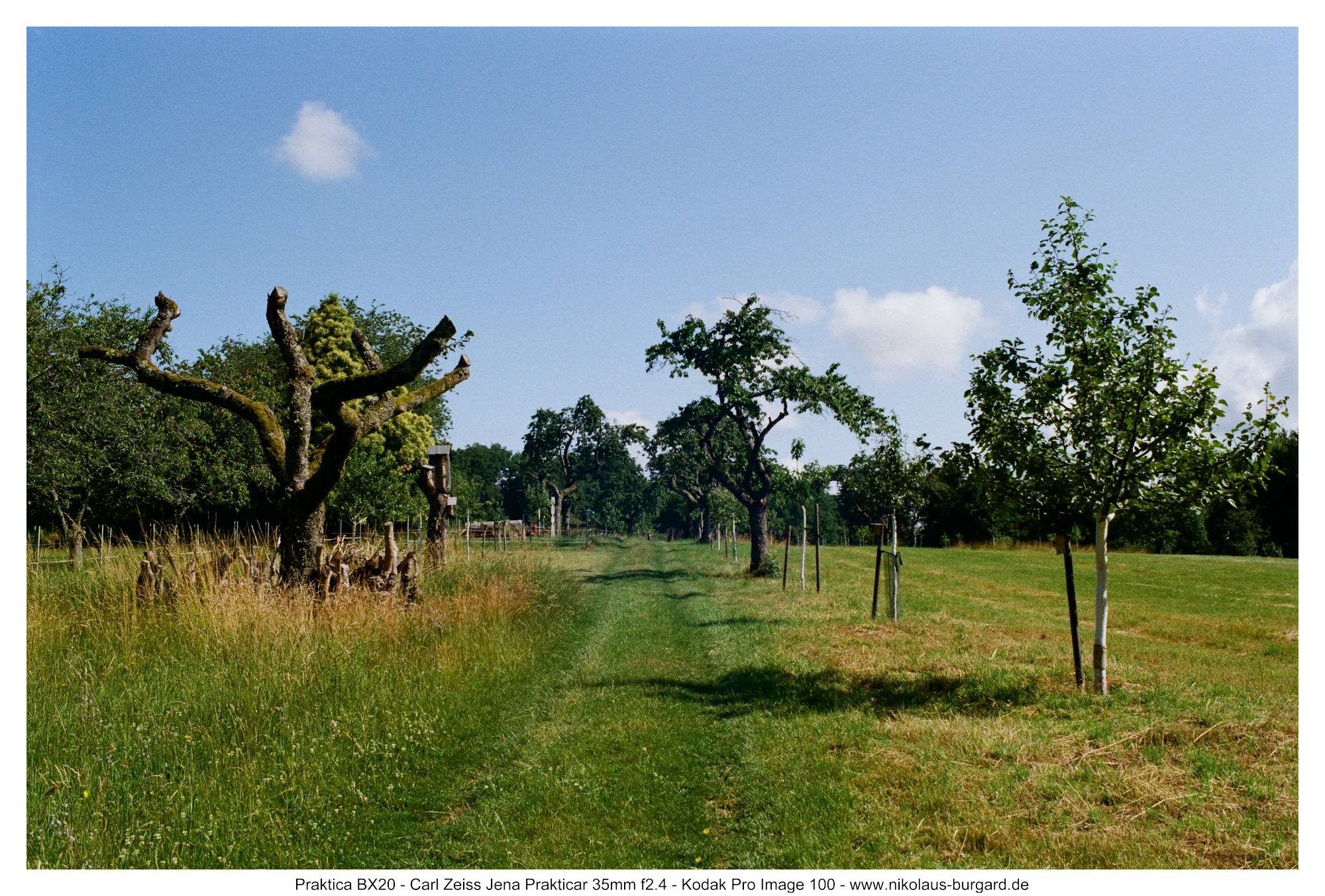
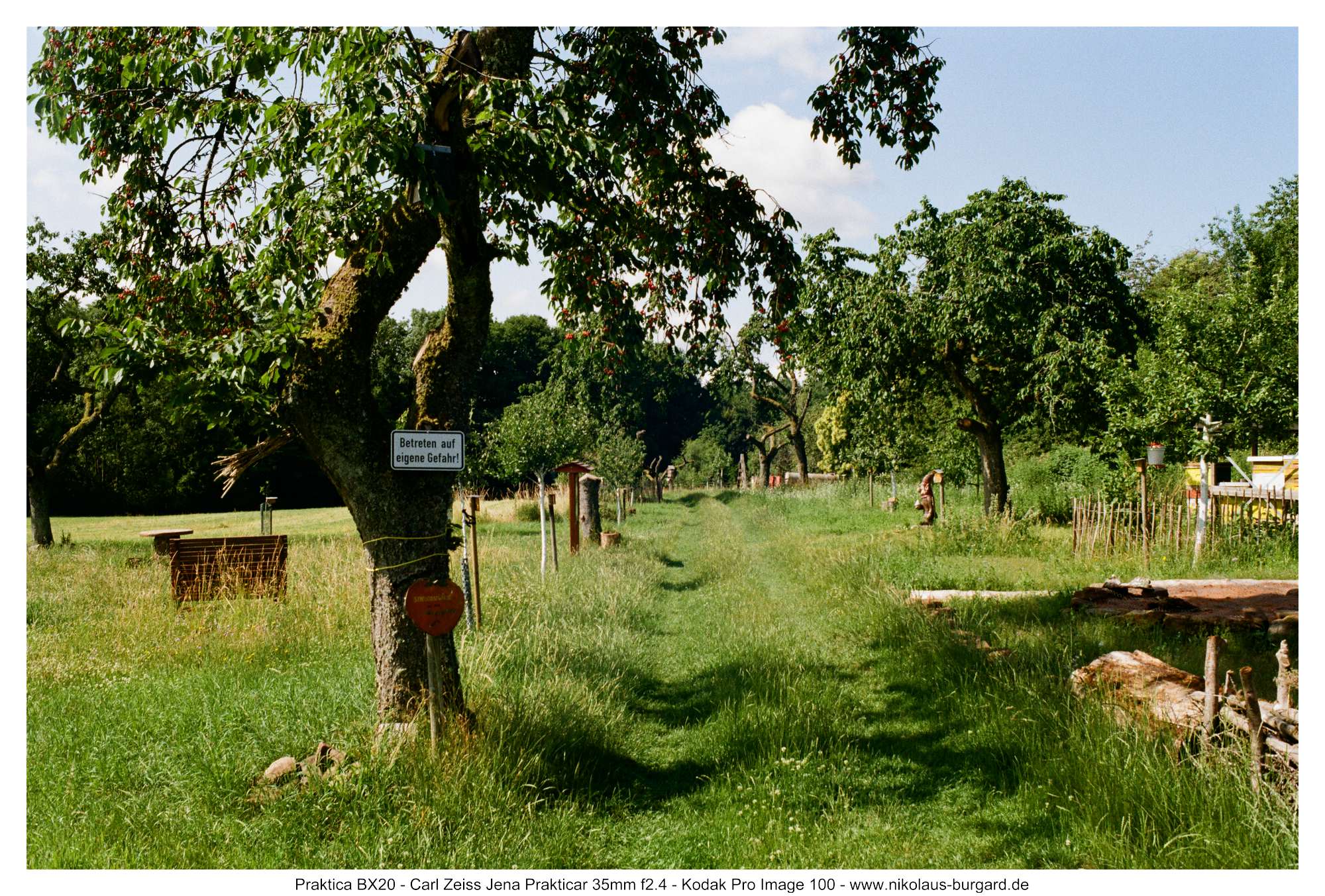
Zu meiner Prakticar-Objektivfamilie passend habe ich natürlich auch analoge Kameras, mit denen ich diese verwenden kann.
Meist benutze ich hier die Praktica BX20, die einfach zuverlässig das tut, was sie soll: Den Film richtig belichten (wenn der Mensch hinter der Kamera das Scharfstellen nicht vergeigt).
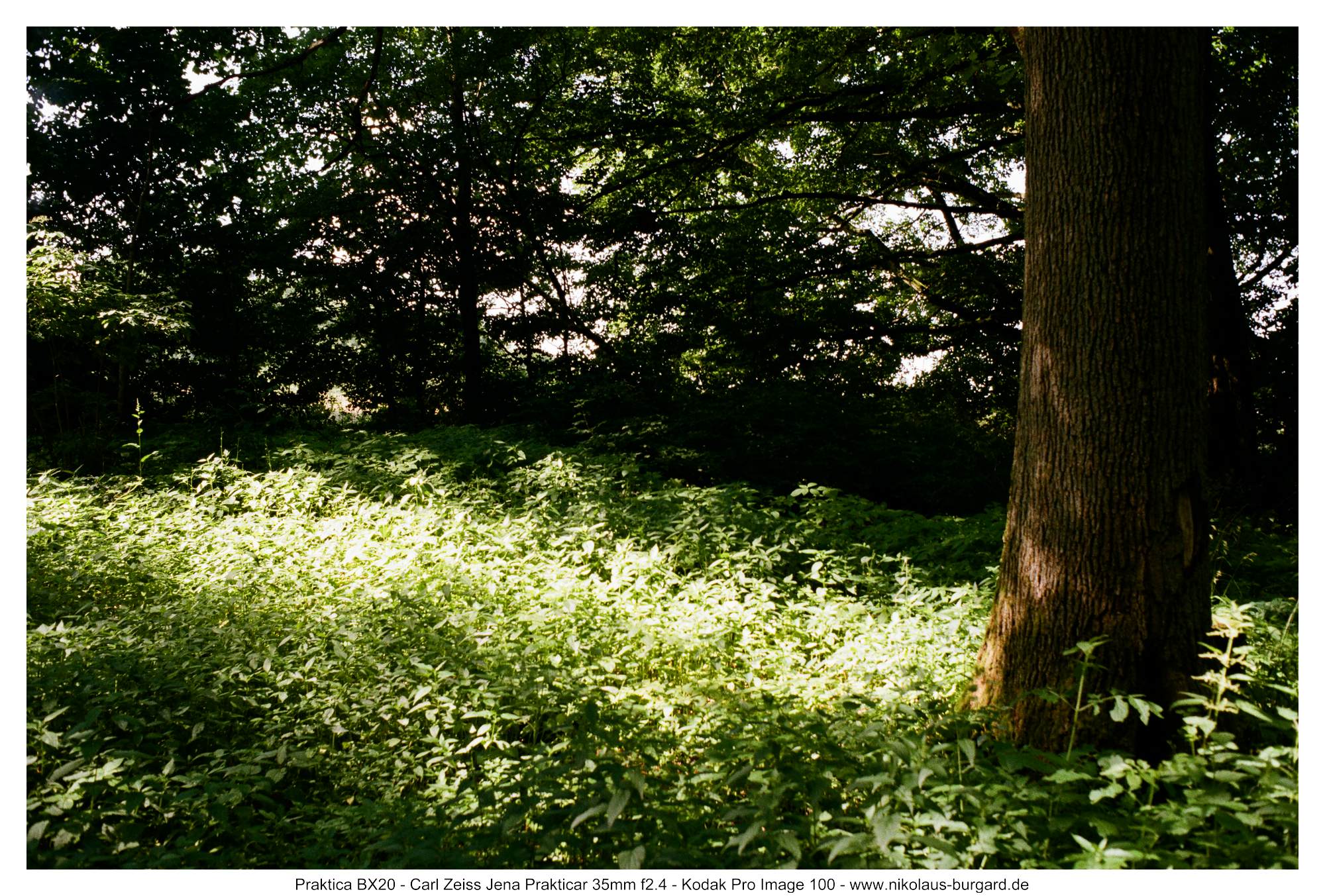
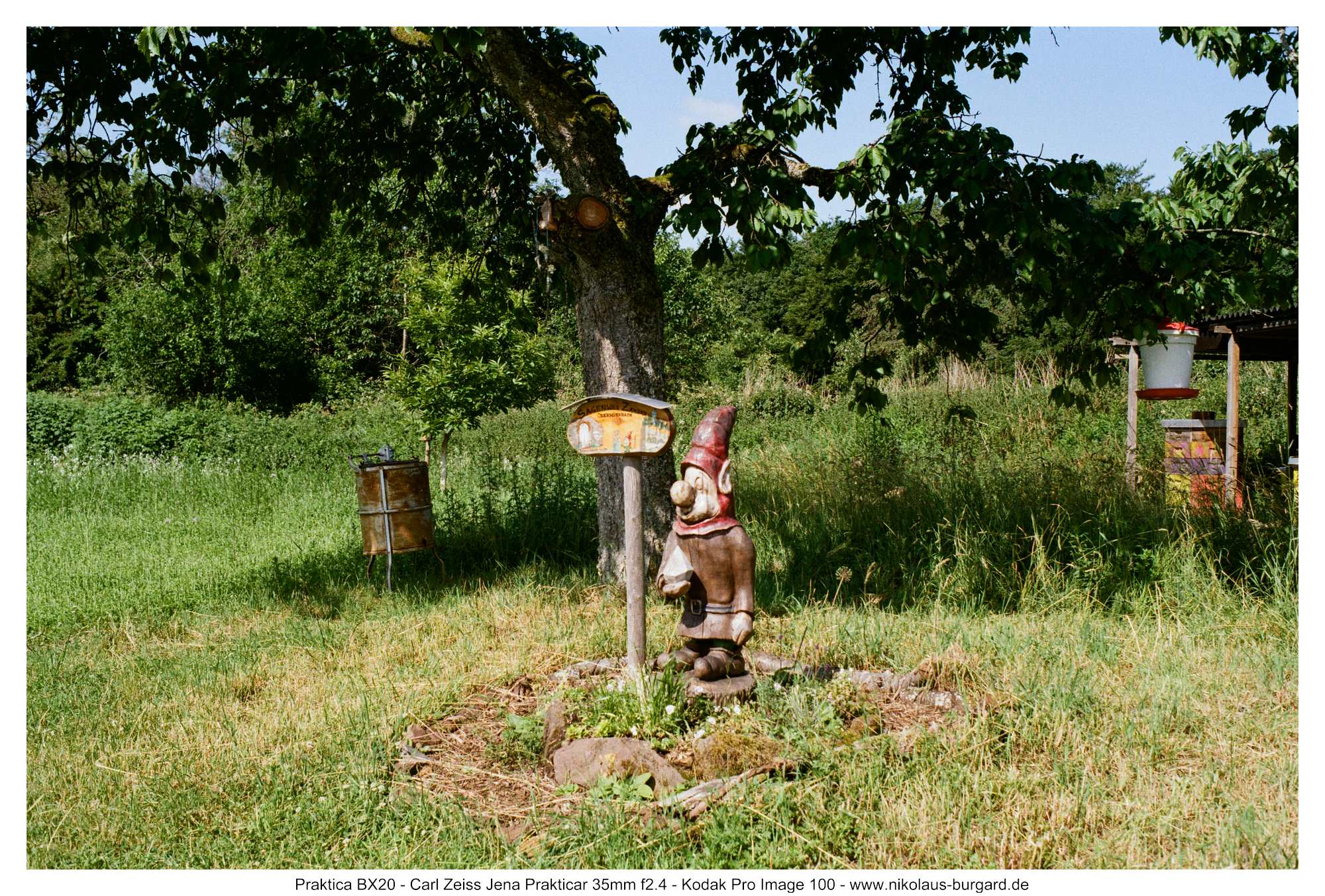
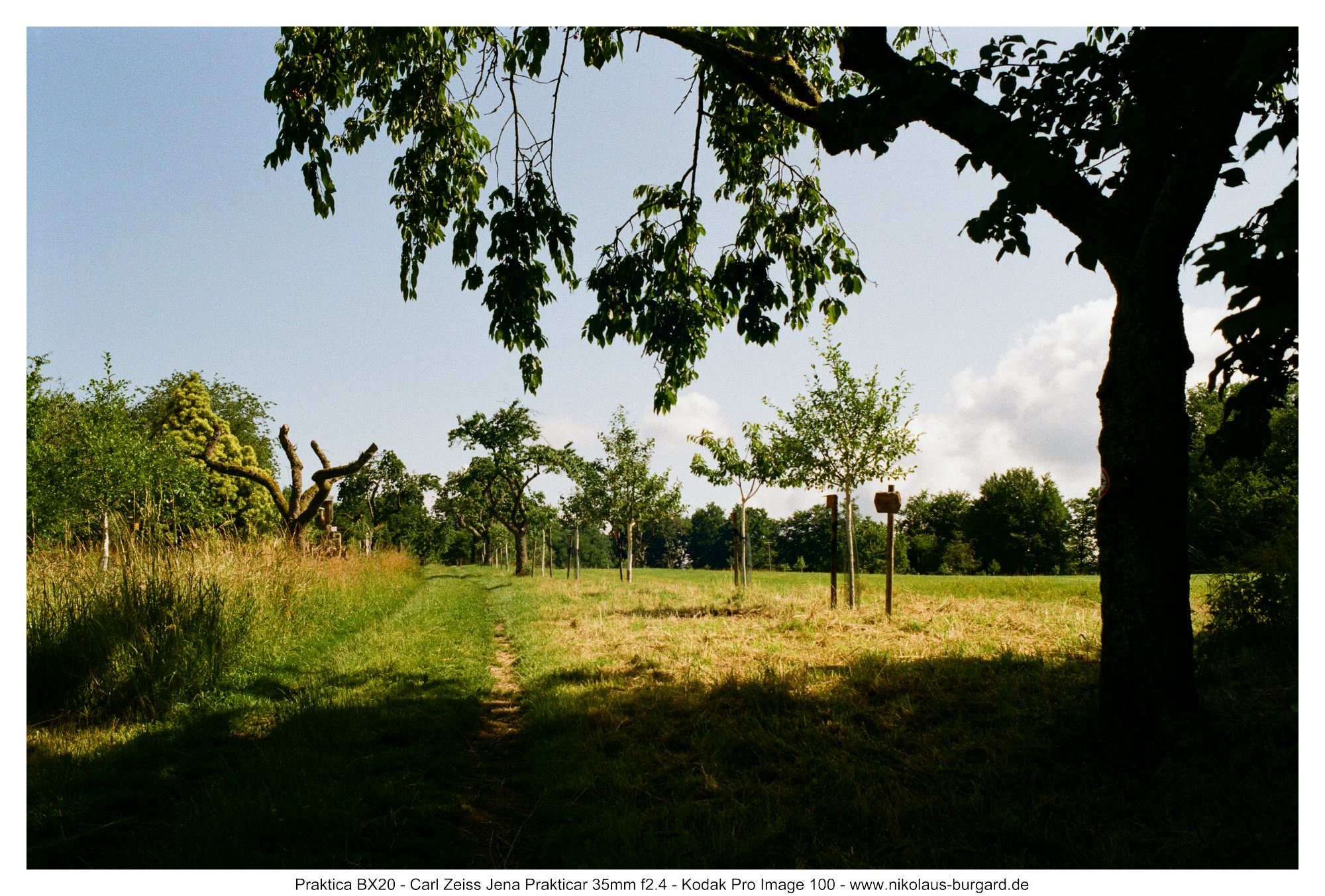
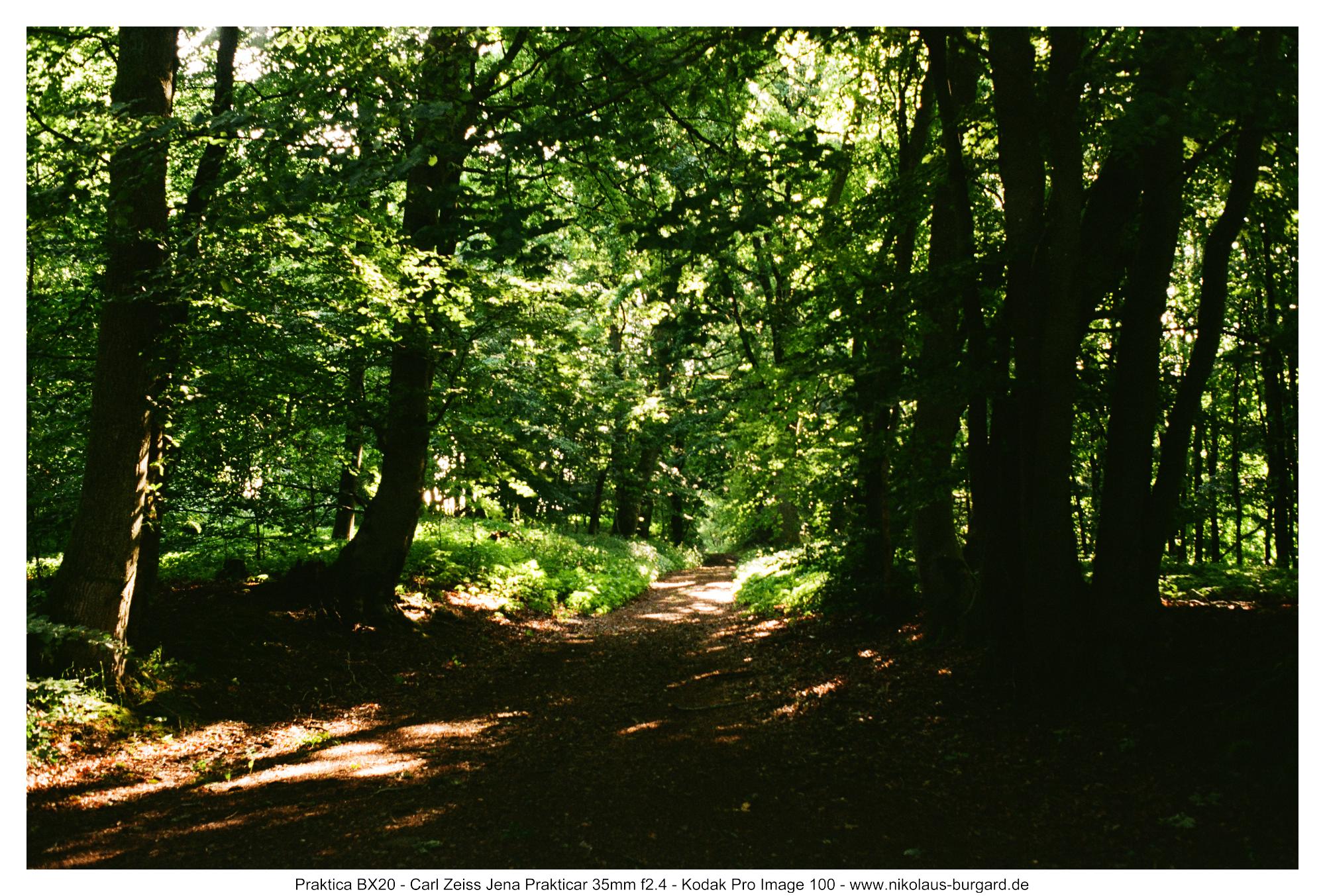
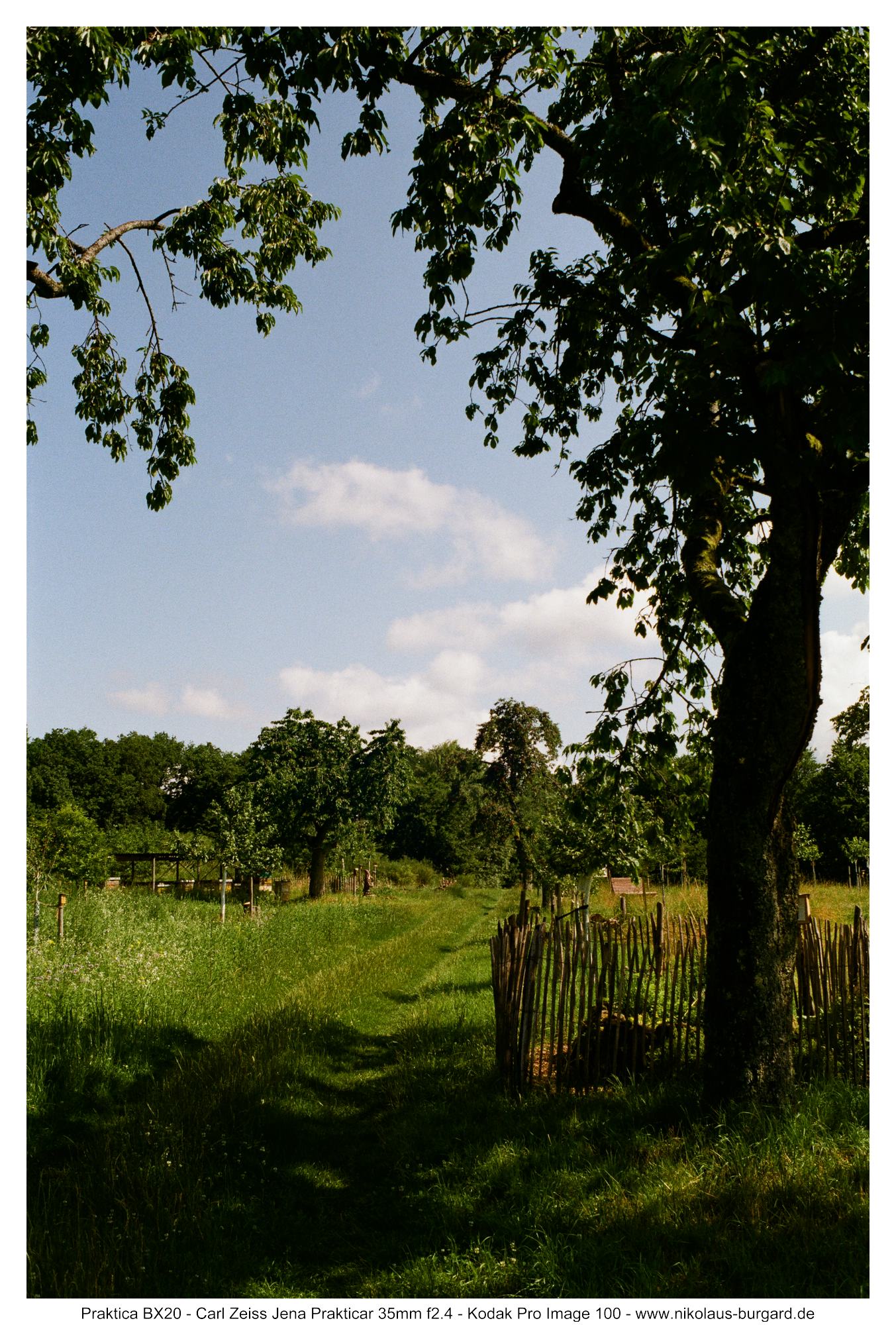
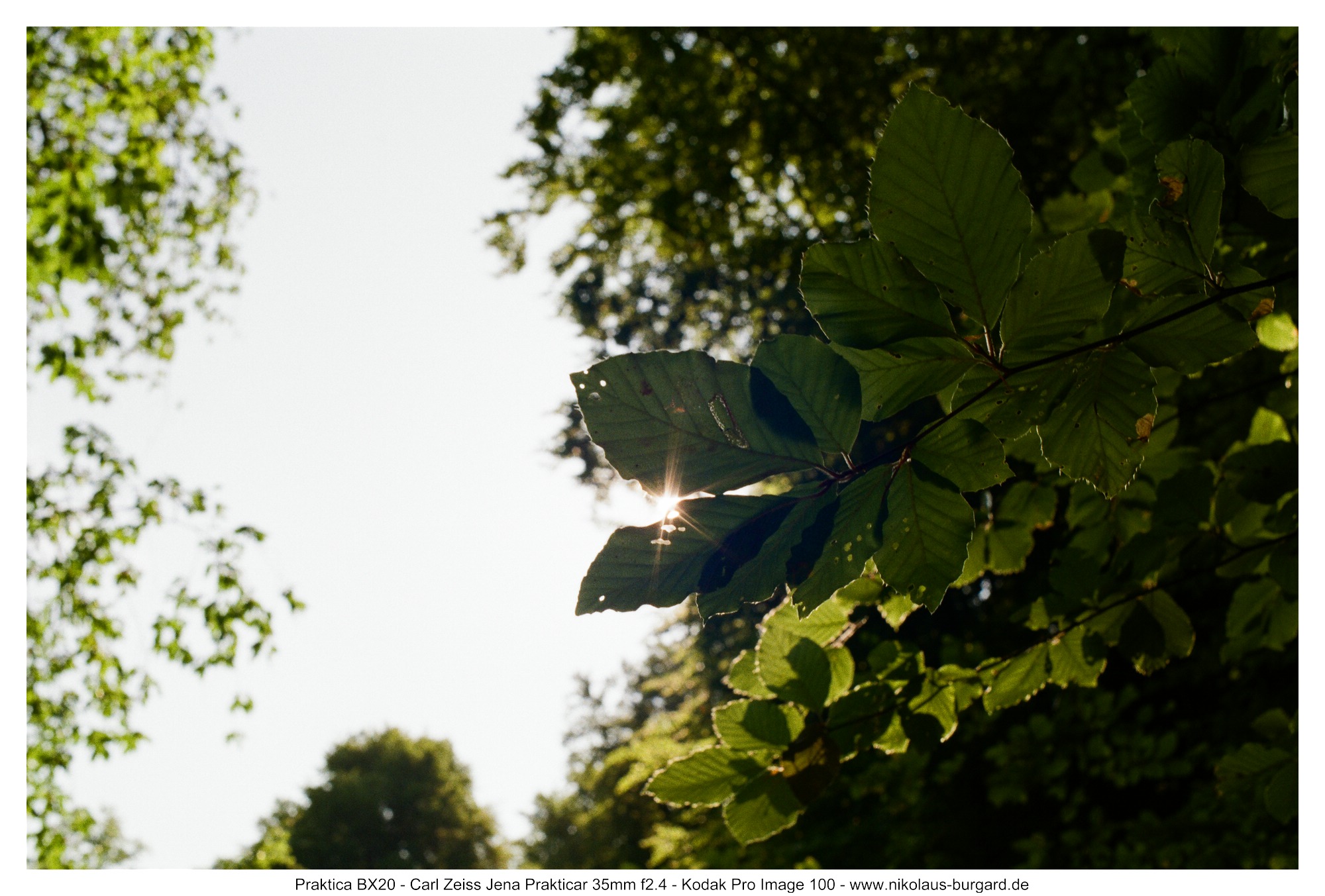
Die folgenden Bilder sind auf Kodak Pro Image 100 Farbnegativfilm entstanden, belichtet mit der Praktica BX20 und dem Prakticar 35mm f2.4.
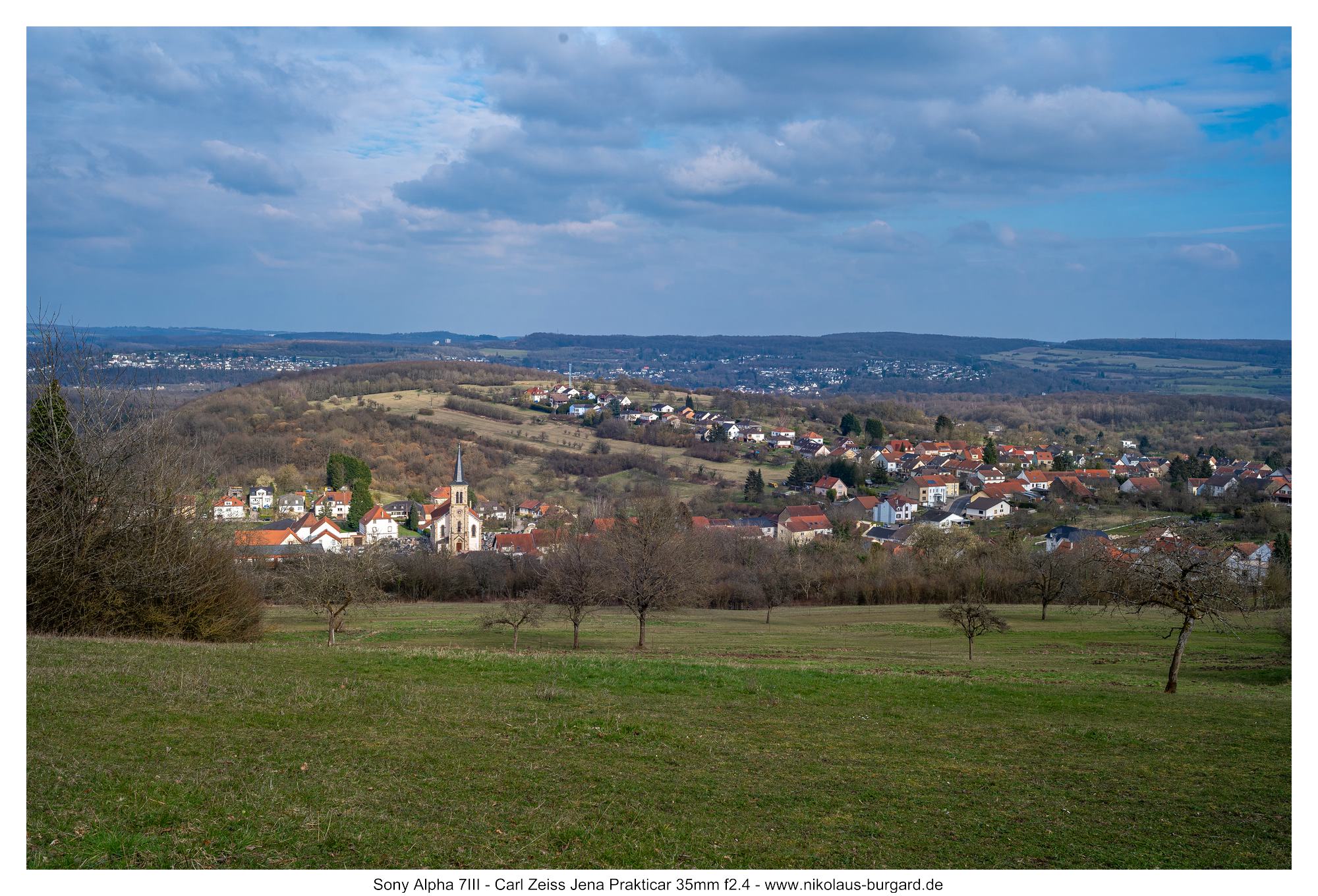
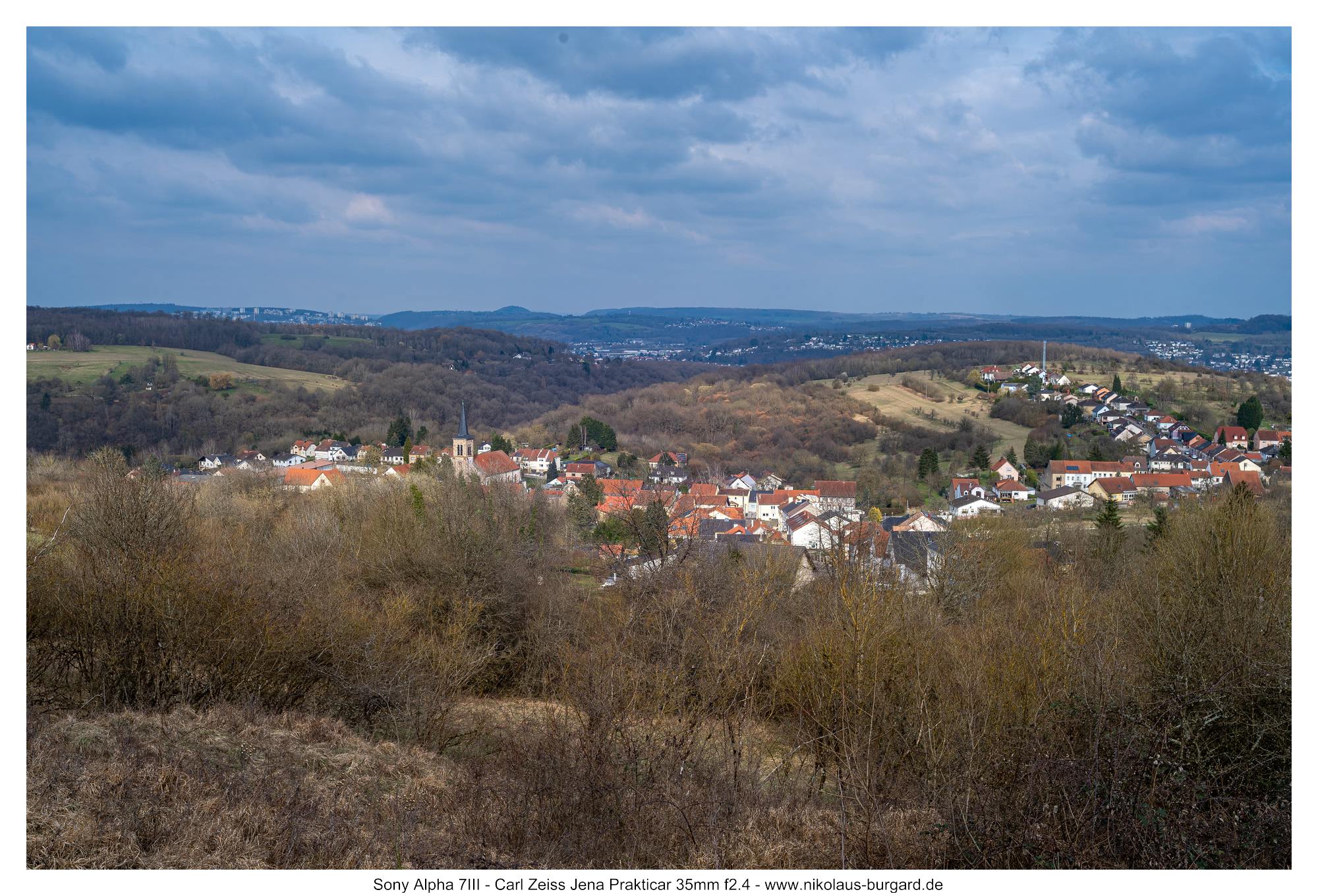
Eine kleine heimatliche Wanderung führte mich zur und über die Streuobstwiese auf dem Farrenberg, unserem ortsnahen Hügel. Hier hat der örtliche Obst- und Gartenbauverein eine sehr schön angelegte Kulturfläche mit vielen Obstbäumen geschaffen.
Of course, I also have analog cameras to match my Prakticar lens family, with which I can use them.
I usually use the Praktica BX20 here, which simply reliably does what it should do: expose the film correctly (if the person behind the camera does not screw up
the focus).
The following images were created on Kodak Pro Image 100 color negative film, exposed with the Praktica BX20 and the Prakticar 35mm f2.4.
A small local hike led me to and over the orchard on the Farrenberg, our local hill. Here, the local fruit and horticultural association has created a very
beautifully landscaped cultivated area with many fruit trees.
Verzeichnung / Distortion
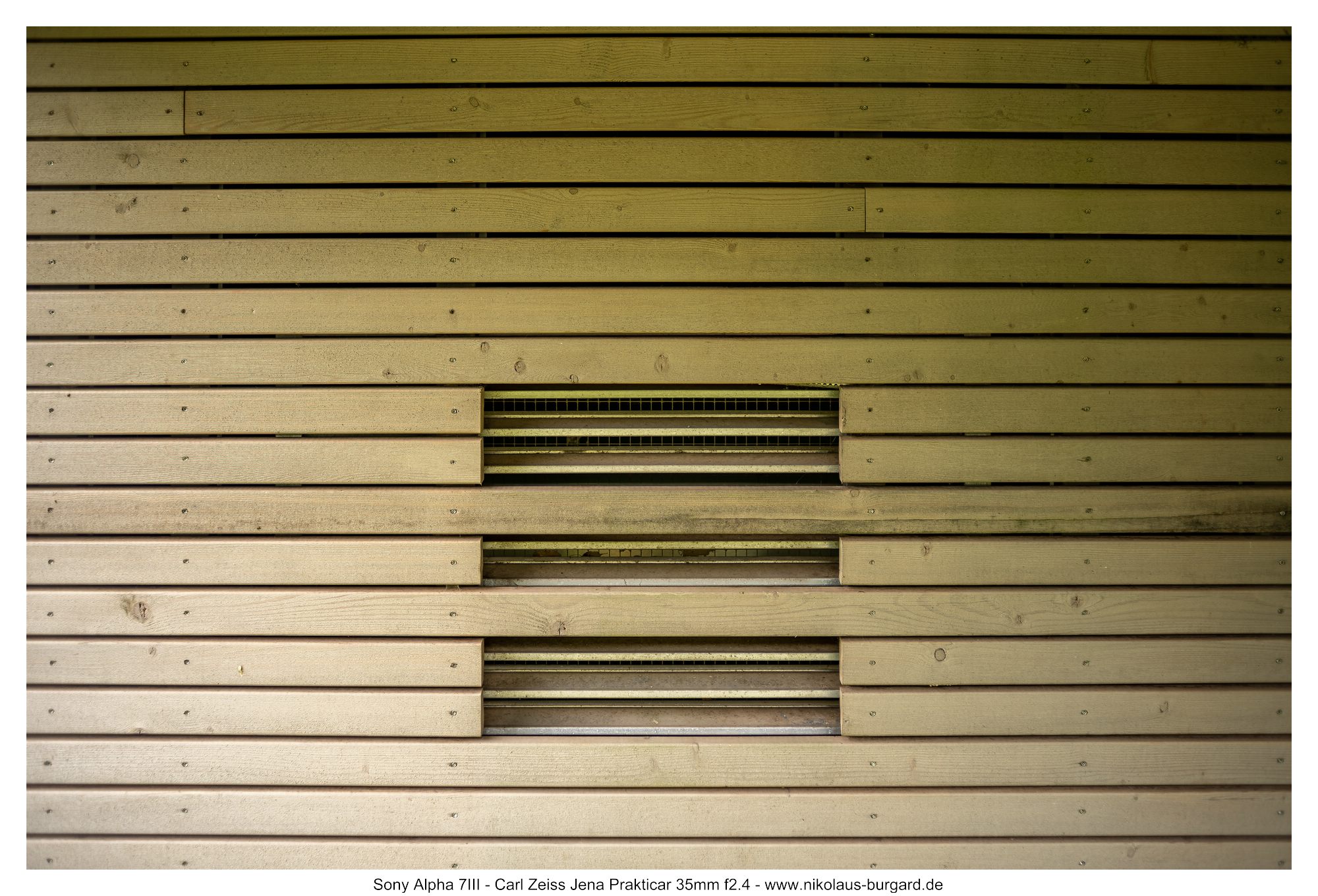
Die Verzeichnung des Prakticar 35mm f2.4 ist gut korrigiert,
für ein Weitwinkel-Objektiv gibt es eine nur sehr geringe tonnenförmige Verzeichnung.
Diese wäre im Bedarfsfall im raw-Konverter leicht zu entfernen.
Kein Bild dieses Tests ist auf Verzeichnung korrigiert.
The distortion of the Prakticar 35mm f2.4 is well corrected,
For a wide-angle lens, there is very little barrel distortion.
This could easily be removed in the raw converter if necessary.
No image in this test is corrected for distortion.
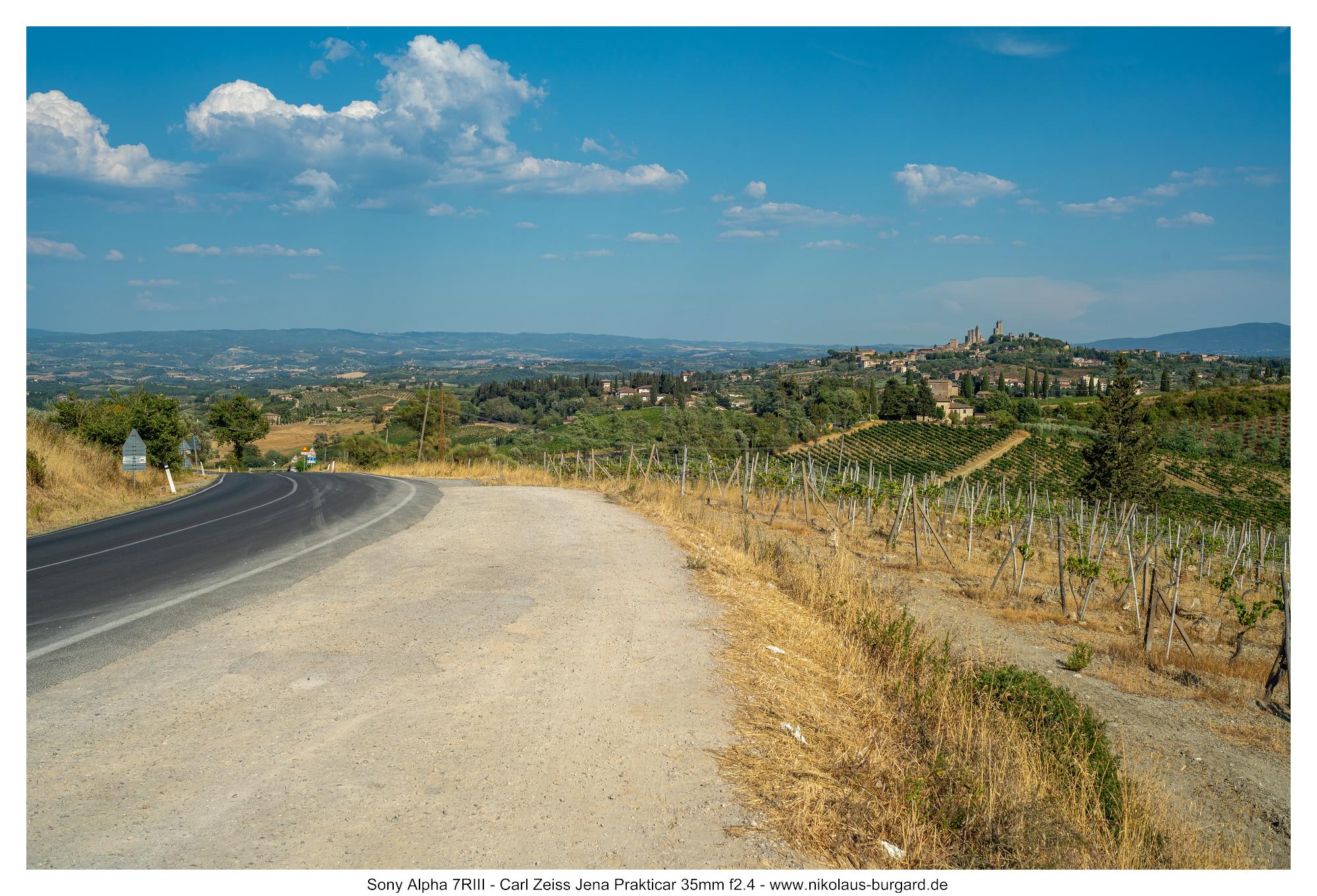
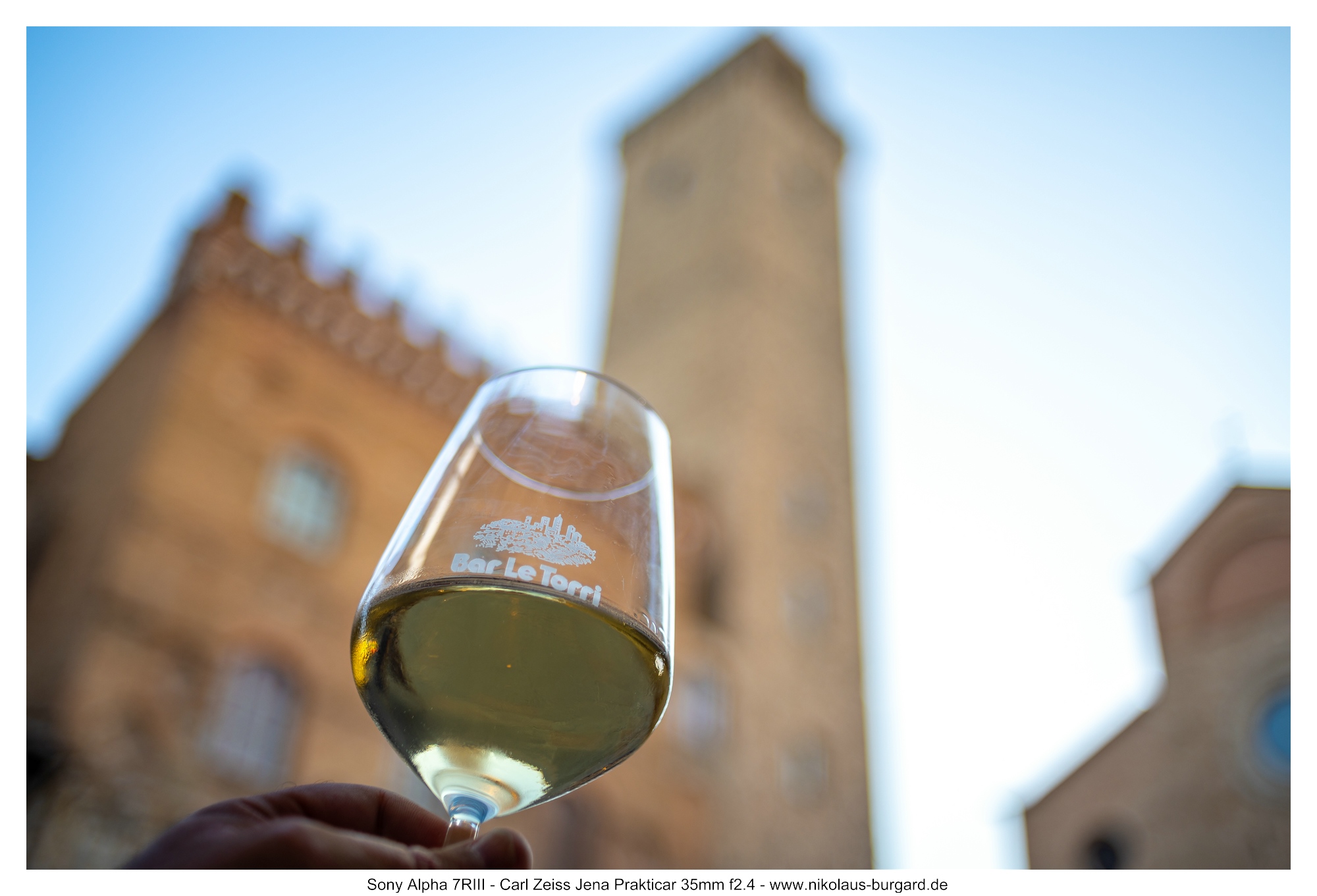
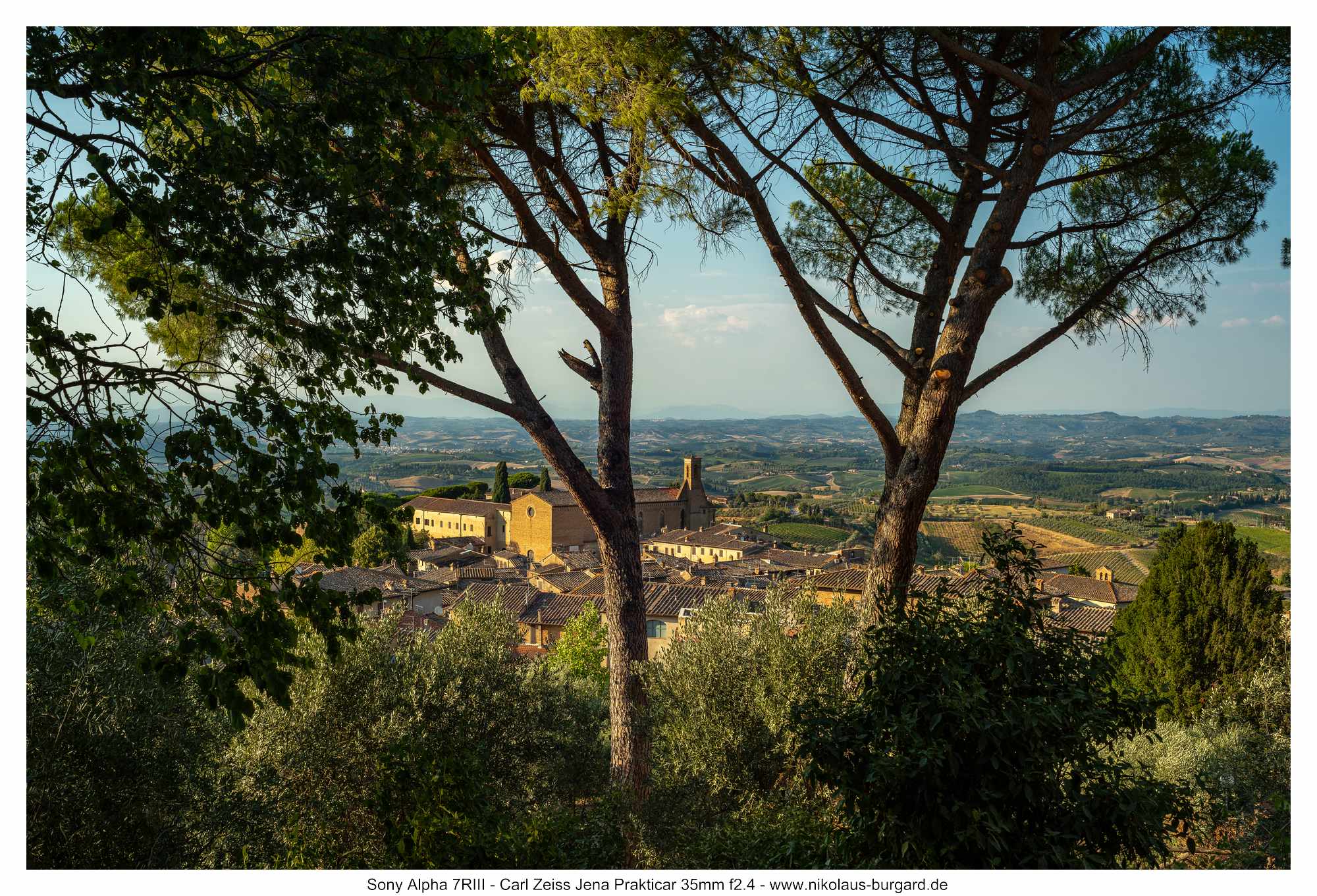
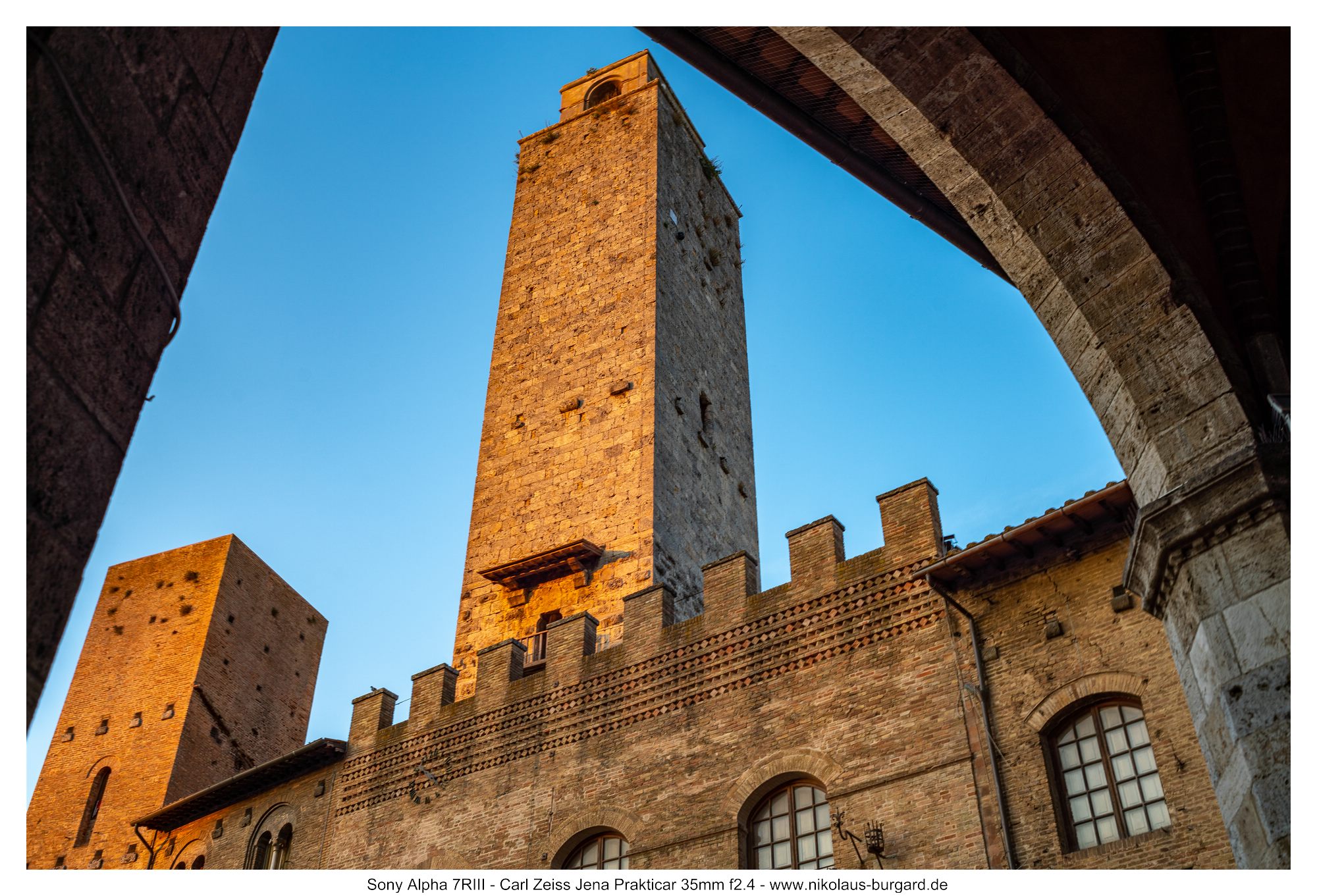
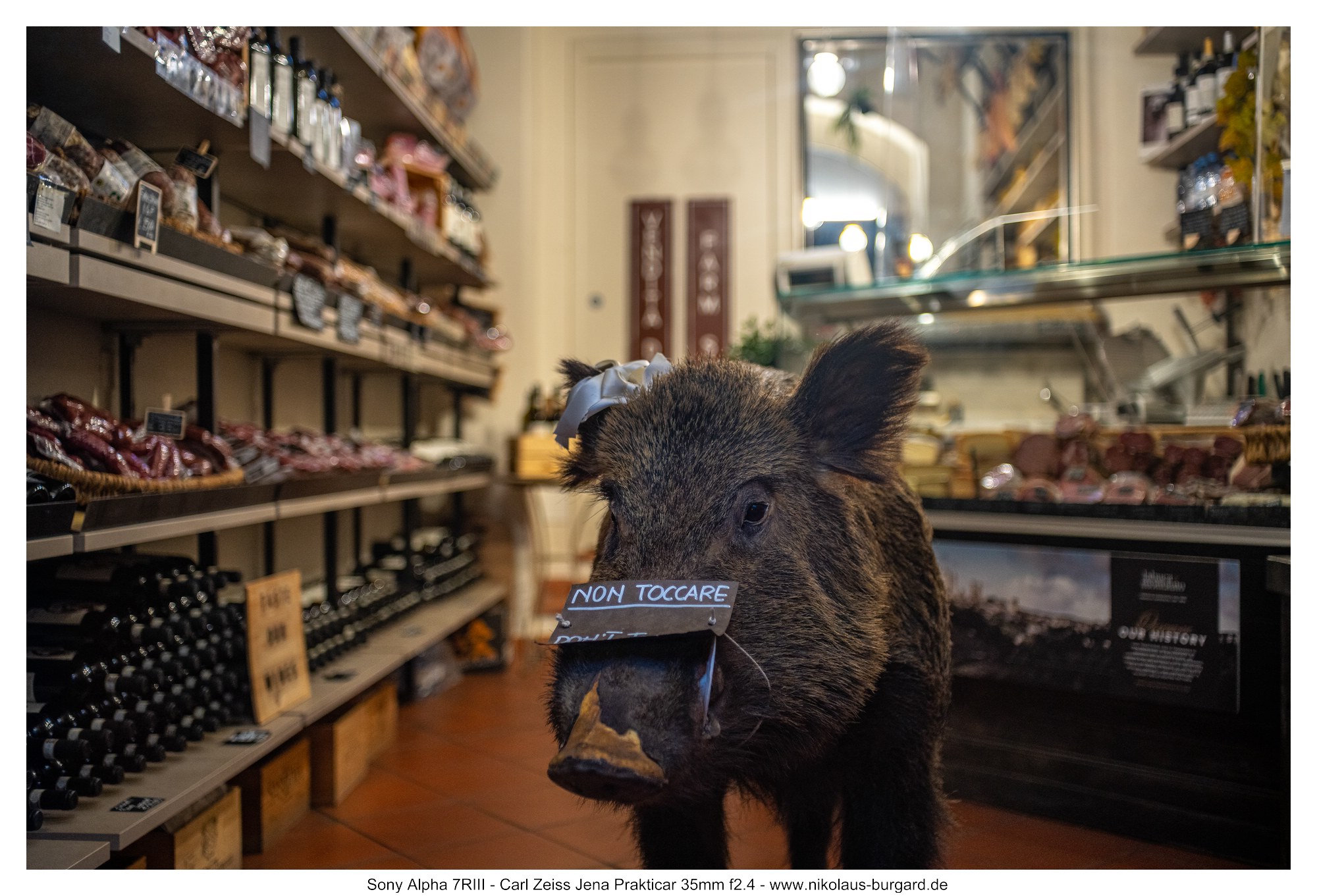
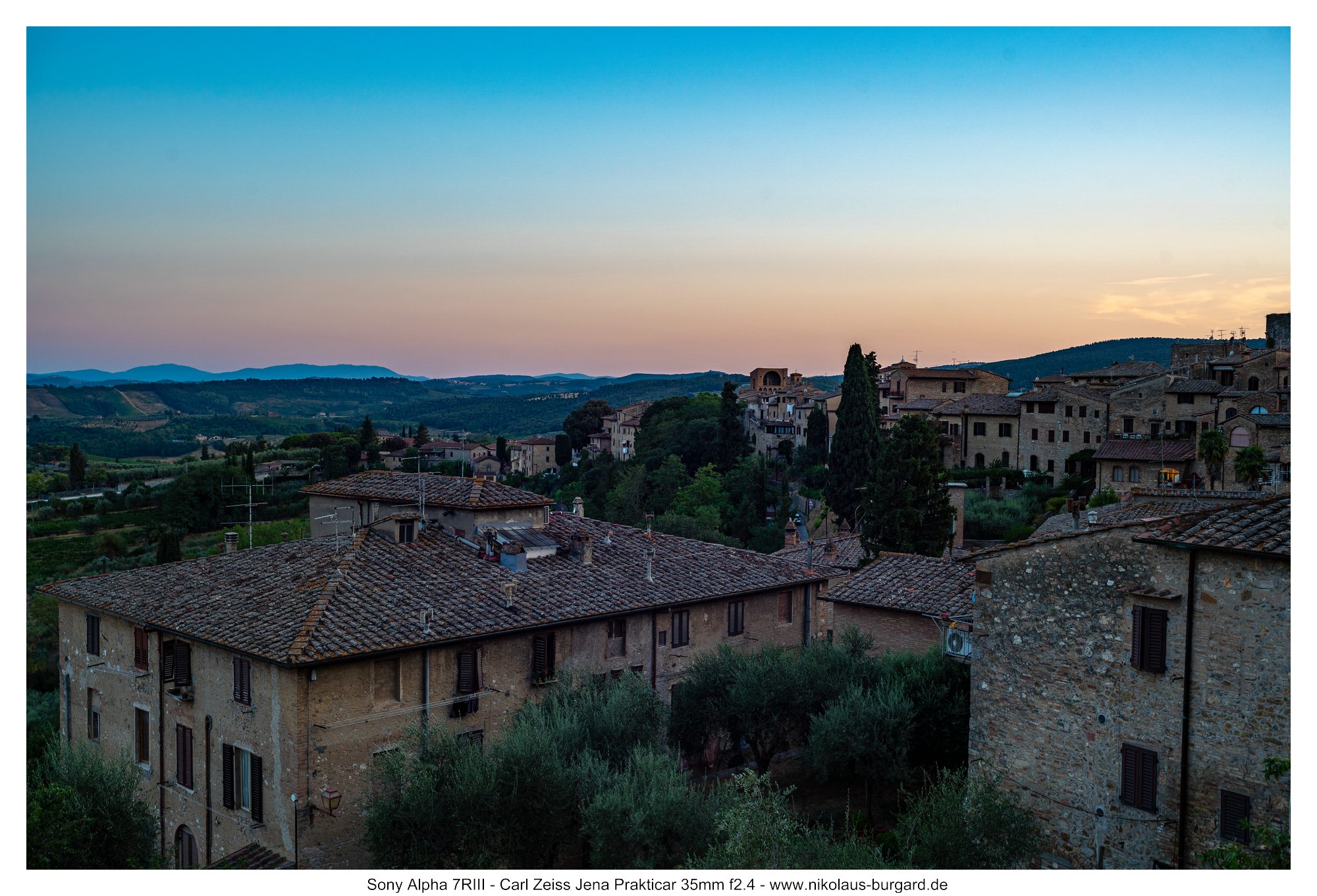
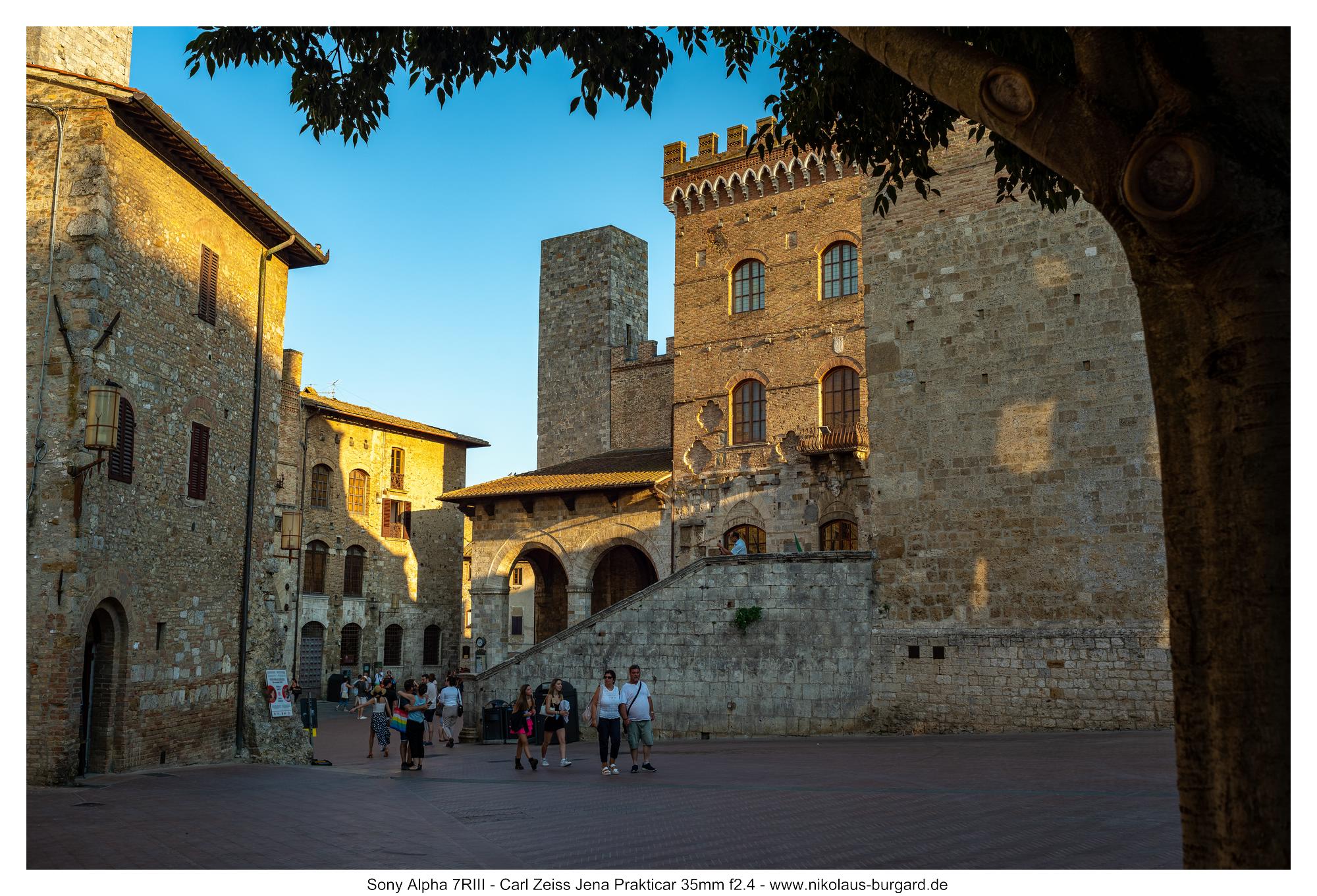
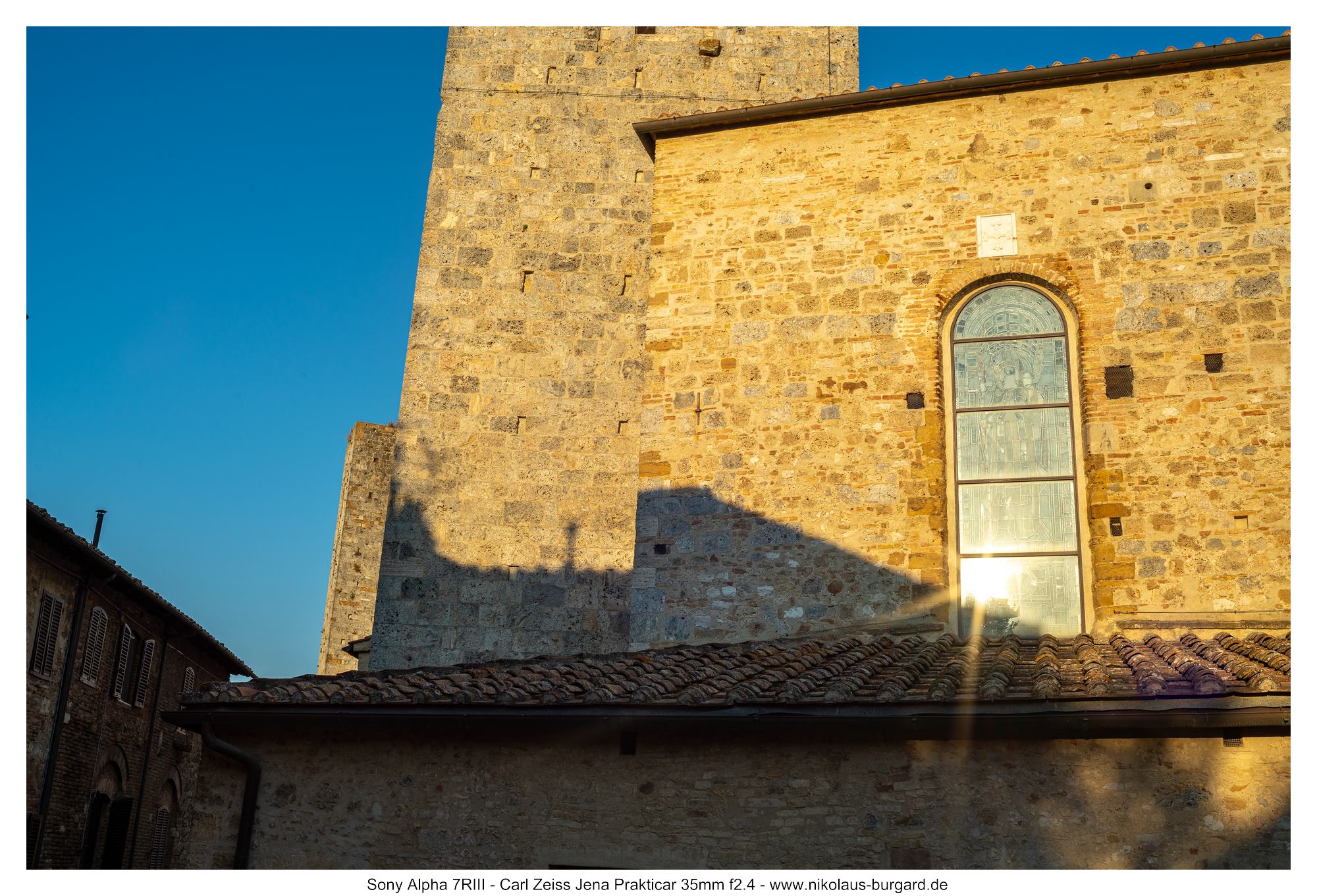
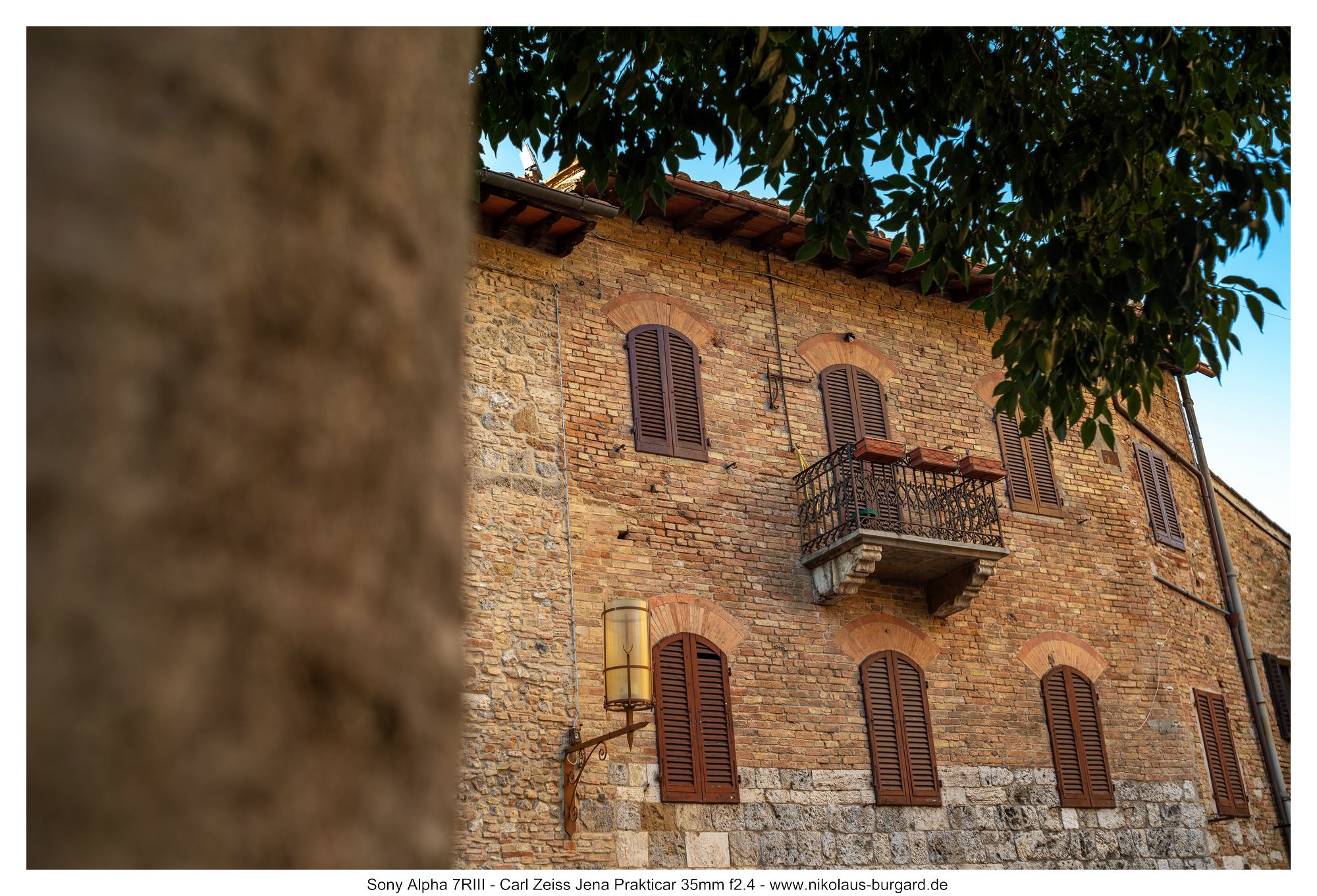
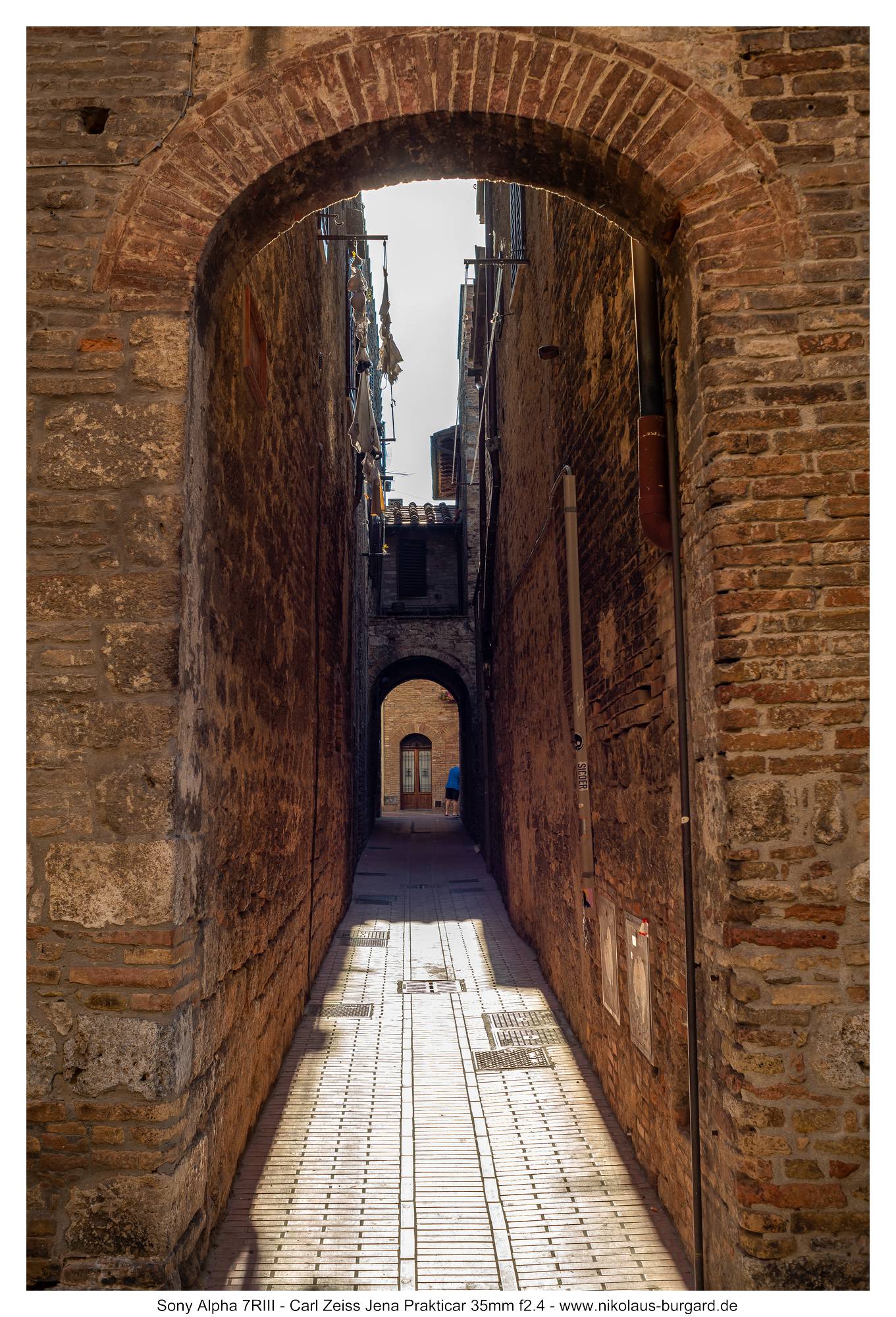
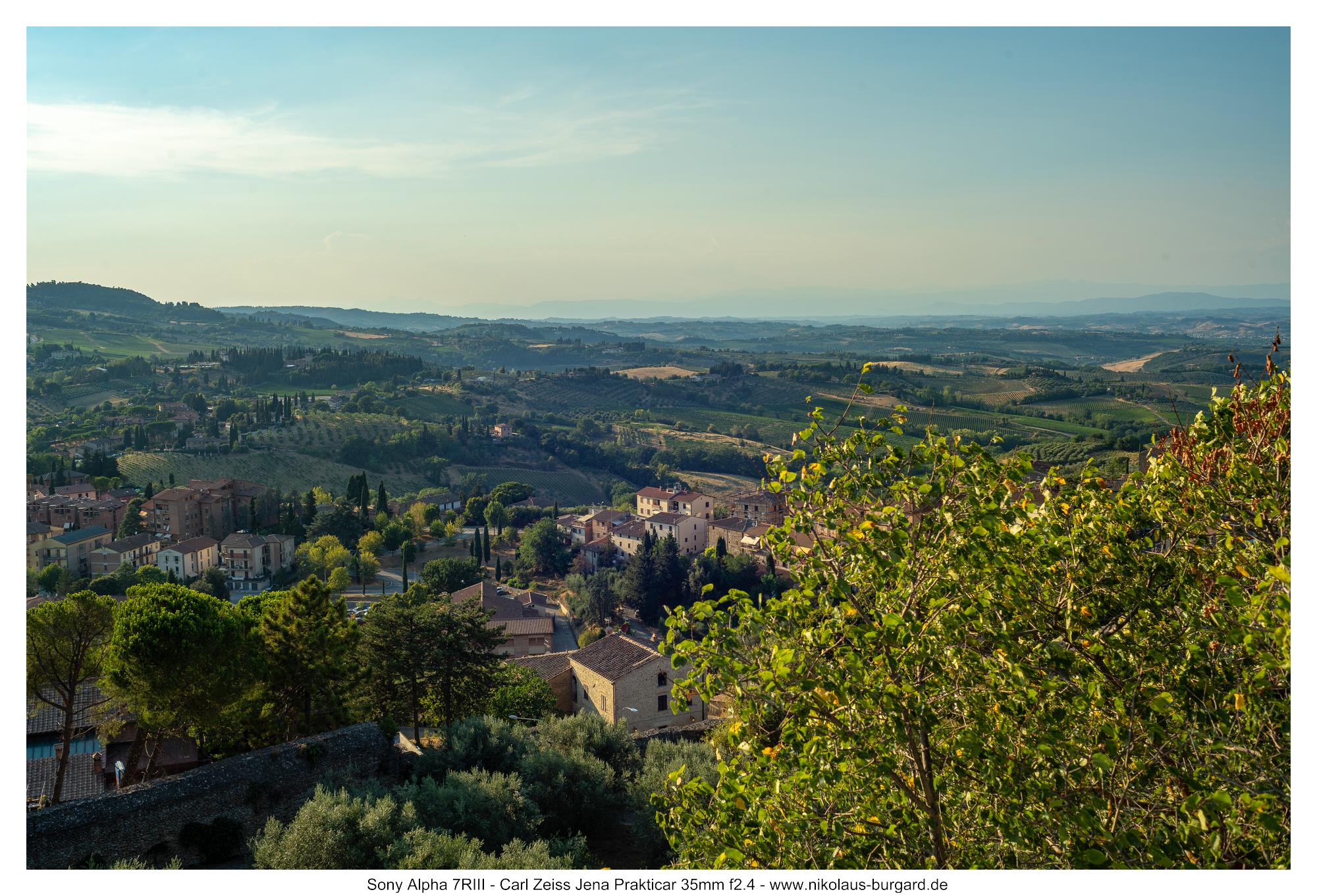
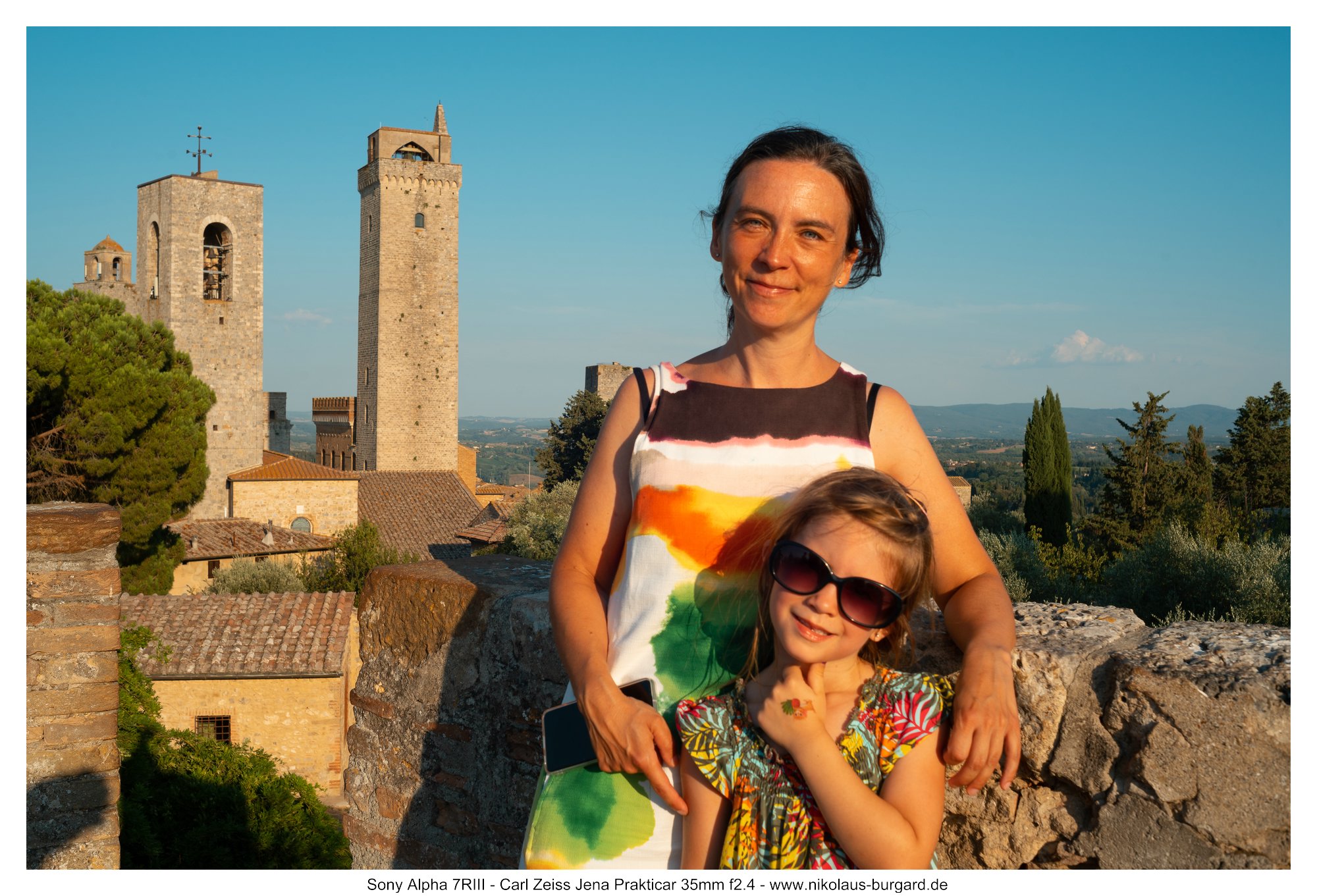
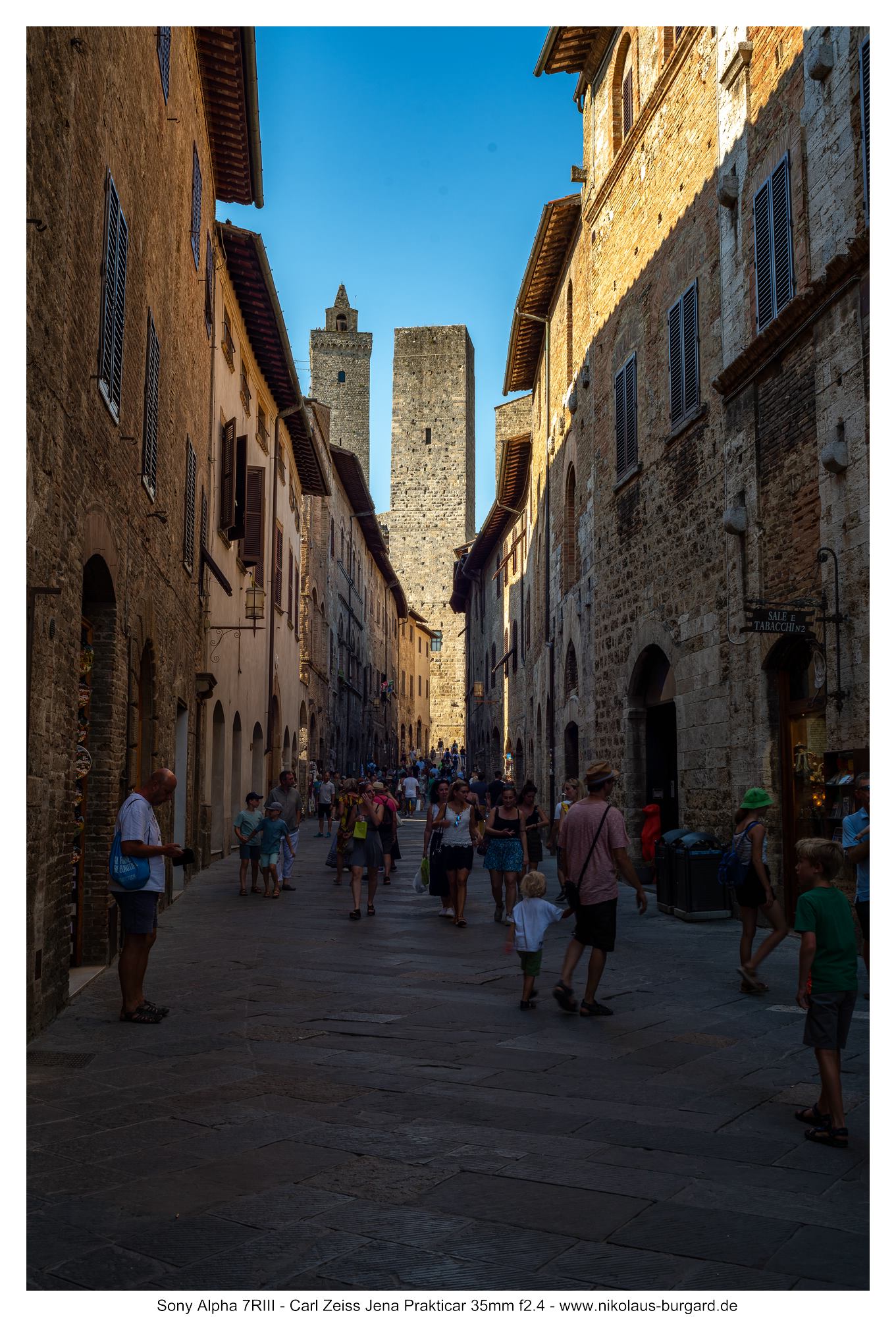
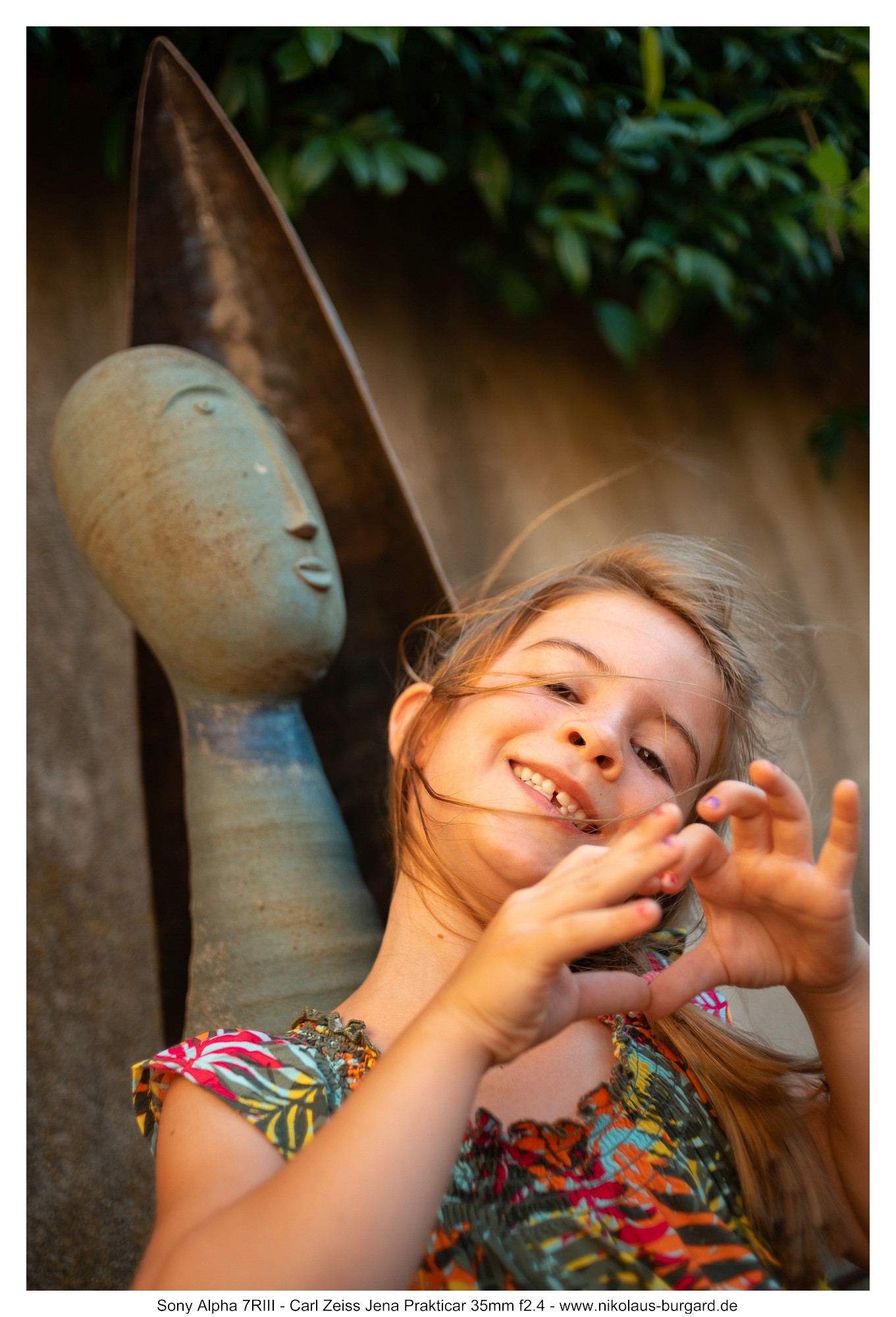
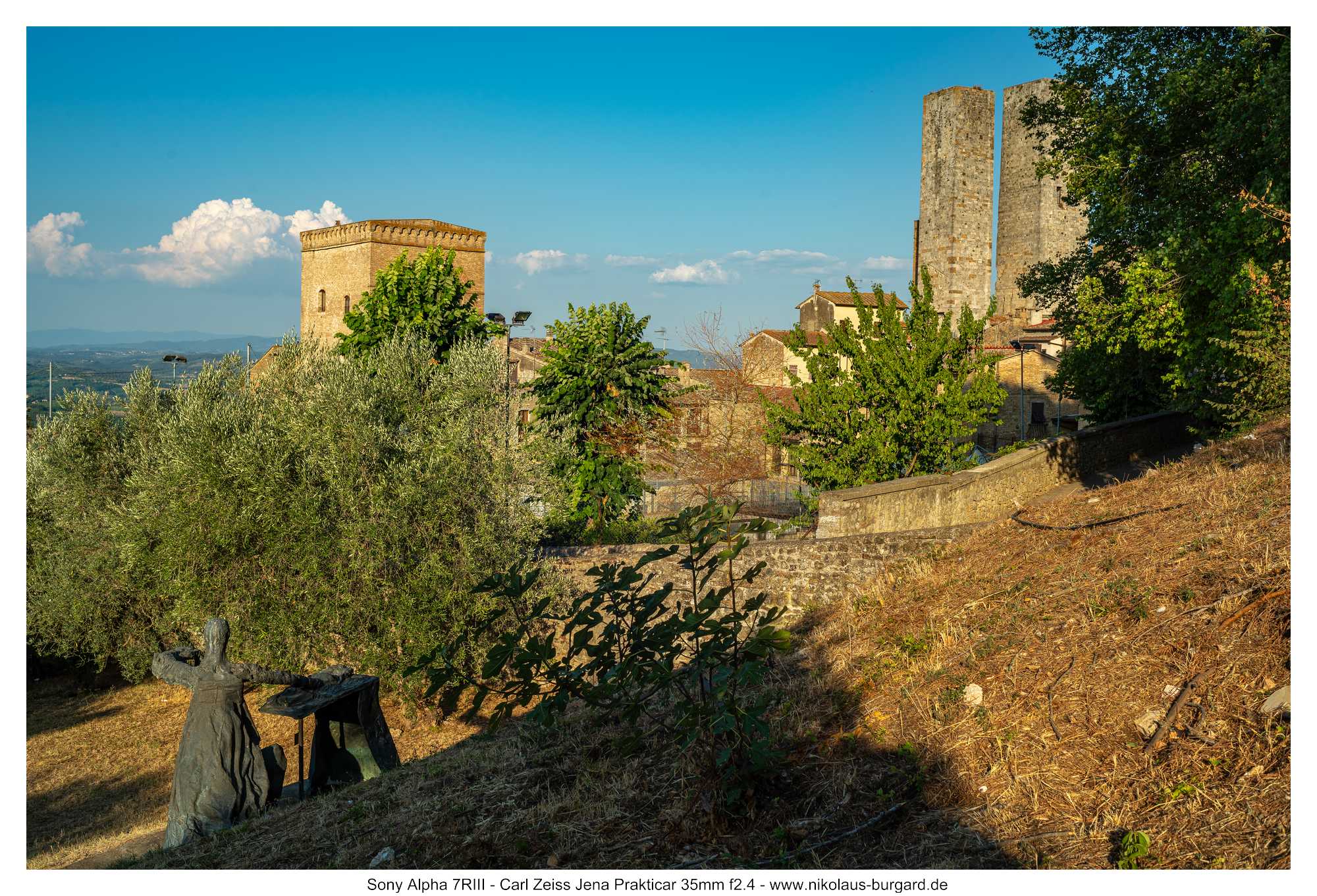
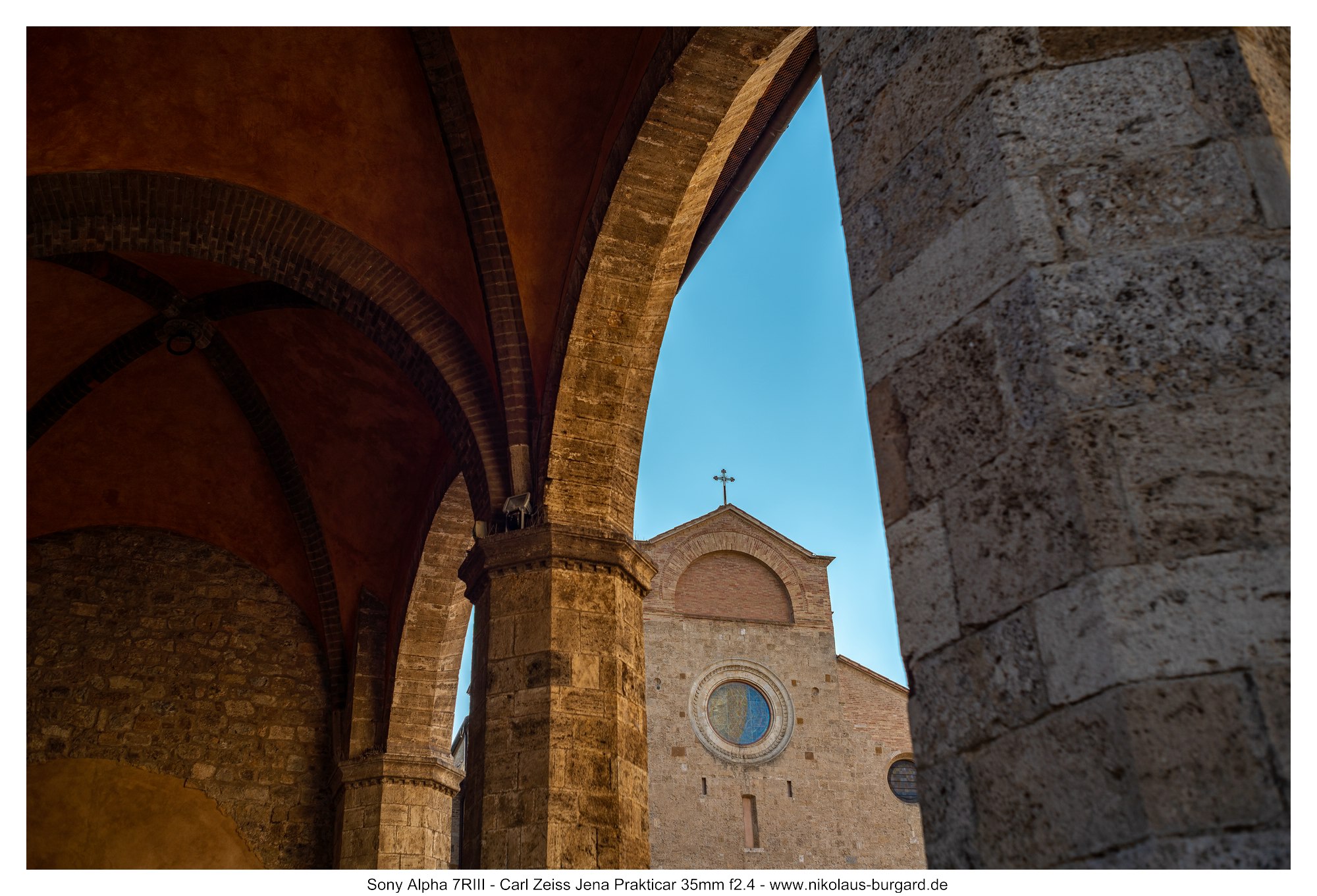
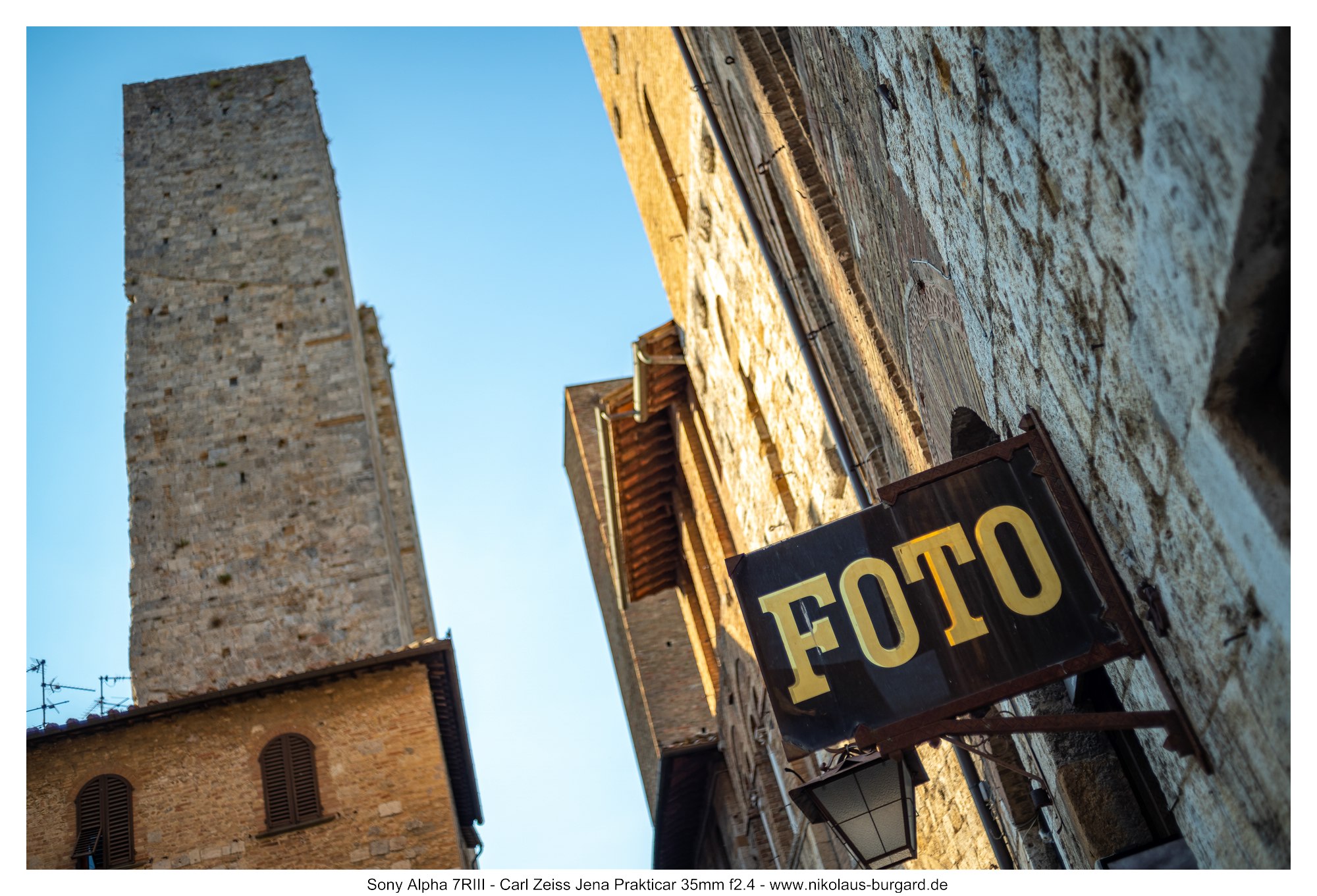
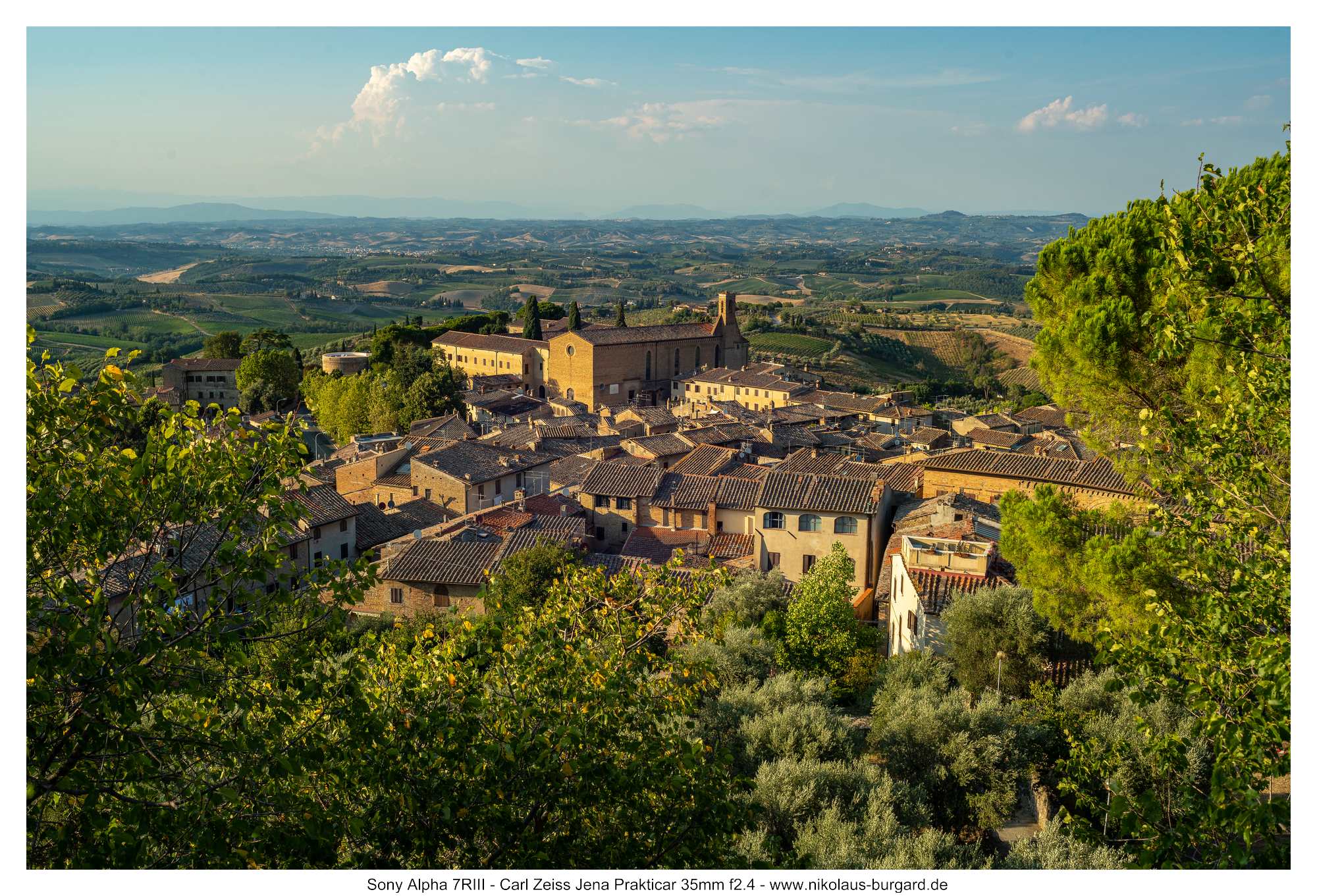
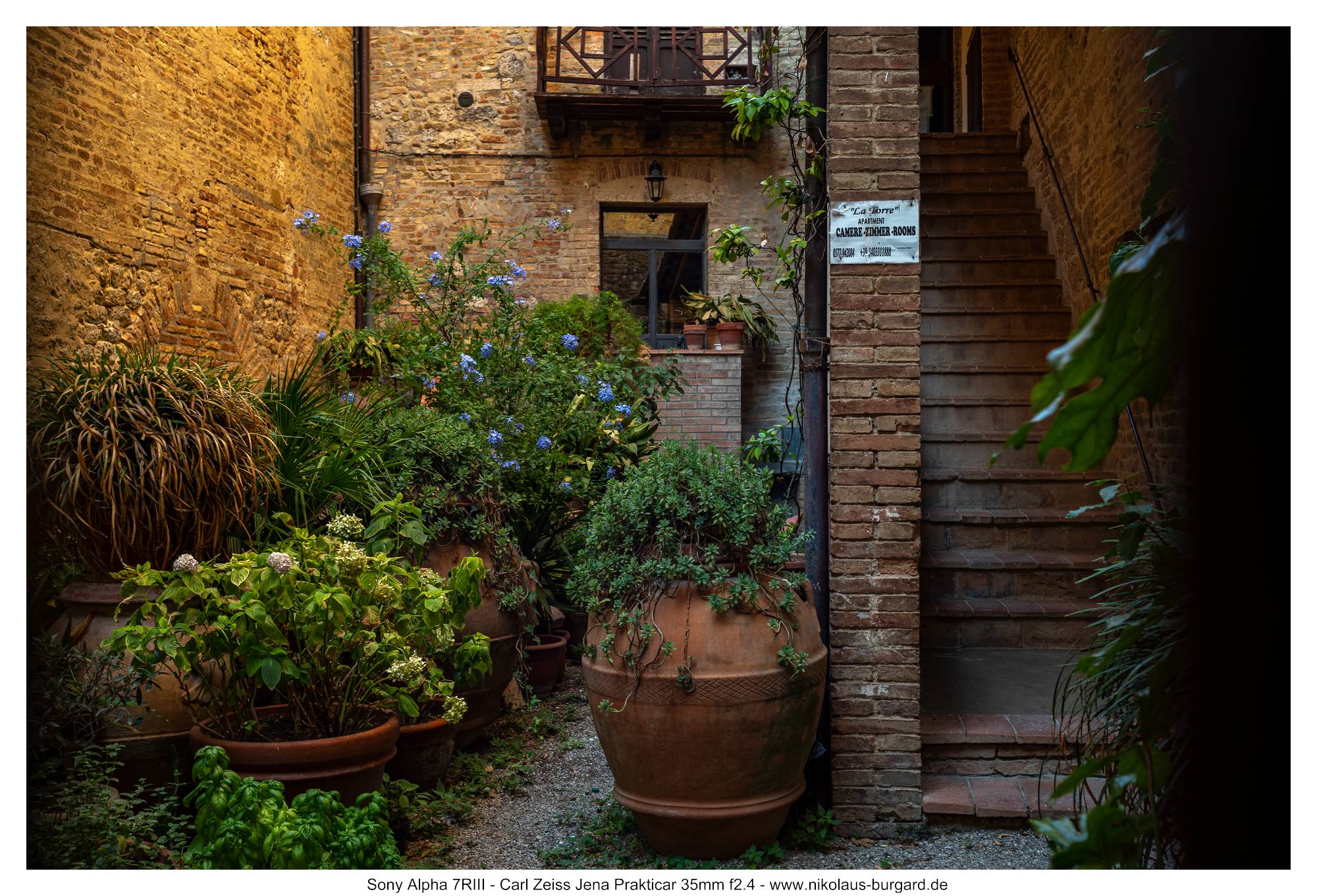
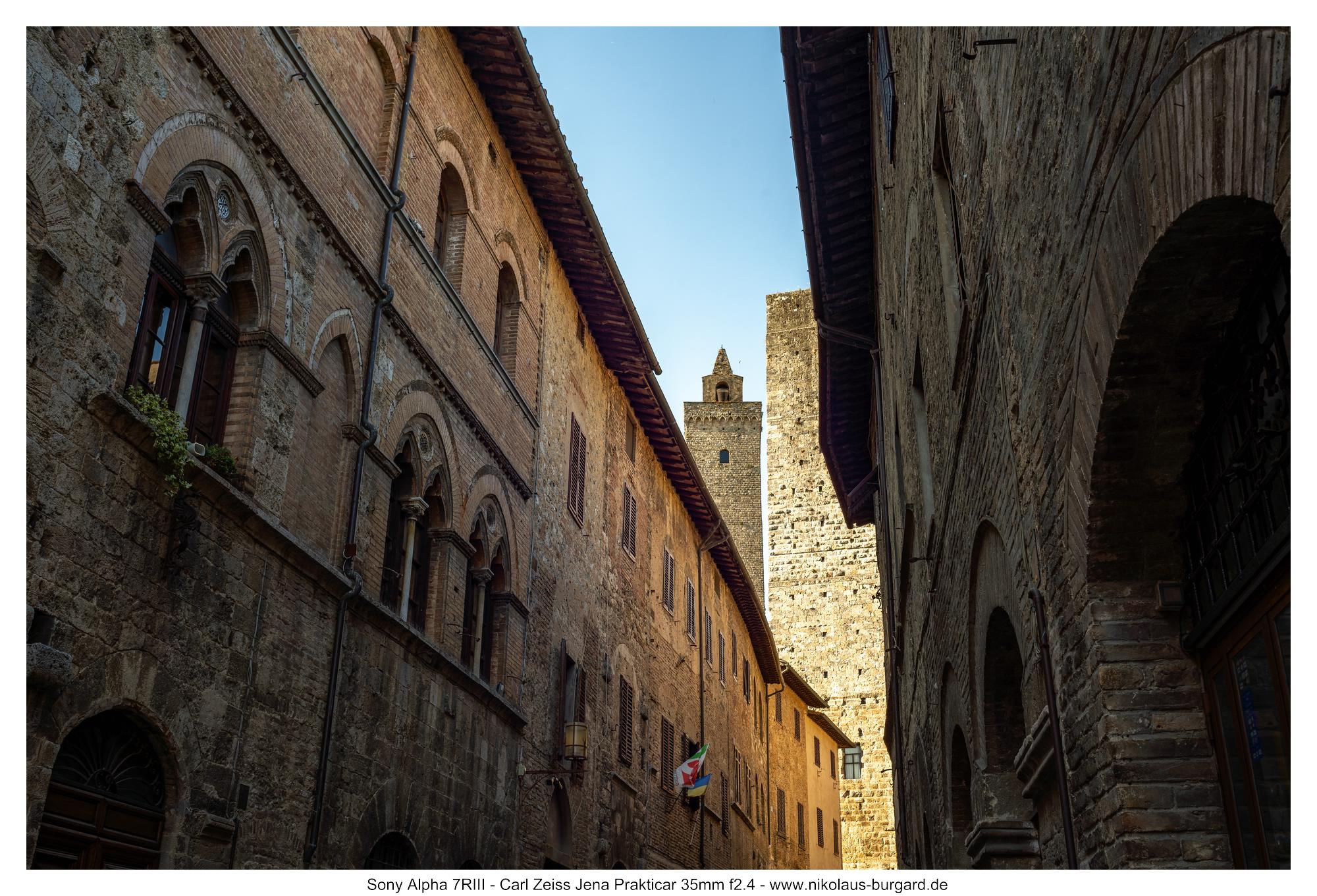
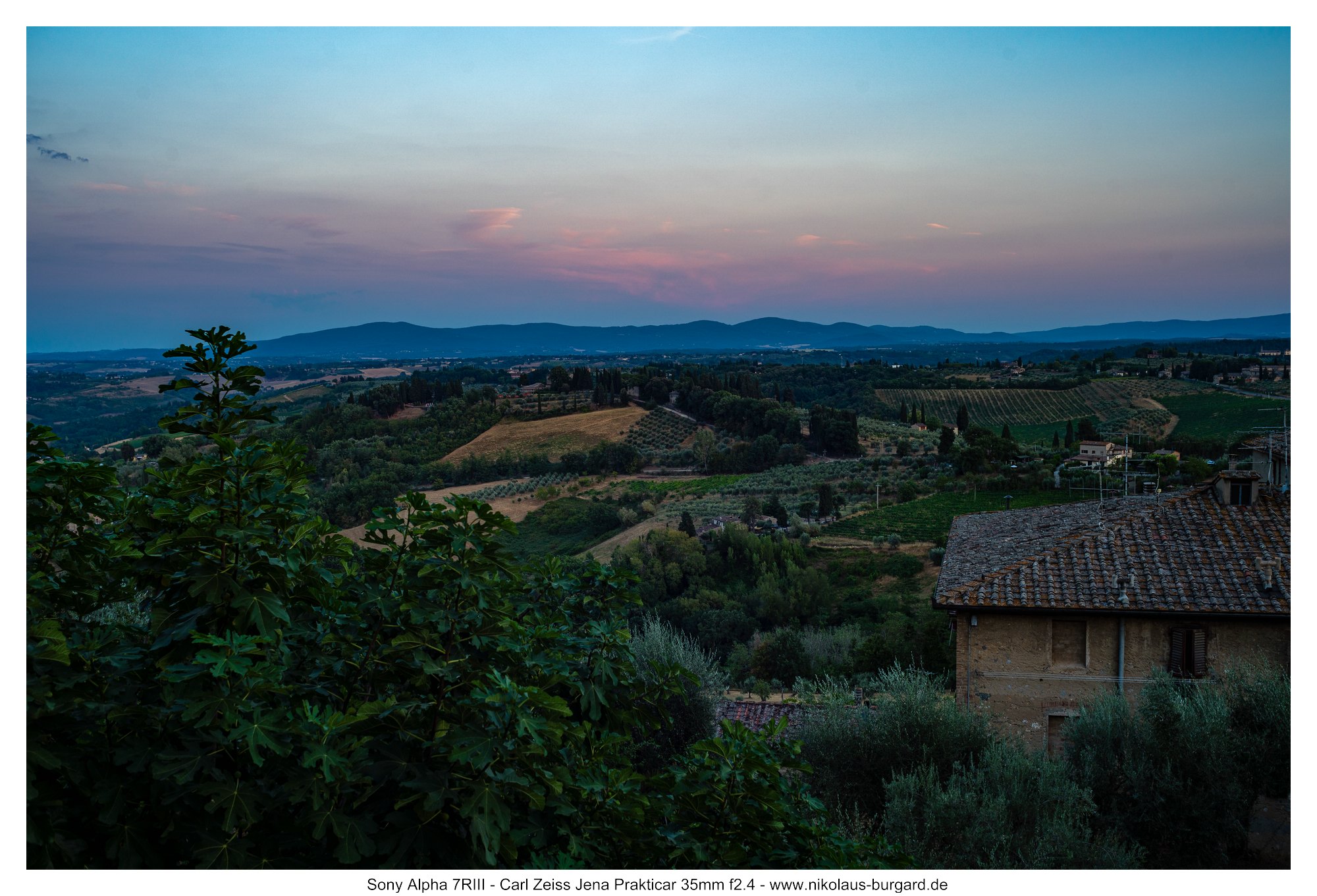
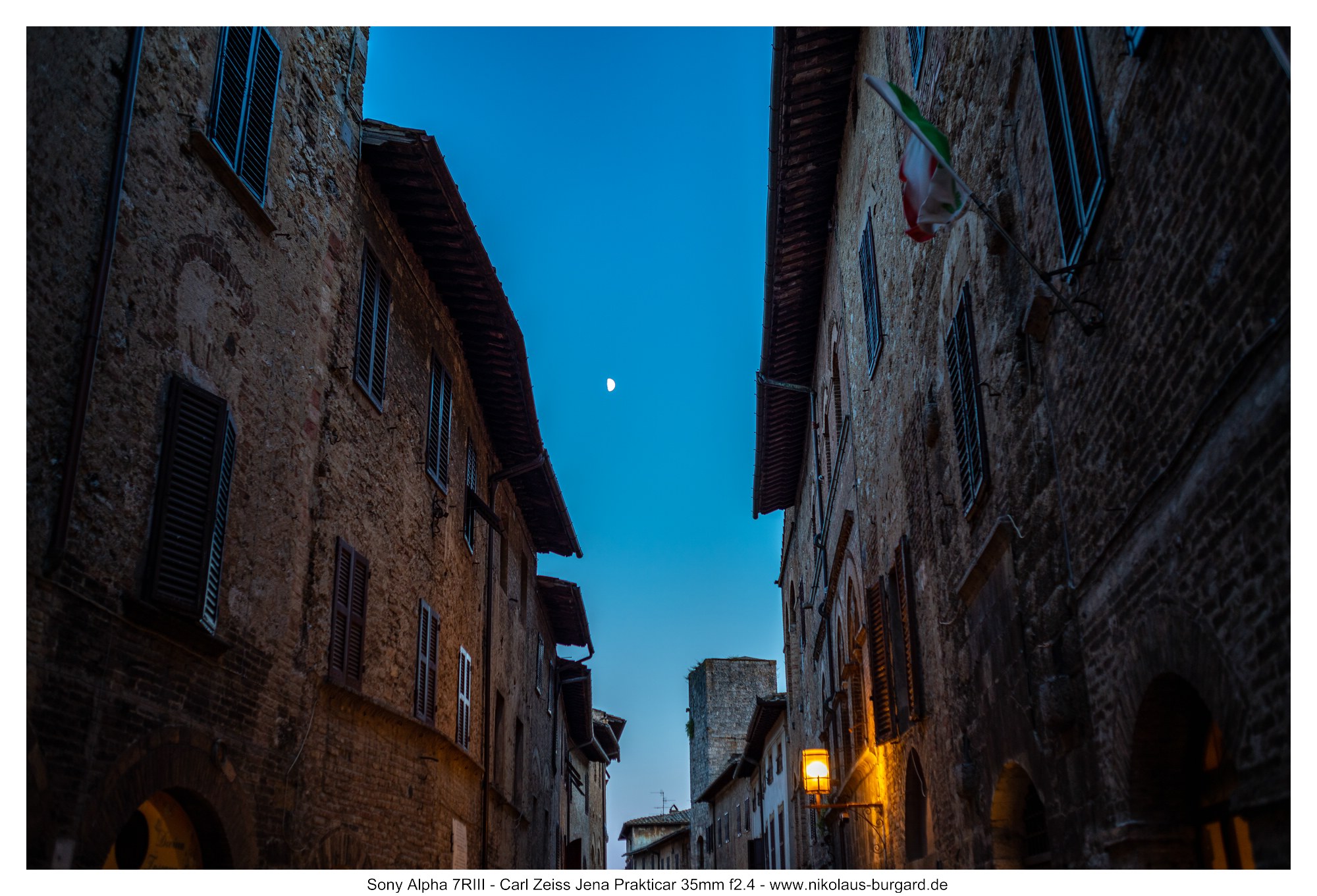
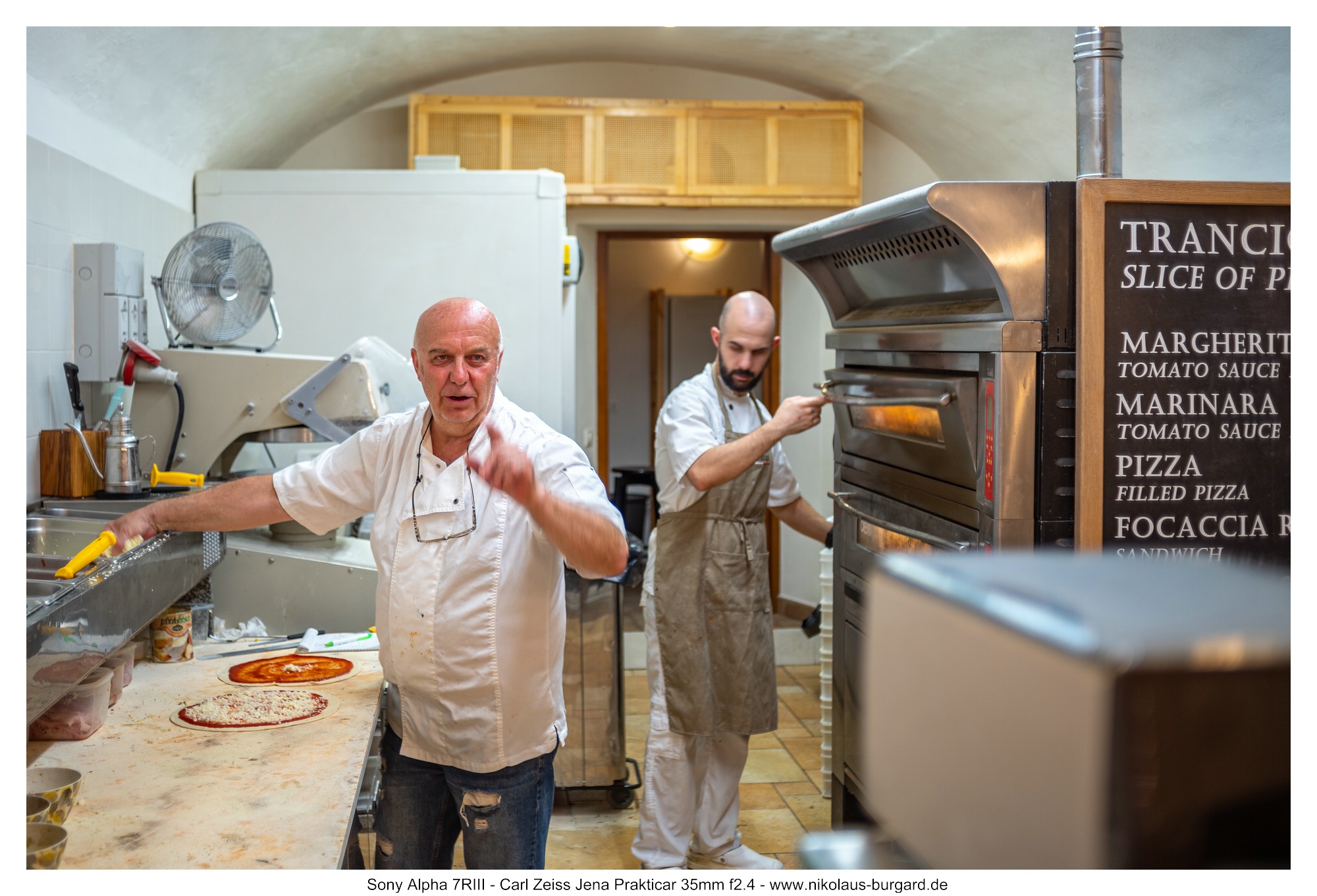
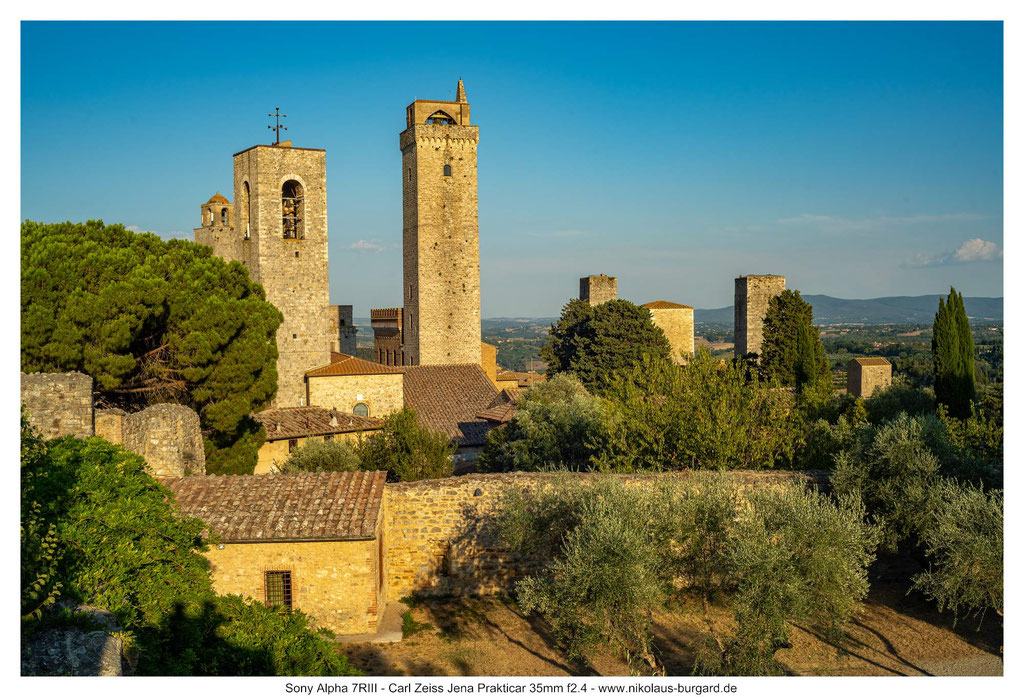
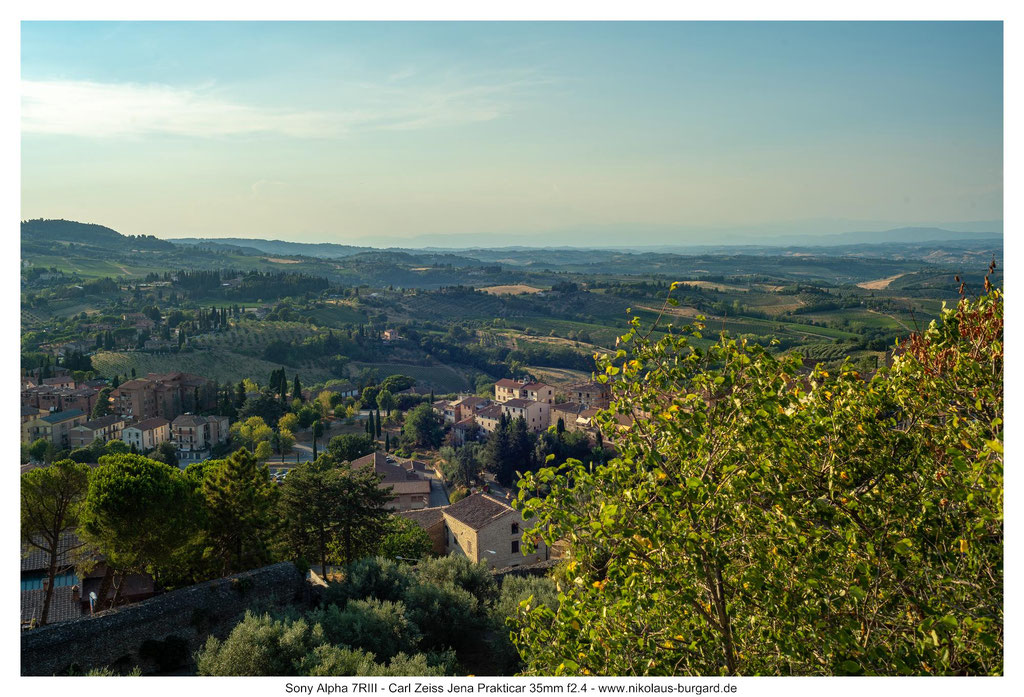
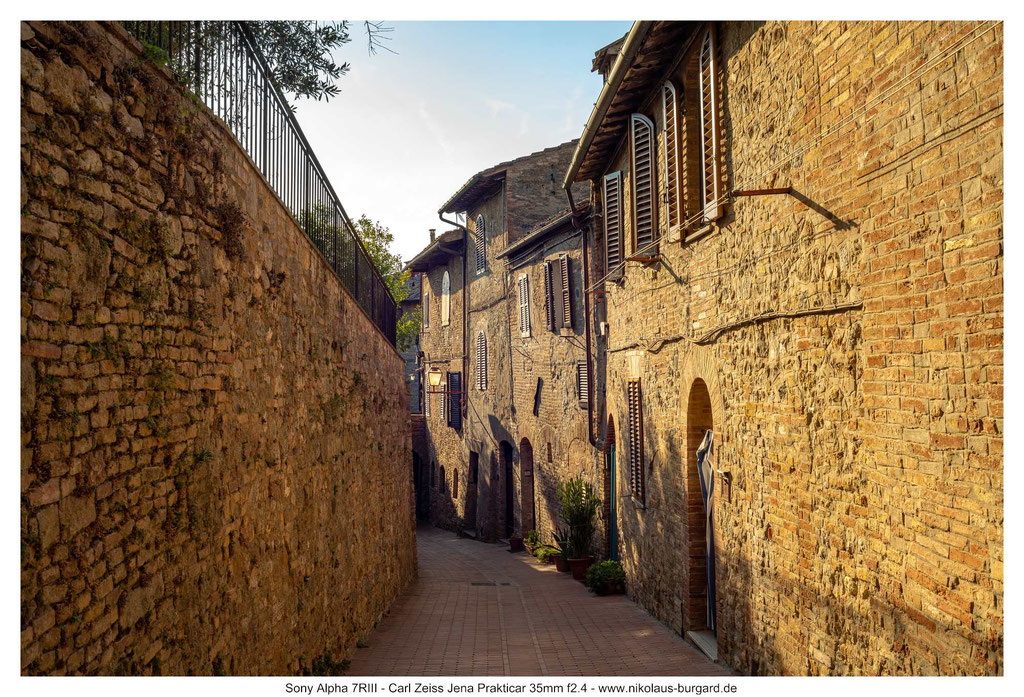
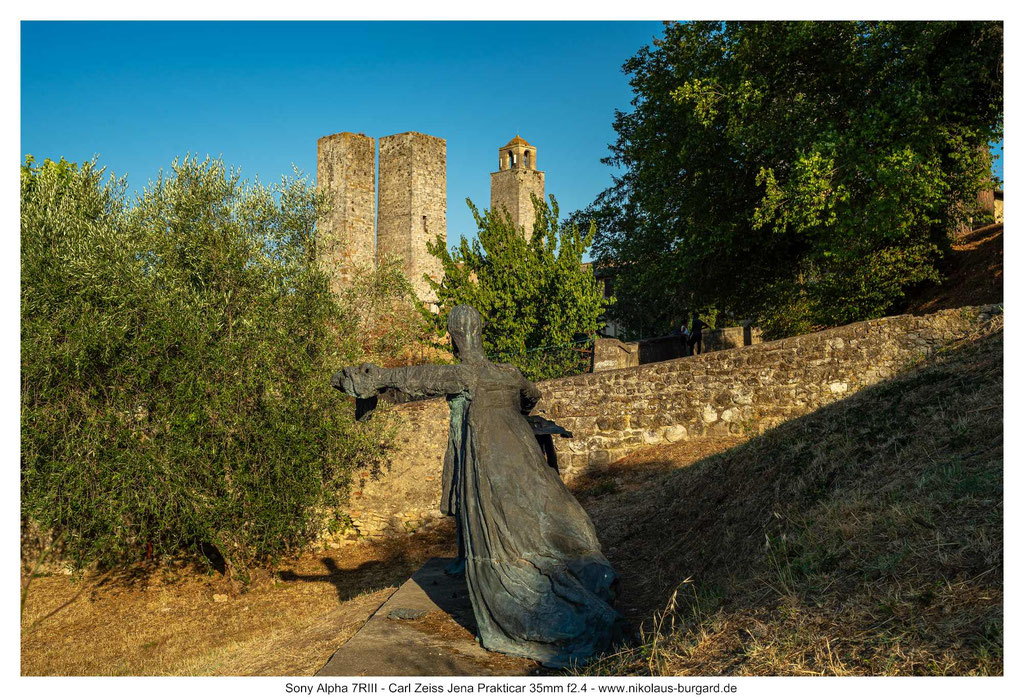
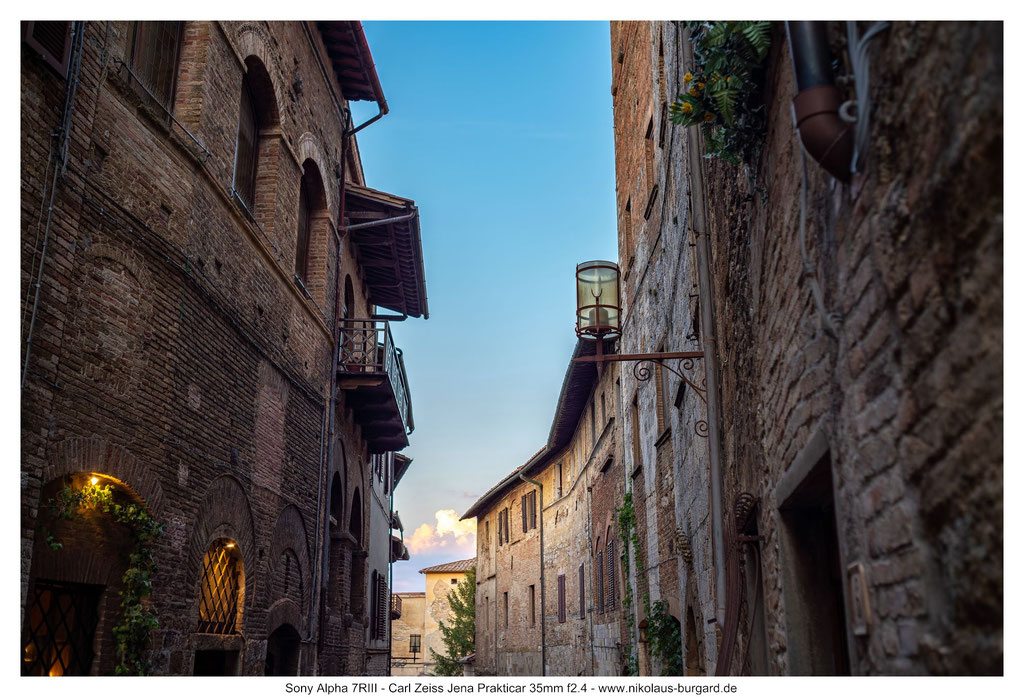
Bildserie / Picture Series: Tuscan Affairs 2: San Gimignano
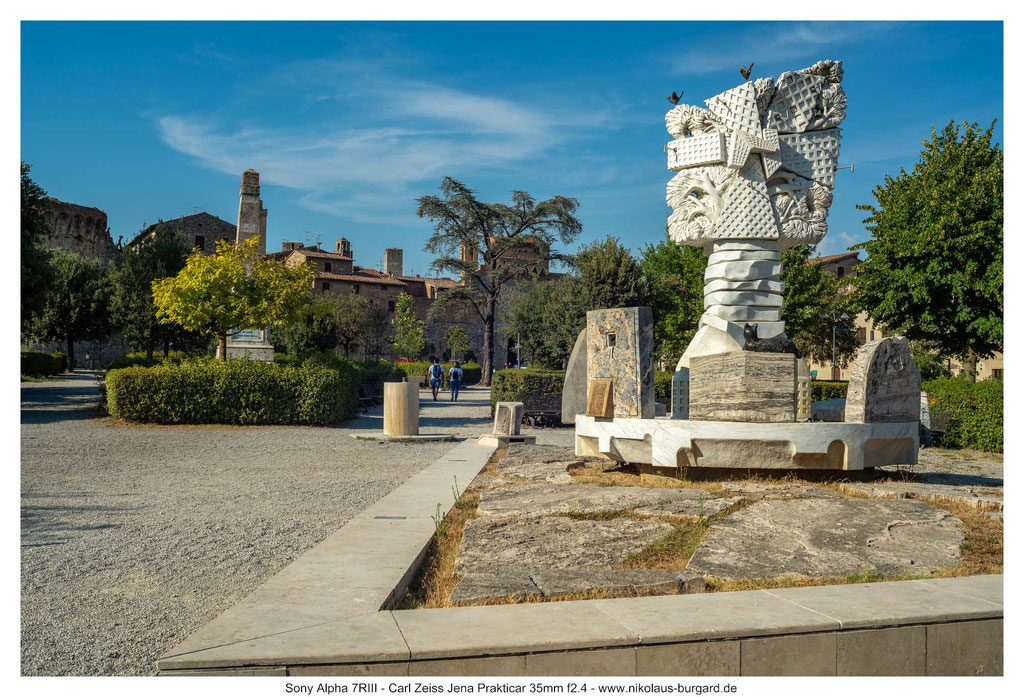
Wie könnte man in der Toskana San Gimignano, die Stadt der Geschlechtertürme, außen vor lassen?
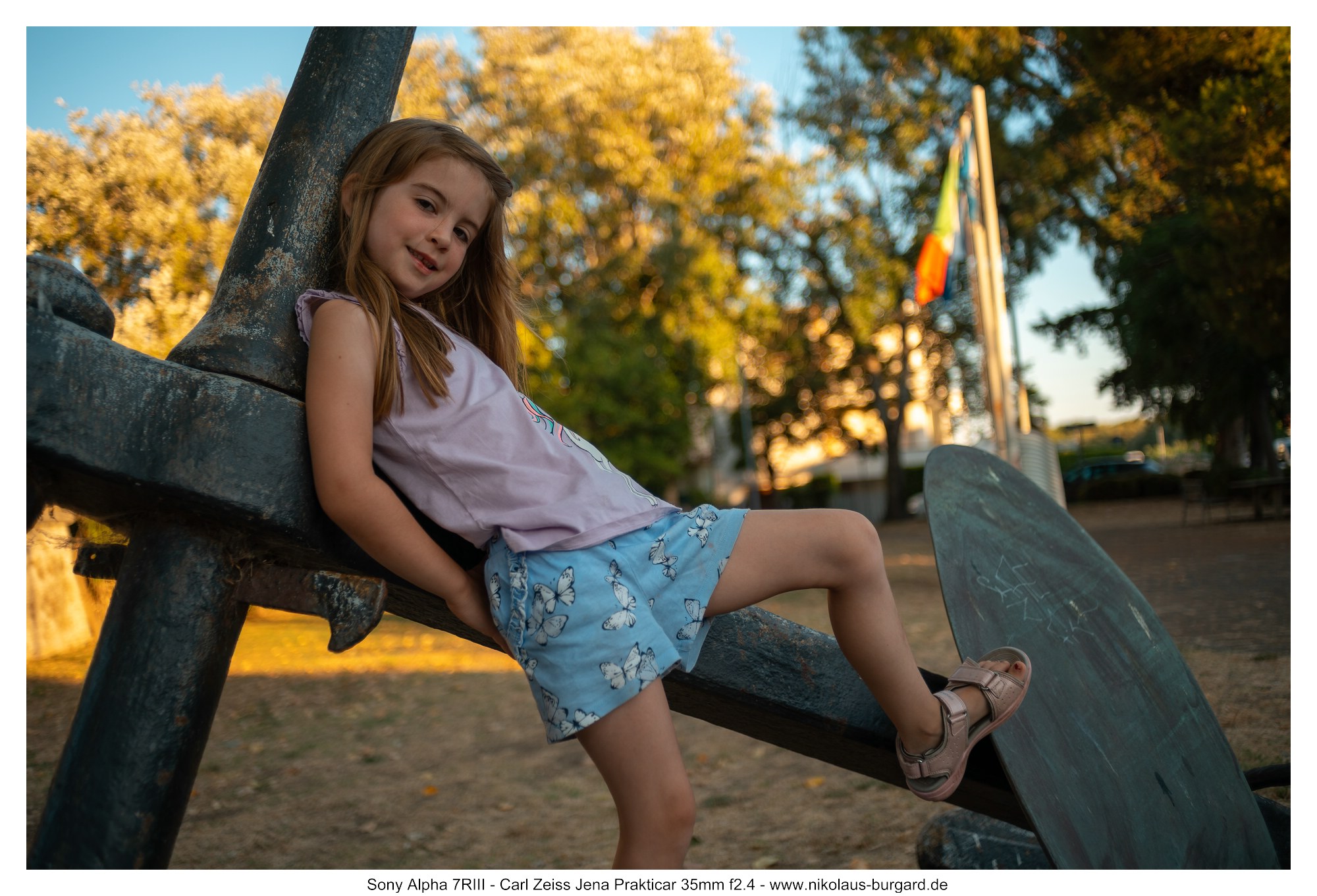
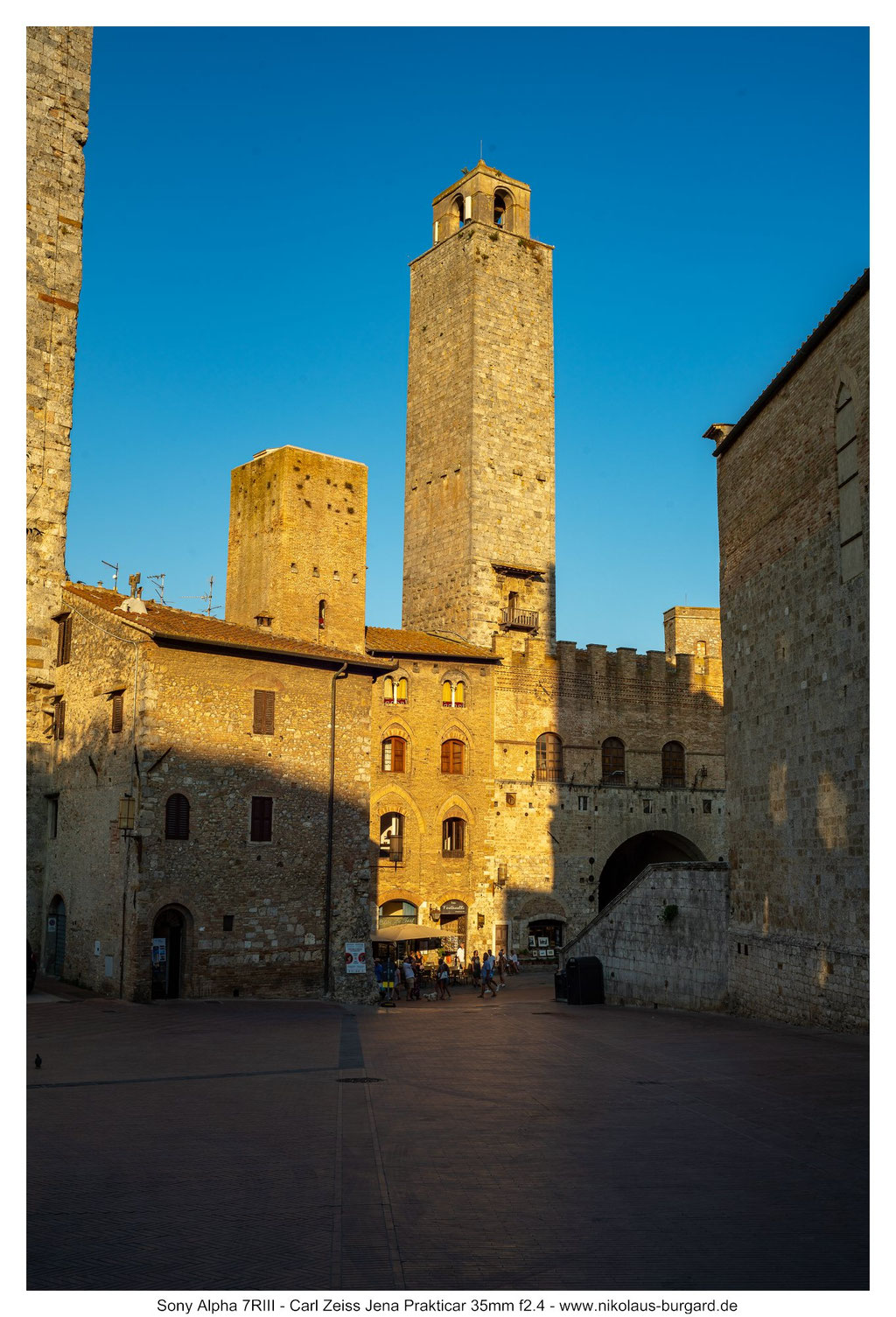
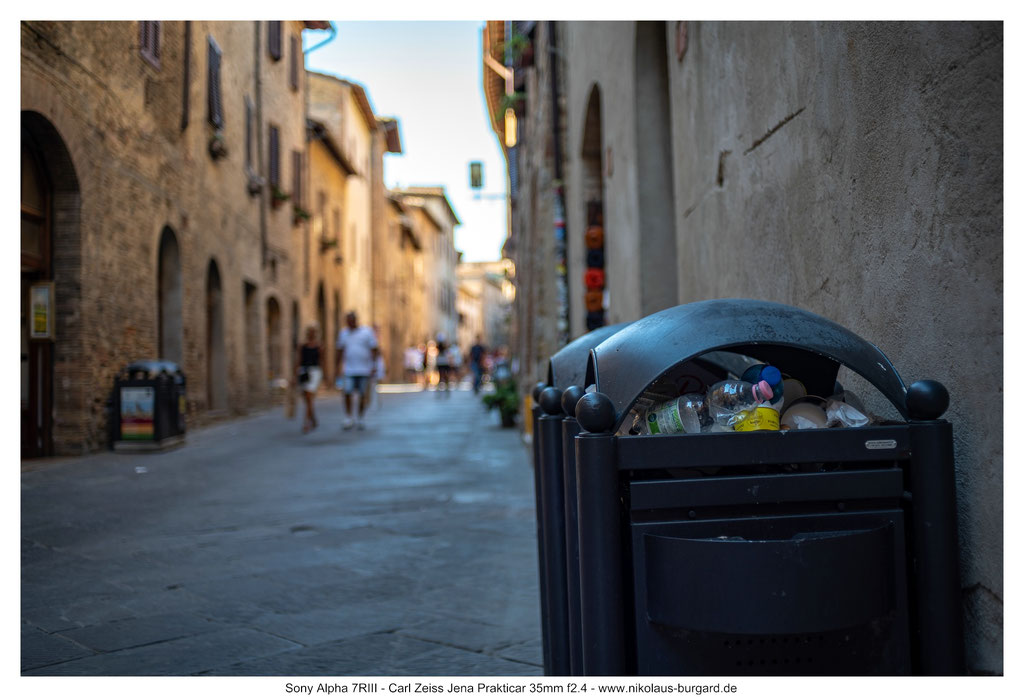
Und so haben wir dort einen fantastischen Spätnachmittag und Abend verbracht. Tagsüber war es in diesem Sommer 2022 unerträglich heiß, es hatte immer mindestens 35 Grad Celsius, so dass sich unsere Ausflüge auf den zweiten Teil des Tages verschoben haben. Der Lichtstimmung hat dies natürlich nicht geschadet, und das Flektogon ist ein toller Reisebegleiter.
How could you leave out San Gimignano, the city of gender towers, in Tuscany?
And so we spent a fantastic late afternoon and evening there. During the day it was unbearably hot this summer of 2022, it always had at least 35 degrees
Celsius, so our excursions have shifted to the second part of the day. Of course, this did not hurt the light mood, and the Flektogon is a great travel companion.
Bildserie / Picture Series: Hongkong Impressions (with Fujifilm GFX)
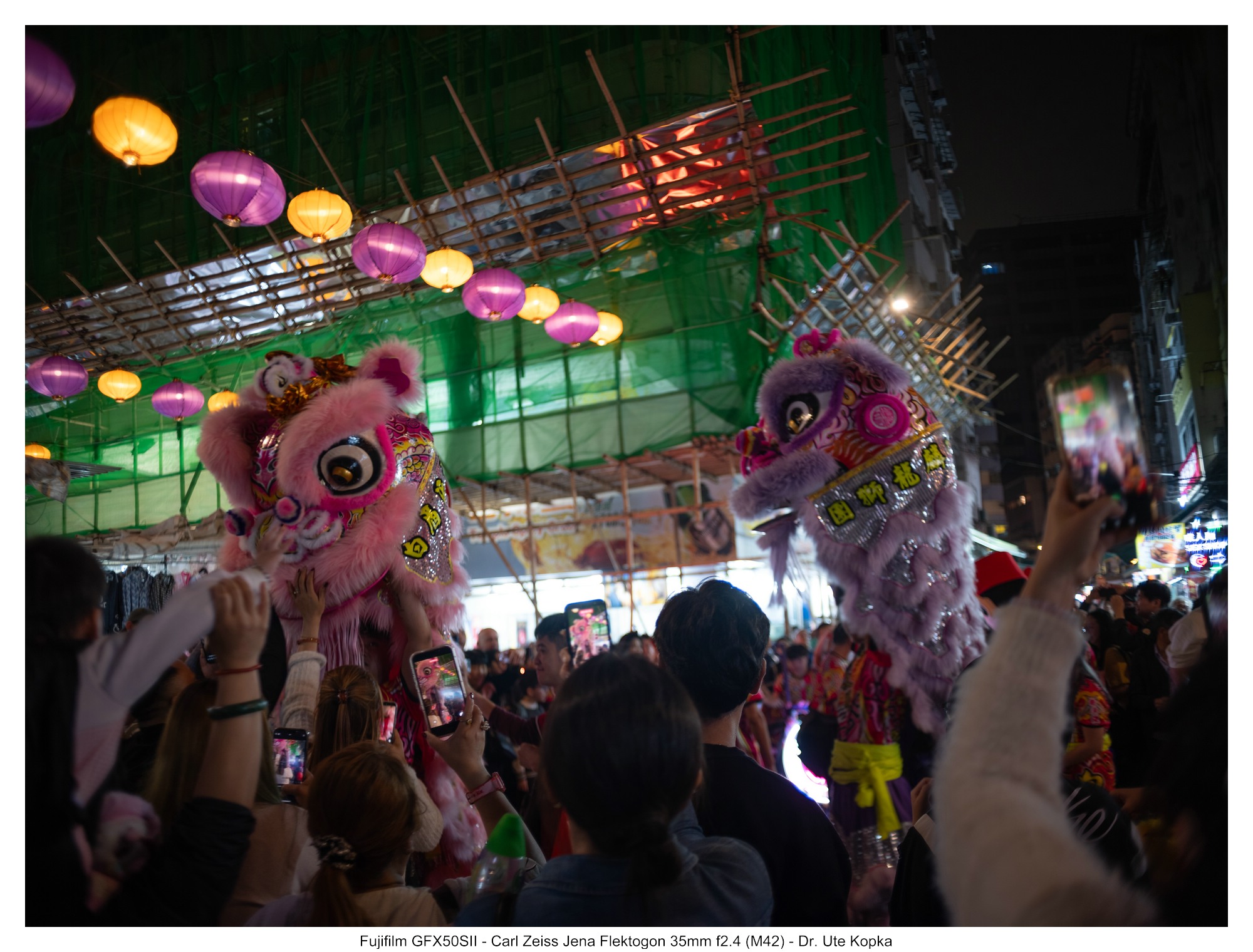
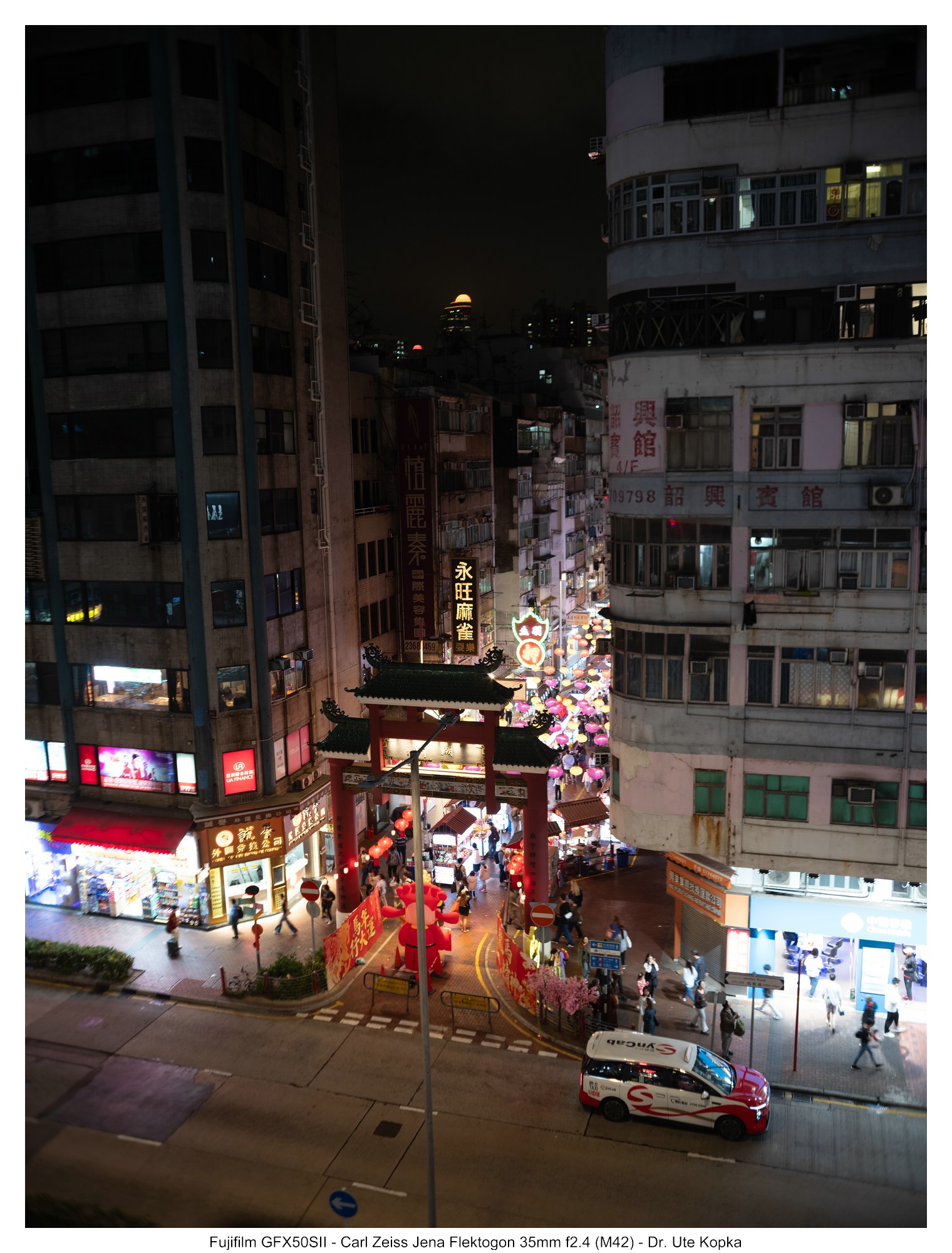
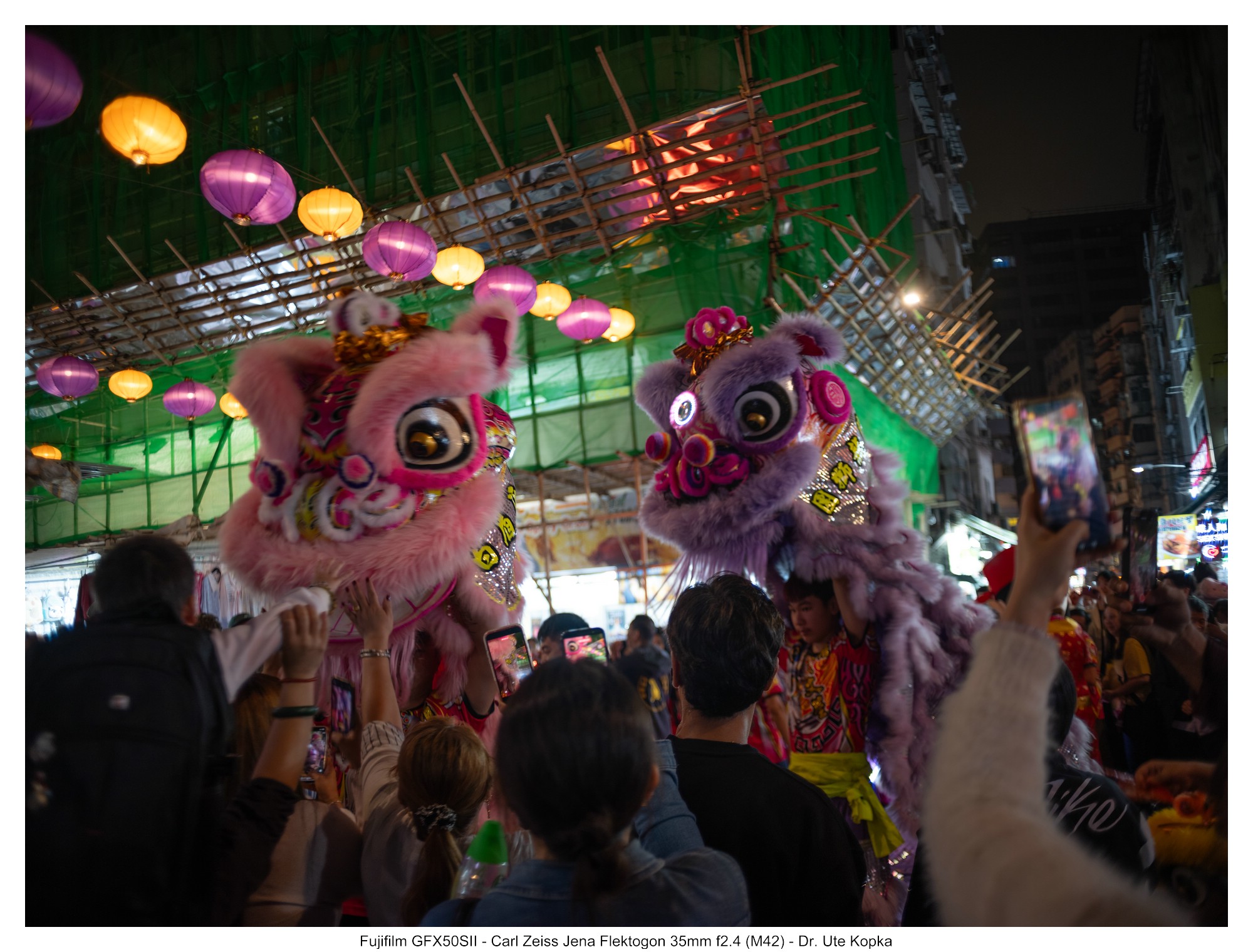
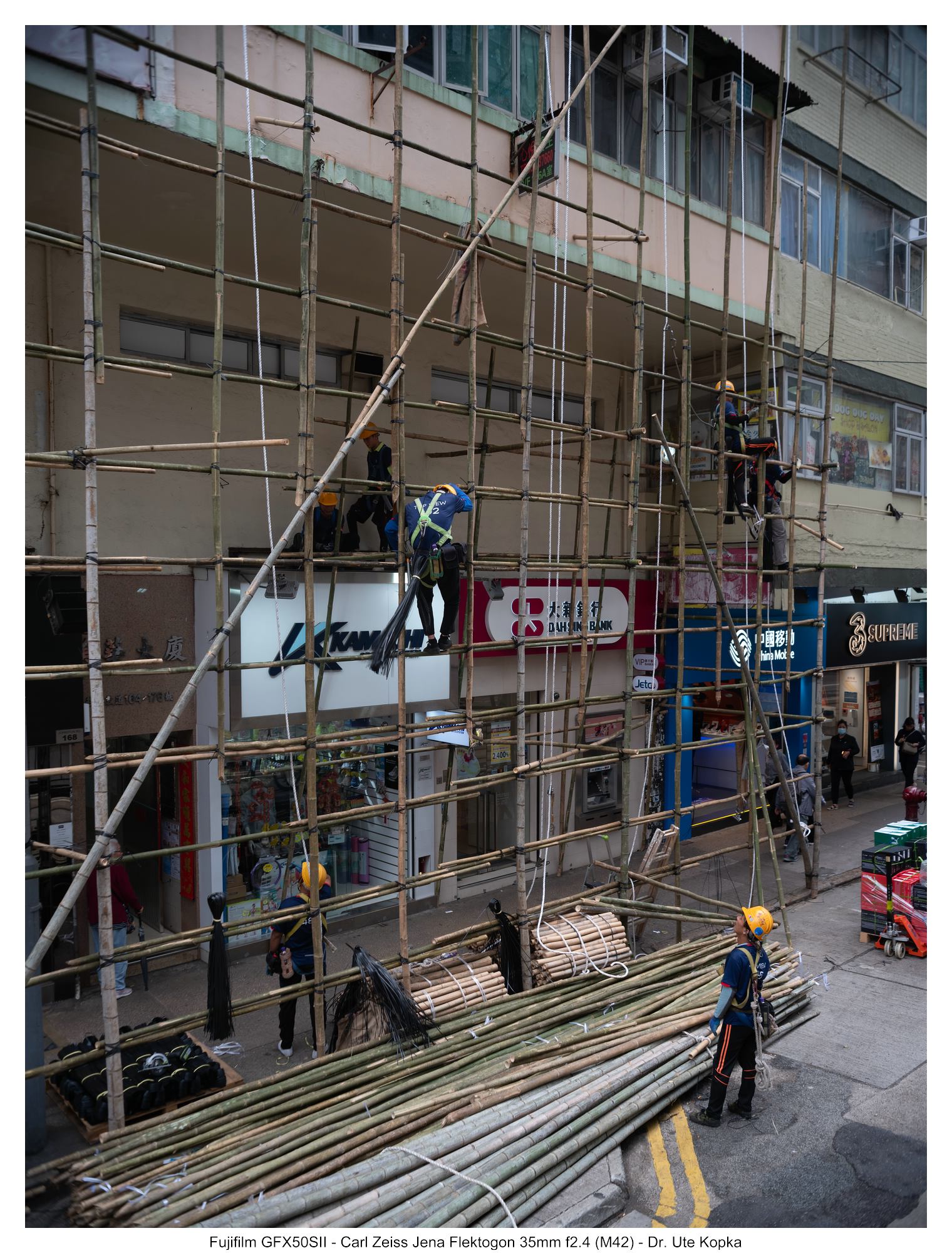
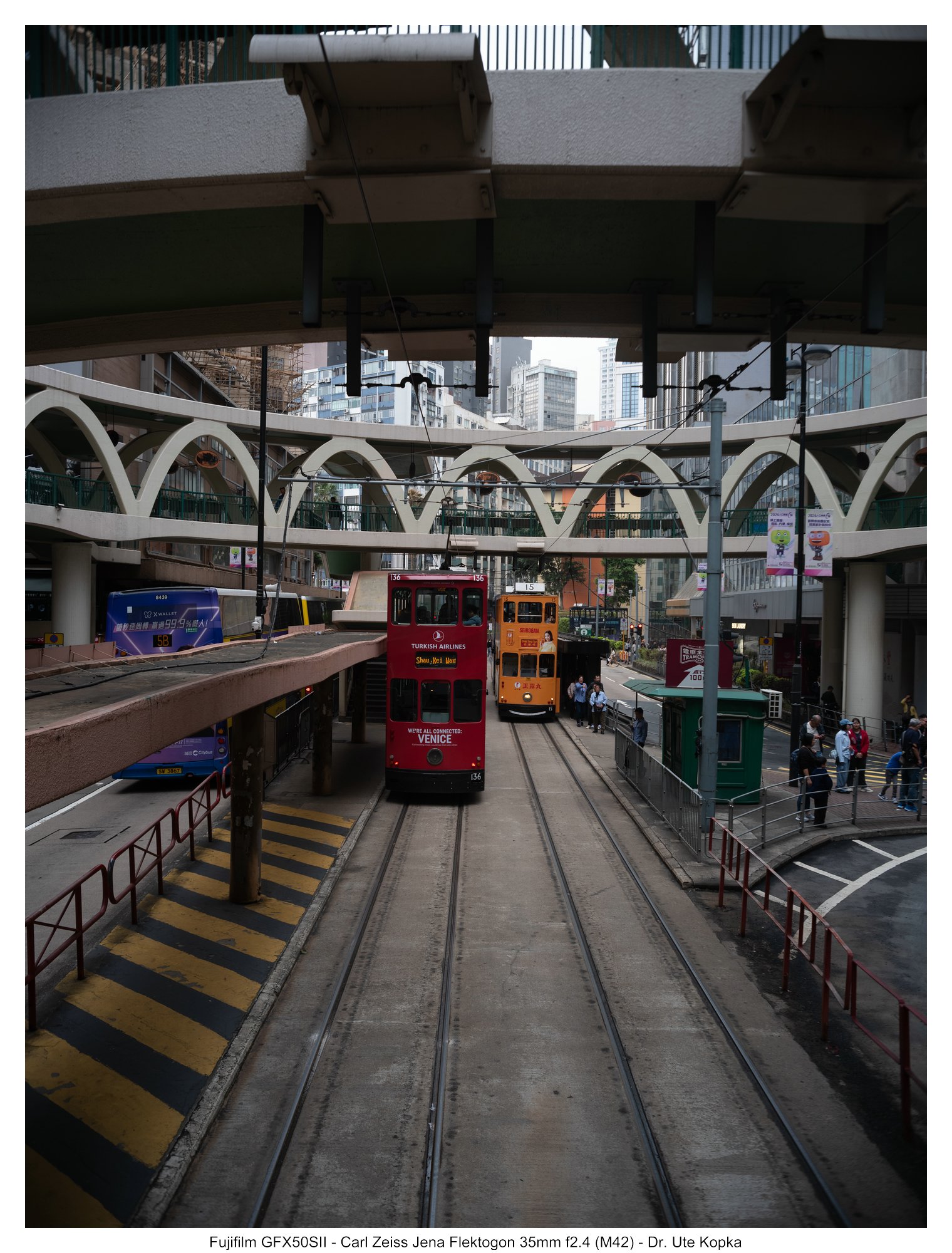
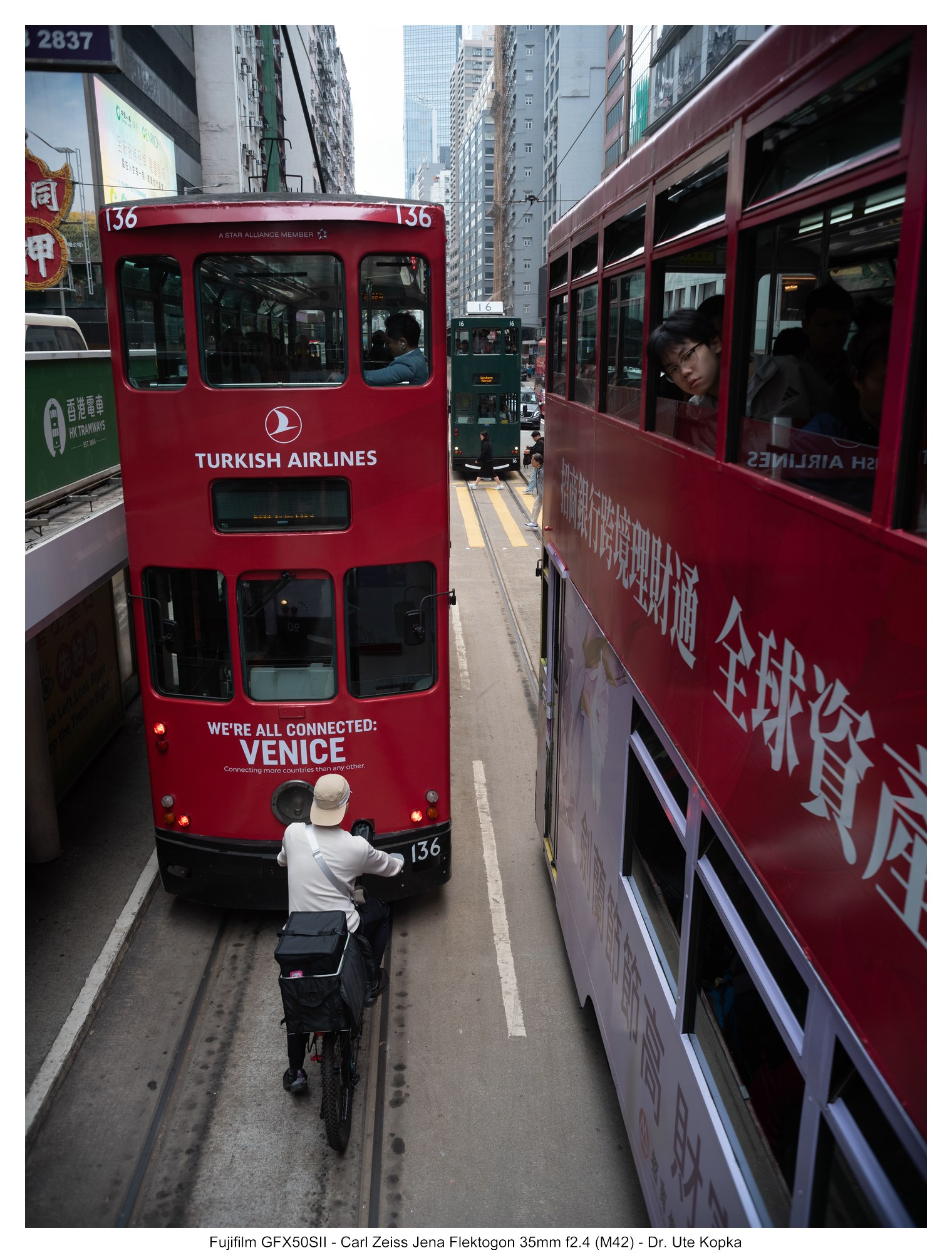
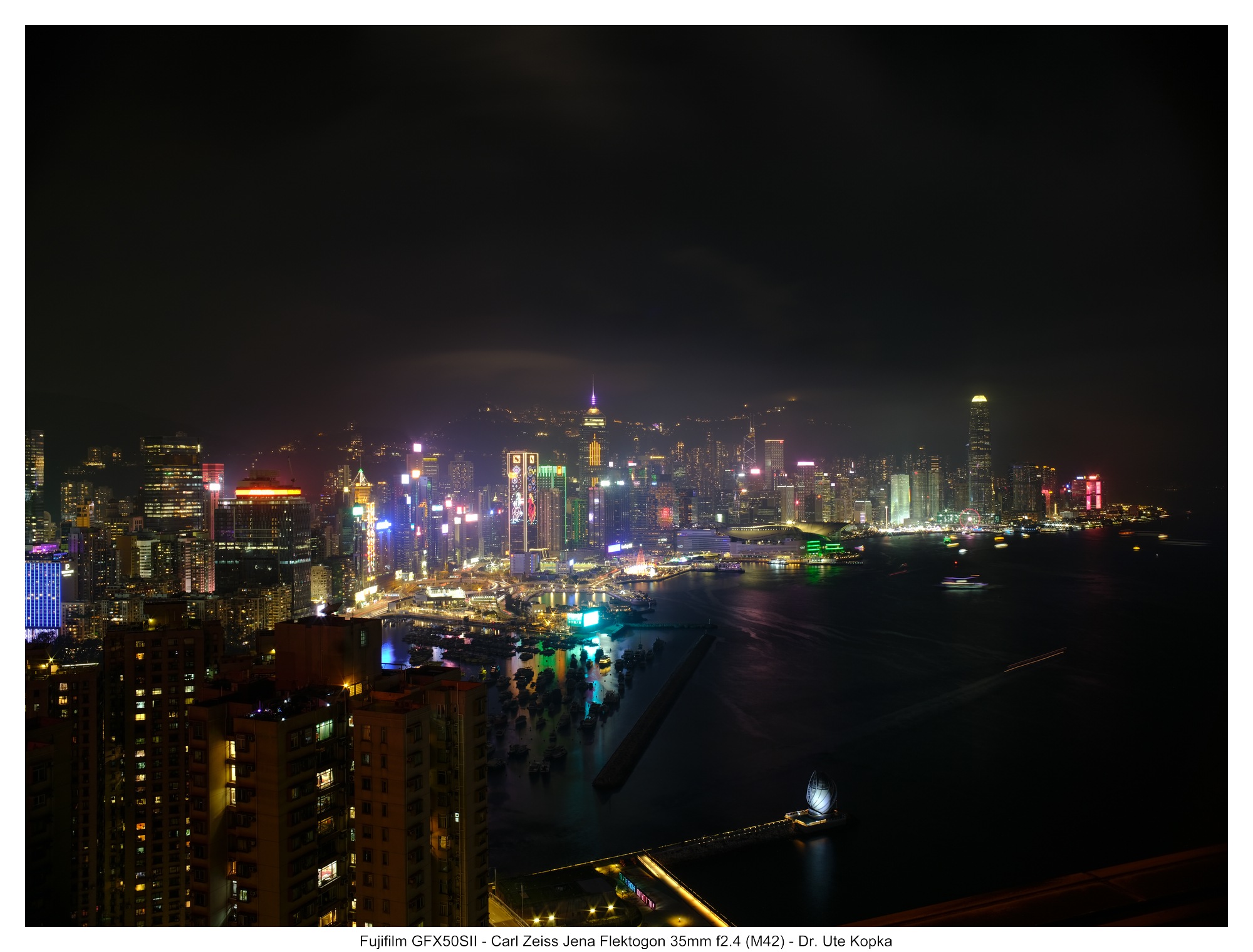
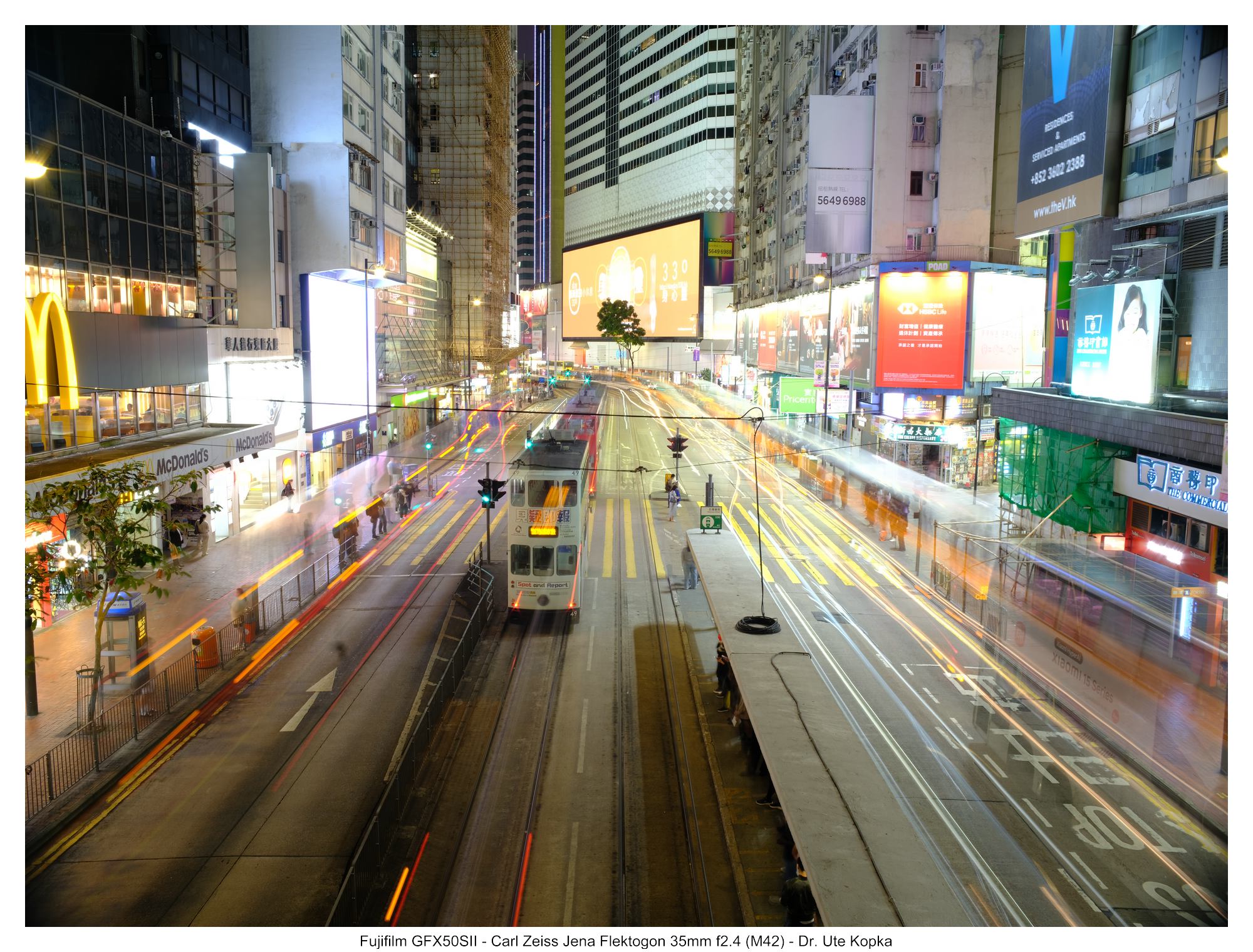
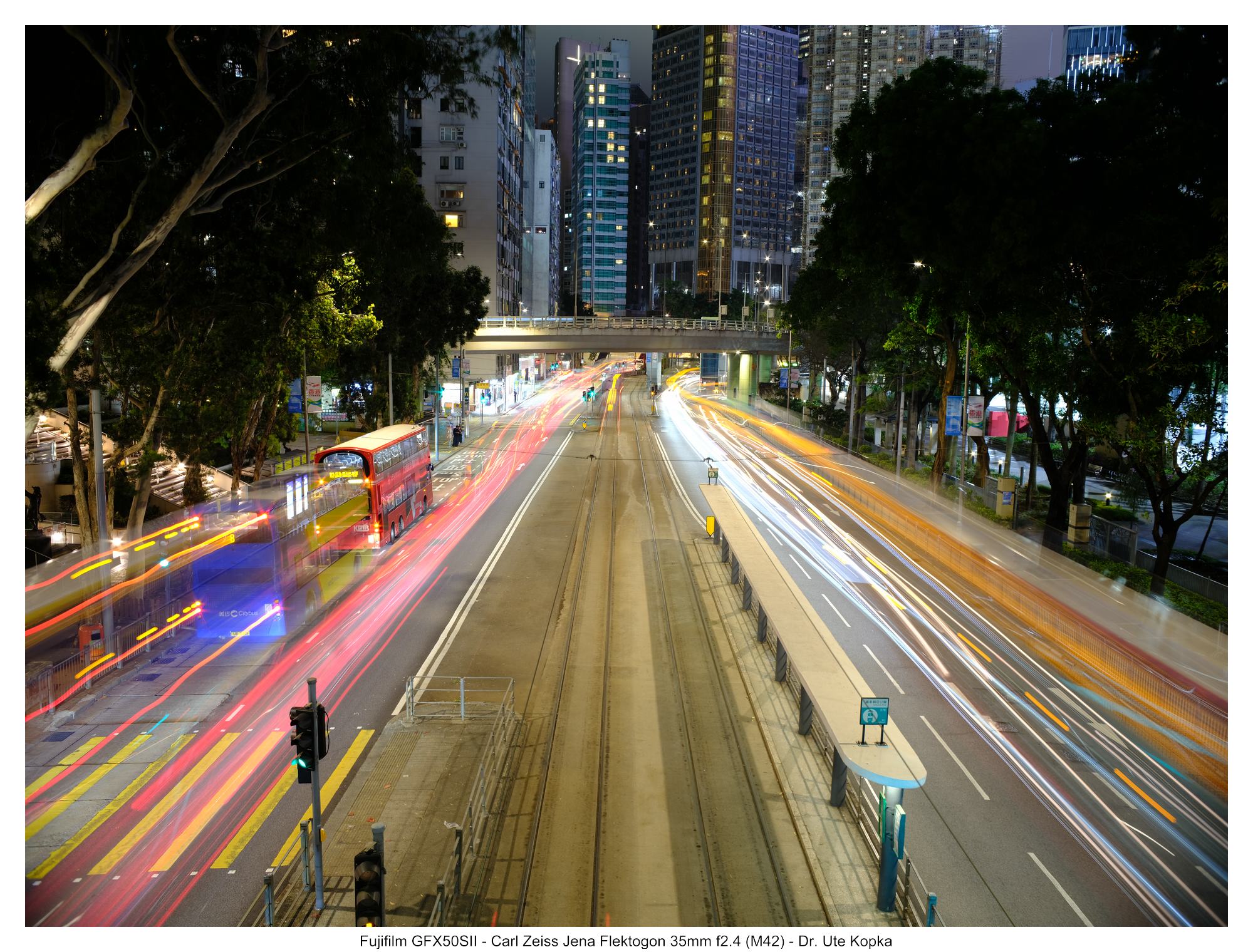
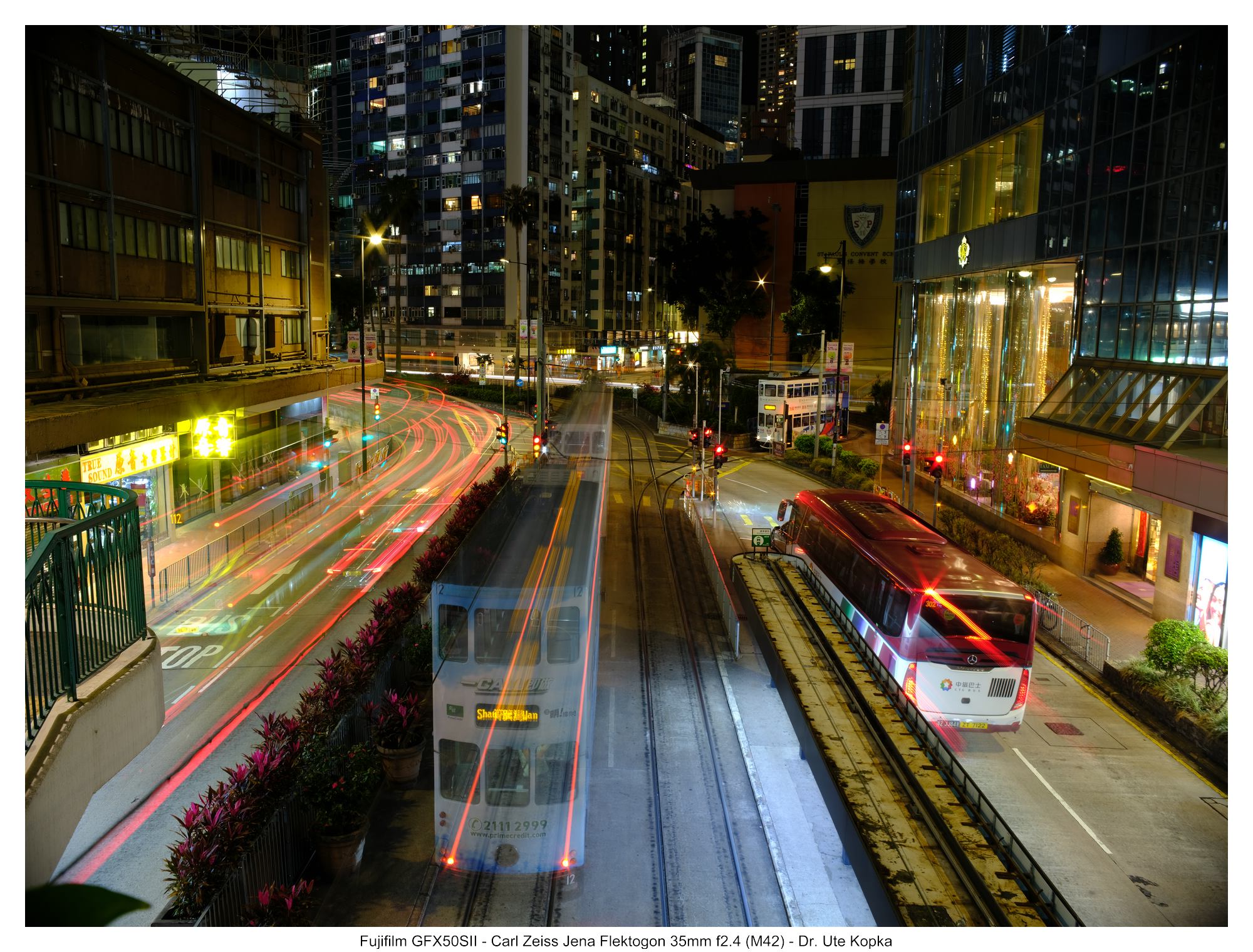
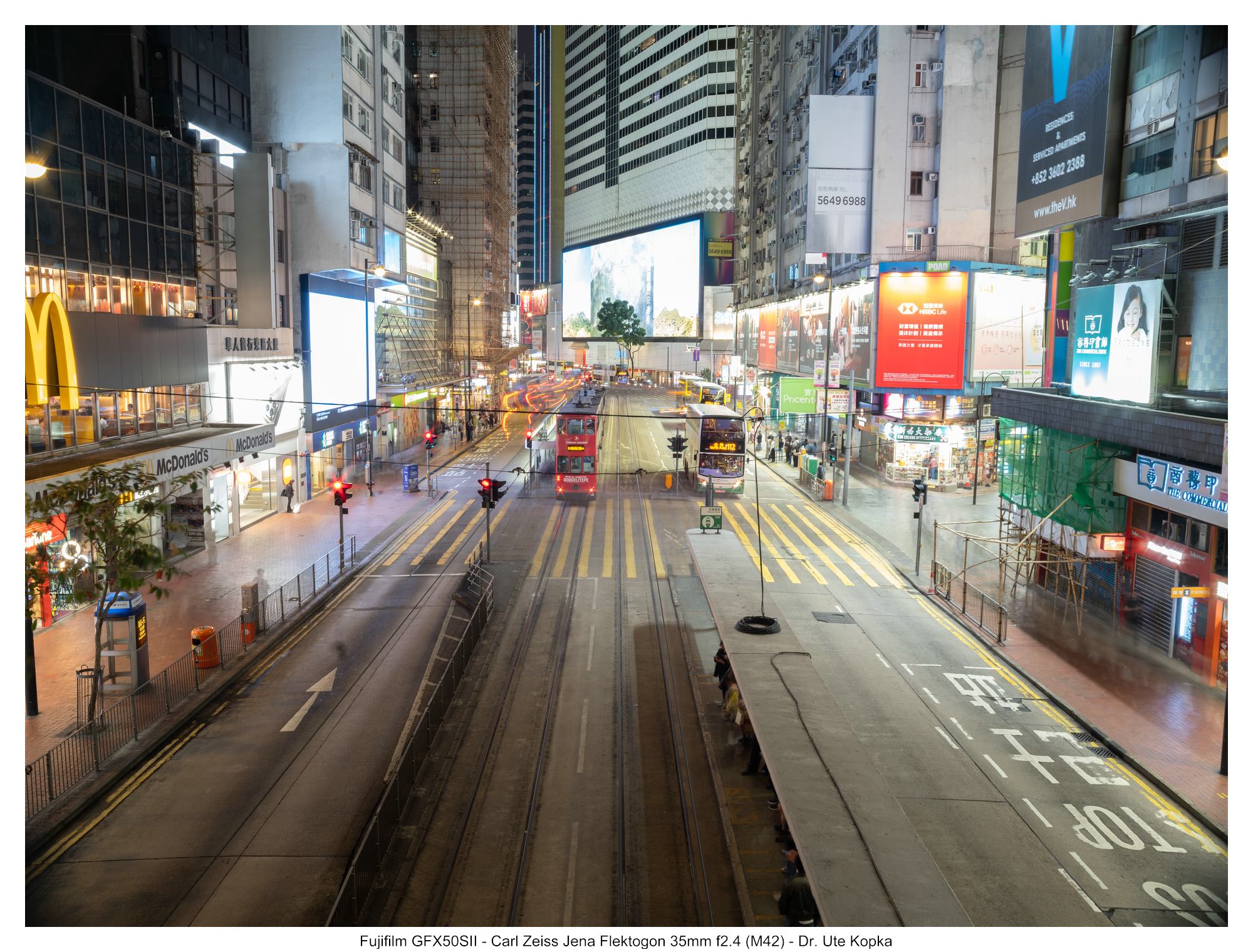
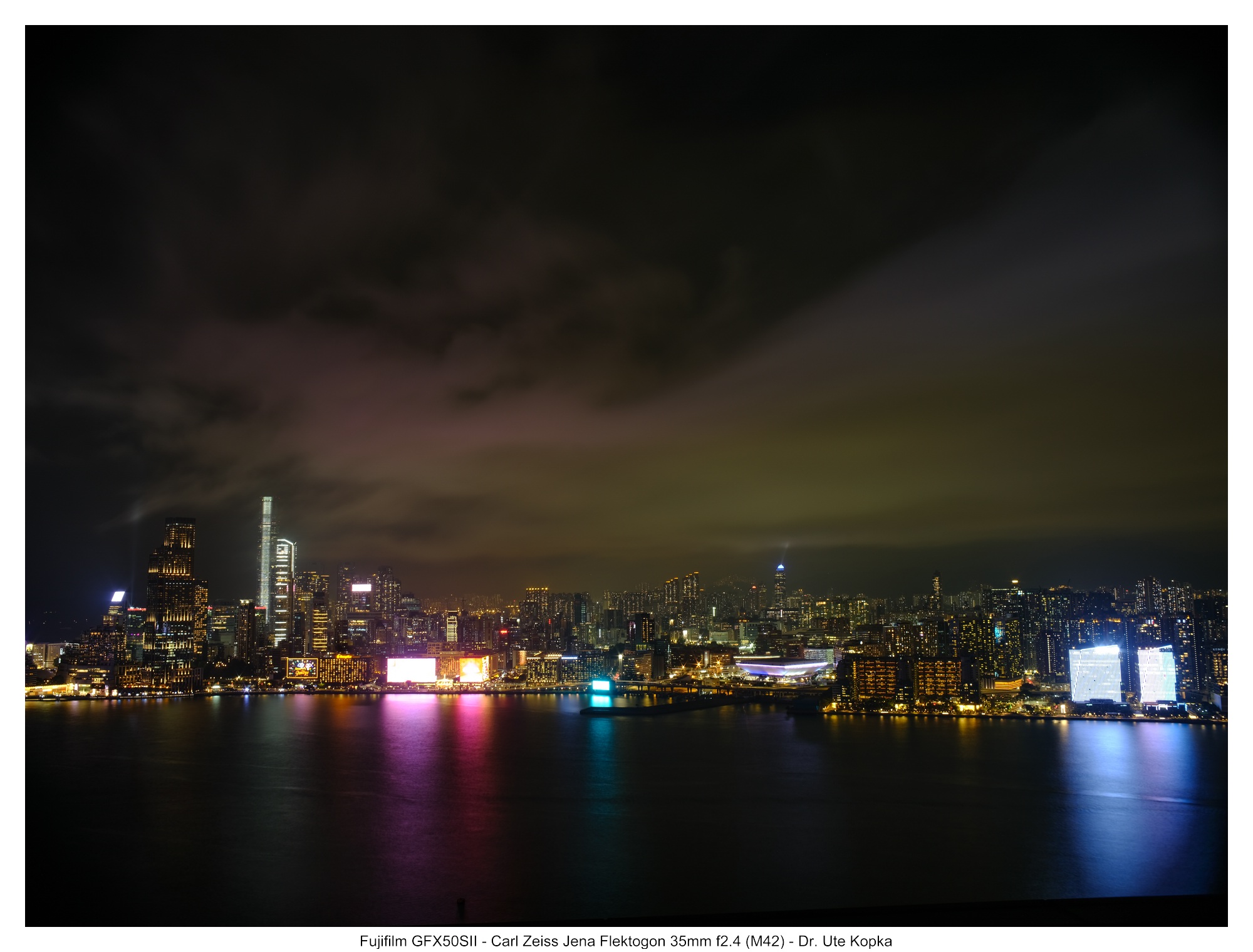
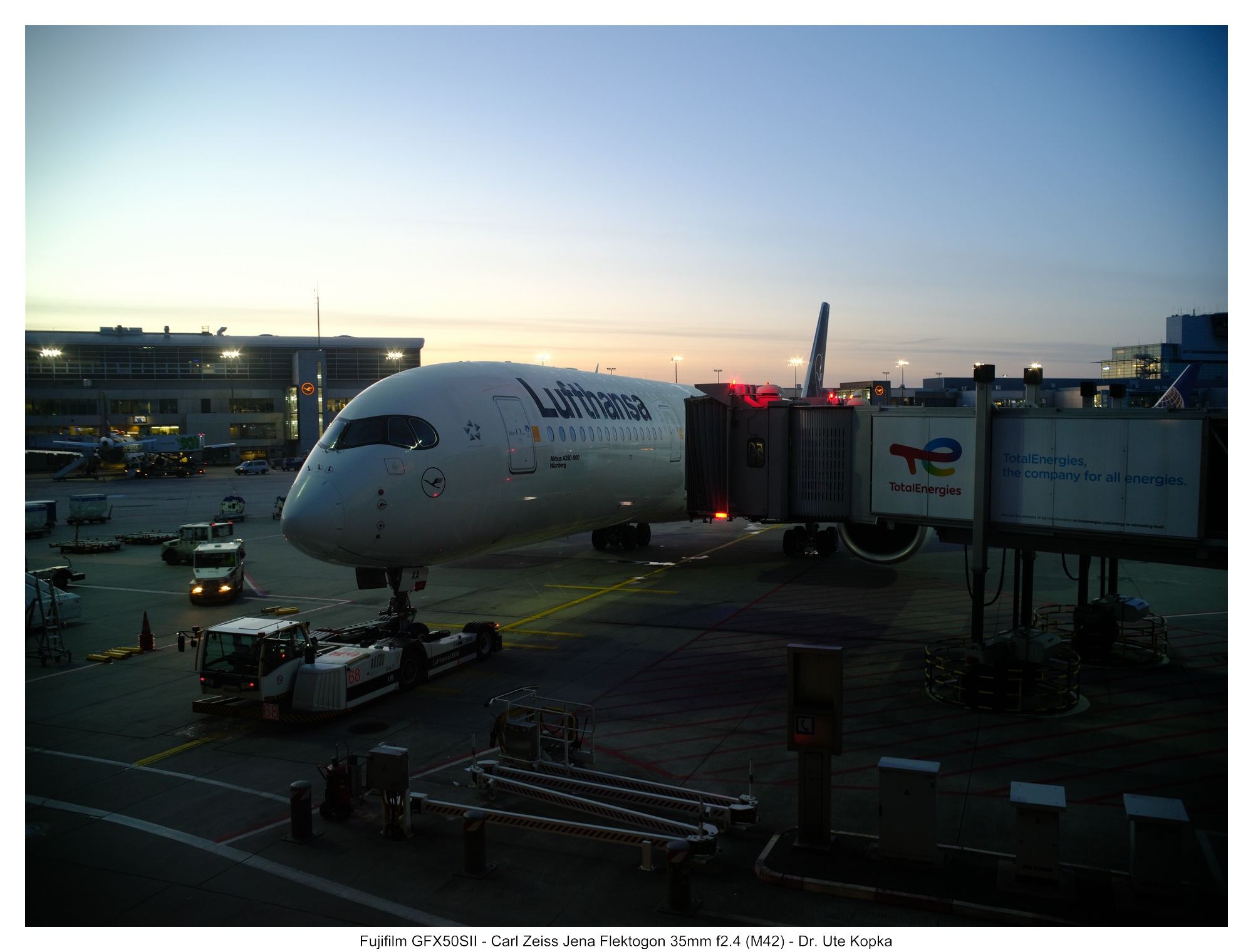
Meine Fotofreundin Ute Kopka hat das Objektiv (M42 Version, Carl Zeiss Jena Flektogon 35mm f/2.4) mit ihrer GFX50SII auf eine Hongkongreise mitgenommen. Durch den Cropfaktor von 0,8 wirkt es dort
wie ein 28mm Objektiv. Obwohl das Objektiv für Kleinbild gerechnet ist, ist die Vignette zwar etwas sichtbar, aber dennoch weich und in der Nachbearbeitung leicht zu entfernen. Dies wurde hier
aber nicht getan, um die Nutzbarkeit an der GFX zu zeigen.
Die folgenden Bilder sind mit Offenblende auf dem bekannten Temple Street Night Market aus der Hand fotografiert worden:
My dear photographer friend Ute Kopka took this lens (M42 version, Carl Zeiss Jena Flektogon 35mm f/2.4) and her GFX50SII on a recent trip to Hongkong. The .8
crop factor of the medium format camera gives the equivalent of a 28mm lens on full frame. Although the lens is calculated for 35mm film, it is very usable on digital medium format. The vignette
is noticeable but not hard and easy to remove in post. She did not do that here in order to give you an impression of the usability on the GFX. Ute has taken the following pictures handheld and
wide open on the famous Temple Street Night market:
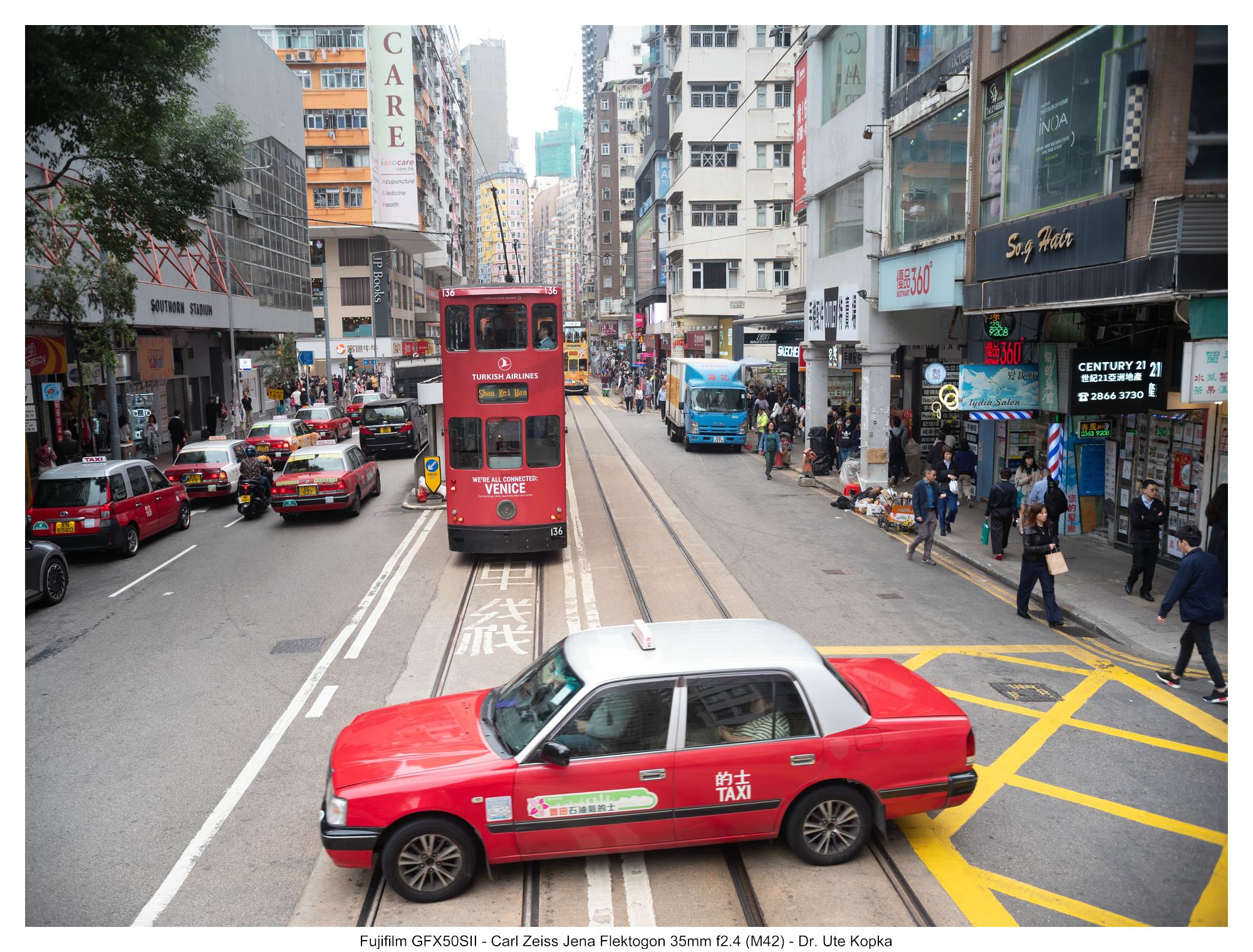
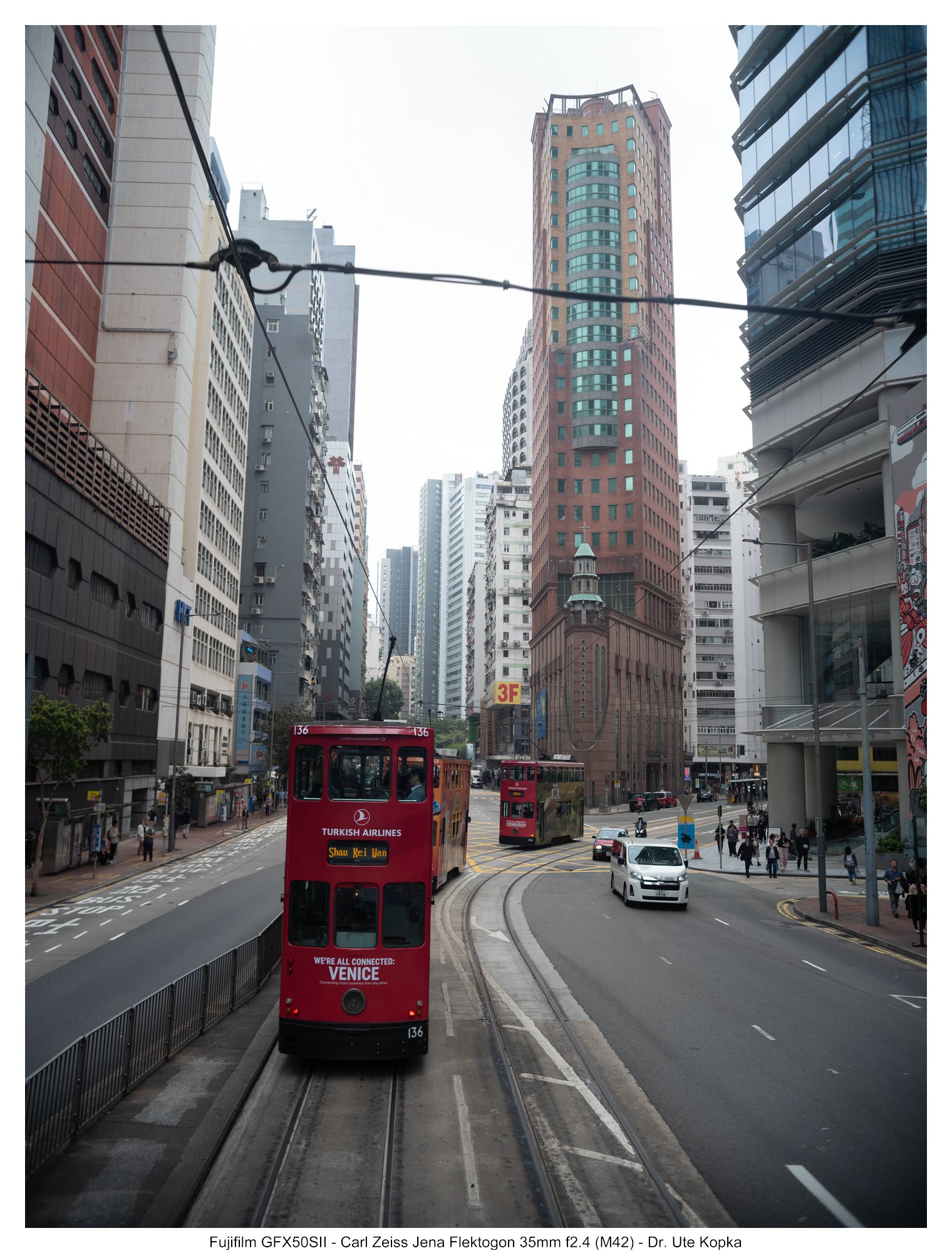
Die folgenden Bilder sind aus der ersten Reihe im oberen Deck der berühmten Dingding-Doppeldeckerstraßenbahn auf Hongkong Island fotografiert, alle mit Blende 4:
The following pictures have been taken at f4 from the front row of the upper deck of the historic ding ding tram on Hongkong Island:

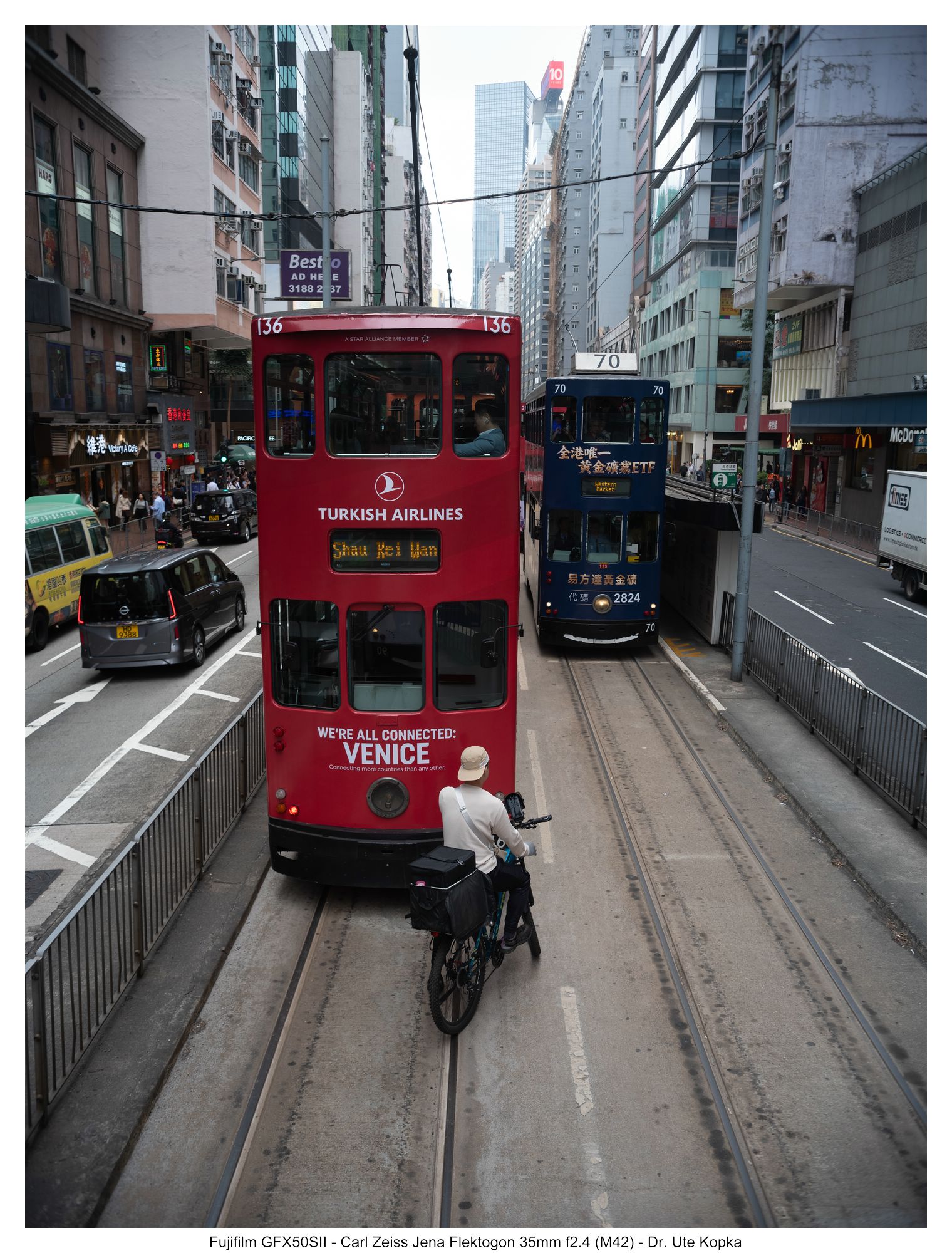
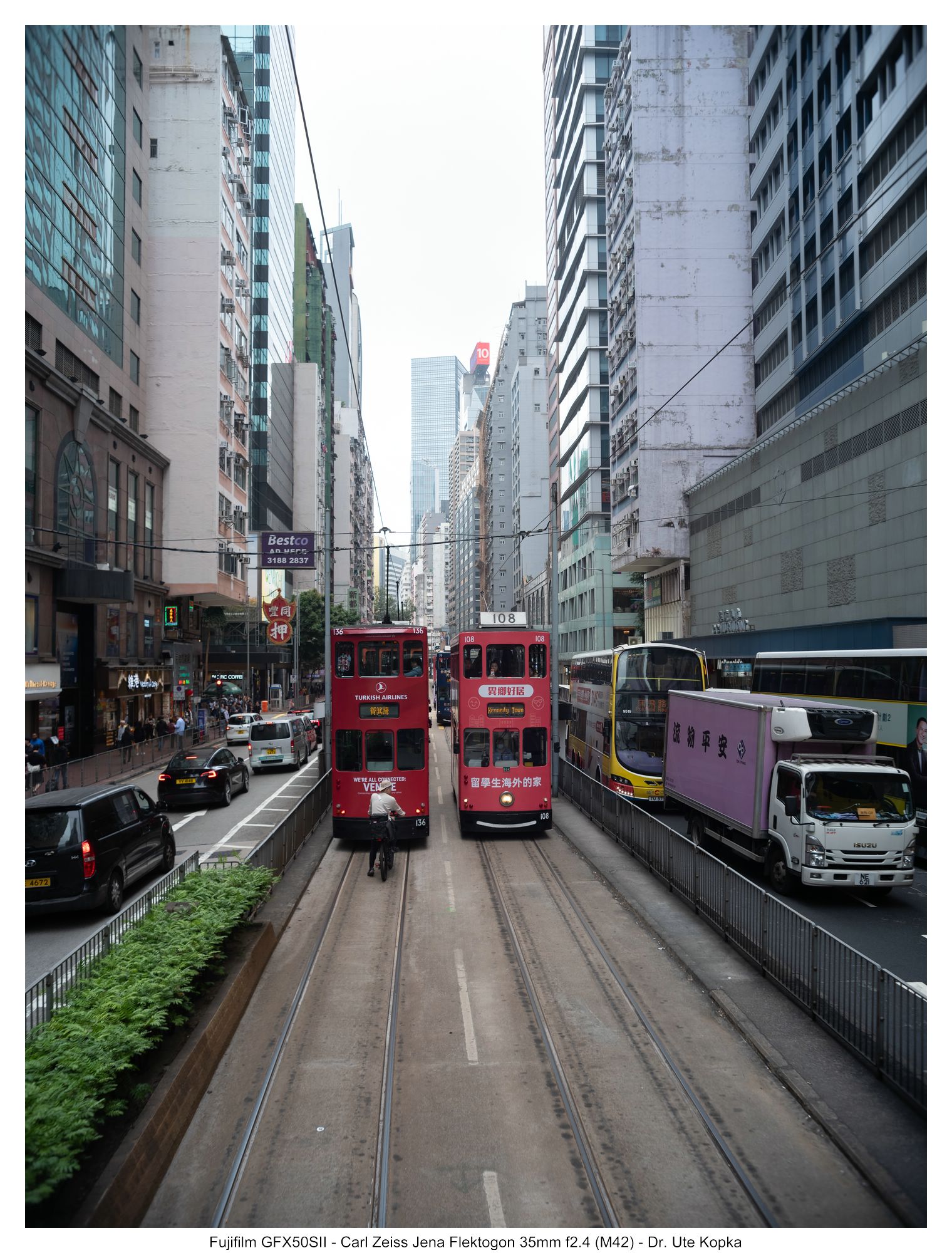
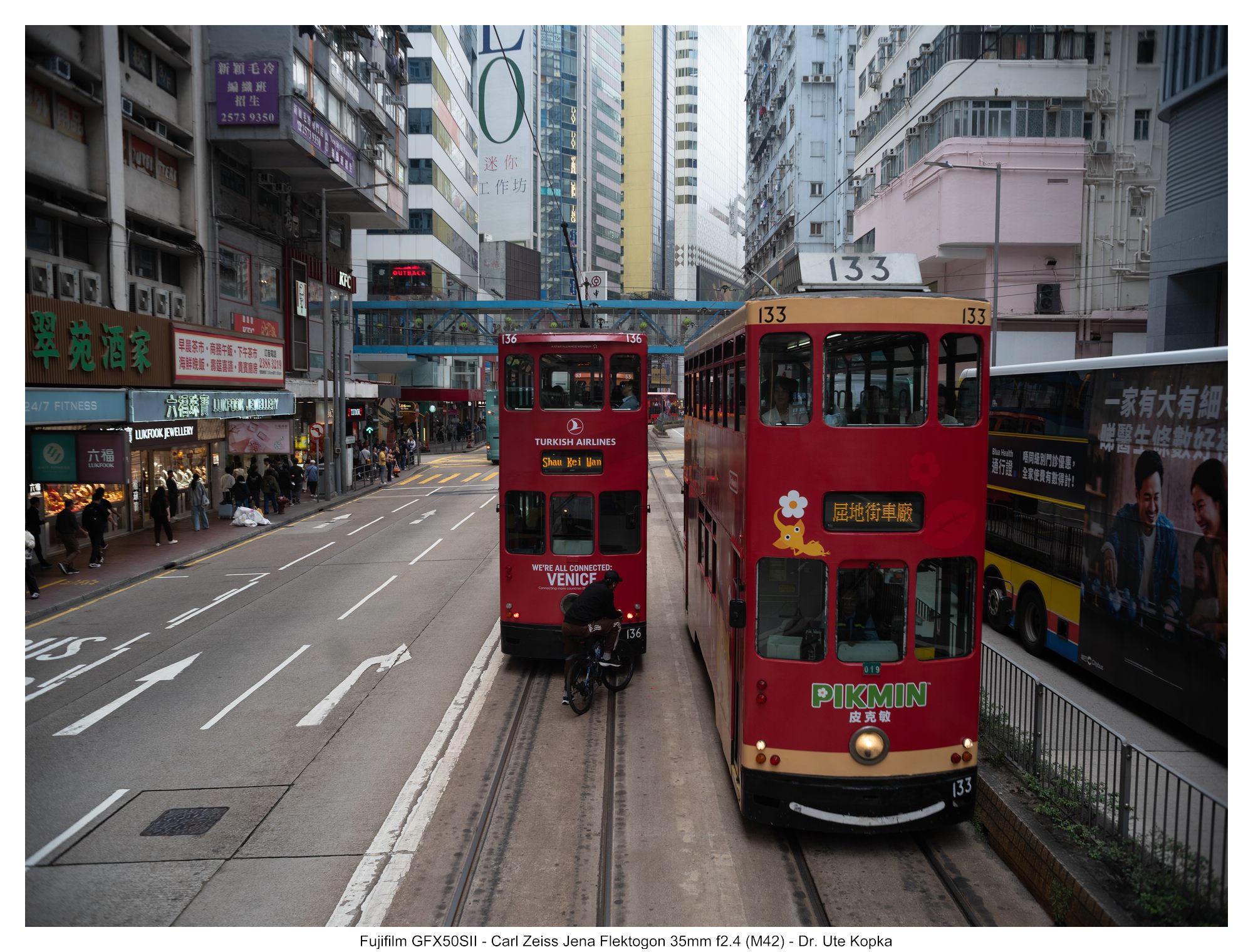
Ute hat auch Langzeitbelichtungen von 15 bis 20 Sekunden von Hongkong bei Nacht aufgenommen bei Blende 8 und 11 vom Stativ aus:
Ute also did long exposures of Hongkong at night of 15 and 20 seconds with the camera mounted on a tripod, at f8 and f11:
...und bei jeder Reise gibt es leider auch den Flug nach Hause:
...and with every trip there is unfortunately also the flight home:
Farbfehler / Chromatic Aberrations
Im Kapitel Farbfehler schlägt sich das Prakticar wacker.
Wie im Schärfe-Kapitel bereits angesprochen, sind in den Bildern Spuren von lateralen chromatischen Aberrationen zu finden.
Etwas genauer lohnt sich die Betrachtung der longitudinalen chromatischen Aberrationen.
Hier das übliche Chrom-Ösen-Testbild mit Vergrößerungen von vor und hinter der Schärfeebene:
In the chapter on color errors, the Prakticar performs well.
As already mentioned in the sharpness chapter, there are traces of lateral chromatic aberrations in the images.
It is worth taking a closer look at longitudinal chromatic aberrations.
Here is the usual chrome ooze test image with magnifications from in front of and behind the focal plane:
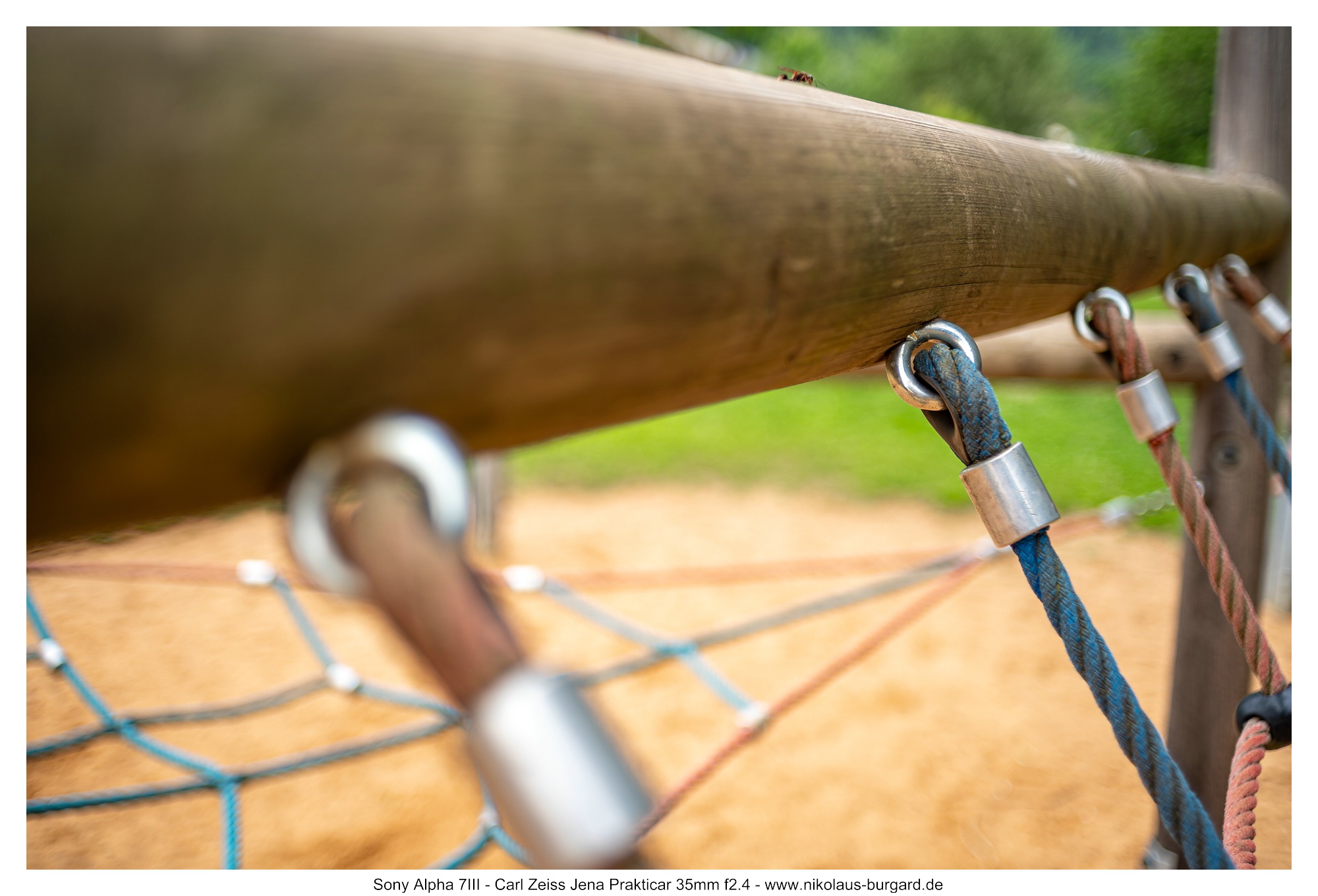
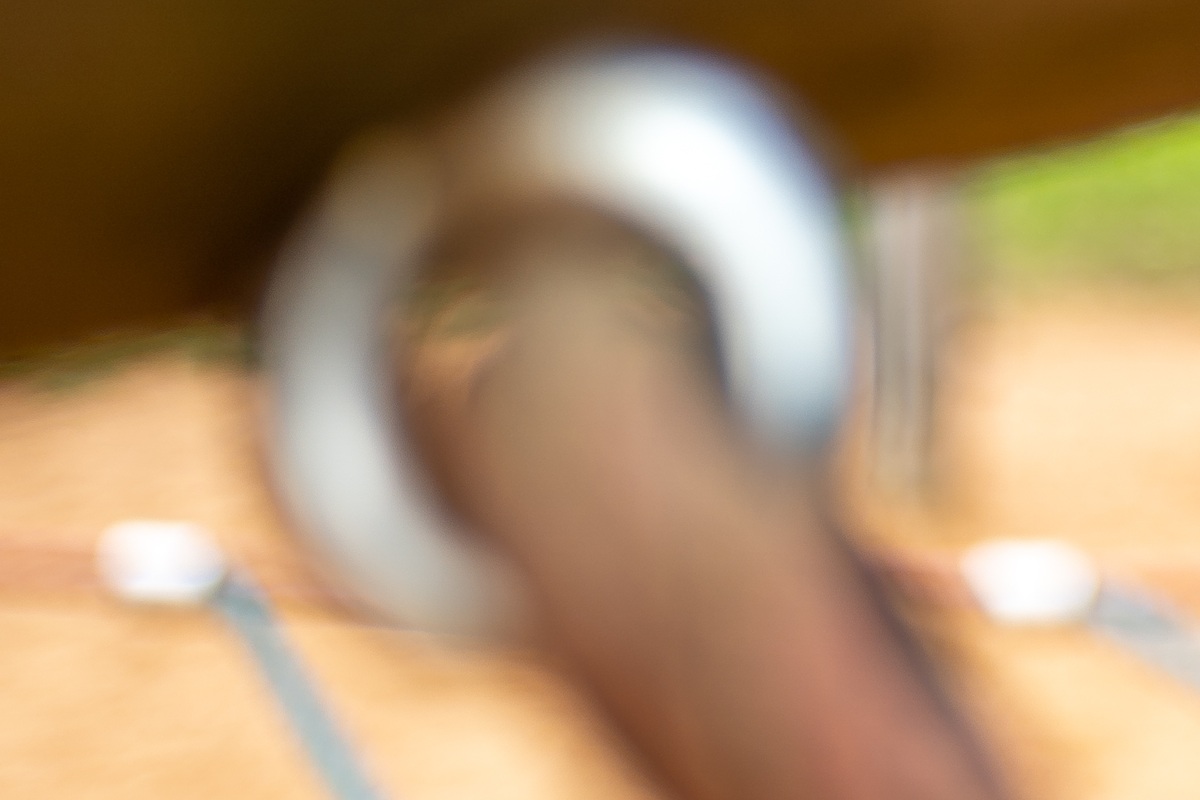
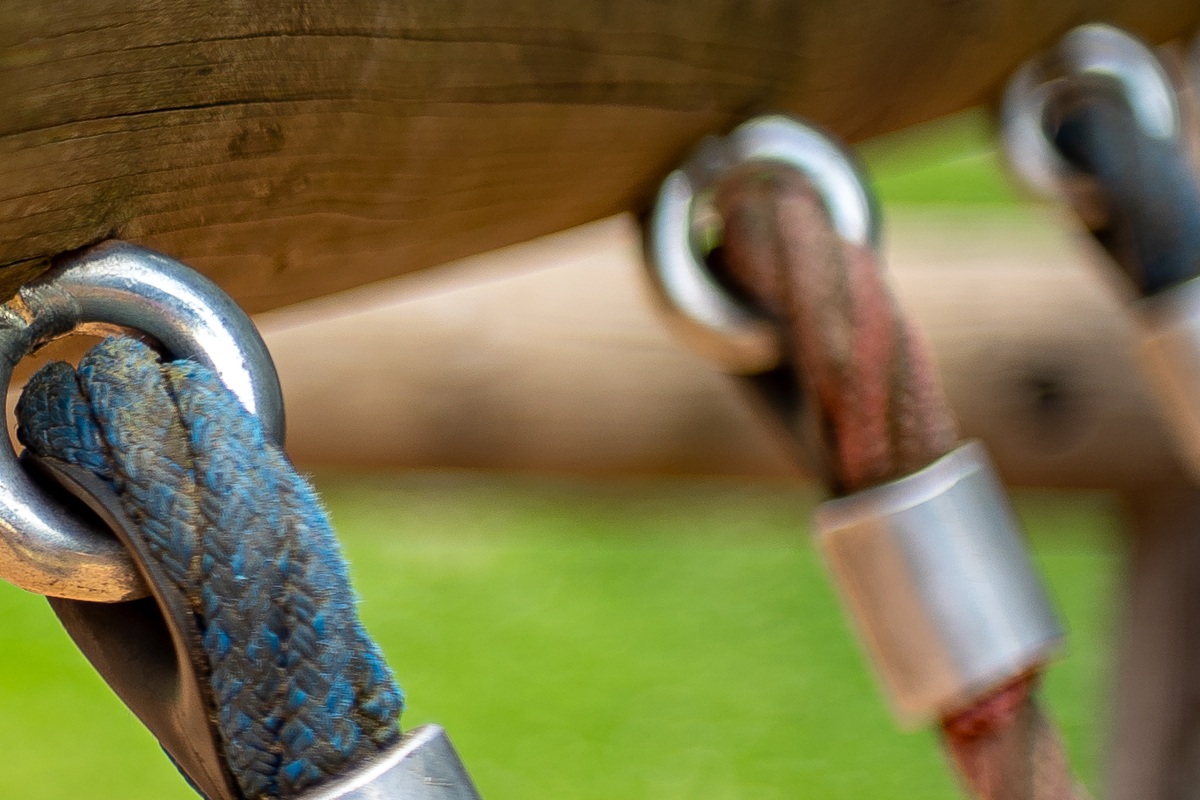


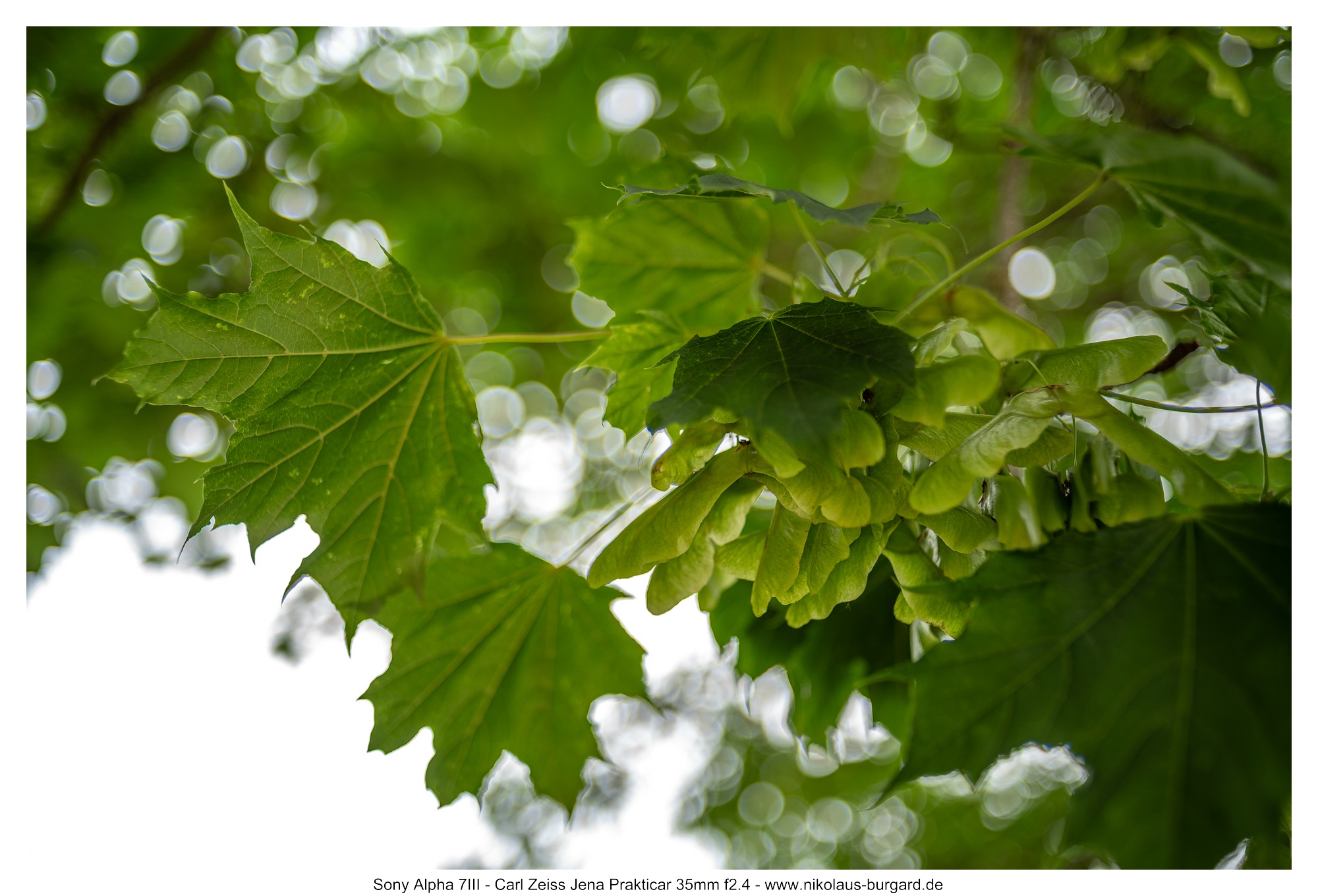
Während es vor der Schärfeebene kaum Spuren von magenta gibt, ist das grüne Bokeh-Fringing etwas auffälliger hier in der Vergrößerung.
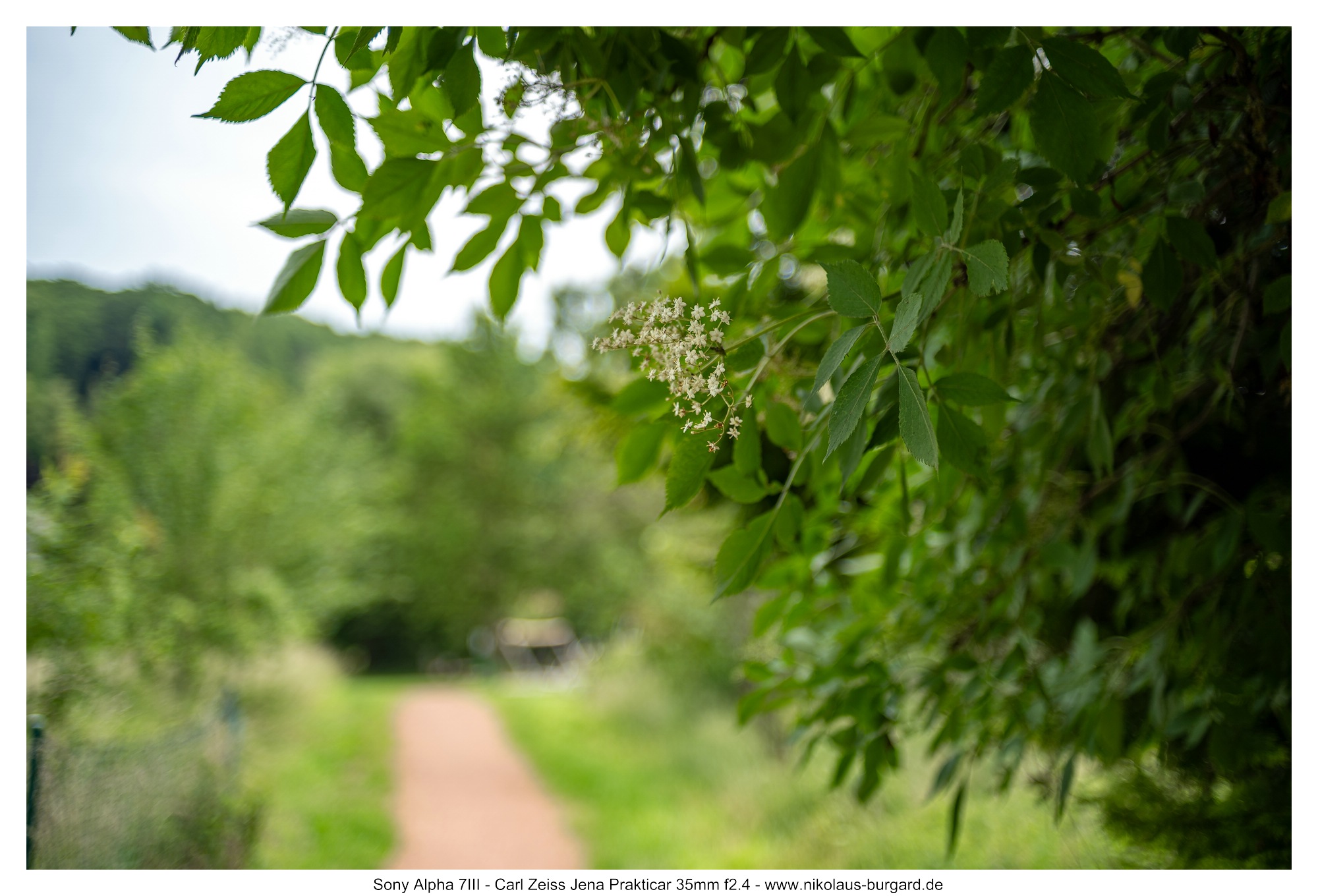
Bei "Real-Life"-Bildern sind Farbfehler wirklich selten ein Thema, am ehesten sieht man Spuren von Bokeh-Fringing bei Blättern gegen den hellen Himmel.
Der Worst Case ist das, was ihr im letzten Bild seht (die Magenta-Spuren vor der Schärfeebene bei den oberen Blättern), und diesen Fall hatte ich in all den Jahren nur bei diesem Bild.
While there are hardly any traces of magenta before the focus plane, the green bokeh fringing is a little more noticeable here in the
magnification.
With "Real-Life" images, color errors are really rarely a topic, most likely you can see traces of bokeh-fringing in leaves against the bright
sky.
The worst case is what you see in the last picture (the magenta traces before the sharpness level at the upper leaves), and I have only had this case in this
picture in all these years.
Bildserie: Der alte Kalksteinbruch bei Alsting / Picture Series: The former limestone quarry in Alsting
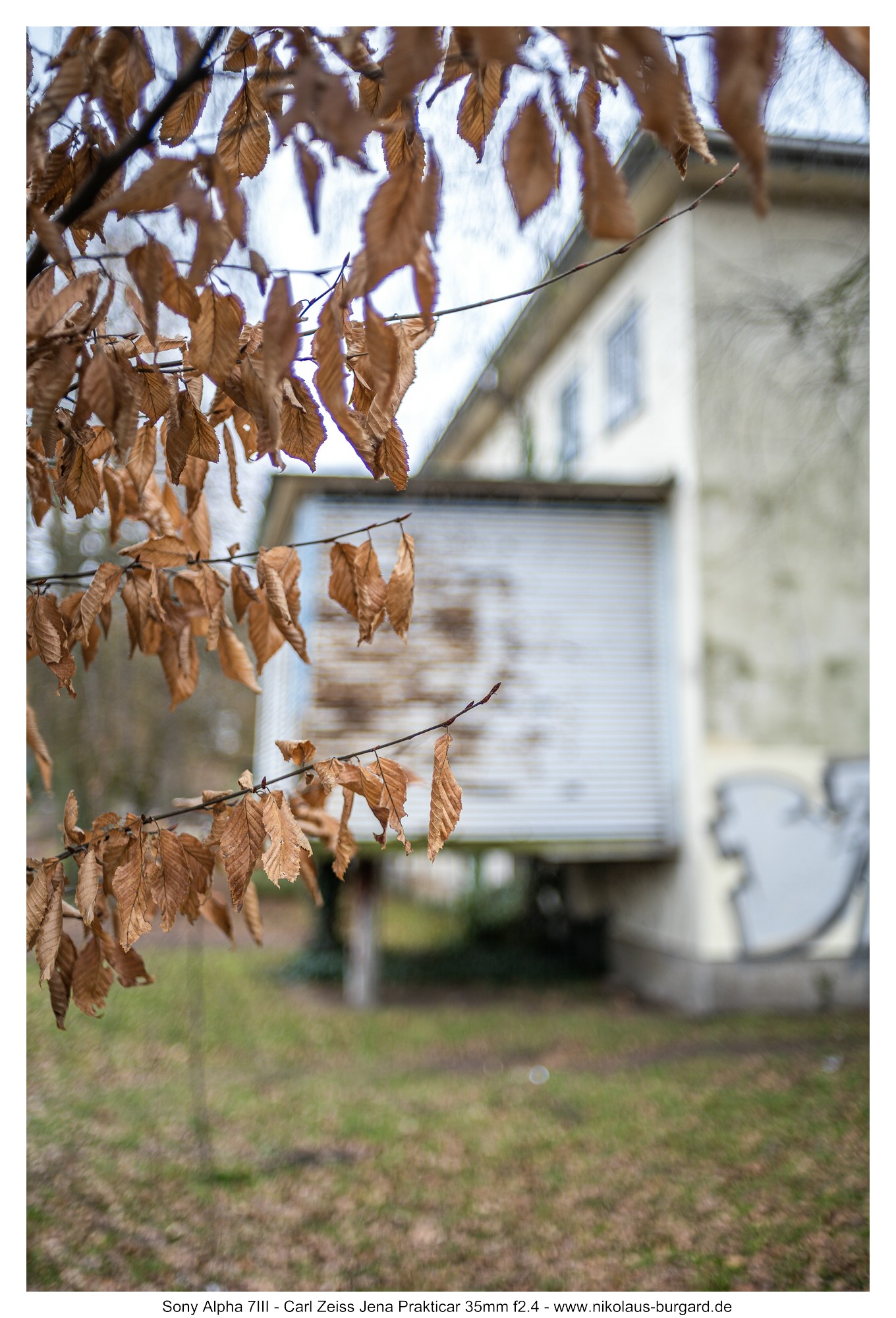
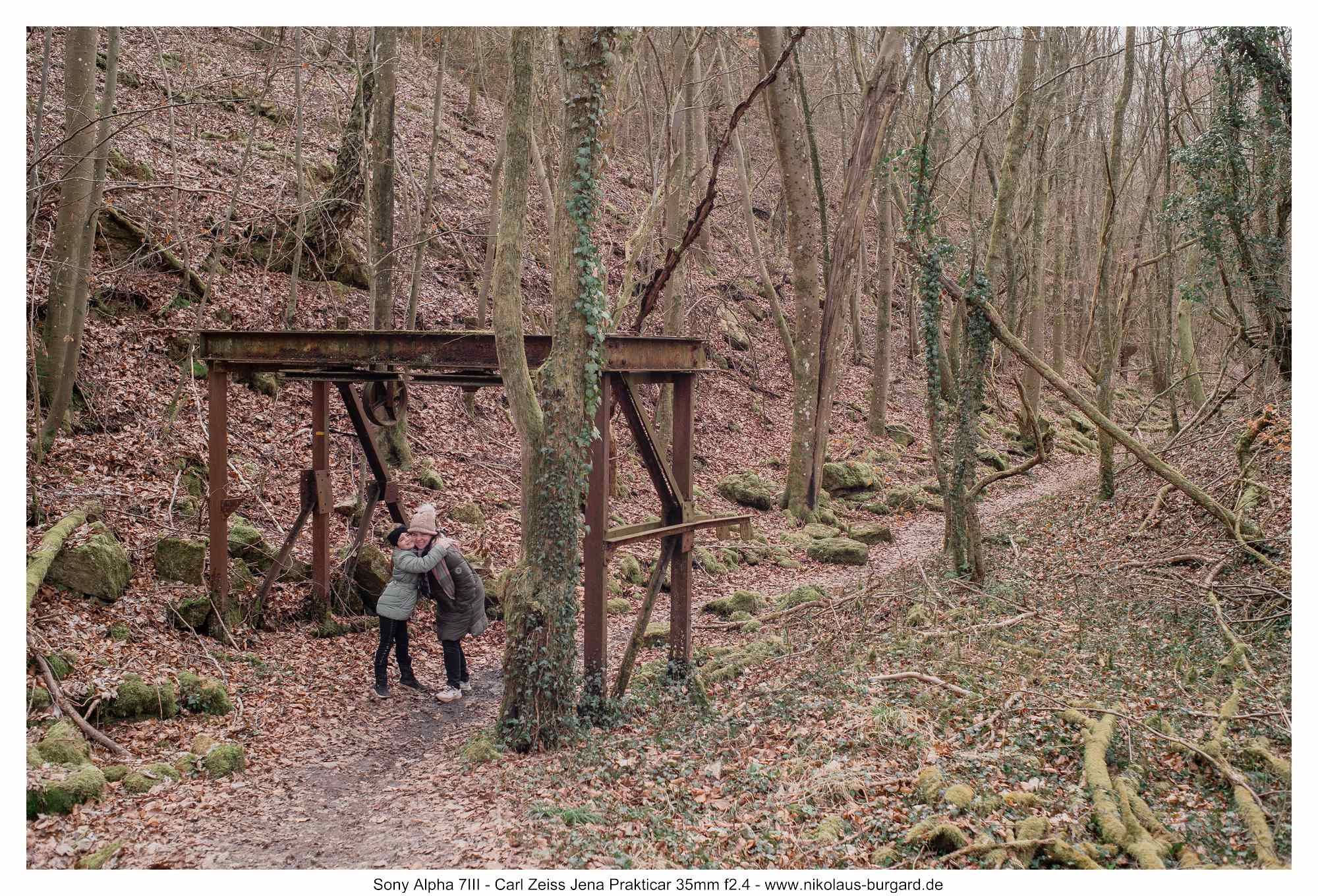
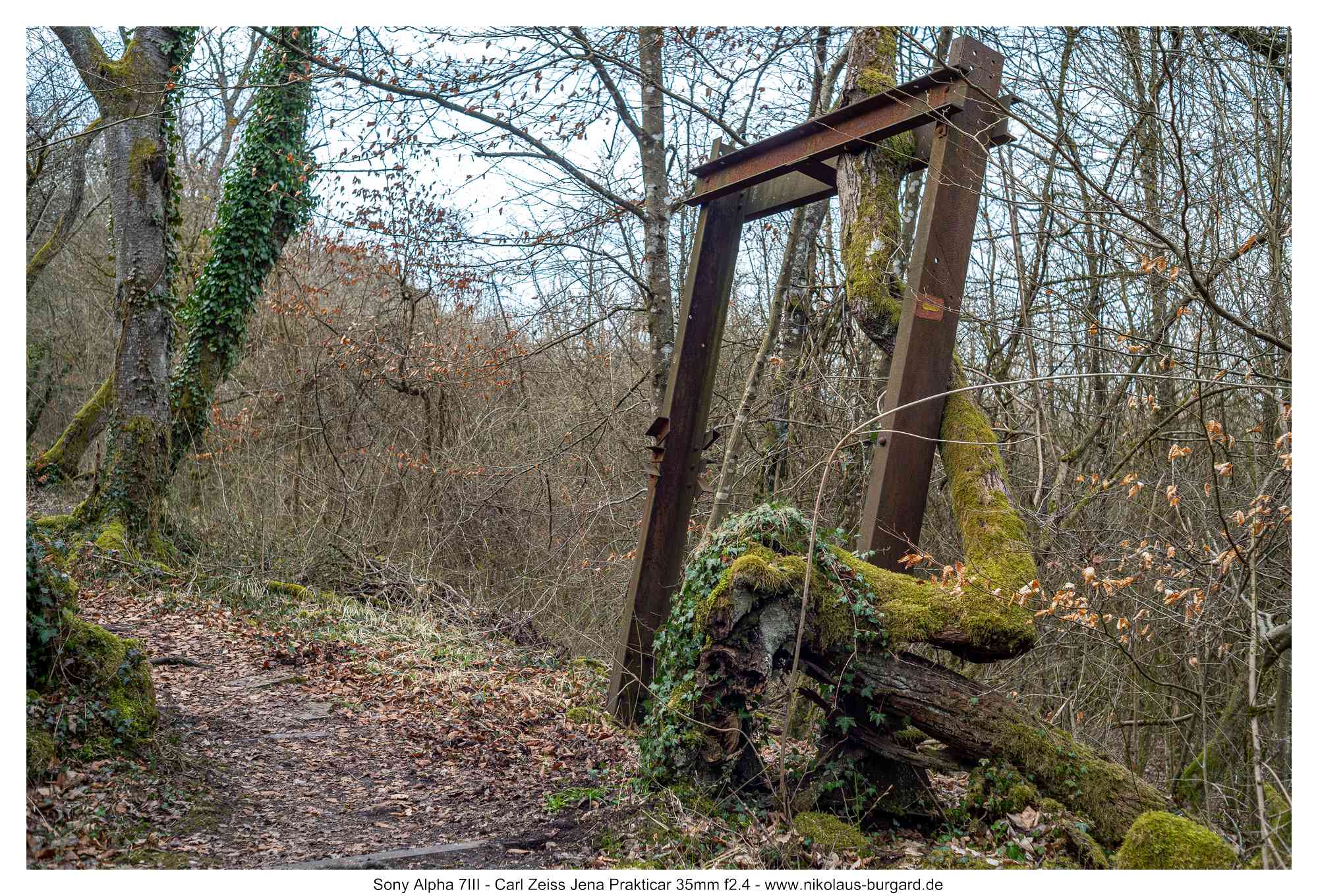
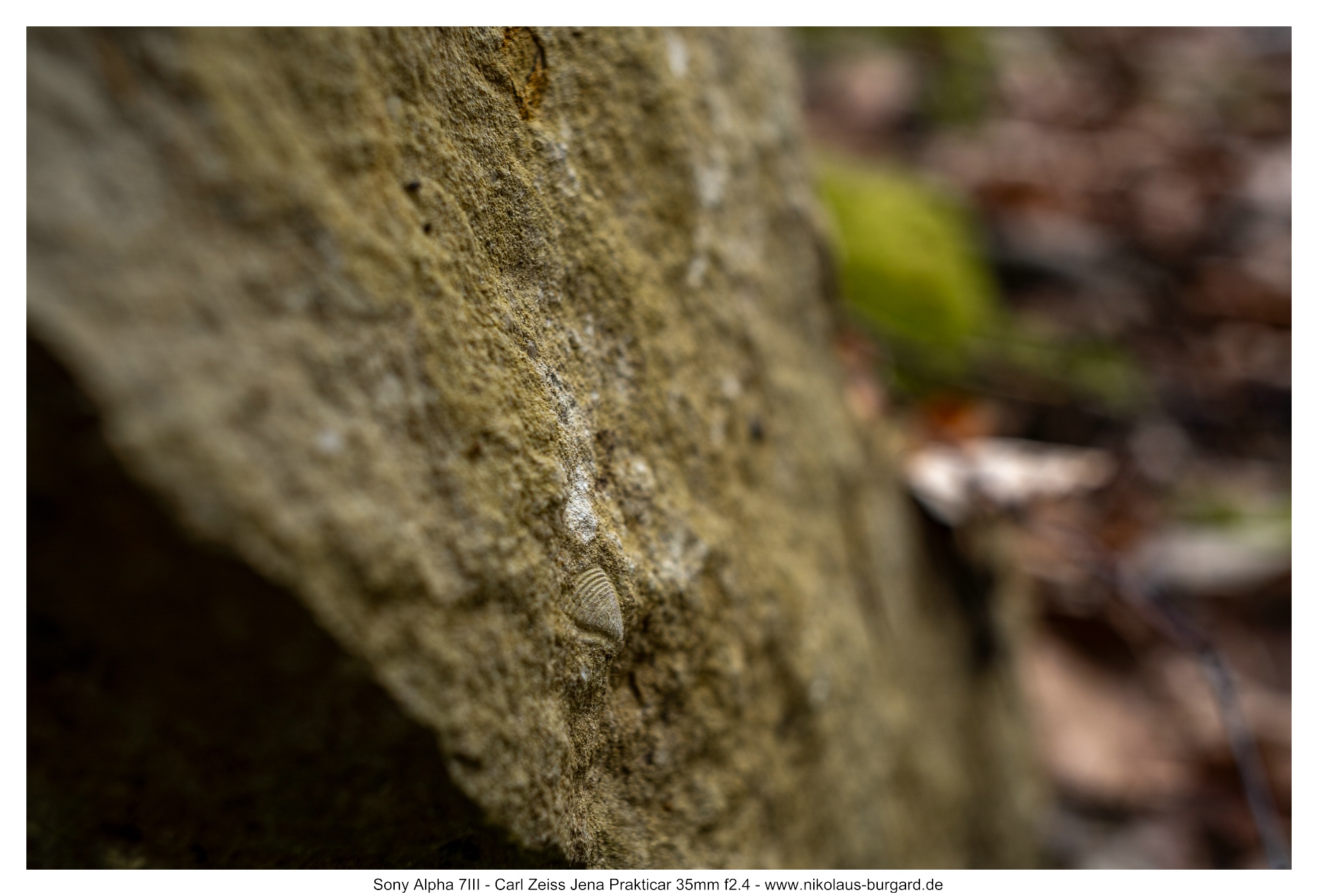
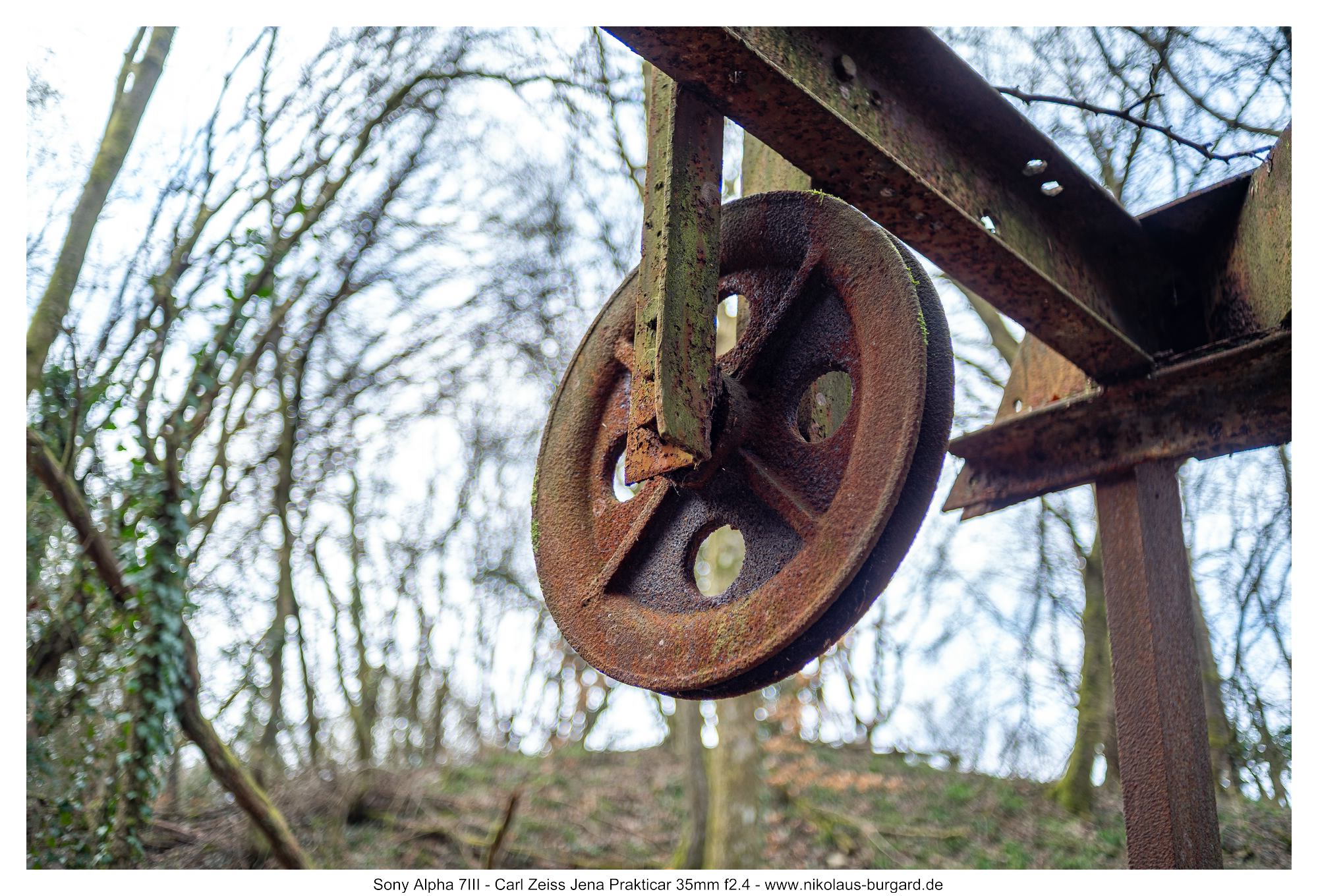
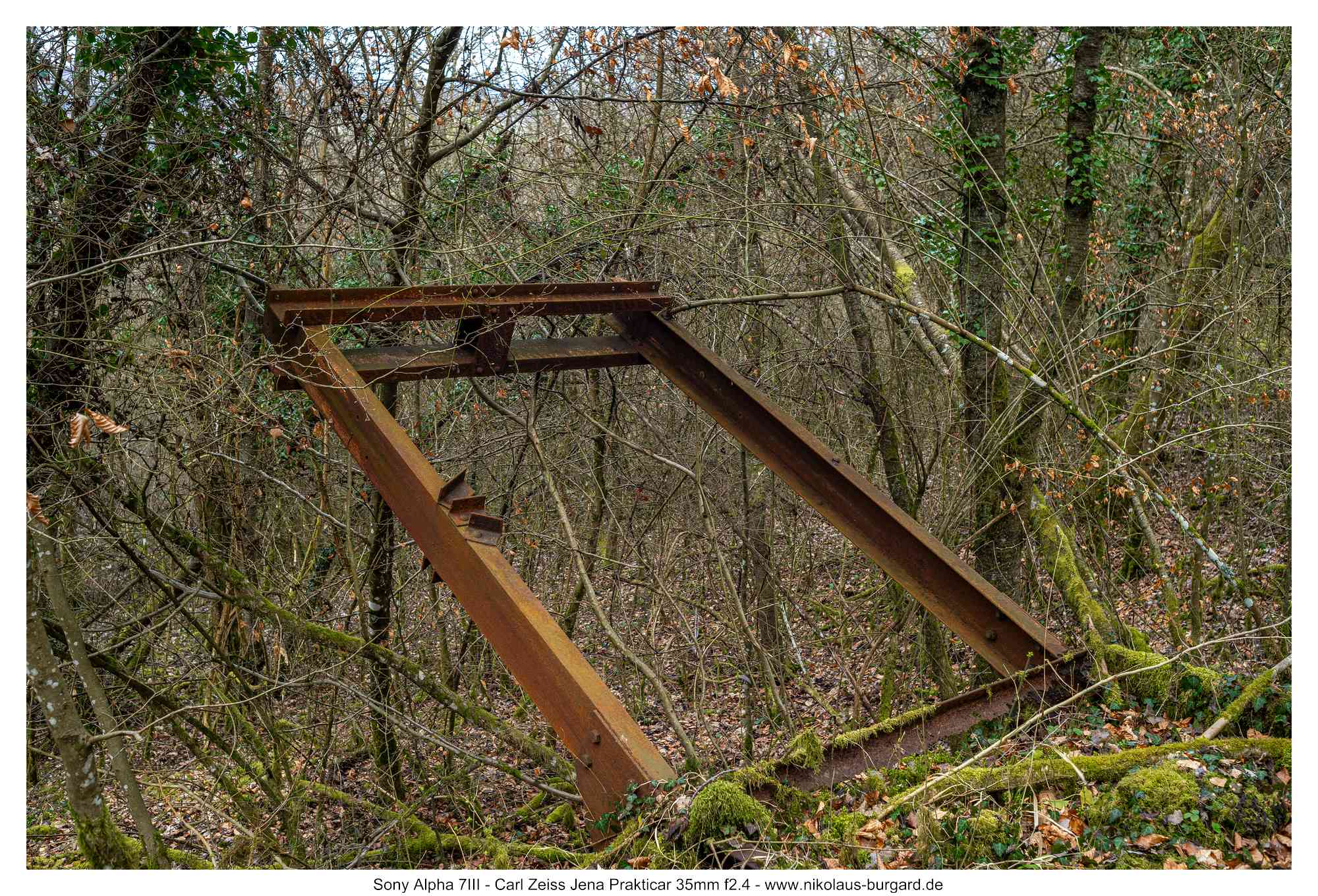
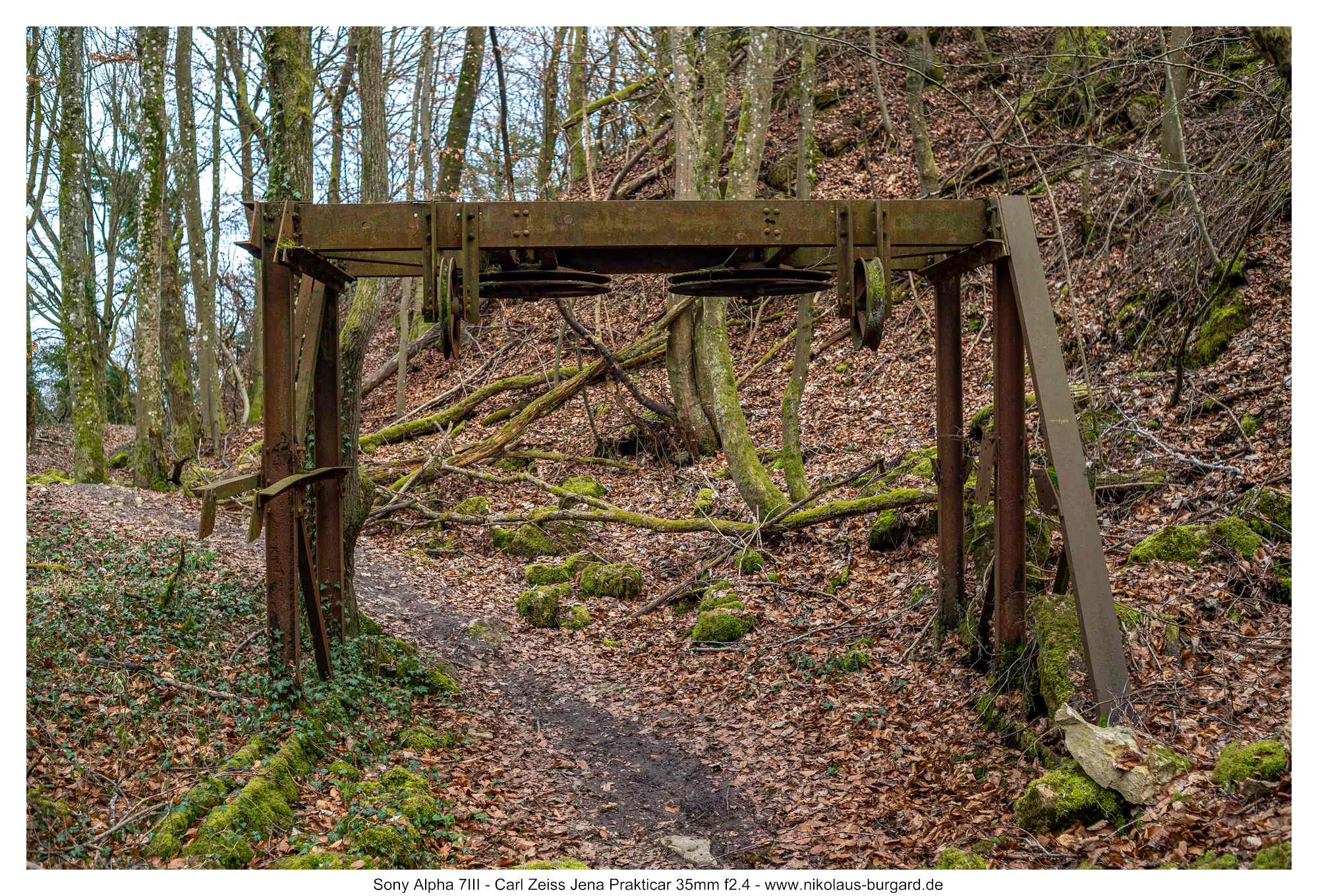
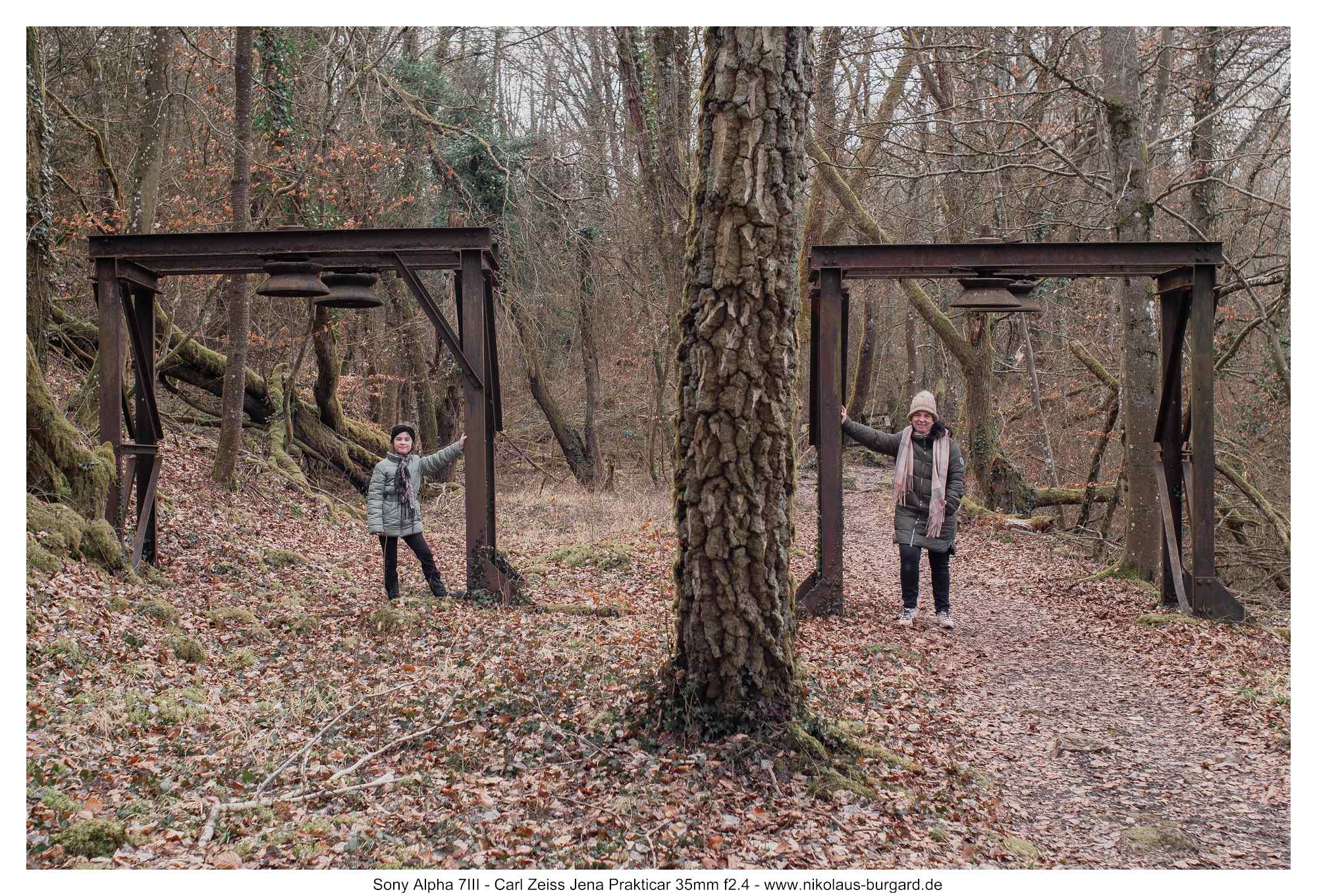
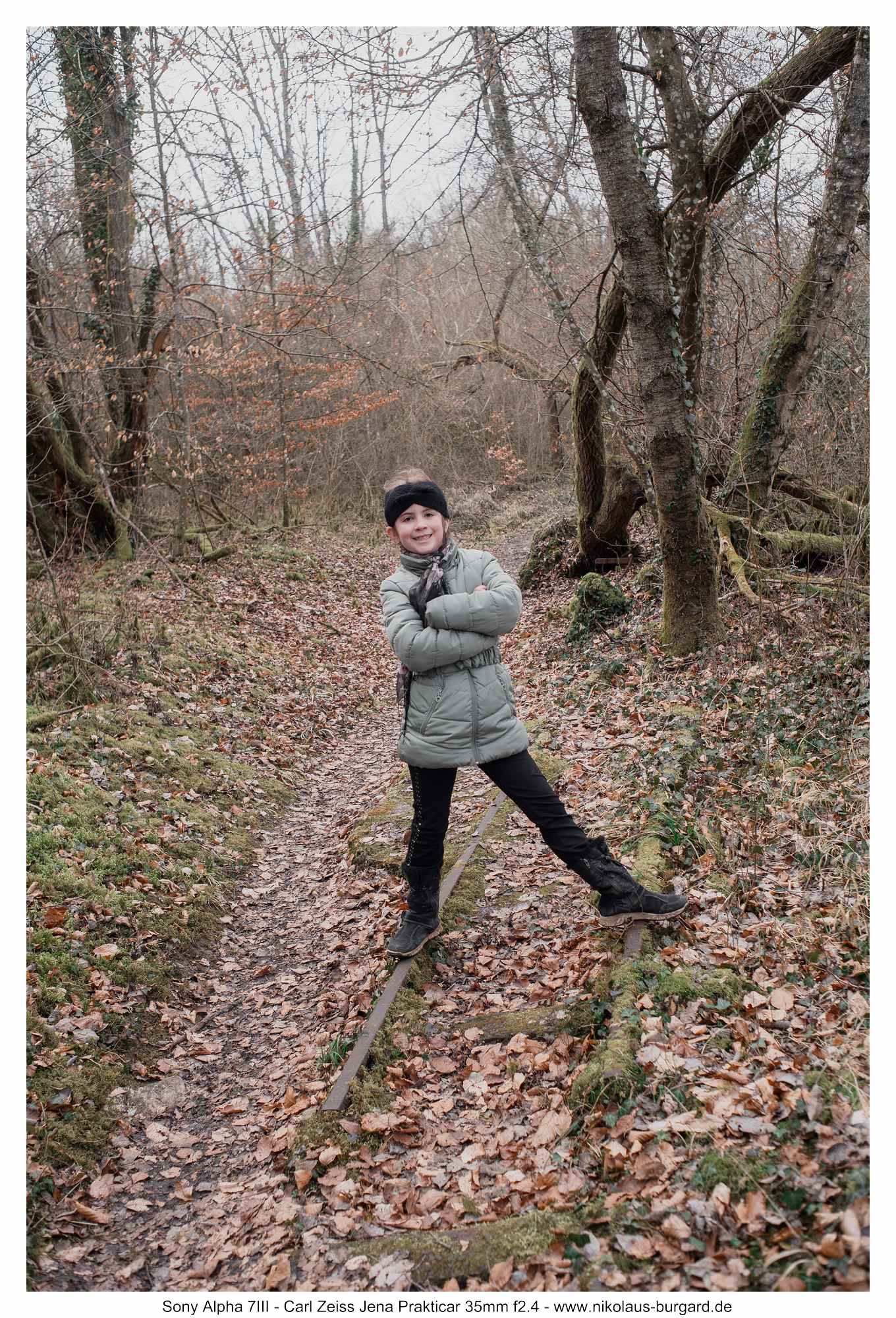
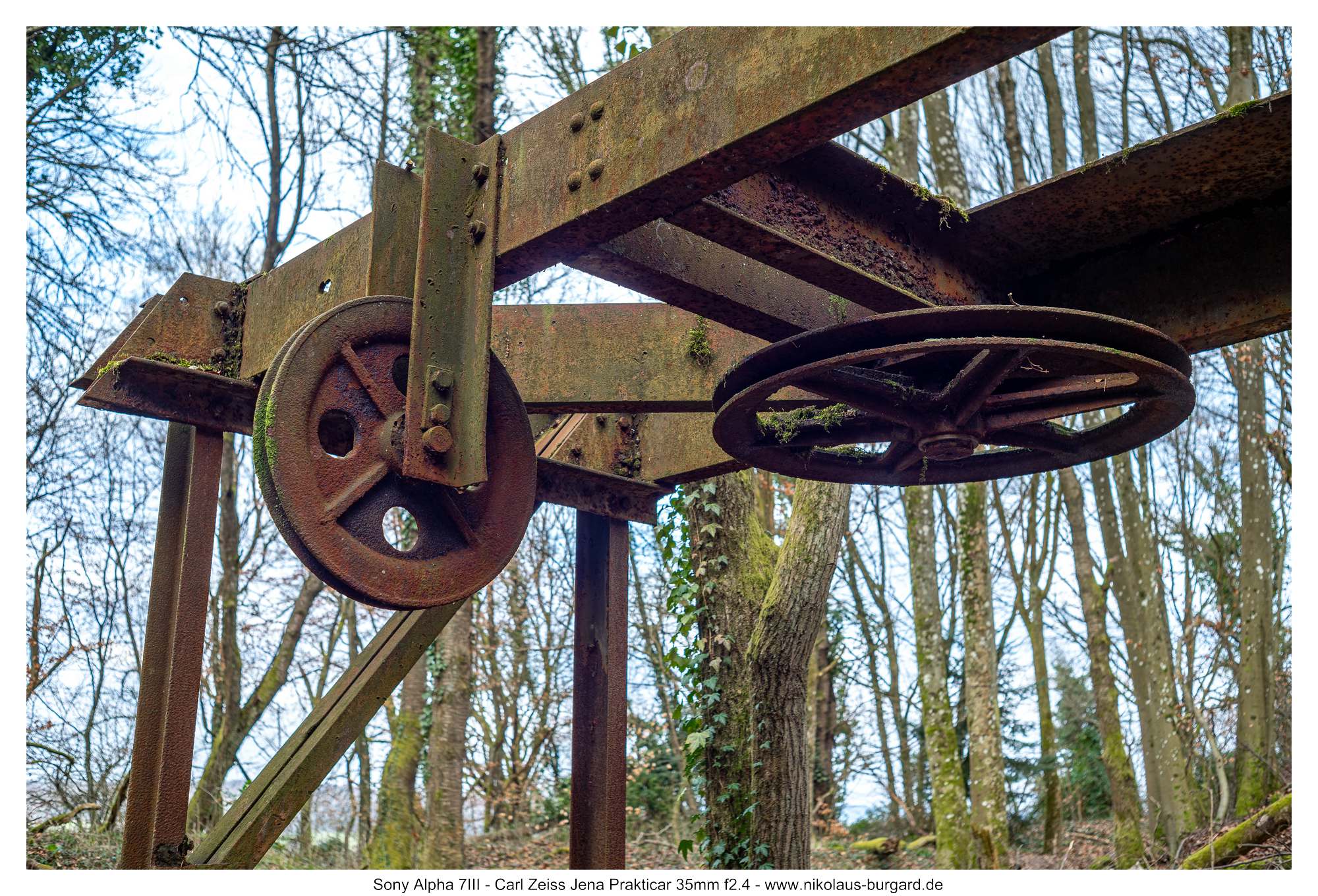
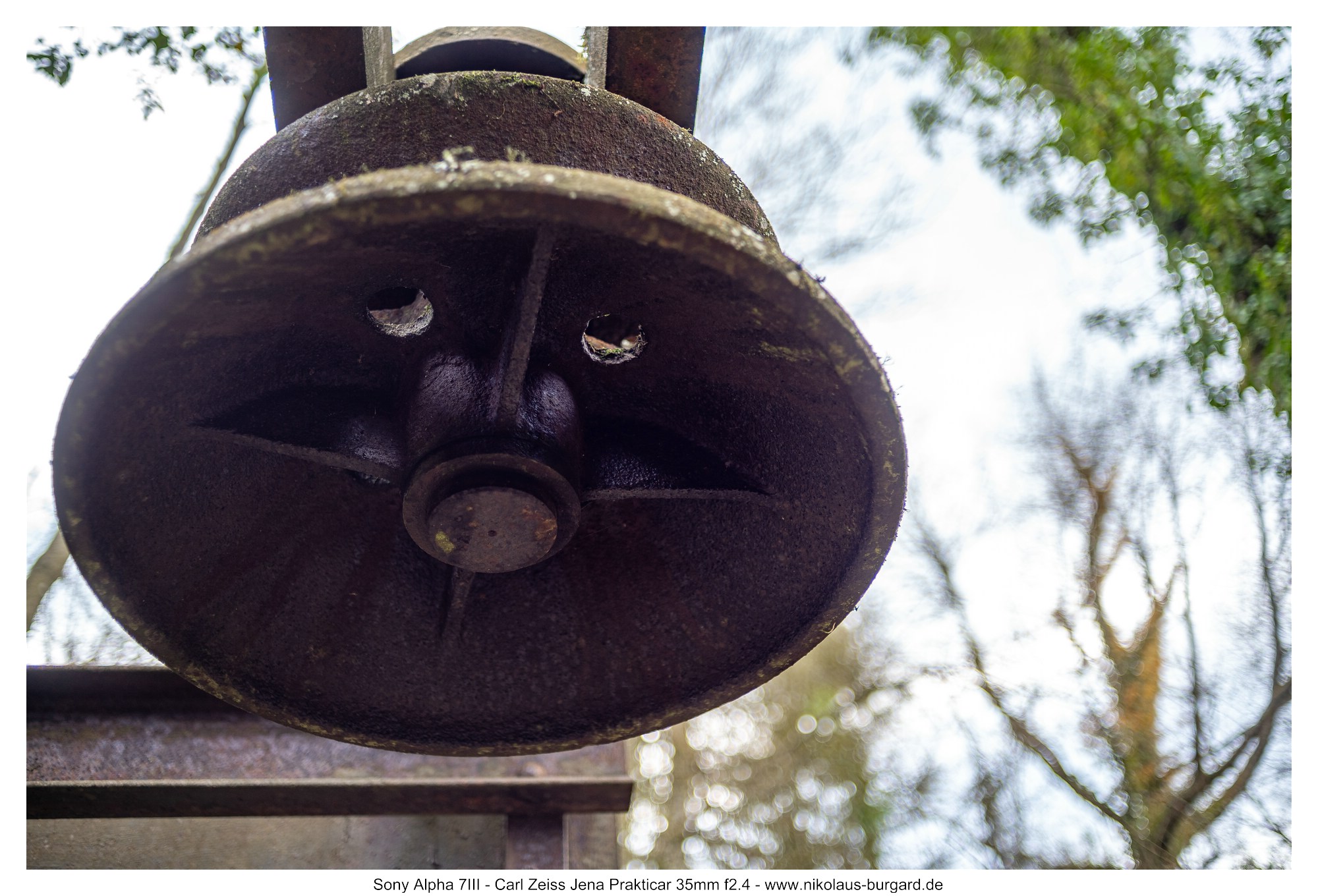
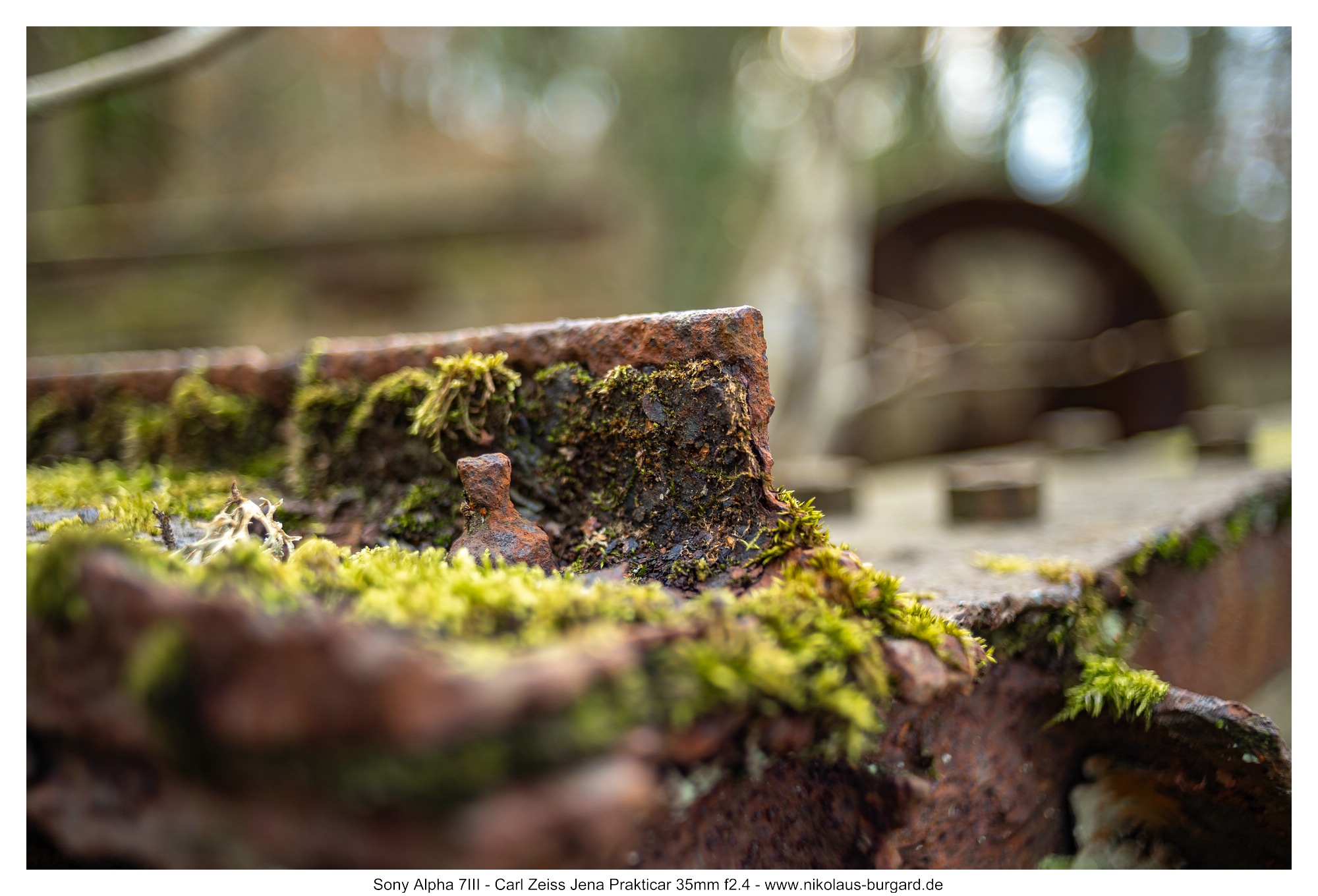
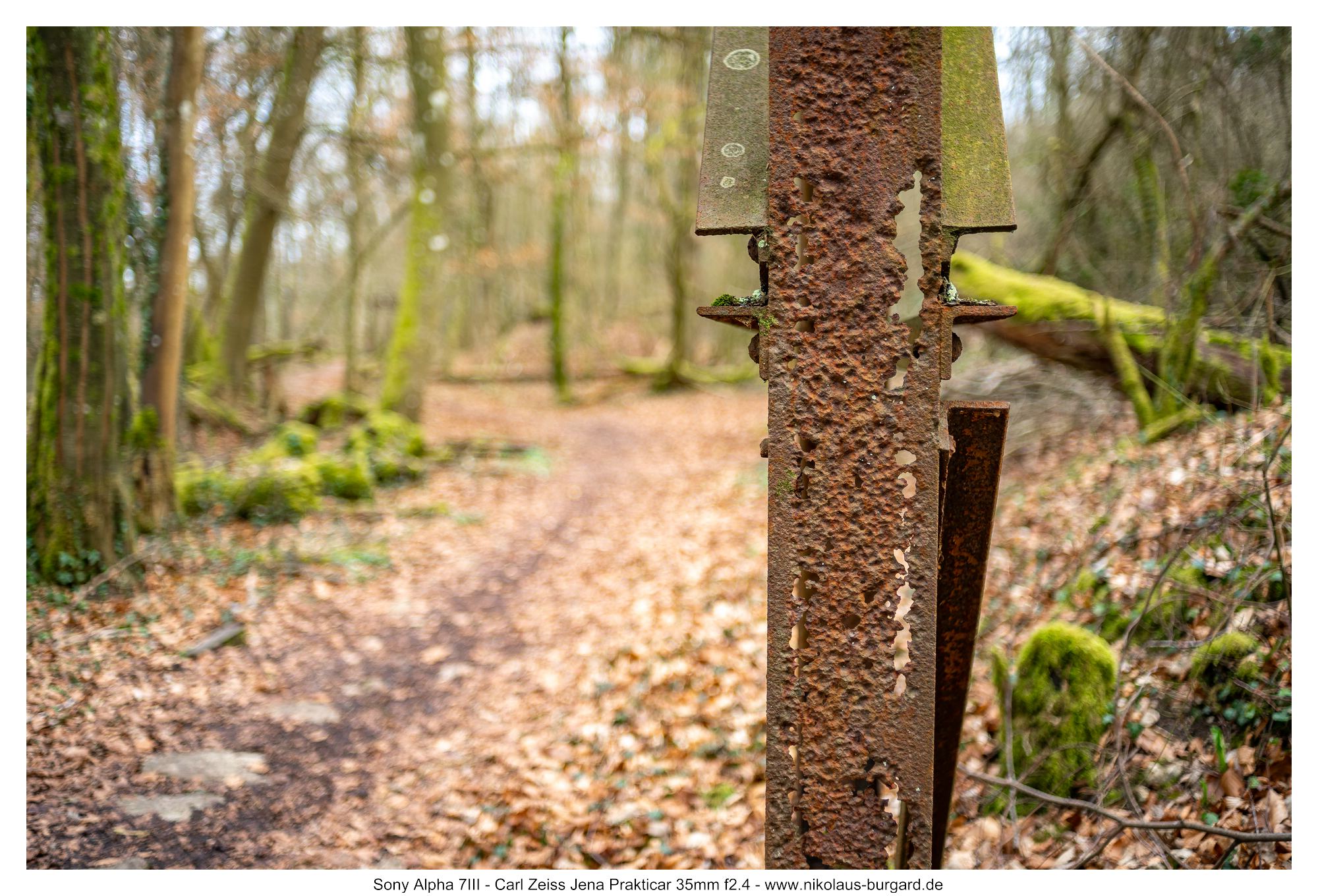
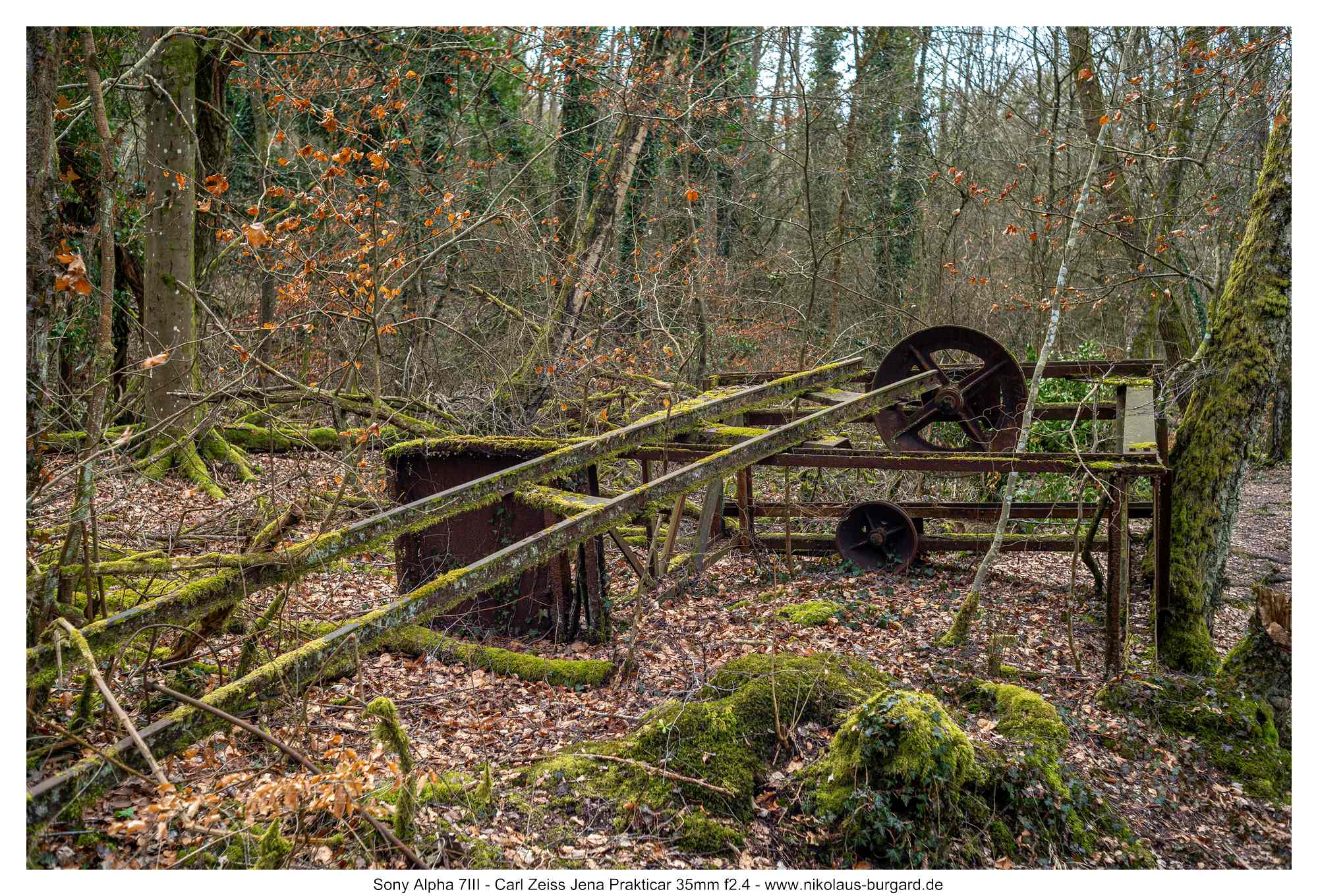
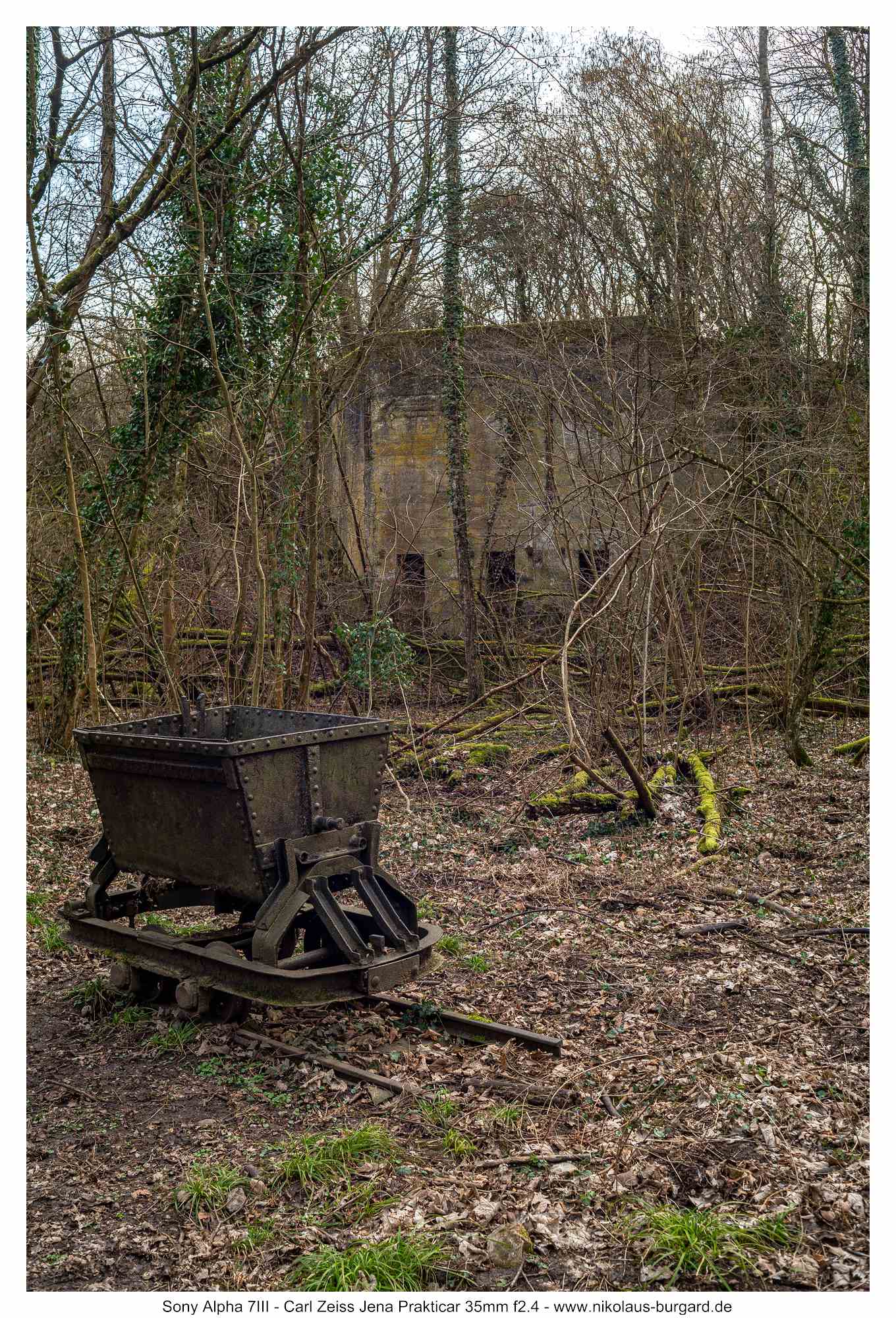
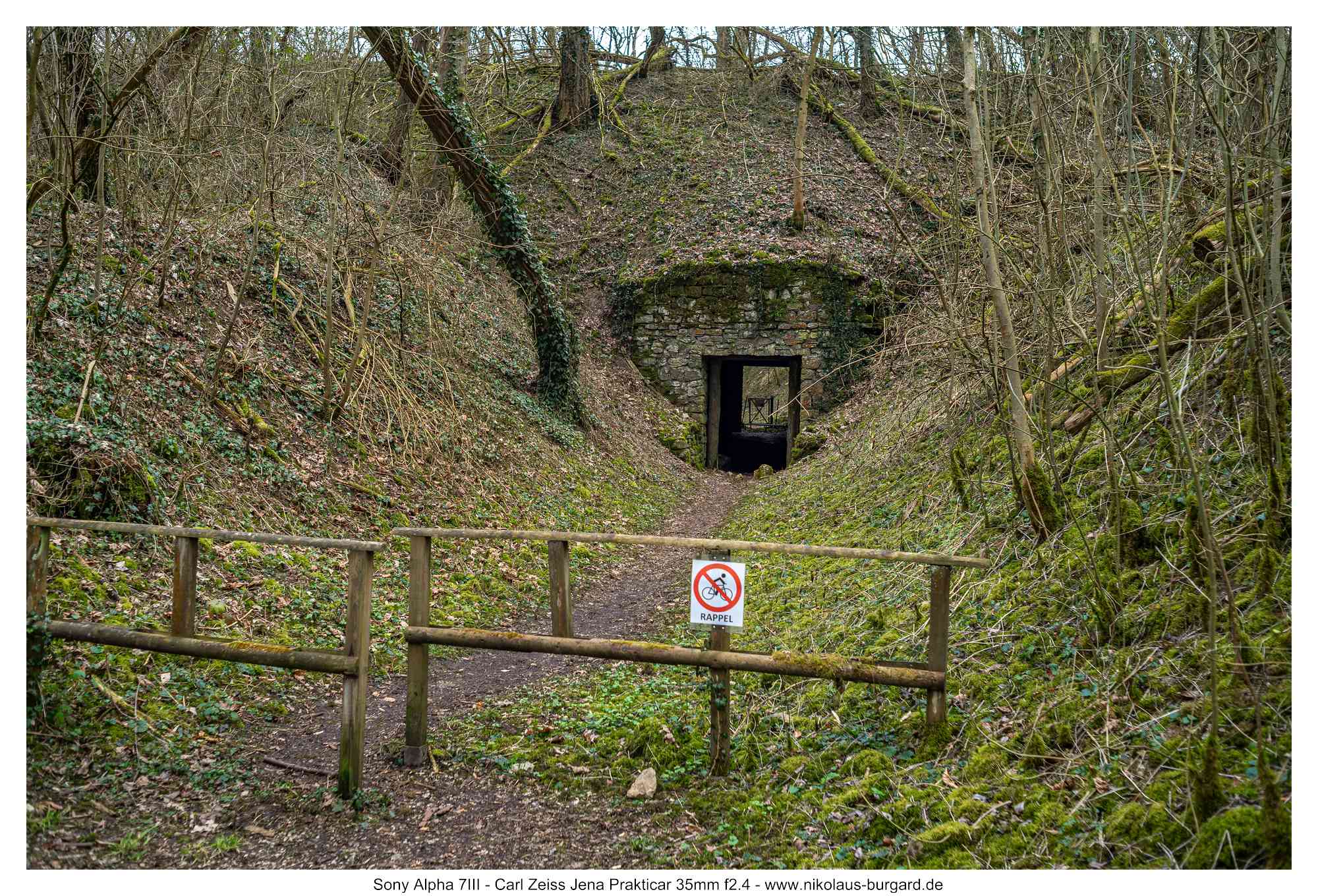
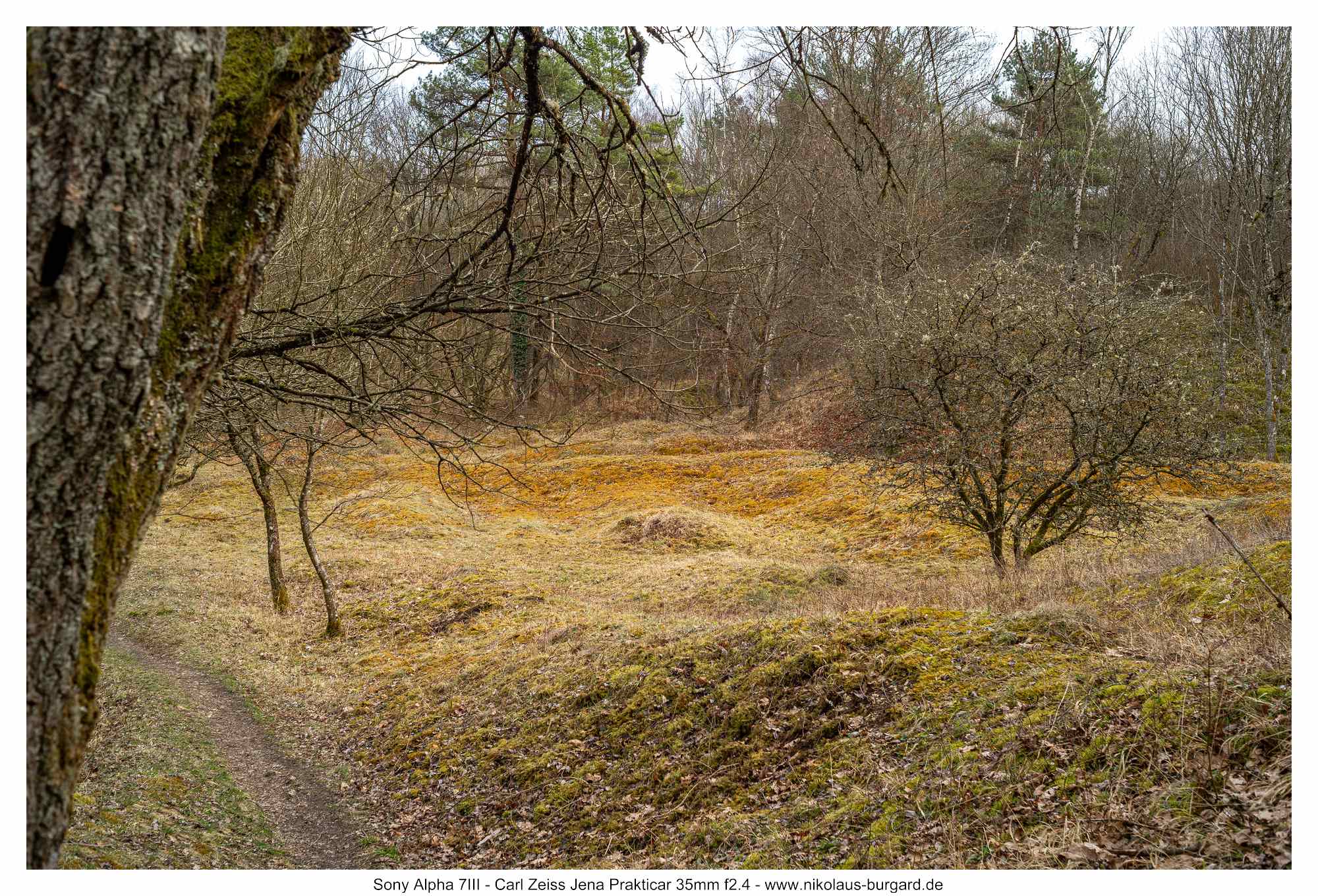
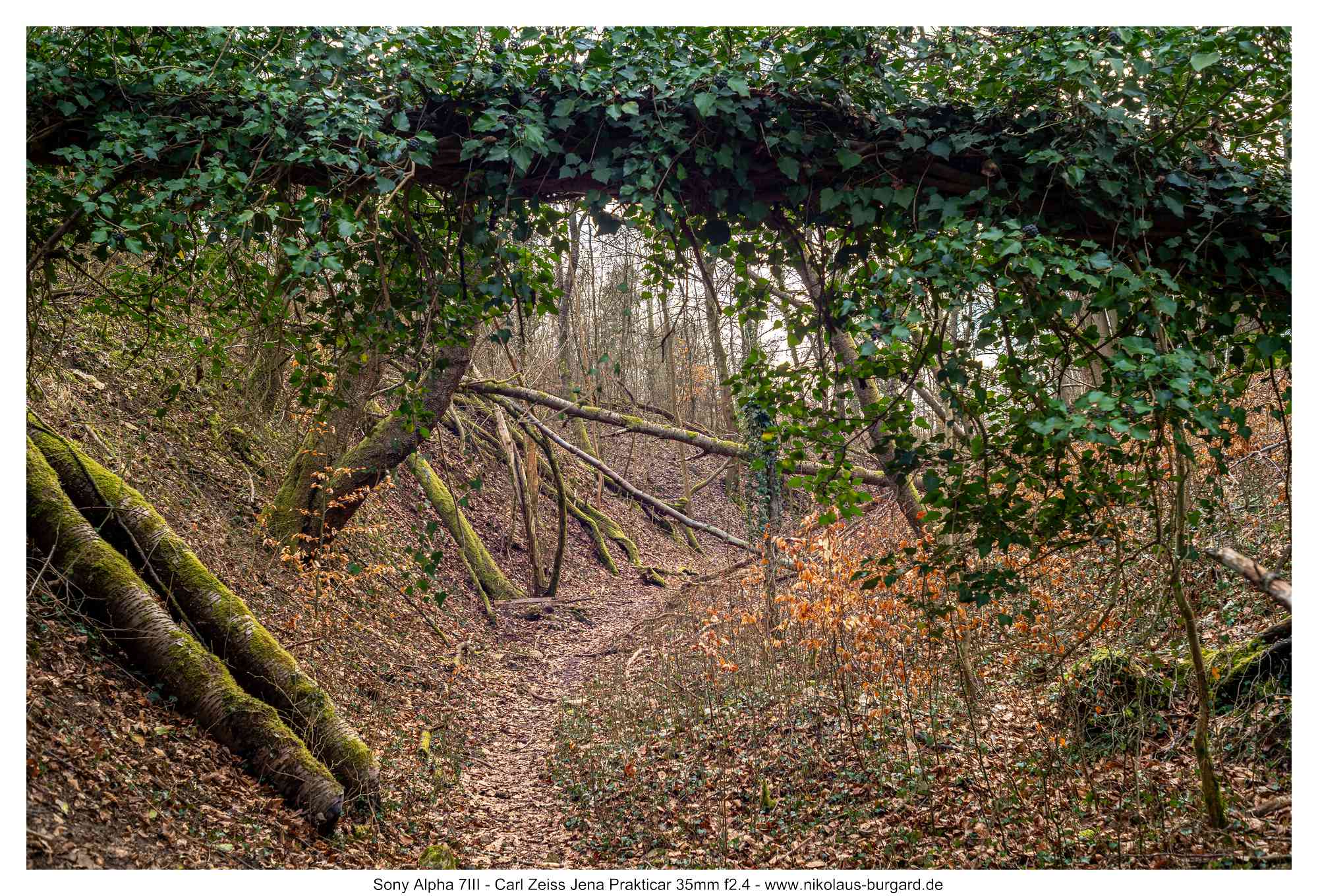
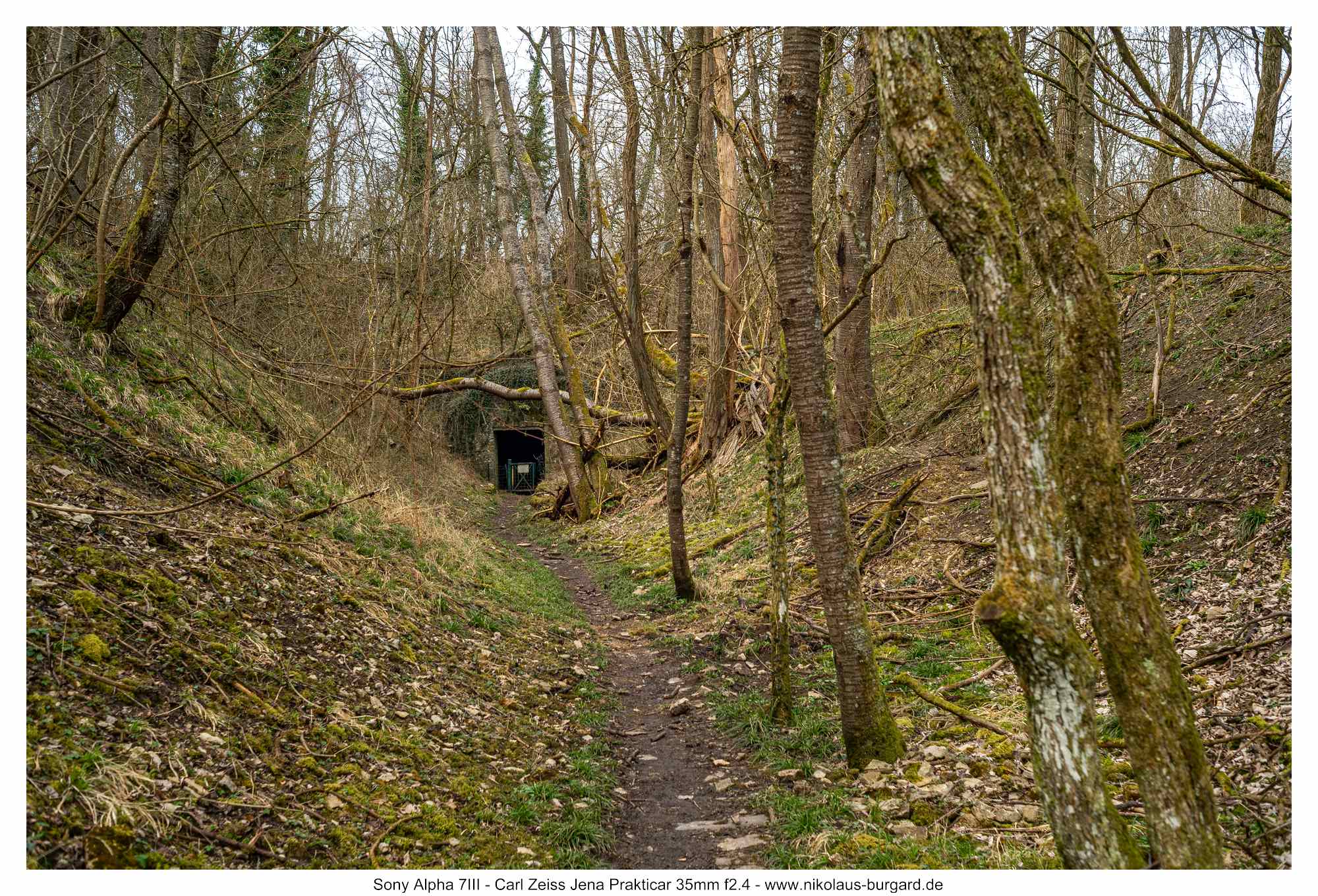
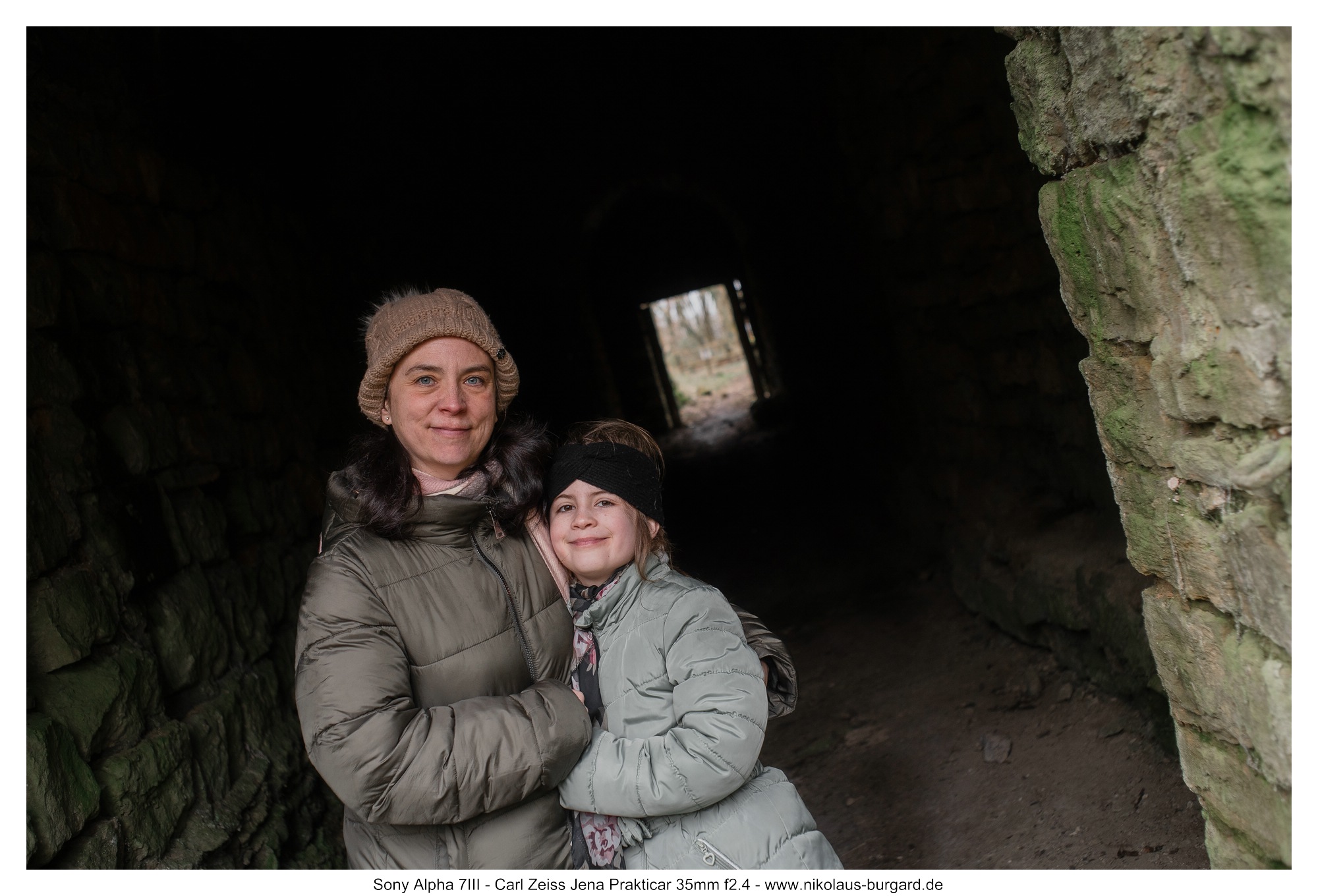
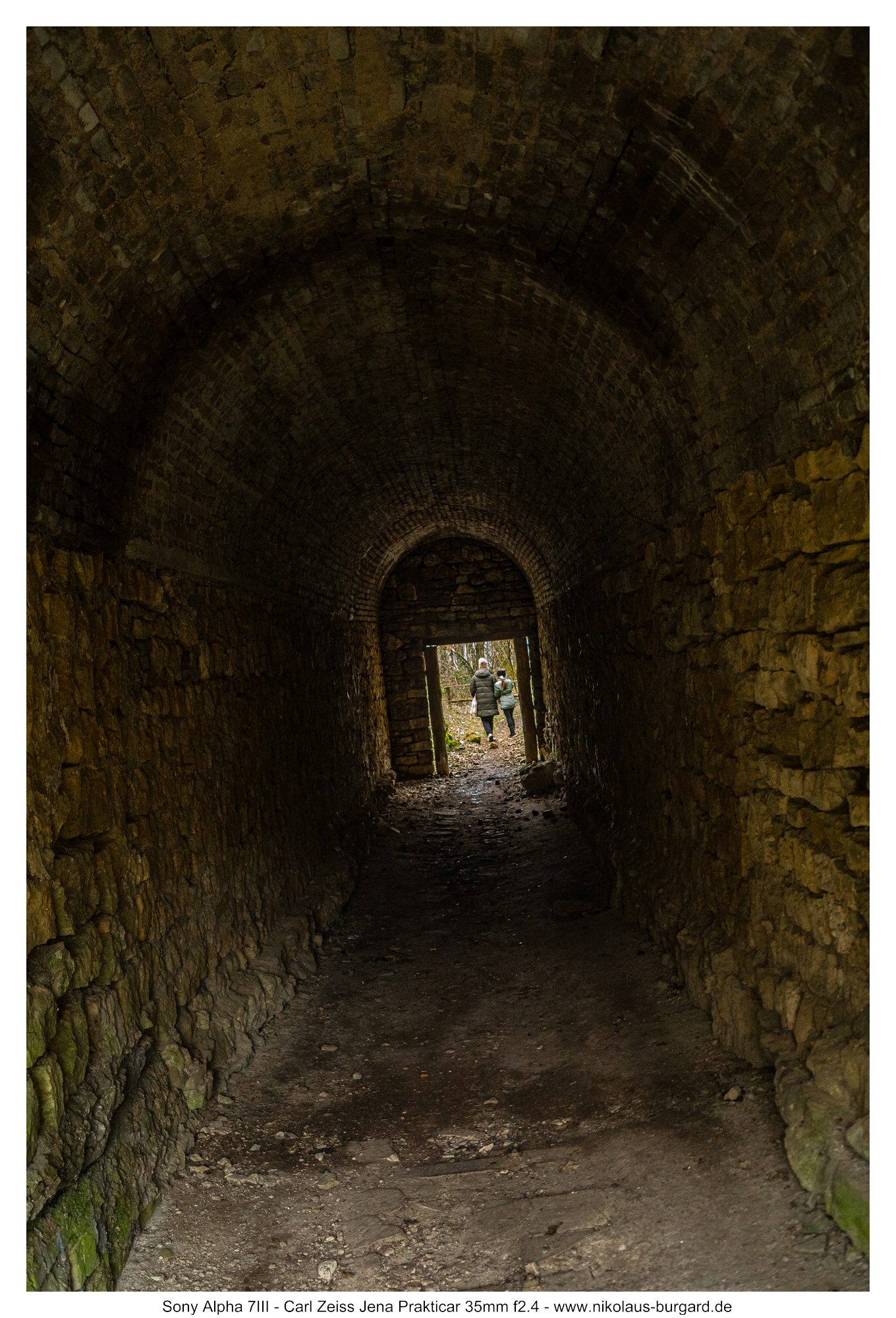
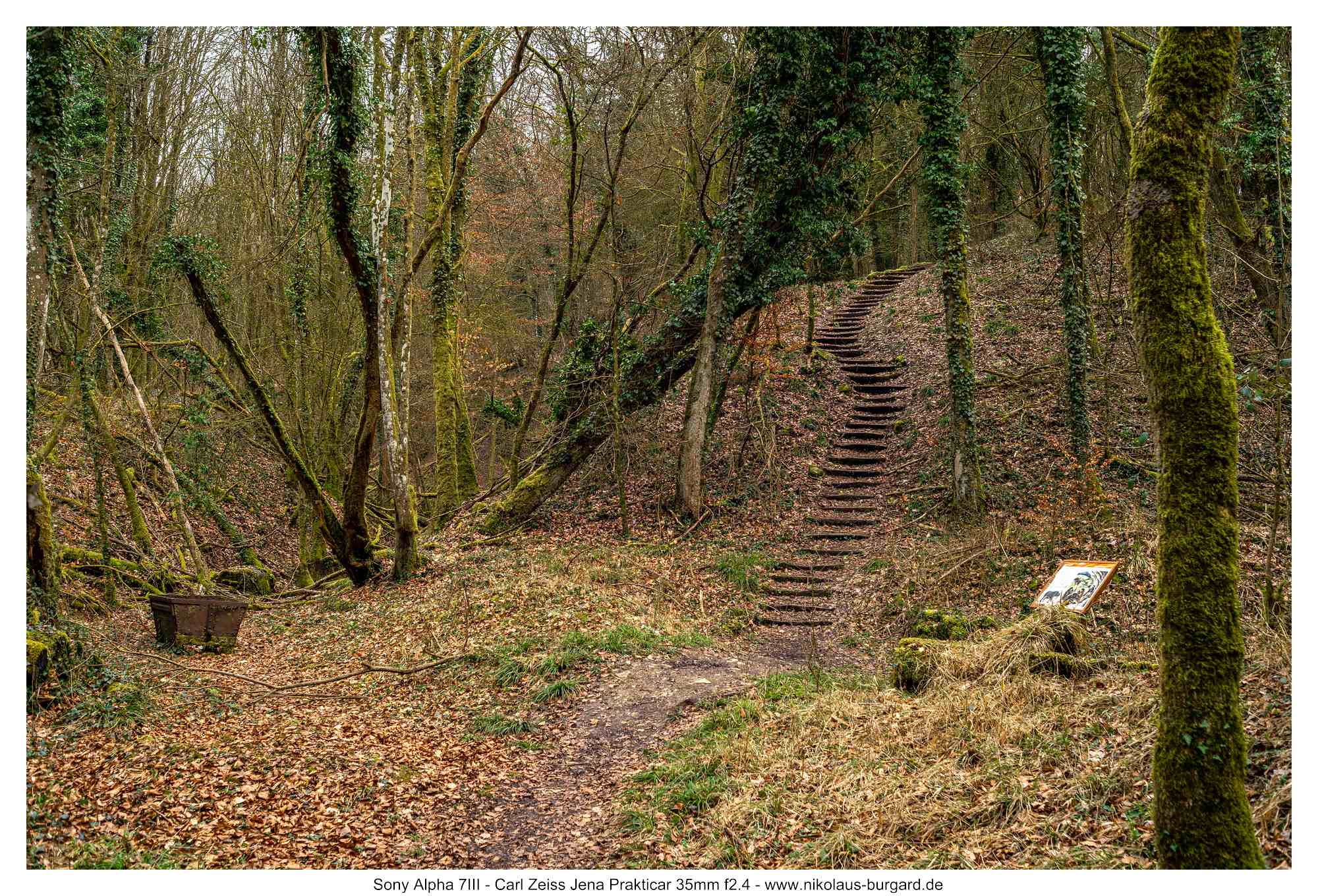
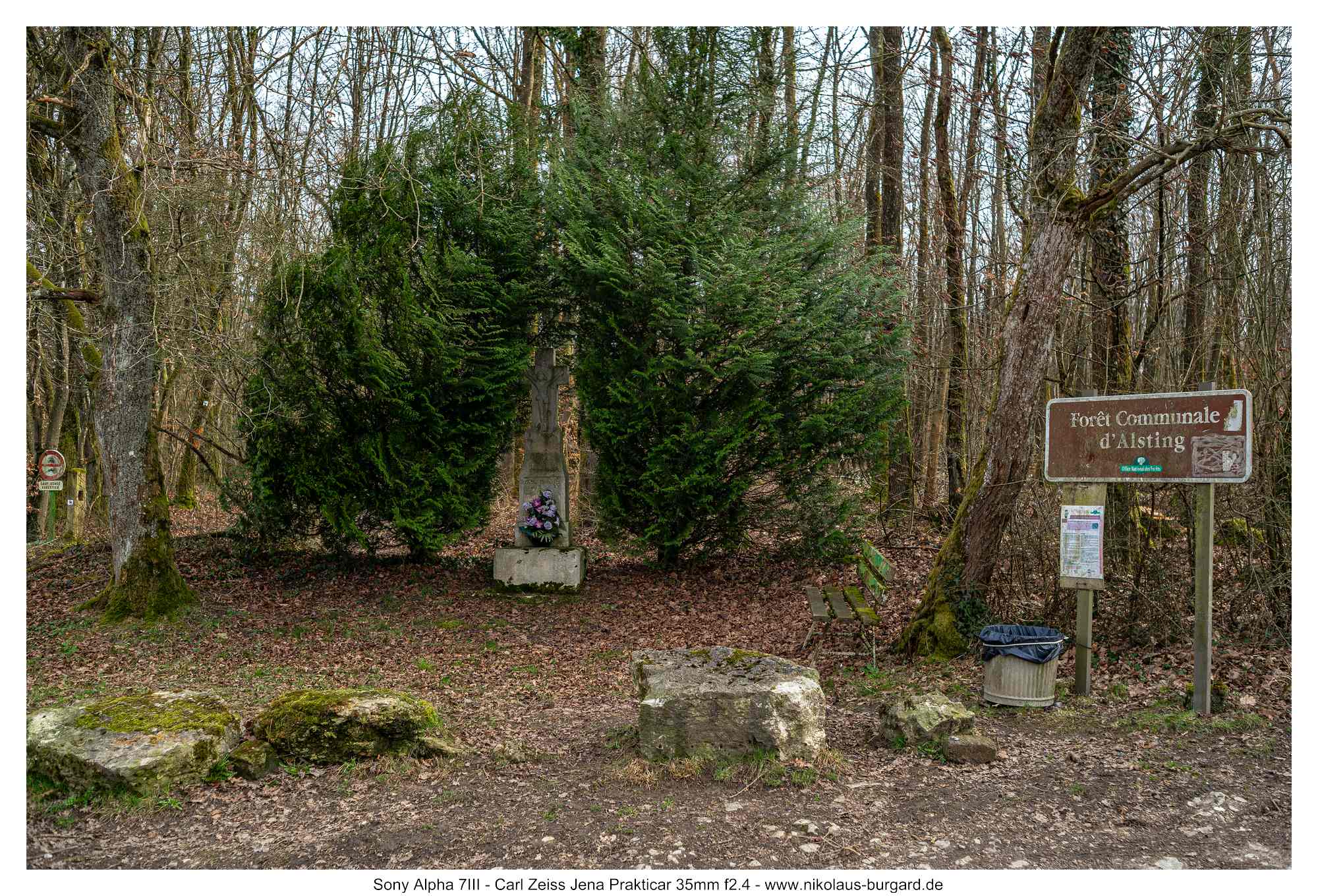
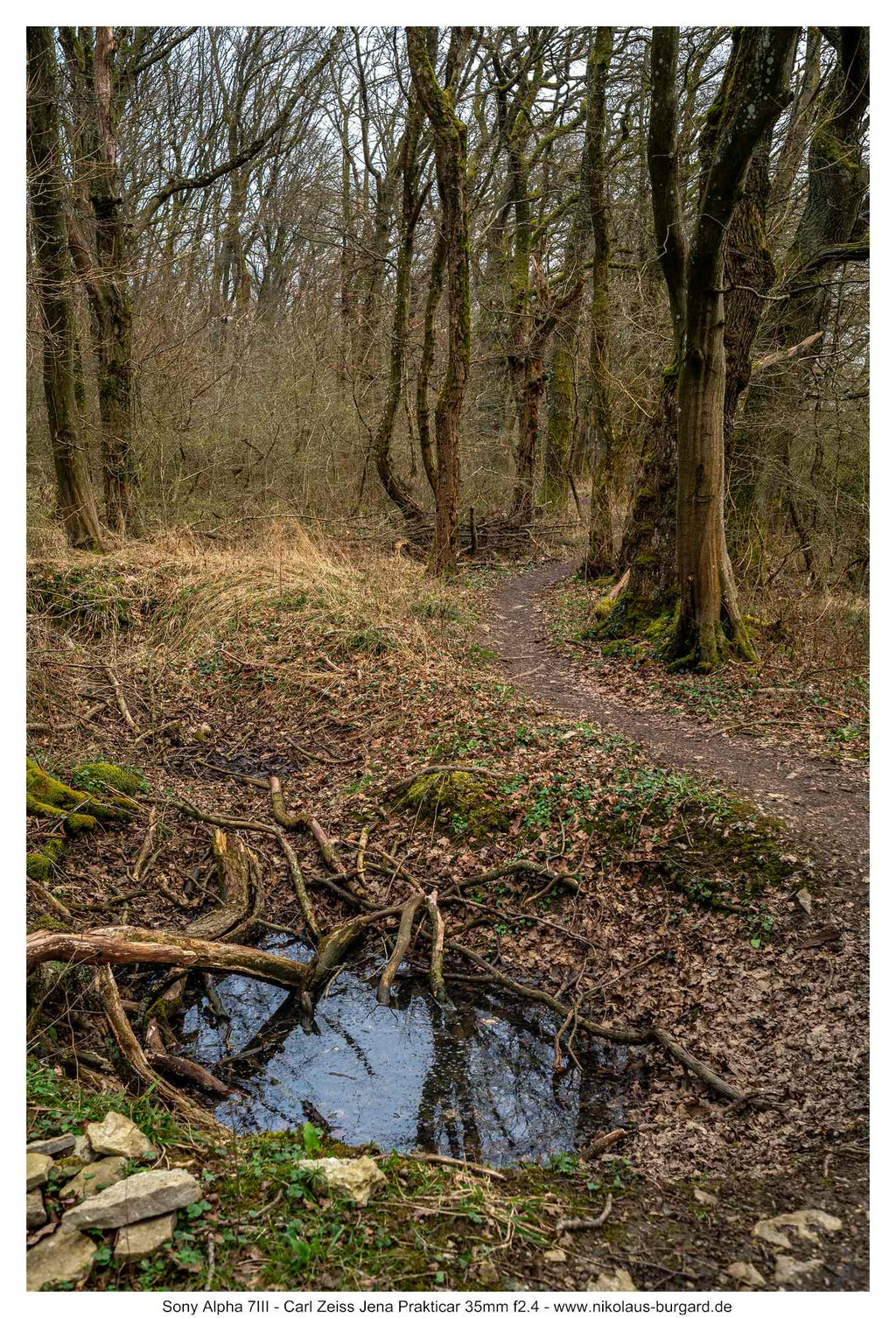
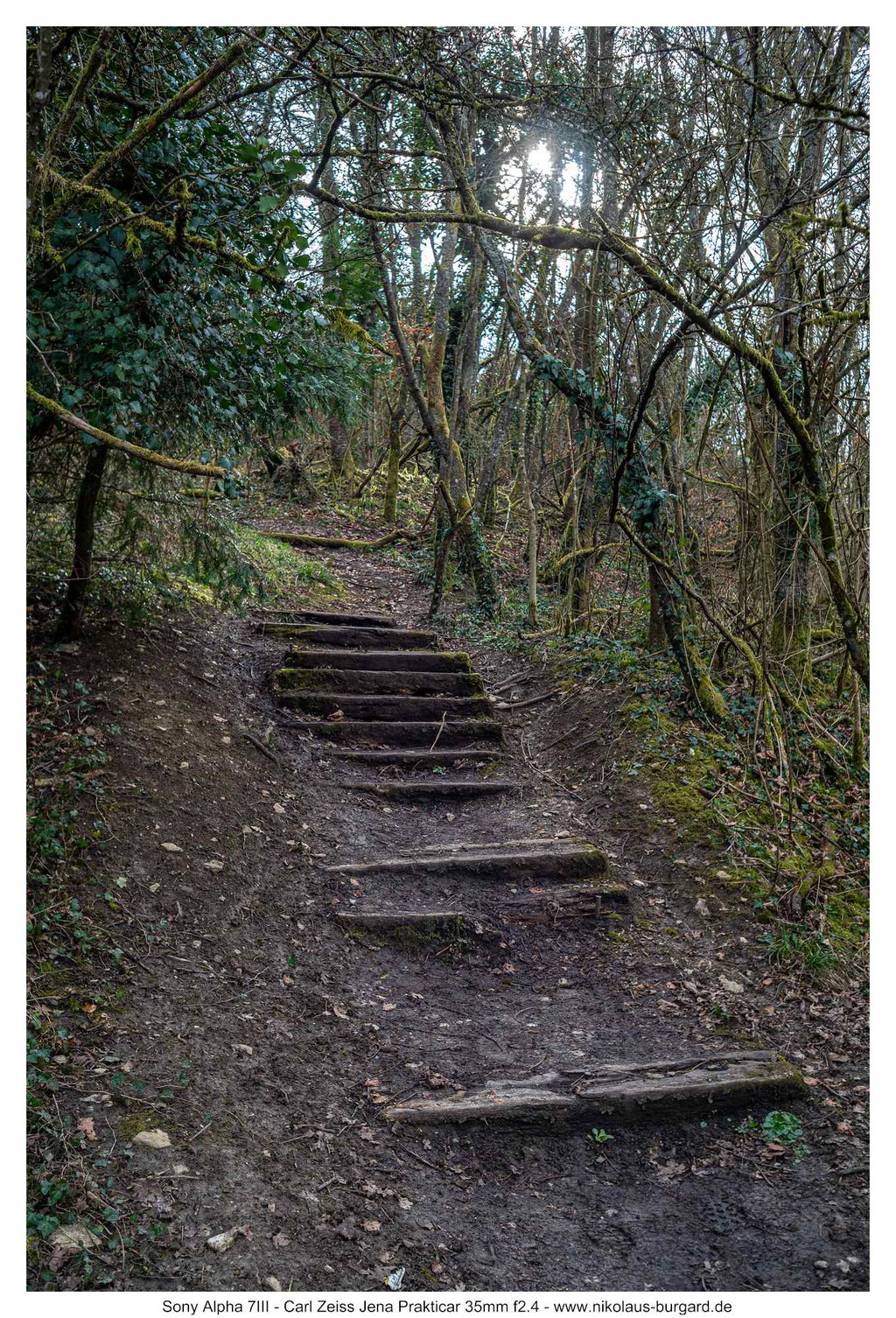
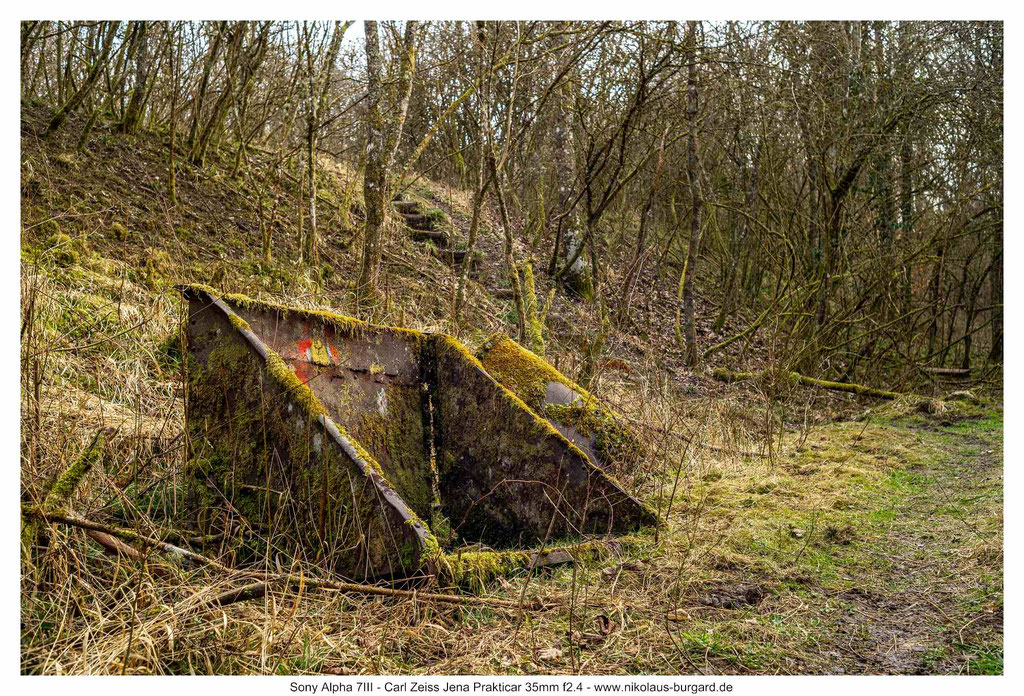
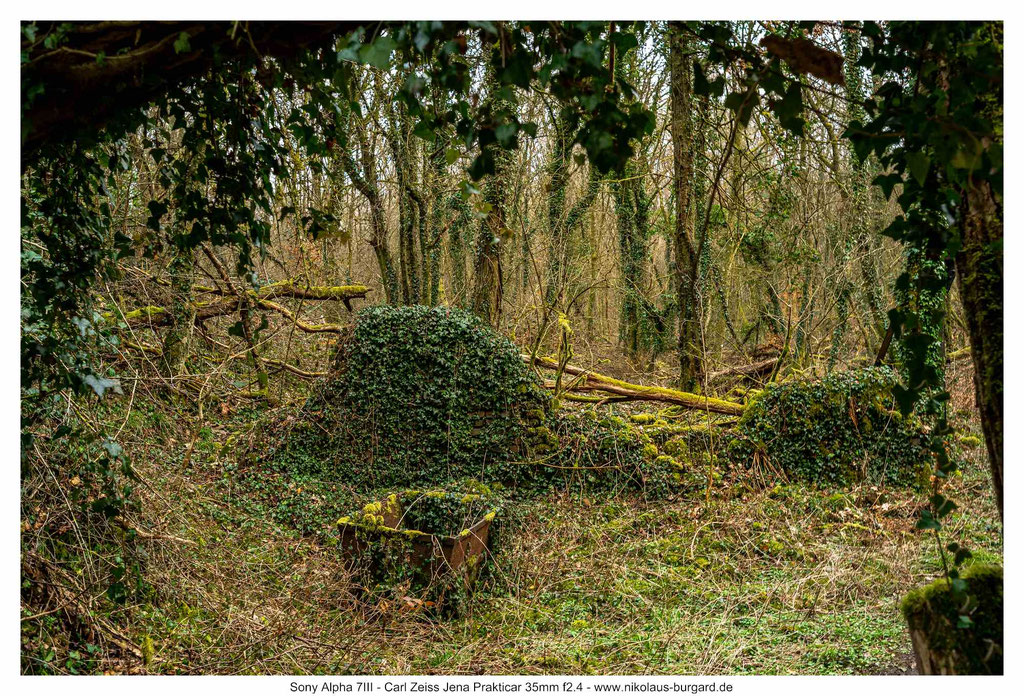
Ausserhalb von Alsting, einer Gemeinde in Grand-Est in Frankreich, gibt es ein interessantes Gebiet mit den Überresten eines großen Kalksteinbruches, der gegen Ende des zweiten Weltkrieges stillgelegt wurde. Man läuft entlang der Trassen der ehemaligen Förderbahn und sieht überall Restbauten, die sich die Natur zurückerobert. Gerade im Winter mit den kahlen Bäumen ergibt sich eine sehr interessante Stimmung.
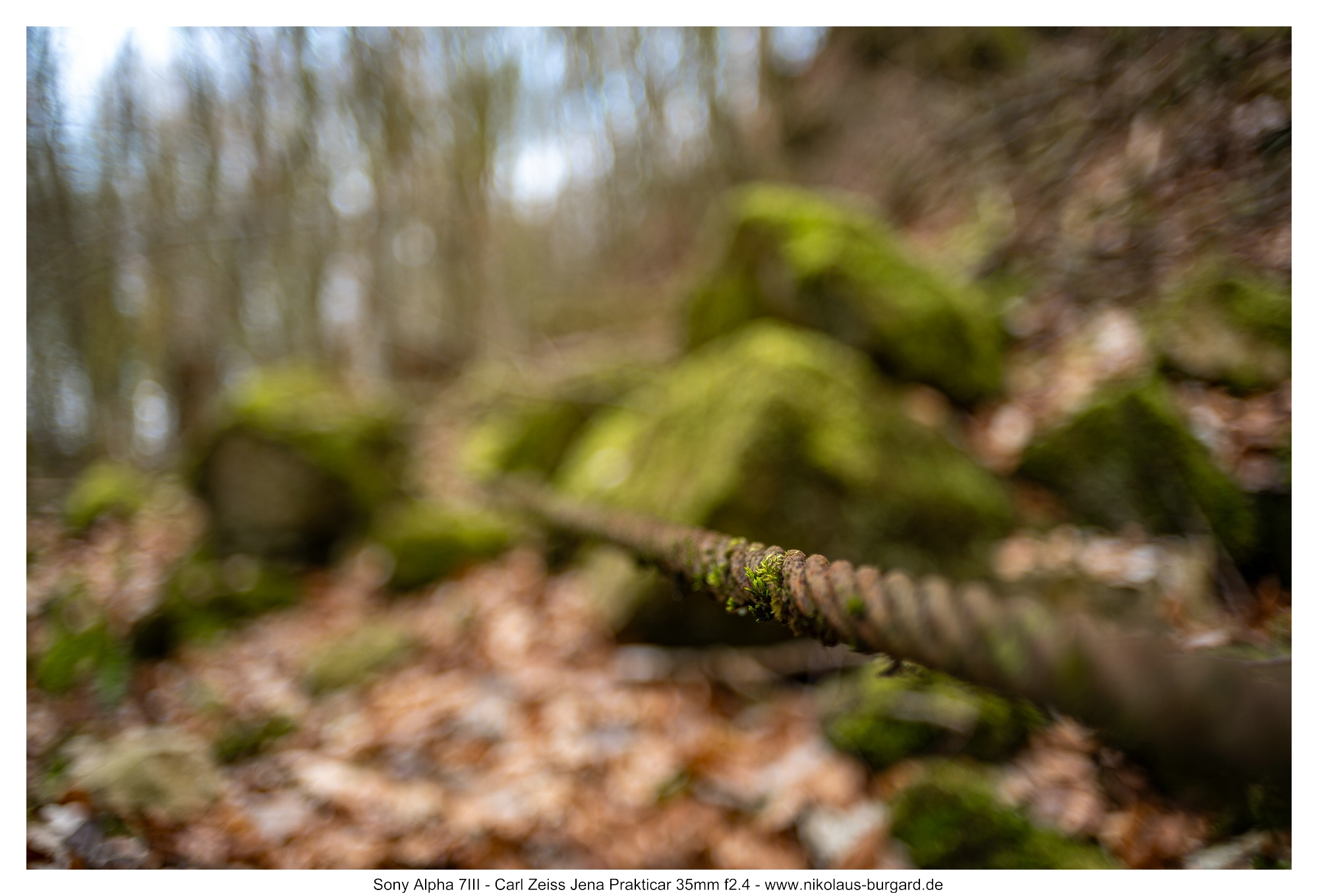
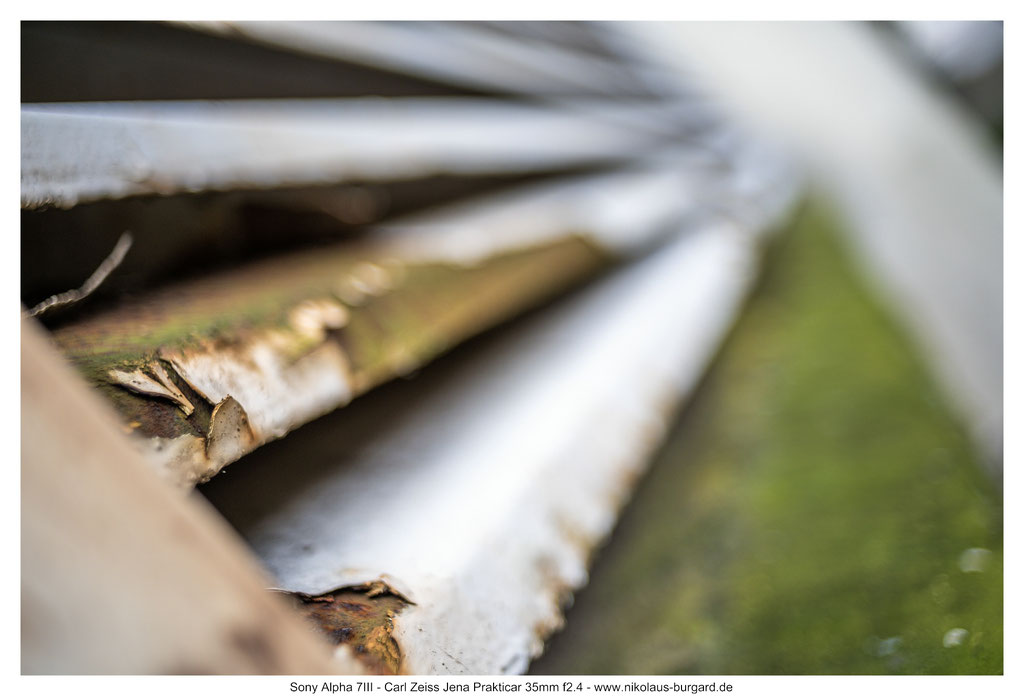
Das Flektogon kann hier besonders mit seiner genial kurzen Naheinstellgrenze punkten, mit der man die rostigen Details perfekt einfangen kann. Leicht abgeblendet ist es so scharf, wie man es sich nur wünschen kann für die Übersichtsaufnahmen.
Outside of Alsting, a municipality in Grand-Est in France, there is an interesting area with the remains of a large limestone quarry that was shut down towards
the end of World War II. You walk along the routes of the former conveyor railway and see remaining buildings everywhere, which nature reclaims. Especially in winter with the bare trees there is
a very interesting atmosphere.
The Flektogon can score here especially with its ingeniously short near-adjustment limit, with which you can perfectly capture the rusty details. Stopped down it
is easily as sharp as you could wish for the overview shots.
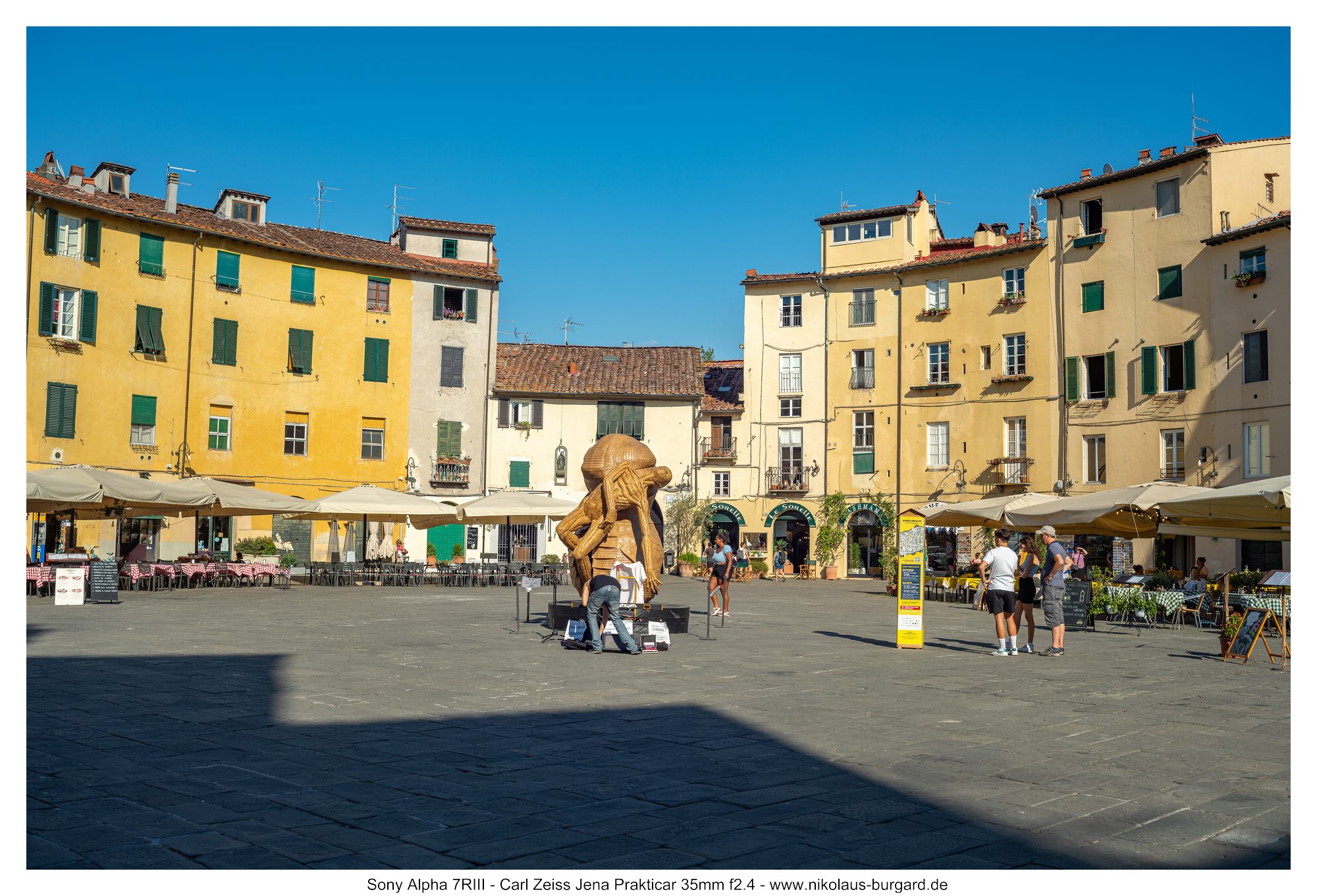
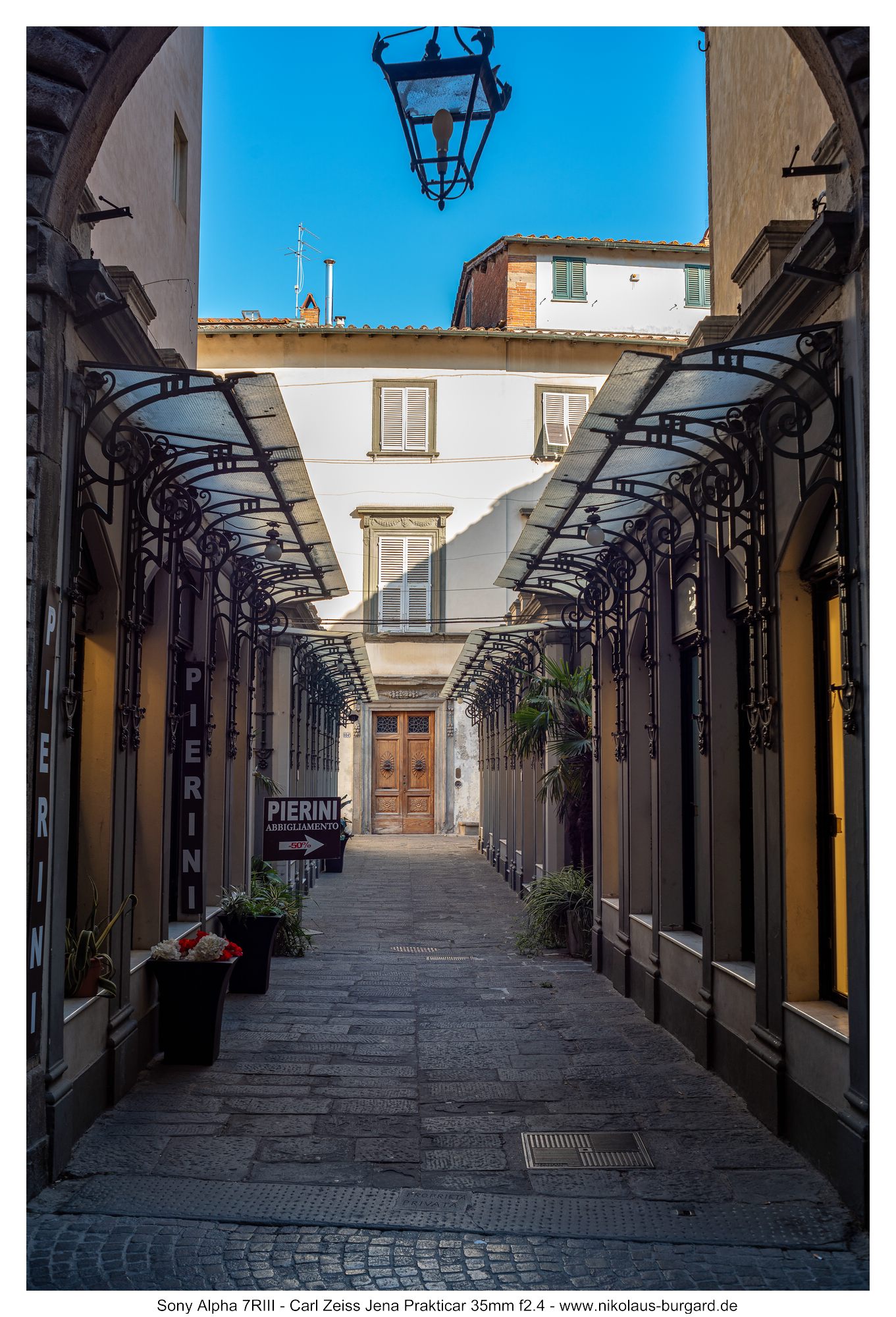
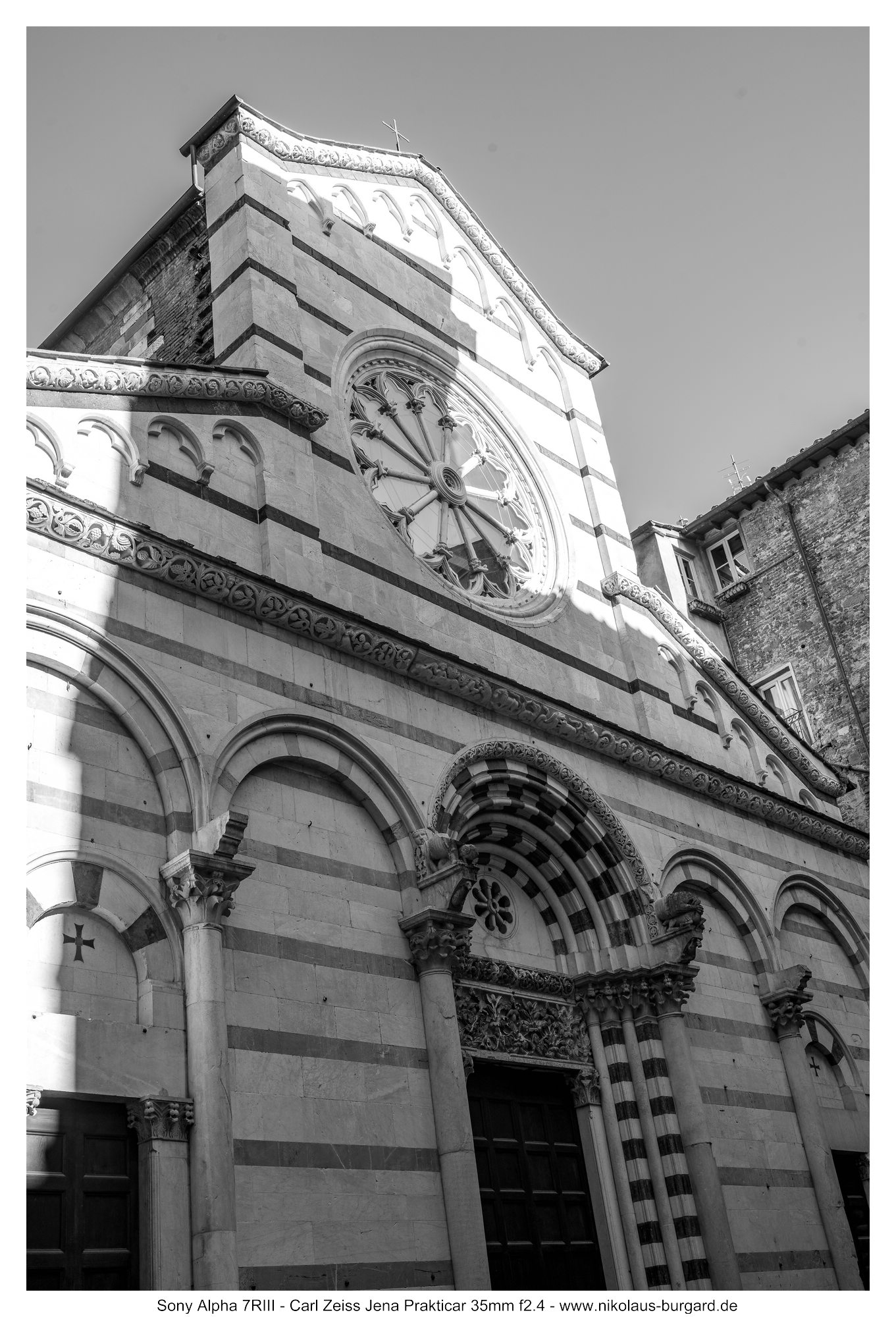
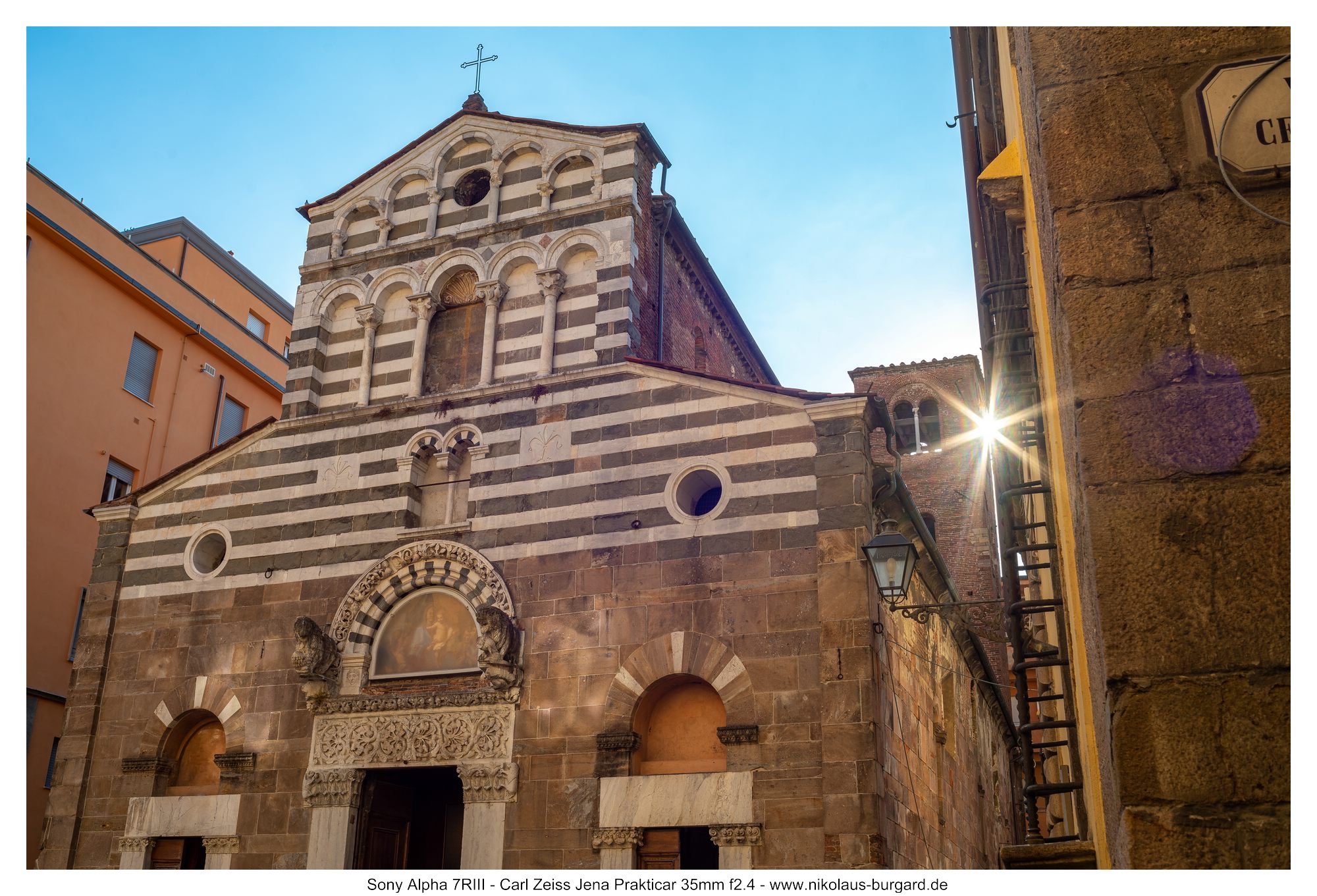
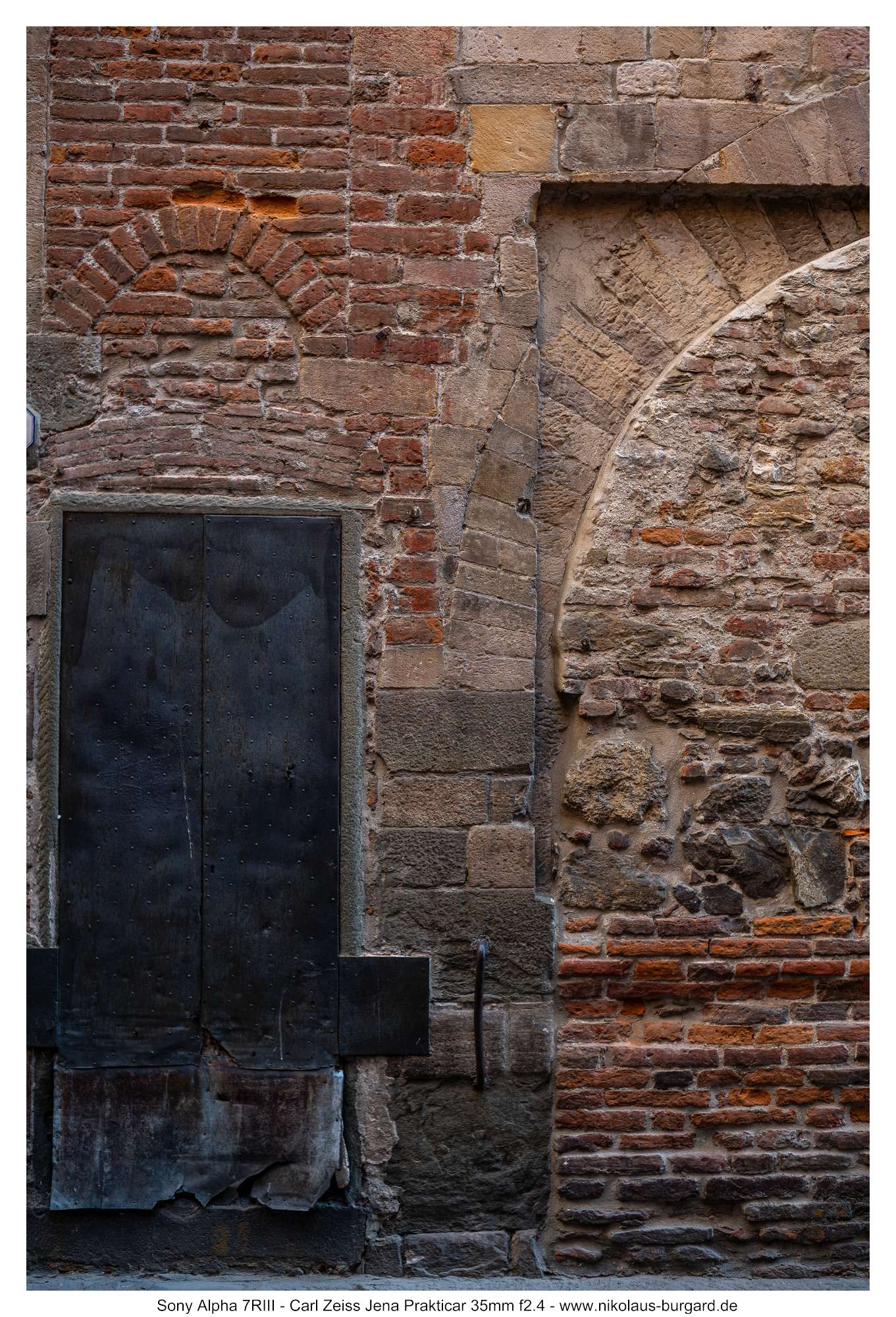
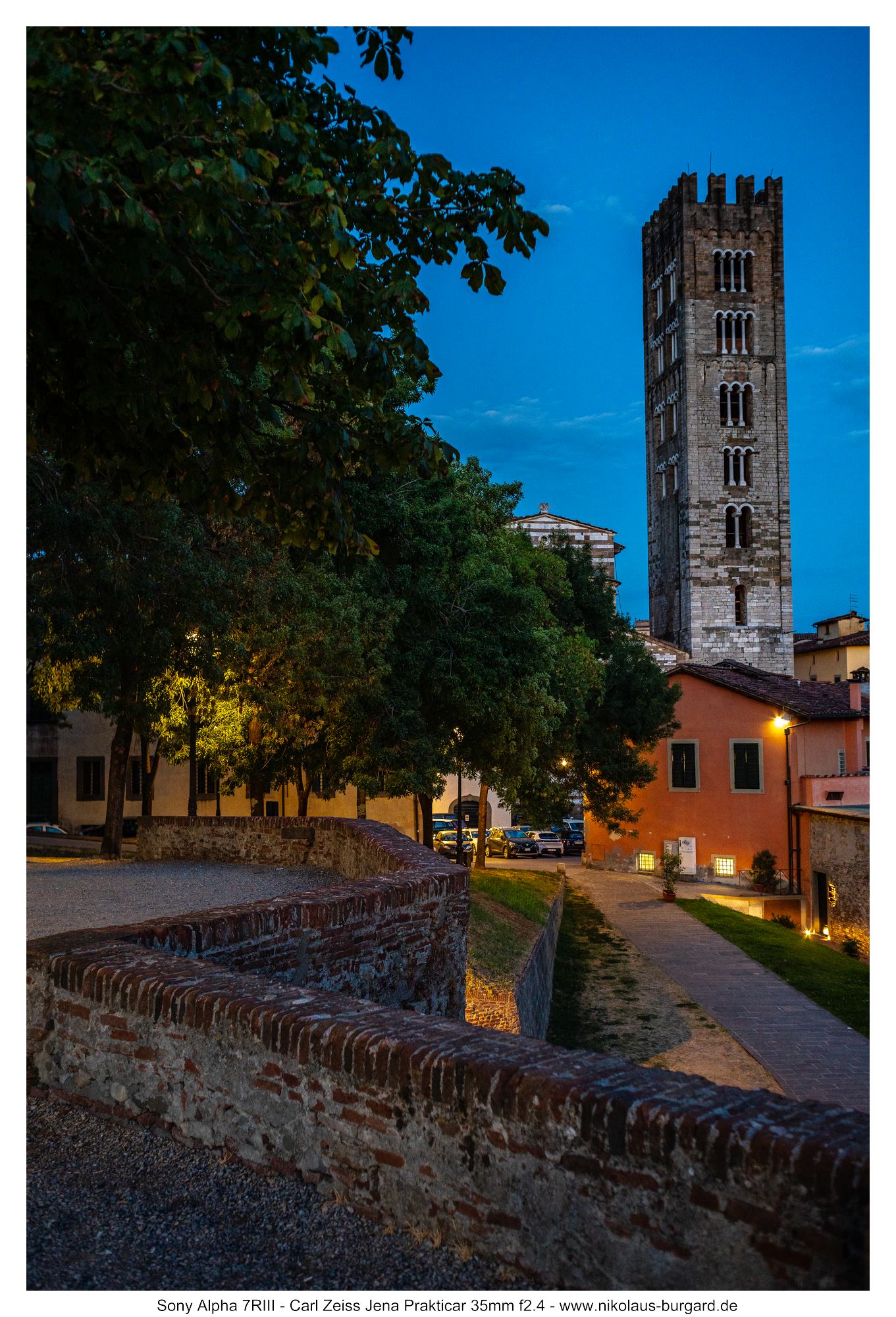
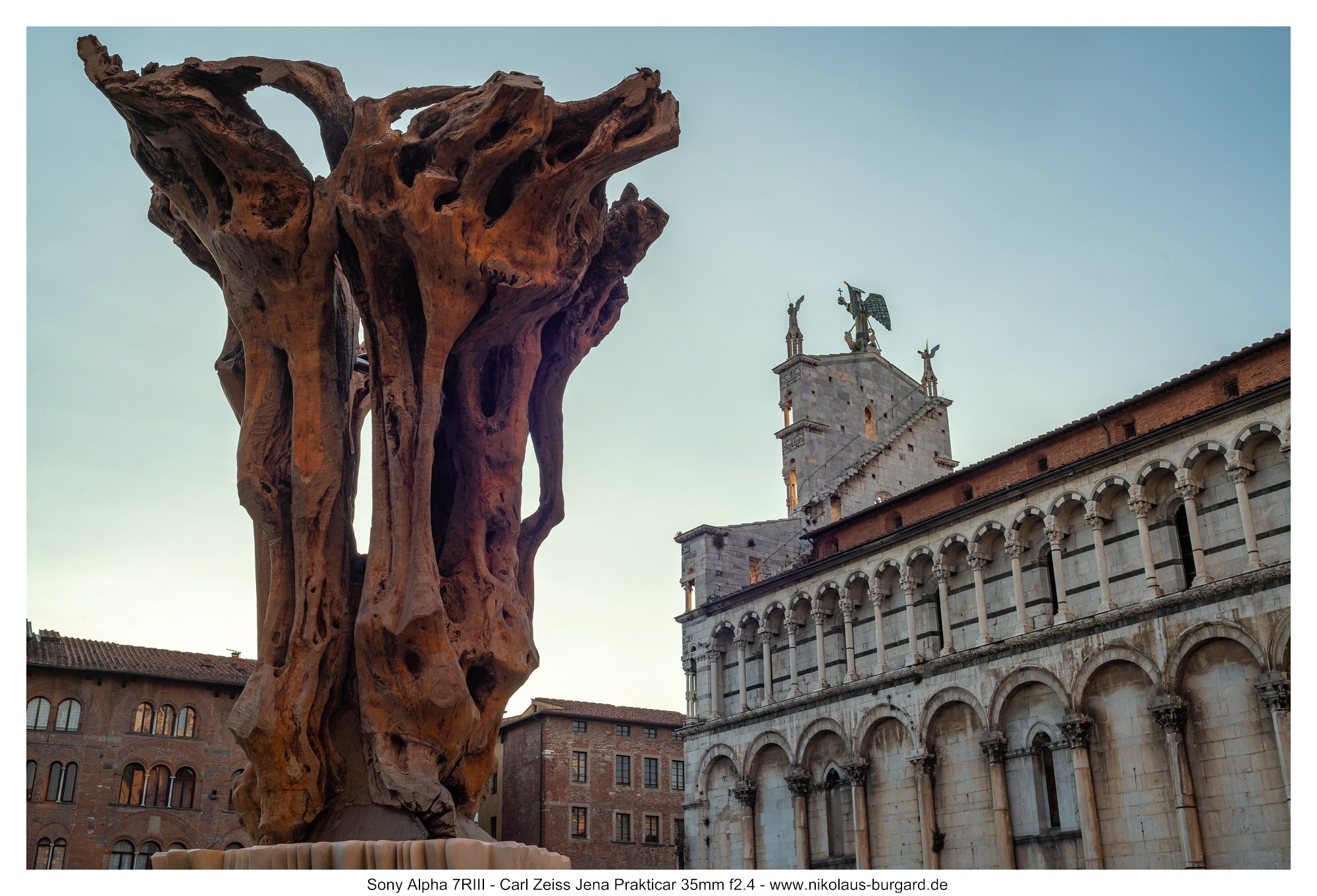
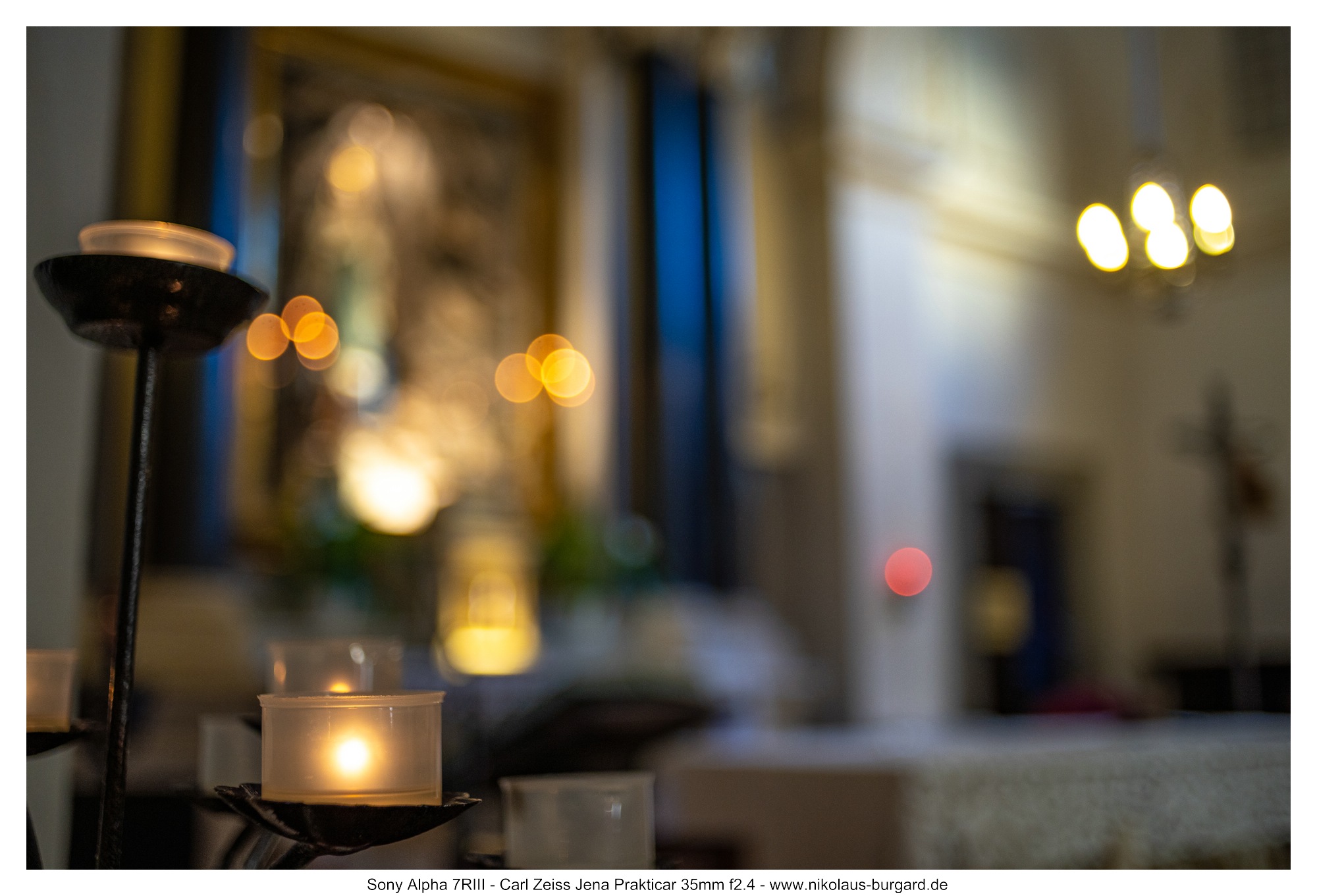
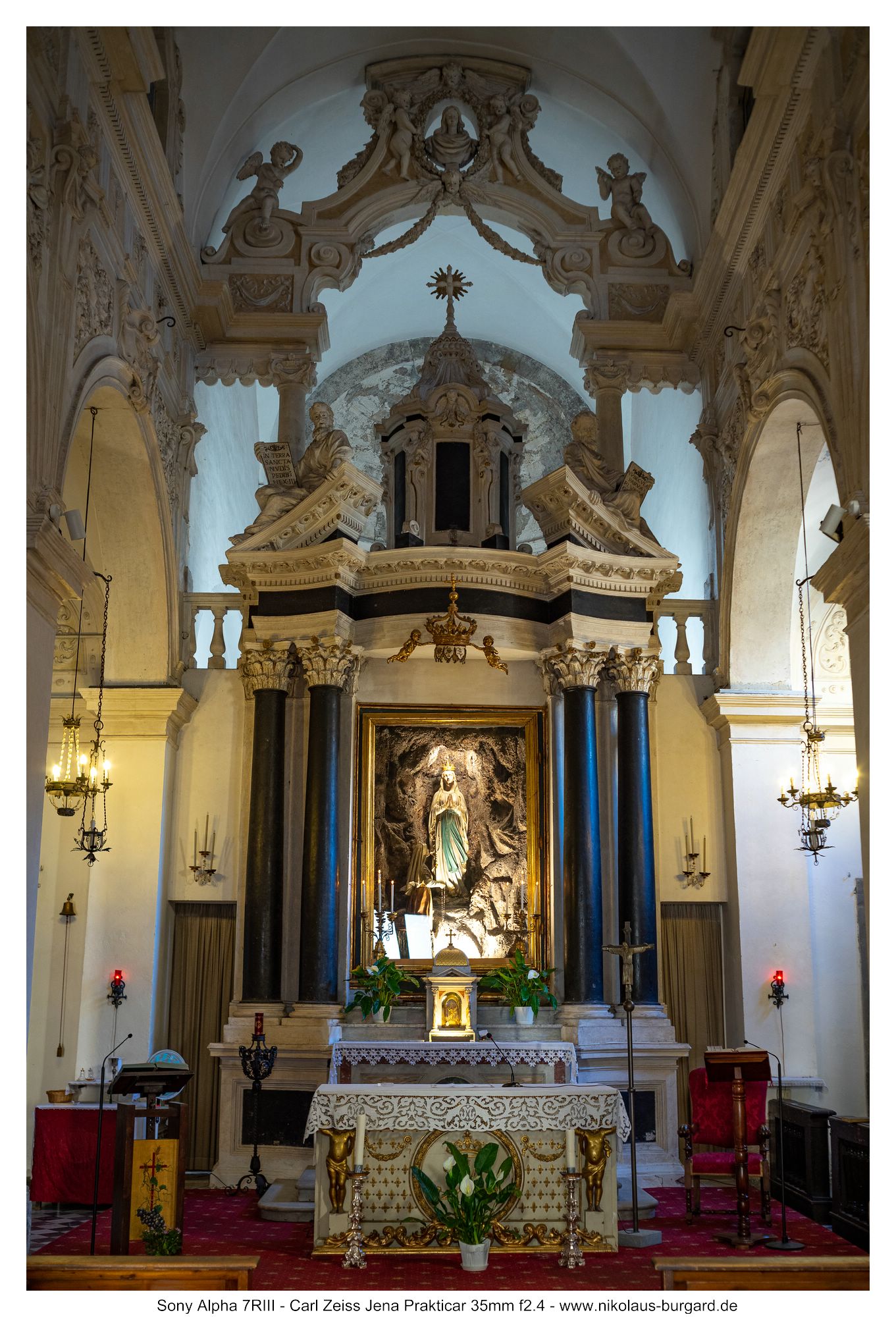
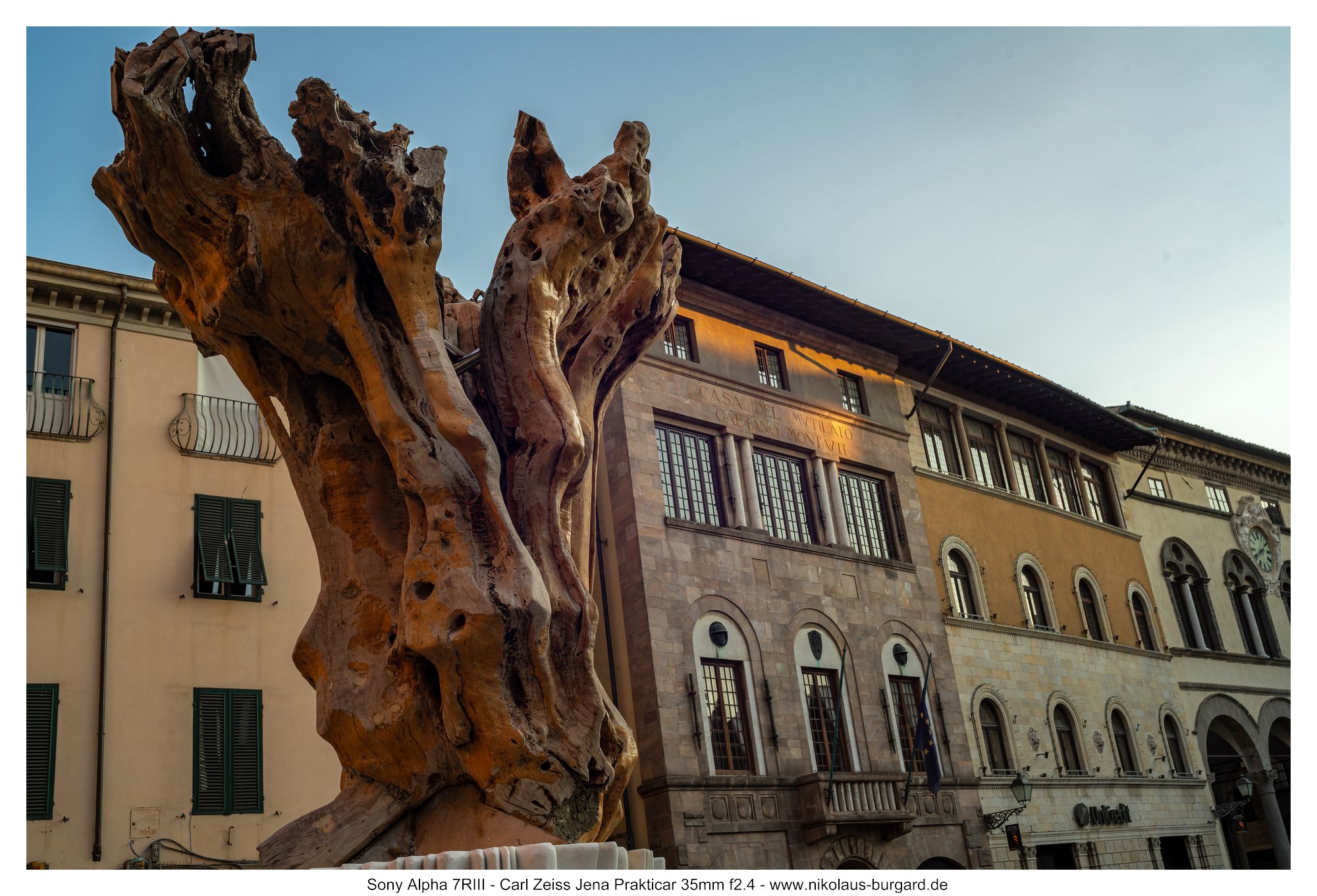
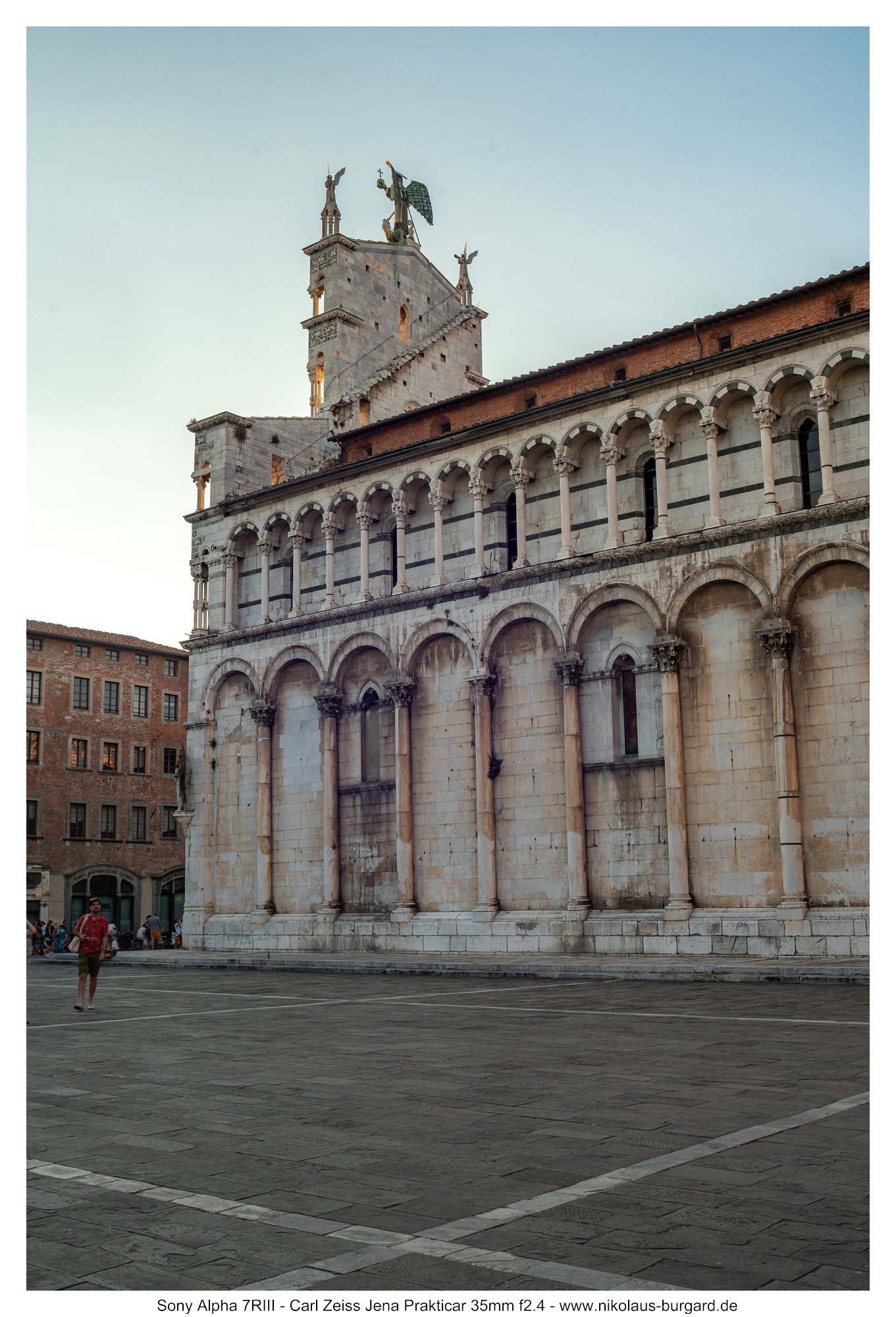
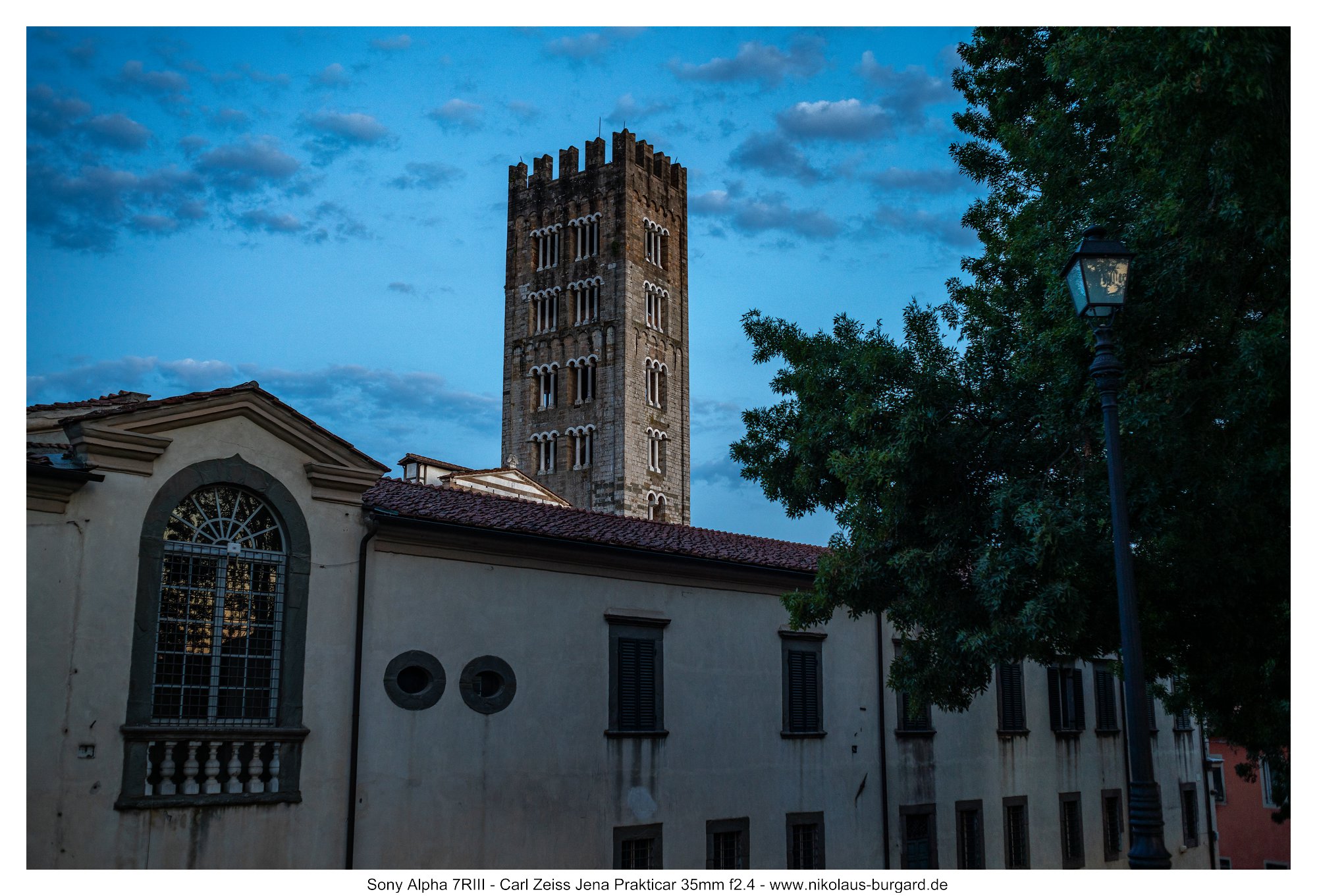
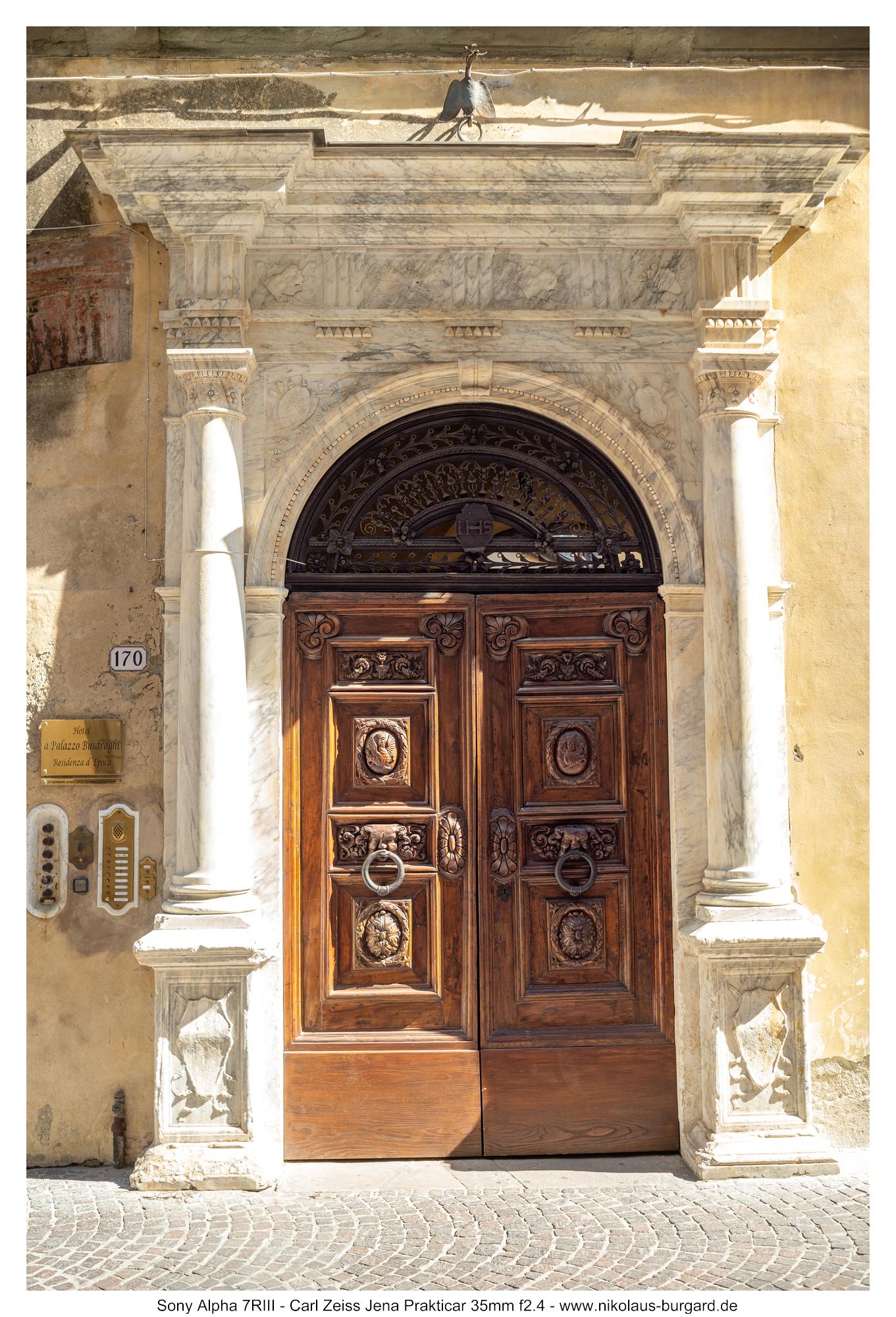
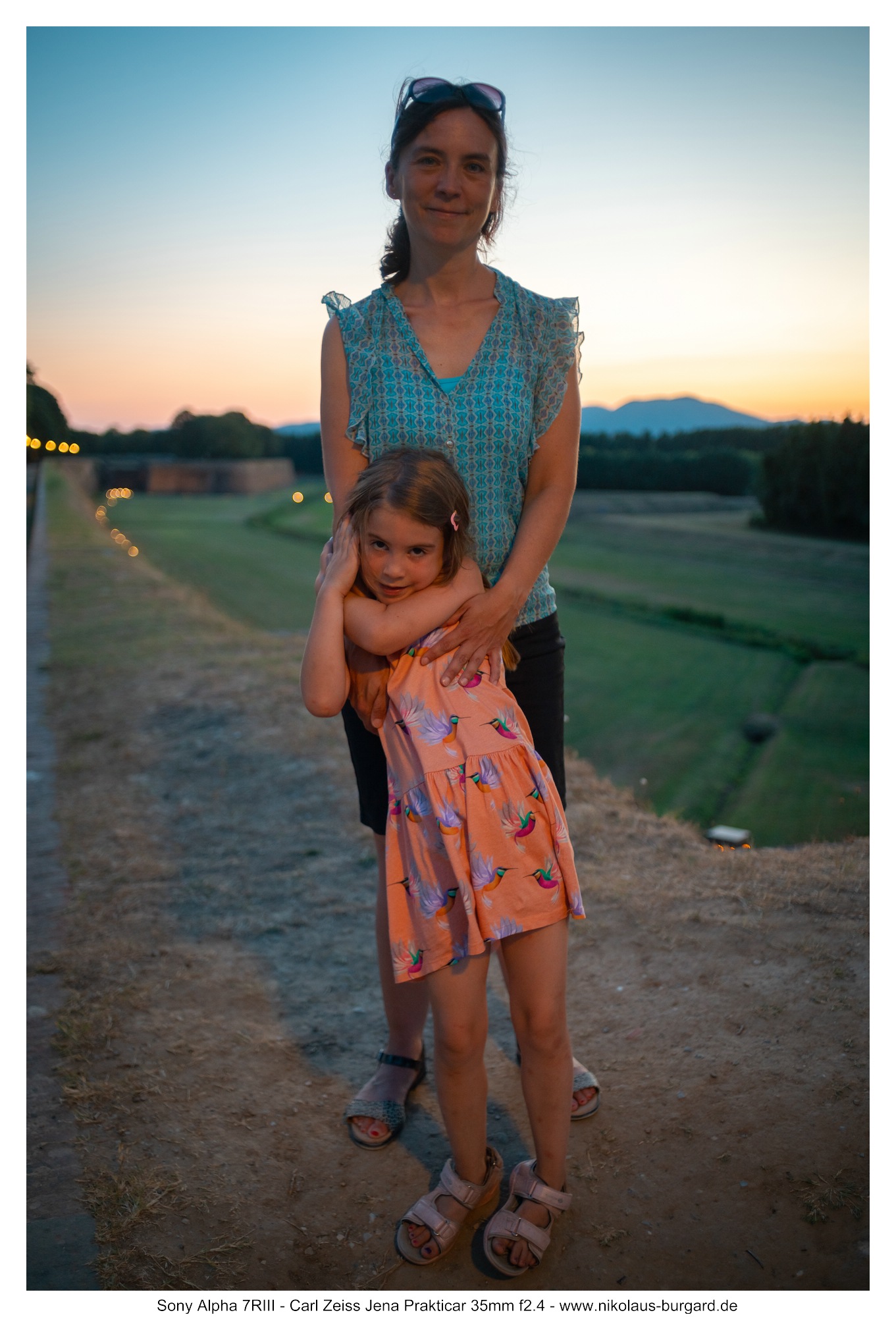
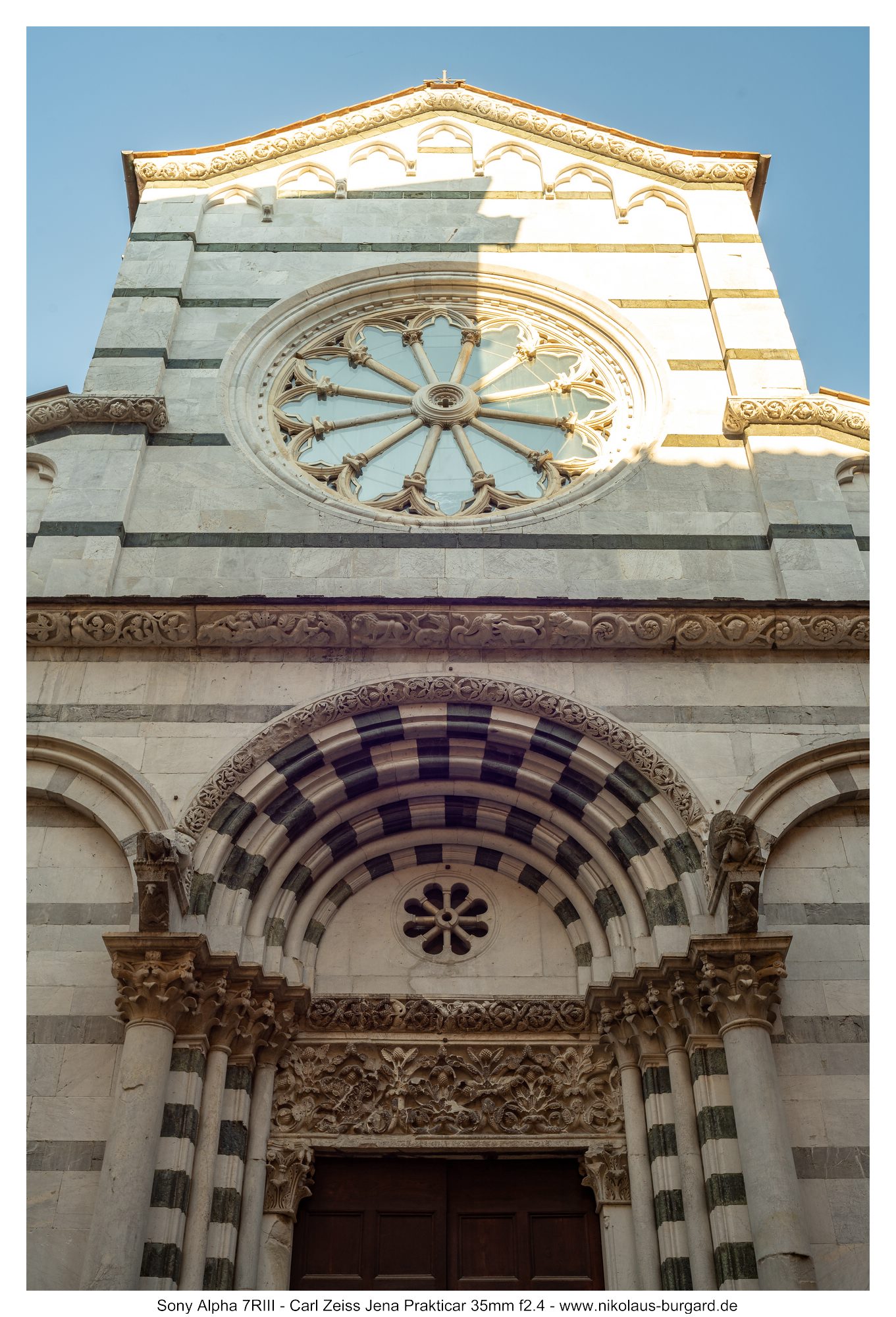
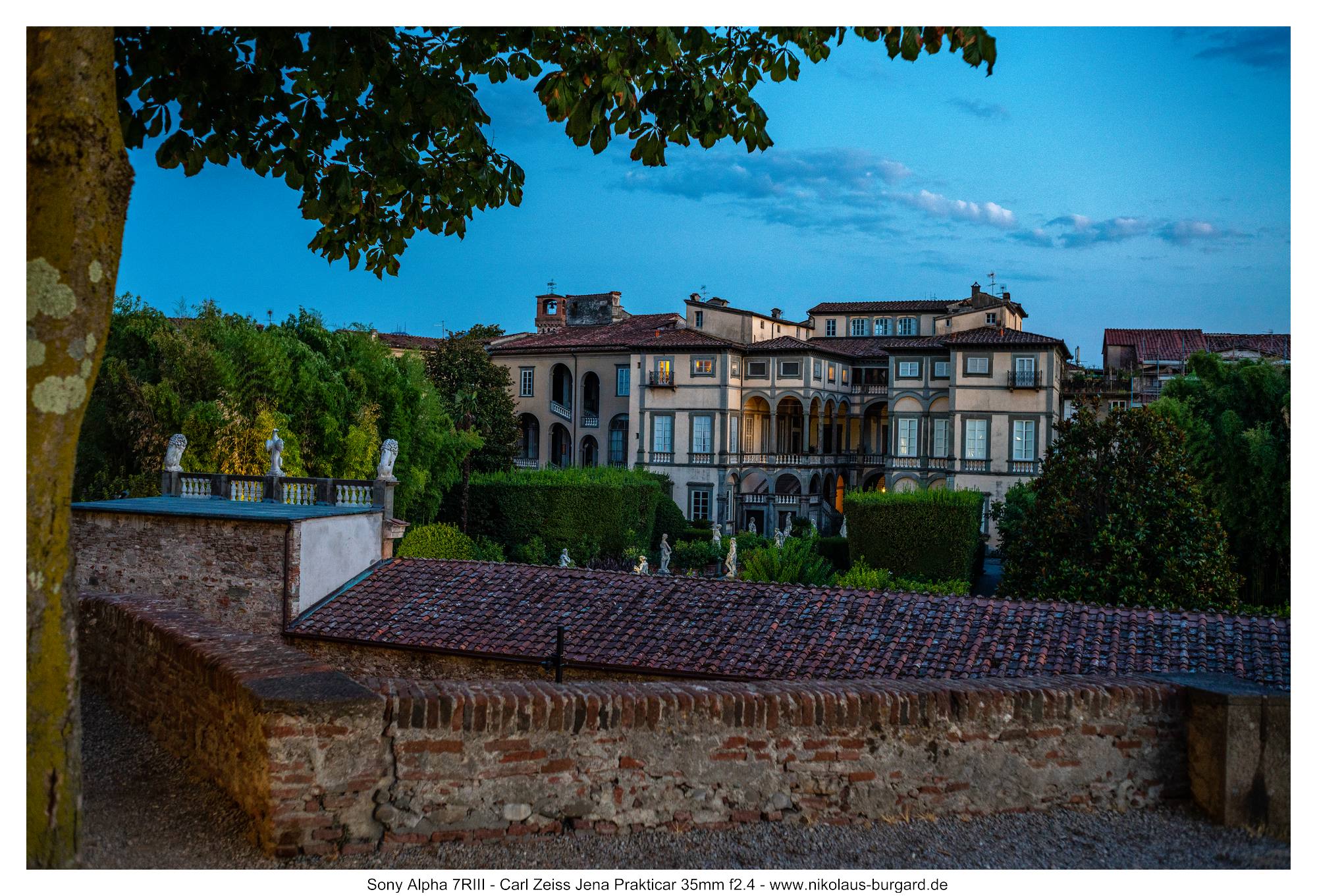
Bildserie / Picture Series: Tuscan Affairs 3: Lucca
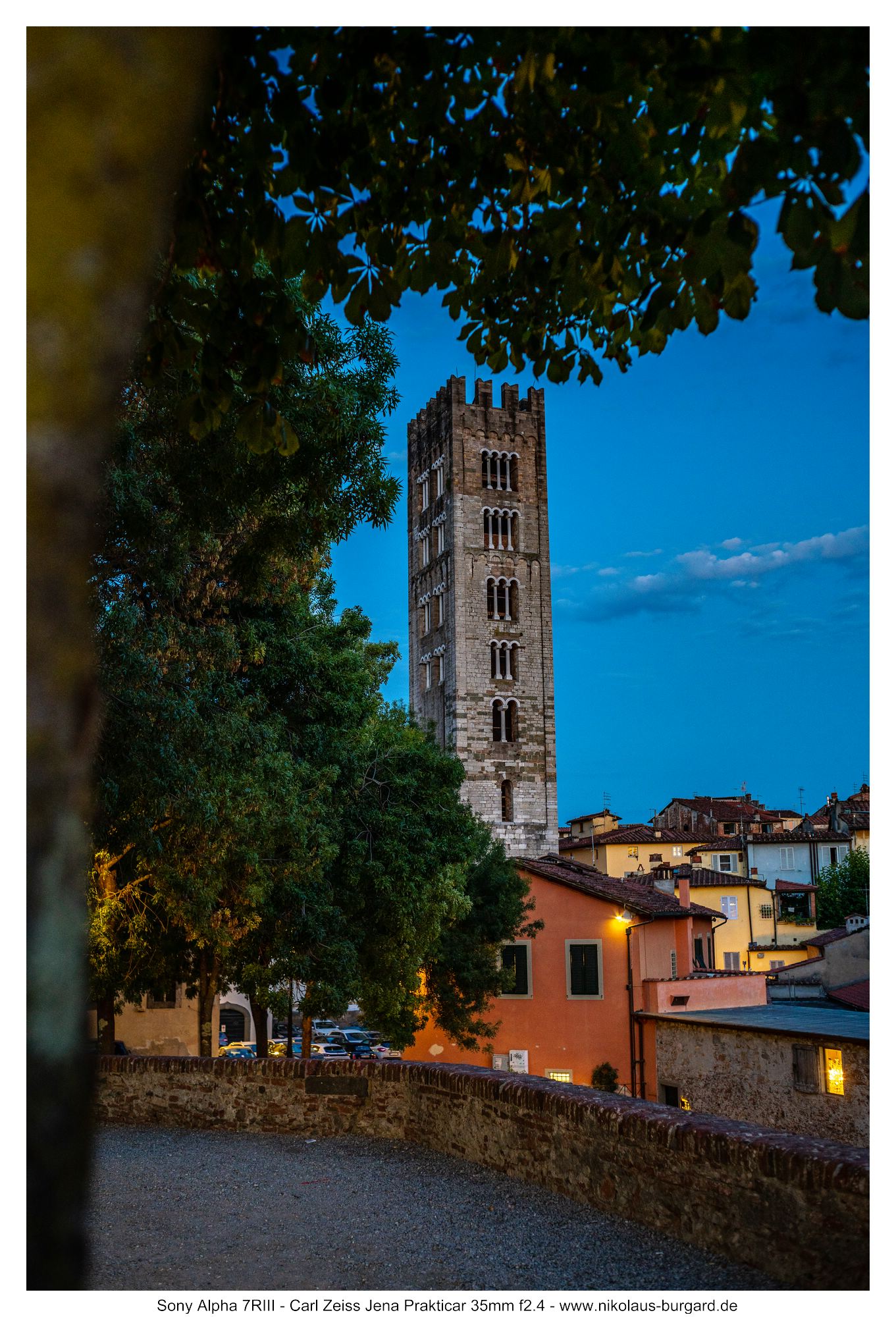
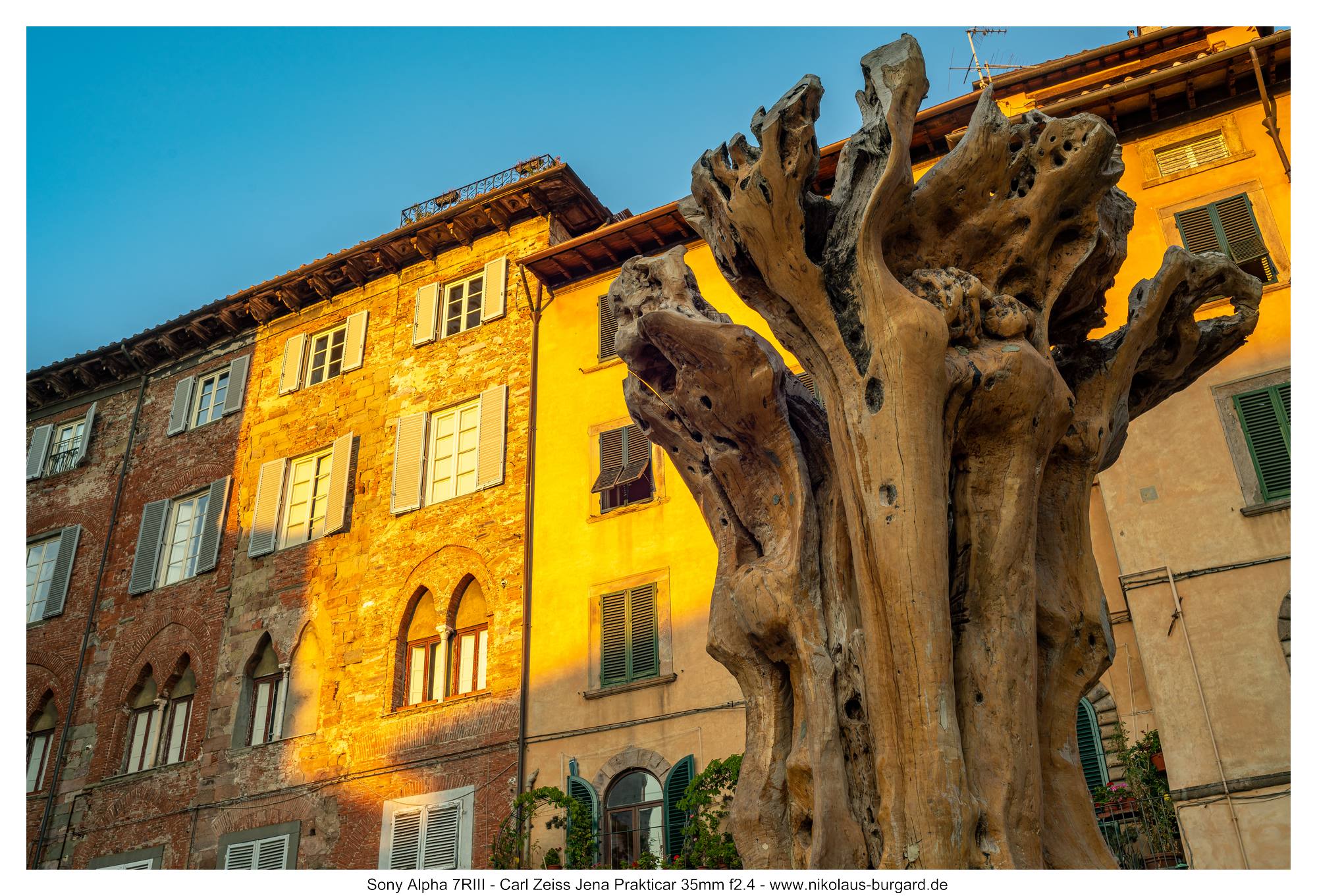
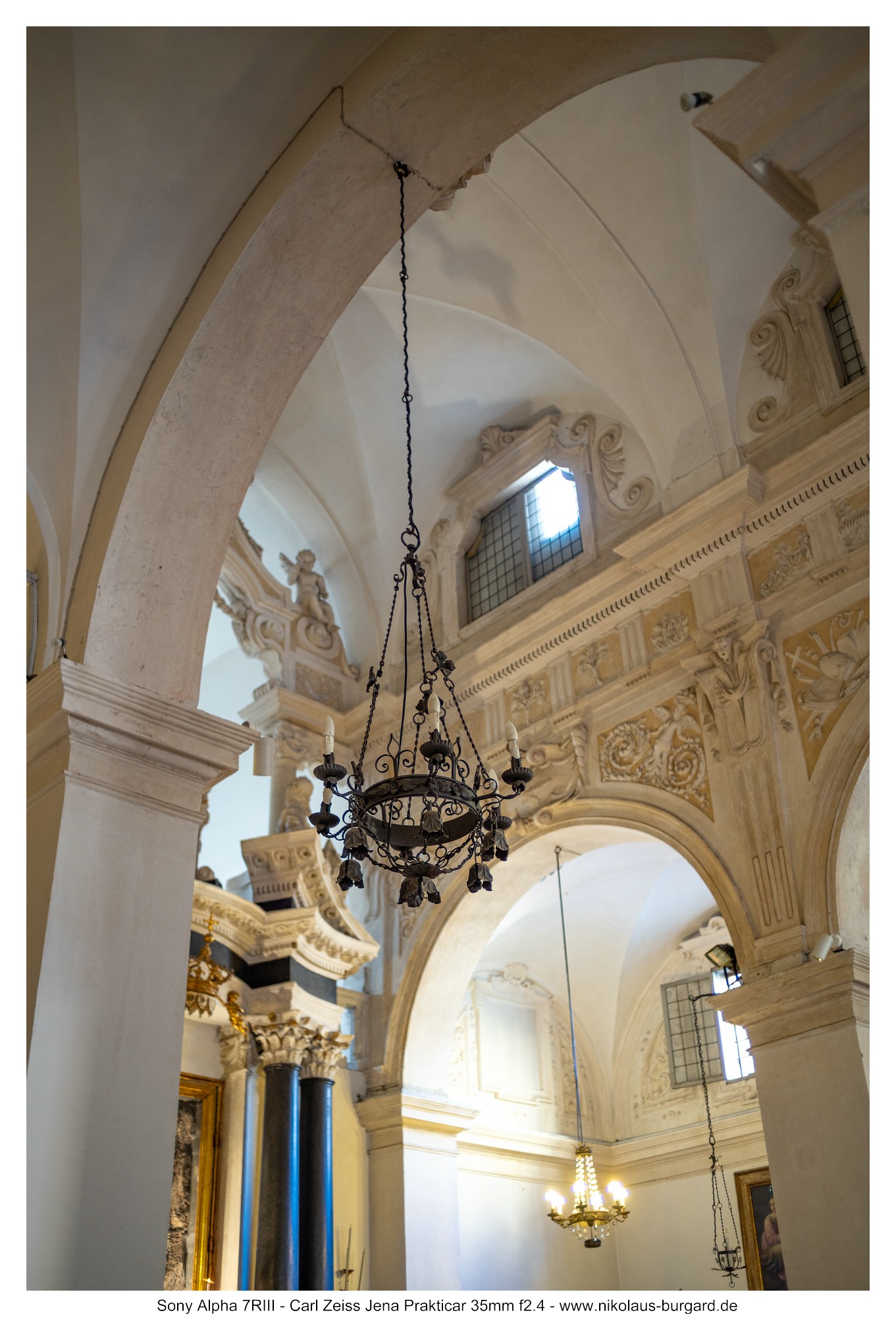
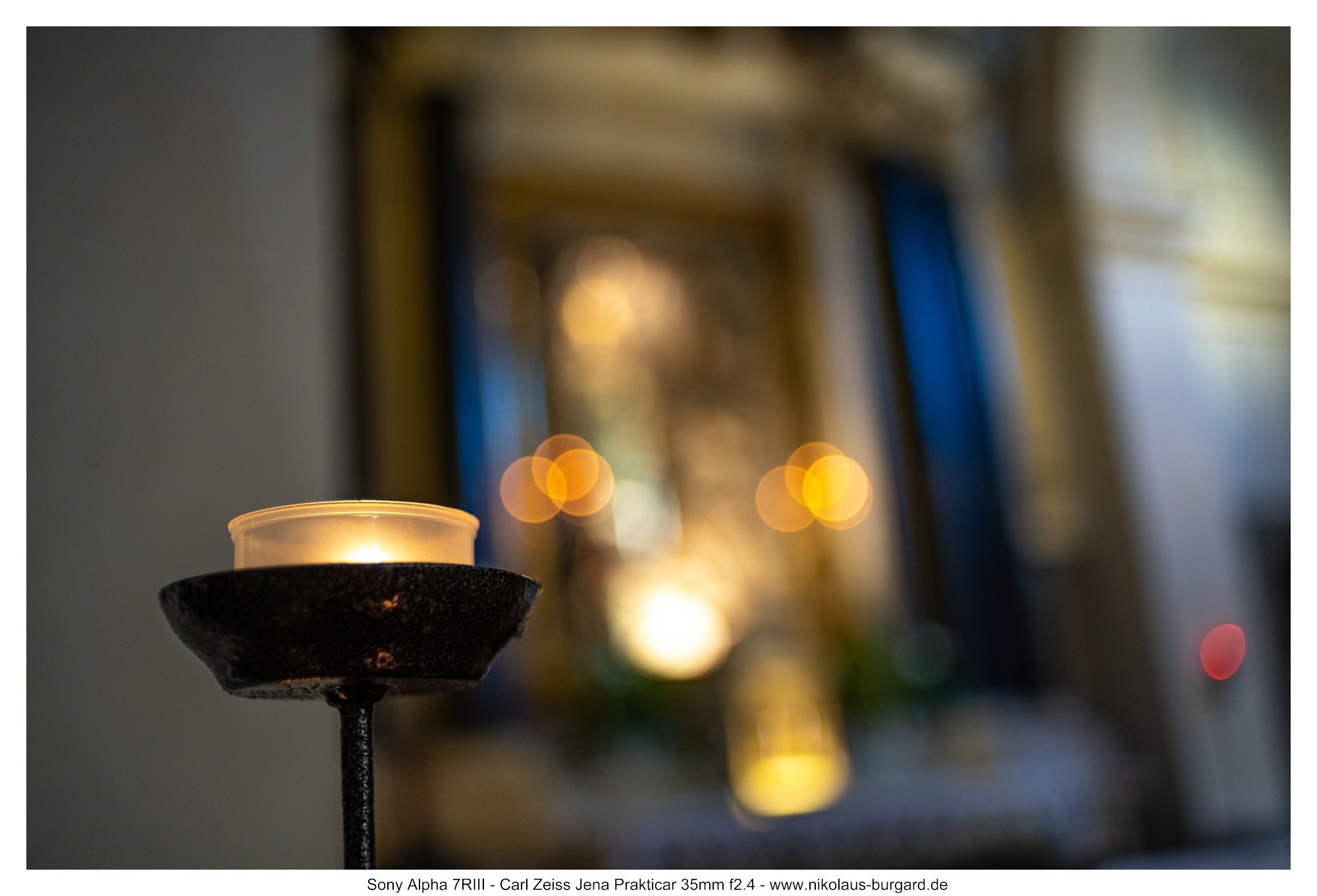
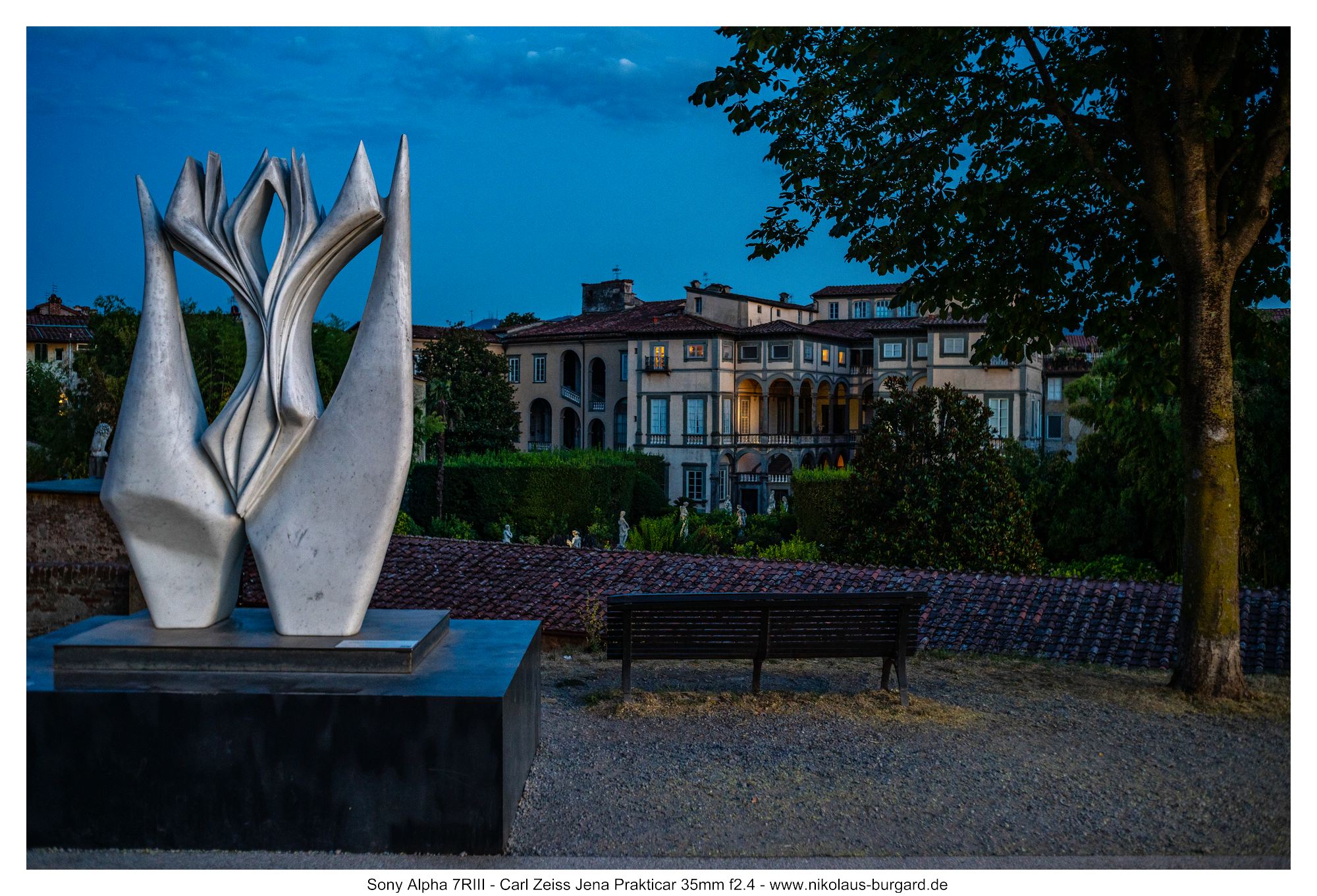
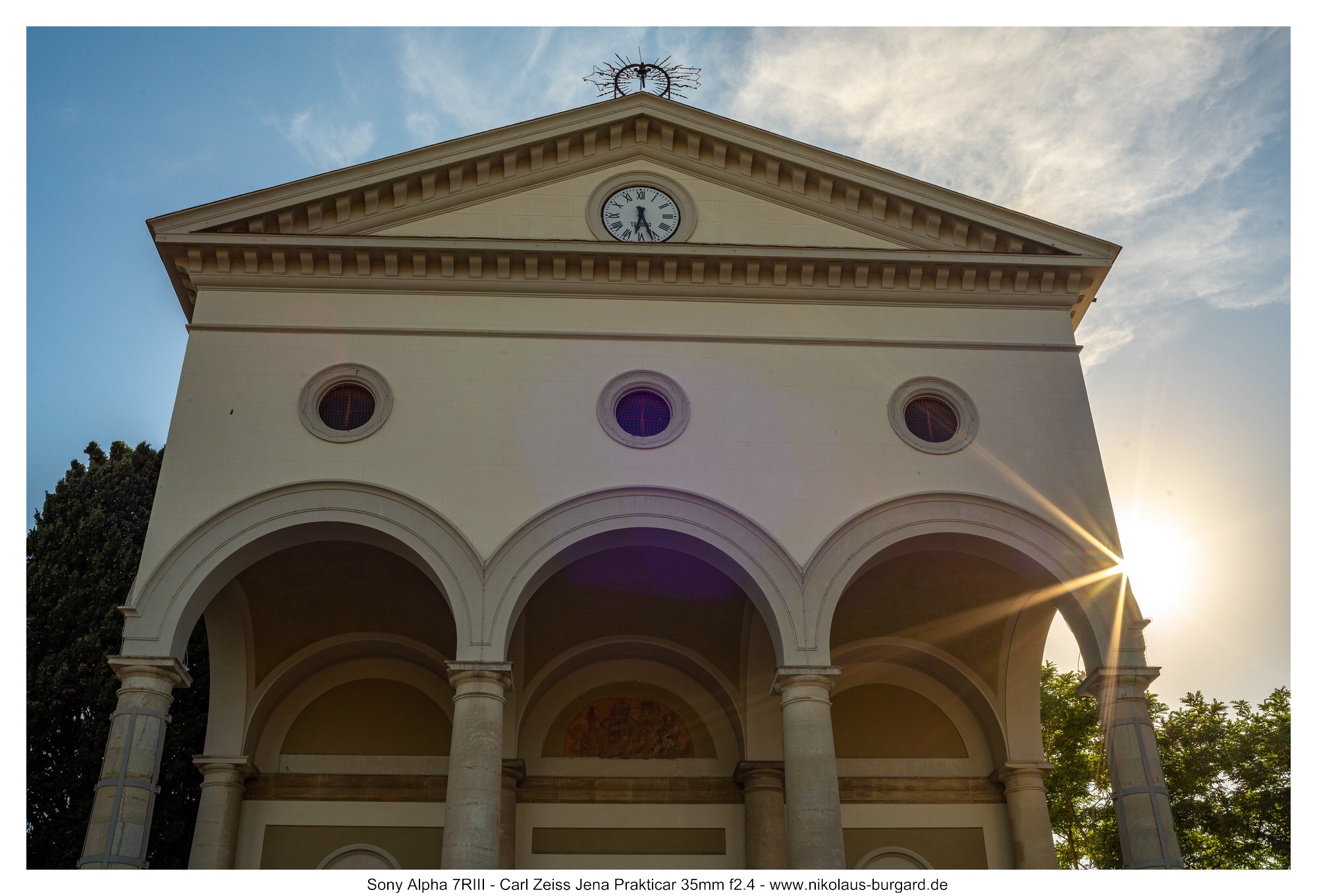
Lucca darf bei einer Toskana-Reise natürlich nicht fehlen.
Besonders das Licht in den Abendstunden taucht die historische Stadt in eine besondere Stimmung.
Und natürlich ist man dann (und auch in Innenräumen) über die Lichtstärke des Prakticars froh und nutzt diese auch aus.
Lucca is not to be missed on a Tuscany trip.
Especially the light in the evening hours immerses the historic city in a special mood.
And then of course you are happy (also indoors) about the light intensity of the Prakticar and take advantage of it.
Verhalten im Gegenlicht / Flares and Ghosts
Das Gegenlichtverhalten des Prakticars muss sehr differenziert betrachtet werden.
Wie alle Prakticare leidet es bei der Adaption an Digitalkameras unter seinen unbehandelten, reflektierenden Blendenlamellen, die deutliche Flares produzieren durch das vagabundierende Licht zwischen Blendenlamellen und Sensorschutzglas. Je stärker man abblendet, desto schlimmmer die Flares.
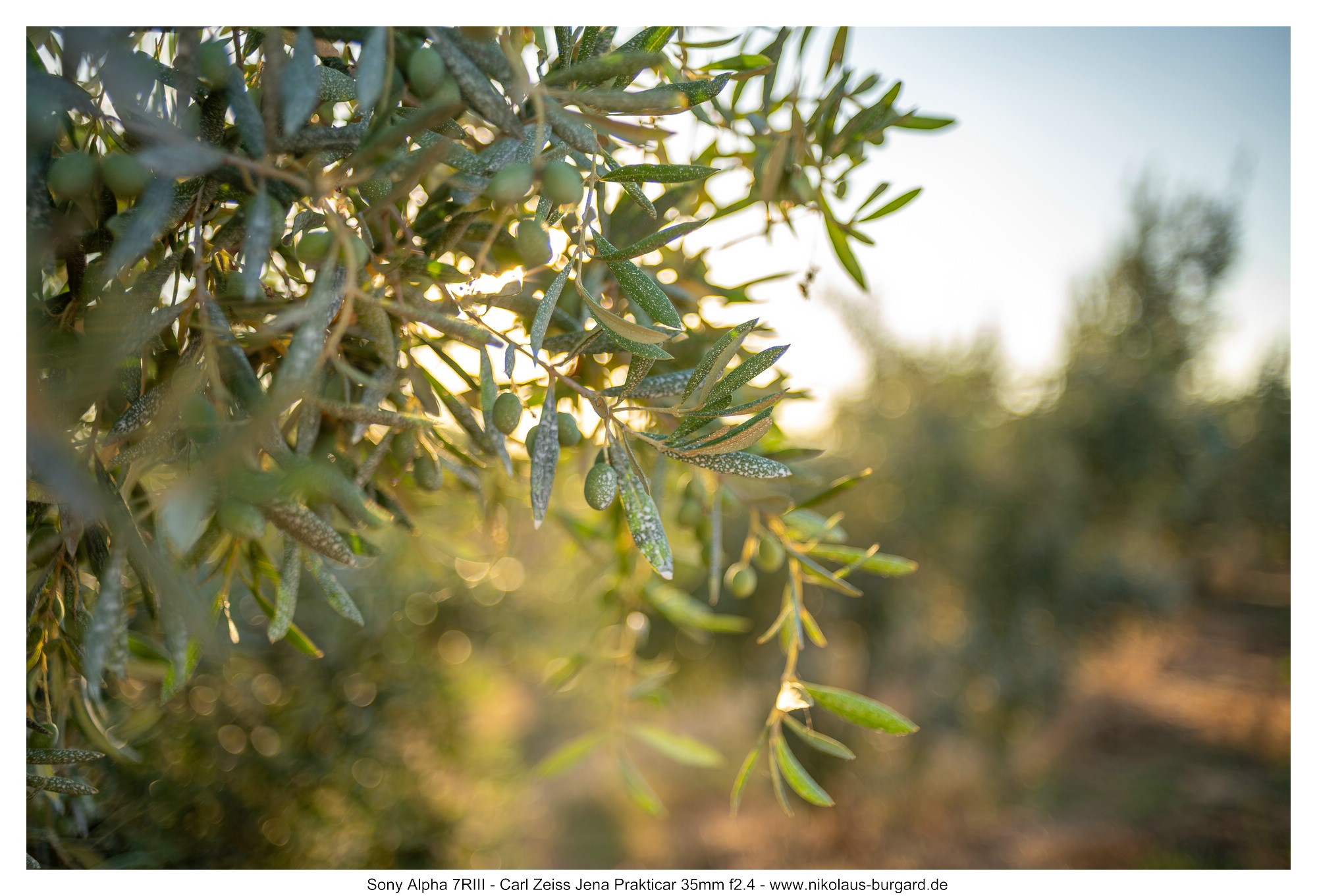
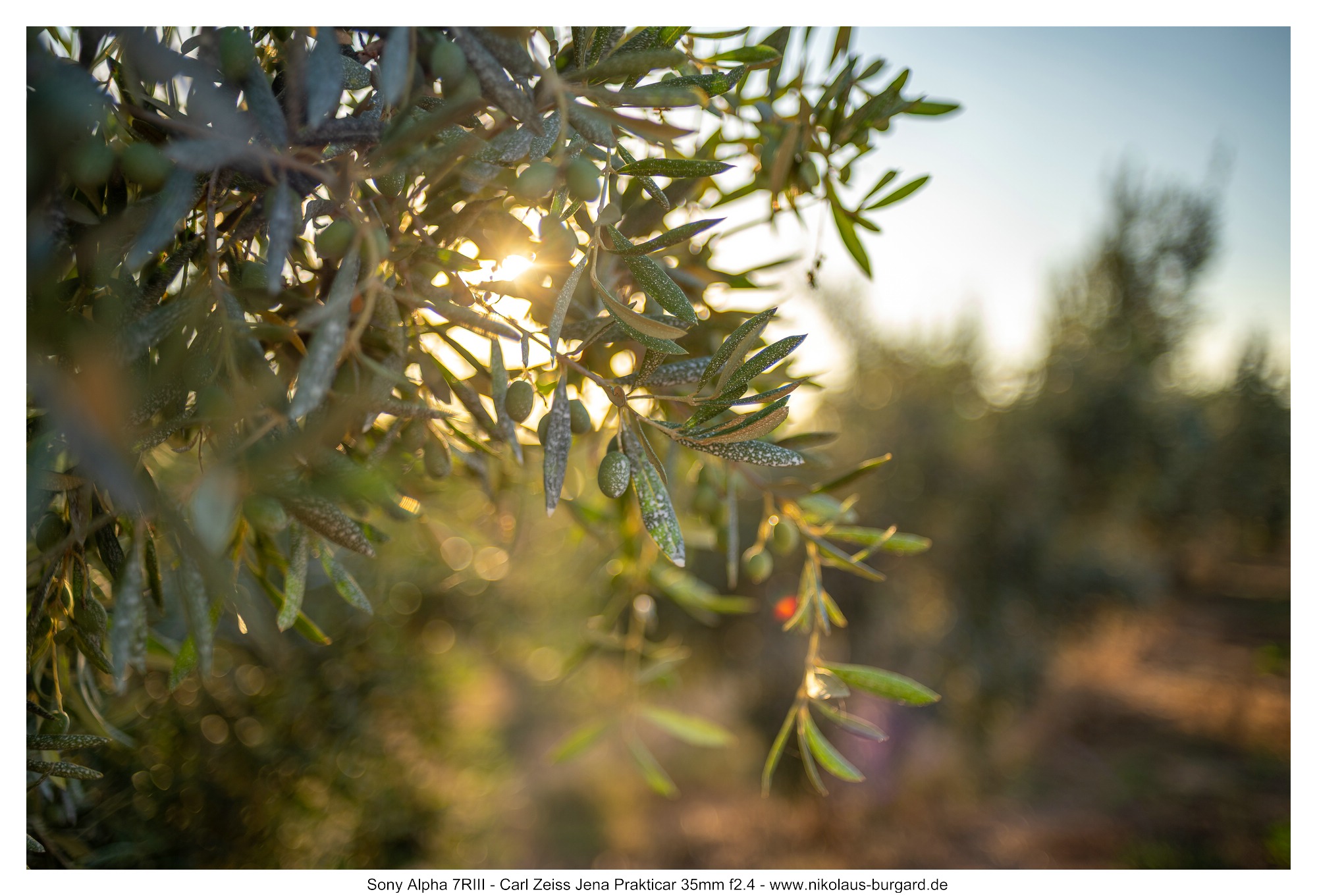
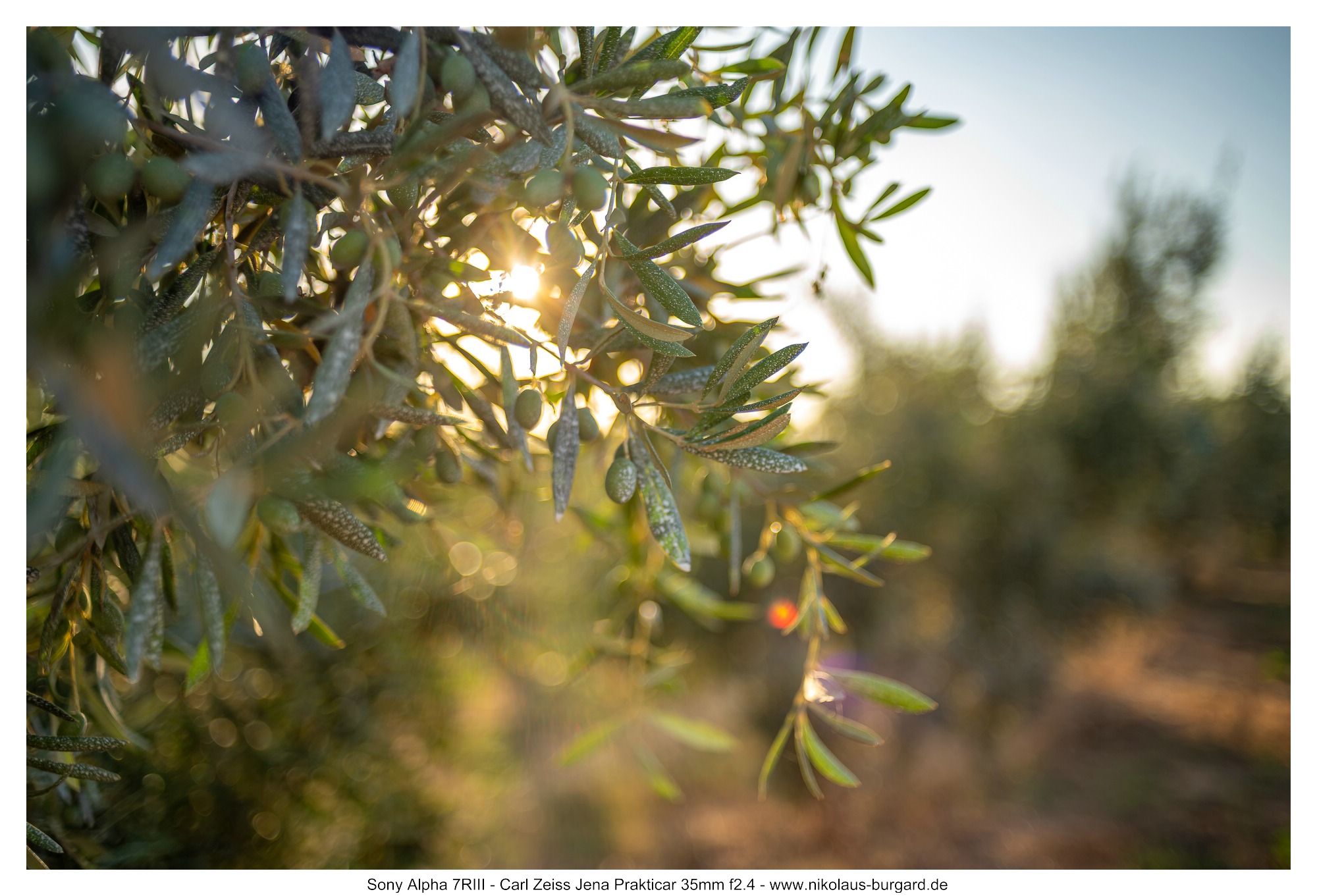
Bei Offenblende ist das Prakticar gar nicht schlecht, leichte Flares bilden sich gegenüber der unverdeckten Sonne. Bei verdeckter Sonne gibt es nur einen leichten Kontrastverlust:
The backlight behavior of the Prakticar must be considered in a very differentiated way.
Like all Prakticars, the adaptation to digital cameras suffers from its untreated, reflective aperture blades, which produce clear flares by the vagabonding
light between aperture blades and sensor protection glass. The more you stop down, the worse the flares.
In the case of open aperture, the Prakticar is not bad at all, light flares form diagonally to the uncovered sun. With the sun covered, there is only a slight
loss of contrast:


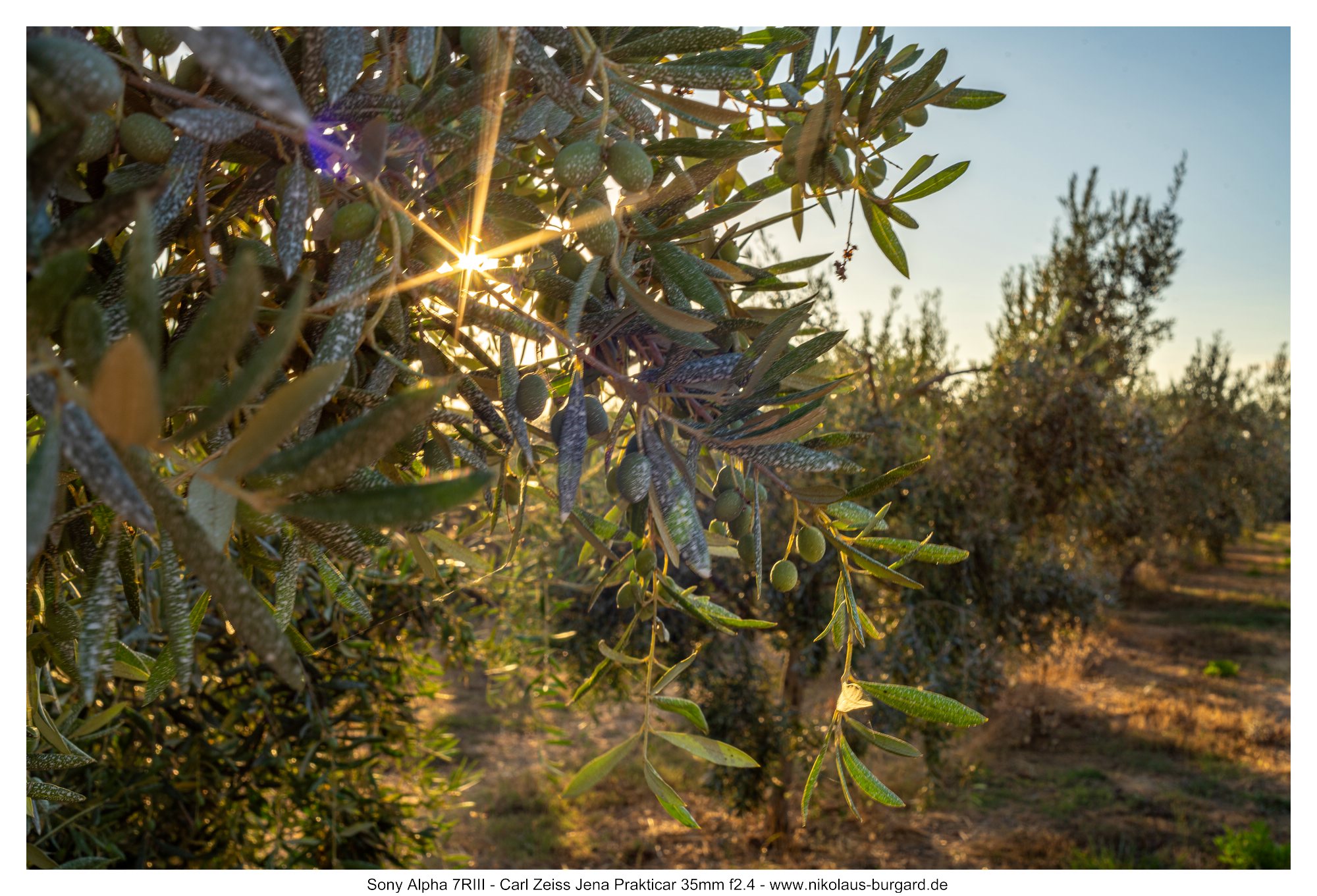
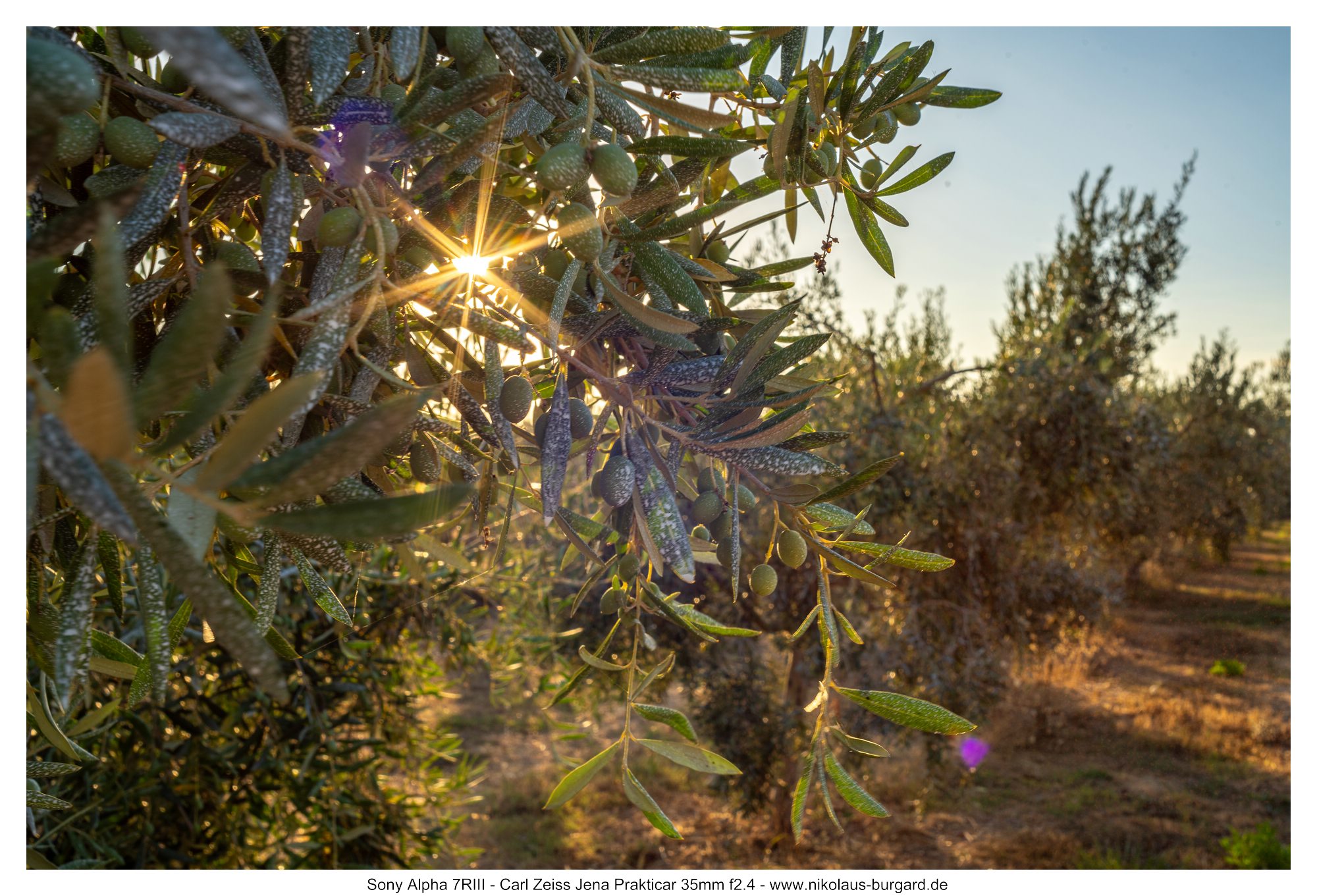
Sobald man abblendet, entstehen die oben angesprochenen lilafarbenen Flares.
Je direkter die Sonne auf das Objektiv trifft, desto schlimmer auch die Blobs:
As soon as you stop down, the above-mentioned purple flares are created.
The more directly the sun hits the lens, the worse the blobs:
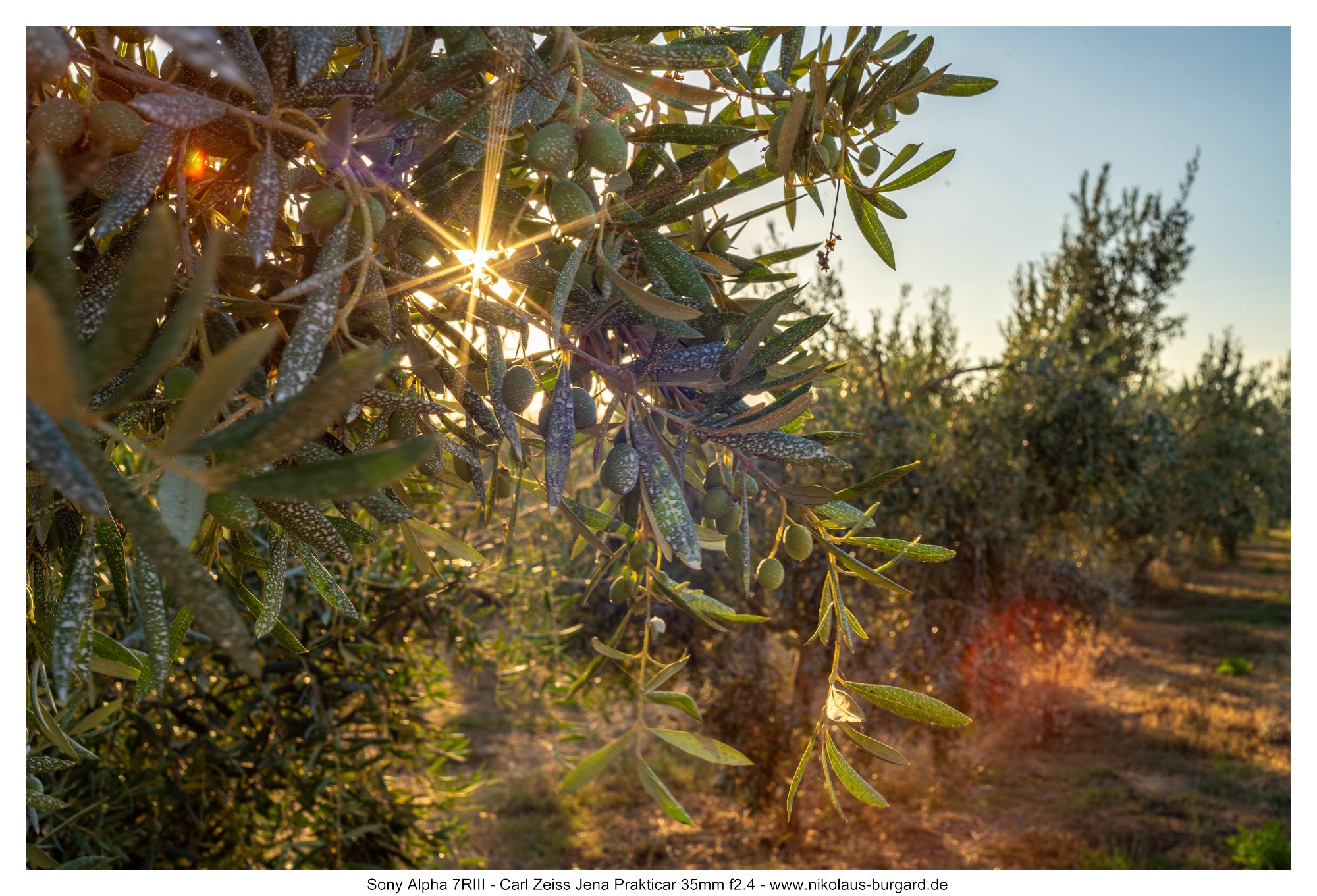
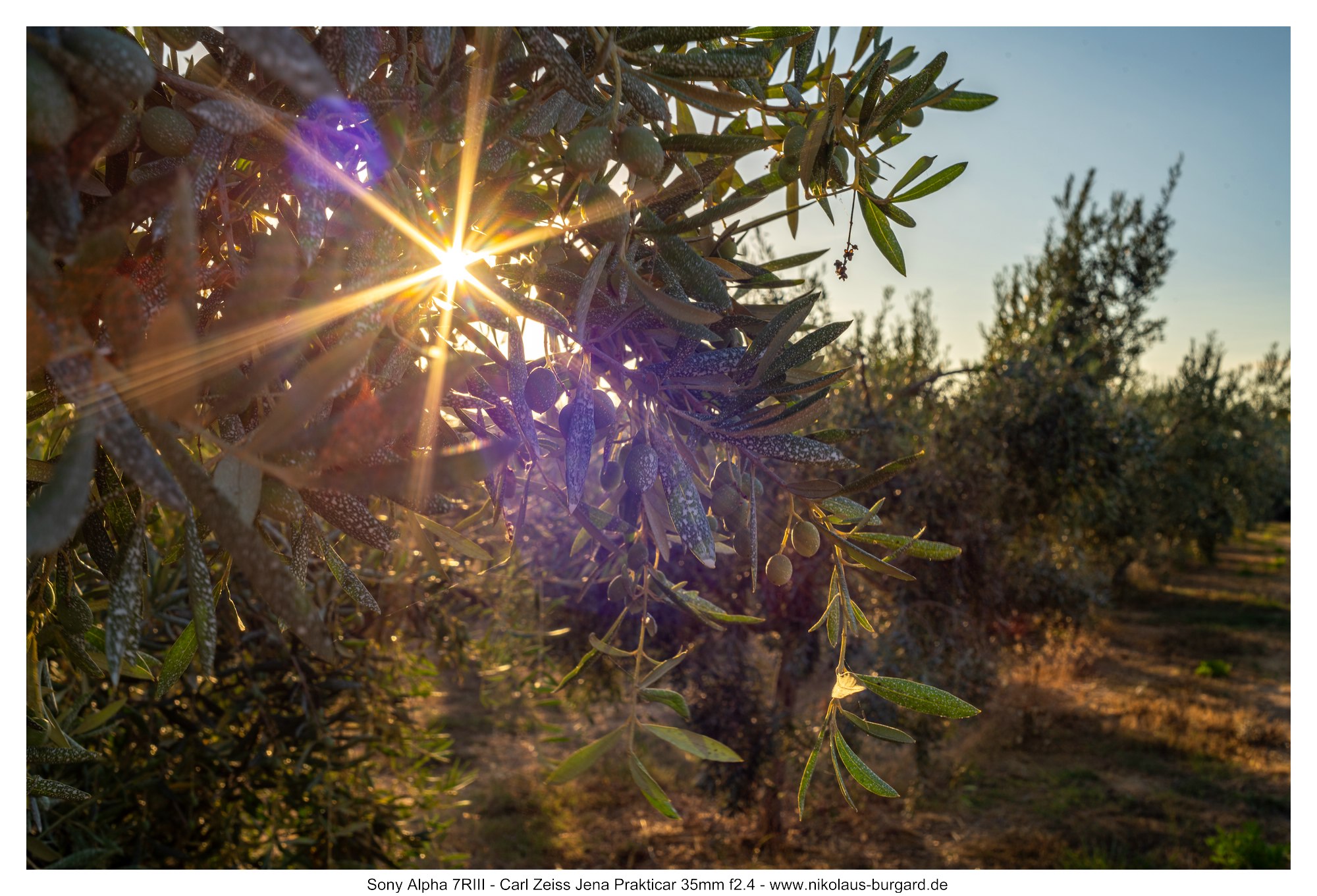
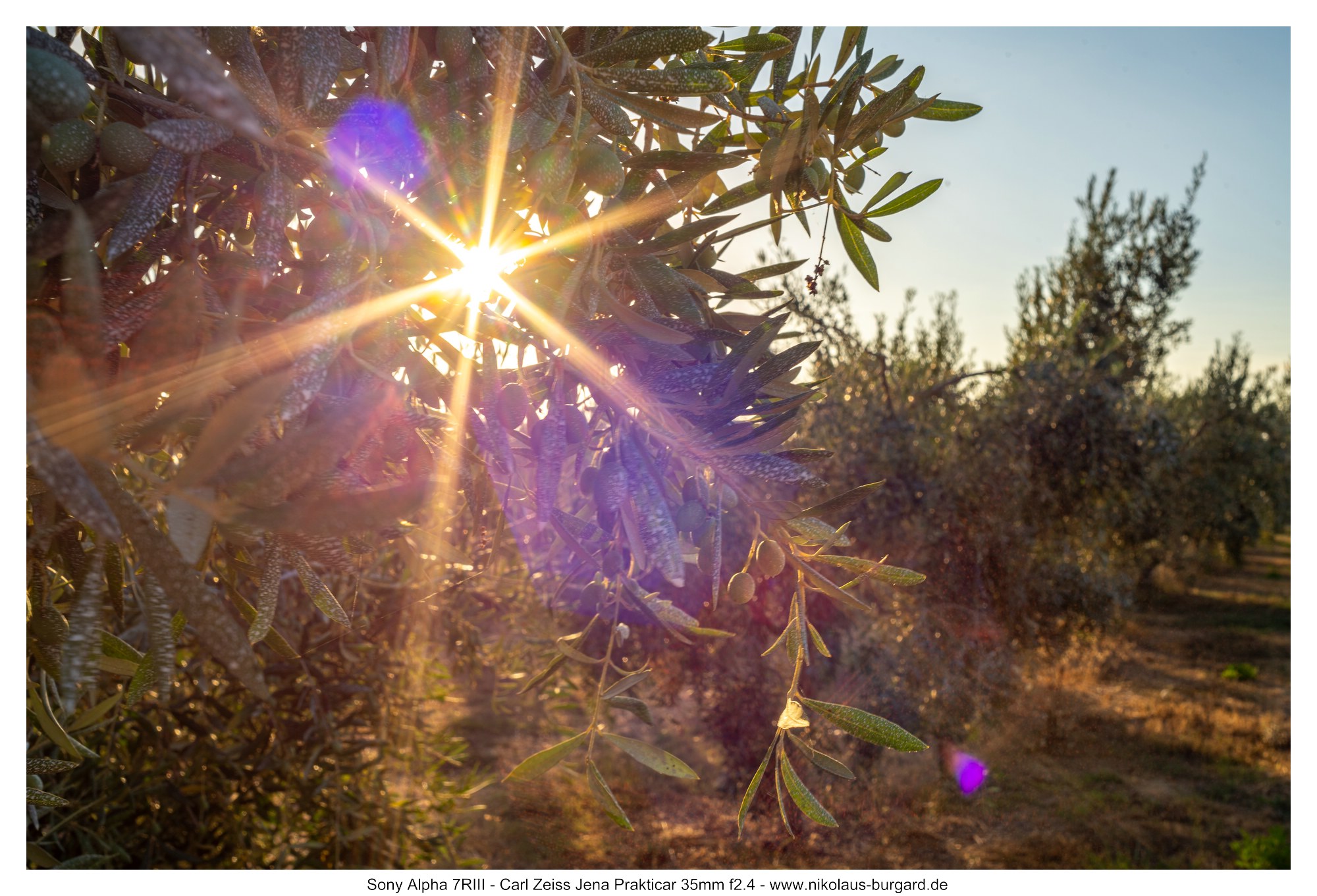


Durch leichtes Umkomponieren kann man die Situation oft retten bzw. beeinflussen.
Das erste Bild wäre für mich in Ordnung, bei den beiden anderen gibt es schon die lila Flecken:
By slightly recomposing, the situation can often be saved or influenced.
The first picture would be fine for me, with the other two there are already the purple spots:
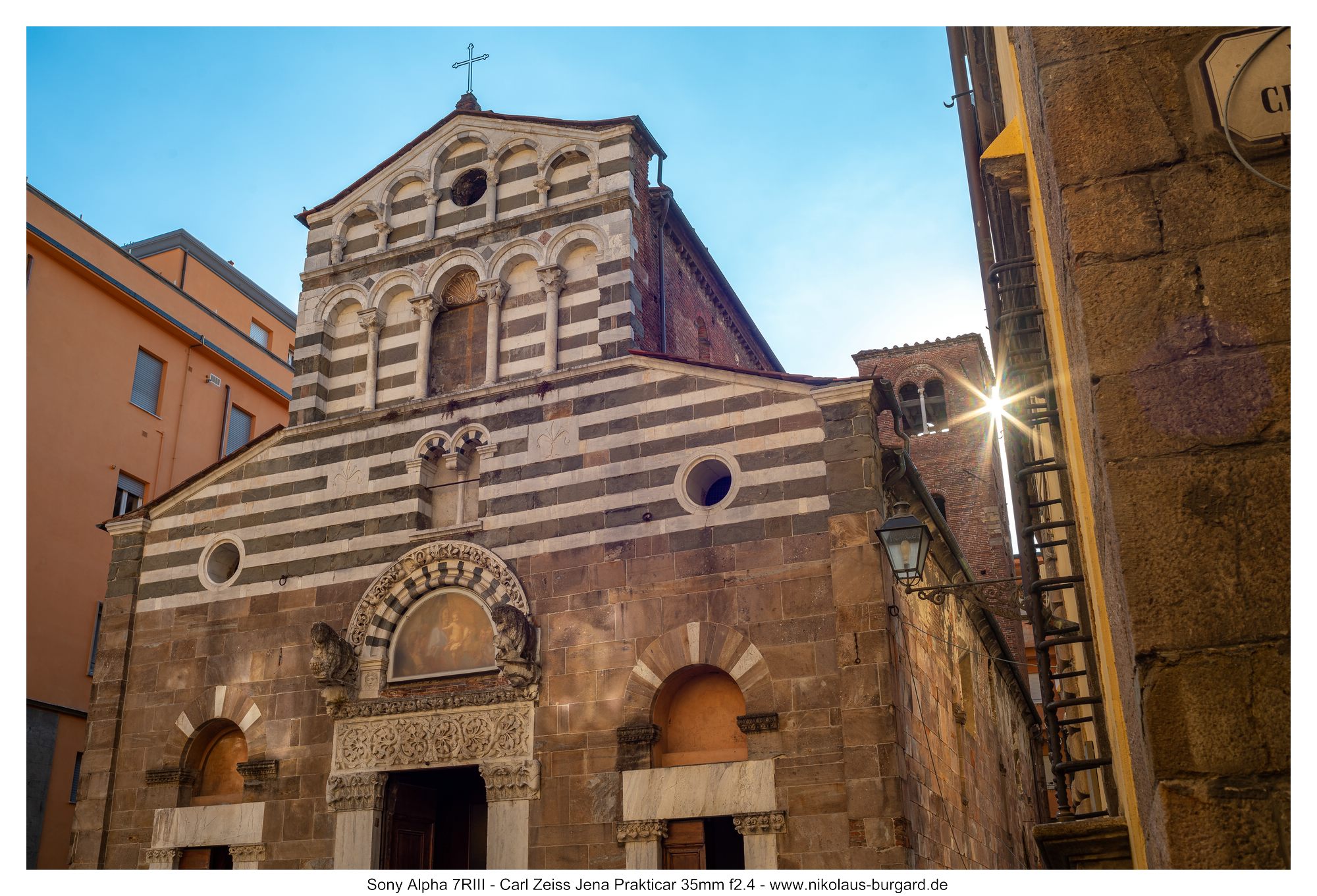
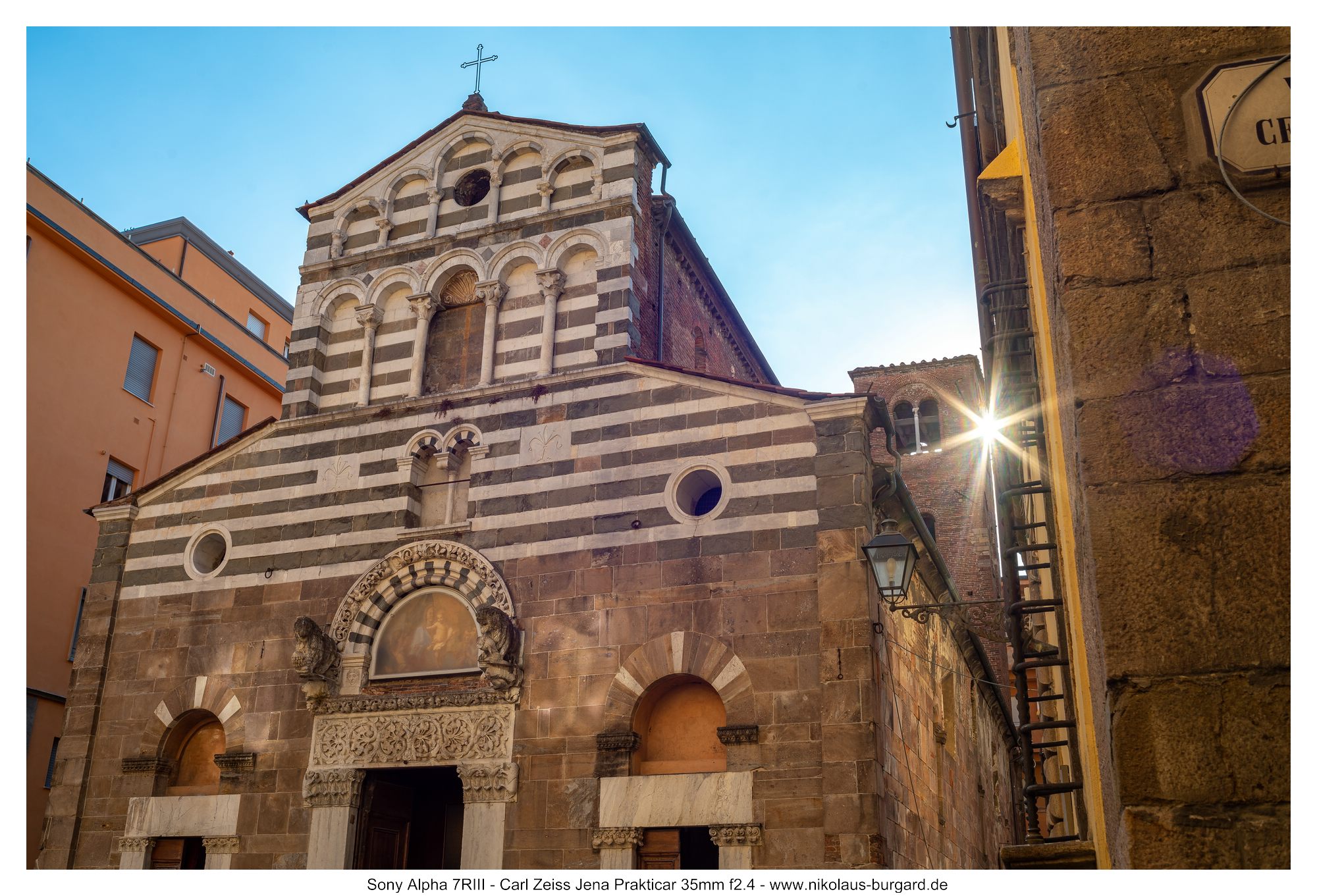
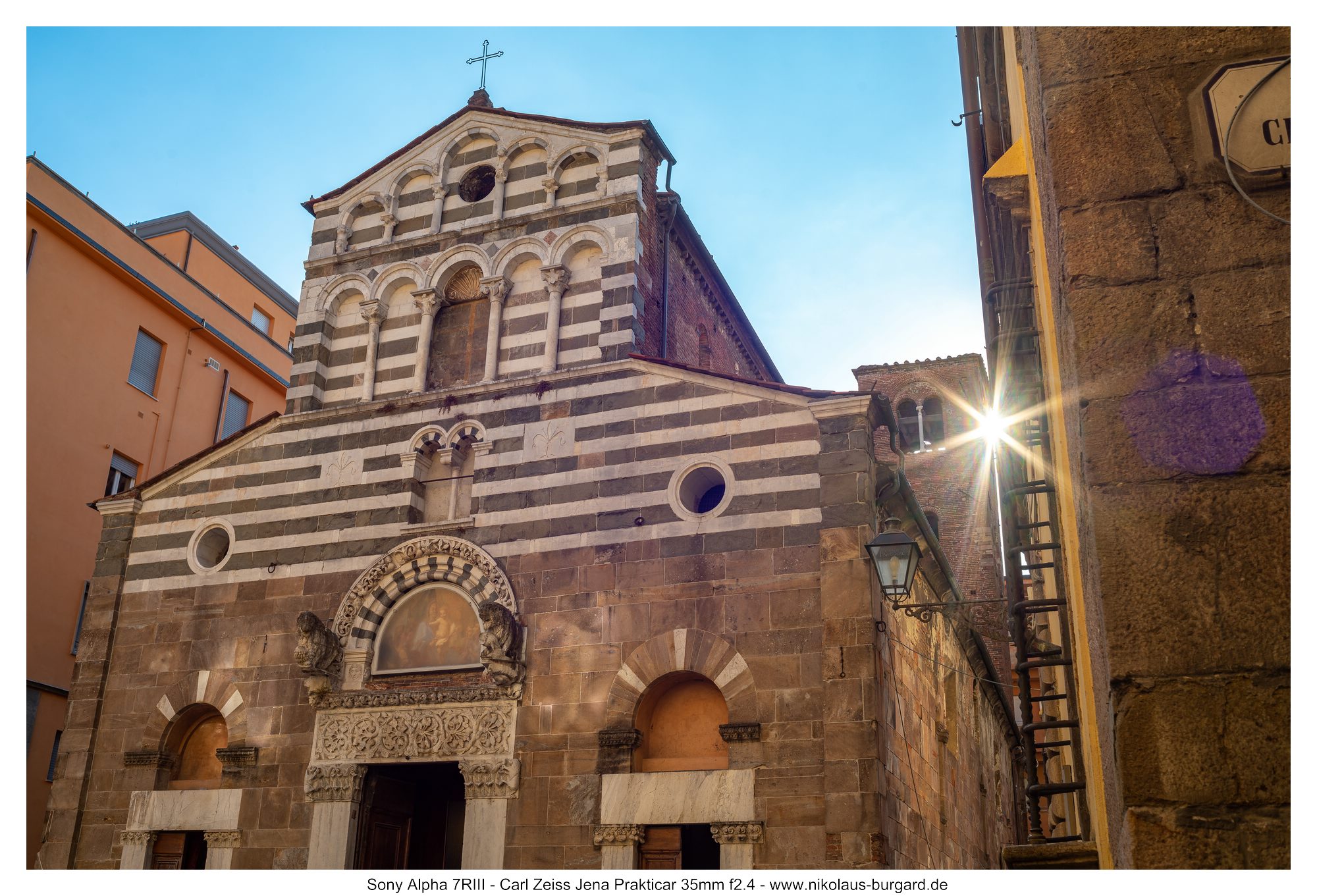


Natürlich ist auch die Position der Sonne im Bild von Bedeutung.
An manchen Positionen gibt es schlimmerer Reflexe als an Anderen:
Of course, the position of the sun in the picture is also important.
In some positions there are worse reflexes than in others:
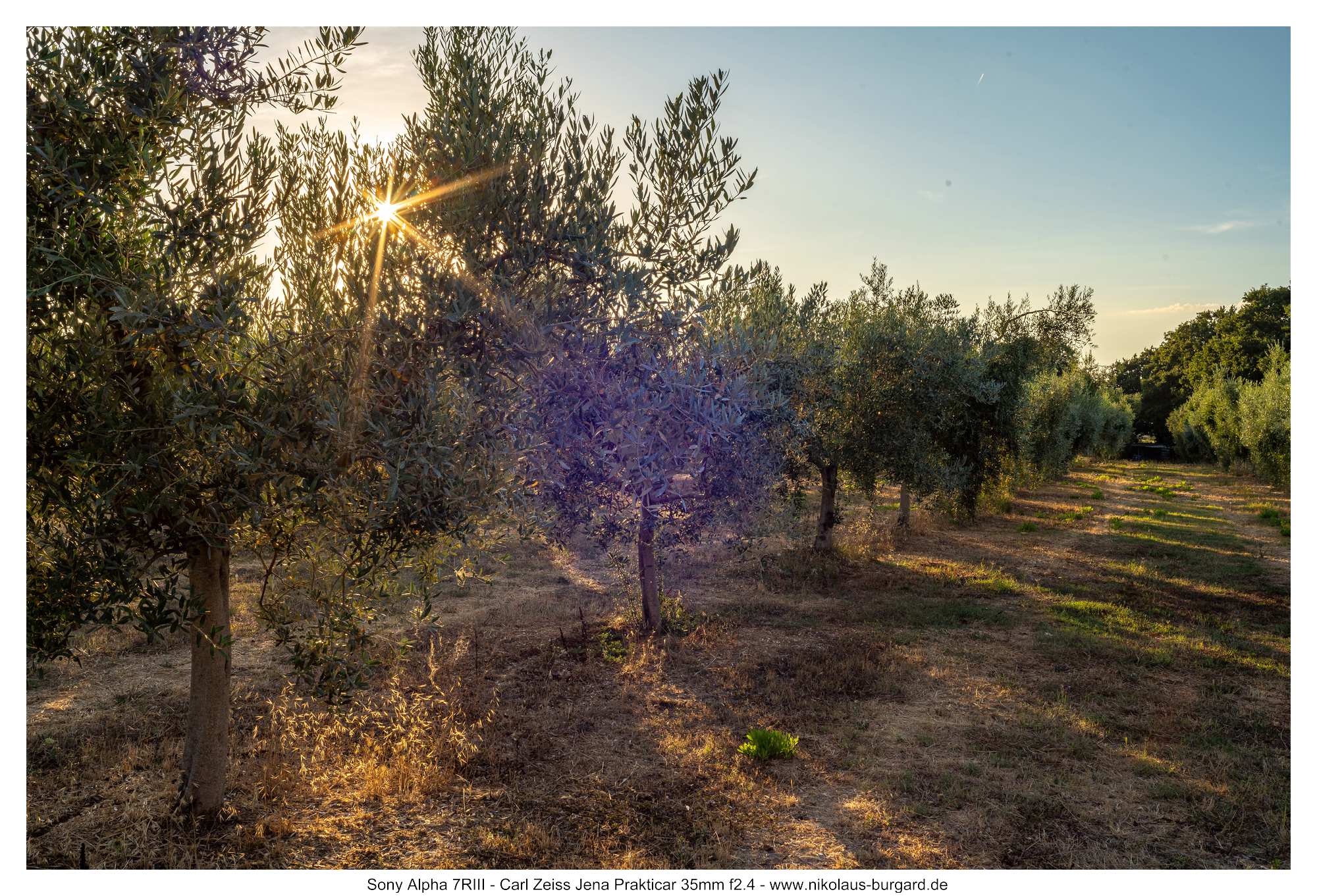
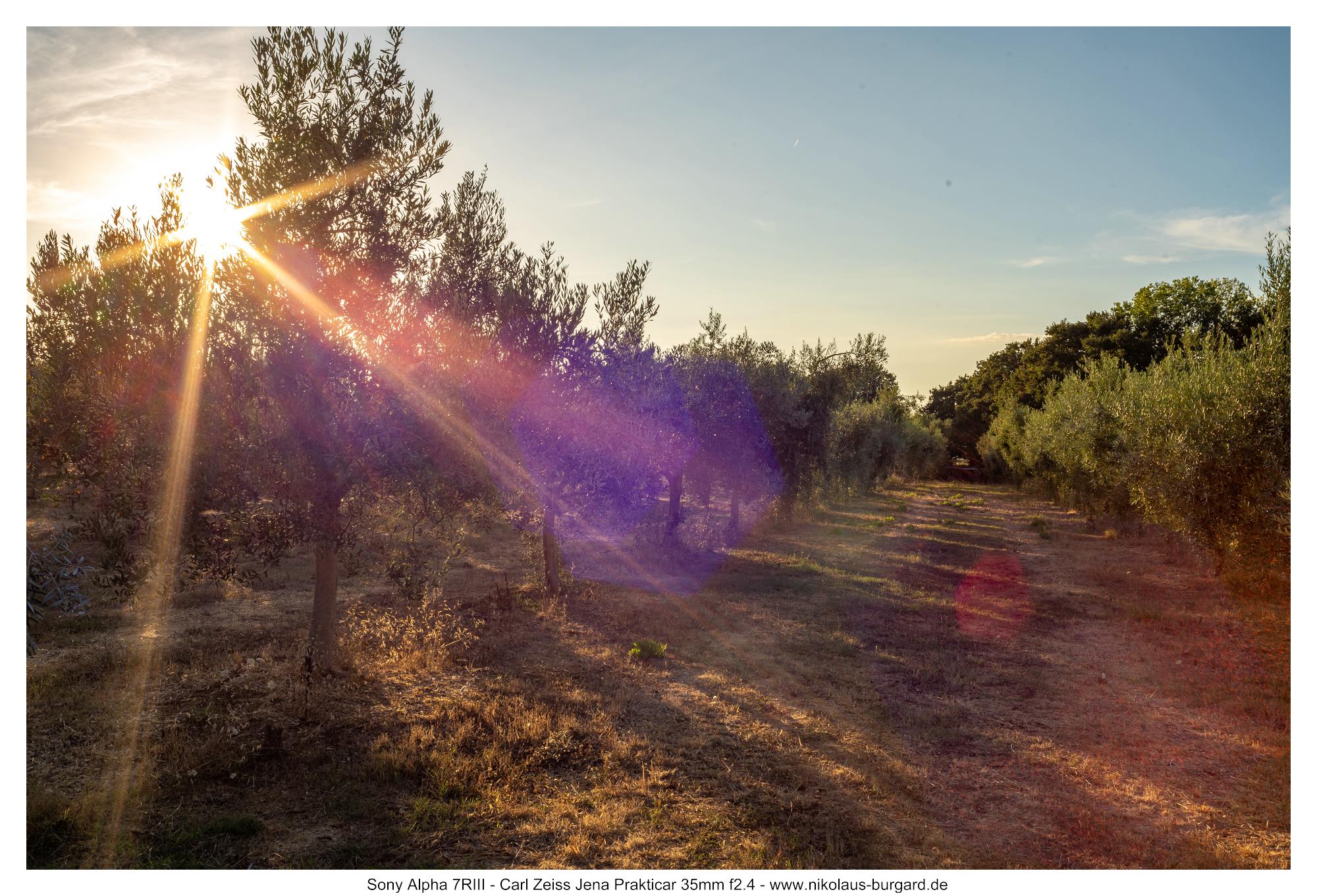


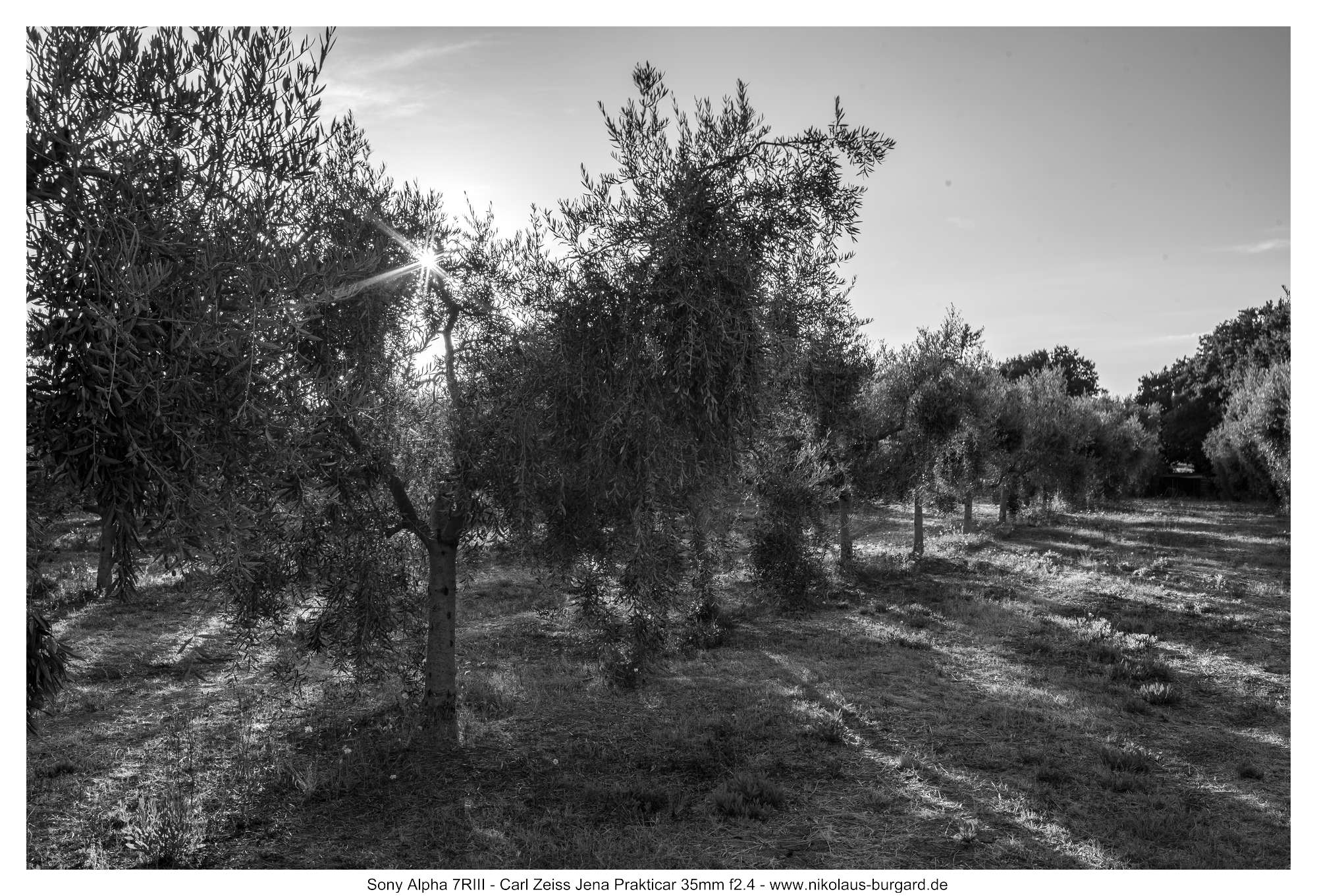
Eine Möglichkeit bietet das Wandeln nach Schwarz-Weiss. Dann verschwinden die Blobs vollkommen.
One possibility is to convert to black and white. Then the blobs disappear completely.
Wenn man das Objektiv wie ursprünglich gedacht an einer Filmkamera einsetzt,
gibt es diese Reflektionsprobleme nicht. Hier zeigt sich, wie wirkungsvoll die MC-Beschichtung von Carl Zeiss Jena ist.
If you use the lens on a film camera as originally thought,
there are none of these reflection problems. This shows how effective the MC coating by Carl Zeiss Jena is.
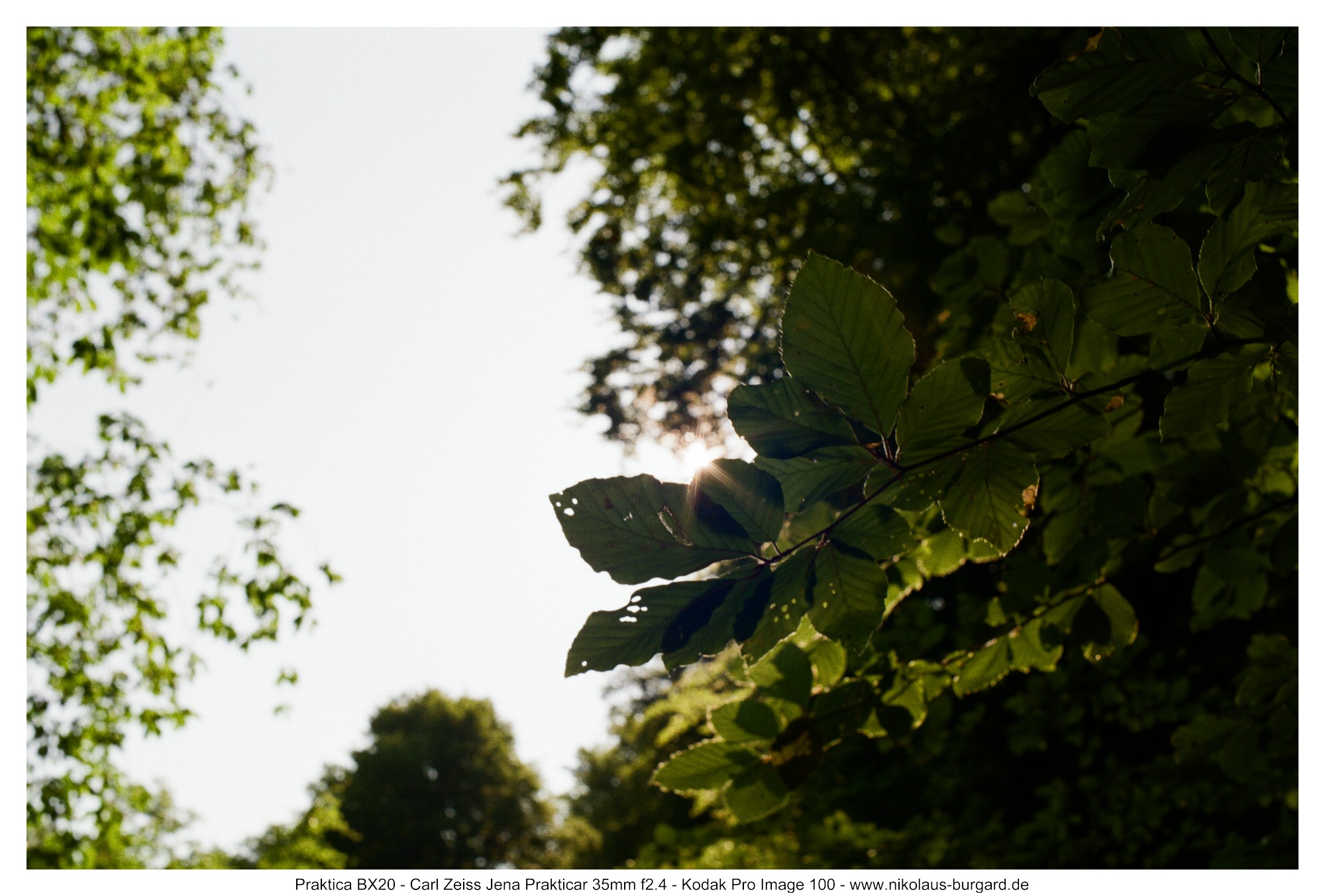
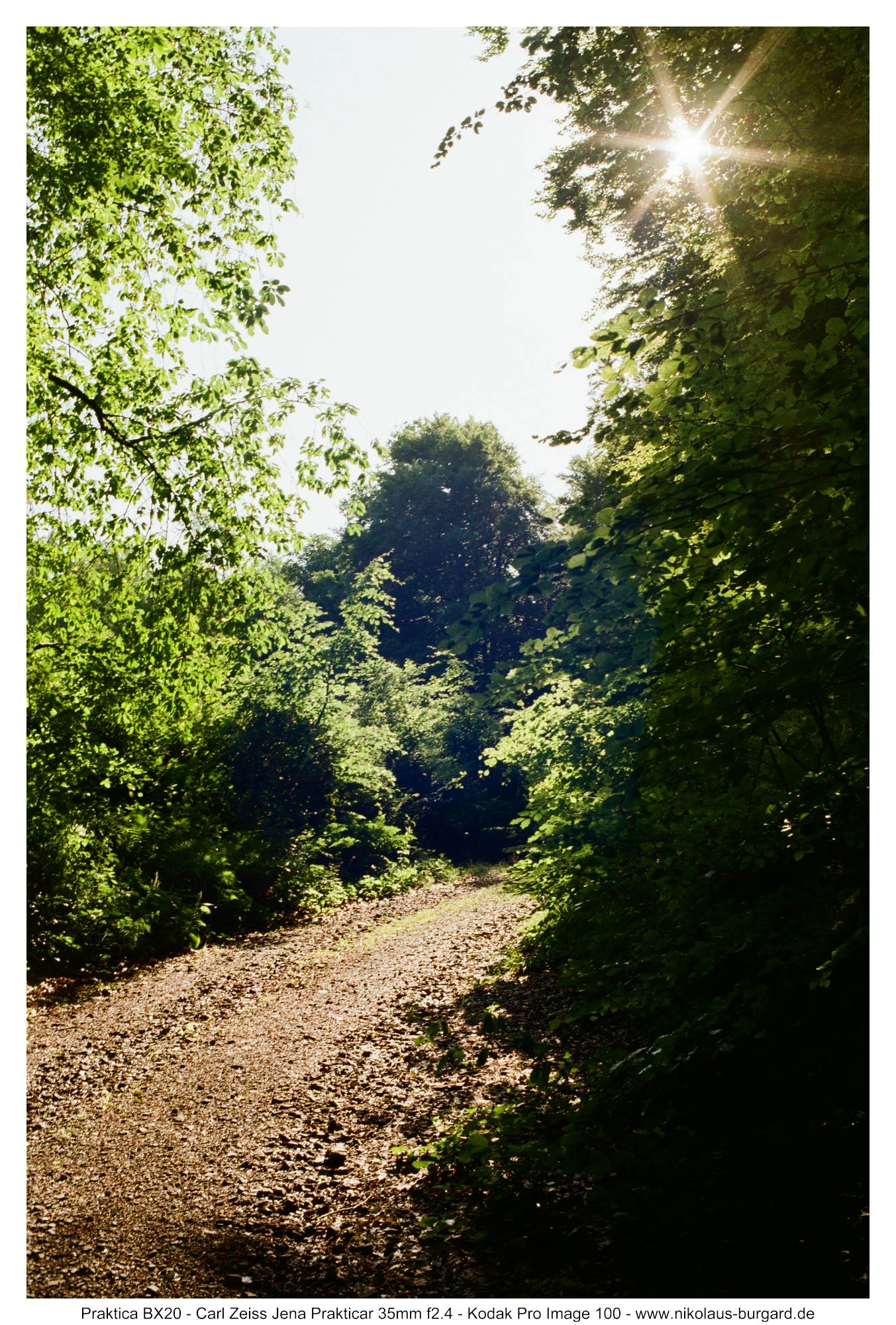
Zusammenfassend kann man sagen, dass das Prakticar 35mm f2.4 eigentlich sehr gut im Gegenlicht ist. Leichter Kontrastverlust, das wars.
Nur bei der Nutzung am Digitalsensor ergeben sich Probleme durch Reflektionen zwischen Blende und Sensorschutzglas, die zu hässlichen lila Blobs führen.
In summary, the Prakticar 35mm f2.4 is actually very good in the backlight. Slight loss of contrast, that was it.
Only when using wit the digital sensor problems arise from reflections between the aperture and the sensor protection glass, which leads to ugly purple blobs.
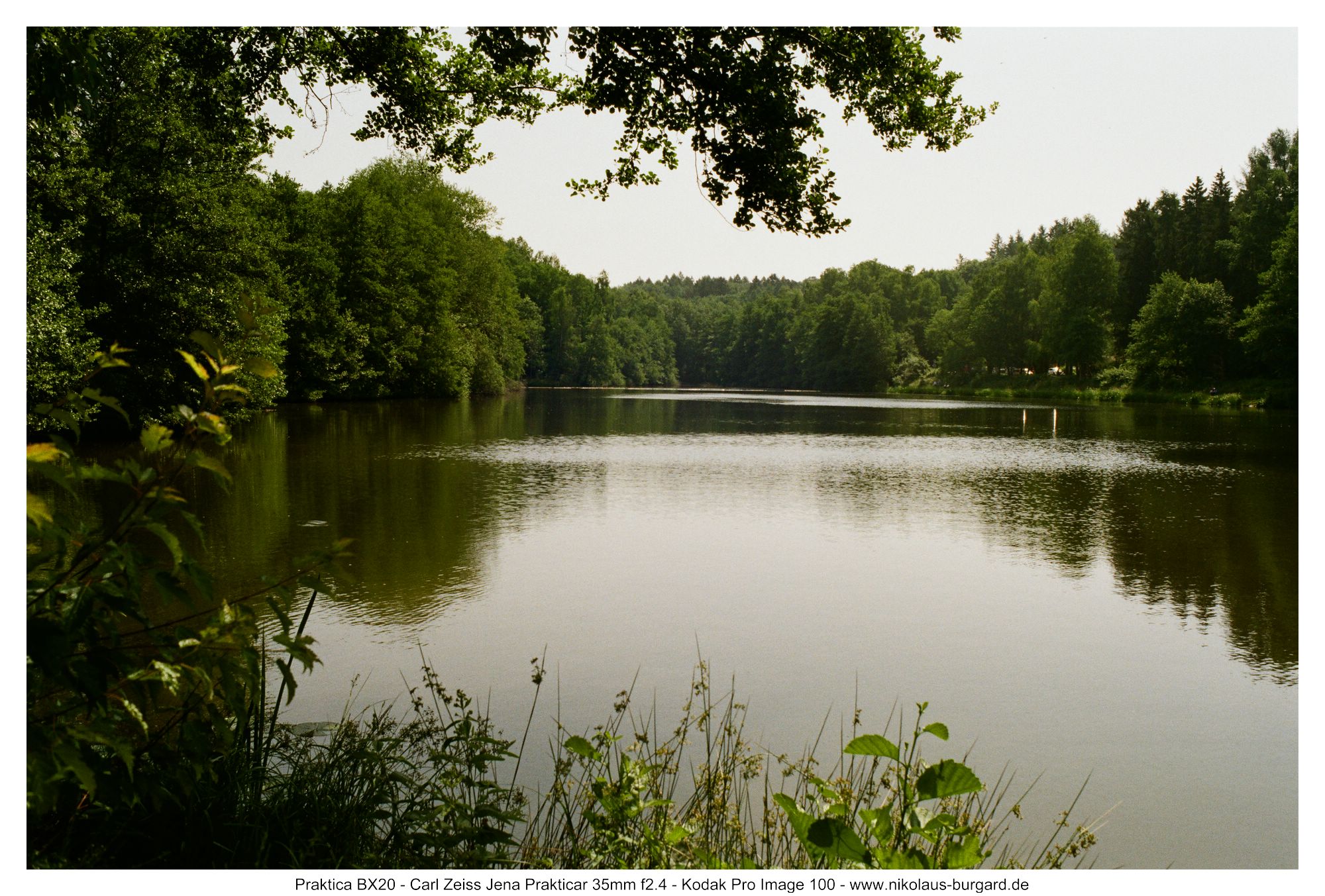
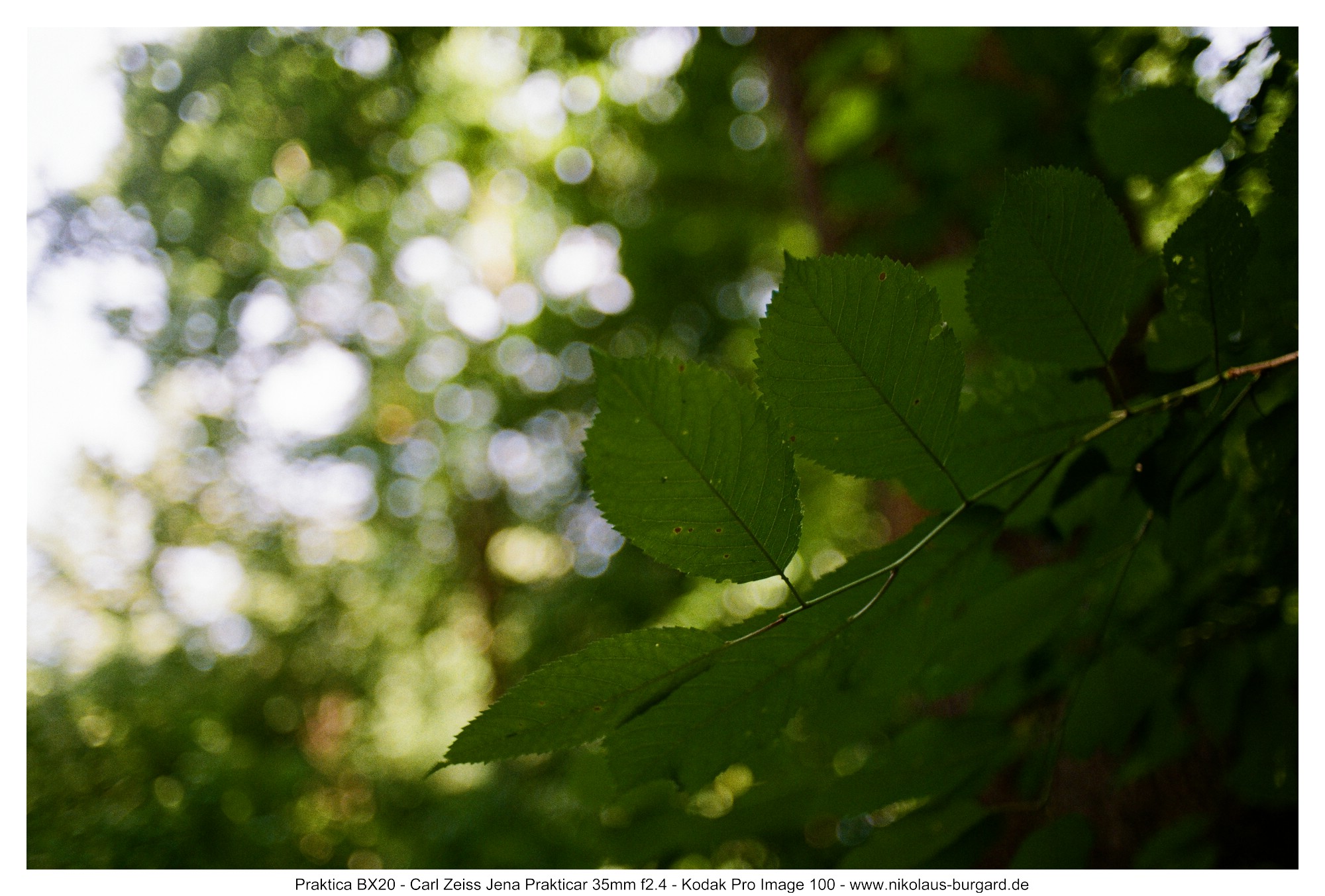
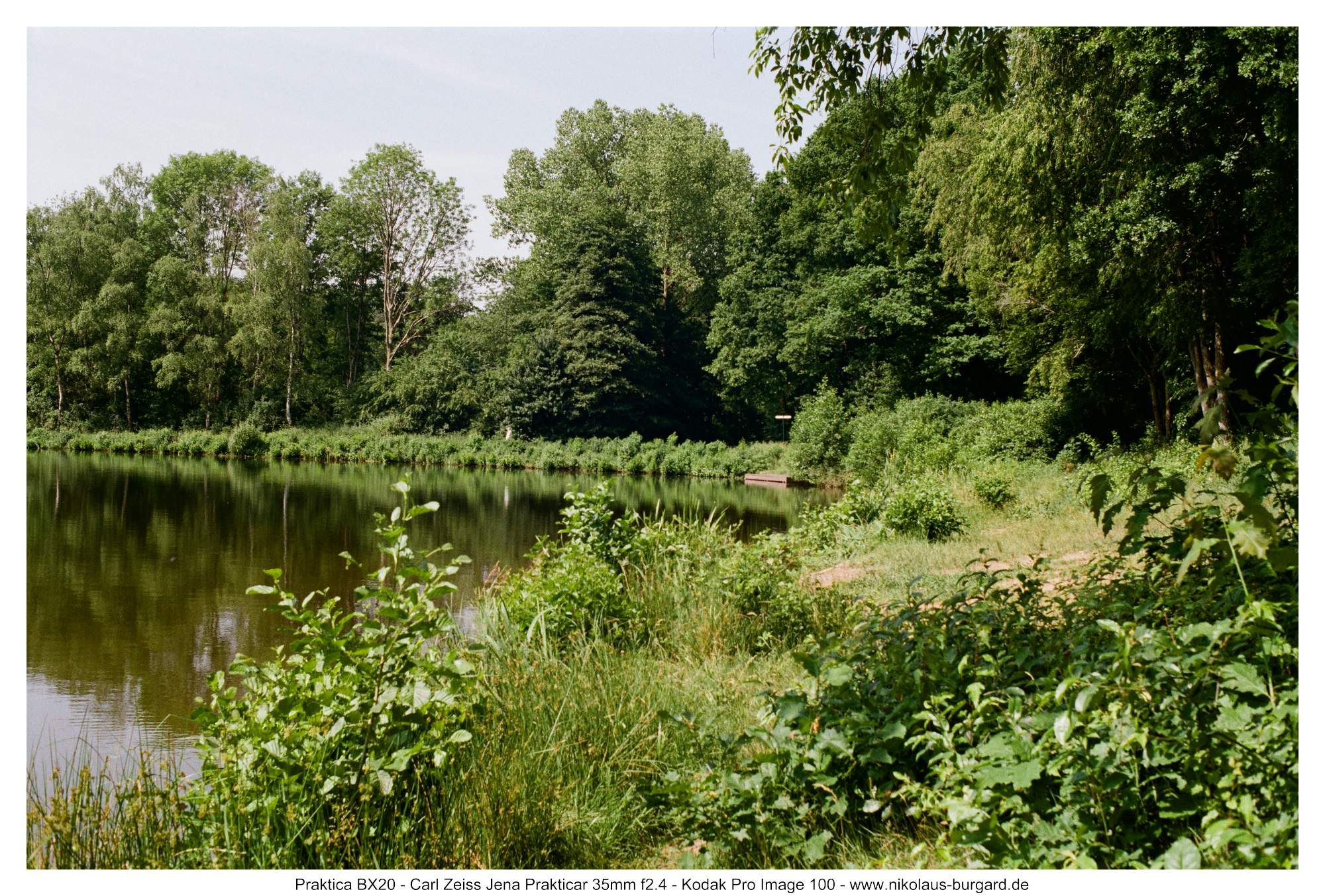
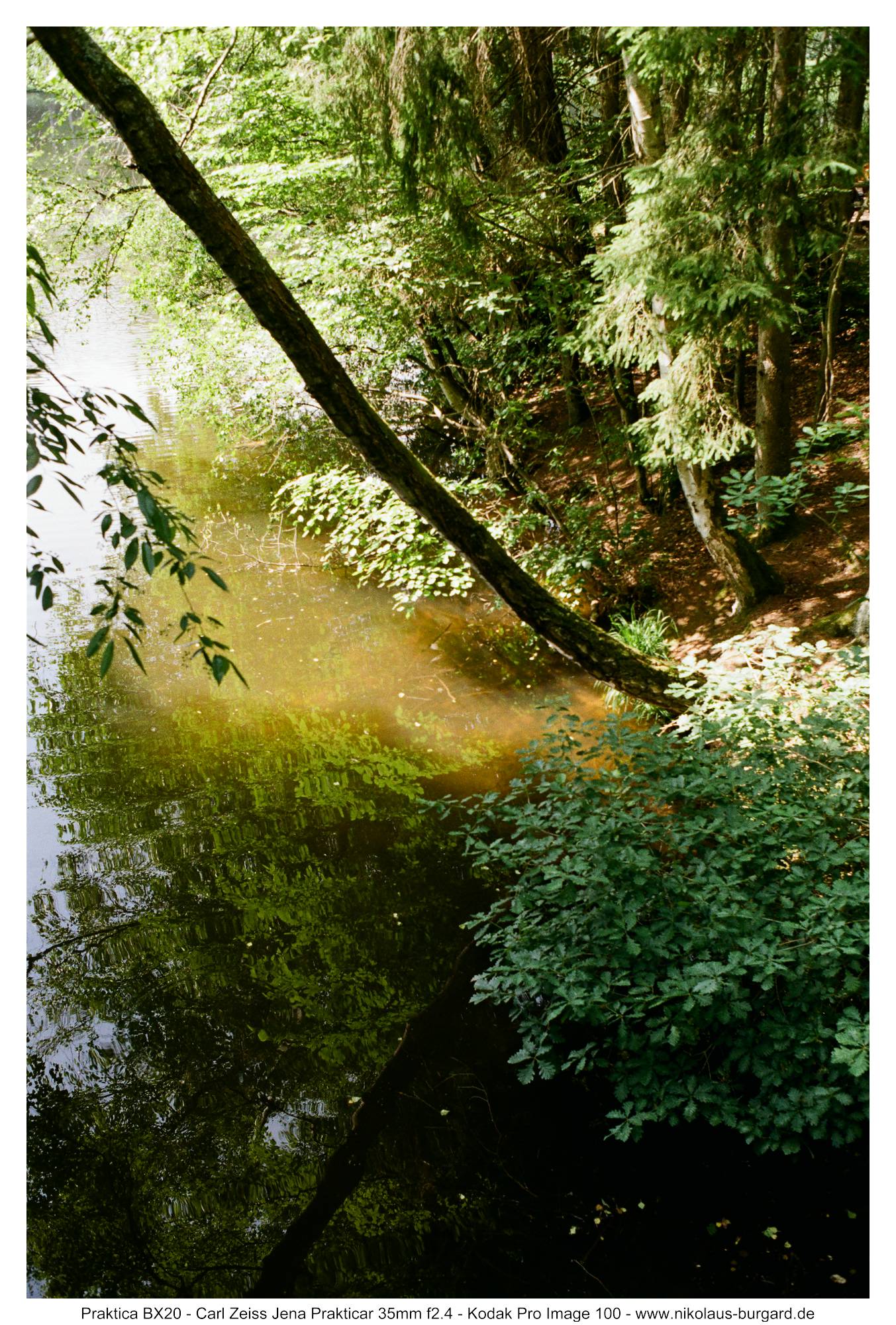
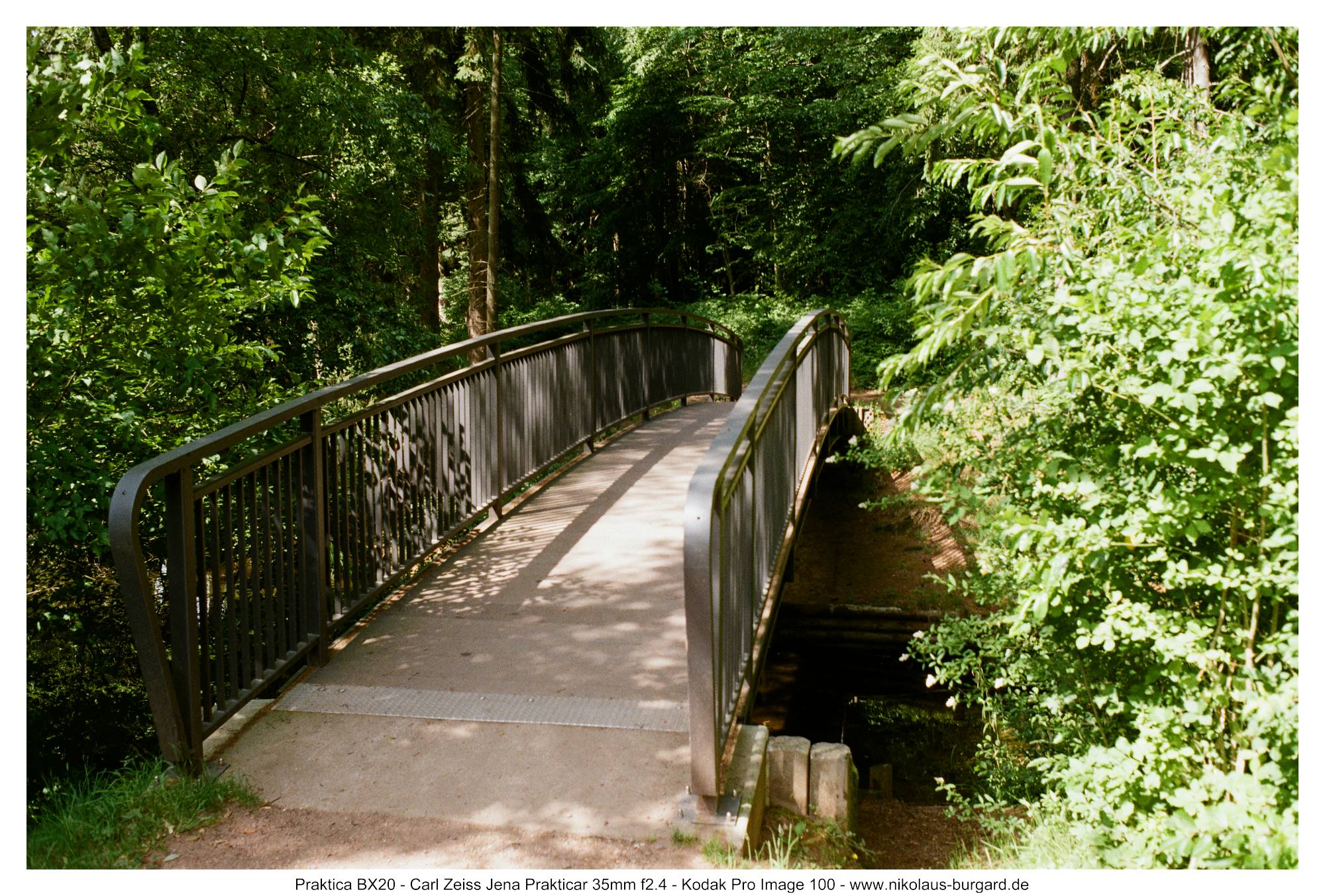
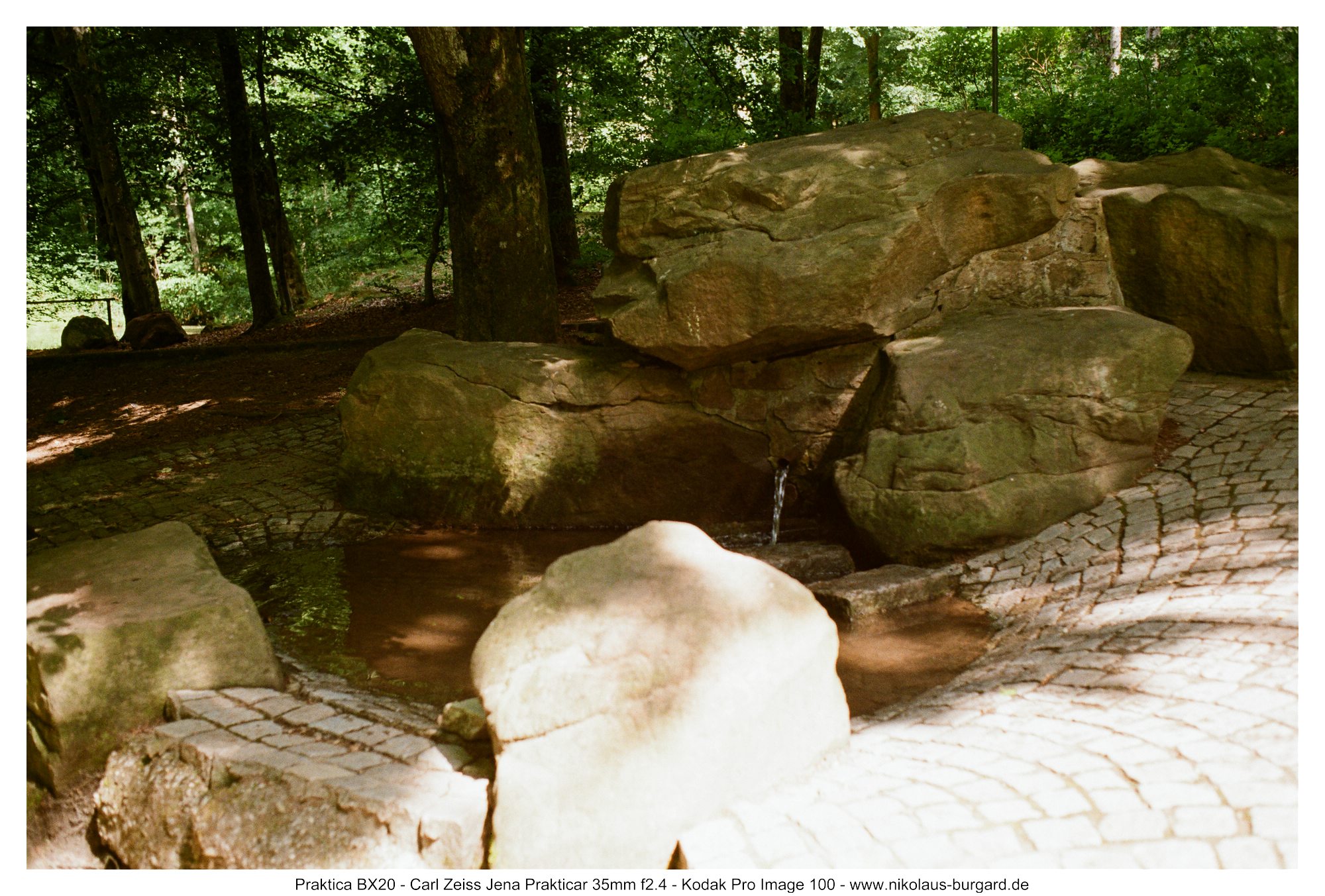
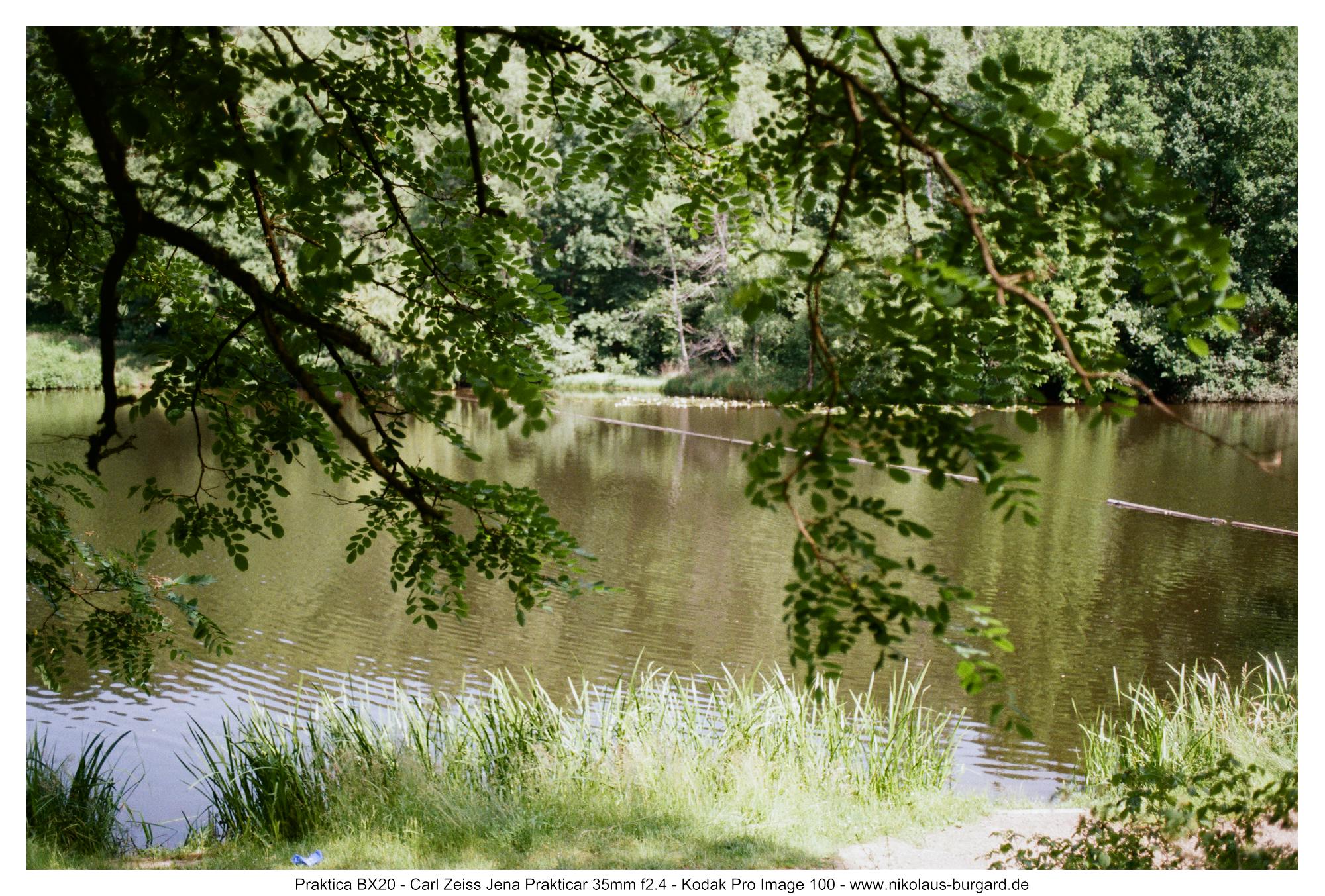
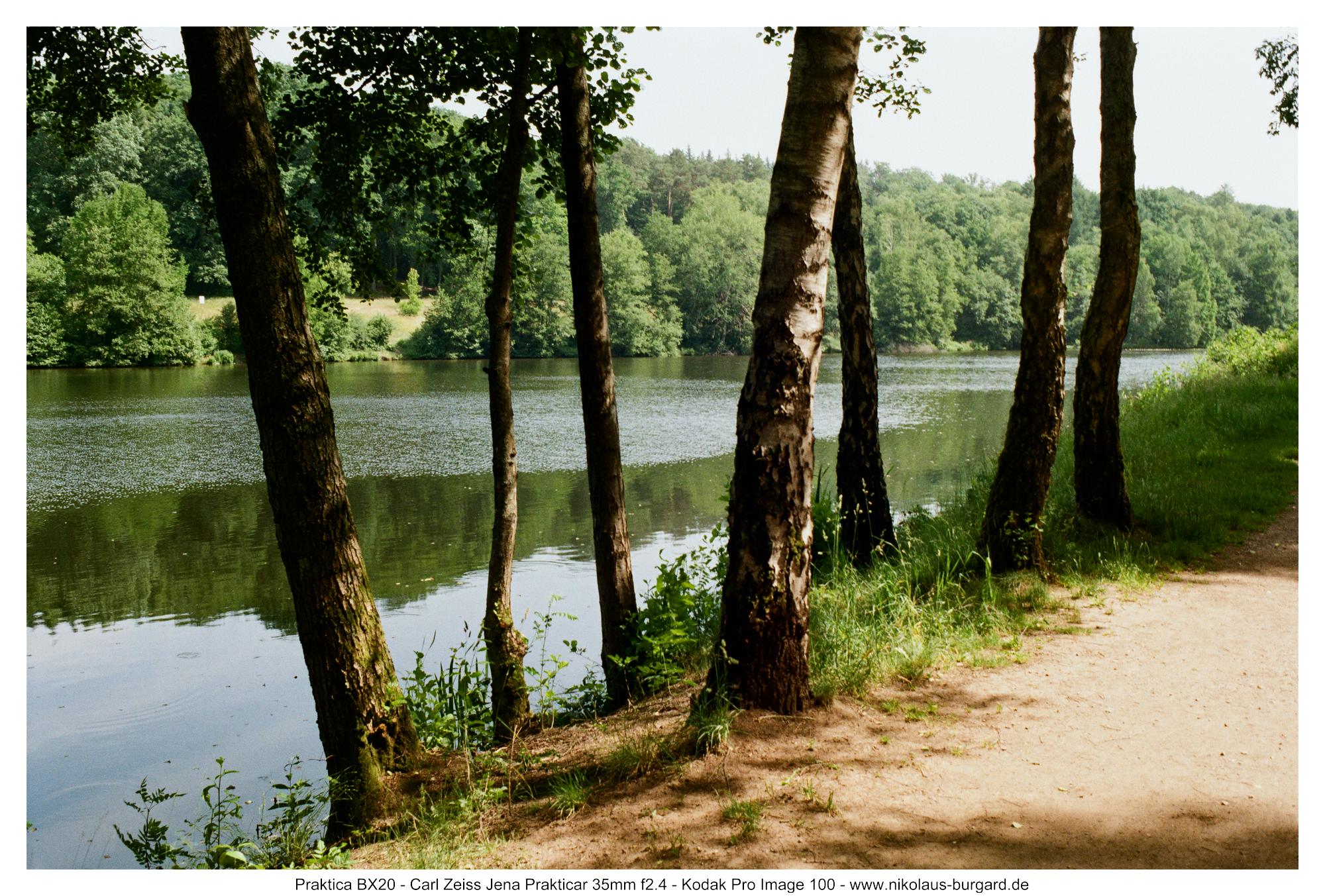
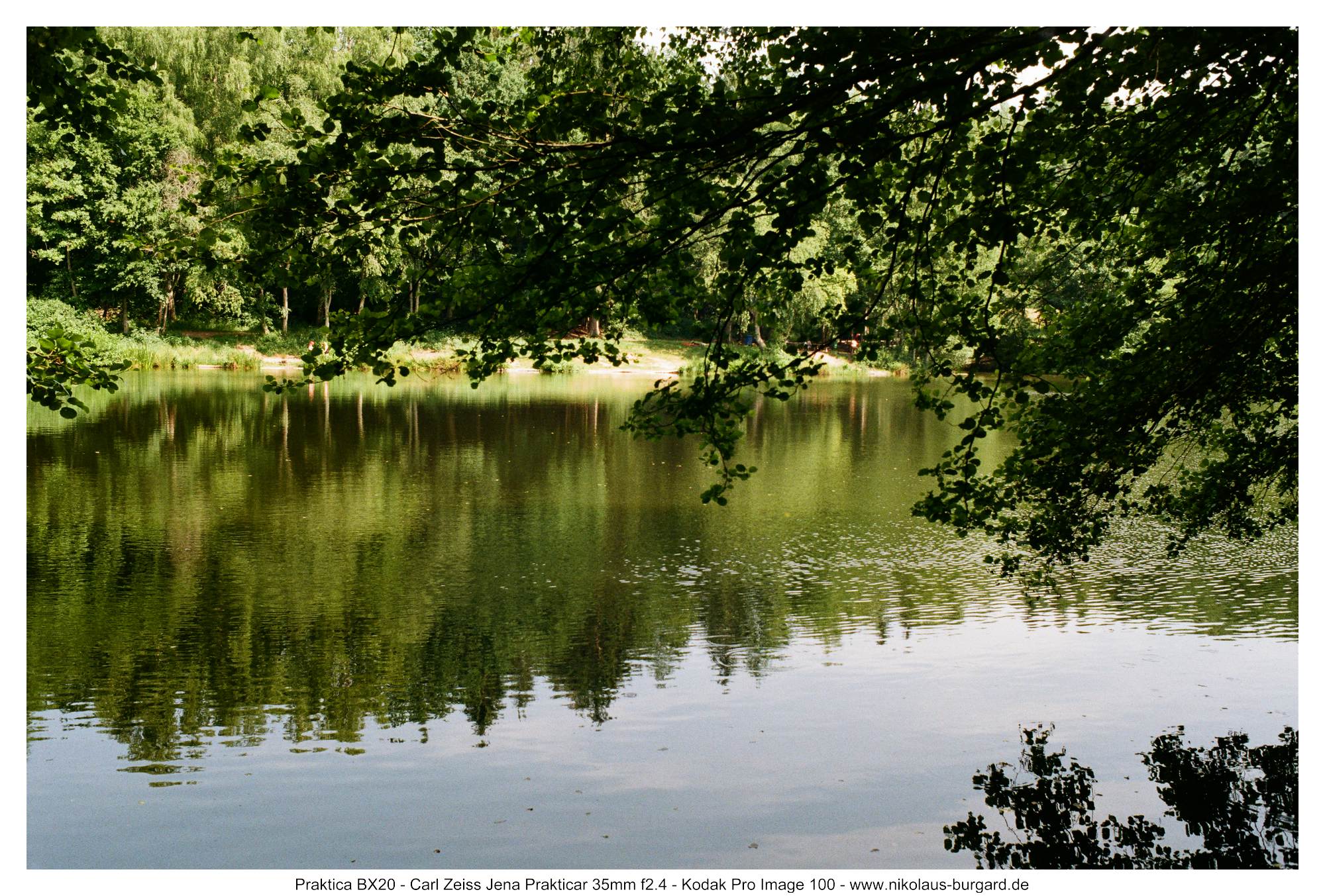
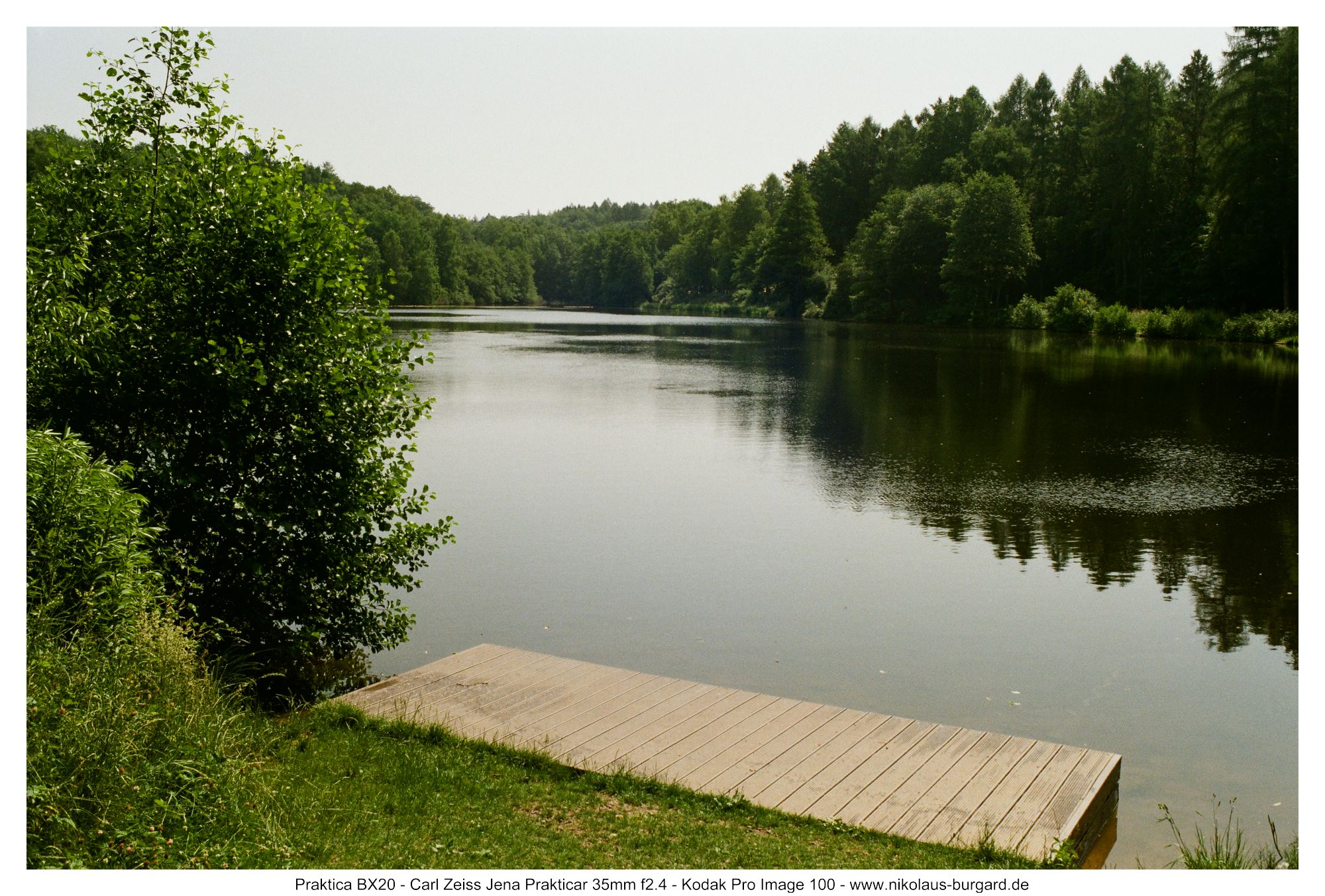
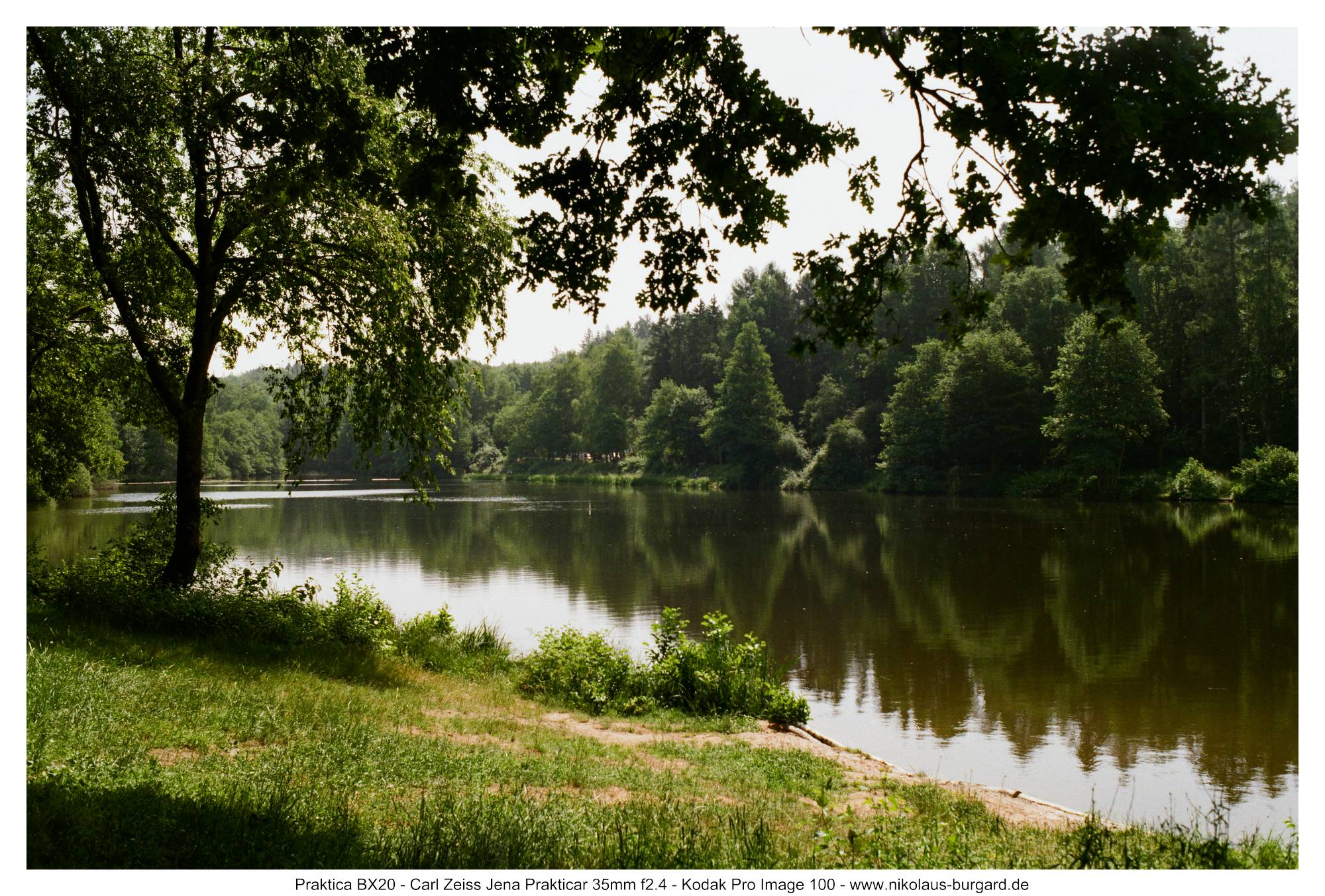
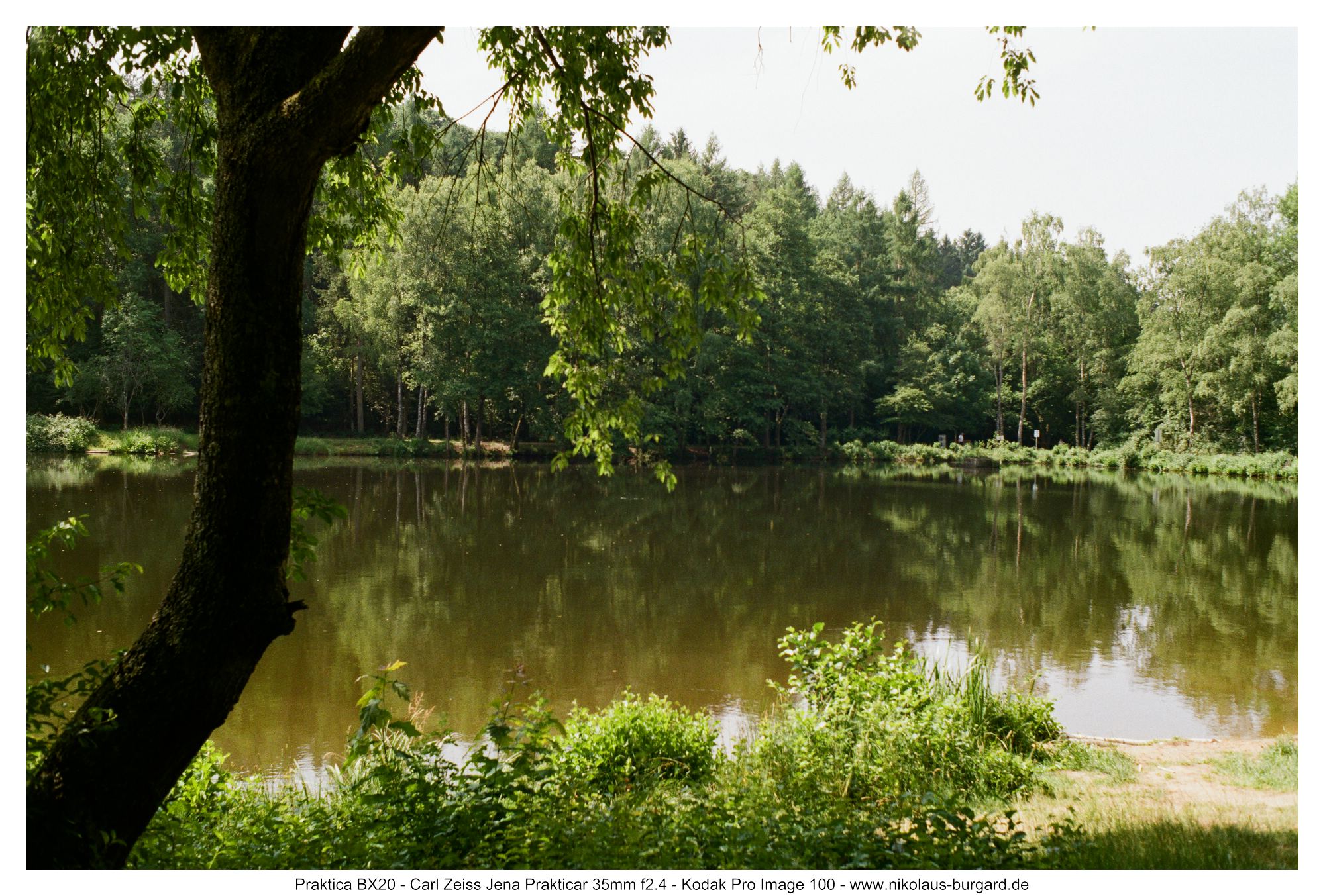
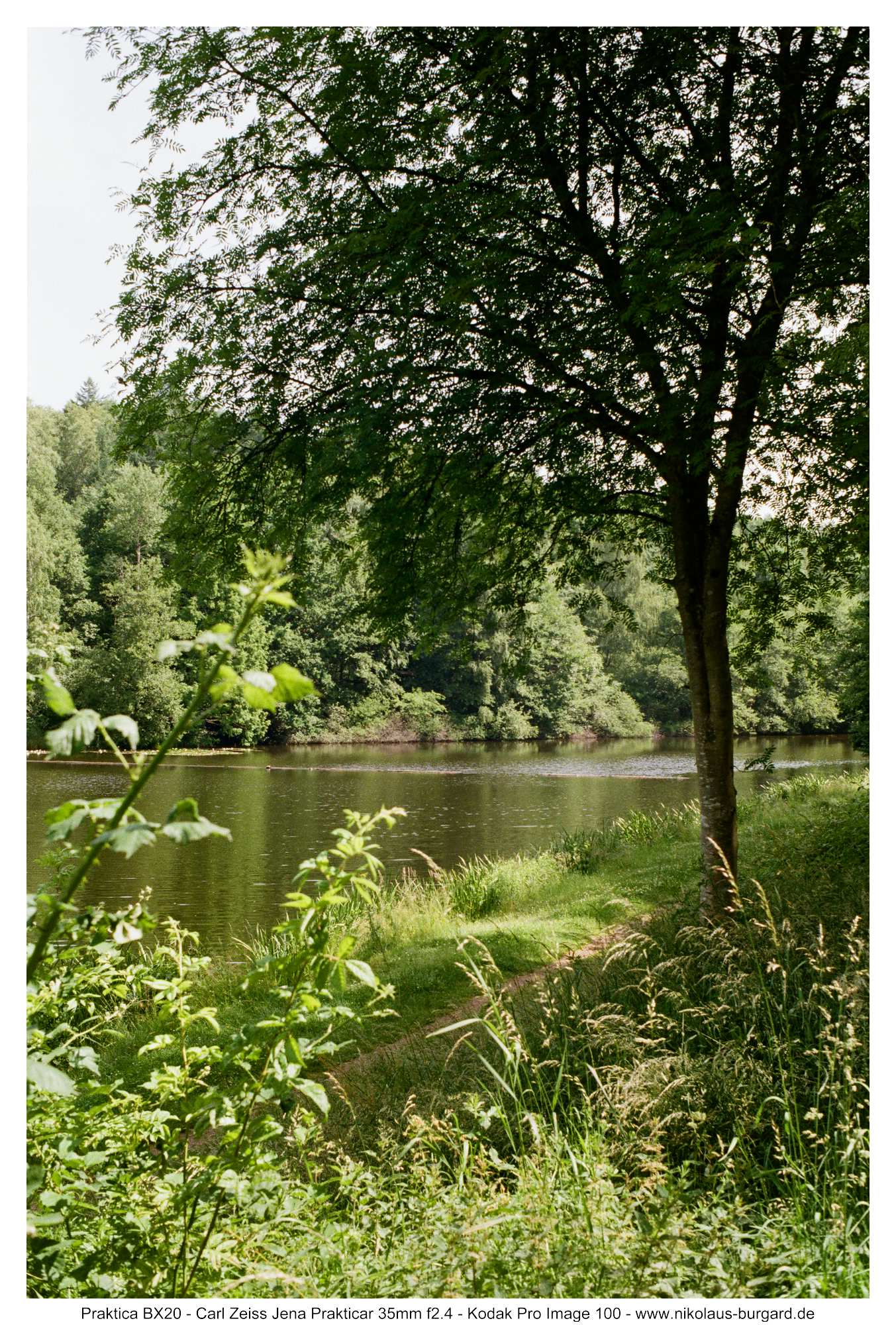
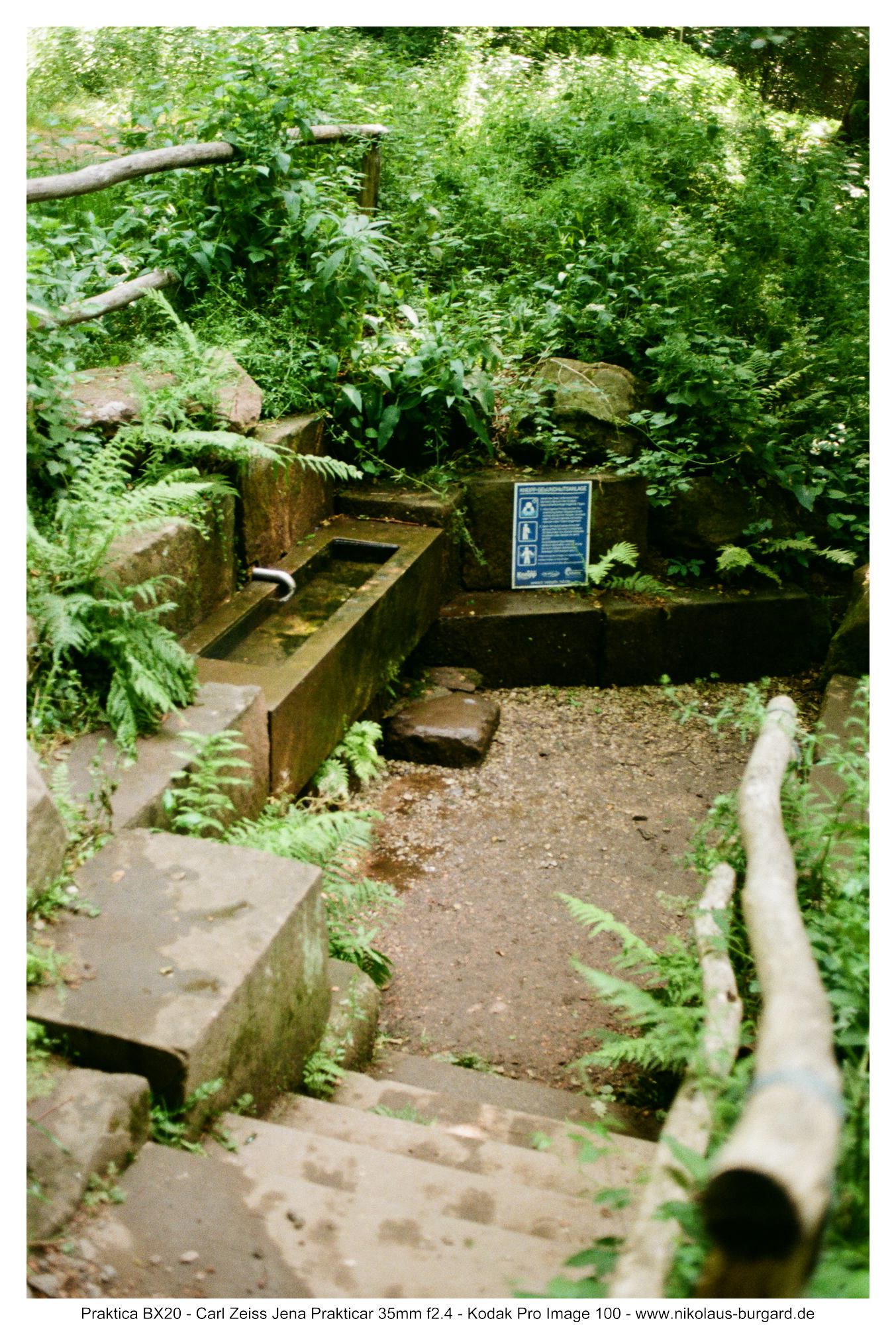
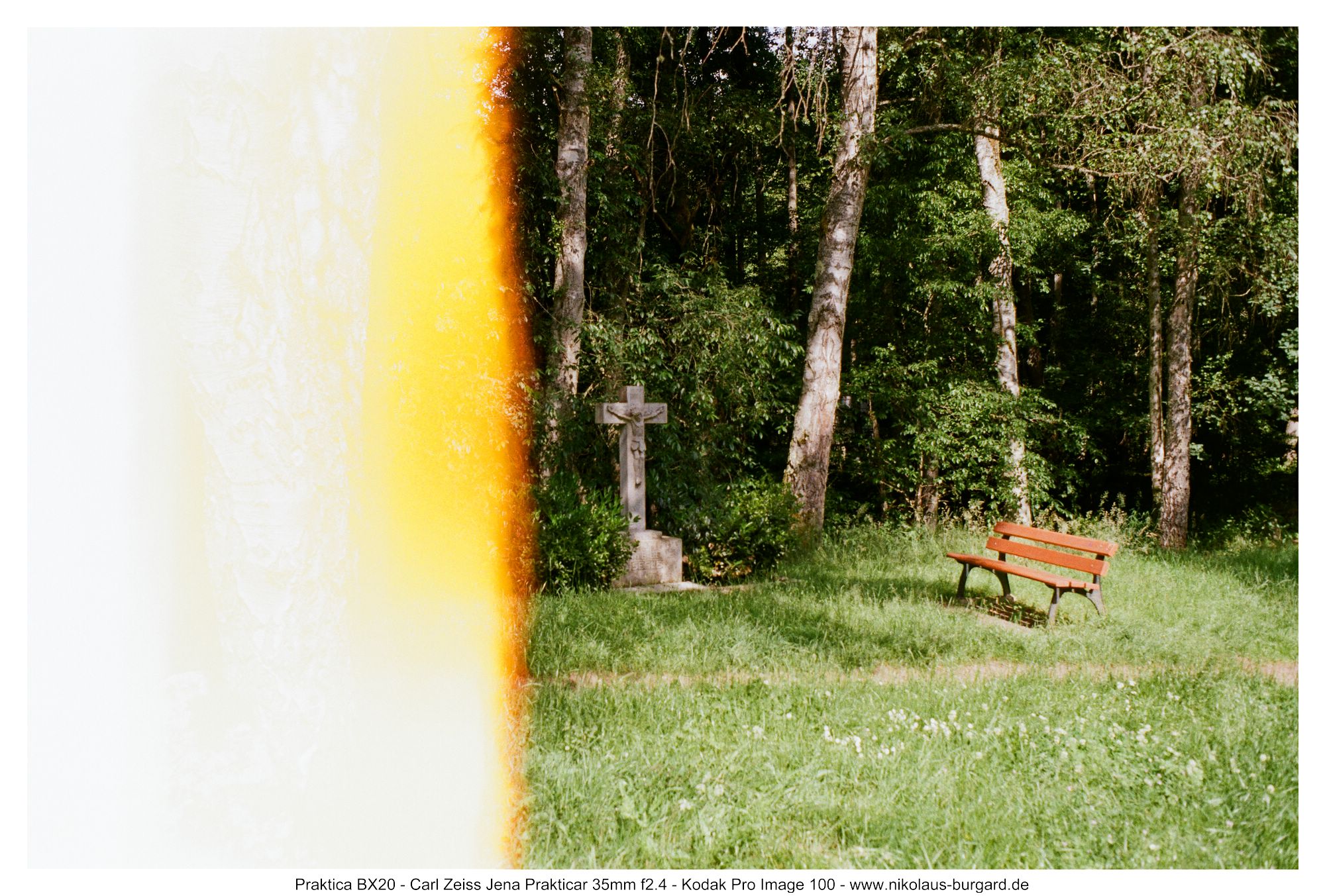
Bildserie analog / Picture Series analogue: Glashütter Weiher
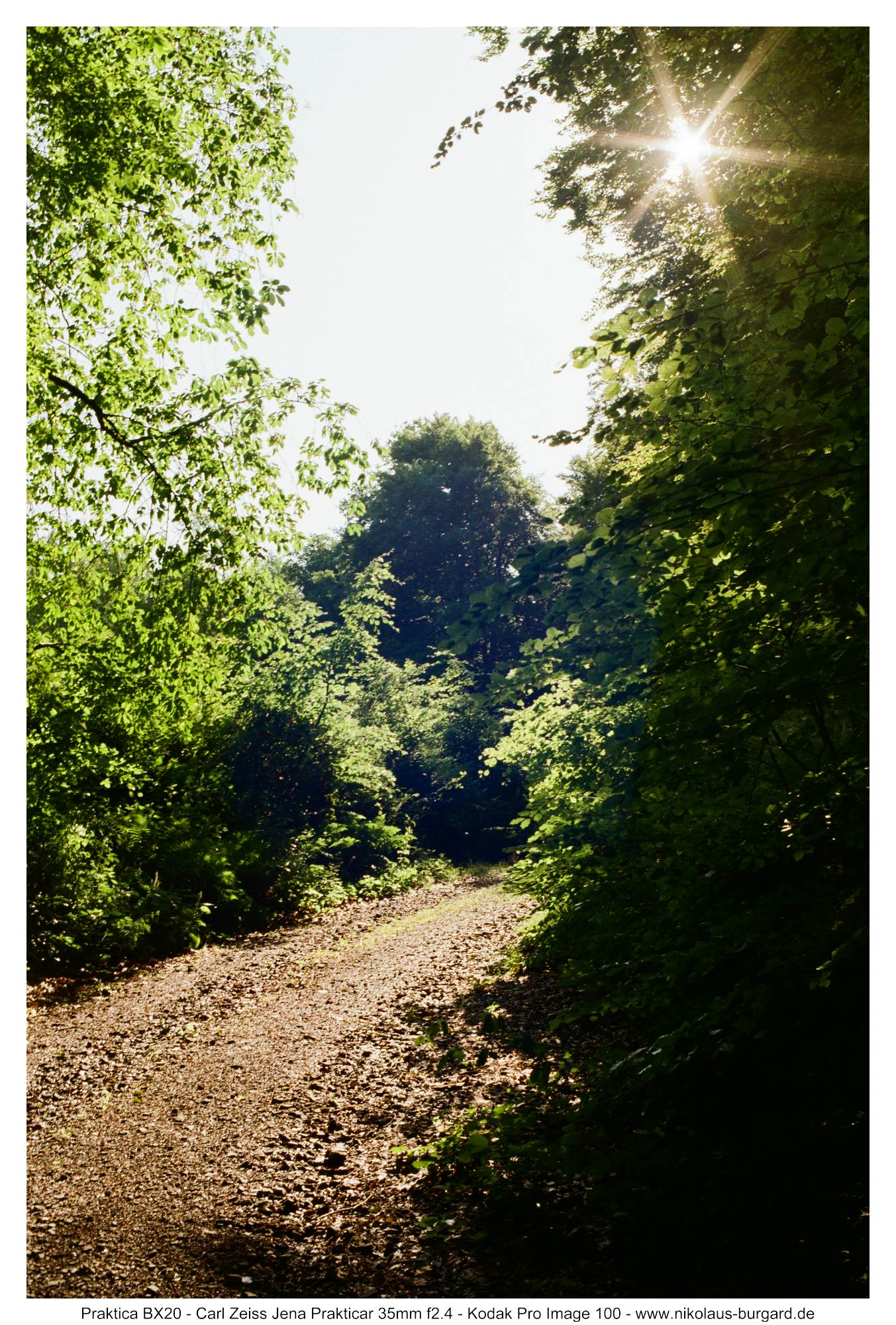
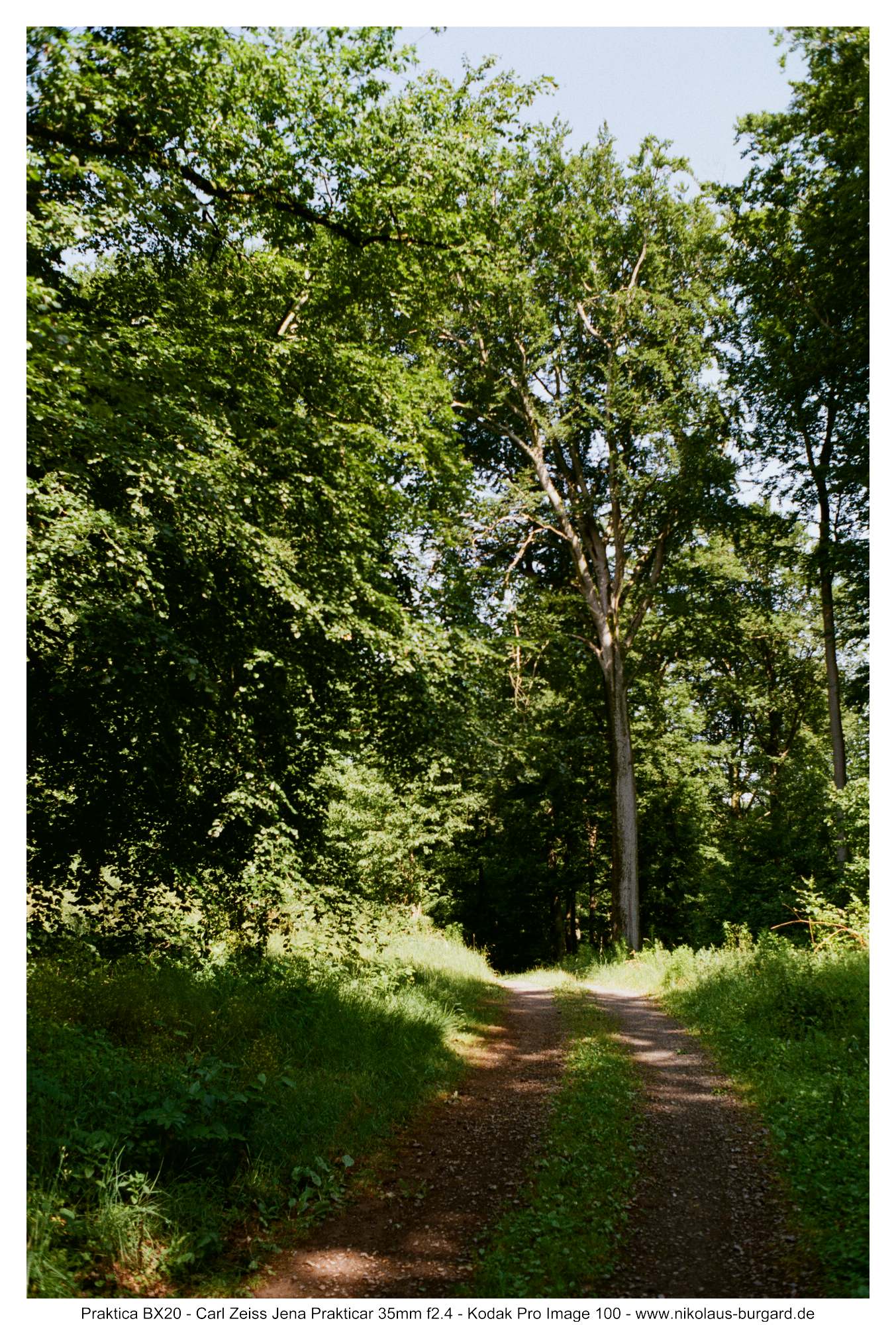
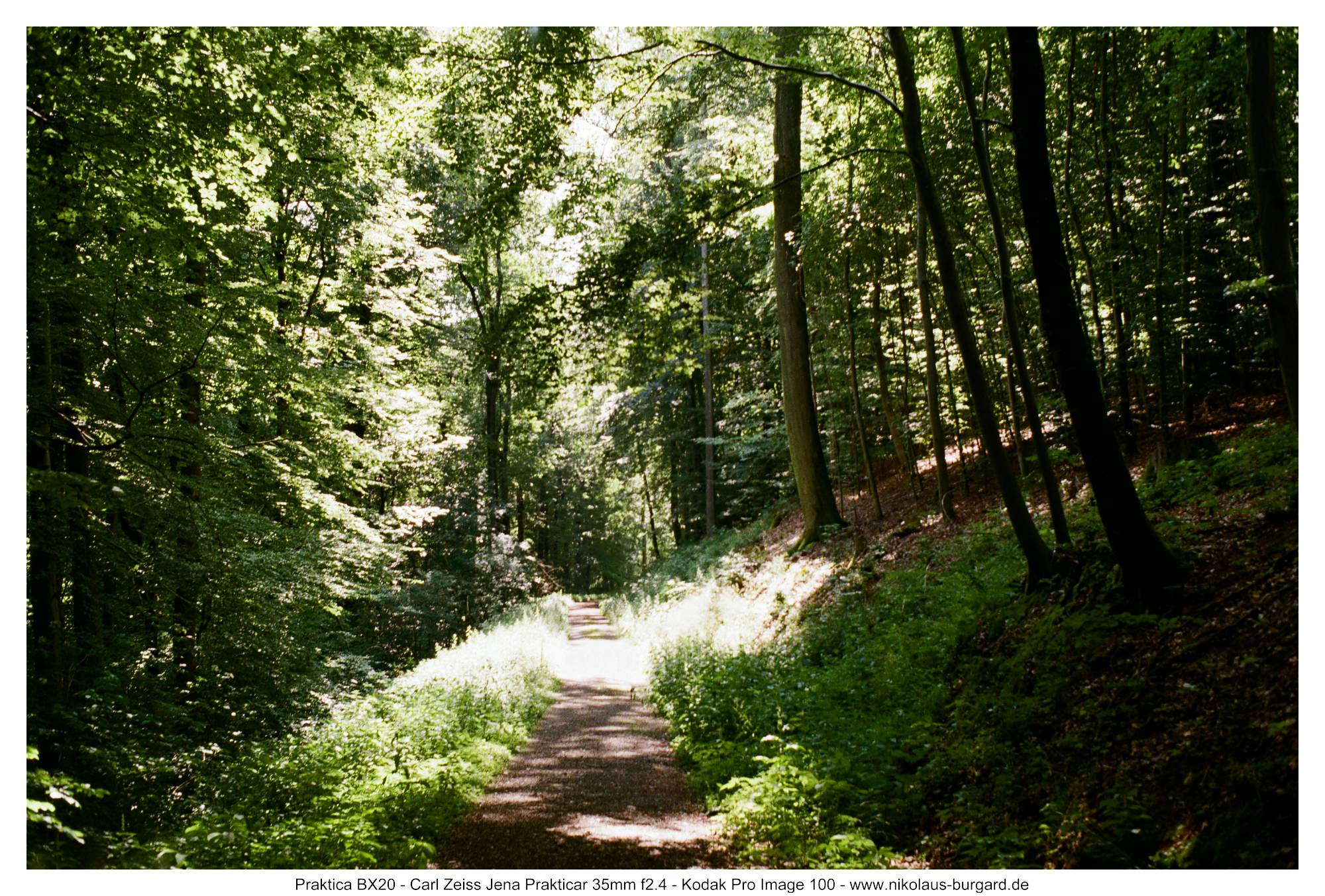
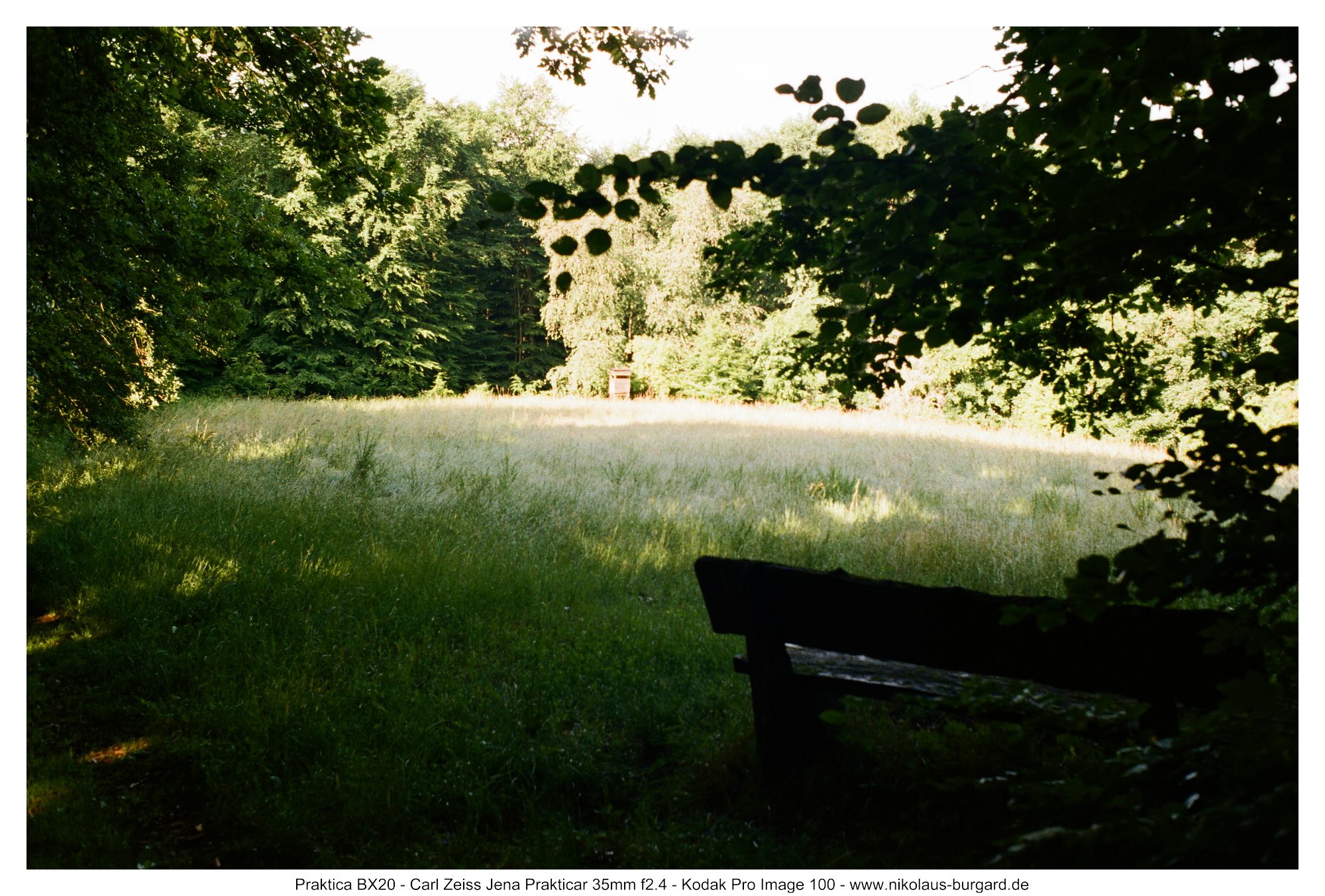
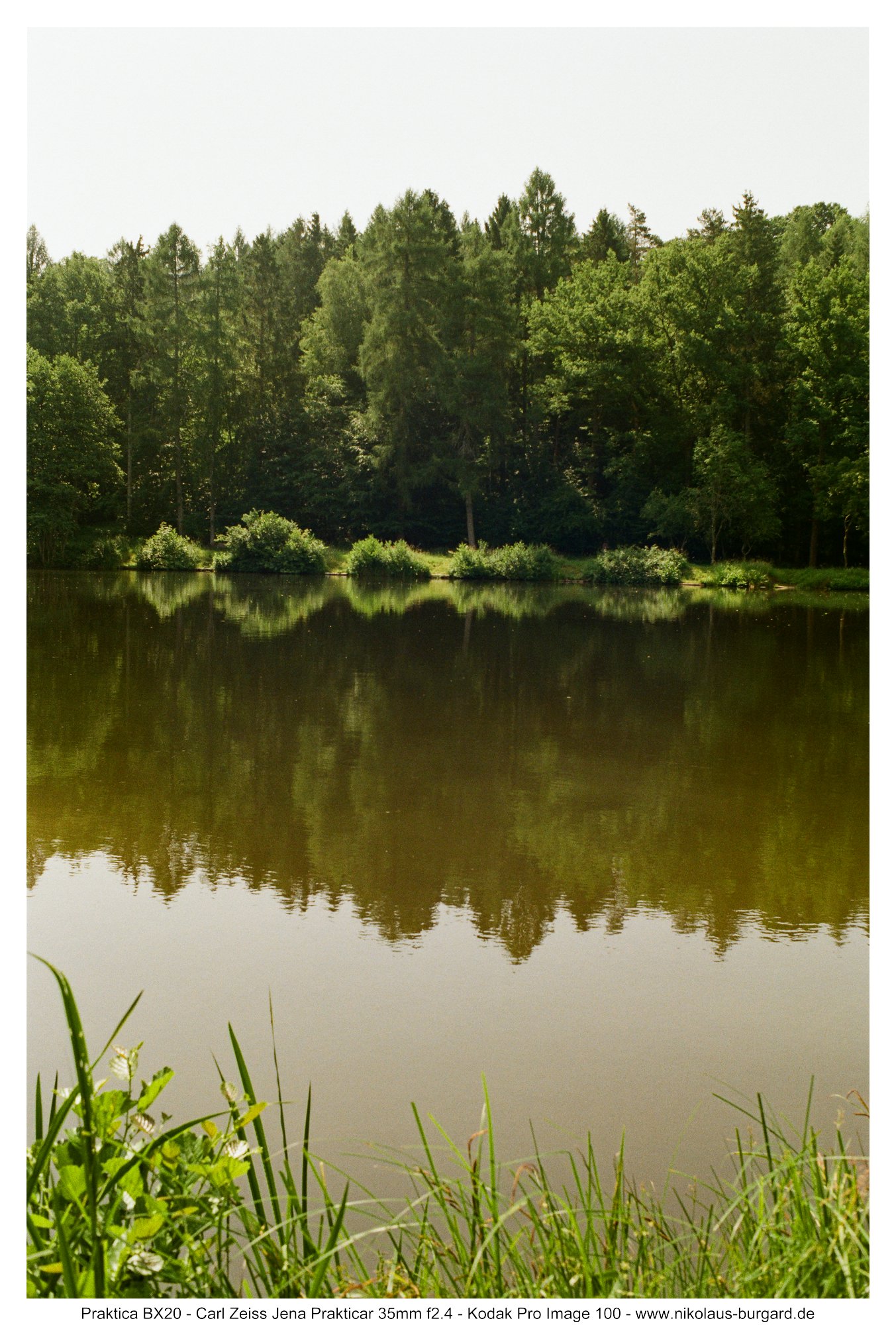
Ein sonnig-dunstiger Sommermorgen führte mich mit meiner Praktica BX20-Filmkamera und dem Prakticar an den nahe gelegenen Glashütter Weiher.
Die Helligkeit bei wolkenlosem Himmel führte zu extremen Kontrastsituationen, die das Objektiv ebenso wie der verwendete Kodak Pro Image 100-Farbnegativfilm gut händeln konnte.
A sunny-hazy summer morning took me with my Praktica BX20 film camera and the Prakticar to the nearby Glashütter ponds.
The brightness because of the cloudless sky led to extreme contrast situations, which the lens, as well as the used Kodak Pro Image 100 color negative film,
could handle well.
Bildserie / Picture Series: Tuscan Affairs 4: Vada
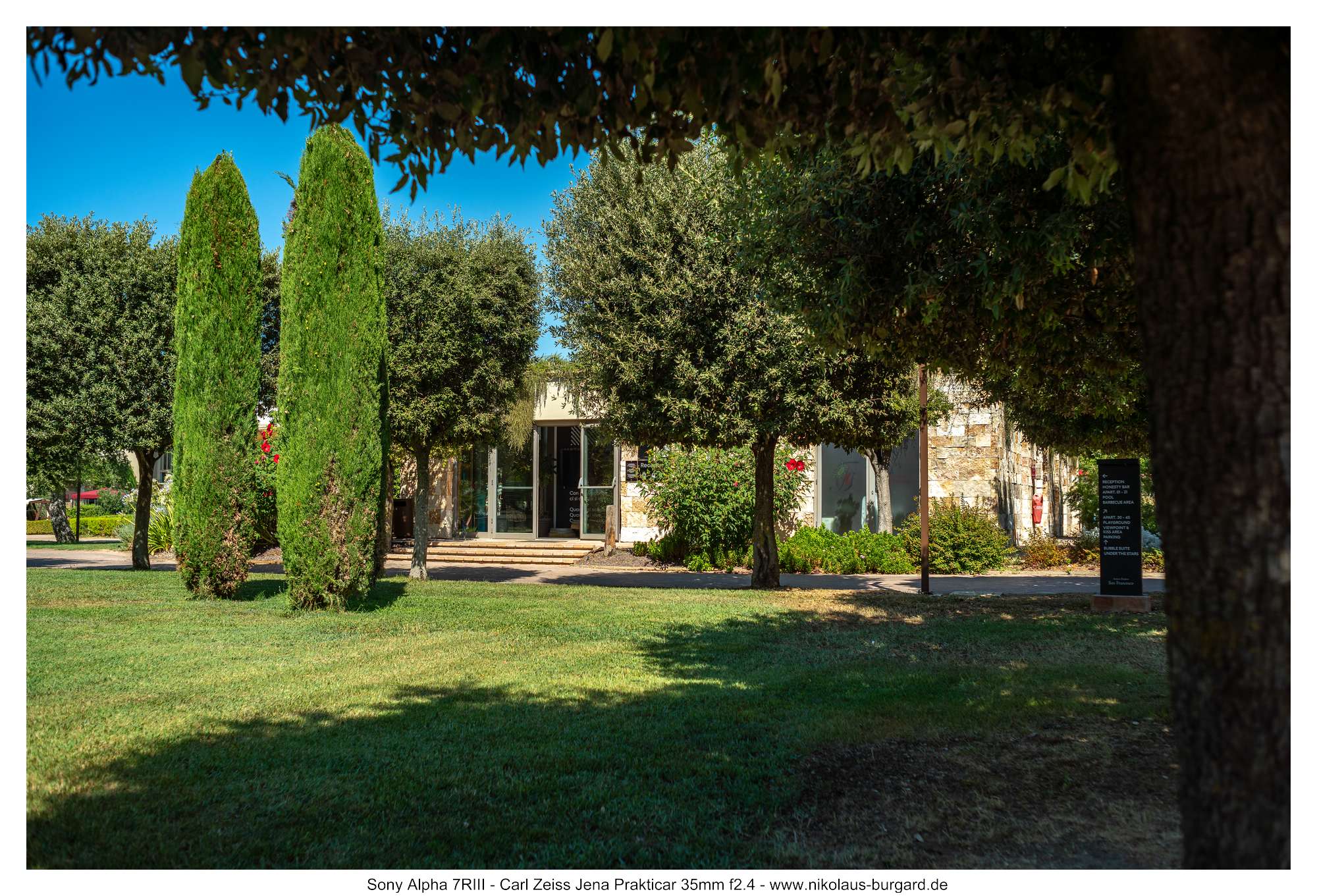
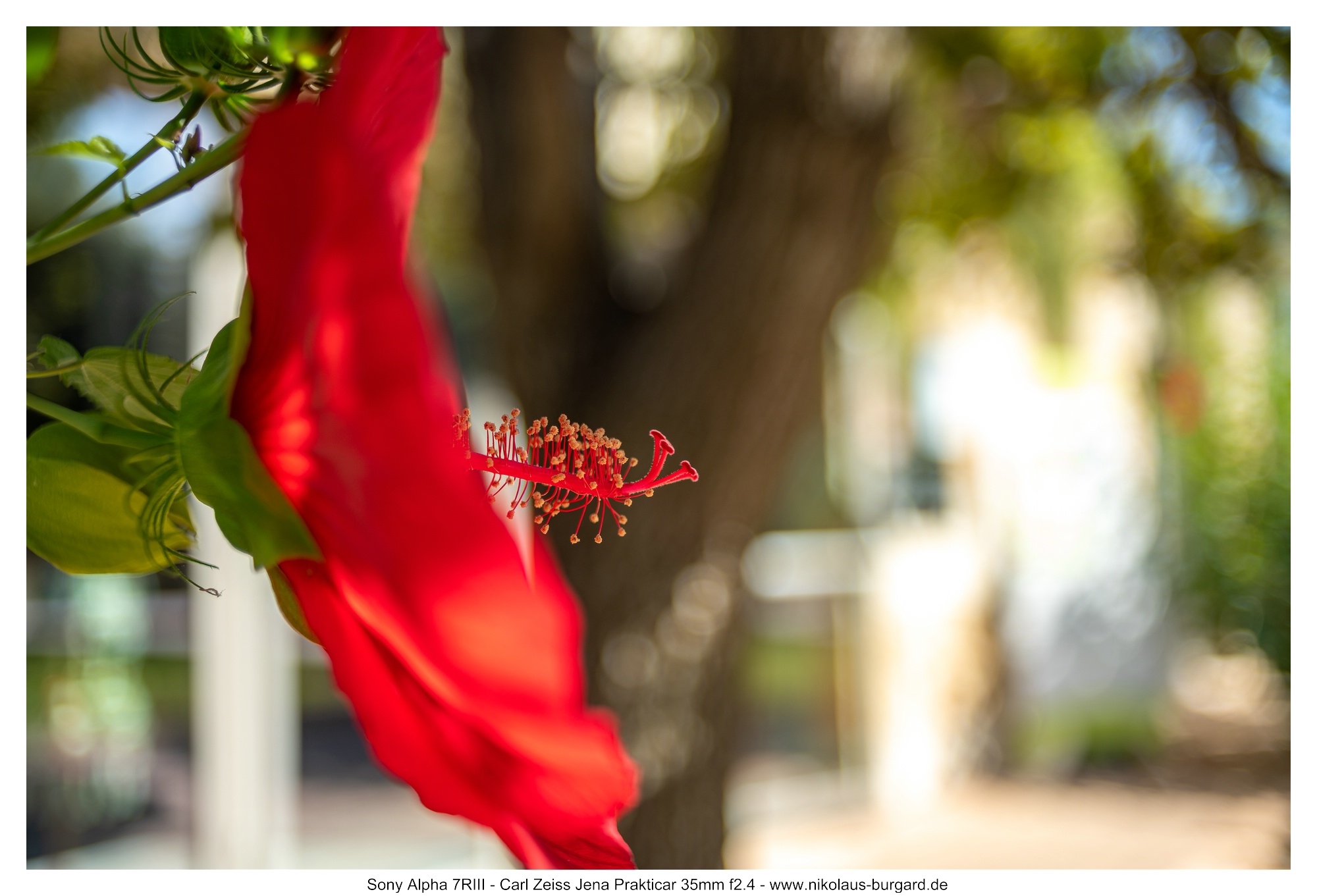
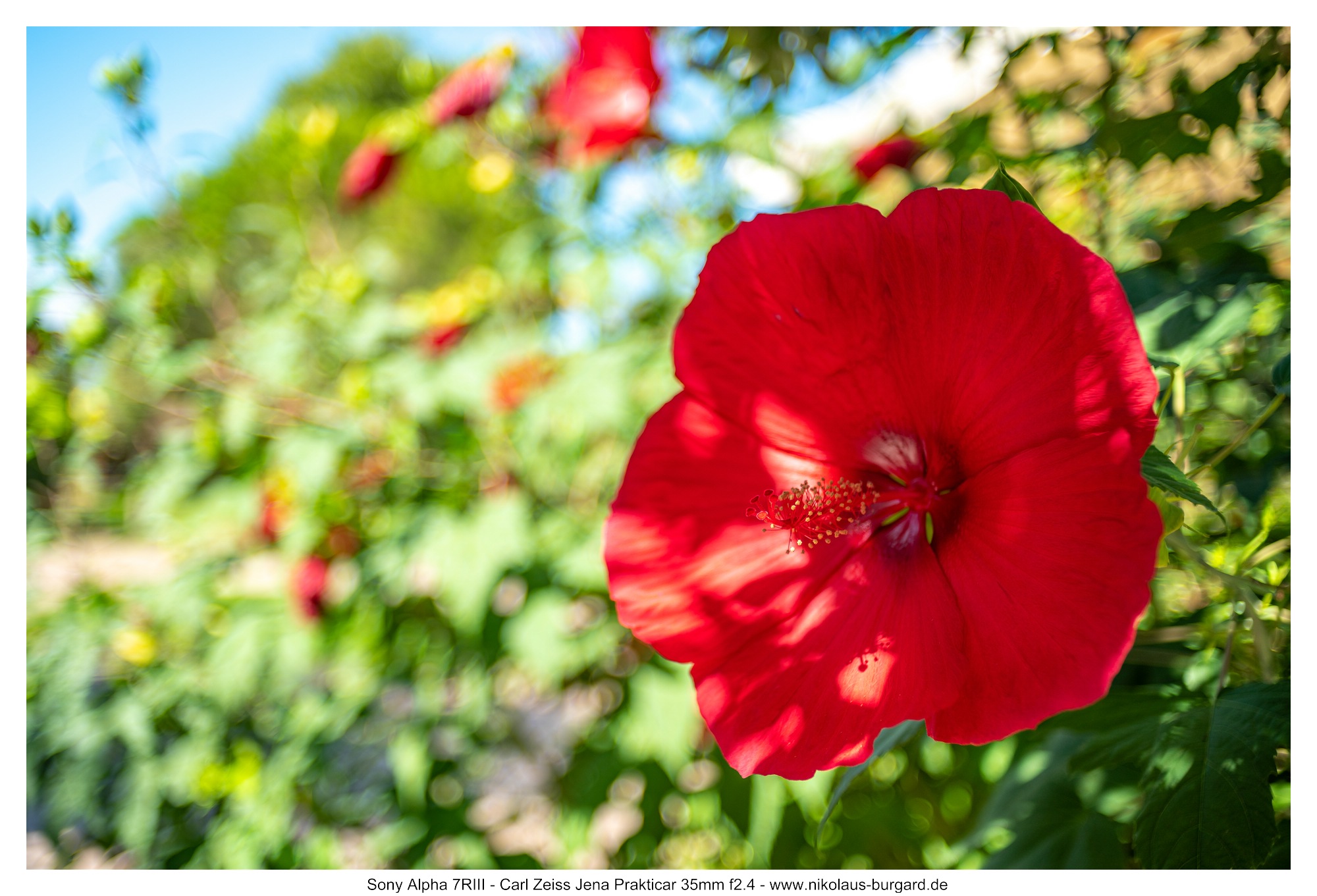
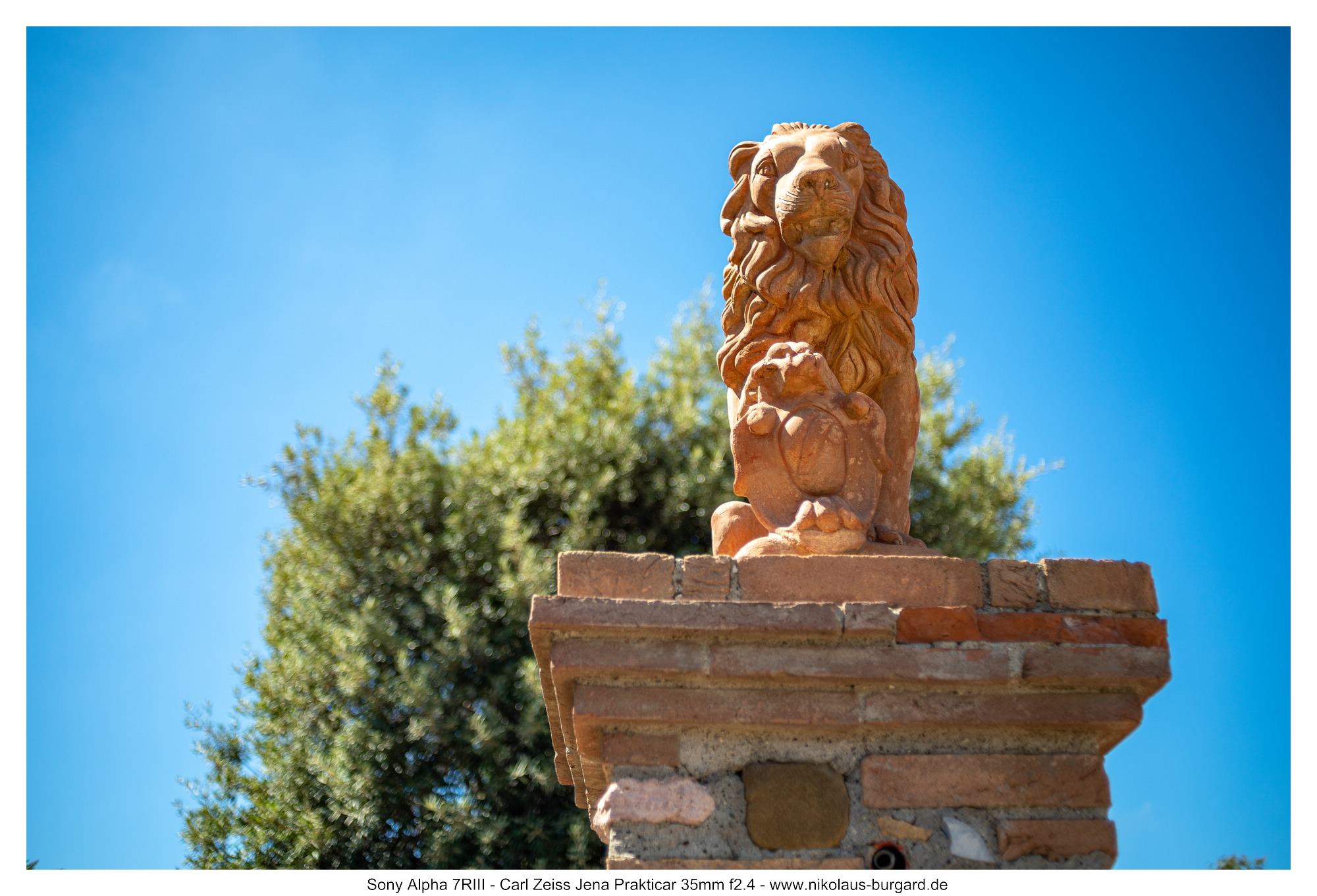
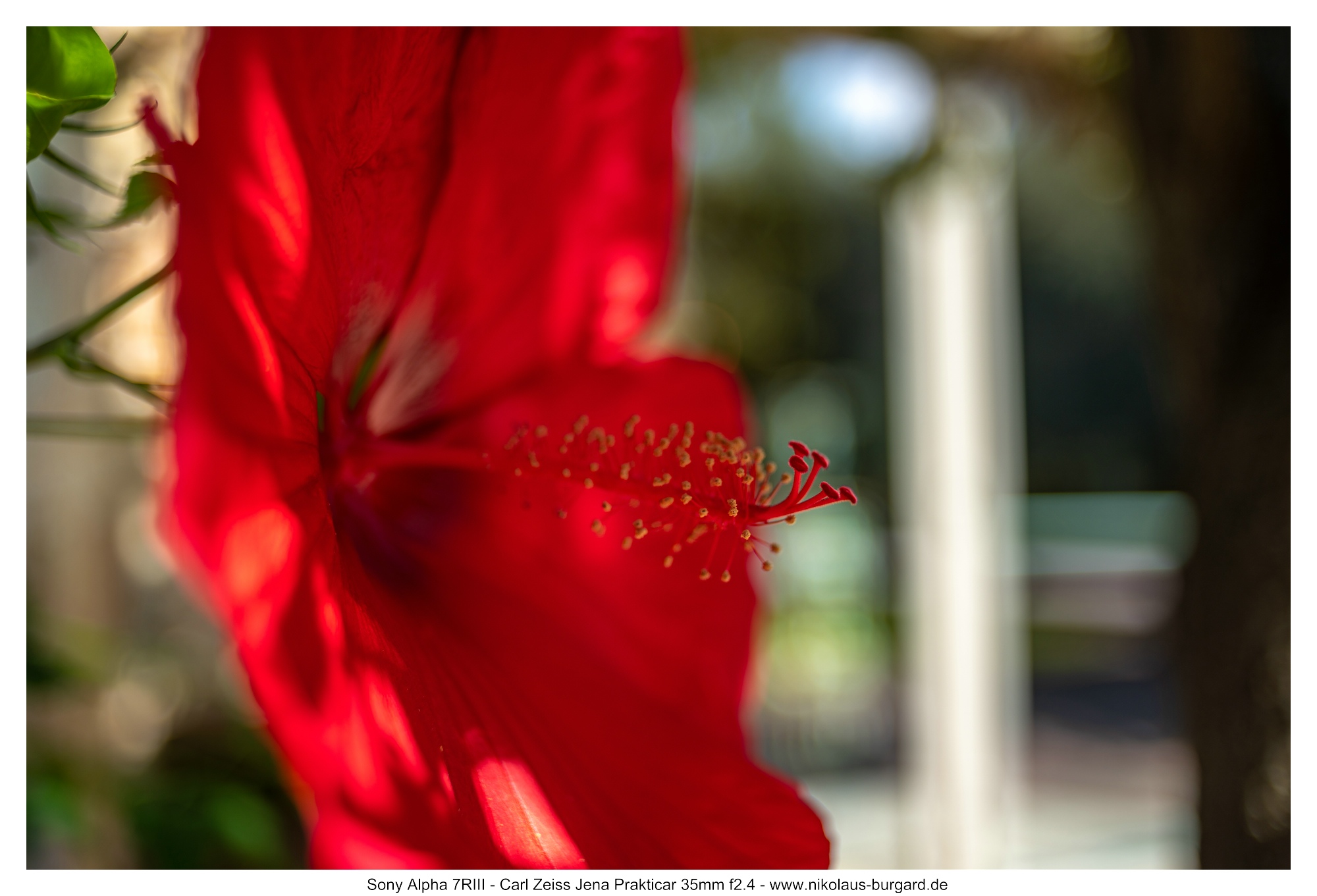
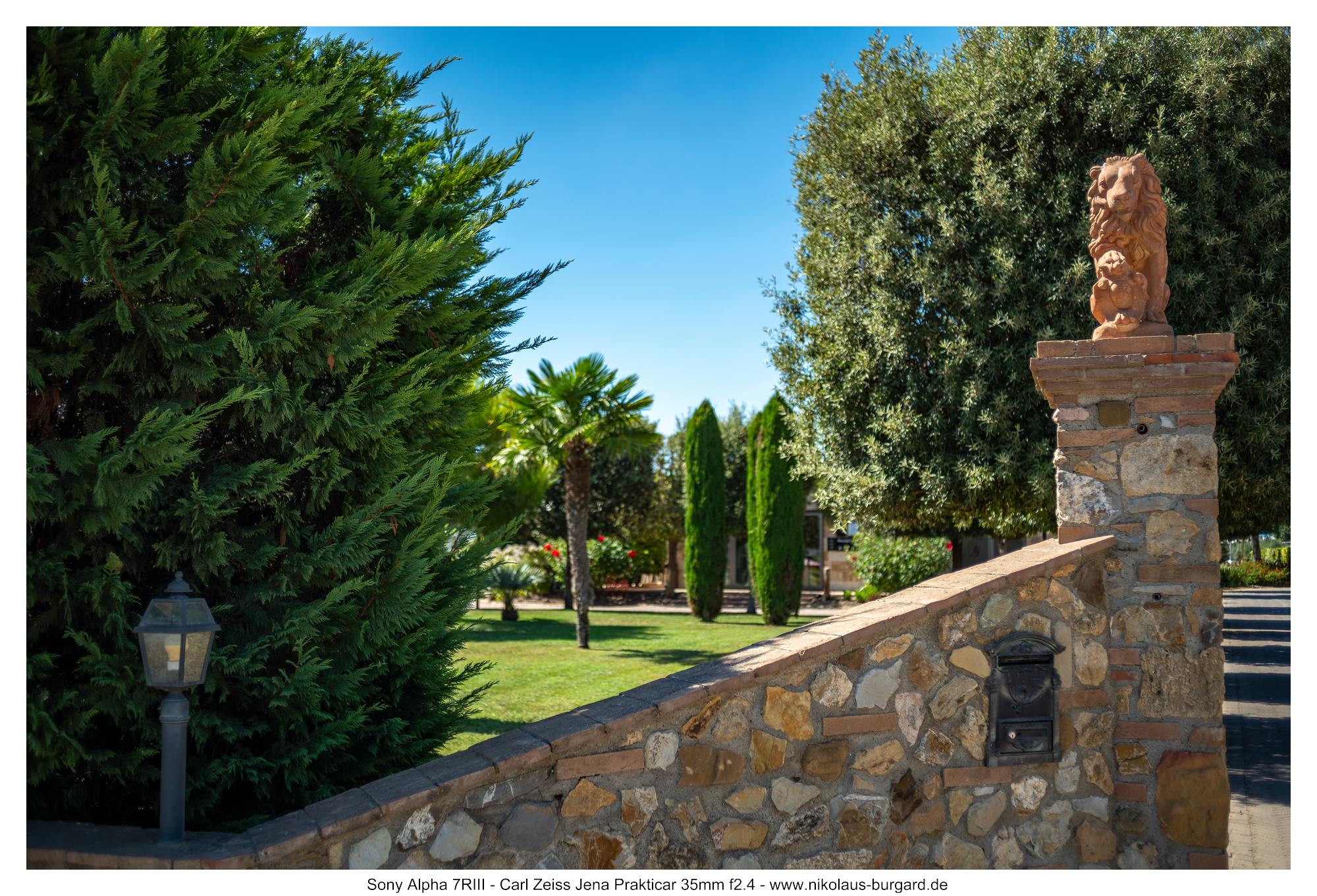
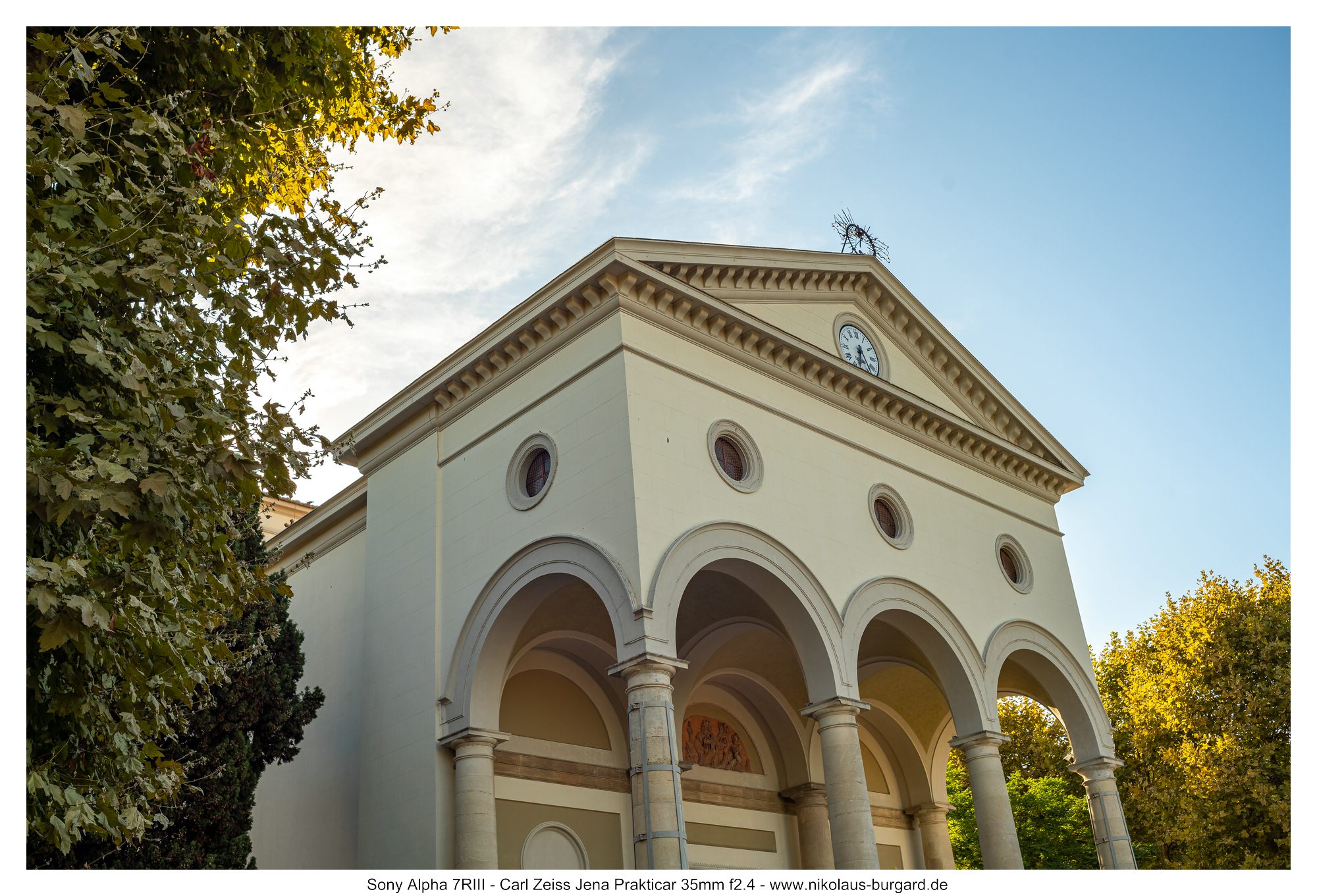
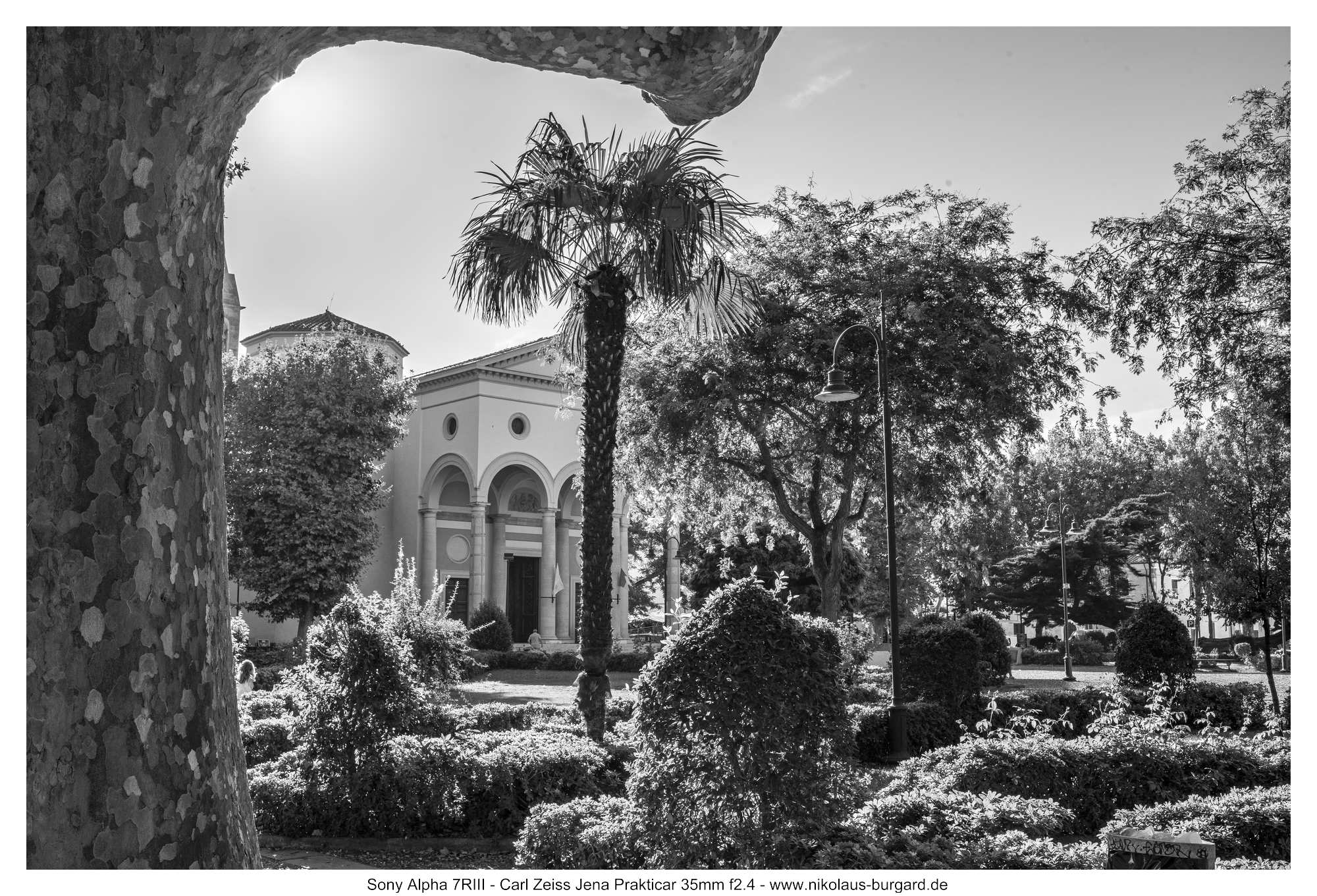
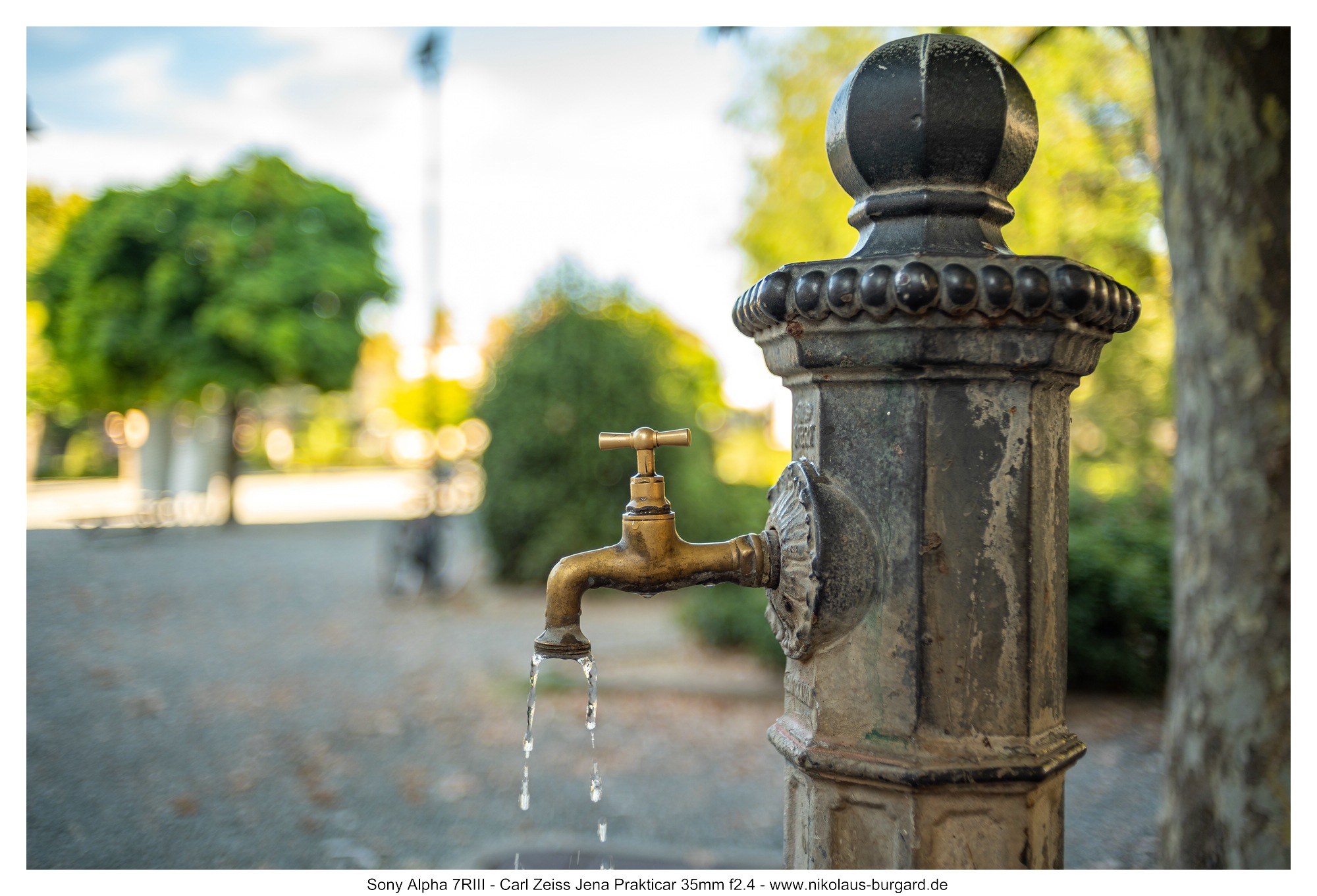
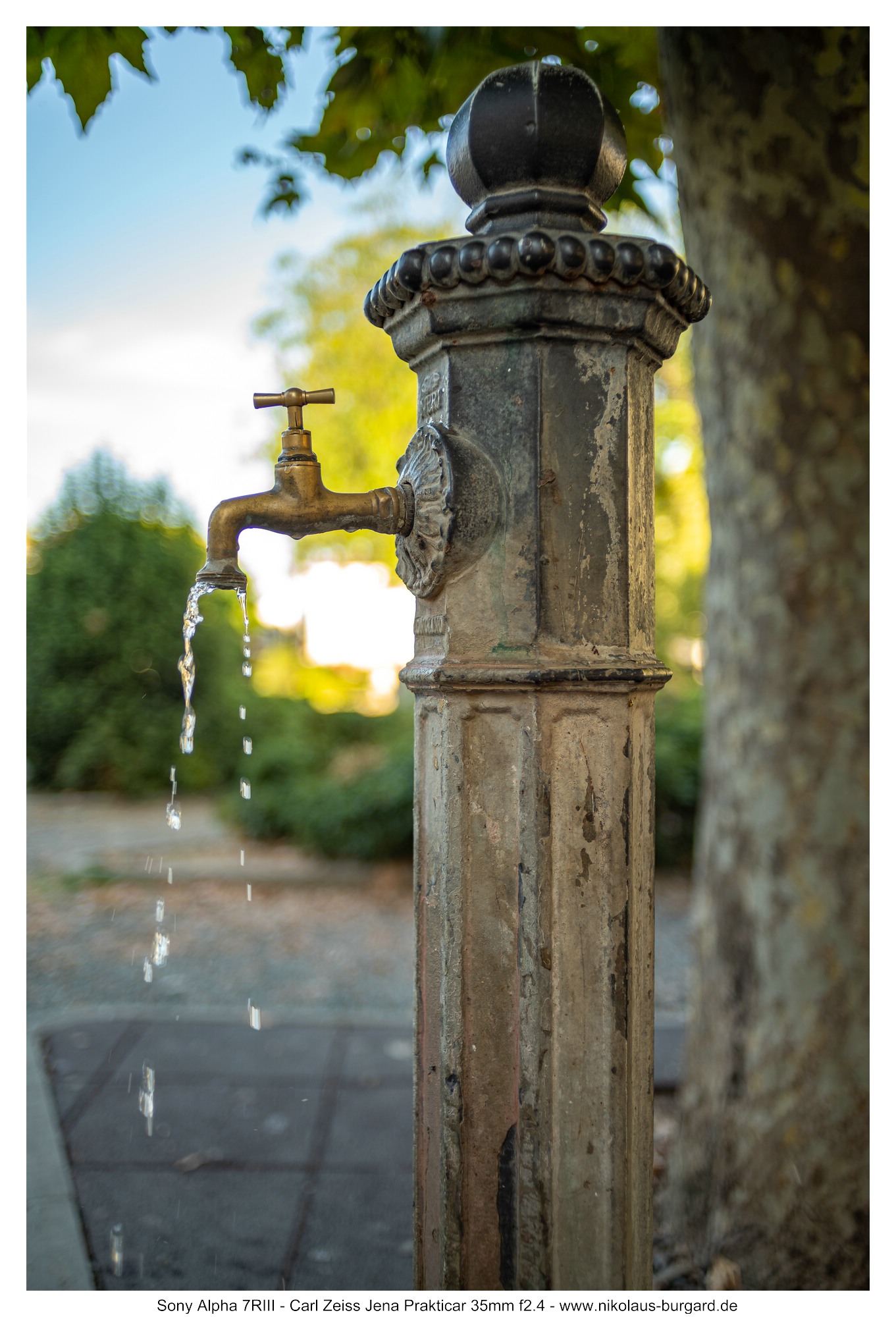
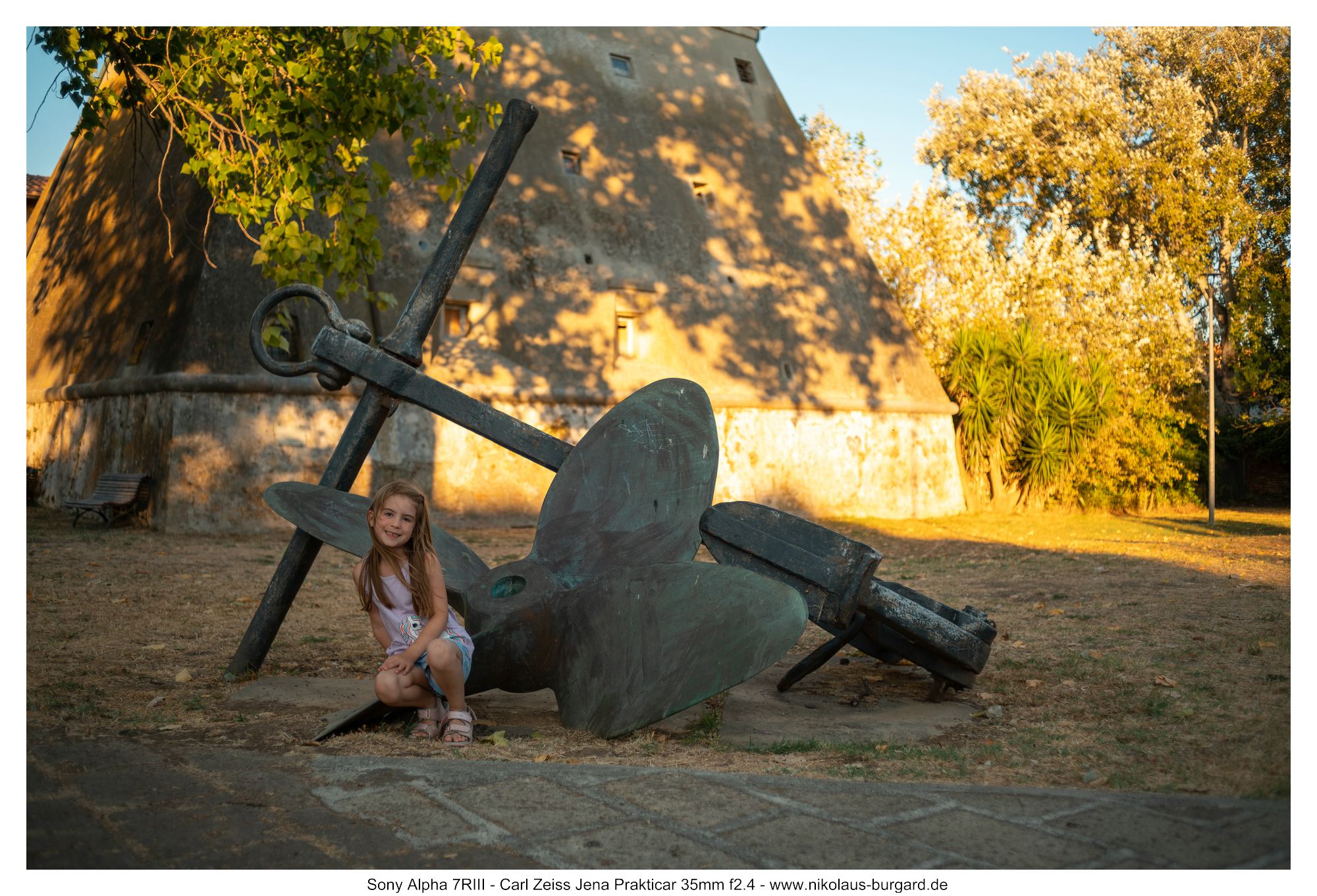
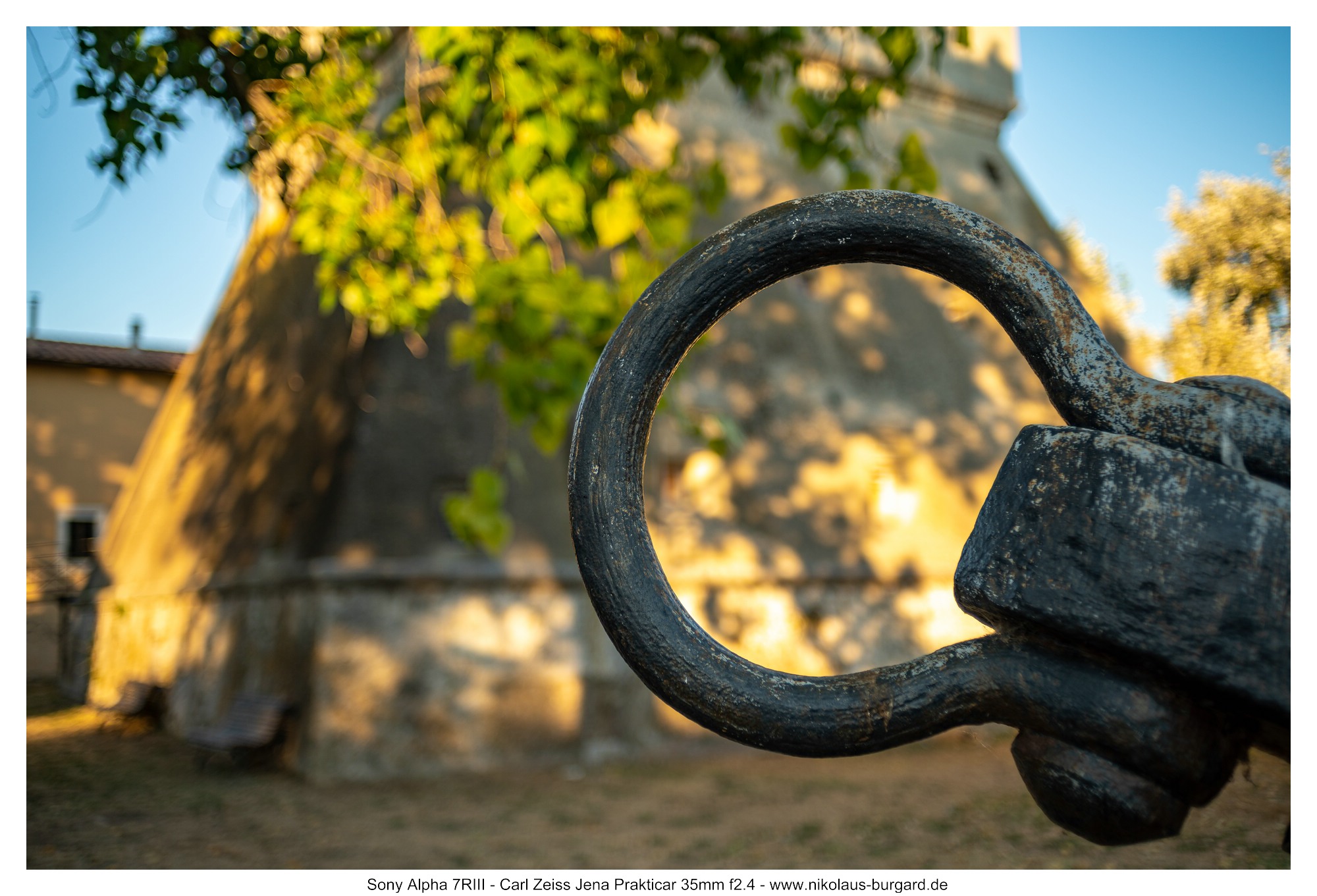
Der letzte Teil meiner Toskana-Reihe zeigt Impressionen aus Vada, unserem Urlaubsort und dem schönen Agriculturo, auf dem wir unsere Ferien verbrachten. Toll angelegt mit direkt angrenzendem Olivenhain - so stellt man sich das "La Dolce Vita" vor!
The last part of my Tuscany series shows impressions from Vada, our holiday resort and the beautiful Agriculturo, where we spent our holidays. Great laid out with directly adjacent olive grove - that's how you imagine the "La Dolce Vita"!
Mein Fazit / Conclusion
Das Carl Zeiss Jena Prakticar 35mm f2.4 ist ein echter "Dauerbrenner" in meiner Sammlung an manuellen Objektiven.
Seit über 10 Jahren begleitet es mich regelmäßig - ob adaptiert an eine Digitalkamera oder "artgerecht" an einer Praktica-Film-Spiegelreflexkamera.
Dass ich regelmäßig zu ihm greife, liegt neben einigen subjektiven Gründen auch in den objektiv messbar sehr guten Leistungen:
Die Bildschärfe ist im Zentrum bei Offenblende schon gut, ab f4 sehr gut und ab f5.6 hervorragend.
Sehr randscharf ist es (überraschend für ein älteres 35mm-Objektiv) auch schon bei f5.6.
Für sehr gute Ecken und insgesamt ausgezeichnete Schärfe über das komplette Bild muss man auf f8 abblenden.
Die Verzeichnung ist sehr gering tonnenförmig.
Die Korrektur auf Farbfehler ist für ein lichtstarkes Objektiv mehr als ordentlich:
Es gibt kaum laterale chromatische Aberrationen und auch das Bokeh-Fringing ist recht gut korrigiert.
Einzig das Gegenlichtverhalten ist bei der Adaption an eine Digitalkamera ein Problem, da die blanken Blendenlamellen und das Deckglas des Digitalsensors gegenseitig reflektieren und es so zu unschönen lila Flares kommt. An einer Filmkamera ist dies kein Problem.
Soweit die objektiv messbaren Kriterien.
Aber was sagt meine subjektive Wahrnehmung?
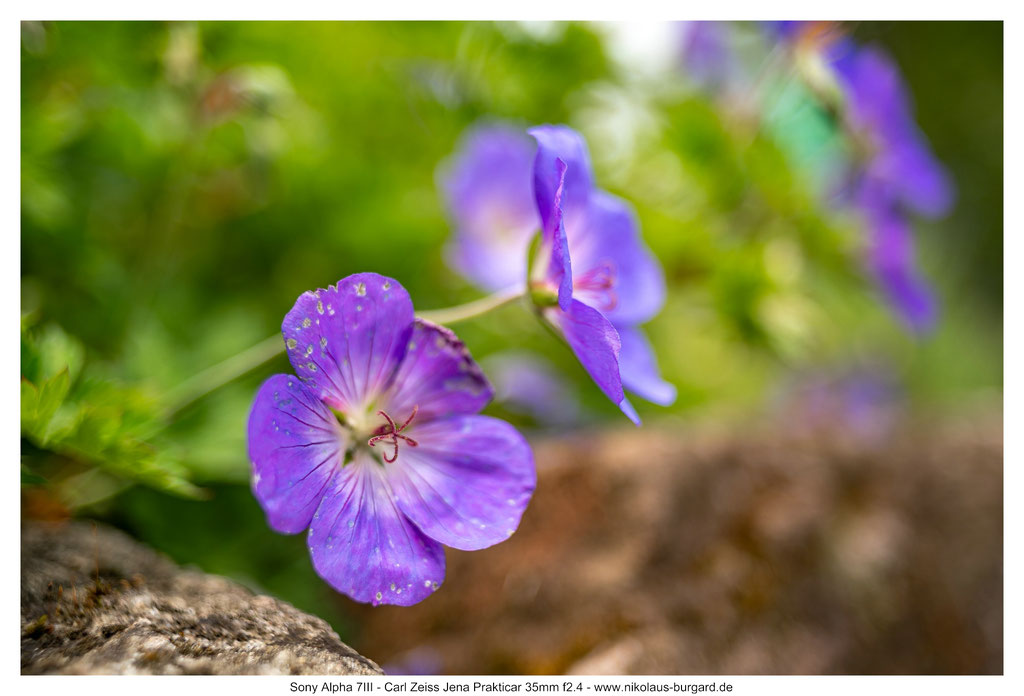
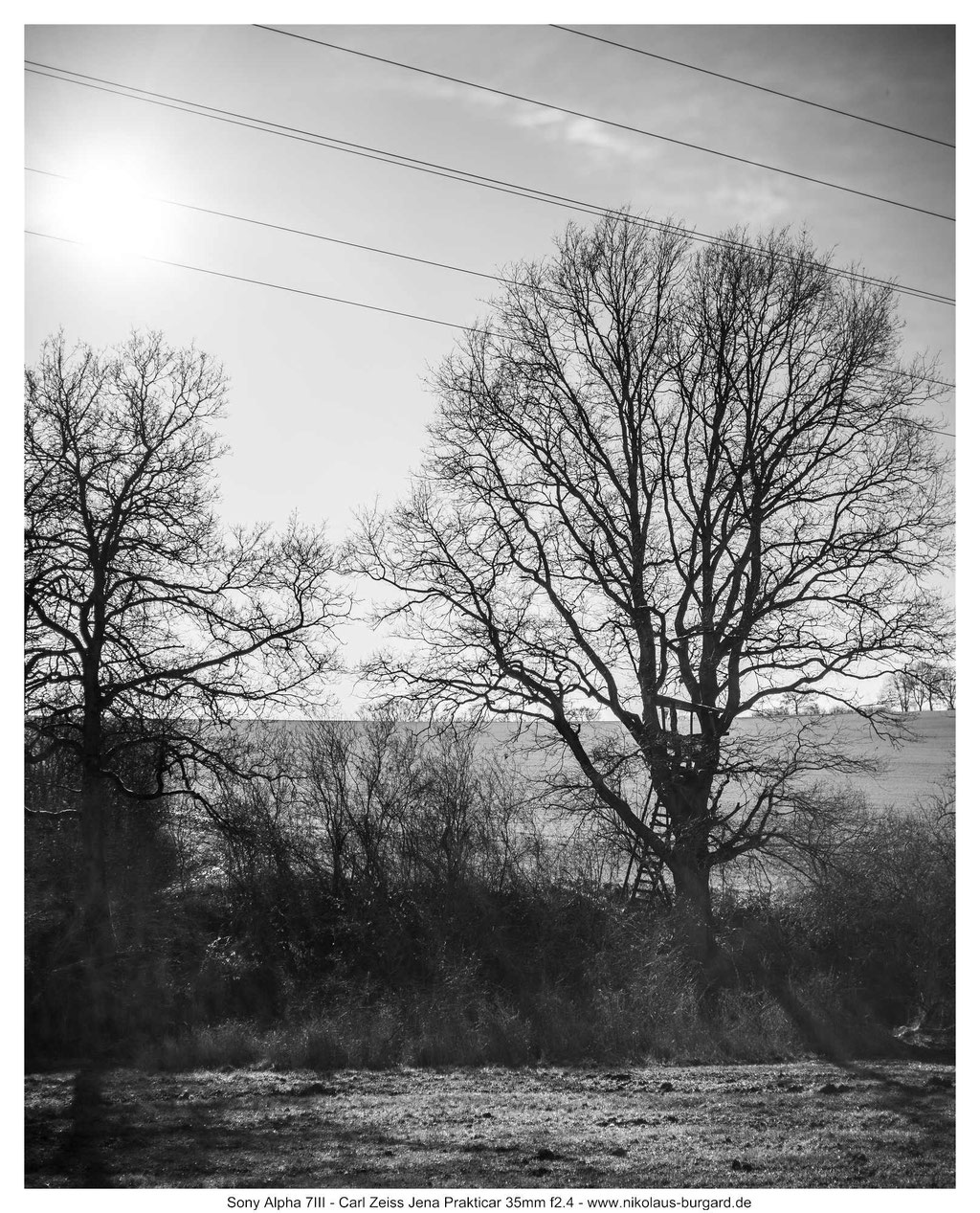
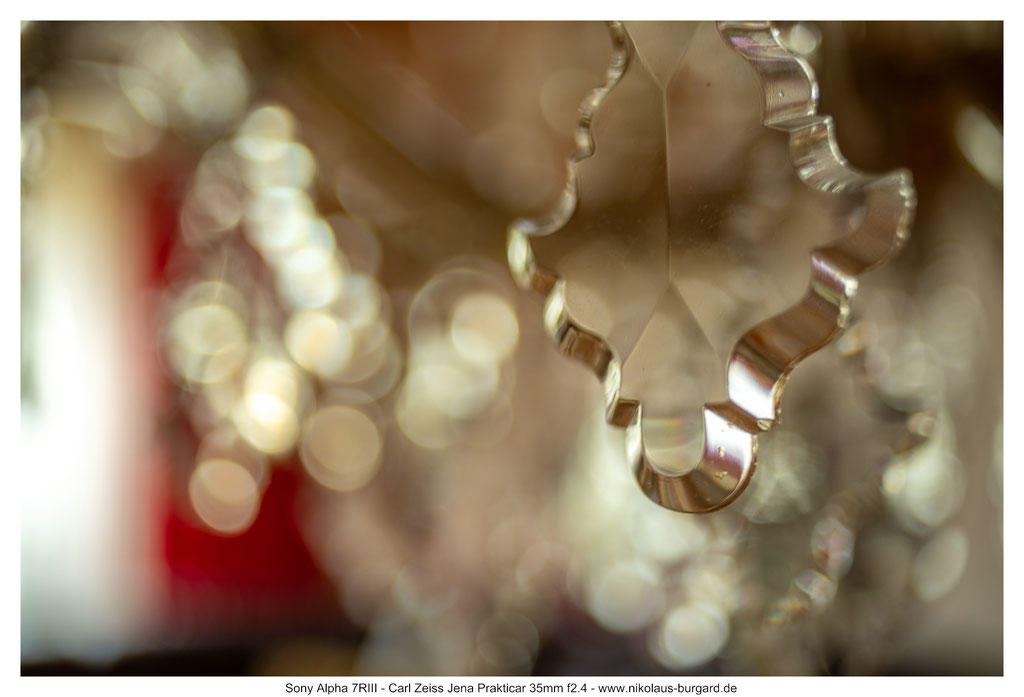
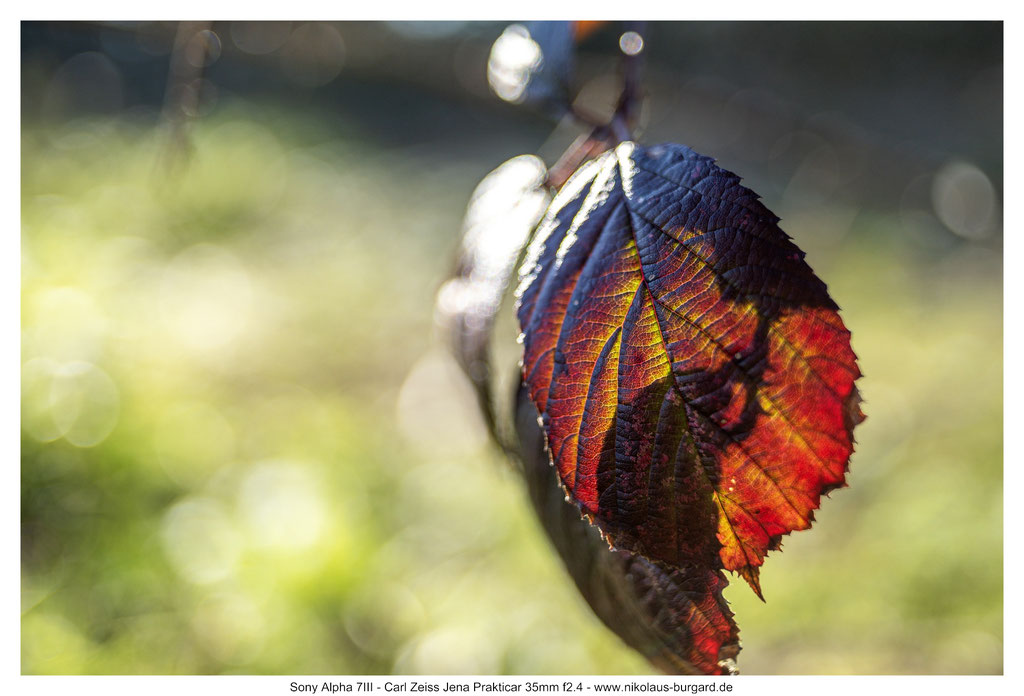
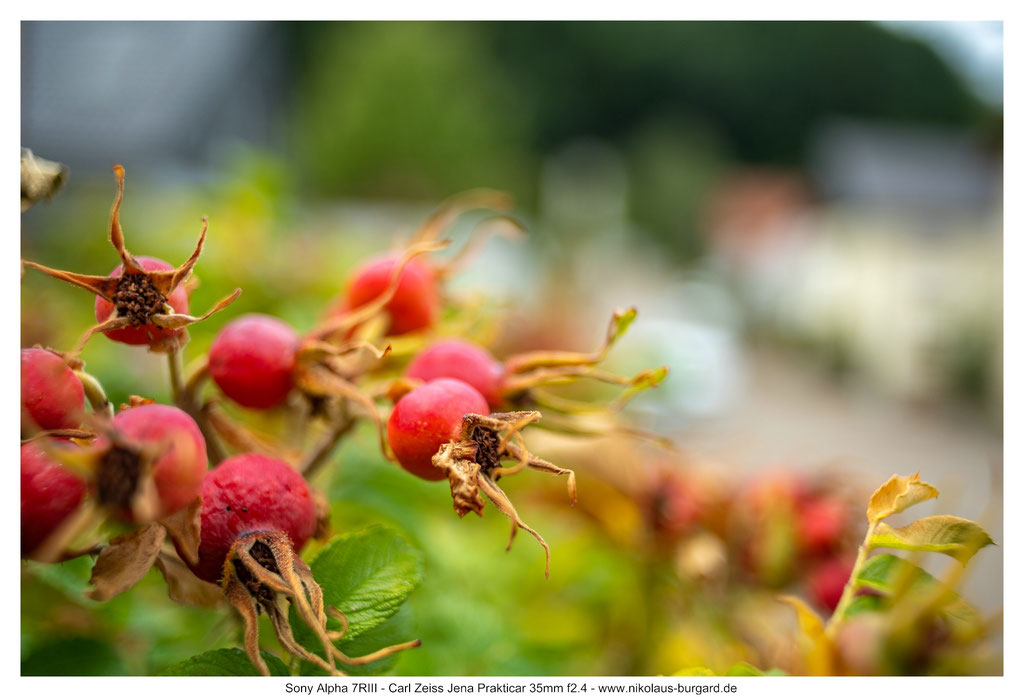
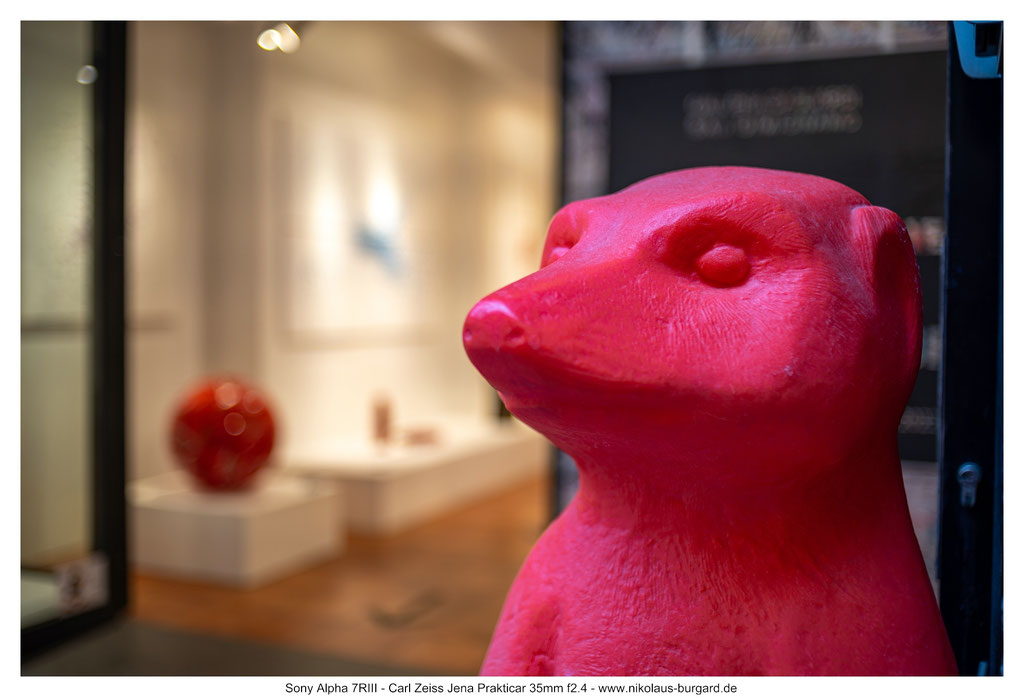
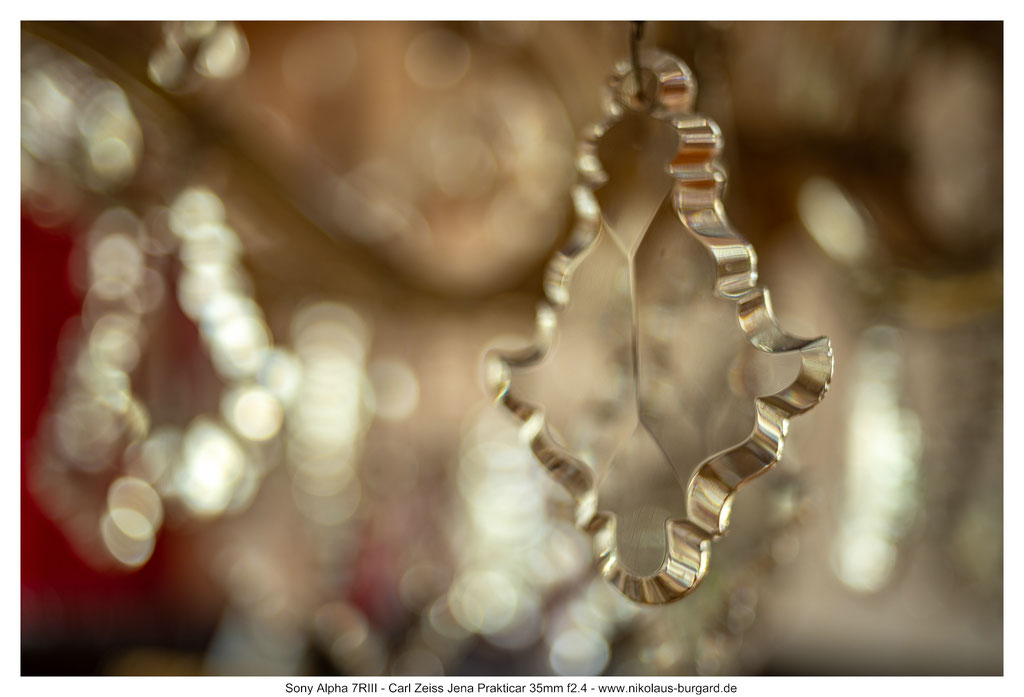
Dass ich es so oft mitnehme, hat einige Gründe. Der Erste ist die hervorragende Naheinstellgrenze, die für gelegentliche Nahaufnahmen vollkommen ausreichend ist. Gerade bei diesen "Pseudo"-Makros gefällt mir das Bildrendering ganz hervorragend.
Apropos Bildrendering: Die Kombination aus sehr guter Schärfe am Fokuspunkt, egal auf welche Distanz und dem Bokeh des Objektives (nie ganz weich, aber auch nie zu aufdringlich, irgendwie klassisch-elegant) sind für mich der persönliche Wohlfühl-Spot bei einem 35mm-Objektiv. Kurz: ich mag das Rendering sehr.
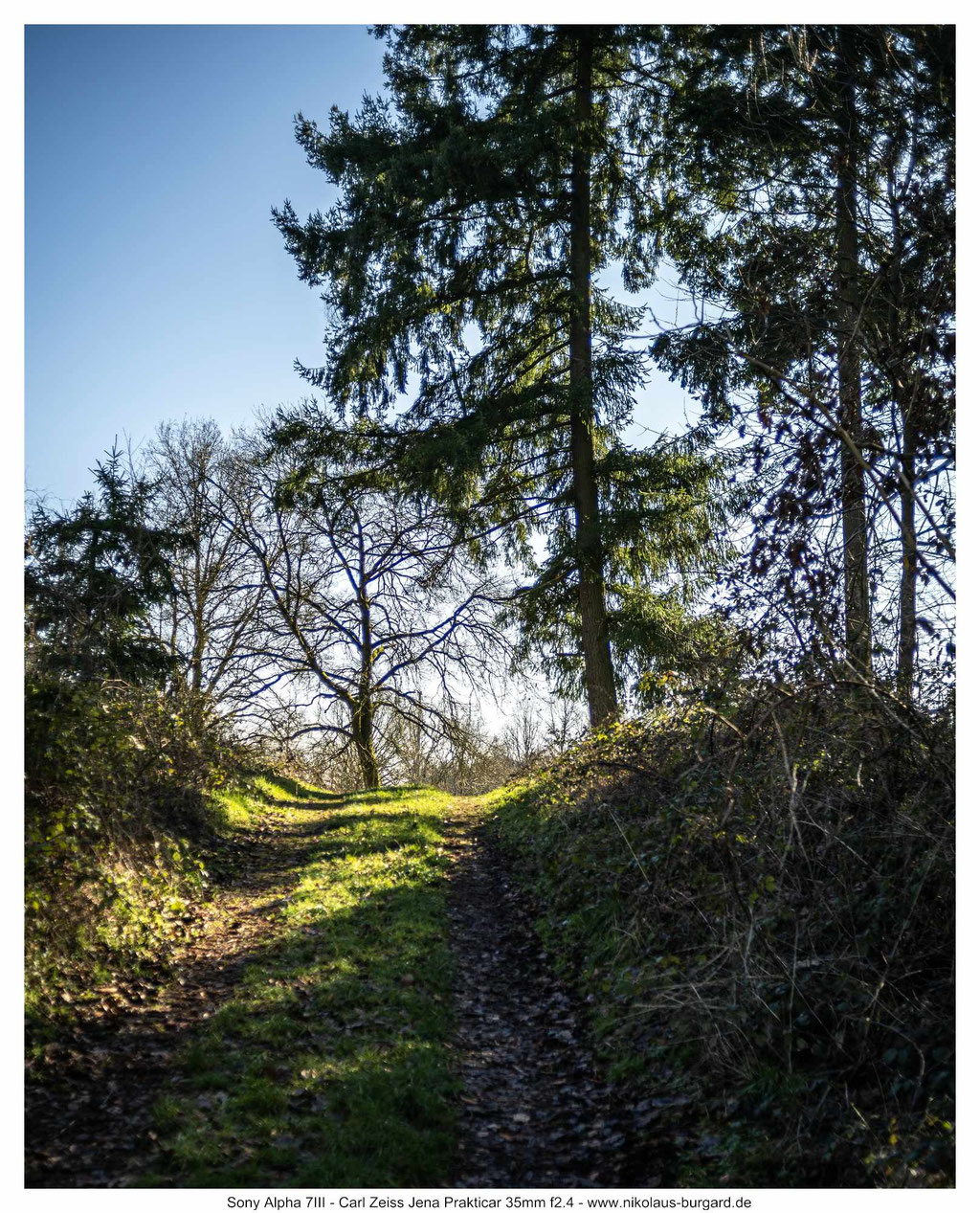
Diese Kombination aus klassisch-schönem Bildrendering und gleichzeitig technisch sehr hoher Qualität (Schärfe, Kontraste, Verzeichnungsarmut etc.) findet man selten und lässt das Prakticar / Flektogon 35mm f2.4 aus der Masse der 35mm-Objektive positiv herausstechen.
Wie immer ist dies meine sehr subjektive Bewertung - aber anhand der vielfältigen Beispielbilder sollte man sich leicht eine eigene Meinung bilden können.
Problematisch bei diesem Objektiv ist, dass wohl sehr viele verbastelte Kopien im Umlauf sind. Denn es genügt, wenn ein unwissender Reparateur z.B. die Zentrierung unwiederbringlich zerstört, in dem er auf der Rückseite des Objektives am Anschluss an den falschen Schrauben dreht. 4 davon sind zum Öffnen der Fassung, und die anderen 3 bestimmen die Zentrierung - ein unbedachter Schraubendreh, und das Objektiv ist schrottreif (was die Abbildungsqualität angeht). Man sollte es also gebraucht nur mit Rückgaberecht kaufen. Mit einem guten Exemplar aber hat man (wie ich) ein tolles Objektiv, das einem viel Freude bereitet.
Im Anschluß an die abrundende Bildergalerie freue ich mich im Kommentarbereich wie immer auf eure Anmerkungen zu Objektiv und Testbericht.
The Carl Zeiss Jena Prakticar 35mm f2.4 is a real "permanent burner" in my collection of manual lenses.
For over 10 years, it has accompanied me regularly - whether adapted to a digital camera or "species-appropriate" to a Praktica film mirror reflex
camera.
The fact that I regularly reach for him, in addition to some subjective reasons, also lies in the objectively measurably very good
performances:
The image sharpness in the center is already good at open aperture, from f4 very good and from f5.6 excellent.
It is very edge-sharp (surprising for an older 35mm lens) even at f5.6.
For very good corners and overall excellent sharpness over the complete picture you have to stop down to f8.
The distortion is very small in the shape of a barrel.
The correction to color errors is more than neat for a bright lens:
There are hardly any lateral chromatic aberrations and the bokeh-fringing is also quite well corrected.
Only the backlight behavior is a problem when adapting to a digital camera, because the bare aperture blades and the cover glass of the digital sensor
reflect each other and it thus comes to unsightly purple flares. This is not a problem with a film camera.
So far the objectively measurable criteria.
But what does my subjective perception say?
That I take it so many times has a few reasons. The first is the excellent close focusing limit, which is perfectly sufficient for occasional close-ups.
Especially with these "pseudo" macros, I like the picture rendering quite excellently.
Speaking of image rendering: The combination of very good sharpness at the focus point, no matter at what distance and the bokeh of the lens (never quite
soft, but also never too intrusive, somehow classic-elegant) are for me the personal feel-good spot with a 35mm lens. In short, I really like the rendering.
This combination of classic-beautiful picture rendering and at the same time technically very high quality (sharpness, contrasts, distortion etc.) is
rarely found and the Praktica / Flektogon 35mm f2.4 from the mass of the 35mm lenses can be positively distinguished.
As always, this is my very subjective evaluation - but on the basis of the various example pictures you should be able to easily form your own
opinion.
The problem with this lens is that there are probably many defective copies in circulation. Because it is enough if an ignorant repairer, for example,
irretrievably destroys the centering, in which he rotates the wrong screws on the back of the lens. 4 of them are for opening the socket, and the other 3 determine the centering - a careless
screw turn, and the lens is scrap-ready (as far as the imaging quality is concerned). So you should only buy it used with the right of return. With a good specimen but (like me) you have a great
lens that gives you a lot of pleasure.
Following the rounding picture gallery, I look forward to your comments on lens and test report in the comments section as always.
Tests anderer Objektive von Carl Zeiss Jena:
Reviews of other lenses by Carl Zeiss Jena:
- Carl Zeiss Jena Vario -Prakticar 35-70mm f2.7-3.5
- Carl Zeiss Jena Prakticar 50mm f1.4 (Version 1)
- Carl Zeiss Jena Prakticar 80mm f1.8
- Carl Zeiss Jena MC Sonnar 200mm f2.8
Diese Tests von Objektiven mit vergleichbarer Brennweite könnten auch interessant sein:
These tests of lenses with comparable focal length might also be interesting:
- Carl Zeiss Skoparex 35mm f3.4
- Carl Zeiss Jena Vario-Prakticar 35-70mm f2.7-3.5
- Enna Super-Lithagon 35mm f2.5
- Olympus OM Zuiko Shift 35mm f2.8
- Olympus OM Zuiko Auto-Zoom 35-80mm f2.8
- Rodenstock Retina-Eurygon 30mm f2.8
- Schneider-Kreuznach Rollei SL-Angulon 35mm f2.8
- Tokyo Kogaku RE Auto-Topcor 35mm f2.8
Kommentar schreiben